Rigveda 7.2: Apri hymn
Introduction
Rigveda 7.2 is a hymn of 11 verses addressed to Apri hymn. It stands in book (maṇḍala) 7, the family book of Vasiṣṭha. The Rigveda is the oldest collection of Sanskrit hymns, composed in the second half of the second millennium BCE and handed down orally for many centuries before it was written down.
The manuscript shown is Penn Ms. Coll. 390 Item 41 (University of Pennsylvania), an undated paper manuscript of the padapāṭha (the word-by-word recitation text, in which every word is written separately and compounds are split) of the whole Ṛgveda in Devanāgarī, 884 leaves in fascicles, 7-9 lines to the page, accents in red; this hymn stands on fol. 494r-494v. Each section below gives the verses that end on one page; the page boundaries were read on the images (the opening words of every page), not counted out. Where the manuscript is a padapāṭha (the word-by-word recitation text), the section shows Aufrecht's continuous (saṃhitā) text first and, as the edition text, the padapāṭha of the same verses, which is the form written on the page.
How was this verified? (Provenance)
Where on the image
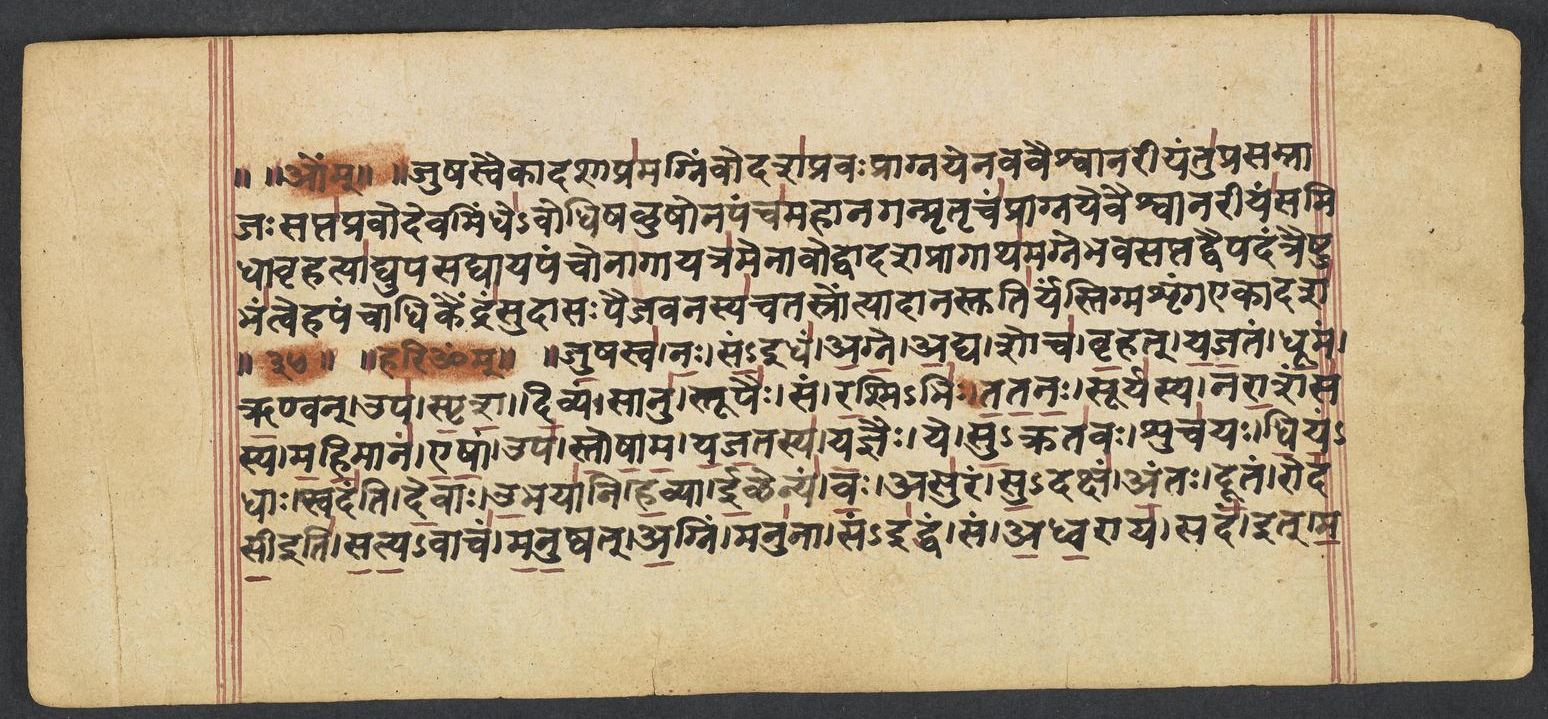
Penn Ms. Coll. 390 Item 41, fol. 494r (numbered 15r by the scribe) (OPenn image 494, lower leaf). Checked on the image: the Rigveda text on this page begins in RV 7.2.1 ‹juṣasva naḥ sam-idham agne›. Lines 1-4 carry the anukramaṇī for aṣṭaka 5, adhyāya 2; 7.2.1 (juṣasva naḥ samidham agne adya) begins in line 5 after hariḥ oṃ. The next page with Rigveda text, fol. 494v (numbered 15v by the scribe), begins in RV 7.2.3 ‹-mahema›. Verses 7.2.1-2 end on this page.
1ju̱ṣasva̍ naḥ sa̱midha̍m agne a̱dya śocā̍ bṛ̱had ya̍ja̱taṁ dhū̱mam ṛ̱ṇvan | upa̍ spṛśa di̱vyaṁ sānu̱ stūpai̱ḥ saṁ ra̱śmibhi̍s tatana̱ḥ sūrya̍sya ||
2narā̱śaṁsa̍sya mahi̱māna̍m eṣā̱m upa̍ stoṣāma yaja̱tasya̍ ya̱jñaiḥ | ye su̱krata̍va̱ḥ śuca̍yo dhiya̱ṁdhāḥ svada̍nti de̱vā u̱bhayā̍ni ha̱vyā ||
Compare: Padapāṭha (word-by-word text written in the manuscript; Sansknet e-text via GRETIL)
1juṣasva | naḥ | sam-idham | agne | adya | śoca | bṛhat | yajatam | dhūmam | ṛṇvan | upa | spṛśa | divyam | sānu | stūpaiḥ | sam | raśmi-bhiḥ | tatanaḥ | sūryasya
2narāśaṃsasya | mahimānam | eṣām | upa | stoṣāma | yajatasya | yajñaiḥ | ye | su-kratavaḥ | śucayaḥ | dhiyam-dhāḥ | svadanti | devāḥ | ubhayāni | havyā
1GLADLY accept, this day, our fuel, Agni: send up thy sacred smoke and shine sublimely. Touch the celestial summits with thy columns, and overspread thee with the rays of Sûrya.
2With sacrifice to these we men will honour the majesty of holy Narâṣansa- To these the pure, most wise, the thought. inspirers, Gods who enjoy both sorts of our oblations.
Where on the image
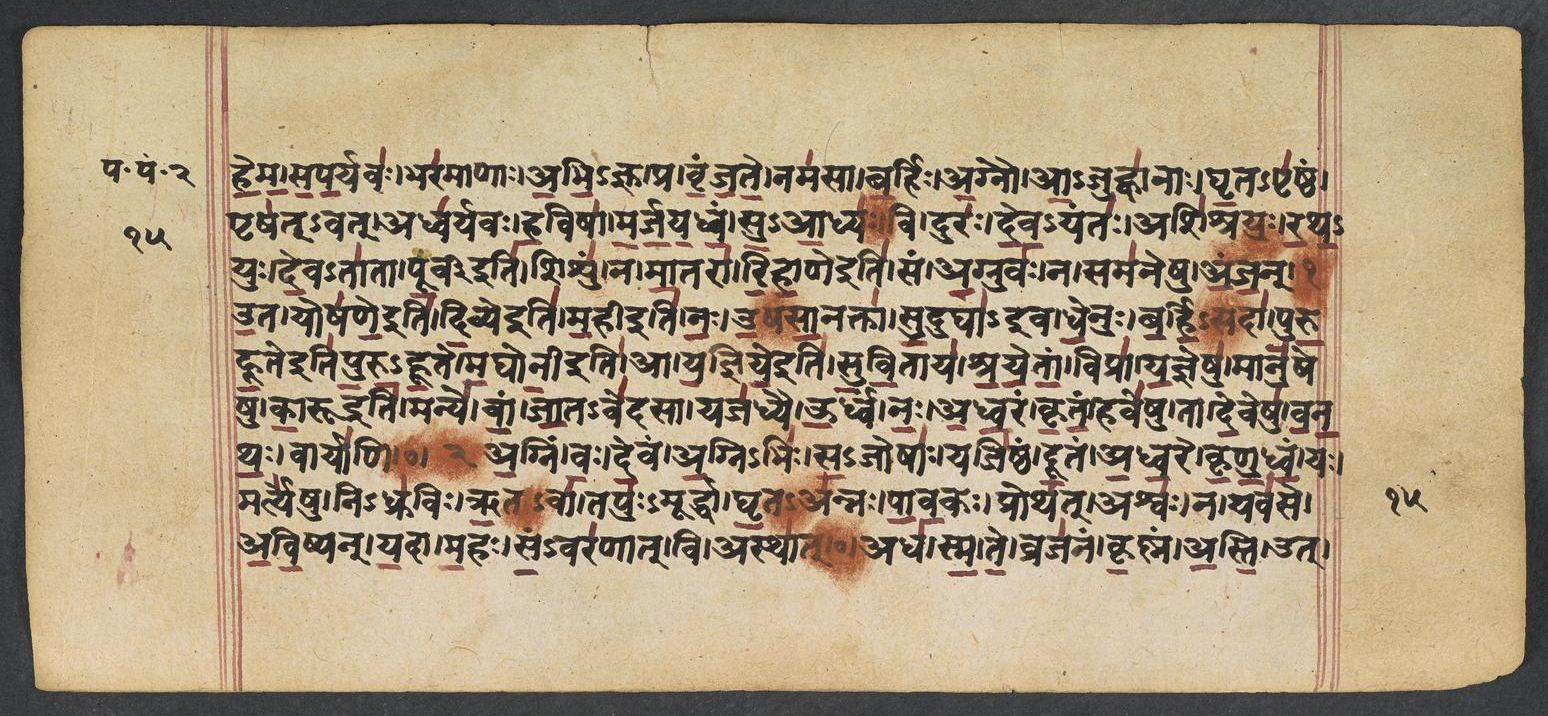
Penn Ms. Coll. 390 Item 41, fol. 494v (numbered 15v by the scribe) (OPenn image 495, upper leaf). Checked on the image: the Rigveda text on this page begins in RV 7.2.3 ‹-mahema›. The next page with Rigveda text, fol. 495r (numbered 16r by the scribe), begins in RV 7.3.3 ‹ut yasya te nava-jātasya›. Verses 7.2.3-11 end on this page; 7.2.3 begins on fol. 494r (numbered 15r by the scribe).
3ī̱ḻenya̍ṁ vo̱ asu̍raṁ su̱dakṣa̍m a̱ntar dū̱taṁ roda̍sī satya̱vāca̍m | ma̱nu̱ṣvad a̱gnim manu̍nā̱ sami̍ddha̱ṁ sam a̍dhva̱rāya̱ sada̱m in ma̍hema ||
4sa̱pa̱ryavo̱ bhara̍māṇā abhi̱jñu pra vṛ̍ñjate̱ nama̍sā ba̱rhir a̱gnau | ā̱juhvā̍nā ghṛ̱tapṛ̍ṣṭha̱m pṛṣa̍dva̱d adhva̍ryavo ha̱viṣā̍ marjayadhvam ||
5svā̱dhyo̱3̱̍ vi duro̍ deva̱yanto 'śi̍śrayū ratha̱yur de̱vatā̍tā | pū̱rvī śiśu̱ṁ na mā̱tarā̍ rihā̱ṇe sam a̱gruvo̱ na sama̍neṣv añjan ||
6u̱ta yoṣa̍ṇe di̱vye ma̱hī na̍ u̱ṣāsā̱naktā̍ su̱dughe̍va dhe̱nuḥ | ba̱rhi̱ṣadā̍ puruhū̱te ma̱ghonī̱ ā ya̱jñiye̍ suvi̱tāya̍ śrayetām ||
7viprā̍ ya̱jñeṣu̱ mānu̍ṣeṣu kā̱rū manye̍ vāṁ jā̱tave̍dasā̱ yaja̍dhyai | ū̱rdhvaṁ no̍ adhva̱raṁ kṛ̍ta̱ṁ have̍ṣu̱ tā de̱veṣu̍ vanatho̱ vāryā̍ṇi ||
8ā bhāra̍tī̱ bhāra̍tībhiḥ sa̱joṣā̱ iḻā̍ de̱vair ma̍nu̱ṣye̍bhir a̱gniḥ | sara̍svatī sārasva̱tebhi̍r a̱rvāk ti̱sro de̱vīr ba̱rhir edaṁ sa̍dantu ||
9tan na̍s tu̱rīpa̱m adha̍ poṣayi̱tnu deva̍ tvaṣṭa̱r vi ra̍rā̱ṇaḥ sya̍sva | yato̍ vī̱raḥ ka̍rma̱ṇya̍ḥ su̱dakṣo̍ yu̱ktagrā̍vā̱ jāya̍te de̱vakā̍maḥ ||
10vana̍spa̱te 'va̍ sṛ̱jopa̍ de̱vān a̱gnir ha̱viḥ śa̍mi̱tā sū̍dayāti | sed u̱ hotā̍ sa̱tyata̍ro yajāti̱ yathā̍ de̱vānā̱ṁ jani̍māni̱ veda̍ ||
11ā yā̍hy agne samidhā̱no a̱rvāṅ indre̍ṇa de̱vaiḥ sa̱ratha̍ṁ tu̱rebhi̍ḥ | ba̱rhir na̍ āstā̱m adi̍tiḥ supu̱trā svāhā̍ de̱vā a̱mṛtā̍ mādayantām ||
Compare: Padapāṭha (word-by-word text written in the manuscript; Sansknet e-text via GRETIL)
3īḷenyam | vaḥ | asuram | su-dakṣam | antaḥ | dūtam | rodasī iti | satya-vācam | manuṣvat | agnim | manunā | sam-iddham | sam | adhvarāya | sadam | it | mahema
4saparyavaḥ | bharamāṇāḥ | abhi-jñu | pra | vṛñjate | namasā | barhiḥ | agnau | ājuhvānāḥ | ghṛta-pṛṣṭham | pṛṣat-vat | adhvaryavaḥ | haviṣā | marjayadhvam
5su-ādhyaḥ | vi | duraḥ | deva-yantaḥ | aśiśrayuḥ | ratha-yuḥ | deva-tātā | pūrvī iti | siśum | na | mātarā | rihāṇe iti | sam | agruvaḥ | na | samaneṣu | añjan
6uta | yoṣaṇeiti | divye iti | mahī iti | naḥ | uṣasānaktā | sudughāiva | dhenuḥ | barhi-sadā | puruhūte itipuru-hūte | maghonī iti | ā | yajñiye | suvitāya | śrayetām
7viprā | yajñeṣu | mānuṣeṣu | kārū iti | manye | vām | jāta-vedasā | yajadhyai | ūrdhvam | naḥ | adhvaram | kṛtam | haveṣu | tā | deveṣu | vanathaḥ | vāryāṇi
8ā | bhāratī | bharatībhiḥ | sa-joṣāḥ | iḷā | devaiḥ | manuṣyebhiḥ | agniḥ | sarasvatī | sārasvatebhiḥ | arvāk | tisraḥ | devīḥ | barhiḥ | ā | idam | sadantu
9tat | naḥ | turīpam | adha | poṣayitnu | deva | tvaṣṭaḥ | vi | rarāṇaḥ | syasveti syasva | yataḥ | vīraḥ | karmaṇyaḥ | su-dakṣaḥ | yukta-grāvā | jāyate | deva-kāmaḥ
10vanaspate | ava | sṛja | upa | devān | agniḥ | haviḥ | śamitā | sūdayāti | saḥ | it | oṃ iti | hotā | satya-taraḥ | yajāti | yathā | devānām | janimāni | veda
11ā | yāhi | agne | sam-idhānaḥ | arvāṅ | indreṇa | devaiḥ | sa-ratham | turebhiḥ | barhiḥ | naḥ | āstām | aditiḥ | su-putrā | svāhā | devāḥ | amṛtāḥ | mādayantām
3We will extol at sacrifice for ever, as men may do, Agni whom Manu kindled, Your very skilful Asura, meet for worship, envoy between both worlds, the truthful speaker.
4Bearing the sacred grass, the men who serve him strew it with reverence, on their knees, by Agni. Calling him to the spotted grass, oil-sprinkled, adorn him, ye Adhvaryus, with oblation.
5With holy thoughts the pious have thrown open Doors fain for chariots in the Gods' assembly. Like two full mother cows who lick their youngling, like maidens for the gathering, they adorn them.
6And let the two exalted Heavenly Ladies, Morning and Night, like a cow good at milking, Come, much-invoked, and on our grass be seated ' wealthy, deserving worship, for our welfare.
7You, Bards and Singers at men's sacrifices, both filled with wisdom, I incline to worship. Send up our offerings when we call upon you, and so among the Gods obtain us treasures.
8May Bhâratî with all her Sisters, Iḷâ accordant with the Gods, with mortals Agni, Sarasvatî with all her kindred Rivers, come to this grass, Three Goddesses, and seat them.
9Well pleased with us do thou, O God, O Tvashṭar, give ready issue to our procreant vigour, Whence springs the hero, powerful, skilled in action, lover of Gods, adjuster of the press-stones.
10Send to the Gods the oblation, Lord of Forests, and let the Immolator, Agni, dress it. He as the truer Priest shall offer worship, for the God'sgenerations well he knoweth.
11Come thou to us, O Agni, duly kindled, together with the potent Gods and Indra. On this our grass sit Aditi, happy Mother, and let our Hail! delight the Gods Immortal.
Notes
- Sanskrit: Aufrecht's edition (1877) with the Vedic accents, as entered by van Nooten and Holland (GRETIL).
- English: Ralph T. H. Griffith, The Hymns of the Rigveda (1889-1892; 2nd ed. 1896-1897), from the VedaWeb digital text; OCR slips in that text were corrected against the printed 2nd edition (data/sources/rigveda/griffith_errata.json).
- Padapāṭha (edition text): Sansknet e-text via GRETIL (CC BY-NC-SA 4.0).
Cite
Sources
- Source: Penn Ms. Coll. 390 Item 41 (undated (catalogued with Penn's 18th-19th c. Vedic manuscripts)), OPenn, Public Domain Mark + Aufrecht's accented text (GRETIL) + Griffith's English (VedaWeb) (holding institution)
- Critical edition: Aufrecht (1877), accented e-text via GRETIL
← previous · → next · v cycle view · l back to library