Rigveda 7.100: To Vishnu
Introduction
Rigveda 7.100 is a hymn of 7 verses addressed to Vishnu. It stands in book (maṇḍala) 7, the family book of Vasiṣṭha. The Rigveda is the oldest collection of Sanskrit hymns, composed in the second half of the second millennium BCE and handed down orally for many centuries before it was written down.
The manuscript shown is Penn Ms. Coll. 390 Item 41 (University of Pennsylvania), an undated paper manuscript of the padapāṭha (the word-by-word recitation text, in which every word is written separately and compounds are split) of the whole Ṛgveda in Devanāgarī, 884 leaves in fascicles, 7-9 lines to the page, accents in red; this hymn stands on fol. 554r-554v. Each section below gives the verses that end on one page; the page boundaries were read on the images (the opening words of every page), not counted out. Where the manuscript is a padapāṭha (the word-by-word recitation text), the section shows Aufrecht's continuous (saṃhitā) text first and, as the edition text, the padapāṭha of the same verses, which is the form written on the page.
How was this verified? (Provenance)
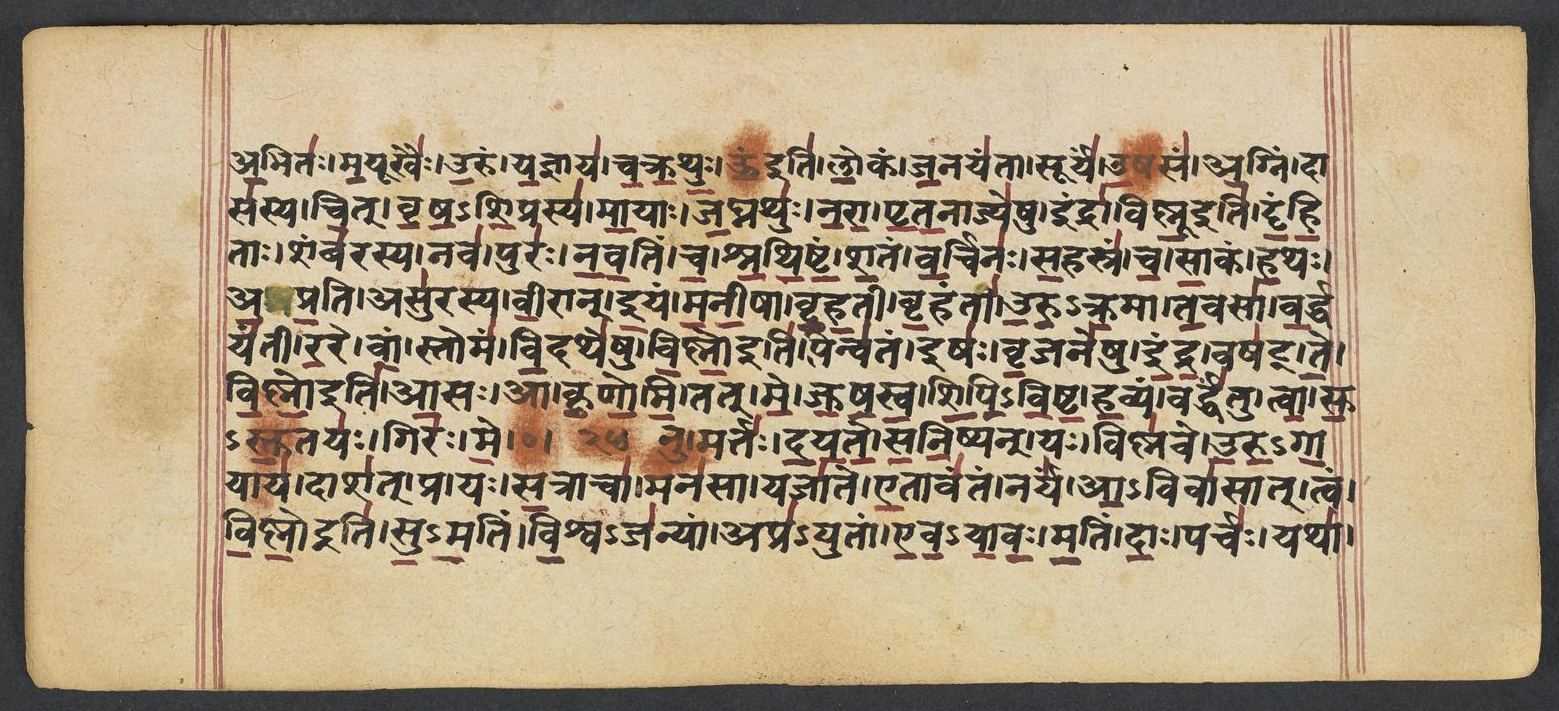
Where on the image
Penn Ms. Coll. 390 Item 41, fol. 554r (numbered 75r by the scribe) (OPenn image 554, lower leaf). Checked on the image: the Rigveda text on this page begins in RV 7.99.3 ‹abhitaḥ mayūkhaiḥ›. The next page with Rigveda text, fol. 554v (numbered 75v by the scribe), begins in RV 7.100.2 ‹naḥ suvitasya bhūreḥ aśva-vataḥ›. Verse 7.100.1 ends on this page.
1nū marto̍ dayate sani̱ṣyan yo viṣṇa̍va urugā̱yāya̱ dāśa̍t | pra yaḥ sa̱trācā̱ mana̍sā̱ yajā̍ta e̱tāva̍nta̱ṁ narya̍m ā̱vivā̍sāt ||
Compare: Padapāṭha (word-by-word text written in the manuscript; Sansknet e-text via GRETIL)
1nu | martaḥ | dayate | saniṣyan | yaḥ | viṣṇave | uru-gāyāya | dāśat | pra | yaḥ | satrācā | manasā | yajāte | etāvantam | naryam | āvivāsāt
1NE'ER doth the man repent, who, seeking profit, bringeth his gift to the far-striding Vishṇu. He who adoreth him with all his spirit winneth himself so great a benefactor.
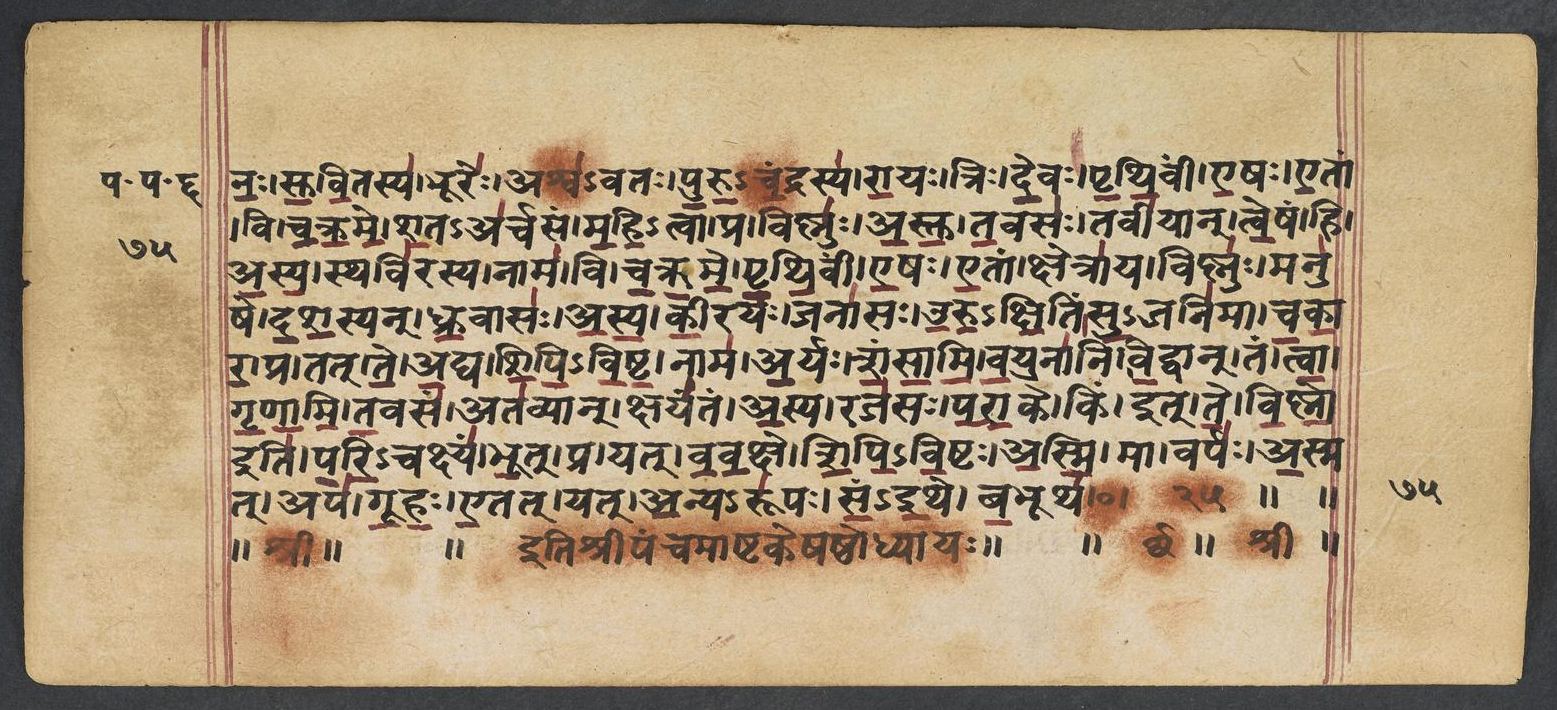
Where on the image
Penn Ms. Coll. 390 Item 41, fol. 554v (numbered 75v by the scribe) (OPenn image 555, upper leaf). Checked on the image: the Rigveda text on this page begins in RV 7.100.2 ‹naḥ suvitasya bhūreḥ aśva-vataḥ›. The next page with Rigveda text, fol. 555v (numbered 76v by the scribe), begins in RV 7.101.1 ‹tisraḥ vācaḥ pra vada›. Verses 7.100.2-7 end on this page; 7.100.2 begins on fol. 554r (numbered 75r by the scribe).
2tvaṁ vi̍ṣṇo suma̱tiṁ vi̱śvaja̍nyā̱m apra̍yutām evayāvo ma̱tiṁ dā̍ḥ | parco̱ yathā̍ naḥ suvi̱tasya̱ bhūre̱r aśvā̍vataḥ puruśca̱ndrasya̍ rā̱yaḥ ||
3trir de̱vaḥ pṛ̍thi̱vīm e̱ṣa e̱tāṁ vi ca̍krame śa̱tarca̍sam mahi̱tvā | pra viṣṇu̍r astu ta̱vasa̱s tavī̍yān tve̱ṣaṁ hy a̍sya̱ sthavi̍rasya̱ nāma̍ ||
4vi ca̍krame pṛthi̱vīm e̱ṣa e̱tāṁ kṣetrā̍ya̱ viṣṇu̱r manu̍ṣe daśa̱syan | dhru̱vāso̍ asya kī̱rayo̱ janā̍sa urukṣi̱tiṁ su̱jani̍mā cakāra ||
5pra tat te̍ a̱dya śi̍piviṣṭa̱ nāmā̱ryaḥ śa̍ṁsāmi va̱yunā̍ni vi̱dvān | taṁ tvā̍ gṛṇāmi ta̱vasa̱m ata̍vyā̱n kṣaya̍ntam a̱sya raja̍saḥ parā̱ke ||
6kim it te̍ viṣṇo pari̱cakṣya̍m bhū̱t pra yad va̍va̱kṣe śi̍pivi̱ṣṭo a̍smi | mā varpo̍ a̱smad apa̍ gūha e̱tad yad a̱nyarū̍paḥ sami̱the ba̱bhūtha̍ ||
7vaṣa̍ṭ te viṣṇav ā̱sa ā kṛ̍ṇomi̱ tan me̍ juṣasva śipiviṣṭa ha̱vyam | vardha̍ntu tvā suṣṭu̱tayo̱ giro̍ me yū̱yam pā̍ta sva̱stibhi̱ḥ sadā̍ naḥ ||
Compare: Padapāṭha (word-by-word text written in the manuscript; Sansknet e-text via GRETIL)
2tvam | viṣṇo iti | su-matim | viśva-janyām | apra-yutām | eva-yāvaḥ | matim | dāḥ | parcaḥ | yathā | naḥ | suvitasya | bhūreḥ | aśva-vataḥ | puru-candrasya | rāyaḥ
3triḥ | devaḥ | pṛthivīm | eṣaḥ | etām | vi | cakrame | śata-arcasam | mahi-tvā | pra | viṣṇuḥ | astu | tavasaḥ | tavīyān | tveṣam | hi | asya | sthavirasya | nāma
4vi | cakrame | pṛthivīm | eṣaḥ | etām | kṣetrāya | viṣṇuḥ | manuṣe | daśasyan | dhruvāsaḥ | asya | kīrayaḥ | janāsaḥ | uru-kṣitim | su-janimā | cakāra
5pra | tat | te | adya | śipi-viṣṭa | nāma | aryaḥ | śaṃsāmi | vayunāni | vidvān | tam | tvā | gṛṇāmi | tavasam | atavyān | kṣayantam | asya | rajasaḥ | parāke
6kim | it | te | viṣṇo iti | pari-cakṣyam | bhūt | pra | yat | vavakṣe | śipi-viṣṭaḥ | asmi | mā | varpaḥ | asmat | apa | gūhaḥ | etat | yat | anya-rūpaḥ | samithe | babhūtha
7vaṣaṭ | te | viṣṇo iti | āsaḥ | ā | kṛṇomi | tat | me | juṣasva | śipi-viṣṭa | havyam | vardhantu | tvā | su-stutayaḥ | giraḥ | me | yūyam | pāta | svasti-bhiḥ | sadā | naḥ
2Thou, Vishṇu, constant in thy courses, gavest good-will to all men, and a hymn that lasteth, That thou mightst move us to abundant comfort of very splendid wealth with store of horses.
3Three times strode forth this God in all his grandeur over this earth bright with a hundred splendours. Foremost be Vishṇu, stronger than the strongest: for glorious is his name who lives for ever.
4Over this earth with mighty step strode Vishṇu, ready to give it for a home to Manu. In him the humble people trust for safety: he, nobly born, hath made them spacious dwellings.
5To-day I laud this name, O Ṣipivishṭa, I, skilled in rules, the name of thee the Noble. Yea, I the poor and weak praise thee the Mighty who dwellest in the realm beyond this region.
6What was there to be blamed in thee, O Vishṇu, when thou declaredst, I am Ṣipivishṭa? Hide not this form from us, nor keep it secret, since thou didst wear another shape in battle.
7O Vishṇu, unto thee my lips cry Vashaṭ! Let this mine offering, Ṣipivishṭa, please thee. May these my songs of eulogy exalt thee. Preserve us evermore, ye Gods, with blessings.
Notes
- Sanskrit: Aufrecht's edition (1877) with the Vedic accents, as entered by van Nooten and Holland (GRETIL).
- English: Ralph T. H. Griffith, The Hymns of the Rigveda (1889-1892; 2nd ed. 1896-1897), from the VedaWeb digital text; OCR slips in that text were corrected against the printed 2nd edition (data/sources/rigveda/griffith_errata.json).
- Padapāṭha (edition text): Sansknet e-text via GRETIL (CC BY-NC-SA 4.0).
Cite
Sources
- Source: Penn Ms. Coll. 390 Item 41 (undated (catalogued with Penn's 18th-19th c. Vedic manuscripts)), OPenn, Public Domain Mark + Aufrecht's accented text (GRETIL) + Griffith's English (VedaWeb) (holding institution)
- Critical edition: Aufrecht (1877), accented e-text via GRETIL
← previous · → next · v cycle view · l back to library