Rigveda 7.103: To the frogs
Introduction
Rigveda 7.103 is a hymn of 10 verses addressed to the frogs. It stands in book (maṇḍala) 7, the family book of Vasiṣṭha. The Rigveda is the oldest collection of Sanskrit hymns, composed in the second half of the second millennium BCE and handed down orally for many centuries before it was written down.
The manuscript shown is Penn Ms. Coll. 390 Item 41 (University of Pennsylvania), an undated paper manuscript of the padapāṭha (the word-by-word recitation text, in which every word is written separately and compounds are split) of the whole Ṛgveda in Devanāgarī, 884 leaves in fascicles, 7-9 lines to the page, accents in red; this hymn stands on fol. 556r-557r. Each section below gives the verses that end on one page; the page boundaries were read on the images (the opening words of every page), not counted out. Where the manuscript is a padapāṭha (the word-by-word recitation text), the section shows Aufrecht's continuous (saṃhitā) text first and, as the edition text, the padapāṭha of the same verses, which is the form written on the page.
How was this verified? (Provenance)
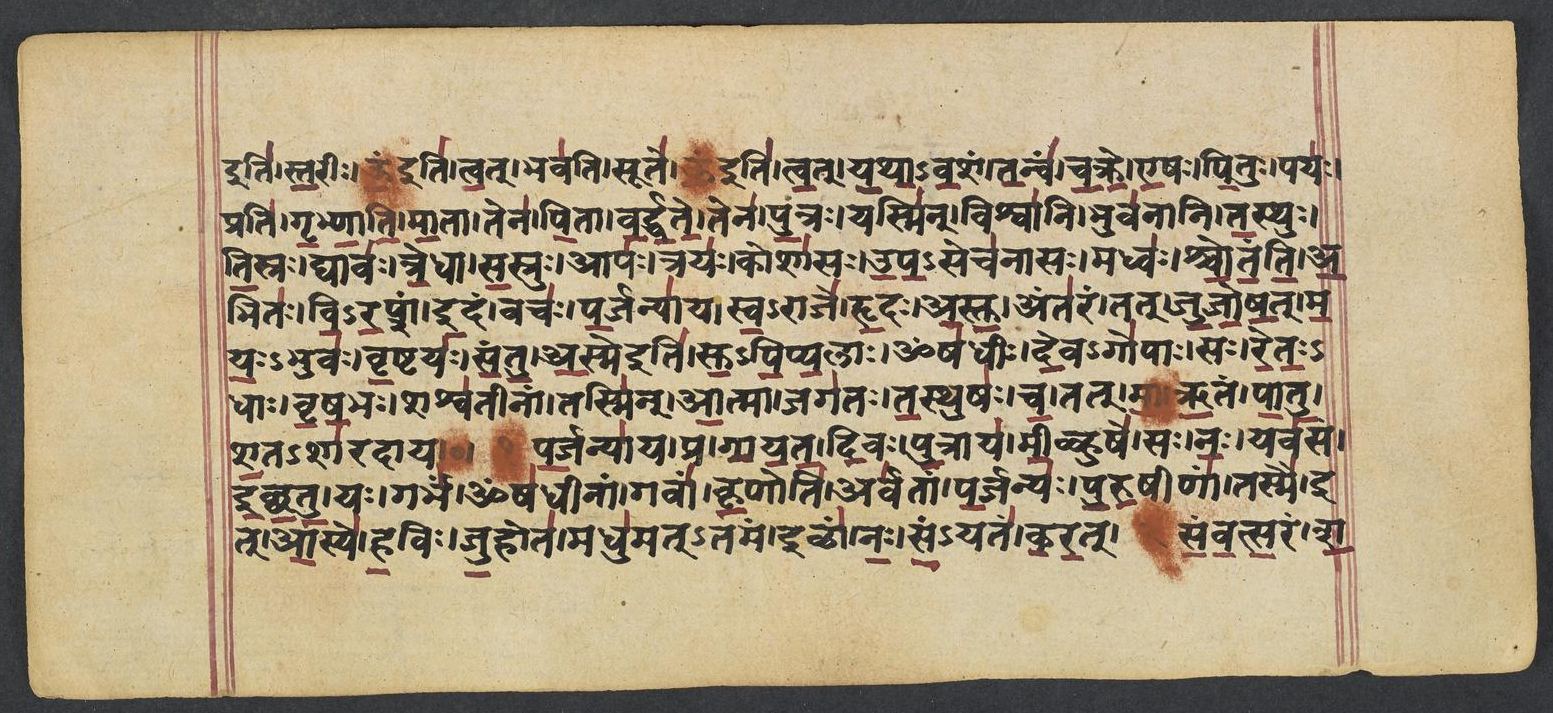
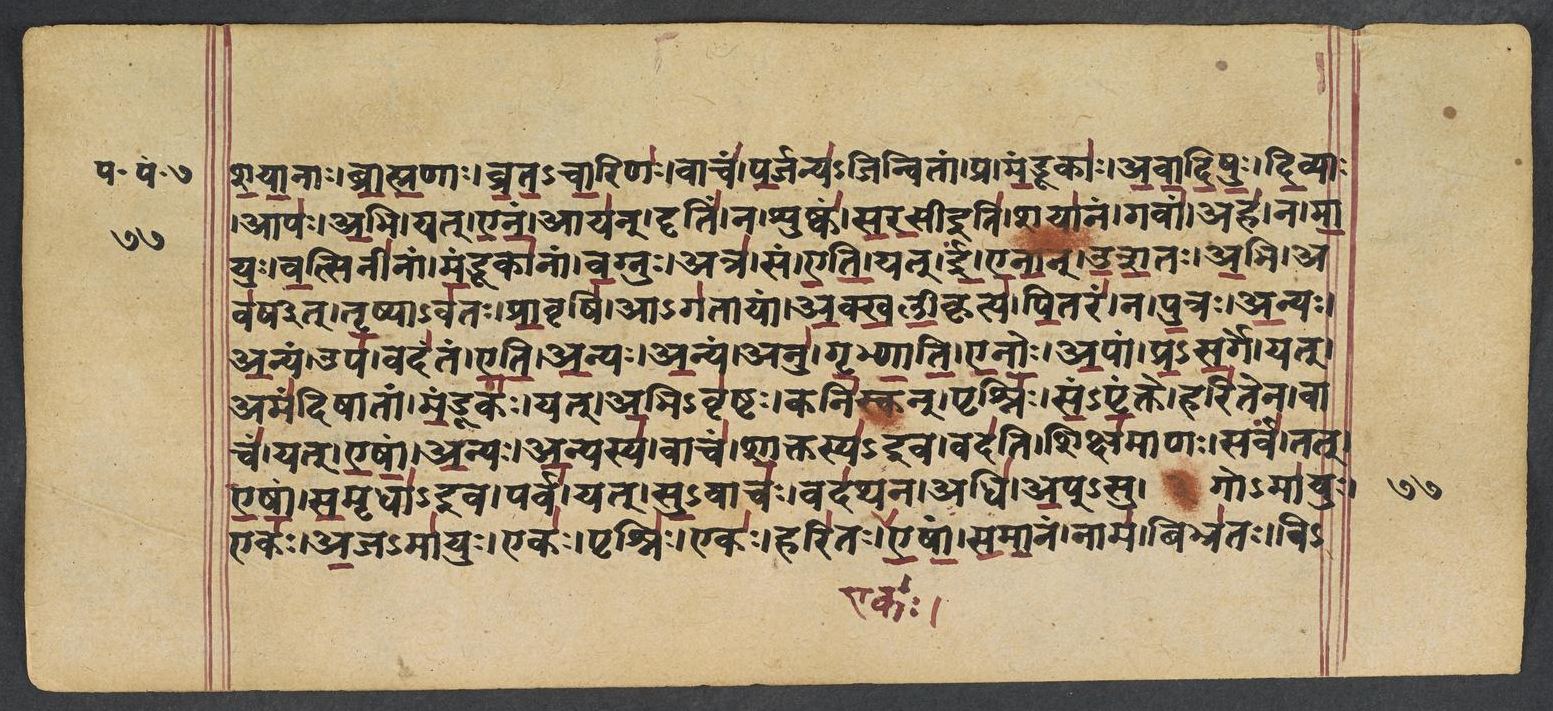
Where on the image
Penn Ms. Coll. 390 Item 41, fol. 556v (numbered 77v by the scribe) (OPenn image 557, upper leaf). Checked on the image: the Rigveda text on this page begins in RV 7.103.1 ‹-śaśayānāḥ brāhmaṇāḥ vrata-cāriṇaḥ vācam›. The next page with Rigveda text, fol. 557r (numbered 78r by the scribe), begins in RV 7.103.6 ‹-vi-rūpāḥ puru-tra vācam pipiśuḥ›. Verses 7.103.1-5 end on this page; 7.103.1 begins on fol. 556r (numbered 77r by the scribe).
1sa̱ṁva̱tsa̱raṁ śa̍śayā̱nā brā̍hma̱ṇā vra̍tacā̱riṇa̍ḥ | vāca̍m pa̱rjanya̍jinvitā̱m pra ma̱ṇḍūkā̍ avādiṣuḥ ||
2di̱vyā āpo̍ a̱bhi yad e̍na̱m āya̱n dṛti̱ṁ na śuṣka̍ṁ sara̱sī śayā̍nam | gavā̱m aha̱ na mā̱yur va̱tsinī̍nām ma̱ṇḍūkā̍nāṁ va̱gnur atrā̱ sam e̍ti ||
3yad ī̍m enām̐ uśa̱to a̱bhy ava̍rṣīt tṛ̱ṣyāva̍taḥ prā̱vṛṣy āga̍tāyām | a̱khkha̱lī̱kṛtyā̍ pi̱tara̱ṁ na pu̱tro a̱nyo a̱nyam upa̱ vada̍ntam eti ||
4a̱nyo a̱nyam anu̍ gṛbhṇāty enor a̱pām pra̍sa̱rge yad ama̍ndiṣātām | ma̱ṇḍūko̱ yad a̱bhivṛ̍ṣṭa̱ḥ kani̍ṣka̱n pṛśni̍ḥ sampṛ̱ṅkte hari̍tena̱ vāca̍m ||
5yad e̍ṣām a̱nyo a̱nyasya̱ vāca̍ṁ śā̱ktasye̍va̱ vada̍ti̱ śikṣa̍māṇaḥ | sarva̱ṁ tad e̍ṣāṁ sa̱mṛdhe̍va̱ parva̱ yat su̱vāco̱ vada̍tha̱nādhy a̱psu ||
Compare: Padapāṭha (word-by-word text written in the manuscript; Sansknet e-text via GRETIL)
1saṃvatsaram | śaśayānāḥ | brāhmaṇāḥ | vrata-cāriṇaḥ | vācam | parjanya-jinvitām | pra | maṇḍūkāḥ | avādiṣuḥ
2divyāḥ | āpaḥ | abhi | yat | enam | āyan | dṛtim | na | śuṣkam | sarasī iti | śayānam | gavām | aha | na | māyuḥ | vatsinīnām | maṇḍūkānām | vagnuḥ | atra | sam | eti
3yat | īm | enān | uśataḥ | abhi | avarṣīt | tṛṣyāvataḥ | prāvṛṣi | āgatāyām | akhkhalīkṛtya | pitaram | na | putraḥ | anyaḥ | anyam | upa | vadantam | eti
4anyaḥ | anyam | anu | gṛbhṇāti | enoḥ | apām | pra-sarge | yat | amandiṣātām | maṇḍūkaḥ | yat | abhi-vṛṣṭaḥ | kaniskan | pṛśniḥ | sam-pṛṅkte | haritena | vācam
5yat | eṣām | anyaḥ | anyasya | vācam | śāktasya-iva | vadati | śikṣamāṇaḥ | sarvam | tat | eṣām | samṛdhāiva | parva | yat | su-vācaḥ | vadathana | adhi | ap-su
1THEY who lay quiet for a year, the Brahmans who fulfil their vows, The Frogs have lifted up their voice, the voice Parjanya hath inspired.
2What time on these, as on a dry skin lying in the pool's bed, the floods of heaven descended, The music of the Frogs comes forth in concert like the cows lowing with their calves beside them.
3When at the coming of the Rains the water has poured upon them as they yearned and thirsted, One seeks another as he talks and greets him with cries of pleasure as a son his father.
4Each of these twain receives the other kindly, while they are revelling in the flow of waters, When the Frog moistened by the rain springs forward, and Green and Spotty both combine their voices.
5When one of these repeats the other's language, as he who learns the lesson of the teacher, Your every limb seems to be growing larger as ye converse with eloquence on the waters.
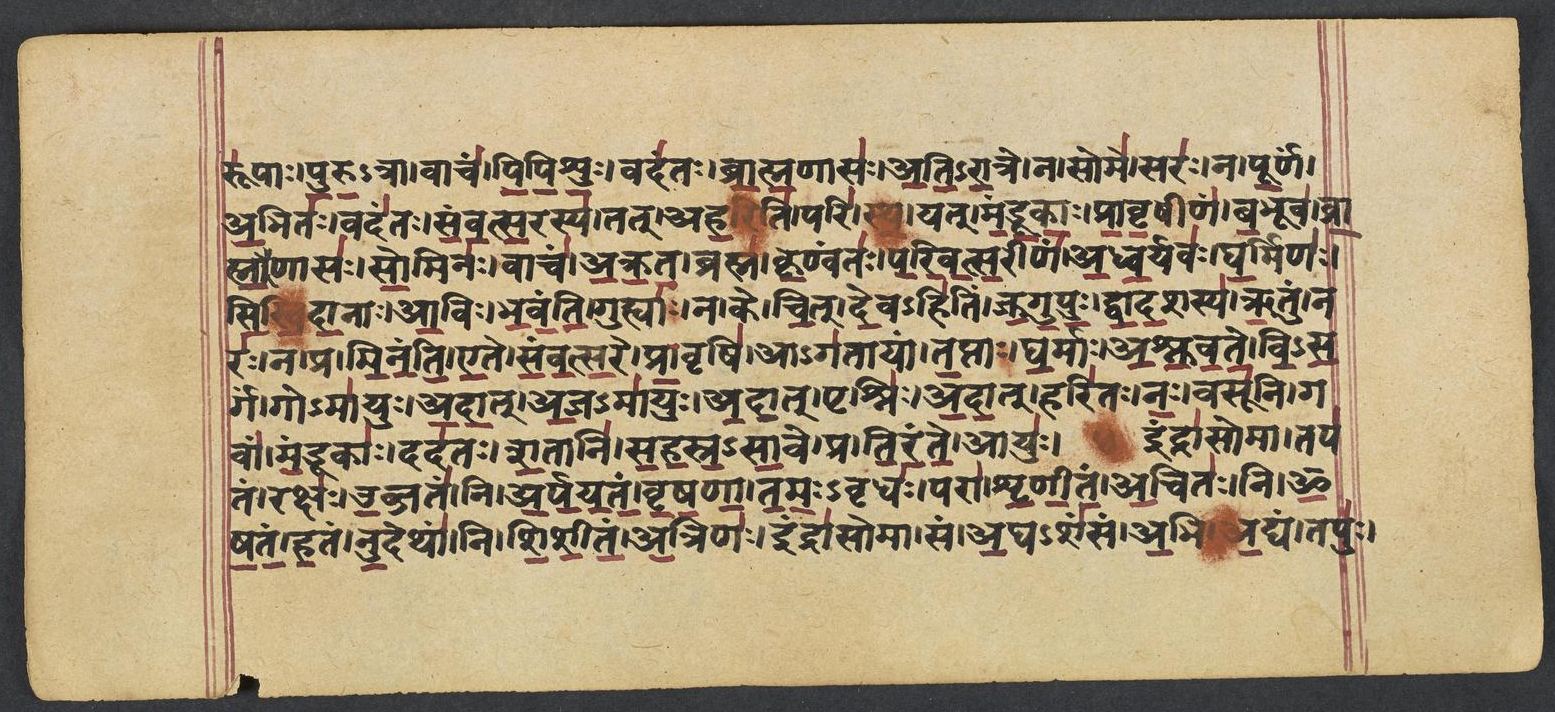
Where on the image
Penn Ms. Coll. 390 Item 41, fol. 557r (numbered 78r by the scribe) (OPenn image 557, lower leaf). Checked on the image: the Rigveda text on this page begins in RV 7.103.6 ‹-vi-rūpāḥ puru-tra vācam pipiśuḥ›. The next page with Rigveda text, fol. 557v (numbered 78v by the scribe), begins in RV 7.104.2 ‹yayastu caruḥ agnivān-iva brahma-dviṣe›. Verses 7.103.6-10 end on this page; 7.103.6 begins on fol. 556v (numbered 77v by the scribe).
6gomā̍yu̱r eko̍ a̱jamā̍yu̱r eka̱ḥ pṛśni̱r eko̱ hari̍ta̱ eka̍ eṣām | sa̱mā̱naṁ nāma̱ bibhra̍to̱ virū̍pāḥ puru̱trā vāca̍m pipiśu̱r vada̍ntaḥ ||
7brā̱hma̱ṇāso̍ atirā̱tre na some̱ saro̱ na pū̱rṇam a̱bhito̱ vada̍ntaḥ | sa̱ṁva̱tsa̱rasya̱ tad aha̱ḥ pari̍ ṣṭha̱ yan ma̍ṇḍūkāḥ prāvṛ̱ṣīṇa̍m ba̱bhūva̍ ||
8brā̱hma̱ṇāsa̍ḥ so̱mino̱ vāca̍m akrata̱ brahma̍ kṛ̱ṇvanta̍ḥ parivatsa̱rīṇa̍m | a̱dhva̱ryavo̍ gha̱rmiṇa̍ḥ siṣvidā̱nā ā̱vir bha̍vanti̱ guhyā̱ na ke ci̍t ||
9de̱vahi̍tiṁ jugupur dvāda̱śasya̍ ṛ̱tuṁ naro̱ na pra mi̍nanty e̱te | sa̱ṁva̱tsa̱re prā̱vṛṣy āga̍tāyāṁ ta̱ptā gha̱rmā a̍śnuvate visa̱rgam ||
10gomā̍yur adād a̱jamā̍yur adā̱t pṛśni̍r adā̱d dhari̍to no̱ vasū̍ni | gavā̍m ma̱ṇḍūkā̱ dada̍taḥ śa̱tāni̍ sahasrasā̱ve pra ti̍ranta̱ āyu̍ḥ ||
Compare: Padapāṭha (word-by-word text written in the manuscript; Sansknet e-text via GRETIL)
6go--māyuḥ | ekaḥ | aja-māyuḥ | ekaḥ | pṛśniḥ | ekaḥ | haritaḥ | ekaḥ | eṣām | samānam | nāma | bibhrataḥ | vi-rūpāḥ | puru-tra | vācam | pipiśuḥ | vadantaḥ
7brāhmaṇāsaḥ | ati-rātre | na | some | saraḥ | na | pūrṇam | abhitaḥ | vadantaḥ | saṃvatsarasya | tat | ahariti | pari | stha | yat | maṇḍūkāḥ | prāvṛṣīṇam | babhūva
8brāhmaṇāsaḥ | sominaḥ | vācam | akrata | brahma | kṛṇvantaḥ | parivatsarīṇam | adhvaryavaḥ | gharmiṇaḥ | sisvidānāḥ | āviḥ | bhavanti | guhyāḥ | na | ke | c it
9deva-hitim | jugupuḥ | dvādaśasya | ṛtum | naraḥ | na | pra | minanti | ete | saṃvatsare | prāvṛṣi | āgatāyām | taptāḥ | gharmāḥ | aśnuvate | vi-sargam
10go--māyuḥ | adāt | aja-māyuḥ | adāt | pṛśniḥ | adāt | haritaḥ | naḥ | vasūni | gavām | maṇḍūkāḥ | dadataḥ | śatāni | sahasra-sāve | pra | tirante | āyuḥ
6Onc is Cow-bellow and Goat-bleat the other, one Frog is Green and one of them is Spotty. They bear one common name, and yet they vary, and, talking, modulate the voice diversely.
7As Brahmans, sitting round the brimful vessel, talk at the Soma-rite of Atirâtra, So, Frogs, ye gather round the pool to honour this day of all the year, the first of Rain-time.
8These Brahmans with the Soma juice, performing their year-long rite, have lifted up their voices; And these Adhvaryus, sweating with their kettles, come forth and show themselves, and none are hidden.
9They keep the twelve month's God-appointed order, and never do the men neglect the season. Soon as the Rain-time in the year returneth, these who were heated kettles gain their freedom.
10Cow-bellow and Goat-bleat have granted riches, and Green and Spotty have vouchsafed us treasure. The Frogs who give us cows in hundreds lengthen our lives in this most fertilizing season.
Notes
- Sanskrit: Aufrecht's edition (1877) with the Vedic accents, as entered by van Nooten and Holland (GRETIL).
- English: Ralph T. H. Griffith, The Hymns of the Rigveda (1889-1892; 2nd ed. 1896-1897), from the VedaWeb digital text; OCR slips in that text were corrected against the printed 2nd edition (data/sources/rigveda/griffith_errata.json).
- Padapāṭha (edition text): Sansknet e-text via GRETIL (CC BY-NC-SA 4.0).
Cite
Sources
- Source: Penn Ms. Coll. 390 Item 41 (undated (catalogued with Penn's 18th-19th c. Vedic manuscripts)), OPenn, Public Domain Mark + Aufrecht's accented text (GRETIL) + Griffith's English (VedaWeb) (holding institution)
- Critical edition: Aufrecht (1877), accented e-text via GRETIL
← previous · → next · v cycle view · l back to library