Rigveda 7.104: To Indra, Soma and other gods
Introduction
Rigveda 7.104 is a hymn of 25 verses addressed to Indra, Soma and other gods. It stands in book (maṇḍala) 7, the family book of Vasiṣṭha. The Rigveda is the oldest collection of Sanskrit hymns, composed in the second half of the second millennium BCE and handed down orally for many centuries before it was written down.
The manuscript shown is Penn Ms. Coll. 390 Item 41 (University of Pennsylvania), an undated paper manuscript of the padapāṭha (the word-by-word recitation text, in which every word is written separately and compounds are split) of the whole Ṛgveda in Devanāgarī, 884 leaves in fascicles, 7-9 lines to the page, accents in red; this hymn stands on fol. 557r-559v. Each section below gives the verses that end on one page; the page boundaries were read on the images (the opening words of every page), not counted out. Where the manuscript is a padapāṭha (the word-by-word recitation text), the section shows Aufrecht's continuous (saṃhitā) text first and, as the edition text, the padapāṭha of the same verses, which is the form written on the page.
How was this verified? (Provenance)
Where on the image
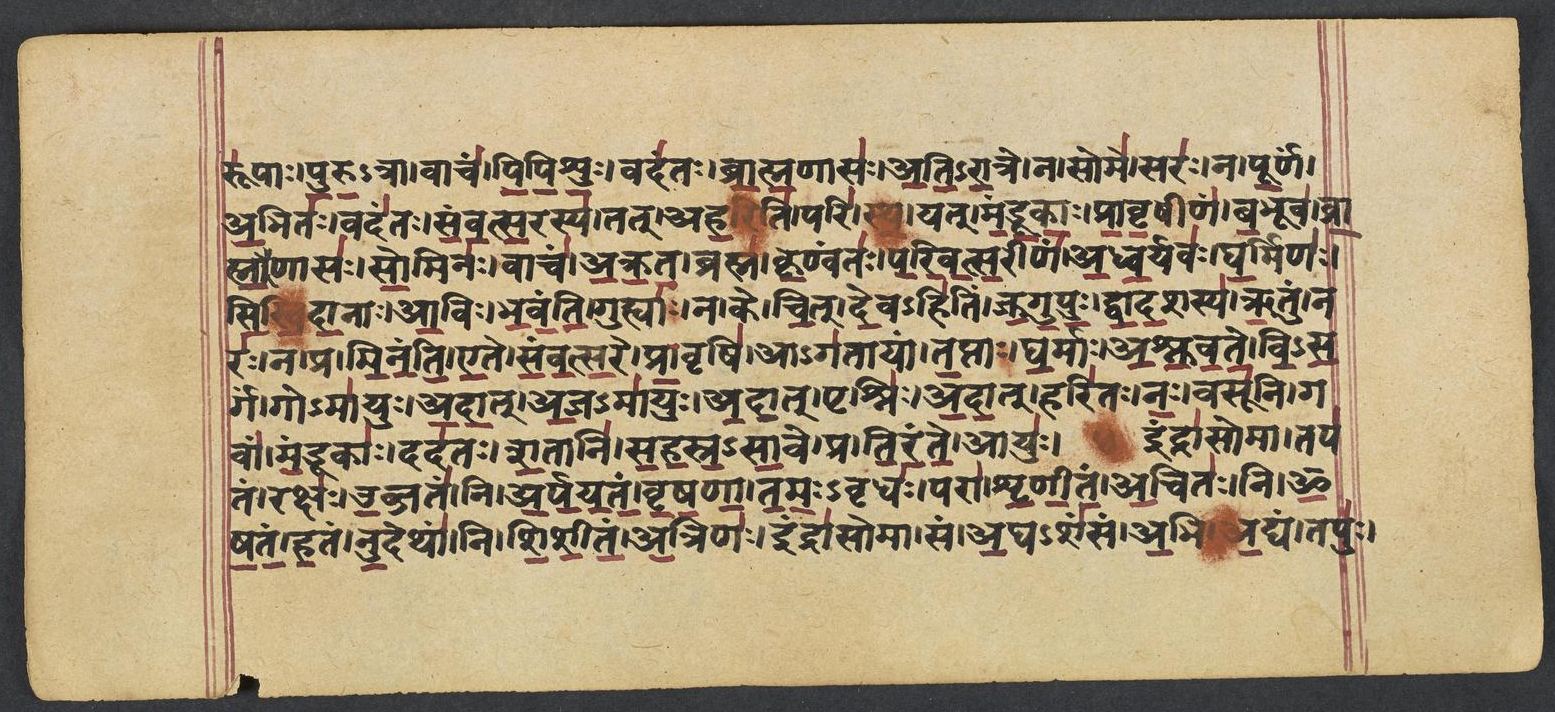
Penn Ms. Coll. 390 Item 41, fol. 557r (numbered 78r by the scribe) (OPenn image 557, lower leaf). Checked on the image: the Rigveda text on this page begins in RV 7.103.6 ‹-vi-rūpāḥ puru-tra vācam pipiśuḥ›. The next page with Rigveda text, fol. 557v (numbered 78v by the scribe), begins in RV 7.104.2 ‹yayastu caruḥ agnivān-iva brahma-dviṣe›. Verse 7.104.1 ends on this page.
1indrā̍somā̱ tapa̍ta̱ṁ rakṣa̍ u̱bjata̱ṁ ny a̍rpayataṁ vṛṣaṇā tamo̱vṛdha̍ḥ | parā̍ śṛṇītam a̱cito̱ ny o̍ṣataṁ ha̱taṁ nu̱dethā̱ṁ ni śi̍śītam a̱triṇa̍ḥ ||
Compare: Padapāṭha (word-by-word text written in the manuscript; Sansknet e-text via GRETIL)
1indrāsomā | tapatam | rakṣaḥ | ubjatam | ni | arpayatam | vṛṣaṇā | tamaḥ-vṛdhaḥ | parā | śṛṇītam | acitaḥ | ni | oṣatam | hatam | nudethām | ni | śiśītam | atriṇaḥ
1INDRA and Soma, burn, destroy the demon foe, send downward, O ye Bulls, those who add gloom to gloom. Annihilate the fools, slay them and burn them up: chase them away from us, pierce the voracious ones.
Where on the image
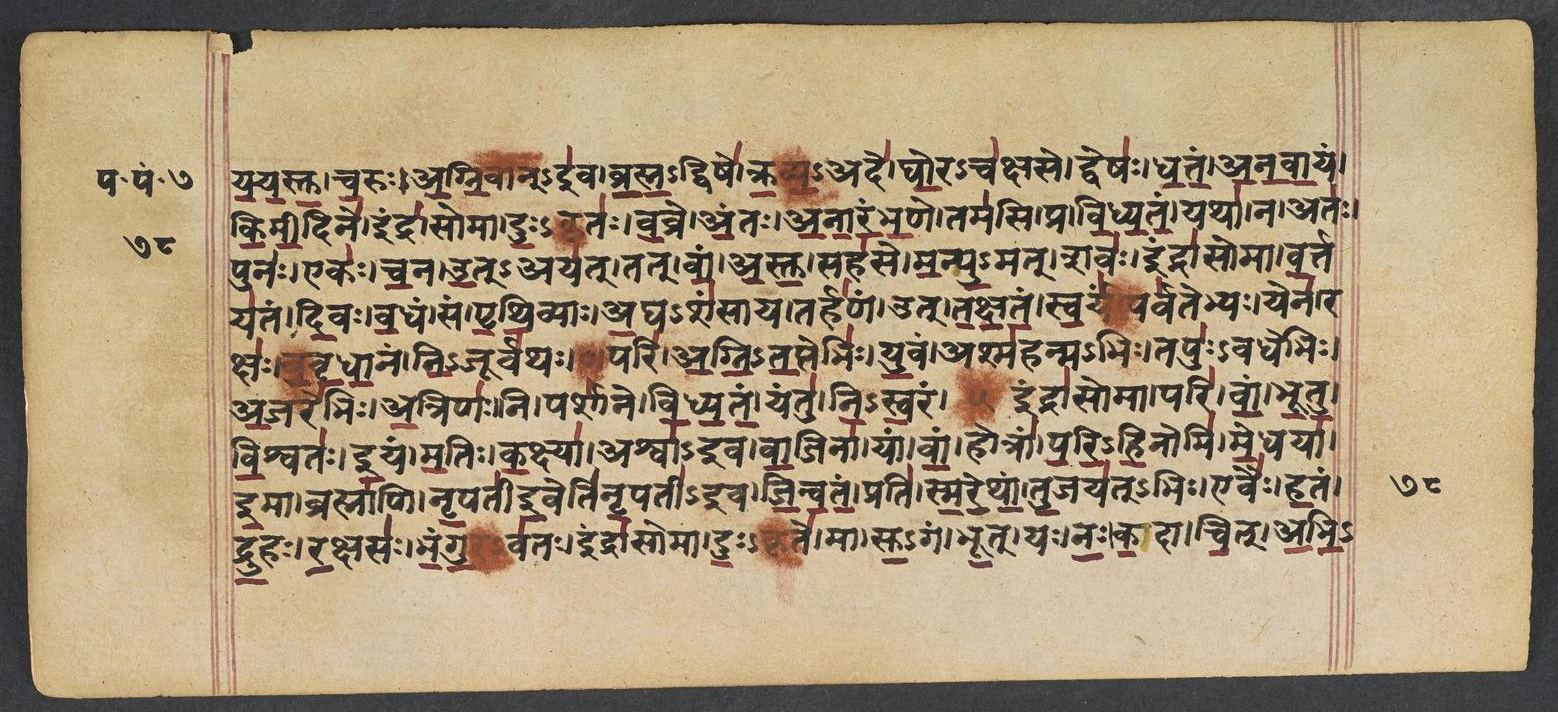
Penn Ms. Coll. 390 Item 41, fol. 557v (numbered 78v by the scribe) (OPenn image 558, upper leaf). Checked on the image: the Rigveda text on this page begins in RV 7.104.2 ‹yayastu caruḥ agnivān-iva brahma-dviṣe›. The next page with Rigveda text, fol. 558r (numbered 79r by the scribe), begins in RV 7.104.7 ‹-abhi-dāsati druhā›. Verses 7.104.2-6 end on this page; 7.104.2 begins on fol. 557r (numbered 78r by the scribe).
2indrā̍somā̱ sam a̱ghaśa̍ṁsam a̱bhy a1̱̍ghaṁ tapu̍r yayastu ca̱rur a̍gni̱vām̐ i̍va | bra̱hma̱dviṣe̍ kra̱vyāde̍ gho̱raca̍kṣase̱ dveṣo̍ dhattam anavā̱yaṁ ki̍mī̱dine̍ ||
3indrā̍somā du̱ṣkṛto̍ va̱vre a̱ntar a̍nārambha̱ṇe tama̍si̱ pra vi̍dhyatam | yathā̱ nāta̱ḥ puna̱r eka̍ś ca̱nodaya̱t tad vā̍m astu̱ saha̍se manyu̱mac chava̍ḥ ||
4indrā̍somā va̱rtaya̍taṁ di̱vo va̱dhaṁ sam pṛ̍thi̱vyā a̱ghaśa̍ṁsāya̱ tarha̍ṇam | ut ta̍kṣataṁ sva̱rya1̱̍m parva̍tebhyo̱ yena̱ rakṣo̍ vāvṛdhā̱naṁ ni̱jūrva̍thaḥ ||
5indrā̍somā va̱rtaya̍taṁ di̱vas pary a̍gnita̱ptebhi̍r yu̱vam aśma̍hanmabhiḥ | tapu̍rvadhebhir a̱jare̍bhir a̱triṇo̱ ni parśā̍ne vidhyata̱ṁ yantu̍ nisva̱ram ||
6indrā̍somā̱ pari̍ vām bhūtu vi̱śvata̍ i̱yam ma̱tiḥ ka̱kṣyāśve̍va vā̱jinā̍ | yāṁ vā̱ṁ hotrā̍m parihi̱nomi̍ me̱dhaye̱mā brahmā̍ṇi nṛ̱patī̍va jinvatam ||
Compare: Padapāṭha (word-by-word text written in the manuscript; Sansknet e-text via GRETIL)
2indrāsomā | sam | agha-śaṃsam | abhi | agham | tapuḥ | yayastu | caruḥ | agnivān-iva | brahma-dviṣe | kravya-ade | ghora-cakṣase | dveṣaḥ | dhattam | anavāyam | kimīdine
3indrāsomā | duḥ-kṛtaḥ | vavre | antaḥ | anārambhaṇe | tamasi | pra | vidhyatam | yathā | na | ataḥ | punaḥ | ekaḥ | cana | ut-ayat | tat | vām | astu | sahase | manyu-mat | śavaḥ
4indrāsomā | vartayatam | divaḥ | vadham | sam | pṛthivyāḥ | agha-śaṃsāya | taharṇam | ut | takṣatam | svaryam | parvatebhyaḥ | yena | rakṣaḥ | vavṛdhānam | ni-jūrvathaḥ
5indrāsomā | vartayatam | divaḥ | pari | agni-taptebhiḥ | yuvam | aśmahanma-bhiḥ | tapuḥ-vadhebhiḥ | ajarebhiḥ | atriṇaḥ | ni | parśāne | vidhyatam | yantu | ni--svaram
6indrāsomā | pari | vām | bhūtu | viśvataḥ | iyam | matiḥ | kakṣyā | aśvāiva | vāji nā | yām | vām | hotrām | pari-hinomi | medhayā | imā | brahmāṇi | nṛpatīivetinṛpatī-iva | jinvatam
2Indra and Soma, let sin round the wicked boil like as a caldron set amid the flames of fire. Against the foe of prayer, devourer of raw flesh, the vile fiend fierce of eye, keep ye perpetual hate.
3Indra and Soma, plunge the wicked in the depth, yea, cast them into darkness that hath no support, So that not one of them may ever thence return: so may your wrathful might prevail and conquer them.
4Indra and Soma, hurl your deadly crushing bolt down on the wicked fiend from heaven and from the earth. Yea, forge out of the mountains your celestial dart wherewith ye burn to death the waxing demon race.
5Indra and Soma, cast ye downward out of heaven your deadly darts of stone burning with fiery flame, Eternal, scorching darts; plunge the voracious ones within the depth, and let them sink without a sound.
6Indra and Soma, let this hymn control you both, even as the girth encompasses two vigorous steeds- The song of praise which I with wisdom offer you: do ye, as Lords of men, animate these my prayers.
Where on the image
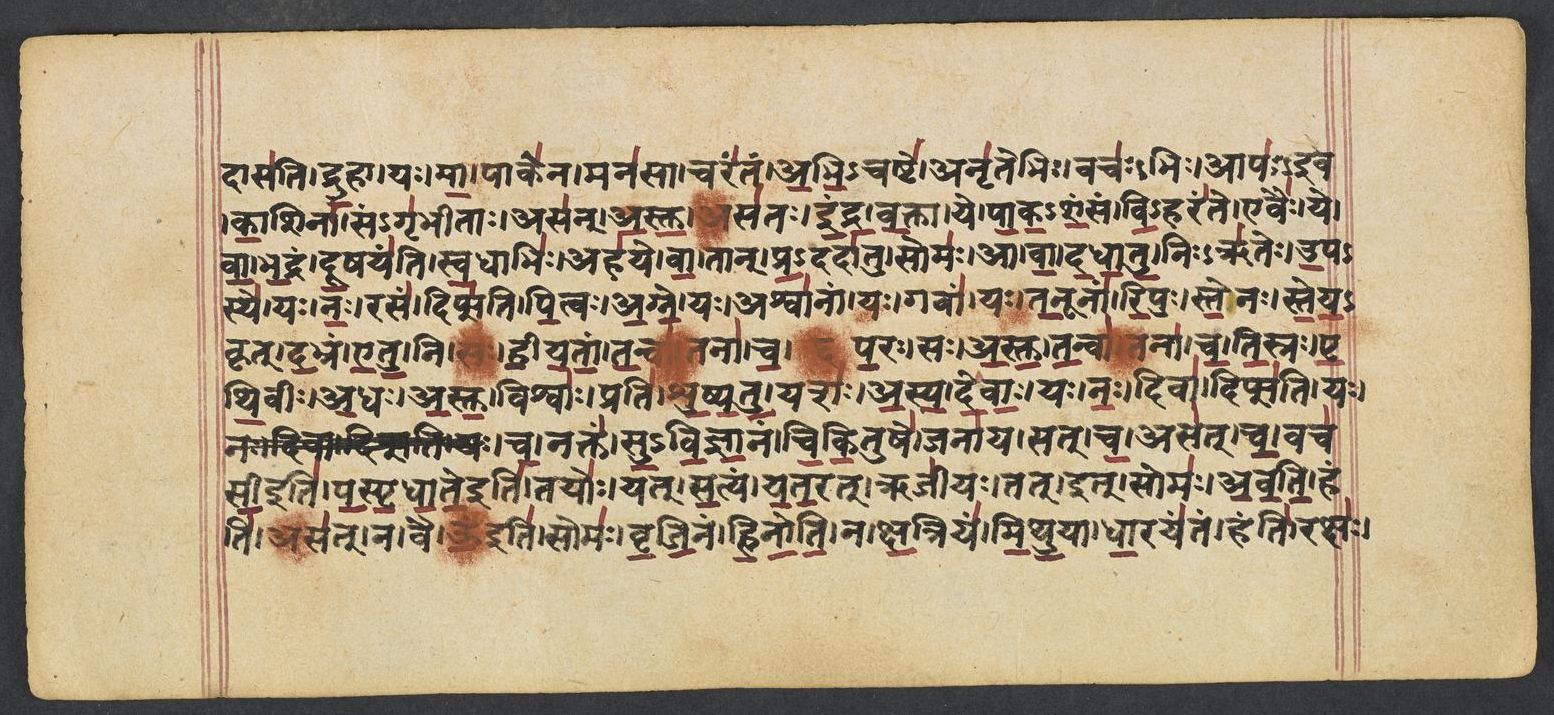
Penn Ms. Coll. 390 Item 41, fol. 558r (numbered 79r by the scribe) (OPenn image 558, lower leaf). Checked on the image: the Rigveda text on this page begins in RV 7.104.7 ‹-abhi-dāsati druhā›. The next page with Rigveda text, fol. 558v (numbered 79v by the scribe), begins in RV 7.104.13 ‹hanti asat vadantam ubhau›. Verses 7.104.7-12 end on this page; 7.104.7 begins on fol. 557v (numbered 78v by the scribe).
7prati̍ smarethāṁ tu̱jaya̍dbhi̱r evai̍r ha̱taṁ dru̱ho ra̱kṣaso̍ bhaṅgu̱rāva̍taḥ | indrā̍somā du̱ṣkṛte̱ mā su̱gam bhū̱d yo na̍ḥ ka̱dā ci̍d abhi̱dāsa̍ti dru̱hā ||
8yo mā̱ pāke̍na̱ mana̍sā̱ cara̍ntam abhi̱caṣṭe̱ anṛ̍tebhi̱r vaco̍bhiḥ | āpa̍ iva kā̱śinā̱ saṁgṛ̍bhītā̱ asa̍nn a̱stv āsa̍ta indra va̱ktā ||
9ye pā̍kaśa̱ṁsaṁ vi̱hara̍nta̱ evai̱r ye vā̍ bha̱draṁ dū̱ṣaya̍nti sva̱dhābhi̍ḥ | aha̍ye vā̱ tān pra̱dadā̍tu̱ soma̱ ā vā̍ dadhātu̱ nirṛ̍ter u̱pasthe̍ ||
10yo no̱ rasa̱ṁ dipsa̍ti pi̱tvo a̍gne̱ yo aśvā̍nā̱ṁ yo gavā̱ṁ yas ta̱nūnā̍m | ri̱puḥ ste̱naḥ ste̍ya̱kṛd da̱bhram e̍tu̱ ni ṣa hī̍yatāṁ ta̱nvā̱3̱̍ tanā̍ ca ||
11pa̱raḥ so a̍stu ta̱nvā̱3̱̍ tanā̍ ca ti̱sraḥ pṛ̍thi̱vīr a̱dho a̍stu̱ viśvā̍ḥ | prati̍ śuṣyatu̱ yaśo̍ asya devā̱ yo no̱ divā̱ dipsa̍ti̱ yaś ca̱ nakta̍m ||
12su̱vi̱jñā̱naṁ ci̍ki̱tuṣe̱ janā̍ya̱ sac cāsa̍c ca̱ vaca̍sī paspṛdhāte | tayo̱r yat sa̱tyaṁ ya̍ta̱rad ṛjī̍ya̱s tad it somo̍ 'vati̱ hanty āsa̍t ||
Compare: Padapāṭha (word-by-word text written in the manuscript; Sansknet e-text via GRETIL)
7prati | smarethām | tujayat-bhiḥ | evaiḥ | hatam | druhaḥ | rakṣasaḥ | bhaṅgura-vataḥ | indrāsomā | duḥ-kṛte | mā | su-gam | bhūt | yaḥ | naḥ | kadā | cit | abhi-dāsati | druhā
8yaḥ | mā | pākena | manasā | carantam | abhi-caṣṭe | anṛtebhiḥ | vacaḥ-bhiḥ | āpaḥ-iva | kāśinā | sam-gṛbhītāḥ | asan | astu | asataḥ | indra | vaktā
9ye | pāka-śaṃsam | vi-harante | evaiḥ | ye | vā | bhadram | dūṣayanti | svadhābh iḥ | ahaye | vā | tān | pra-dadātu | somaḥ | ā | vā | dadhātu | niḥ-ṛteḥ | upa-sthe
10yaḥ | naḥ | rasam | dipsati | pitvaḥ | agne | yaḥ | aśvānām | yaḥ | gavām | yaḥ | tanūnām | ripuḥ | stenaḥ | steya-kṛt | dabhram | etu | ni | saḥ | hīyatām | tanvā | tanā | ca
11paraḥ | saḥ | astu | tanvā | tanā | ca | tisraḥ | pṛthivīḥ | adhaḥ | astu | viśvāḥ | prati | śuṣyatu | yaśaḥ | asya | devāḥ | yaḥ | naḥ | divā | dipsati | yaḥ | ca | naktam
12su-vijñānam | cikituṣe | janāya | sat | ca | asat | ca | vacasī iti | paspṛdhāteiti | tayoḥ | yat | satyam | yatarat | ṛjīyaḥ | tat | it | somaḥ | avati | hanti | asat
7In your impetuous manner think ye both thereon: destroy these evil beings, slay the treacherous fiends. Indra and Soma, let the wicked have no bliss who evermore assails us with malignity.
8Whoso accuses me with words of falsehood when I pursue my way with guileless spirit, May he, the speaker of untruth, be, Indra, like water which the hollowed hand compresses.
9Those who destroy, as is their wont, the simple, and with their evil natures harm the righteous, May Soma give them over to the serpent, or to the lap of Nirr̥iti consign them.
10The fiend, O Agni, who designs to injure the essence of our food, kine, steeds, or bodies, May he, the adversary, thief, and robber, sink to destruction, both himself and offspring.
11May he be swept away, himself and children: may all the three earths press him down beneath them. May his fair glory, O ye Gods, be blighted, who in the day or night would fain destroy us.
12The prudent finds it easy to distinguish the true and false: their words oppose each other. Of these two that which is the true and honest, Soma protects, and brings the false to nothing.
Where on the image
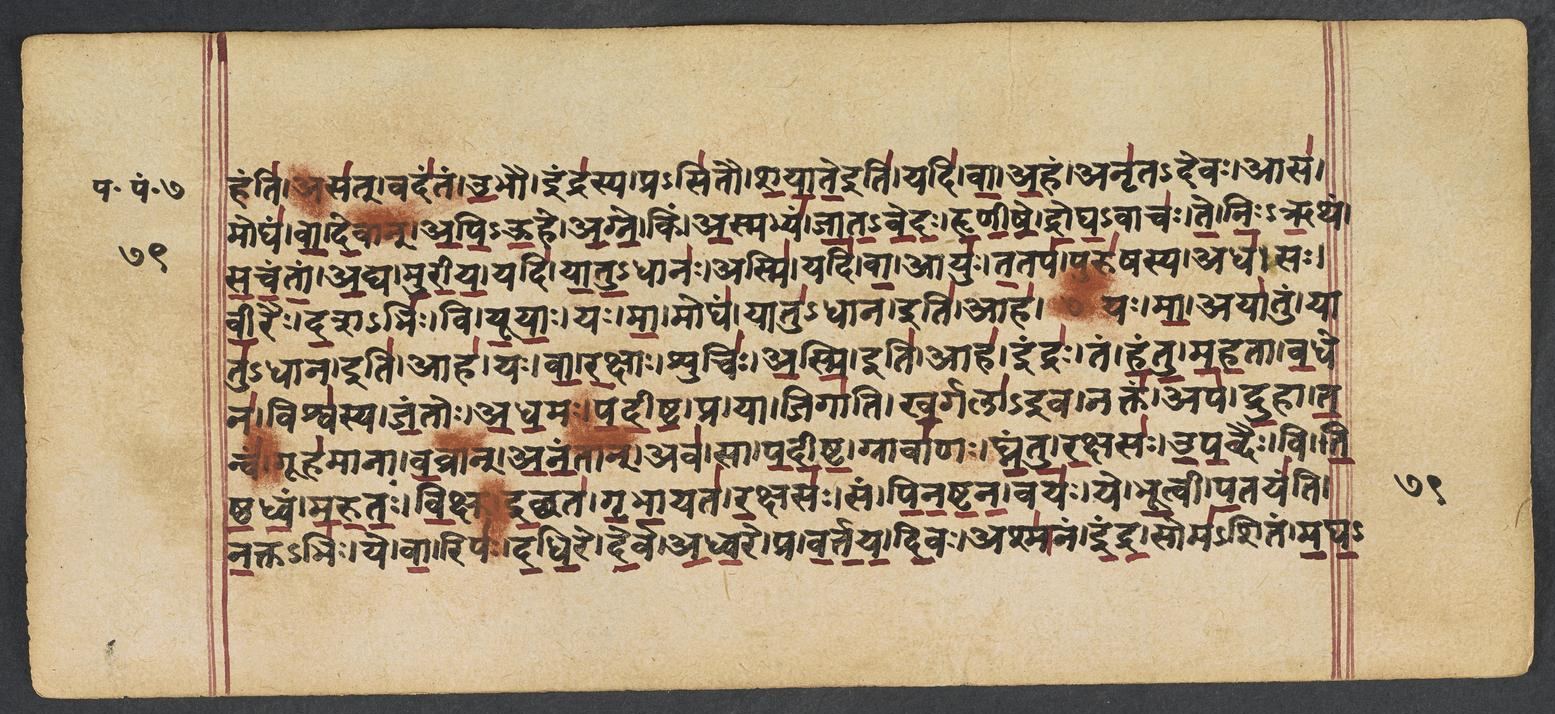
Penn Ms. Coll. 390 Item 41, fol. 558v (numbered 79v by the scribe) (OPenn image 559, upper leaf). Checked on the image: the Rigveda text on this page begins in RV 7.104.13 ‹hanti asat vadantam ubhau›. The next page with Rigveda text, fol. 559r (numbered 80r by the scribe), begins in RV 7.104.19 ‹-magha-van sam siśādhi prāktāt›. Verses 7.104.13-18 end on this page; 7.104.13 begins on fol. 558r (numbered 79r by the scribe).
13na vā u̱ somo̍ vṛji̱naṁ hi̍noti̱ na kṣa̱triya̍m mithu̱yā dhā̱raya̍ntam | hanti̱ rakṣo̱ hanty āsa̱d vada̍ntam u̱bhāv indra̍sya̱ prasi̍tau śayāte ||
14yadi̍ vā̱ham anṛ̍tadeva̱ āsa̱ mogha̍ṁ vā de̱vām̐ a̍pyū̱he a̍gne | kim a̱smabhya̍ṁ jātavedo hṛṇīṣe drogha̱vāca̍s te nirṛ̱thaṁ sa̍cantām ||
15a̱dyā mu̍rīya̱ yadi̍ yātu̱dhāno̱ asmi̱ yadi̱ vāyu̍s ta̱tapa̱ pūru̍ṣasya | adhā̱ sa vī̱rair da̱śabhi̱r vi yū̍yā̱ yo mā̱ mogha̱ṁ yātu̍dhā̱nety āha̍ ||
16yo māyā̍tu̱ṁ yātu̍dhā̱nety āha̱ yo vā̍ ra̱kṣāḥ śuci̍r a̱smīty āha̍ | indra̱s taṁ ha̍ntu maha̱tā va̱dhena̱ viśva̍sya ja̱ntor a̍dha̱mas pa̍dīṣṭa ||
17pra yā jigā̍ti kha̱rgale̍va̱ nakta̱m apa̍ dru̱hā ta̱nva1̱̍ṁ gūha̍mānā | va̱vrām̐ a̍na̱ntām̐ ava̱ sā pa̍dīṣṭa̱ grāvā̍ṇo ghnantu ra̱kṣasa̍ upa̱bdaiḥ ||
18vi ti̍ṣṭhadhvam maruto vi̱kṣv i1̱̍cchata̍ gṛbhā̱yata̍ ra̱kṣasa̱ḥ sam pi̍naṣṭana | vayo̱ ye bhū̱tvī pa̱taya̍nti na̱ktabhi̱r ye vā̱ ripo̍ dadhi̱re de̱ve a̍dhva̱re ||
Compare: Padapāṭha (word-by-word text written in the manuscript; Sansknet e-text via GRETIL)
13na | vai | oṃ iti | somaḥ | vṛjinam | hinoti | na | kṣatriyam | mithuyā | dhārayantam | hanti | rakṣaḥ | hanti | asat | vadantam | ubhau | indrasya | pra-sitau | śayāteiti
14yadi | vā | aham | anṛta-devaḥ | āsa | mogham | vā | devān | api-ūhe | agne | kim | asmabhyam | jāta-vedaḥ | hṛṇīṣe | drogha-vācaḥ | te | nir-ṛtham | sacantām
15adya | murīya | yadi | yātu-dhānaḥ | asmi | yadi | vā | āyuḥ | tatapa | puruṣasya | adha | saḥ | vīraiḥ | daśa-bhiḥ | vi | yūyāḥ | yaḥ | mā | mogham | yātu-dhāna | iti | āha
16yaḥ | mā | ayātum | yātu-dhāna | iti | āha | yaḥ | vā | rakṣāḥ | śuciḥ | asmi | iti | āha | indraḥ | tam | hantu | mahatā | vadhena | viśvasya | jantoḥ | adhamaḥ | padīṣṭa
17pra | yā | jigāti | khargalāiva | naktam | apa | druhā | tanvam | gūhamānā | vavrān | anantāmn | ava | sā | padīṣṭa | grāvāṇaḥ | ghnantu | rakṣasaḥ | upabdaiḥ
18vi | tiṣṭhadhvam | marutaḥ | vikṣu | icchata | gṛbhāyata | rakṣasaḥ | sam | pinaṣṭana | vayaḥ | ye | bhūtvī | patayanti | nakta-bhiḥ | ye | vā | ripaḥ | dadhire | deve | adhvare
13Never doth Soma aid and guide the wicked or him who falsely claims the Warrior's title. He slays the fiend and him who speaks untruly: both lie entangled in the noose of Indra.
14As if I worshipped deities of falsehood, or thought vain thoughts about the Gods, O Agni. Why art thou angry with us, Jâtavedas? Destruction fall on those who lie against thee!
15So may I die this day if I have harassed any man's life or if I be a demon. Yea, may he lose all his ten sons together who with false tongue hath called me Yatudhana.
16May Indra slay him with a mi weapon, and let the vilest ofghty all creatures perish, The fiend who says that he is pure, who calls me a demon though devoid of demon nature.
17She too who wanders like an owl at night-time, hiding her body in her guile and malice, May she fall downward into endless caverns. May press-stones with loud ring destroy the demons.
18Spread out, ye Maruts, search among the people: seize ye and grind the Raksasas to pieces, Who fly abroad, transformed to birds, at night-time, or sully and pollute our holy worship.
Where on the image
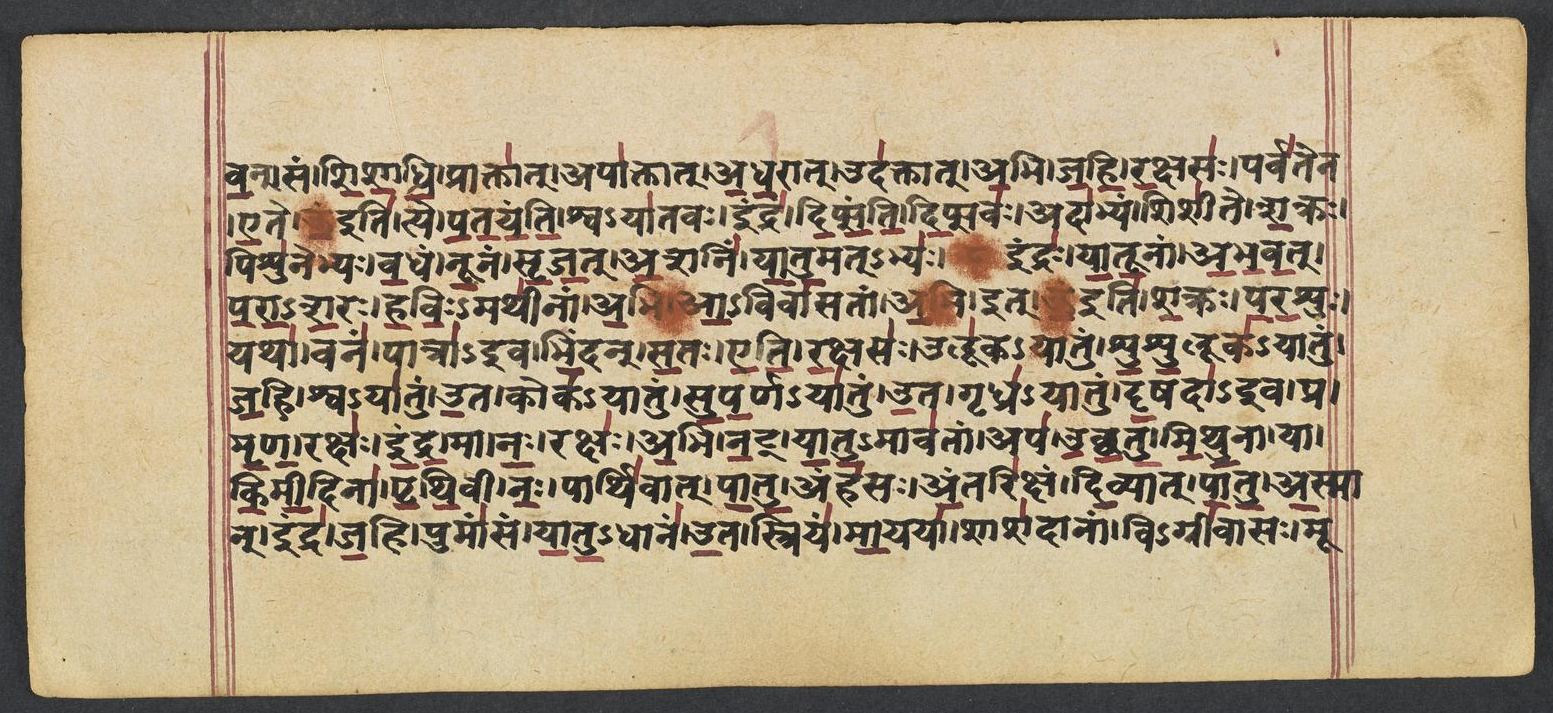
Penn Ms. Coll. 390 Item 41, fol. 559r (numbered 80r by the scribe) (OPenn image 559, lower leaf). Checked on the image: the Rigveda text on this page begins in RV 7.104.19 ‹-magha-van sam siśādhi prāktāt›. The next page with Rigveda text, fol. 559v (numbered 80v by the scribe), begins in RV 7.104.24 ‹-mūra-devāḥ ṛdantu mā te›. Verses 7.104.19-23 end on this page; 7.104.19 begins on fol. 558v (numbered 79v by the scribe).
19pra va̍rtaya di̱vo aśmā̍nam indra̱ soma̍śitam maghava̱n saṁ śi̍śādhi | prāktā̱d apā̍ktād adha̱rād uda̍ktād a̱bhi ja̍hi ra̱kṣasa̱ḥ parva̍tena ||
20e̱ta u̱ tye pa̍tayanti̱ śvayā̍tava̱ indra̍ṁ dipsanti di̱psavo 'dā̍bhyam | śiśī̍te śa̱kraḥ piśu̍nebhyo va̱dhaṁ nū̱naṁ sṛ̍jad a̱śani̍ṁ yātu̱madbhya̍ḥ ||
21indro̍ yātū̱nām a̍bhavat parāśa̱ro ha̍vi̱rmathī̍nām a̱bhy ā̱3̱̍vivā̍satām | a̱bhīd u̍ śa̱kraḥ pa̍ra̱śur yathā̱ vana̱m pātre̍va bhi̱ndan sa̱ta e̍ti ra̱kṣasa̍ḥ ||
22ulū̍kayātuṁ śuśu̱lūka̍yātuṁ ja̱hi śvayā̍tum u̱ta koka̍yātum | su̱pa̱rṇayā̍tum u̱ta gṛdhra̍yātuṁ dṛ̱ṣade̍va̱ pra mṛ̍ṇa̱ rakṣa̍ indra ||
23mā no̱ rakṣo̍ a̱bhi na̍ḍ yātu̱māva̍tā̱m apo̍cchatu mithu̱nā yā ki̍mī̱dinā̍ | pṛ̱thi̱vī na̱ḥ pārthi̍vāt pā̱tv aṁha̍so̱ 'ntari̍kṣaṁ di̱vyāt pā̍tv a̱smān ||
Compare: Padapāṭha (word-by-word text written in the manuscript; Sansknet e-text via GRETIL)
19pra | vartaya | divaḥ | aśmānam | indra | soma-śitam | magha-van | sam | siśādhi | prāktāt | apāktāt | adharāt | udaktāt | abhi | jahi | rakṣasaḥ | parvatena
20ete | oṃ iti | tye | patayanti | śva-yātavaḥ | indram | dipsanti | dipsavaḥ | adābhyam | śiśīte | śakraḥ | piśunebhyaḥ | vadham | nūnam | sṛjat | aśanim | yātumat-bhyaḥ
21indraḥ | yātūnām | abhavat | parāśaraḥ | haviḥ-mathīnām | abhi | āvivāsatām | abhi | it | oṃ iti | śakraḥ | paraśuḥ | yathā | vanam | pātrāiva | bhindan | sataḥ | eti | rakṣasaḥ
22ulūka-yātum | śuśulūka-yātum | jahi | śva-yātum | uta | koka-yātum | suparṇa-yātum | uta | gṛdhra-yātum | dṛṣadāiva | pra | mṛṇa | rakṣaḥ | indra
23mā | naḥ | rakṣaḥ | abhi | naṭ | yātu-māvatām | apa | ucchatu | mithunā | yā | kimīdinā | pṛthivī | naḥ | pārthivāt | pātu | aṃhasaḥ | antarikṣam | divyāt | pātu | asmān
19Hurl down from heaven thy bolt of stone, O Indra: sharpen it, Maghavan, made keen by Soma. Forward, behind, and from above and under, smite down the demons with thy rocky weapon.
20They fly, the demon dogs, and, bent on mischief, fain would they harm indomitable Indra. Ṣakra makes sharp his weapon for the wicked: now, let him cast his bolt at fiendish wizards.
21Indra hath ever been the fiends' destroyer who spoil oblations of the Gods' invokers: Yea, Ṣakra, like an axe that splits the timber, attacks and smashes them like earthen vessels.
22Destroy the fiend shaped like an owl or owlet, destroy him in the form of dog or cuckoo. Destroy him shaped as eagle or as vulture as with a stone, O Indra, crush the demon.
23Let not the fiend of witchcraft-workers reach us: may Dawn drive off the couples of Kimîdins. Earth keep us safe from earthly woe and trouble: from grief that comes from heaven mid-air preserve us.
Where on the image
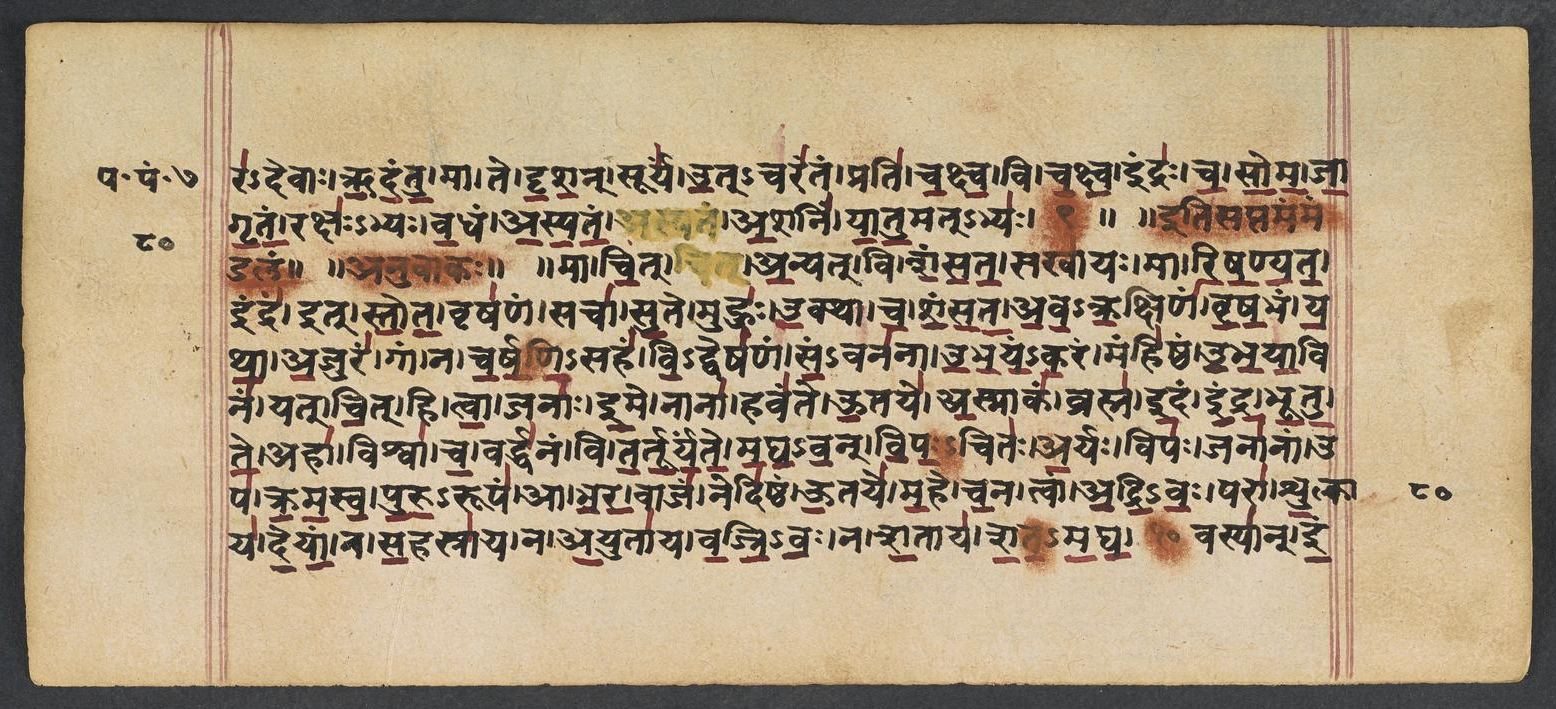
Penn Ms. Coll. 390 Item 41, fol. 559v (numbered 80v by the scribe) (OPenn image 560, upper leaf). Checked on the image: the Rigveda text on this page begins in RV 7.104.24 ‹-mūra-devāḥ ṛdantu mā te›. The next page with Rigveda text, fol. 560r (numbered 81r by the scribe), begins in RV 8.1.6 ‹-indra asi me pituḥ›. Verses 7.104.24-25 end on this page; 7.104.24 begins on fol. 559r (numbered 80r by the scribe).
24indra̍ ja̱hi pumā̍ṁsaṁ yātu̱dhāna̍m u̱ta striya̍m mā̱yayā̱ śāśa̍dānām | vigrī̍vāso̱ mūra̍devā ṛdantu̱ mā te dṛ̍śa̱n sūrya̍m u̱ccara̍ntam ||
25prati̍ cakṣva̱ vi ca̱kṣvendra̍ś ca soma jāgṛtam | rakṣo̍bhyo va̱dham a̍syatam a̱śani̍ṁ yātu̱madbhya̍ḥ ||
Compare: Padapāṭha (word-by-word text written in the manuscript; Sansknet e-text via GRETIL)
24indra | jahi | pumāṃsam | yātu-dhānam | uta | striyam | māyayā | śāśadānām | vi-grīvāsaḥ | mūra-devāḥ | ṛdantu | mā | te | dṛśan | sūryam | ut-carantam
25prati | cakṣva | vi | cakṣva | indraḥ | ca | soma | jāgṛtam | rakṣaḥ-bhyaḥ | vadham | asyatam | aśanim | yātumat-bhyaḥ
24Slay the male demon, Indra! slay the female, joying and triumphing in arts of magic. Let the fools' gods with bent necks fall and perish, and see no more the Sun when he arises.
25Look each one hither, look around Indra and Soma, watch ye well. Cast forth your weapon at the fiends against the sorcerers hurl your bolt.
Notes
- Sanskrit: Aufrecht's edition (1877) with the Vedic accents, as entered by van Nooten and Holland (GRETIL).
- English: Ralph T. H. Griffith, The Hymns of the Rigveda (1889-1892; 2nd ed. 1896-1897), from the VedaWeb digital text; OCR slips in that text were corrected against the printed 2nd edition (data/sources/rigveda/griffith_errata.json).
- Padapāṭha (edition text): Sansknet e-text via GRETIL (CC BY-NC-SA 4.0).
Cite
Sources
- Source: Penn Ms. Coll. 390 Item 41 (undated (catalogued with Penn's 18th-19th c. Vedic manuscripts)), OPenn, Public Domain Mark + Aufrecht's accented text (GRETIL) + Griffith's English (VedaWeb) (holding institution)
- Critical edition: Aufrecht (1877), accented e-text via GRETIL
← previous · → next · v cycle view · l back to library