Rigveda 8.1: To Indra
Introduction
Rigveda 8.1 is a hymn of 34 verses addressed to Indra. It stands in book (maṇḍala) 8, the book of the Kaṇva and Aṅgiras poets. The Rigveda is the oldest collection of Sanskrit hymns, composed in the second half of the second millennium BCE and handed down orally for many centuries before it was written down.
The manuscript shown is Penn Ms. Coll. 390 Item 41 (University of Pennsylvania), an undated paper manuscript of the padapāṭha (the word-by-word recitation text, in which every word is written separately and compounds are split) of the whole Ṛgveda in Devanāgarī, 884 leaves in fascicles, 7-9 lines to the page, accents in red; this hymn stands on fol. 559v-562r. Each section below gives the verses that end on one page; the page boundaries were read on the images (the opening words of every page), not counted out. Where the manuscript is a padapāṭha (the word-by-word recitation text), the section shows Aufrecht's continuous (saṃhitā) text first and, as the edition text, the padapāṭha of the same verses, which is the form written on the page.
How was this verified? (Provenance)
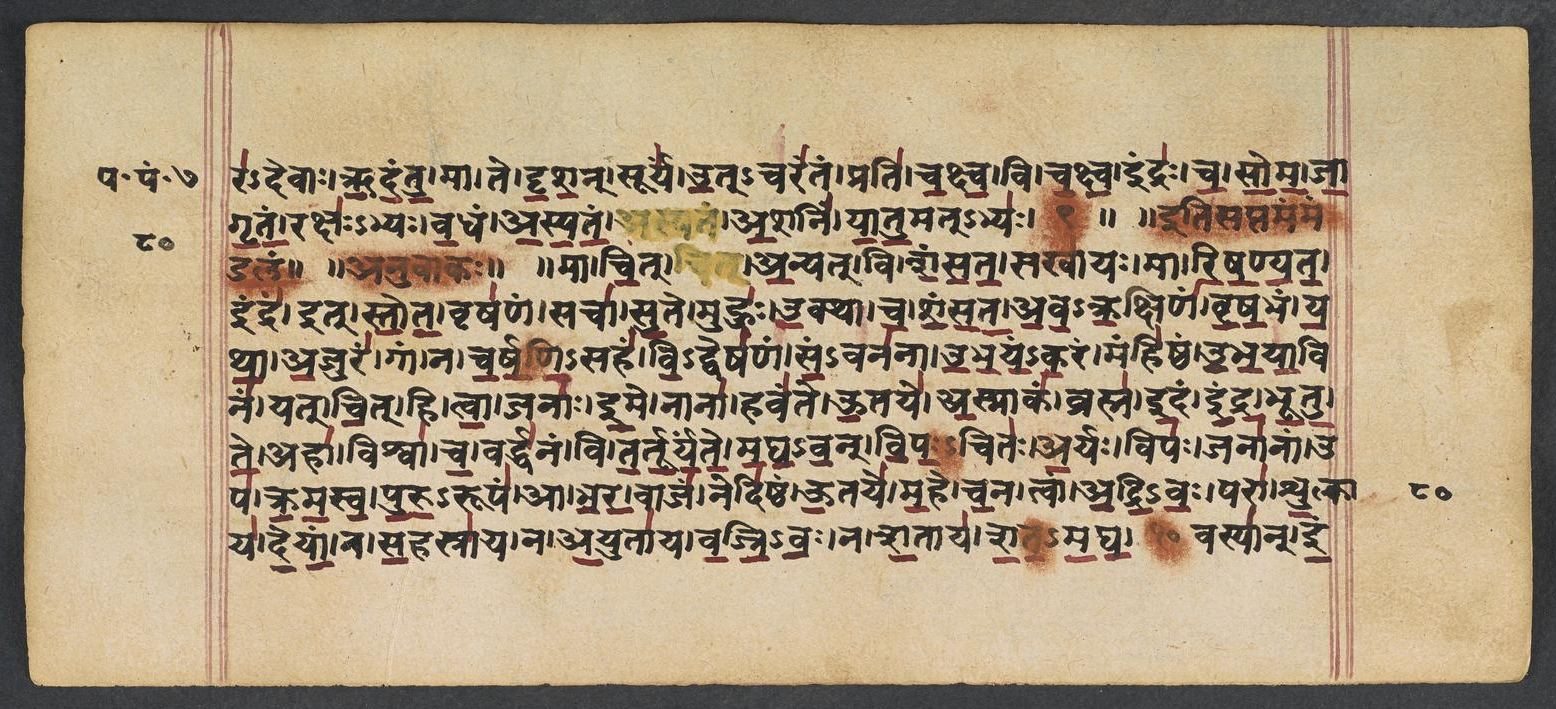
Where on the image
Penn Ms. Coll. 390 Item 41, fol. 559v (numbered 80v by the scribe) (OPenn image 560, upper leaf). Checked on the image: the Rigveda text on this page begins in RV 7.104.24 ‹-mūra-devāḥ ṛdantu mā te›. The next page with Rigveda text, fol. 560r (numbered 81r by the scribe), begins in RV 8.1.6 ‹-indra asi me pituḥ›. Verses 8.1.1-5 end on this page.
1mā ci̍d a̱nyad vi śa̍ṁsata̱ sakhā̍yo̱ mā ri̍ṣaṇyata | indra̱m it sto̍tā̱ vṛṣa̍ṇa̱ṁ sacā̍ su̱te muhu̍r u̱kthā ca̍ śaṁsata ||
2a̱va̱kra̱kṣiṇa̍ṁ vṛṣa̱bhaṁ ya̍thā̱jura̱ṁ gāṁ na ca̍rṣaṇī̱saha̍m | vi̱dveṣa̍ṇaṁ sa̱ṁvana̍nobhayaṁka̱ram maṁhi̍ṣṭham ubhayā̱vina̍m ||
3yac ci̱d dhi tvā̱ janā̍ i̱me nānā̱ hava̍nta ū̱taye̍ | a̱smāka̱m brahme̱dam i̍ndra bhūtu̱ te 'hā̱ viśvā̍ ca̱ vardha̍nam ||
4vi ta̍rtūryante maghavan vipa̱ścito̱ 'ryo vipo̱ janā̍nām | upa̍ kramasva puru̱rūpa̱m ā bha̍ra̱ vāja̱ṁ nedi̍ṣṭham ū̱taye̍ ||
5ma̱he ca̱na tvām a̍driva̱ḥ parā̍ śu̱lkāya̍ deyām | na sa̱hasrā̍ya̱ nāyutā̍ya vajrivo̱ na śa̱tāya̍ śatāmagha ||
Compare: Padapāṭha (word-by-word text written in the manuscript; Sansknet e-text via GRETIL)
1mā | cit | anyat | vi | śaṃsata | sakhāyaḥ | mā | riṣaṇyata | indram | it | stota | vṛṣaṇam | saca | sute | muhuḥ | ukthā | ca | śaṃsata
2ava-krakṣiṇam | vṛṣabham | yathā | ajuram | gām | na | carṣaṇi-saham | vi-dveṣaṇam | sam-vananā | ubhayam-karam | maṃhiṣṭham | ubhayāvinam
3yat | cit | hi | tvā | janāḥ | ime | nānā | havante | ūtaye | asmākam | brahma | idam | indra | bhūtu | te | ahā | viśvā | ca | vardhanam
4vi | tartūryante | magha-van | vipaḥ-citaḥ | aryaḥ | vipaḥ | janānām | upa | kramasva | puru-rūpam | ā | bhara | vājam | nediṣṭham | ūtaye
5mahe | cana | tvām | adri-vaḥ | parā | śulkāya | deyām | na | sahasrāya | na | ayutāya | vajri-vaḥ | na | śatāya | śata-magha
1GLORIFY naught besides, O friends; so shall no sorrow trouble you. Praise only mighty Indra when the juice is shed, and say your lauds repeatedly:
2Even him, eternal, like a bull who rushes down, men's Conqueror, bounteous like a cow; Him who is cause of both, of enmity and peace, to both sides most munificent.
3Although these men in sundry ways invoke thee to obtain thine aid, Be this our prayer, addressed, O Indra, unto thee, thine exaltation every day.
4Those skilled in song, O Maghavan among these men o'ercome with might the foeman's songs. Come hither, bring us strength in many a varied form most near that it may succour us.
5O Caster of the Stone, I would not sell thee for a mighty price, Not for a thousand, Thunderer! nor ten thousand, nor a hundred, Lord of countless wealth!
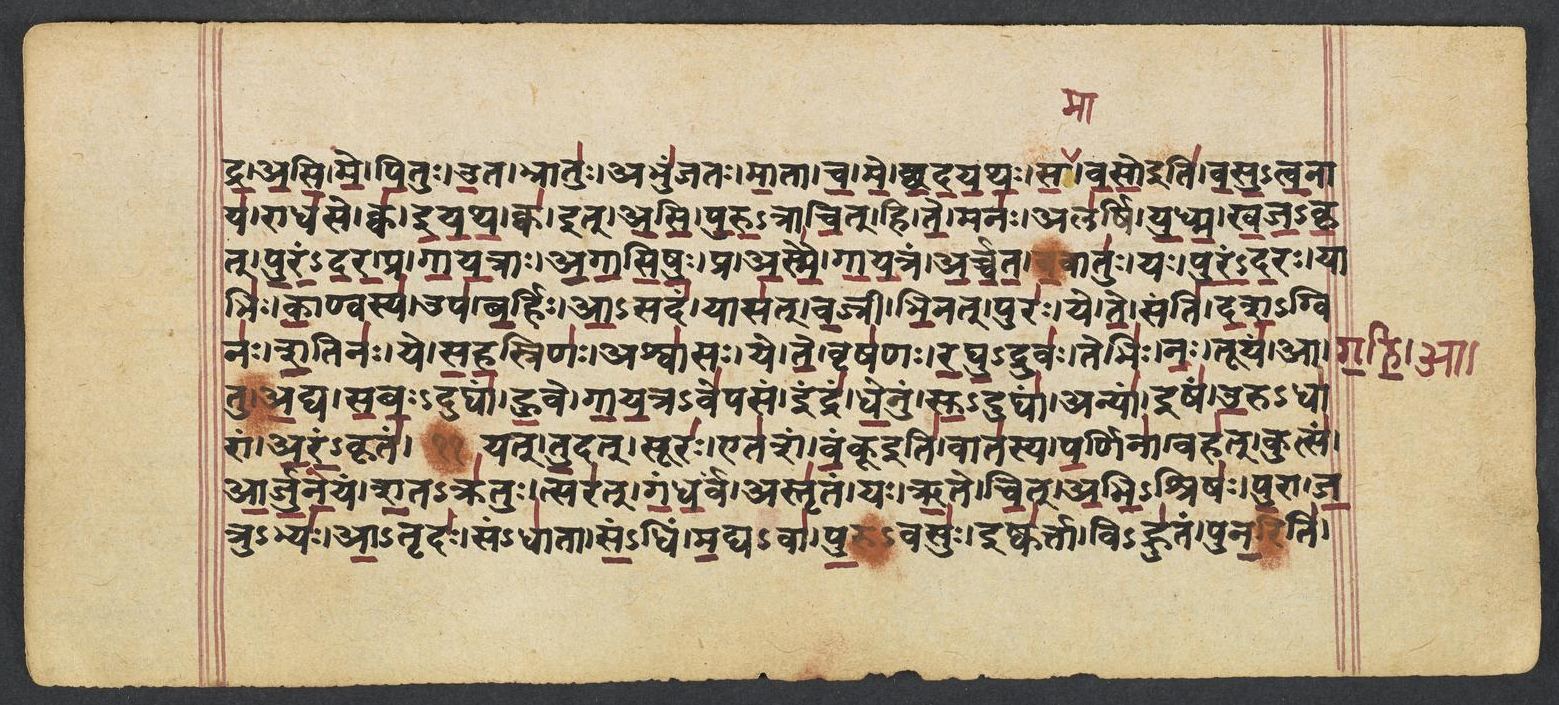
Where on the image
Penn Ms. Coll. 390 Item 41, fol. 560r (numbered 81r by the scribe) (OPenn image 560, lower leaf). Checked on the image: the Rigveda text on this page begins in RV 8.1.6 ‹-indra asi me pituḥ›. The next page with Rigveda text, fol. 560v (numbered 81v by the scribe), begins in RV 8.1.13 ‹mā bhūma niṣṭyāḥ-iva indra›. Verses 8.1.6-12 end on this page; 8.1.6 begins on fol. 559v (numbered 80v by the scribe).
6vasyā̍m̐ indrāsi me pi̱tur u̱ta bhrātu̱r abhu̍ñjataḥ | mā̱tā ca̍ me chadayathaḥ sa̱mā va̍so vasutva̱nāya̱ rādha̍se ||
7kve̍yatha̱ kved a̍si puru̱trā ci̱d dhi te̱ mana̍ḥ | ala̍rṣi yudhma khajakṛt puraṁdara̱ pra gā̍ya̱trā a̍gāsiṣuḥ ||
8prāsmai̍ gāya̱tram a̍rcata vā̱vātu̱r yaḥ pu̍raṁda̱raḥ | yābhi̍ḥ kā̱ṇvasyopa̍ ba̱rhir ā̱sada̱ṁ yāsa̍d va̱jrī bhi̱nat pura̍ḥ ||
9ye te̱ santi̍ daśa̱gvina̍ḥ śa̱tino̱ ye sa̍ha̱sriṇa̍ḥ | aśvā̍so̱ ye te̱ vṛṣa̍ṇo raghu̱druva̱s tebhi̍r na̱s tūya̱m ā ga̍hi ||
10ā tv a1̱̍dya sa̍ba̱rdughā̍ṁ hu̱ve gā̍ya̱trave̍pasam | indra̍ṁ dhe̱nuṁ su̱dughā̱m anyā̱m iṣa̍m u̱rudhā̍rām ara̱ṁkṛta̍m ||
11yat tu̱dat sūra̱ eta̍śaṁ va̱ṅkū vāta̍sya pa̱rṇinā̍ | vaha̱t kutsa̍m ārjune̱yaṁ śa̱takra̍tu̱ḥ tsara̍d gandha̱rvam astṛ̍tam ||
12ya ṛ̱te ci̍d abhi̱śriṣa̍ḥ pu̱rā ja̱trubhya̍ ā̱tṛda̍ḥ | saṁdhā̍tā sa̱ṁdhim ma̱ghavā̍ purū̱vasu̱r iṣka̍rtā̱ vihru̍ta̱m puna̍ḥ ||
Compare: Padapāṭha (word-by-word text written in the manuscript; Sansknet e-text via GRETIL)
6vasyān | indra | asi | me | pituḥ | uta | bhrātuḥ | abhuñjataḥ | mātā | ca | me | chadayathaḥ | samā | vaso iti | vasu-tvanāya | rādhase
7kva | iyatha | kva | it | asi | puru-trā | cit | hi | te | manaḥ | alarṣi | yudhma | khaja-kṛt | puram-dara | pra | gāyatrāḥ | agāsiṣuḥ
8pra | asmai | gāyatram | arcata | vavātuḥ | yaḥ | param-daraḥ | yābhiḥ | kāṇvasya | upa | barhiḥ | āsadam | yāsat | vajrī | bhinat | puraḥ
9ye | te | santi | daśa-gvinaḥ | śatinaḥ | ye | sahasriṇaḥ | aśvāsaḥ | ye | te | vṛṣaṇaḥ | raghu-druvaḥ | tebhiḥ | naḥ | tūyam | ā | gahi
10ā | tu | adya | sabaḥ-dughām | huve | gāyatra-vepasam | indram | dhenum | su-dughām | anyām | iṣam | uru-dhārām | aram-kṛtam
11yat | tudat | sūraḥ | etaśam | vaṅkūiti | vātasya | parṇinā | vahat | kutsam | ārjuneyam | śata-kratuḥ | tsarat | gandharvam | astṛtam
12yaḥ | ṛte | cit | abhi-śriṣaḥ | purā | jatru-bhyaḥ | ātṛdaḥ | sam-dhātā | sandhim | magha-vā | puru-vasuḥ | iṣkartā | vi-hrutam | punariti
6O Indra, thou art more to me than sire or niggard brother is. Thou and my mother, O Good Lord, appear alike, to give me wealth abundantly.
7Where art thou? Whither art thou gone? For many a place attracts thy mind. Haste, Warrior, Fort-destroyer, Lord of battle's din, haste, holy songs have sounded forth.
8Sing out the psalm to him who breaks down castles for his faithful friend, Verses to bring the Thunderer to destroy the forts and sit on Kaṇva's sacred grass.
9The Horses which are thine in tens, in hundreds, yea, in thousands thine, Even those vigorous Steeds, fleet-footed in the course, with those come quickly near to us.
10This day I call Sabardugiha who animates the holy song, Indra the richly-yielding Milch-cow who provides unfailing food in ample stream.
11When Sura wounded Etaṣa, with Vâta's rolling winged car. Indra bore Kutsa Ârjuneya off, and mocked Gandharva. the unconquered One.
12He without ligature, before making incision in the neck, Closed up the wound again, most wealthy Maghavan, who maketh whole the injured part.
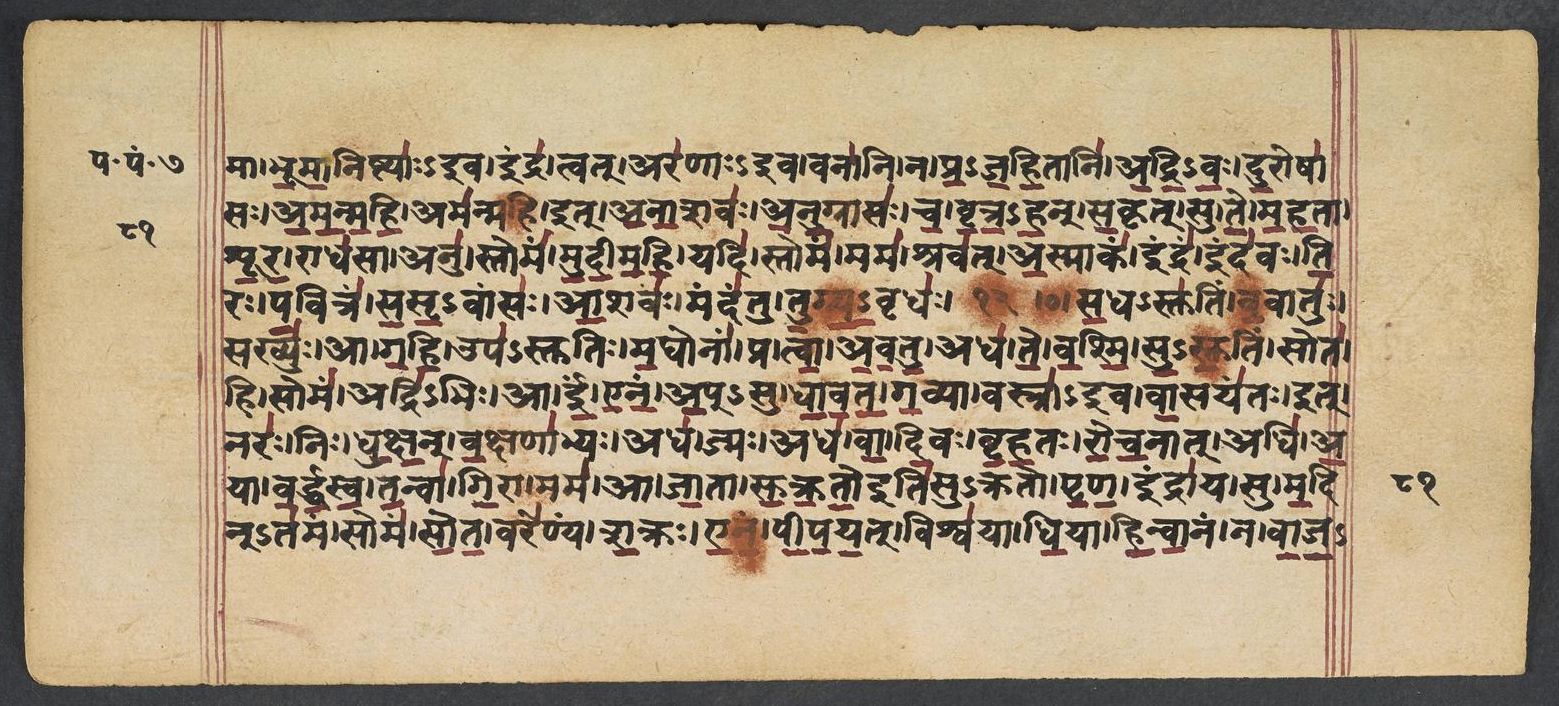
Where on the image
Penn Ms. Coll. 390 Item 41, fol. 560v (numbered 81v by the scribe) (OPenn image 561, upper leaf). Checked on the image: the Rigveda text on this page begins in RV 8.1.13 ‹mā bhūma niṣṭyāḥ-iva indra›. The next page with Rigveda text, fol. 561r (numbered 82r by the scribe), begins in RV 8.1.19 ‹-vāja-yum›. Verses 8.1.13-18 end on this page.
13mā bhū̍ma̱ niṣṭyā̍ i̱vendra̱ tvad ara̍ṇā iva | vanā̍ni̱ na pra̍jahi̱tāny a̍drivo du̱roṣā̍so amanmahi ||
14ama̍nma̱hīd a̍nā̱śavo̍ 'nu̱grāsa̍ś ca vṛtrahan | sa̱kṛt su te̍ maha̱tā śū̍ra̱ rādha̍sā̱ anu̱ stoma̍m mudīmahi ||
15yadi̱ stoma̱m mama̱ śrava̍d a̱smāka̱m indra̱m inda̍vaḥ | ti̱raḥ pa̱vitra̍ṁ sasṛ̱vāṁsa̍ ā̱śavo̱ manda̍ntu tugryā̱vṛdha̍ḥ ||
16ā tv a1̱̍dya sa̱dhastu̍tiṁ vā̱vātu̱ḥ sakhyu̱r ā ga̍hi | upa̍stutir ma̱ghonā̱m pra tvā̍va̱tv adhā̍ te vaśmi suṣṭu̱tim ||
17sotā̱ hi soma̱m adri̍bhi̱r em e̍nam a̱psu dhā̍vata | ga̱vyā vastre̍va vā̱saya̍nta̱ in naro̱ nir dhu̍kṣan va̱kṣaṇā̍bhyaḥ ||
18adha̱ jmo adha̍ vā di̱vo bṛ̍ha̱to ro̍ca̱nād adhi̍ | a̱yā va̍rdhasva ta̱nvā̍ gi̱rā mamā jā̱tā su̍krato pṛṇa ||
Compare: Padapāṭha (word-by-word text written in the manuscript; Sansknet e-text via GRETIL)
13mā | bhūma | niṣṭyāḥ-iva | indra | tvat | araṇāḥ-iva | vanāni | na | pra-jahitāni | adri-vaḥ | duroṣāsaḥ | amanmahi
14amanmahi | it | anāśavaḥ | anugrāsaḥ | ca | vṛtra-han | sakṛt | su | te | mahatā | śūra | rādhasā | anu | stomam | mudīmahi
15yadi | stomam | mama | śravat | asmākam | indram | indavaḥ | tiraḥ | pavitram | sasṛ-vāṃsaḥ | āśavaḥ | mandantu | tugrya-vṛdhaḥ
16ā | tu | adya | sadha-stutim | vavātuḥ | sakhyuḥ | ā | gahi | upa-stutiḥ | maghonām | pra | tvā | avatu | adha | te | vaśmi | su-stutim
17sotā | hi | somam | adri-bhiḥ | ā | īm | enam | ap-su | dhāvata | gavyā | vastrāiva | vāsayantaḥ | it | naraḥ | niḥ | dhukṣan | vakṣaṇābhyaḥ
18adha | jmaḥ | agha | vā | divaḥ | bṛhataḥ | rocanāt | adhi | ayā | vardhasva | tanvā | girā | mama | ā | jātā | sukrato itisu-krato | pṛṇa
13May we be never cast aside, and strangers, as it were, to thee. We, Thunder-wielding Indra, count ourselves as trees rejected and unfit to bum.
14O Vr̥itra-slayer, we were thought slow and unready for the fray. Yet once in thy great bounty may we have delight, O Hero, after praising thee.
15If he will listen to my laud, then may our Soma-drops that flow Rapidly through the strainer gladden Indra, drops due to the Tugryas' Strengthener.
16Come now unto the common laud of thee and of thy faithful friend. So may our wealthy nobles' praise give joy to thee. Fain would I sing thine eulogy.
17Press out the Soma with the stones, and in the waters wash it clean. The men investing it with raiment made of milk shall milk it forth from out the stems.
18Whether thou come from earth or from the lustre of the lofty heaven, Wax stronger in thy body through my song of praise: fill full all creatures, O most Wise.
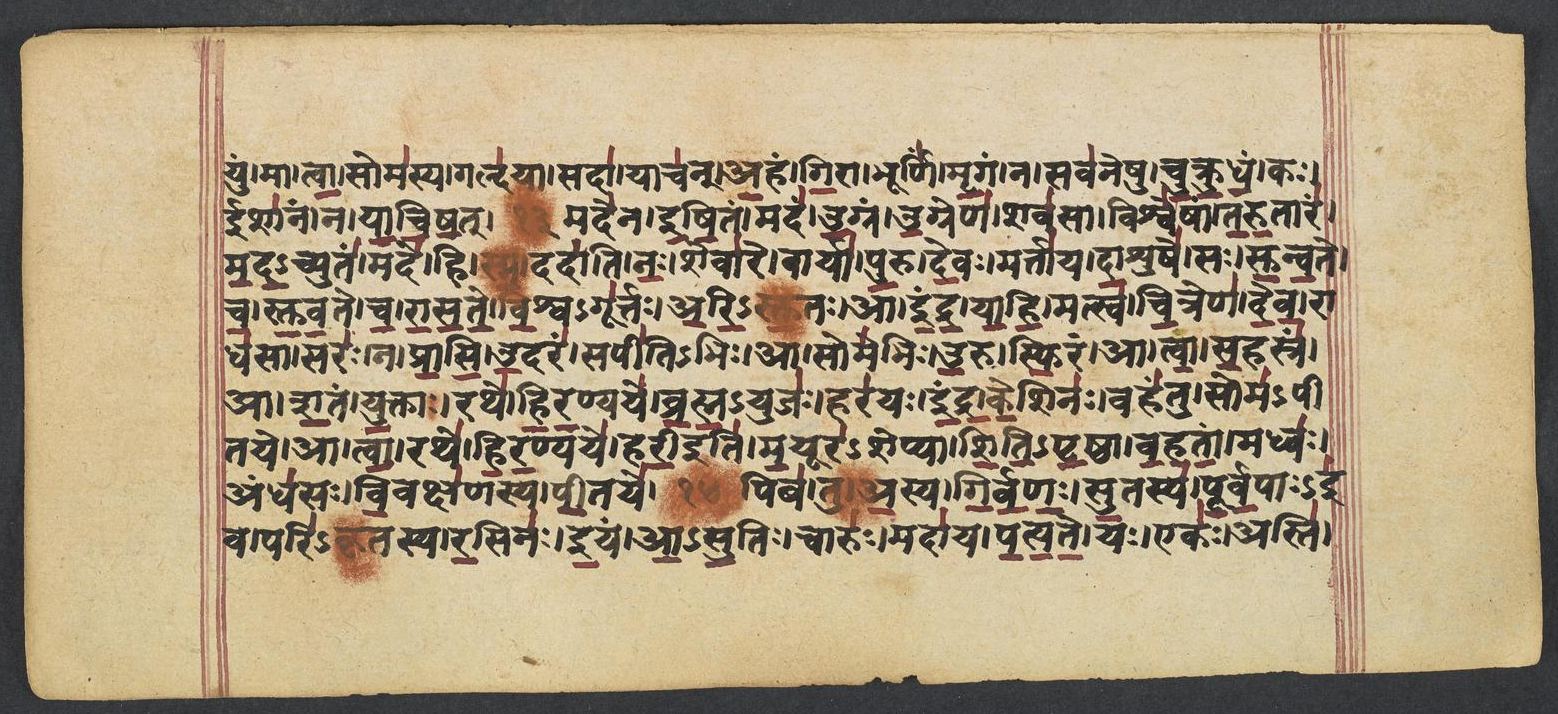
Where on the image
Penn Ms. Coll. 390 Item 41, fol. 561r (numbered 82r by the scribe) (OPenn image 561, lower leaf). Checked on the image: the Rigveda text on this page begins in RV 8.1.19 ‹-vāja-yum›. The next page with Rigveda text, fol. 561v (numbered 82v by the scribe), begins in RV 8.1.27 ‹daṃsanā mahām ugraḥ abhi›. Verses 8.1.19-26 end on this page; 8.1.19 begins on fol. 560v (numbered 81v by the scribe).
19indrā̍ya̱ su ma̱dinta̍ma̱ṁ soma̍ṁ sotā̱ vare̍ṇyam | śa̱kra e̍ṇam pīpaya̱d viśva̍yā dhi̱yā hi̍nvā̱naṁ na vā̍ja̱yum ||
20mā tvā̱ soma̍sya̱ galda̍yā̱ sadā̱ yāca̍nn a̱haṁ gi̱rā | bhūrṇi̍m mṛ̱gaṁ na sava̍neṣu cukrudha̱ṁ ka īśā̍na̱ṁ na yā̍ciṣat ||
21made̍neṣi̱tam mada̍m u̱gram u̱greṇa̱ śava̍sā | viśve̍ṣāṁ taru̱tāra̍m mada̱cyuta̱m made̱ hi ṣmā̱ dadā̍ti naḥ ||
22śevā̍re̱ vāryā̍ pu̱ru de̱vo martā̍ya dā̱śuṣe̍ | sa su̍nva̱te ca̍ stuva̱te ca̍ rāsate vi̱śvagū̍rto ariṣṭu̱taḥ ||
23endra̍ yāhi̱ matsva̍ ci̱treṇa̍ deva̱ rādha̍sā | saro̱ na prā̍sy u̱dara̱ṁ sapī̍tibhi̱r ā some̍bhir u̱ru sphi̱ram ||
24ā tvā̍ sa̱hasra̱m ā śa̱taṁ yu̱ktā rathe̍ hira̱ṇyaye̍ | bra̱hma̱yujo̱ hara̍ya indra ke̱śino̱ vaha̍ntu̱ soma̍pītaye ||
25ā tvā̱ rathe̍ hira̱ṇyaye̱ harī̍ ma̱yūra̍śepyā | śi̱ti̱pṛ̱ṣṭhā va̍hatā̱m madhvo̱ andha̍so vi̱vakṣa̍ṇasya pī̱taye̍ ||
26pibā̱ tv a1̱̍sya gi̍rvaṇaḥ su̱tasya̍ pūrva̱pā i̍va | pari̍ṣkṛtasya ra̱sina̍ i̱yam ā̍su̱tiś cāru̱r madā̍ya patyate ||
Compare: Padapāṭha (word-by-word text written in the manuscript; Sansknet e-text via GRETIL)
19indrāya | su | madin-tamam | somam | sota | vareṇyam | śakraḥ | eṇam | pīpayat | viśvayā | dhiyā | hinvānam | na | vāja-yum
20mā | tvā | somasya | galdayā | sadā | yācan | aham | girā | bhūrṇim | mṛgam | na | savaneṣu | cukrudham | kaḥ | īśānam | na | yāciṣat
21madena | iṣitam | madam | ugram | ugreṇa | śavasā | viśveṣām | tarutāram | mada-cyutam | made | hi | sma | dadāti | naḥ
22śevāre | vāryā | puru | devaḥ | martāya | dāśuṣe | saḥ | sunvate | ca | stuvate | ca | rāsate | viśva-gūrtaḥ | ari-stutaḥ
23ā | indra | yāhi | matsva | citreṇa | deva | rādhasā | saraḥ | na | prāsi | udaram | sapīti-bhiḥ | ā | somebhiḥ | uru | sphiram
24ā | tvā | sahasram | ā | śatam | yuktāḥ | rathe | hiraṇyaye | brahma-yujaḥ | harayaḥ | indra | keśinaḥ | vahantu | soma-pītaye
25ā | tvā | rathe | hiraṇyaye | harī iti | mayūra-śepyā | śiti-pṛṣṭhā | vahatām | madhvaḥ | andhasaḥ | vivakṣaṇasya | pītaye
26piba | tu | asya | girvaṇaḥ | sutasya | pūrvapāḥ-iva | pari-kṛtasya | rasinaḥ | iyam | āsutiḥ | cāruḥ | madāya | patyate
19For Indra press the Soma out, most gladdening and most excellent. May Ṣakra make it swell sent forth with every prayer and asking, as it were, for strength.
20Let me not, still beseeching thee with earnest song at Soma rites, Anger thee like some wild beast. Who would not beseech him who hath power to grant his prayer?
21The draught made swift with rapturous joy, effectual with its mighty strength, All-conquering, distilling transport, let him drink: for he in ecstasy gives us gifts.
22Where bliss is not, may he, All-praised, God whom the pious glorify, Bestow great wealth upon the mortal worshipper who sheds the juice and praises him.
23Come, Indra, and rejoice thyself, O God, in manifold affluence. Thou fillest like a lake thy vast capacious bulk with Soma and with draughts besides.
24A thousand and a hundred Steeds are harnessed to thy golden car. So may the long-maned Bays, yoked by devotion, bring Indra to drink the Soma juice.
25Yoked to thy chariot wrought of gold, may thy two Bays with peacock tails, Convey thee hither, Steeds with their white backs, to quaff sweet juice that makes us eloquent.
26So drink, thou Lover of the Song, as the first drinker, of this juice. This the outpouring of the savoury sap prepared is good and meet to gladden thee.
Where on the image
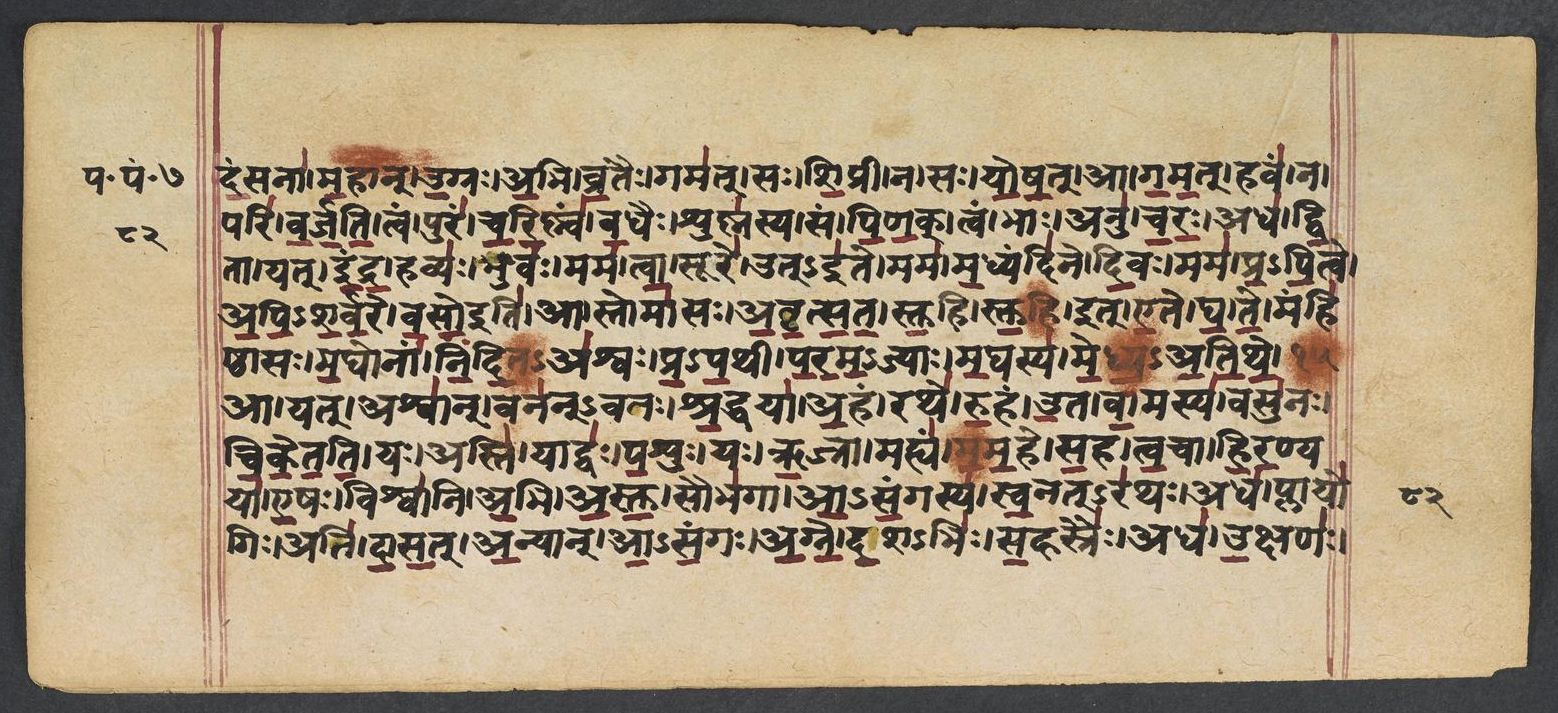
Penn Ms. Coll. 390 Item 41, fol. 561v (numbered 82v by the scribe) (OPenn image 562, upper leaf). Checked on the image: the Rigveda text on this page begins in RV 8.1.27 ‹daṃsanā mahām ugraḥ abhi›. The next page with Rigveda text, fol. 562r (numbered 83r by the scribe), begins in RV 8.1.33 ‹daśa mahyam ruśantaḥ naḷāḥ-iva›. Verses 8.1.27-32 end on this page; 8.1.27 begins on fol. 561r (numbered 82r by the scribe).
27ya eko̱ asti̍ da̱ṁsanā̍ ma̱hām̐ u̱gro a̱bhi vra̱taiḥ | gama̱t sa śi̱prī na sa yo̍ṣa̱d ā ga̍ma̱d dhava̱ṁ na pari̍ varjati ||
28tvam pura̍ṁ cari̱ṣṇva̍ṁ va̱dhaiḥ śuṣṇa̍sya̱ sam pi̍ṇak | tvam bhā anu̍ caro̱ adha̍ dvi̱tā yad i̍ndra̱ havyo̱ bhuva̍ḥ ||
29mama̍ tvā̱ sūra̱ udi̍te̱ mama̍ ma̱dhyaṁdi̍ne di̱vaḥ | mama̍ prapi̱tve a̍piśarva̱re va̍sa̱v ā stomā̍so avṛtsata ||
30stu̱hi stu̱hīd e̱te ghā̍ te̱ maṁhi̍ṣṭhāso ma̱ghonā̍m | ni̱ndi̱tāśva̍ḥ prapa̱thī pa̍rama̱jyā ma̱ghasya̍ medhyātithe ||
31ā yad aśvā̱n vana̍nvataḥ śra̱ddhayā̱haṁ rathe̍ ru̱ham | u̱ta vā̱masya̱ vasu̍naś ciketati̱ yo asti̱ yādva̍ḥ pa̱śuḥ ||
32ya ṛ̱jrā mahya̍m māma̱he sa̱ha tva̱cā hi̍ra̱ṇyayā̍ | e̱ṣa viśvā̍ny a̱bhy a̍stu̱ saubha̍gāsa̱ṅgasya̍ sva̱nadra̍thaḥ ||
Compare: Padapāṭha (word-by-word text written in the manuscript; Sansknet e-text via GRETIL)
27yaḥ | ekaḥ | asti | daṃsanā | mahām | ugraḥ | abhi | vrataiḥ | gamat | saḥ | śiprī | na | saḥ | yoṣat | ā | gamat | havam | na | pari | varjati
28tvam | puram | cariṣṇvam | vadhaiḥ | śuṣṇasya | sam | piṇak | tvam | bhāḥ | anu | caraḥ | adha | dvitā | yat | indra | havyaḥ | bhuvaḥ
29mama | tvā | sūre | ut-ite | mama | madhyandine | divaḥ | mama | pra-pitve | api-śarvare | vaso iti | ā | stomāsaḥ | avṛtsata
30stuhi | stuhi | it | ete | gha | te | maṃhiṣṭhāsaḥ | maghonām | nindita-aśvaḥ | pra-pathī | parama-jyāḥ | maghasya | medhya-atithe
31ā | yat | aśvān | vanan-vataḥ | śraddhayā | aham | rathe | ruham | uta | vāmasya | vasunaḥ | ciketati | yaḥ | asti | yādvaḥ | paśuḥ
32yaḥ | ṛjrā | mahyam | mamahe | saha | tvacā | hiraṇyayā | eṣaḥ | viśvāni | abhi | astu | saubhagā | āsaṅgasya | svanat-rathaḥ
27He who alone by wondrous deed is Mighty, Strong by holy works, May he come, fair of cheek; may he not stay afar, but come and turn not from our call.
28Ṣushṇa's quick moving castle thou hast crushed to pieces with thy bolts. Thou, Indra, from of old, hast followed after light, since we have had thee to invoke.
29My praises when the Sun hath risen, my praises at the time of noon, My praises at the coming of the gloom of night, O Vasu, have gone forth to thee.
30Praise yea, praise him. Of princes these are the most liberal of their gifts, These, Paramajyâ, Ninditâṣva, Prapathî, most bounteous, O Medhyâtithi.
31When to the car, by faith, I yoked the horses longing for the way- For skilled is Yadu's son in dealing precious wealth, he who is rich in herds of kine.
32May he who gave me two brown steeds together with their cloths of gold, May he, Âsanga's son Svanadratha, obtain all joy and high felicities.
Where on the image
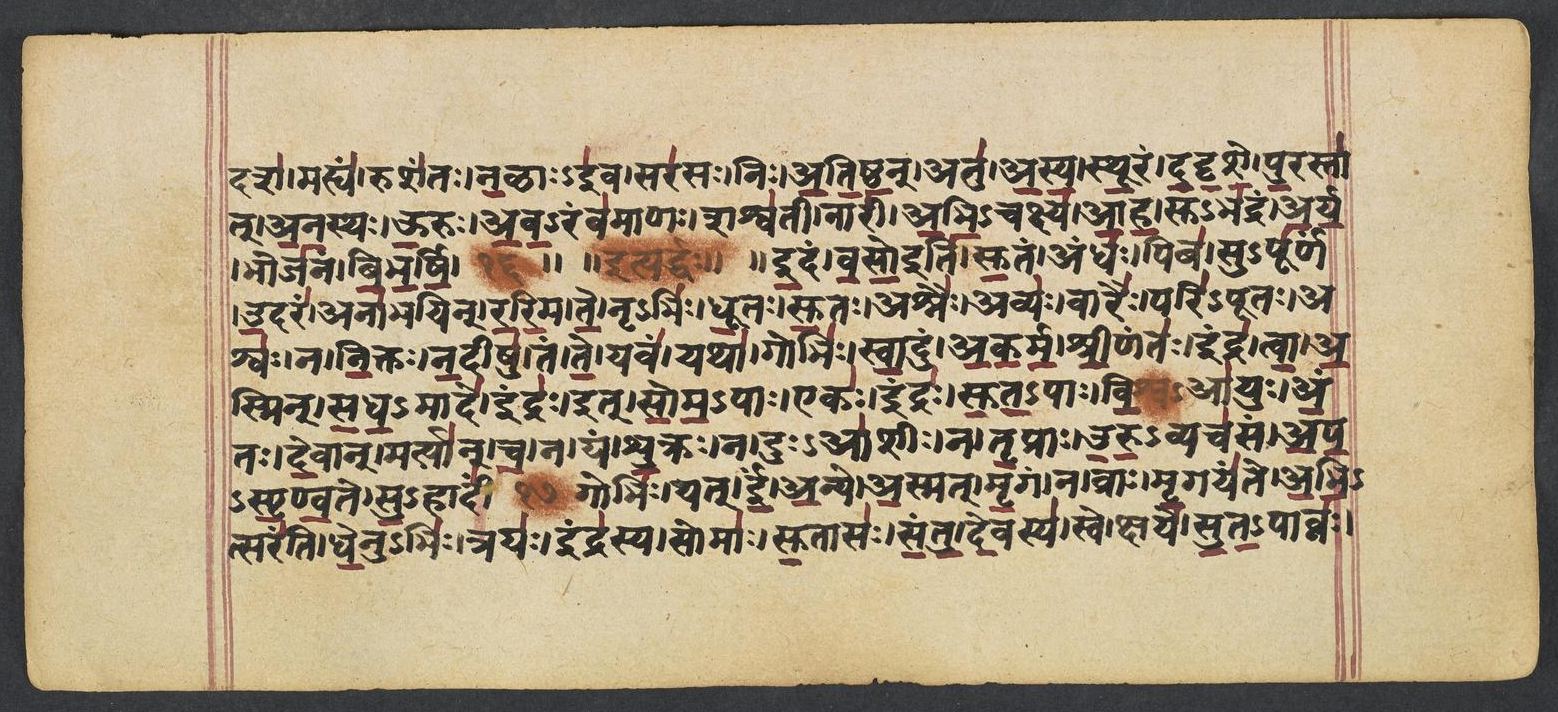
Penn Ms. Coll. 390 Item 41, fol. 562r (numbered 83r by the scribe) (OPenn image 562, lower leaf). Checked on the image: the Rigveda text on this page begins in RV 8.1.33 ‹daśa mahyam ruśantaḥ naḷāḥ-iva›. The next page with Rigveda text, fol. 562v (numbered 83v by the scribe), begins in RV 8.2.8 ‹trayaḥ kośāsaḥ ścotanti tisraḥ›. Verses 8.1.33-34 end on this page; 8.1.33 begins on fol. 561v (numbered 82v by the scribe).
33adha̱ plāyo̍gi̱r ati̍ dāsad a̱nyān ā̍sa̱ṅgo a̍gne da̱śabhi̍ḥ sa̱hasrai̍ḥ | adho̱kṣaṇo̱ daśa̱ mahya̱ṁ ruśa̍nto na̱ḻā i̍va̱ sara̍so̱ nir a̍tiṣṭhan ||
34anv a̍sya sthū̱raṁ da̍dṛśe pu̱rastā̍d ana̱stha ū̱rur a̍va̱ramba̍māṇaḥ | śaśva̍tī̱ nāry a̍bhi̱cakṣyā̍ha̱ subha̍dram arya̱ bhoja̍nam bibharṣi ||
Compare: Padapāṭha (word-by-word text written in the manuscript; Sansknet e-text via GRETIL)
33adha | plāyogiḥ | ati | dāsat | anyān | āsaṅgaḥ | agne | daśa-bhiḥ | sahasraiḥ | adha | ukṣaṇaḥ | daśa | mahyam | ruśantaḥ | naḷāḥ-iva | sarasaḥ | niḥ | atiṣṭhan
34anu | asya | sthūram | dadṛśe | purastāt | anasthaḥ | ūruḥ | ava-rambamāṇaḥ | śaśvatī | nārī | abhi-cakṣya | āha | su-bhadram | arya | bhojanam | bibharṣi
33Playoga's son Âsanga, by ten thousand, O Agni, hath surpassed the rest in giving. For me ten bright-hued oxen have come forward like lotus-stalks from out a lake upstanding.
34What time her husband's perfect restoration to his lost strength and manhood was apparent, His consort Ṣaṣvatî with joy addressed him, Now art thou well, my lord, and shalt be happy.
Notes
- Sanskrit: Aufrecht's edition (1877) with the Vedic accents, as entered by van Nooten and Holland (GRETIL).
- English: Ralph T. H. Griffith, The Hymns of the Rigveda (1889-1892; 2nd ed. 1896-1897), from the VedaWeb digital text; OCR slips in that text were corrected against the printed 2nd edition (data/sources/rigveda/griffith_errata.json).
- Padapāṭha (edition text): Sansknet e-text via GRETIL (CC BY-NC-SA 4.0).
Cite
Sources
- Source: Penn Ms. Coll. 390 Item 41 (undated (catalogued with Penn's 18th-19th c. Vedic manuscripts)), OPenn, Public Domain Mark + Aufrecht's accented text (GRETIL) + Griffith's English (VedaWeb) (holding institution)
- Critical edition: Aufrecht (1877), accented e-text via GRETIL
← previous · → next · v cycle view · l back to library