Rigveda 7.16: To Agni
Introduction
Rigveda 7.16 is a hymn of 12 verses addressed to Agni. It stands in book (maṇḍala) 7, the family book of Vasiṣṭha. The Rigveda is the oldest collection of Sanskrit hymns, composed in the second half of the second millennium BCE and handed down orally for many centuries before it was written down.
The manuscript shown is Penn Ms. Coll. 390 Item 41 (University of Pennsylvania), an undated paper manuscript of the padapāṭha (the word-by-word recitation text, in which every word is written separately and compounds are split) of the whole Ṛgveda in Devanāgarī, 884 leaves in fascicles, 7-9 lines to the page, accents in red; this hymn stands on fol. 501v-502r. Each section below gives the verses that end on one page; the page boundaries were read on the images (the opening words of every page), not counted out. Where the manuscript is a padapāṭha (the word-by-word recitation text), the section shows Aufrecht's continuous (saṃhitā) text first and, as the edition text, the padapāṭha of the same verses, which is the form written on the page.
How was this verified? (Provenance)
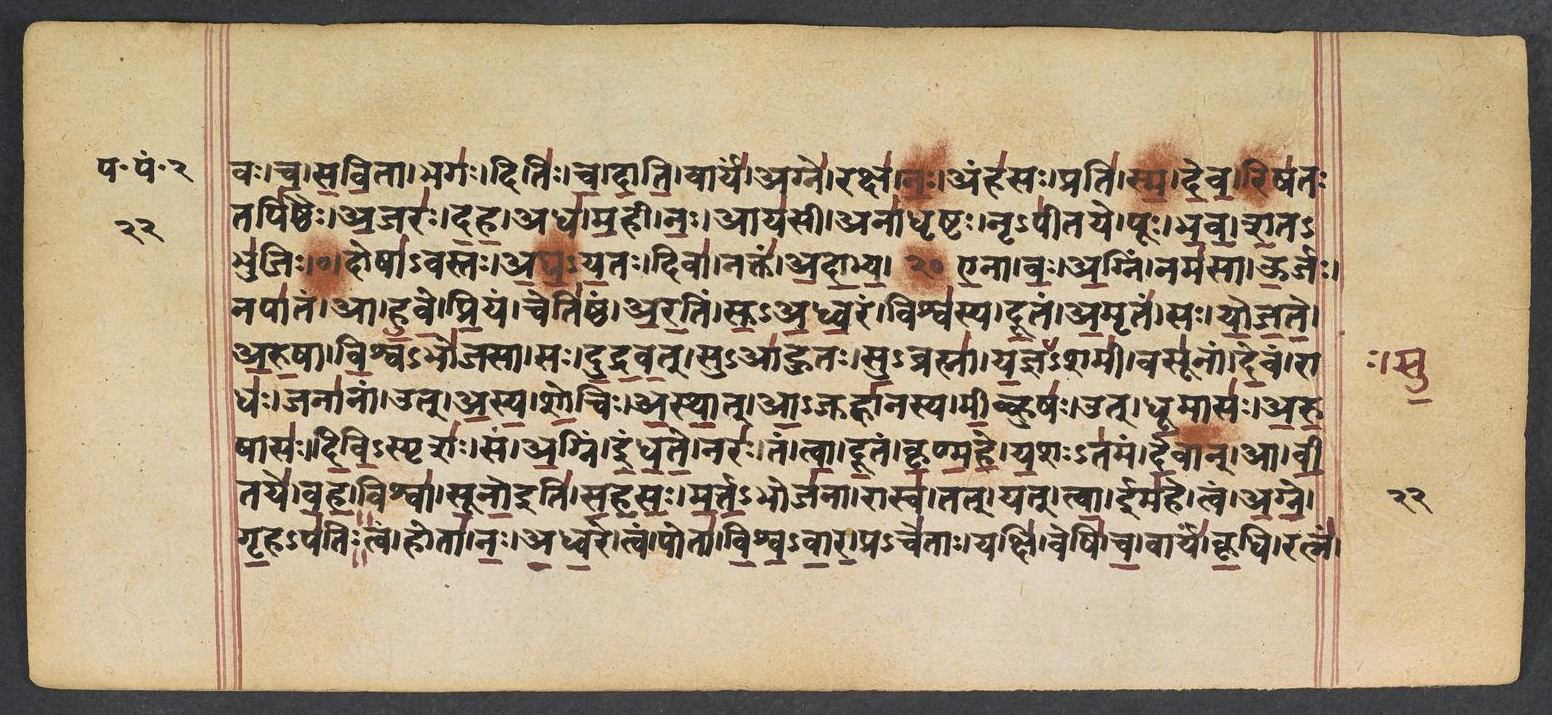
Where on the image
Penn Ms. Coll. 390 Item 41, fol. 501v (numbered 22v by the scribe) (OPenn image 502, upper leaf). Checked on the image: the Rigveda text on this page begins in RV 7.15.12 ‹-devaḥ ca savitā bhagaḥ›. The next page with Rigveda text, fol. 502r (numbered 23r by the scribe), begins in RV 7.16.6 ‹yajamānāya sukrato itisu-krato tvam›. Verses 7.16.1-5 end on this page.
1e̱nā vo̍ a̱gniṁ nama̍so̱rjo napā̍ta̱m ā hu̍ve | pri̱yaṁ ceti̍ṣṭham ara̱tiṁ sva̍dhva̱raṁ viśva̍sya dū̱tam a̱mṛta̍m ||
2sa yo̍jate aru̱ṣā vi̱śvabho̍jasā̱ sa du̍drava̱t svā̍hutaḥ | su̱brahmā̍ ya̱jñaḥ su̱śamī̱ vasū̍nāṁ de̱vaṁ rādho̱ janā̍nām ||
3ud a̍sya śo̱cir a̍sthād ā̱juhvā̍nasya mī̱ḻhuṣa̍ḥ | ud dhū̱māso̍ aru̱ṣāso̍ divi̱spṛśa̱ḥ sam a̱gnim i̍ndhate̱ nara̍ḥ ||
4taṁ tvā̍ dū̱taṁ kṛ̍ṇmahe ya̱śasta̍maṁ de̱vām̐ ā vī̱taye̍ vaha | viśvā̍ sūno sahaso marta̱bhoja̍nā̱ rāsva̱ tad yat tvema̍he ||
5tvam a̍gne gṛ̱hapa̍ti̱s tvaṁ hotā̍ no adhva̱re | tvam potā̍ viśvavāra̱ prace̍tā̱ yakṣi̱ veṣi̍ ca̱ vārya̍m ||
Compare: Padapāṭha (word-by-word text written in the manuscript; Sansknet e-text via GRETIL)
1enā | vaḥ | agnim | namasā | ūrjaḥ | napātam | ā | huve | priyam | cetiṣṭham | aratim | su-adhvaram | viśvasya | dūtam | amṛtam
2saḥ | yojate | aruṣā | viśva-bhojasā | saḥ | dudravat | su-āhutaḥ | su-brahmā | yajñaḥ | su-śamī | vasūnām | devam | rādhaḥ | janānām
3ut | asya | śociḥ | asthāt | ājuhvānasya | mīḷhuṣaḥ | ut | dhūmāsaḥ | aruṣāsaḥ | d ivi-spṛśaḥ | sam | agnim | indhate | naraḥ
4tam | tvā | dutam | kṛṇmahe | yaśaḥ-tamam | devān | ā | vītaye | vaha | viśvā | sūno iti | sahasaḥ | marta-bhojanā | rāsva | tat | yat | tvā | īmahe
5tvam | agne | gṛha-patiḥ | tvam | hotā | naḥ | adhvare | tvam | potā | viśva-vāra | pra-cetāḥ | yakṣi | veṣi | ca | vāryam
1WITH this my reverent hymn I call Agni for you, the Son of Strength, Dear, wisest envoy, served with noble sacrifice, immortal messenger of all.
2His two red horses, all-supporting, let him yoke: let him, well-worshipped, urge them fast. Then hath the sacrifice good prayers and happy end, and heavenly gift of wealth to men.
3The flame of him the Bountiful, the Much-invoked, hath mounted up, And his red-coloured smoke-clouds reach and touch the sky: the men are kindling Agni well.
4Thee, thee Most Glorious One we make our messenger. Bring the Gods hither to the feast. Give us, O Son of Strength, all food that feedeth man: give that for which we pray to thee.
5Thou, Agni, art the homestead's Lord, our Herald at the sacrifice. Lord of all boons, thou art the Cleanser and a Sage. Pay worship, and enjoy the good.
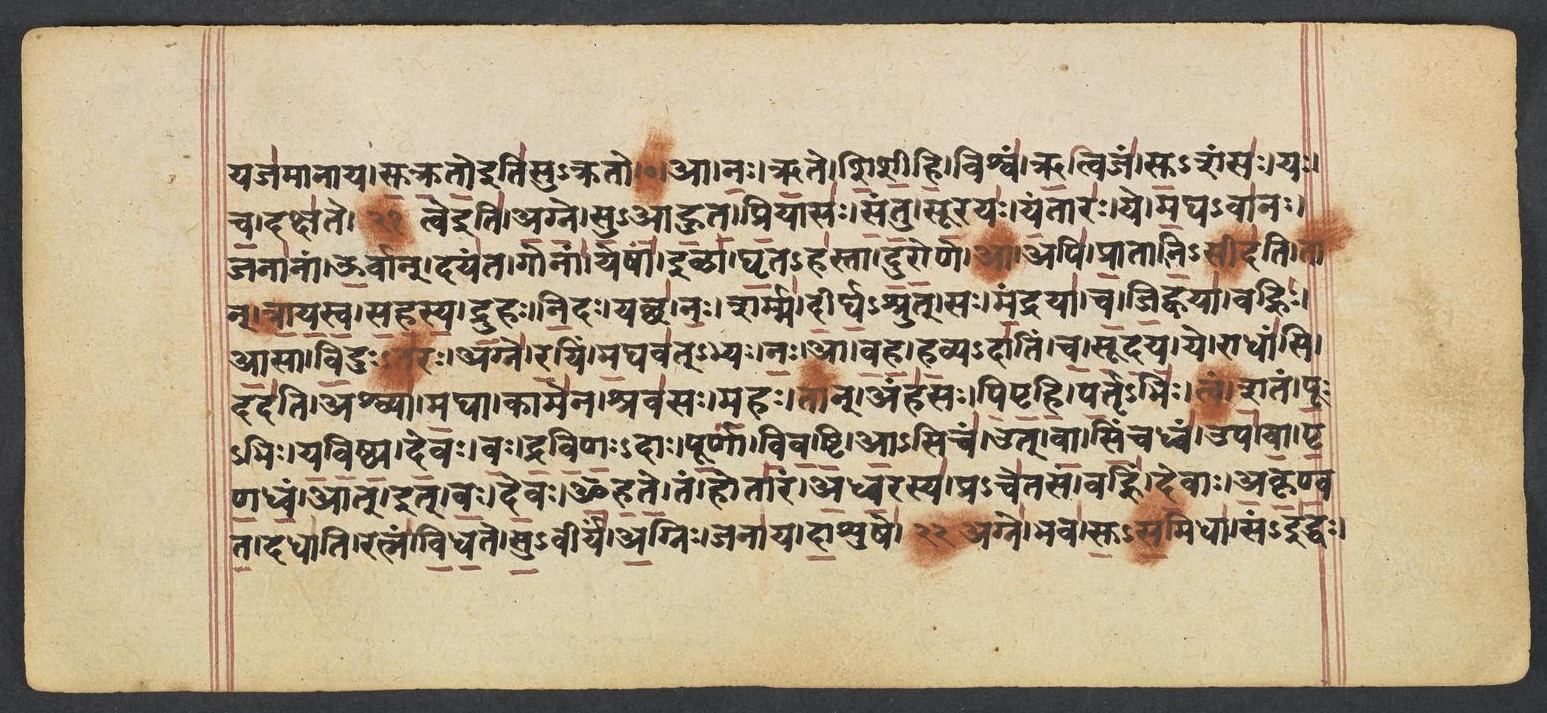
Where on the image
Penn Ms. Coll. 390 Item 41, fol. 502r (numbered 23r by the scribe) (OPenn image 502, lower leaf). Checked on the image: the Rigveda text on this page begins in RV 7.16.6 ‹yajamānāya sukrato itisu-krato tvam›. The next page with Rigveda text, fol. 502v (numbered 23v by the scribe), begins in RV 7.17.1 ‹uta barhiḥ urviyā vi›. Verses 7.16.6-12 end on this page; 7.16.6 begins on fol. 501v (numbered 22v by the scribe).
6kṛ̱dhi ratna̱ṁ yaja̍mānāya sukrato̱ tvaṁ hi ra̍tna̱dhā asi̍ | ā na̍ ṛ̱te śi̍śīhi̱ viśva̍m ṛ̱tvija̍ṁ su̱śaṁso̱ yaś ca̱ dakṣa̍te ||
7tve a̍gne svāhuta pri̱yāsa̍ḥ santu sū̱raya̍ḥ | ya̱ntāro̱ ye ma̱ghavā̍no̱ janā̍nām ū̱rvān daya̍nta̱ gonā̍m ||
8yeṣā̱m iḻā̍ ghṛ̱taha̍stā duro̱ṇa ām̐ api̍ prā̱tā ni̱ṣīda̍ti | tām̐s trā̍yasva sahasya dru̱ho ni̱do yacchā̍ na̱ḥ śarma̍ dīrgha̱śrut ||
9sa ma̱ndrayā̍ ca ji̱hvayā̱ vahni̍r ā̱sā vi̱duṣṭa̍raḥ | agne̍ ra̱yim ma̱ghava̍dbhyo na̱ ā va̍ha ha̱vyadā̍tiṁ ca sūdaya ||
10ye rādhā̍ṁsi̱ dada̱ty aśvyā̍ ma̱ghā kāme̍na̱ śrava̍so ma̱haḥ | tām̐ aṁha̍saḥ pipṛhi pa̱rtṛbhi̱ṣ ṭvaṁ śa̱tam pū̱rbhir ya̍viṣṭhya ||
11de̱vo vo̍ draviṇo̱dāḥ pū̱rṇāṁ vi̍vaṣṭy ā̱sica̍m | ud vā̍ si̱ñcadhva̱m upa̍ vā pṛṇadhva̱m ād id vo̍ de̱va o̍hate ||
12taṁ hotā̍ram adhva̱rasya̱ prace̍tasa̱ṁ vahni̍ṁ de̱vā a̍kṛṇvata | dadhā̍ti̱ ratna̍ṁ vidha̱te su̱vīrya̍m a̱gnir janā̍ya dā̱śuṣe̍ ||
Compare: Padapāṭha (word-by-word text written in the manuscript; Sansknet e-text via GRETIL)
6kṛdhi | ratnam | yajamānāya | sukrato itisu-krato | tvam | hi | ratna-dhāḥ | asi | ā | naḥ | ṛte | śiśīhi | viśvam | ṛtvijam | su-śaṃsaḥ | yaḥ | ca | dakṣate
7tve iti | agne | su-āhuta | priyāsaḥ | santu | sūrayaḥ | yantāraḥ | ye | magha-vānaḥ | janānām | ūrvān | dayanta | gonām
8yeṣām | iḷā | ghṛta-hastā | duroṇe | ā | api | prātā | ni-sīdati | tān | trāyasva | sahasya | druhaḥ | nidaḥ | yaccha | naḥ | śarma | dīrgha-śrut
9saḥ | mandrayā | ca | jihvayā | vahniḥ | āsā | viduḥ-taraḥ | agne | rayim | maghavat-bhyaḥ | naḥ | ā | vaha | havya-dātim | ca | sūdaya
10ye | rādhāṃsi | dadati | aśvyā | maghā | kāmena | śravasaḥ | mahaḥ | tān | aṃhasaḥ | pipṛhi | partṛ-bhiḥ | tvam | śatam | pūḥ-bhiḥ | yaviṣṭhya
11devaḥ | vaḥ | draviṇaḥ-dāḥ | pūrṇām | vivaṣṭi | āsicam | ut | vā | siñcadhvam | upa | vā | pṛṇadhvam | āt | it | vaḥ | devaḥ | ohate
12tam | hotāram | adhvarasya | pra-cetasam | vahnim | devāḥ | akṛṇvata | dadhāti | ratnam | vidhate | su-vīryam | agniḥ | janāya | dāśuṣe
6Give riches to the sacrificer, O Most Wise, for thou art he who granteth wealth. Inspire with zeal each priest at this our solemn rite; all who are skilled in singing praise.
7O Agni who art worshipped well, dear let our princes he to thee, Our wealthy patrons who are governors of men, who part, as gifts, their stalls of kine.
8They in whose home, her hand bearing the sacred oil, Iḷâ sits down well-satisfied- Guard them, Victorious God, from slander and from harm. give us a refuge famed afar.
9Do thou, a Priest with pleasant tongue, most wise, and very near to us, Agni, bring riches hither to our liberal chiefs, and speed the offering of our gifts.
10They who bestow as bounty plenteous wealth of steeds, moved by desire of great renown- Do thou with saving help preserve them from distress, Most Youthful! with a hundred forts.
11The God who gives your wealth demands a full libation poured to him. Pour ye it forth, then fill the vessel full again: then doth the God pay heed to you.
12Him have the Gods appointed Priest of sacrifice, oblation-bearer, passing wise. Agni gives wealth and valour to the worshipper, to folk who offer up their gifts.
Notes
- Sanskrit: Aufrecht's edition (1877) with the Vedic accents, as entered by van Nooten and Holland (GRETIL).
- English: Ralph T. H. Griffith, The Hymns of the Rigveda (1889-1892; 2nd ed. 1896-1897), from the VedaWeb digital text; OCR slips in that text were corrected against the printed 2nd edition (data/sources/rigveda/griffith_errata.json).
- Padapāṭha (edition text): Sansknet e-text via GRETIL (CC BY-NC-SA 4.0).
Cite
Sources
- Source: Penn Ms. Coll. 390 Item 41 (undated (catalogued with Penn's 18th-19th c. Vedic manuscripts)), OPenn, Public Domain Mark + Aufrecht's accented text (GRETIL) + Griffith's English (VedaWeb) (holding institution)
- Critical edition: Aufrecht (1877), accented e-text via GRETIL
← previous · → next · v cycle view · l back to library