Rigveda 7.18: To Indra
Introduction
Rigveda 7.18 is a hymn of 25 verses addressed to Indra. It stands in book (maṇḍala) 7, the family book of Vasiṣṭha. The Rigveda is the oldest collection of Sanskrit hymns, composed in the second half of the second millennium BCE and handed down orally for many centuries before it was written down.
The manuscript shown is Penn Ms. Coll. 390 Item 41 (University of Pennsylvania), an undated paper manuscript of the padapāṭha (the word-by-word recitation text, in which every word is written separately and compounds are split) of the whole Ṛgveda in Devanāgarī, 884 leaves in fascicles, 7-9 lines to the page, accents in red; this hymn stands on fol. 502v-505r. Each section below gives the verses that end on one page; the page boundaries were read on the images (the opening words of every page), not counted out. Where the manuscript is a padapāṭha (the word-by-word recitation text), the section shows Aufrecht's continuous (saṃhitā) text first and, as the edition text, the padapāṭha of the same verses, which is the form written on the page.
How was this verified? (Provenance)
Where on the image
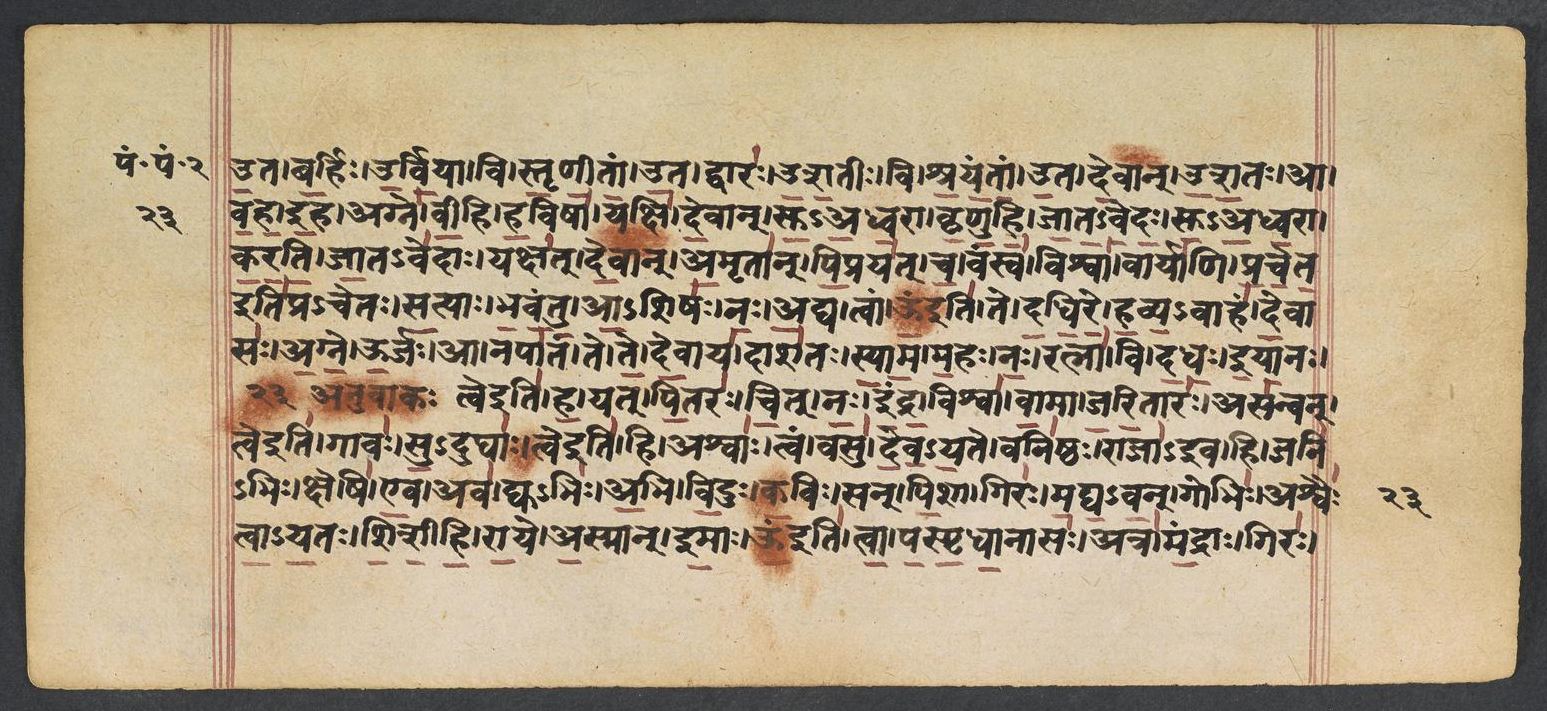
Penn Ms. Coll. 390 Item 41, fol. 502v (numbered 23v by the scribe) (OPenn image 503, upper leaf). Checked on the image: the Rigveda text on this page begins in RV 7.17.1 ‹uta barhiḥ urviyā vi›. The next page with Rigveda text, fol. 503r (numbered 24r by the scribe), begins in RV 7.18.3 ‹deva-yantīḥ upa sthuḥ arvācī›. Verses 7.18.1-2 end on this page.
1tve ha̱ yat pi̱tara̍ś cin na indra̱ viśvā̍ vā̱mā ja̍ri̱tāro̱ asa̍nvan | tve gāva̍ḥ su̱dughā̱s tve hy aśvā̱s tvaṁ vasu̍ devaya̱te vani̍ṣṭhaḥ ||
2rāje̍va̱ hi jani̍bhi̱ḥ kṣeṣy e̱vāva̱ dyubhi̍r a̱bhi vi̱duṣ ka̱viḥ san | pi̱śā giro̍ maghava̱n gobhi̱r aśvai̍s tvāya̱taḥ śi̍śīhi rā̱ye a̱smān ||
Compare: Padapāṭha (word-by-word text written in the manuscript; Sansknet e-text via GRETIL)
1tve iti | ha | yat | pitaraḥ | cit | naḥ | indra | viśvā | vāmā | jaritāraḥ | asanvan | tve iti | gāvaḥ | su-dughāḥ | tve iti | hi | aśvāḥ | tvam | vasu | deva-yate | vaniṣṭhaḥ
2rājāiva | hi | jani-bhiḥ | kṣeṣi | eva | ava | dyu-bhiḥ | abhi | viduḥ | kaviḥ | san | piśā | giraḥ | magha-van | gobhiḥ | aśvaiḥ | tvāyataḥ | śiśīhiḥrāyeḥasmān
1ALL is with thee, O Indra, all the treasures which erst our fathers won who sang thy praises. With thee are milch-kine good to milk, and horses: best winner thou of riches for the pious.
2For like a King among his wives thou dwellest: with glories, as a Sage, surround and help us. Make us, thy servants, strong for wealth, and honour our songs with kine and steeds and decoration.
Where on the image
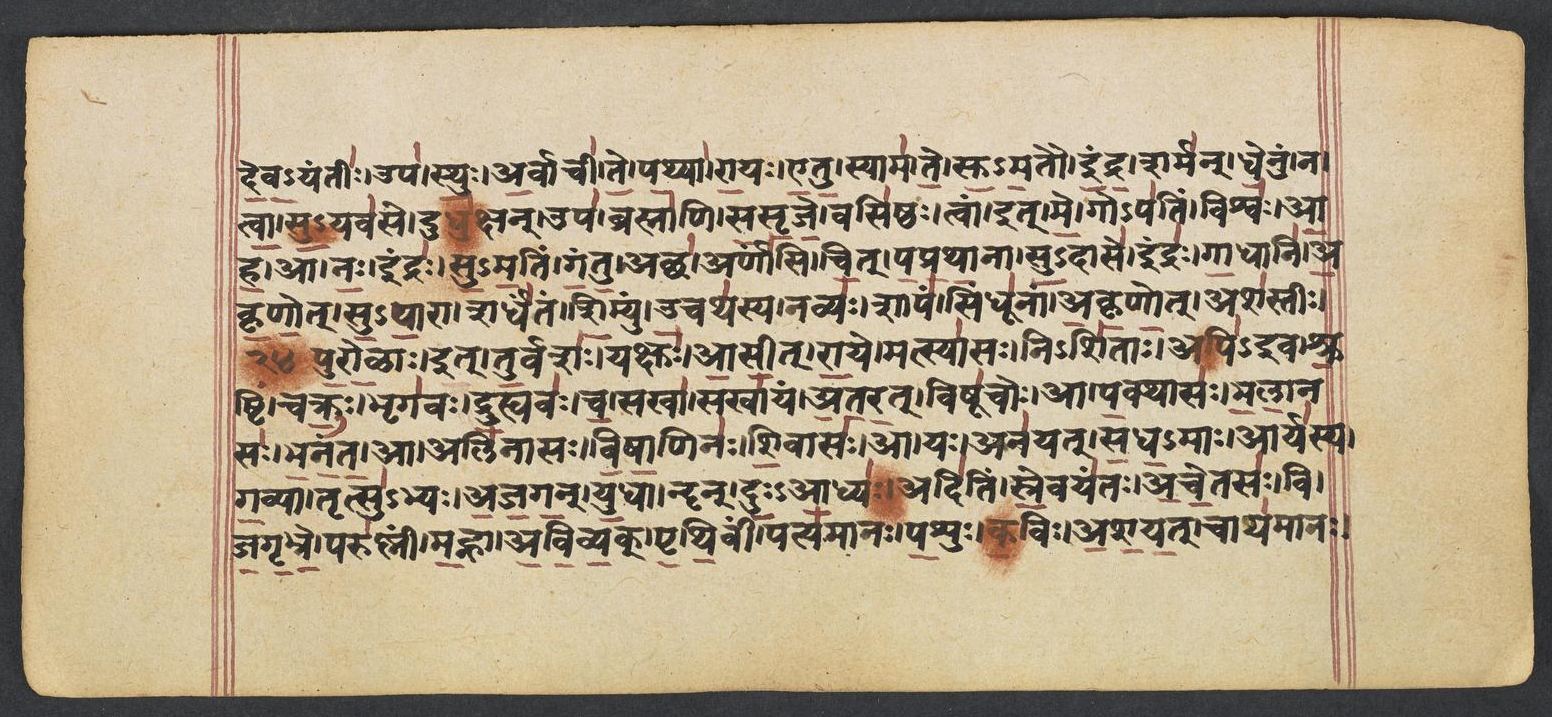
Penn Ms. Coll. 390 Item 41, fol. 503r (numbered 24r by the scribe) (OPenn image 503, lower leaf). Checked on the image: the Rigveda text on this page begins in RV 7.18.3 ‹deva-yantīḥ upa sthuḥ arvācī›. The next page with Rigveda text, fol. 503v (numbered 24v by the scribe), begins in RV 7.18.9 ‹īyuḥ artham na ni-artham›. Verses 7.18.3-8 end on this page; 7.18.3 begins on fol. 502v (numbered 23v by the scribe).
3i̱mā u̍ tvā paspṛdhā̱nāso̱ atra̍ ma̱ndrā giro̍ deva̱yantī̱r upa̍ sthuḥ | a̱rvācī̍ te pa̱thyā̍ rā̱ya e̍tu̱ syāma̍ te suma̱tāv i̍ndra̱ śarma̍n ||
4dhe̱nuṁ na tvā̍ sū̱yava̍se̱ dudu̍kṣa̱nn upa̱ brahmā̍ṇi sasṛje̱ vasi̍ṣṭhaḥ | tvām in me̱ gopa̍ti̱ṁ viśva̍ ā̱hā na̱ indra̍ḥ suma̱tiṁ ga̱ntv accha̍ ||
5arṇā̍ṁsi cit paprathā̱nā su̱dāsa̱ indro̍ gā̱dhāny a̍kṛṇot supā̱rā | śardha̍ntaṁ śi̱myum u̱catha̍sya̱ navya̱ḥ śāpa̱ṁ sindhū̍nām akṛṇo̱d aśa̍stīḥ ||
6pu̱ro̱ḻā it tu̱rvaśo̱ yakṣu̍r āsīd rā̱ye matsyā̍so̱ niśi̍tā̱ apī̍va | śru̱ṣṭiṁ ca̍kru̱r bhṛga̍vo dru̱hyava̍ś ca̱ sakhā̱ sakhā̍yam atara̱d viṣū̍coḥ ||
7ā pa̱kthāso̍ bhalā̱naso̍ bhana̱ntāli̍nāso viṣā̱ṇina̍ḥ śi̱vāsa̍ḥ | ā yo 'na̍yat sadha̱mā ārya̍sya ga̱vyā tṛtsu̍bhyo ajagan yu̱dhā nṝn ||
8du̱rā̱dhyo̱3̱̍ adi̍tiṁ sre̱vaya̍nto 'ce̱taso̱ vi ja̍gṛbhre̱ paru̍ṣṇīm | ma̱hnāvi̍vyak pṛthi̱vīm patya̍mānaḥ pa̱śuṣ ka̱vir a̍śaya̱c cāya̍mānaḥ ||
Compare: Padapāṭha (word-by-word text written in the manuscript; Sansknet e-text via GRETIL)
3imāḥ | oṃ iti | tvā | paspṛdhānāsaḥ | atra | mandrāḥ | giraḥ | deva-yantīḥ | upa | sthuḥ | arvācī | te | pathyā | rāyaḥ | etu | syāma | te | su-matau | indra | śarman
4dhenum | na | tvā | su-yavase | dudhukṣan | upa | brahmāṇi | sasṛje | vasiṣṭhaḥ | tvām | it | me | go--patim | viśvaḥ | āha | ā | naḥ | indraḥ | su-matim | gantu | accha
5arṇāṃsi | cit | paprathānā | su-dāse | indraḥ | gādhāni | akṛṇot | su-pārā | śardhantam | śimyum | ucathasya | navyaḥ | śāpam | sindhūnām | akṛṇot | aśastīḥ
6puroḷāḥ | it | turvaśaḥ | yakṣuḥ | āsīt | rāye | matsyāsaḥ | ni-śitāḥ | api-iva | śruṣṭim | cakruḥ | bhṛgavaḥ | druhyavaḥ | ca | sakhā | sakhāyam | atarat | viṣūcoḥ
7ā | pakthāsaḥ | bhalānasaḥ | bhananta | ā | alināsaḥ | viṣāṇinaḥ | śivāsaḥ | ā | yaḥ | anayat | sadha-māḥ | āryasya | gavyā | tṛtsu-bhyaḥ | ajagan | yudhā | nṝn
8durodhyaḥ | aditim | srevayantaḥ | acetasaḥ | vi | jagṛbhre | parūṣṇīm | mahnā | avivyak | pṛthivīm | patyamānaḥ | paśuḥ | kaviḥ | aśayat | cāyamānaḥ
3Here these our holy hymns with joy and gladness in pious emulation have approached thee. Hitherward come thy path that leads to riches: may we find shelter in thy favour, Indra.
4Vasishṭha hath poured forth his prayers, desiring to milk thee like a cow in goodly pasture. All these my people call thee Lord of cattle: may Indra. come unto the prayer we offer.
5What though the floods spread widely, Indra made them shallow and easy for Sudâs to traverse. He, worthy of our praises, caused the Simyu, foe of our hymn, to curse the rivers' fury.
6Eager for spoil was Turvaṣa Puroḍâs, fain to win wealth, like fishes urged by hunger. The Bhr̥igus and the Druhyus quickly listened: friend rescued friend mid the two distant peoples.
7Together came the Pakthas, the Bhalânas, the Alinas, the Ṣivas, the Vishâṇins. Yet to the Tr̥itsus came the Ârya's Comrade, through love of spoil and heroes' war, to lead them.
8Fools, in their folly fain to waste her waters, they parted inexhaustible Parushṇî. Lord of the Earth, he with his might repressed them: still lay the herd and the affrighted herdsman.
Where on the image
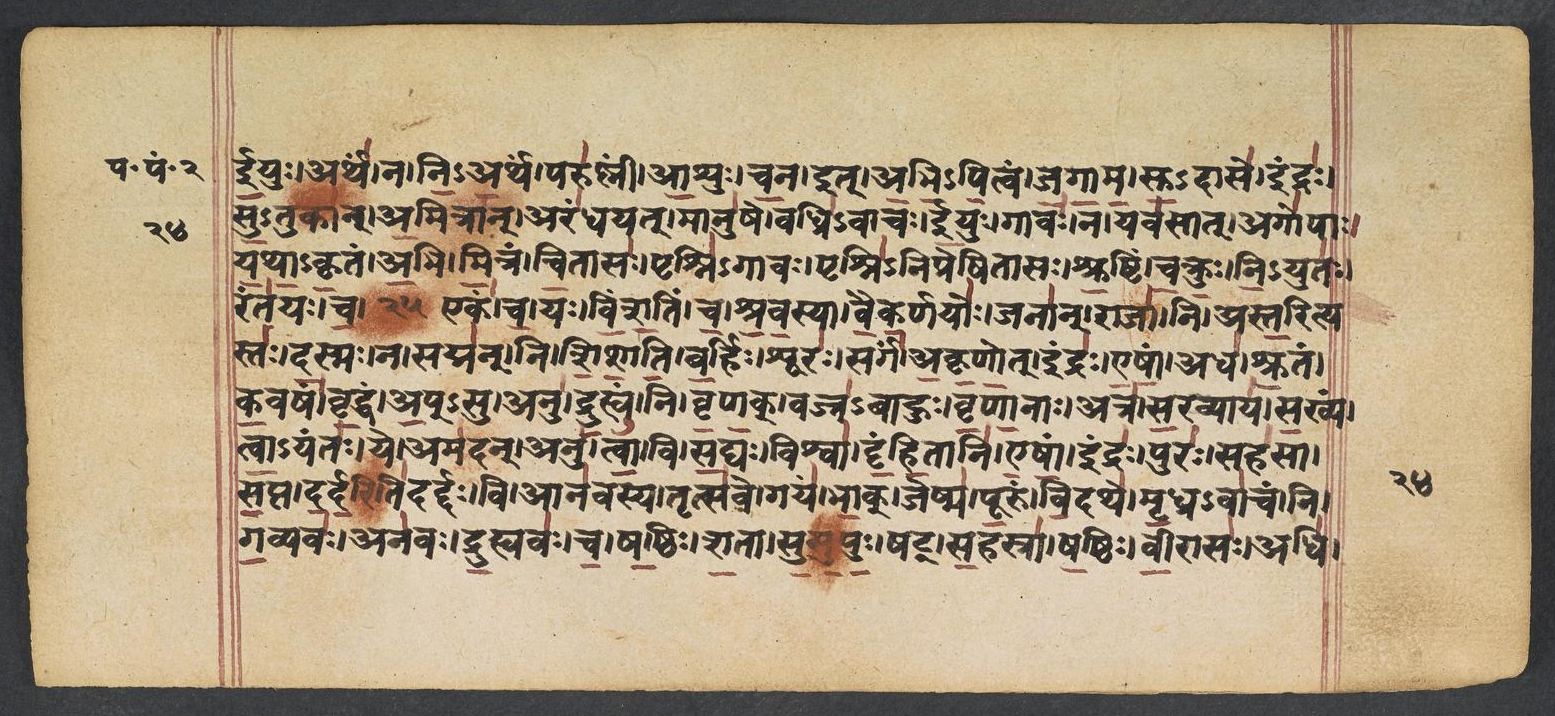
Penn Ms. Coll. 390 Item 41, fol. 503v (numbered 24v by the scribe) (OPenn image 504, upper leaf). Checked on the image: the Rigveda text on this page begins in RV 7.18.9 ‹īyuḥ artham na ni-artham›. The next page with Rigveda text, fol. 504r (numbered 25r by the scribe), begins in RV 7.18.14 ‹ṣaṭ duvaḥ-yu viśvā it›. Verses 7.18.9-13 end on this page.
9ī̱yur artha̱ṁ na nya̱rtham paru̍ṣṇīm ā̱śuś ca̱ned a̍bhipi̱tvaṁ ja̍gāma | su̱dāsa̱ indra̍ḥ su̱tukā̍m̐ a̱mitrā̱n ara̍ndhaya̱n mānu̍ṣe̱ vadhri̍vācaḥ ||
10ī̱yur gāvo̱ na yava̍sā̱d ago̍pā yathākṛ̱tam a̱bhi mi̱traṁ ci̱tāsa̍ḥ | pṛśni̍gāva̱ḥ pṛśni̍nipreṣitāsaḥ śru̱ṣṭiṁ ca̍krur ni̱yuto̱ ranta̍yaś ca ||
11eka̍ṁ ca̱ yo vi̍ṁśa̱tiṁ ca̍ śrava̱syā vai̍ka̱rṇayo̱r janā̱n rājā̱ ny asta̍ḥ | da̱smo na sadma̱n ni śi̍śāti ba̱rhiḥ śūra̱ḥ sarga̍m akṛṇo̱d indra̍ eṣām ||
12adha̍ śru̱taṁ ka̱vaṣa̍ṁ vṛ̱ddham a̱psv anu̍ dru̱hyuṁ ni vṛ̍ṇa̱g vajra̍bāhuḥ | vṛ̱ṇā̱nā atra̍ sa̱khyāya̍ sa̱khyaṁ tvā̱yanto̱ ye ama̍da̱nn anu̍ tvā ||
13vi sa̱dyo viśvā̍ dṛṁhi̱tāny e̍ṣā̱m indra̱ḥ pura̱ḥ saha̍sā sa̱pta da̍rdaḥ | vy āna̍vasya̱ tṛtsa̍ve̱ gaya̍m bhā̱g jeṣma̍ pū̱ruṁ vi̱dathe̍ mṛ̱dhravā̍cam ||
Compare: Padapāṭha (word-by-word text written in the manuscript; Sansknet e-text via GRETIL)
9īyuḥ | artham | na | ni-artham | paruṣṇīm | āśuḥ | cana | it | ābhi-pitvam | jagāma | su-dāse | indraḥ | su-tukān | amitrān | arandhayat | mānuṣe | vadhri-vācaḥ
10īyuḥ | gāvaḥ | na | yavasāt | agopāḥ | yathākṛtam | abhi | mitram | citāsaḥ | pṛśni-gāvaḥ | pṛśni-nipreṣitāsaḥ | śruṣṭim | cakruḥ | ni-yutaḥ | rantayaḥ | ca
11ekam | ca | yaḥ | viṃśatim | ca | śravasyā | vaikarṇayoḥ | janān | rājā | ni | astaḥ | dasmaḥ | na | sadman | ni | śiśāti | barhiḥ | śūraḥ | sargam | akṛṇot | indraḥ | eṣām
12adha | śrutam | kavaṣam | vṛddham | ap-su | anu | druhyum | ni | vṛṇak | vajra-bāhuḥ | vṛṇānāḥ | atra | sakhyāya | sakhyam | tvāyantaḥ | ye | amadan | anu | tvā
13vi | sadyaḥ | viśvā | dṛṃhitāni | eṣām | indraḥ | puraḥ | sahasā | sapta | dardaḥ | vi | ānavasya | tṛtsave | gayam | bhāk | jeṣma | pūrum | vidathe | mṛdhra-vācam
9As to their goal they sped to their destruction: they sought Parushṇî; e'en the swift returned not. Indra abandoned, to Sudâs the manly, the swiftly flying foes, unmanly babblers.
10They went like kine unherded from the pasture, each clinging to a friend as chance directed. They who drive spotted steeds, sent down by Pr̥iṣni, gave ear, the Warriors and the harnessed horses.
11The King who scattered one-and-twenty people of both Vaikarṇa tribes through lust of glory- As the skilled priest clips grass within the chamber, so hath the Hero Indra, wrought their downfall.
12Thou, thunder-armed, o'erwhelmedst in the waters famed ancient Kavasa and then the Druhyu. Others here claiming friendship to their friendship, devoted unto thee, in thee were joyful.
13Indra at once with conquering might demolished all their strong places and their seven castles. The goods of Anu's son he gave to Tr̥itsu. May we in sacrifice conquer scorned Pûru.
Where on the image
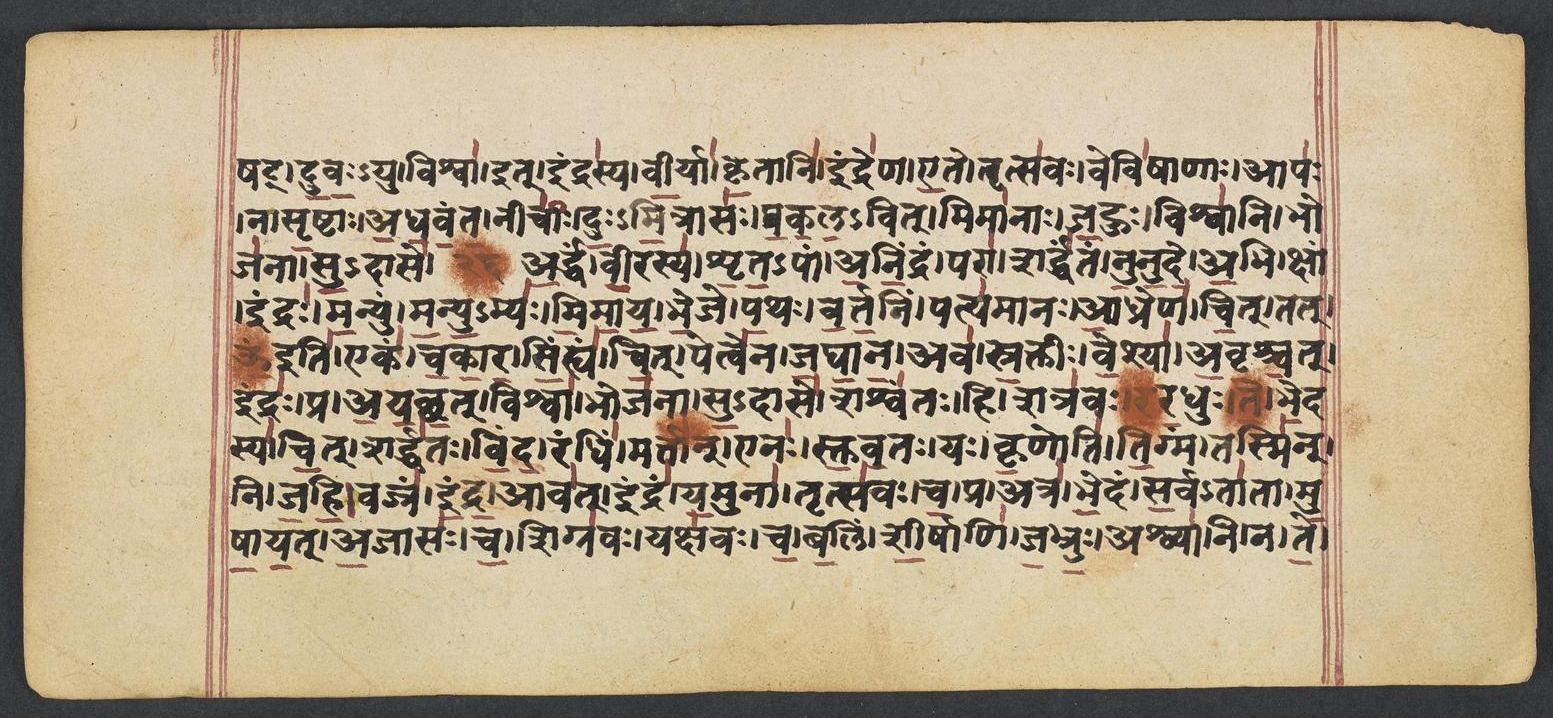
Penn Ms. Coll. 390 Item 41, fol. 504r (numbered 25r by the scribe) (OPenn image 504, lower leaf). Checked on the image: the Rigveda text on this page begins in RV 7.18.14 ‹ṣaṭ duvaḥ-yu viśvā it›. The next page with Rigveda text, fol. 504v (numbered 25v by the scribe), begins in RV 7.18.20 ‹indra su-matayaḥ na rāyaḥ›. Verses 7.18.14-19 end on this page; 7.18.14 begins on fol. 503v (numbered 24v by the scribe).
14ni ga̱vyavo 'na̍vo dru̱hyava̍ś ca ṣa̱ṣṭiḥ śa̱tā su̍ṣupu̱ḥ ṣaṭ sa̱hasrā̍ | ṣa̱ṣṭir vī̱rāso̱ adhi̱ ṣaḍ du̍vo̱yu viśved indra̍sya vī̱ryā̍ kṛ̱tāni̍ ||
15indre̍ṇai̱te tṛtsa̍vo̱ vevi̍ṣāṇā̱ āpo̱ na sṛ̱ṣṭā a̍dhavanta̱ nīcī̍ḥ | du̱rmi̱trāsa̍ḥ prakala̱vin mimā̍nā ja̱hur viśvā̍ni̱ bhoja̍nā su̱dāse̍ ||
16a̱rdhaṁ vī̱rasya̍ śṛta̱pām a̍ni̱ndram parā̱ śardha̍ntaṁ nunude a̱bhi kṣām | indro̍ ma̱nyum ma̍nyu̱myo̍ mimāya bhe̱je pa̱tho va̍rta̱nim patya̍mānaḥ ||
17ā̱dhreṇa̍ ci̱t tad v eka̍ṁ cakāra si̱ṁhya̍ṁ ci̱t petve̍nā jaghāna | ava̍ sra̱ktīr ve̱śyā̍vṛśca̱d indra̱ḥ prāya̍ccha̱d viśvā̱ bhoja̍nā su̱dāse̍ ||
18śaśva̍nto̱ hi śatra̍vo rāra̱dhuṣ ṭe̍ bhe̱dasya̍ ci̱c chardha̍to vinda̱ randhi̍m | martā̱m̐ ena̍ḥ stuva̱to yaḥ kṛ̱ṇoti̍ ti̱gmaṁ tasmi̱n ni ja̍hi̱ vajra̍m indra ||
19āva̱d indra̍ṁ ya̱munā̱ tṛtsa̍vaś ca̱ prātra̍ bhe̱daṁ sa̱rvatā̍tā muṣāyat | a̱jāsa̍ś ca̱ śigra̍vo̱ yakṣa̍vaś ca ba̱liṁ śī̱rṣāṇi̍ jabhru̱r aśvyā̍ni ||
Compare: Padapāṭha (word-by-word text written in the manuscript; Sansknet e-text via GRETIL)
14n | gavyavaḥ | anavaḥ | duhyavaḥ | ca | ṣaṣṭiḥ | śatā | susupuḥ | ṣaṭ | sahasrā | ṣaṣṭiḥ | vīrāsaḥ | adhi | ṣaṭ | duvaḥ-yu | viśvā | it | indrasya | vīryā | kṛtān i
15indreṇa | ete | tṛtsavaḥ | veviṣāṇāḥ | āpaḥ | na | sṛṣṭāḥ | adhavanta | nīcīḥ | duḥ-mitrāsaḥ | prakala-vit | mimānāḥ | jahuḥ | viśvāni | bhojanā | su-dāse
16ardham | vīrasya | śṛta-pām | anindram | parā | śardhantam | nunude | abhi | kṣām | indraḥ | manyum | manu-myaḥ | mimāya | bheje | pathaḥ | vartanim | patyamānaḥ
17ādhreṇa | cit | tat | oṃ iti | ekam | cakāra | siṃhyam | cit | petvena | jaghāna | ava | sraktīḥ | veśyā | avṛścat | indraḥ | pra | ayacchat | viśvā | bhojanā | su-dāse
18śaśvantaḥ | hi | śatravaḥ | raradhuḥ | te | bhedasya | cit | śardhataḥ | vinda | randhim | martān | enaḥ | stuvataḥ | yaḥ | kṛṇoti | tigmam | tasmin | ni | jahi | vajram | indra
19āvat | indram | yamunā | tṛtsavaḥ | ca | pra | atra | bhedam | sarva-tātā | muṣāyat | ajāsaḥ | ca | śigravaḥ | yakṣavaḥ | ca | balim | śīrṣāṇi | jabhruḥ | aśvyāni
14The Anavas and Druhyus, seeking booty, have slept, the sixty hundred, yea, six thousand, And six-and-sixty heroes. For the pious were all these mighty exploits done by Indra.
15These Tr̥itsus under Indra's careful guidance came speeding like loosed waters rushing downward. The foemen, measuring exceeding closely, abandoned to Sudâs all their provisions.
16The hero's side who drank the dressed oblation, Indra's denier, far o'er earth he scattered. Indra brought down the fierce destroyer's fury. He gave them various roads, the path's Controller.
17E'en with the weak he wrought this matchless exploit: e'en with a goat he did to death a lion. He pared the pillar's angles with a needle. Thus to Sudâs Indra gave all provisions.
18To thee have all thine enemies submitted: e'en the fierce Bheda hast thou made thy subject. Cast down thy sharpened thunderbolt, O Indra, on him who harms the men who sing thy praises.
19Yamunâ and the Tr̥itsus aided Indra. There he stripped Bheda bare of all his treasures. The Ajas and the Ṣigrus and the Yakshus brought in to him as tribute heads of horses.
Where on the image
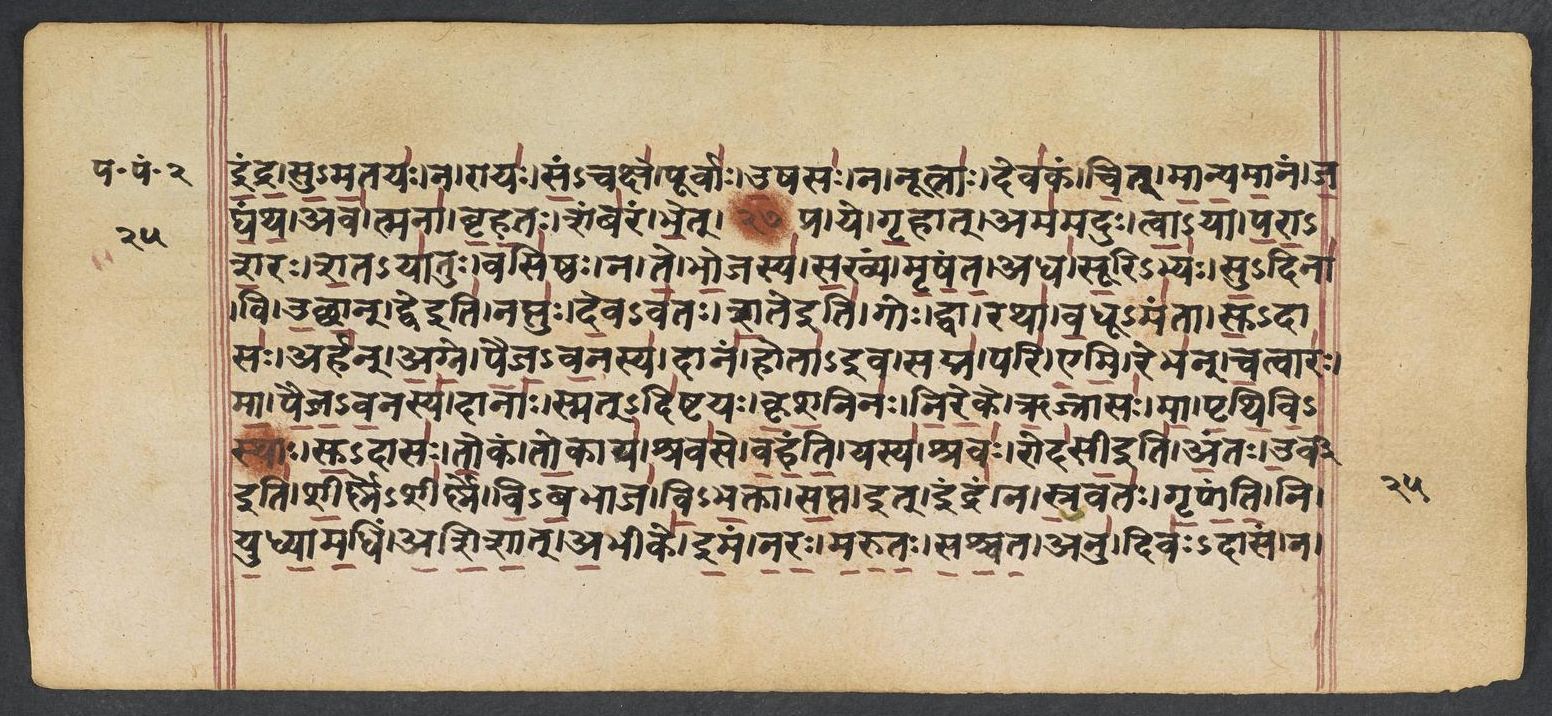
Penn Ms. Coll. 390 Item 41, fol. 504v (numbered 25v by the scribe) (OPenn image 505, upper leaf). Checked on the image: the Rigveda text on this page begins in RV 7.18.20 ‹indra su-matayaḥ na rāyaḥ›. The next page with Rigveda text, fol. 505r (numbered 26r by the scribe), begins in RV 7.18.25 ‹pitaram su-dāsaḥ aviṣṭana paija-vanasya›. Verses 7.18.20-24 end on this page; 7.18.20 begins on fol. 504r (numbered 25r by the scribe).
20na ta̍ indra suma̱tayo̱ na rāya̍ḥ sa̱ṁcakṣe̱ pūrvā̍ u̱ṣaso̱ na nūtnā̍ḥ | deva̍kaṁ cin mānyamā̱naṁ ja̍gha̱nthāva̱ tmanā̍ bṛha̱taḥ śamba̍ram bhet ||
21pra ye gṛ̱hād ama̍madus tvā̱yā pa̍rāśa̱raḥ śa̱tayā̍tu̱r vasi̍ṣṭhaḥ | na te̍ bho̱jasya̍ sa̱khyam mṛ̍ṣa̱ntādhā̍ sū̱ribhya̍ḥ su̱dinā̱ vy u̍cchān ||
22dve naptu̍r de̱vava̍taḥ śa̱te gor dvā rathā̍ va̱dhūma̍ntā su̱dāsa̍ḥ | arha̍nn agne paijava̱nasya̱ dāna̱ṁ hote̍va̱ sadma̱ pary e̍mi̱ rebha̍n ||
23ca̱tvāro̍ mā paijava̱nasya̱ dānā̱ḥ smaddi̍ṣṭayaḥ kṛśa̱nino̍ nire̱ke | ṛ̱jrāso̍ mā pṛthivi̱ṣṭhāḥ su̱dāsa̍s to̱kaṁ to̱kāya̱ śrava̍se vahanti ||
24yasya̱ śravo̱ roda̍sī a̱ntar u̱rvī śī̱rṣṇe-śī̍rṣṇe viba̱bhājā̍ vibha̱ktā | sa̱pted indra̱ṁ na sra̱vato̍ gṛṇanti̱ ni yu̍dhyāma̱dhim a̍śiśād a̱bhīke̍ ||
Compare: Padapāṭha (word-by-word text written in the manuscript; Sansknet e-text via GRETIL)
20na | te | indra | su-matayaḥ | na | rāyaḥ | sam-cakṣe | pūrvāḥ | uṣasaḥ | na | nūtnāḥ | devakam | cit | mānyamānam | jaghantha | ava | tmanā | bṛhataḥ | śambaram | bhet
21pra | ye | gṛhāt | amamaduḥ | tvāyā | parāśaraḥ | śata-yātuḥ | vasiṣṭhaḥ | na | te | bhojasya | sakhyam | mṛṣanta | adha | sūri-bhyaḥ | su-dinā | vi | ucchān
22dve iti | naptuḥ | deva-vataḥ | śate iti | goḥ | dvā | rathā | vadhū-mantā | su-dāsaḥ | arhan | agne | paija-vanasya | dānam | hotāiva | sadma | pari | ebhi | rebhan
23catvāraḥ | mā | paija-vanasya | dānāḥ | smat-diṣṭayaḥ | kṛśaninaḥ | nireke | ṛjrāsaḥ | mā | pṛthivi-sthāḥ | su-dāsaḥ | tokam | tokāya | śravase | vahanti
24yasya | śravaḥ | rodasī iti | antaḥ | urvī iti | śīrṣṇe--śīrṣṇe | vi-babhāja | vi-bhaktā | sapta | it | indram | na | sravataḥ | gṛṇanti | ni | yudhyāmadhim | āśiśāt | abhīke
20Not to be scorned, but like Dawns past and recent, O Indra, are thy favours and thy riches. Devaka, Manyamana's son, thou slewest, and smotest Ṣambara from the lofty mountain.
21They who, from home, have gladdened thee, thy servants Parâṣara, Vasishṭha, Ṣatayâtu, Will not forget thy friendship, liberal Giver. So shall the days dawn prosperous for the princes.
22Priest-like, with praise, I move around the altar, earning Paijavana's reward, O Agni, Two hundred cows from Devavan's descendant, two chariots from Sudâs with mares to draw them.
23Gift of Paijavana, four horses bear me in foremost place, trained steeds with pearl to deck them. Sudâs's brown steeds, firmly-stepping, carry me and my son for progeny and glory.
24Him whose fame spreads between wide earth and heaven, who, as dispenser, gives each chief his portion, Seven flowing Rivers glorify like Indra. He slew Yudhyâmadhi in close encounter.
Where on the image
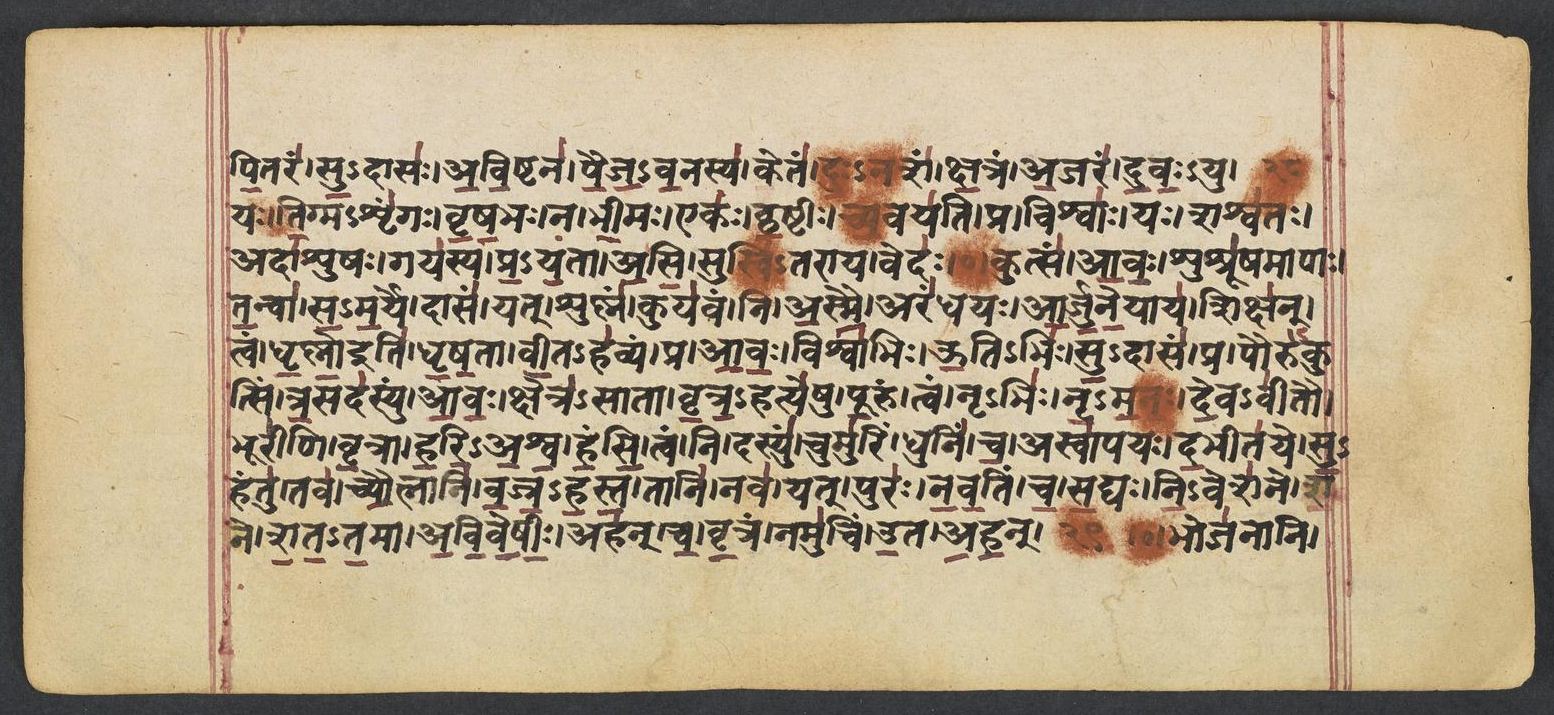
Penn Ms. Coll. 390 Item 41, fol. 505r (numbered 26r by the scribe) (OPenn image 505, lower leaf). Checked on the image: the Rigveda text on this page begins in RV 7.18.25 ‹pitaram su-dāsaḥ aviṣṭana paija-vanasya›. The next page with Rigveda text, fol. 505v (numbered 26v by the scribe), begins in RV 7.19.6 ‹rāta-havyāya dāśuṣe su-dāse vṛṣṇe›. Verse 7.18.25 ends on this page; 7.18.25 begins on fol. 504v (numbered 25v by the scribe).
25i̱maṁ na̍ro marutaḥ saśca̱tānu̱ divo̍dāsa̱ṁ na pi̱tara̍ṁ su̱dāsa̍ḥ | a̱vi̱ṣṭanā̍ paijava̱nasya̱ keta̍ṁ dū̱ṇāśa̍ṁ kṣa̱tram a̱jara̍ṁ duvo̱yu ||
Compare: Padapāṭha (word-by-word text written in the manuscript; Sansknet e-text via GRETIL)
25imam | naraḥ | marutaḥ | saścata | anu | divaḥ-dāsam | na | pitaram | su-dāsaḥ | aviṣṭana | paija-vanasya | ketam | duḥ-nāśam | kṣatram | ajaram | duvaḥ-yu
25Attend on him O ye heroic Maruts as on Sudâs's father Divodâsa. Further Paijavana's desire with favour. Guard faithfully his lasting firm dominion.
Notes
- Sanskrit: Aufrecht's edition (1877) with the Vedic accents, as entered by van Nooten and Holland (GRETIL).
- English: Ralph T. H. Griffith, The Hymns of the Rigveda (1889-1892; 2nd ed. 1896-1897), from the VedaWeb digital text; OCR slips in that text were corrected against the printed 2nd edition (data/sources/rigveda/griffith_errata.json).
- Padapāṭha (edition text): Sansknet e-text via GRETIL (CC BY-NC-SA 4.0).
Cite
Sources
- Source: Penn Ms. Coll. 390 Item 41 (undated (catalogued with Penn's 18th-19th c. Vedic manuscripts)), OPenn, Public Domain Mark + Aufrecht's accented text (GRETIL) + Griffith's English (VedaWeb) (holding institution)
- Critical edition: Aufrecht (1877), accented e-text via GRETIL
← previous · → next · v cycle view · l back to library