Rigveda 7.19: To Indra
Introduction
Rigveda 7.19 is a hymn of 11 verses addressed to Indra. It stands in book (maṇḍala) 7, the family book of Vasiṣṭha. The Rigveda is the oldest collection of Sanskrit hymns, composed in the second half of the second millennium BCE and handed down orally for many centuries before it was written down.
The manuscript shown is Penn Ms. Coll. 390 Item 41 (University of Pennsylvania), an undated paper manuscript of the padapāṭha (the word-by-word recitation text, in which every word is written separately and compounds are split) of the whole Ṛgveda in Devanāgarī, 884 leaves in fascicles, 7-9 lines to the page, accents in red; this hymn stands on fol. 505r-505v. Each section below gives the verses that end on one page; the page boundaries were read on the images (the opening words of every page), not counted out. Where the manuscript is a padapāṭha (the word-by-word recitation text), the section shows Aufrecht's continuous (saṃhitā) text first and, as the edition text, the padapāṭha of the same verses, which is the form written on the page.
How was this verified? (Provenance)
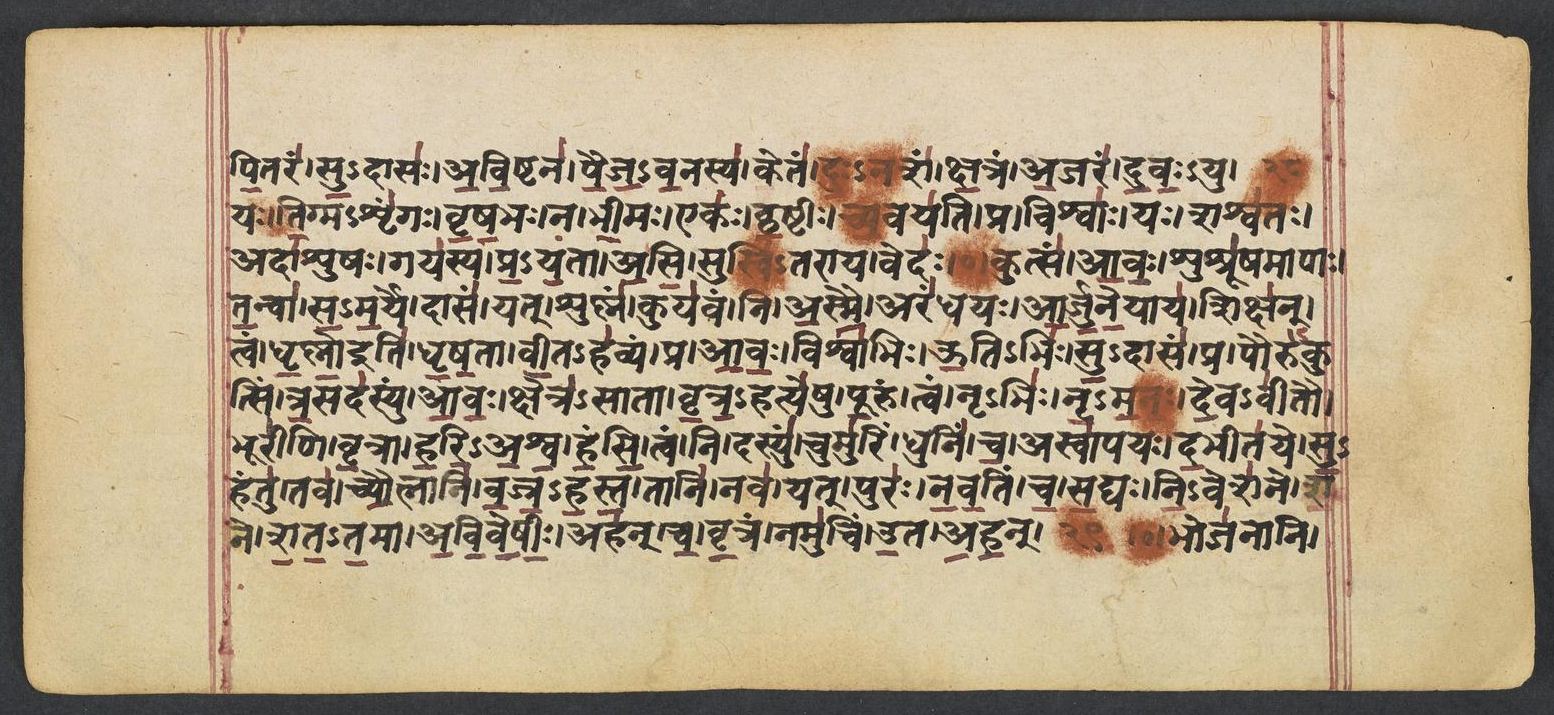
Where on the image
Penn Ms. Coll. 390 Item 41, fol. 505r (numbered 26r by the scribe) (OPenn image 505, lower leaf). Checked on the image: the Rigveda text on this page begins in RV 7.18.25 ‹pitaram su-dāsaḥ aviṣṭana paija-vanasya›. The next page with Rigveda text, fol. 505v (numbered 26v by the scribe), begins in RV 7.19.6 ‹rāta-havyāya dāśuṣe su-dāse vṛṣṇe›. Verses 7.19.1-5 end on this page.
1yas ti̱gmaśṛ̍ṅgo vṛṣa̱bho na bhī̱ma eka̍ḥ kṛ̱ṣṭīś cyā̱vaya̍ti̱ pra viśvā̍ḥ | yaḥ śaśva̍to̱ adā̍śuṣo̱ gaya̍sya praya̱ntāsi̱ suṣvi̍tarāya̱ veda̍ḥ ||
2tvaṁ ha̱ tyad i̍ndra̱ kutsa̍m āva̱ḥ śuśrū̍ṣamāṇas ta̱nvā̍ sama̱rye | dāsa̱ṁ yac chuṣṇa̱ṁ kuya̍va̱ṁ ny a̍smā̱ ara̍ndhaya ārjune̱yāya̱ śikṣa̍n ||
3tvaṁ dhṛ̍ṣṇo dhṛṣa̱tā vī̱taha̍vya̱m prāvo̱ viśvā̍bhir ū̱tibhi̍ḥ su̱dāsa̍m | pra pauru̍kutsiṁ tra̱sada̍syum āva̱ḥ kṣetra̍sātā vṛtra̱hatye̍ṣu pū̱rum ||
4tvaṁ nṛbhi̍r nṛmaṇo de̱vavī̍tau̱ bhūrī̍ṇi vṛ̱trā ha̍ryaśva haṁsi | tvaṁ ni dasyu̱ṁ cumu̍ri̱ṁ dhuni̱ṁ cāsvā̍payo da̱bhīta̍ye su̱hantu̍ ||
5tava̍ cyau̱tnāni̍ vajrahasta̱ tāni̱ nava̱ yat puro̍ nava̱tiṁ ca̍ sa̱dyaḥ | ni̱veśa̍ne śatata̱māvi̍veṣī̱r aha̍ñ ca vṛ̱traṁ namu̍cim u̱tāha̍n ||
Compare: Padapāṭha (word-by-word text written in the manuscript; Sansknet e-text via GRETIL)
1yaḥ | tigma-śṛṅgaḥ | vṛṣabhaḥ | na | bhīmaḥ | ekaḥ | kṛṣṭīḥ | cyavayati | pra | viśvāḥ | yaḥ | śaśvataḥ | adāśuṣaḥ | gayasya | pra-yantā | asi | susvi-tarāya | vedaḥ
2tvam | ha | tyat | indra | kutsam | āvaḥ | śuśrūṣamāṇaḥ | tanvā | sa-marye | dāsam | yat śuṣṇam | kuyavam | ni | asmai | arandhayaḥ | ārjuneyāya | śikṣan
3tvam | dhṛṣṇo iti | dhṛṣatā | vīta-havyam | pra | āvaḥ | viśvābhiḥ | ūti-bhiḥ | su-dāsam | pra | pauru-kutsim | trasadasyum | āvaḥ | kṣetra-sātā | vṛtra-hatyeṣu | pūrum
4tvam | nṛ-bhiḥ | nṛ-manaḥ | deva-vītau | bhūrīṇi | vṛtrā | hari-aśva | haṃsi | tvam | ni | dasyum | cumurim | dhunim | ca | asvāpayaḥ | dabhītaye | su-hantu
5tava | cyautnāni | vajra-hasta | tāni | nava | yat | puraḥ | navatim | ca | sadyaḥ | ni-veśane | śata-tamā | aviveṣīḥ | ahan | ca | vṛtram | namucim | uta | ahan
1HE like a bull with sharpened horns, terrific, singly excites and agitates all the people: Thou givest him who largely pours libations his goods who pours not, for his own possession.
2Thou, verily, Indra, gavest help to Kutsa, willingly giving ear to him in battle, When, aiding Ârjuneya, thou subduedst to him both Kuyava and the Dâsa Ṣushṇa.
3O Bold One, thou with all thine aids hast boldly holpen Sudâs whose offerings were accepted, Pûru in winning land and slaying foemen, and Trasadasyu son of Purukutsa.
4At the Gods' banquet, hero-souled! with Heroes, Lord of Bay Steeds, thou slewest many foemen. Thou sentest in swift death to sleep the Dasyu, both Chumuri and Dhuni, for Dabhîti.
5These were thy mighty powers that, Thunder-wielder, thou swiftly crushedst nine-and-ninety castles: Thou capturedst the hundredth in thine onslaught; thou slewest Namuci, thou slewest Vr̥itra.
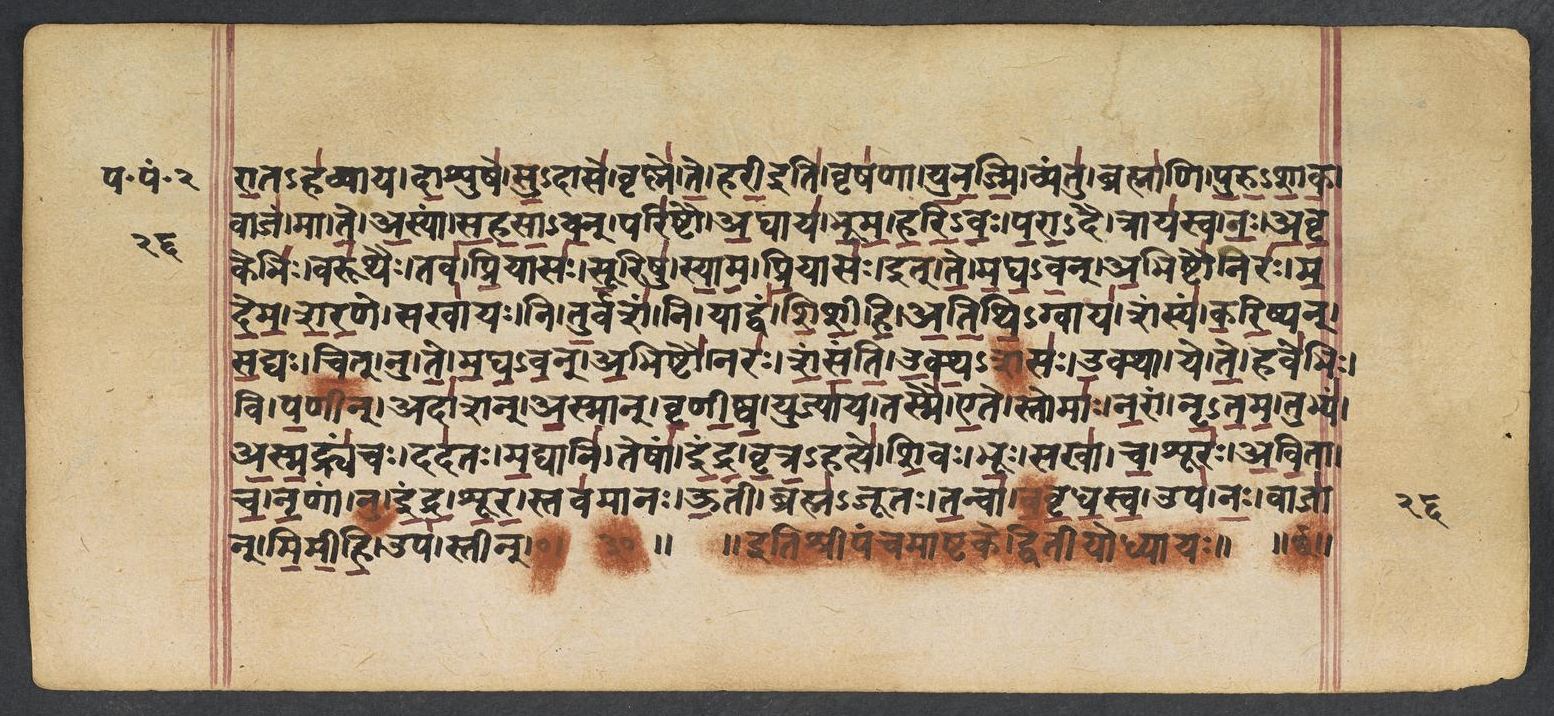
Where on the image
Penn Ms. Coll. 390 Item 41, fol. 505v (numbered 26v by the scribe) (OPenn image 506, upper leaf). Checked on the image: the Rigveda text on this page begins in RV 7.19.6 ‹rāta-havyāya dāśuṣe su-dāse vṛṣṇe›. The next page with Rigveda text, fol. 506r (numbered 27r by the scribe), begins in RV 7.20.1 ‹ugraḥ jajñe vīryāya svadhāvān›. Verses 7.19.6-11 end on this page; 7.19.6 begins on fol. 505r (numbered 26r by the scribe).
6sanā̱ tā ta̍ indra̱ bhoja̍nāni rā̱taha̍vyāya dā̱śuṣe̍ su̱dāse̍ | vṛṣṇe̍ te̱ harī̱ vṛṣa̍ṇā yunajmi̱ vyantu̱ brahmā̍ṇi puruśāka̱ vāja̍m ||
7mā te̍ a̱syāṁ sa̍hasāva̱n pari̍ṣṭāv a̱ghāya̍ bhūma harivaḥ parā̱dai | trāya̍sva no 'vṛ̱kebhi̱r varū̍thai̱s tava̍ pri̱yāsa̍ḥ sū̱riṣu̍ syāma ||
8pri̱yāsa̱ it te̍ maghavann a̱bhiṣṭau̱ naro̍ madema śara̱ṇe sakhā̍yaḥ | ni tu̱rvaśa̱ṁ ni yādva̍ṁ śiśīhy atithi̱gvāya̱ śaṁsya̍ṁ kari̱ṣyan ||
9sa̱dyaś ci̱n nu te ma̍ghavann a̱bhiṣṭau̱ nara̍ḥ śaṁsanty uktha̱śāsa̍ u̱kthā | ye te̱ have̍bhi̱r vi pa̱ṇīm̐r adā̍śann a̱smān vṛ̍ṇīṣva̱ yujyā̍ya̱ tasmai̍ ||
10e̱te stomā̍ na̱rāṁ nṛ̍tama̱ tubhya̍m asma̱drya̍ñco̱ dada̍to ma̱ghāni̍ | teṣā̍m indra vṛtra̱hatye̍ śi̱vo bhū̱ḥ sakhā̍ ca̱ śūro̍ 'vi̱tā ca̍ nṛ̱ṇām ||
11nū i̍ndra śūra̱ stava̍māna ū̱tī brahma̍jūtas ta̱nvā̍ vāvṛdhasva | upa̍ no̱ vājā̍n mimī̱hy upa̱ stīn yū̱yam pā̍ta sva̱stibhi̱ḥ sadā̍ naḥ ||
Compare: Padapāṭha (word-by-word text written in the manuscript; Sansknet e-text via GRETIL)
6sanā | tā | te | indra | bhojanāni | rāta-havyāya | dāśuṣe | su-dāse | vṛṣṇe | te | harī iti | vṛṣaṇā | yunajmi | vyantu | brahmāṇi | puru-śāka | vājam
7mā | te | asyām | sahasāvan | pariṣṭau | aghāya | bhūma | hari-vaḥ | parādai | trāyasva | naḥ | avṛkebhiḥ | varūthaiḥ | tava | priyāsaḥ | sūriṣu | syāma
8priyāsaḥ | it | te | magha-van | abhiṣṭau | naraḥ | madema | śaraṇe | sakhāyaḥ | ni | turvaśam | ni | yādvam | śiśīhi | atithi-gvāya | śaṃsyam | kariṣyan
9sadyaḥ | cit | nu | te | magha-van | abhiṣṭau | naraḥ | śaṃsanti | uktha-śasaḥ | ukthā | ye | te | havebhiḥ | vi | paṇīn | adāśan | asmān | vṛṇīṣva | yujyāya | tasmai
10ete | stomāḥ | narām | nṛ-tama | tubhyam | asmadryañcaḥ | dadataḥ | maghāni | teṣām | indra | vṛtra-hatye | śivaḥ | bhūḥ | sakhā | ca | śūraḥ | avitā | ca | nṛṇām
11nu | indra | śūra | stavamānaḥ | ūtī | brahma-jūtaḥ | tanvā | vavṛdhasva | upa | naḥ | vājān | mimīhi | upa | stīn | yūyam | pāta | svasti-bhiḥ | sadā | naḥ
6Old are the blessings, Indra, which thou gavest Sudâs the worshipper who brought oblations. For thee, the Strong, I yoke thy strong Bay Horses: may our prayers reach thee and win strength, Most Mighty!
7Give us not up, Lord of Bay Horses, Victor, in this thine own assembly, to the wicked. Deliver us with true and faithful succours: dear may we be to thee among the princes.
8May we men, Maghavan, the friends thou lovest, near thee be joyful under thy protection. Fain to fulfil the wish of Âtithigva humble. the pride of Turvaṣa and Yadva.
9Swiftly, in truth, O Maghavan, about thee men skilled in hymning sing their songs and praises. ' Elect us also into their assembly who by their calls on thee despoiled the niggards.
10Thine are these lauds, O manliest of heroes, lauds which revert to us and give us riches. Favour these, Indra, when they fight with foemen, as Friend and Hero and the heroes' Helper.
11Now, lauded for thine aid, Heroic Indra, sped by our prayer, wax mighty in thy body. Apportion to us strength and habitations. Ye Gods, protect us evermore with blessings.
Notes
- Sanskrit: Aufrecht's edition (1877) with the Vedic accents, as entered by van Nooten and Holland (GRETIL).
- English: Ralph T. H. Griffith, The Hymns of the Rigveda (1889-1892; 2nd ed. 1896-1897), from the VedaWeb digital text; OCR slips in that text were corrected against the printed 2nd edition (data/sources/rigveda/griffith_errata.json).
- Padapāṭha (edition text): Sansknet e-text via GRETIL (CC BY-NC-SA 4.0).
Cite
Sources
- Source: Penn Ms. Coll. 390 Item 41 (undated (catalogued with Penn's 18th-19th c. Vedic manuscripts)), OPenn, Public Domain Mark + Aufrecht's accented text (GRETIL) + Griffith's English (VedaWeb) (holding institution)
- Critical edition: Aufrecht (1877), accented e-text via GRETIL
← previous · → next · v cycle view · l back to library