Rigveda 7.20: To Indra
Introduction
Rigveda 7.20 is a hymn of 10 verses addressed to Indra. It stands in book (maṇḍala) 7, the family book of Vasiṣṭha. The Rigveda is the oldest collection of Sanskrit hymns, composed in the second half of the second millennium BCE and handed down orally for many centuries before it was written down.
The manuscript shown is Penn Ms. Coll. 390 Item 41 (University of Pennsylvania), an undated paper manuscript of the padapāṭha (the word-by-word recitation text, in which every word is written separately and compounds are split) of the whole Ṛgveda in Devanāgarī, 884 leaves in fascicles, 7-9 lines to the page, accents in red; this hymn stands on fol. 506r-507r. Each section below gives the verses that end on one page; the page boundaries were read on the images (the opening words of every page), not counted out. Where the manuscript is a padapāṭha (the word-by-word recitation text), the section shows Aufrecht's continuous (saṃhitā) text first and, as the edition text, the padapāṭha of the same verses, which is the form written on the page.
How was this verified? (Provenance)
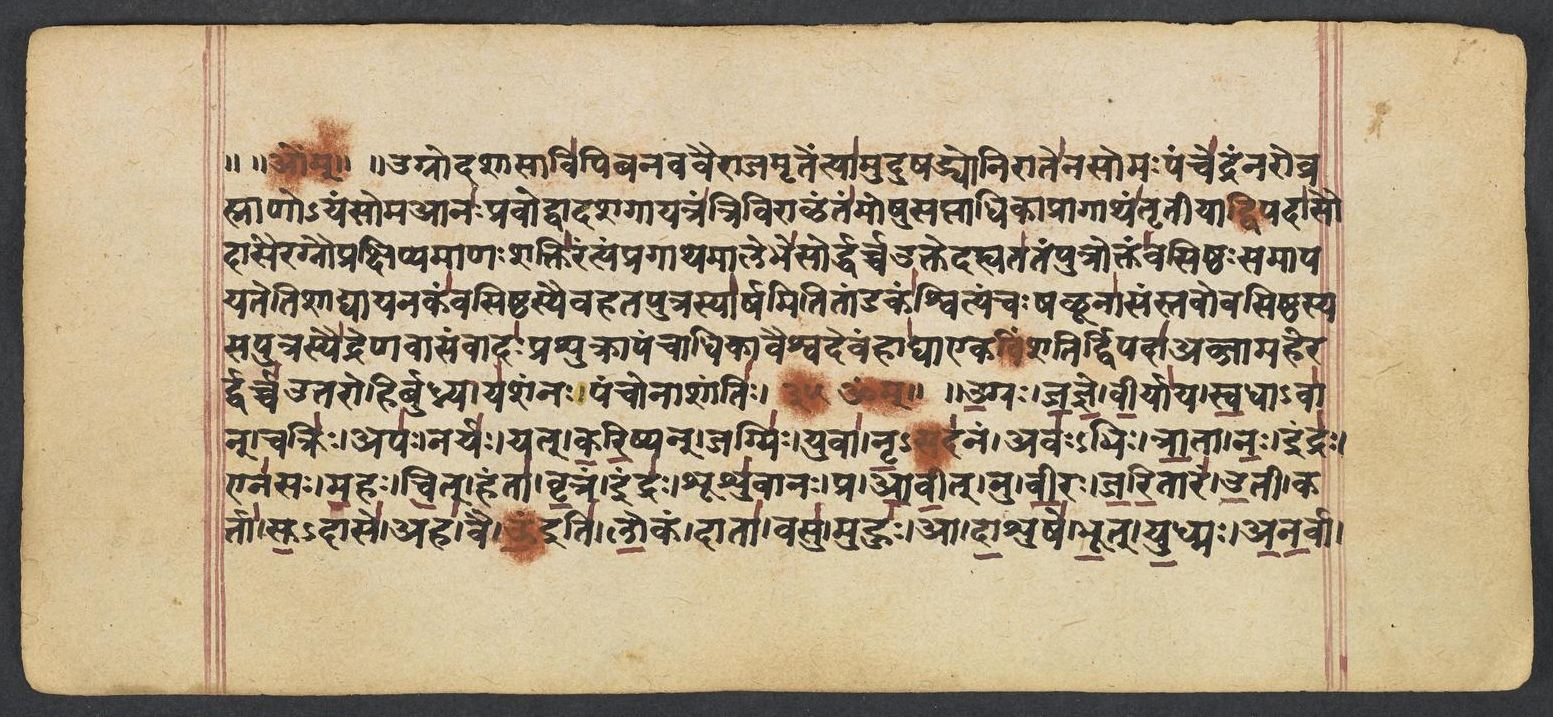
Where on the image
Penn Ms. Coll. 390 Item 41, fol. 506r (numbered 27r by the scribe) (OPenn image 506, lower leaf). Checked on the image: the Rigveda text on this page begins in RV 7.20.1 ‹ugraḥ jajñe vīryāya svadhāvān›. Lines 1-6 carry the anukramaṇī for aṣṭaka 5, adhyāya 3; 7.20.1 (ugraḥ jajñe vīryāya svadhāvān) begins in line 6 after oṃ. The next page with Rigveda text, fol. 506v (numbered 27v by the scribe), begins in RV 7.20.3 ‹khaja-kṛt samat-vā śūraḥ satrāṣāṭ›. Verses 7.20.1-2 end on this page.
1u̱gro ja̍jñe vī̱ryā̍ya sva̱dhāvā̱ñ cakri̱r apo̱ naryo̱ yat ka̍ri̱ṣyan | jagmi̱r yuvā̍ nṛ̱ṣada̍na̱m avo̍bhis trā̱tā na̱ indra̱ ena̍so ma̱haś ci̍t ||
2hantā̍ vṛ̱tram indra̱ḥ śūśu̍vāna̱ḥ prāvī̱n nu vī̱ro ja̍ri̱tāra̍m ū̱tī | kartā̍ su̱dāse̱ aha̱ vā u̍ lo̱kaṁ dātā̱ vasu̱ muhu̱r ā dā̱śuṣe̍ bhūt ||
Compare: Padapāṭha (word-by-word text written in the manuscript; Sansknet e-text via GRETIL)
1ugraḥ | jajñe | vīryāya | svadhāvān | cakriḥ | apaḥ | naryaḥ | yat | kariṣyan | jagmiḥ | yuvā | nṛ-sadanam | avaḥ-bhiḥ | trātā | naḥ | indraḥ | enasaḥ | mahaḥ | cit
2hantā | vṛtram | indraḥ | śūśuvānaḥ | pra | āvīt | nu | vīraḥ | jaritāram | ūtī | kartā | su-dāse | aha | vai | oṃ iti | lokam | dātā | vasu | muhuḥ | ā | dāśuṣe | bhūt
1STRONG, Godly-natured, born for hero exploit, man's Friend, hedoth whatever deed he willeth. Saving us e'en from great transgression, Indra, the Youthful, visiteth man's home with favour.
2Waxing greatness Indra slayeth Vr̥itra: the Hero with his aid hath helped the singer. He gave Sudâs wide room and space, and often hath granted wealth to him who brought oblations.
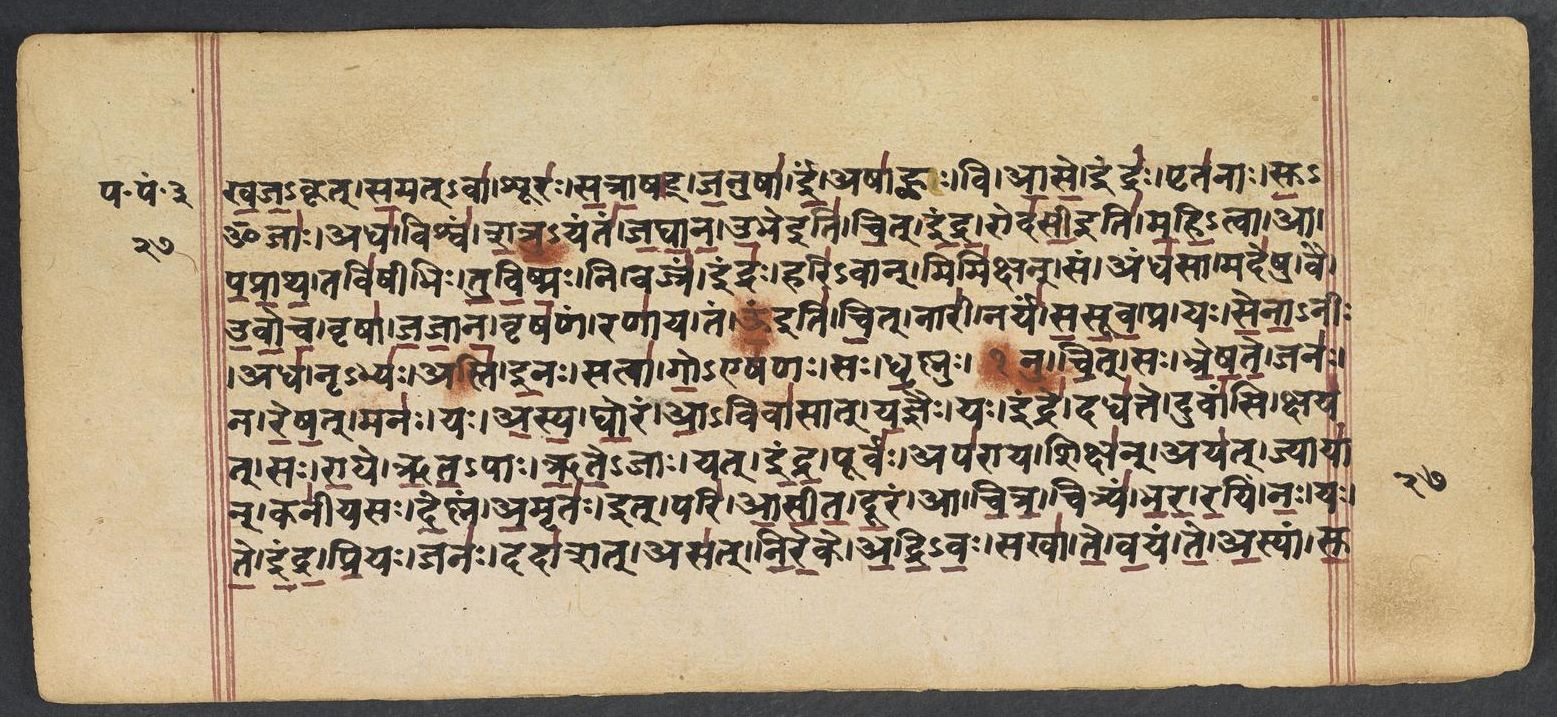
Where on the image
Penn Ms. Coll. 390 Item 41, fol. 506v (numbered 27v by the scribe) (OPenn image 507, upper leaf). Checked on the image: the Rigveda text on this page begins in RV 7.20.3 ‹khaja-kṛt samat-vā śūraḥ satrāṣāṭ›. The next page with Rigveda text, fol. 507r (numbered 28r by the scribe), begins in RV 7.20.8 ‹-su-matau caniṣṭhāḥ syāma varūthe›. Verses 7.20.3-7 end on this page; 7.20.3 begins on fol. 506r (numbered 27r by the scribe).
3yu̱dhmo a̍na̱rvā kha̍ja̱kṛt sa̱madvā̱ śūra̍ḥ satrā̱ṣāḍ ja̱nuṣe̱m aṣā̍ḻhaḥ | vy ā̍sa̱ indra̱ḥ pṛta̍nā̱ḥ svojā̱ adhā̱ viśva̍ṁ śatrū̱yanta̍ṁ jaghāna ||
4u̱bhe ci̍d indra̱ roda̍sī mahi̱tvā pa̍prātha̱ tavi̍ṣībhis tuviṣmaḥ | ni vajra̱m indro̱ hari̍vā̱n mimi̍kṣa̱n sam andha̍sā̱ made̍ṣu̱ vā u̍voca ||
5vṛṣā̍ jajāna̱ vṛṣa̍ṇa̱ṁ raṇā̍ya̱ tam u̍ ci̱n nārī̱ narya̍ṁ sasūva | pra yaḥ se̍nā̱nīr adha̱ nṛbhyo̱ astī̱naḥ satvā̍ ga̱veṣa̍ṇa̱ḥ sa dhṛ̱ṣṇuḥ ||
6nū ci̱t sa bhre̍ṣate̱ jano̱ na re̍ṣa̱n mano̱ yo a̍sya gho̱ram ā̱vivā̍sāt | ya̱jñair ya indre̱ dadha̍te̱ duvā̍ṁsi̱ kṣaya̱t sa rā̱ya ṛ̍ta̱pā ṛ̍te̱jāḥ ||
7yad i̍ndra̱ pūrvo̱ apa̍rāya̱ śikṣa̱nn aya̱j jyāyā̱n kanī̍yaso de̱ṣṇam | a̱mṛta̱ it pary ā̍sīta dū̱ram ā ci̍tra̱ citrya̍m bharā ra̱yiṁ na̍ḥ ||
Compare: Padapāṭha (word-by-word text written in the manuscript; Sansknet e-text via GRETIL)
3yudhmaḥ | anarvā | khaja-kṛt | samat-vā | śūraḥ | satrāṣāṭ | januṣā | īm | aṣāḷhaḥ | vi | āse | indraḥ | pṛtanāḥ | su-ojāḥ | adha | viśvam | śatru-yantam | jaghāna
4ubhe iti | cit | indra | rodasī iti | mahi-tvā | paprātha | taviṣībhiḥ | tuviṣmaḥ | ni | vajram | indraḥ | hari-vān | mimikṣan | sam | andhasā | madeṣu | vai | uvoca
5vṛṣā | jajāna | vṛṣaṇam | raṇāya | tam | oṃ iti | cit | nārī | naryam | sasūva | pra | yaḥ | senānīḥ | adha | nṛ-bhyaḥ | asti | inaḥ | satvā | go--eṣaṇaḥ | saḥ | dhṛṣṇuḥ
6nu | cit | saḥ | bhreṣate | janaḥ | na | reṣat | manaḥ | yaḥ | asya | ghoram | āvivāsāt | yajñaiḥ | yaḥ | indre | dadhate | duvāṃsi | kṣayat | saḥ | rāye | ṛta-pāḥ | ṛte--jāḥ
7yat | indra | pūrvaḥ | aparāya | śikṣan | ayat | jyāyān | kanīyasaḥ | deṣṇam | amṛtaḥ | it | pari | āsīta | dūram | ā | citra | citryam | bhara | rayim | naḥ
3Soldier unchecked, war-rousing, battling Hero, unconquered from of old, victorious ever, Indra the very strong hath scattered armies; yea, he hath slain each foe who fought against him.
4Thou with thy greatness hast filled full, O Indra, even both the worlds with might, O thou Most Mighty. Lord of Bays, Indra, brandishing his thunder, is gratified with Soma at the banquet.
5A Bull begat the Bull for joy of battle, and a strong Mother brought forth him the manly. He who is Chief of men, their armies' Leader, is strong Hero, bold, and fain for booty.
6The people falter not, nor suffer sorrow, who win themselves this God's terrific spirit. He who with sacrifices worships Indra is lord of wealth, law-born and law's protector.
7Whene'er the elder fain would help the younger the greater cometh to the lesser's present. Shall the Immortal sit aloof' inactive? O Wondrous Indra, bring us wondrous riches.
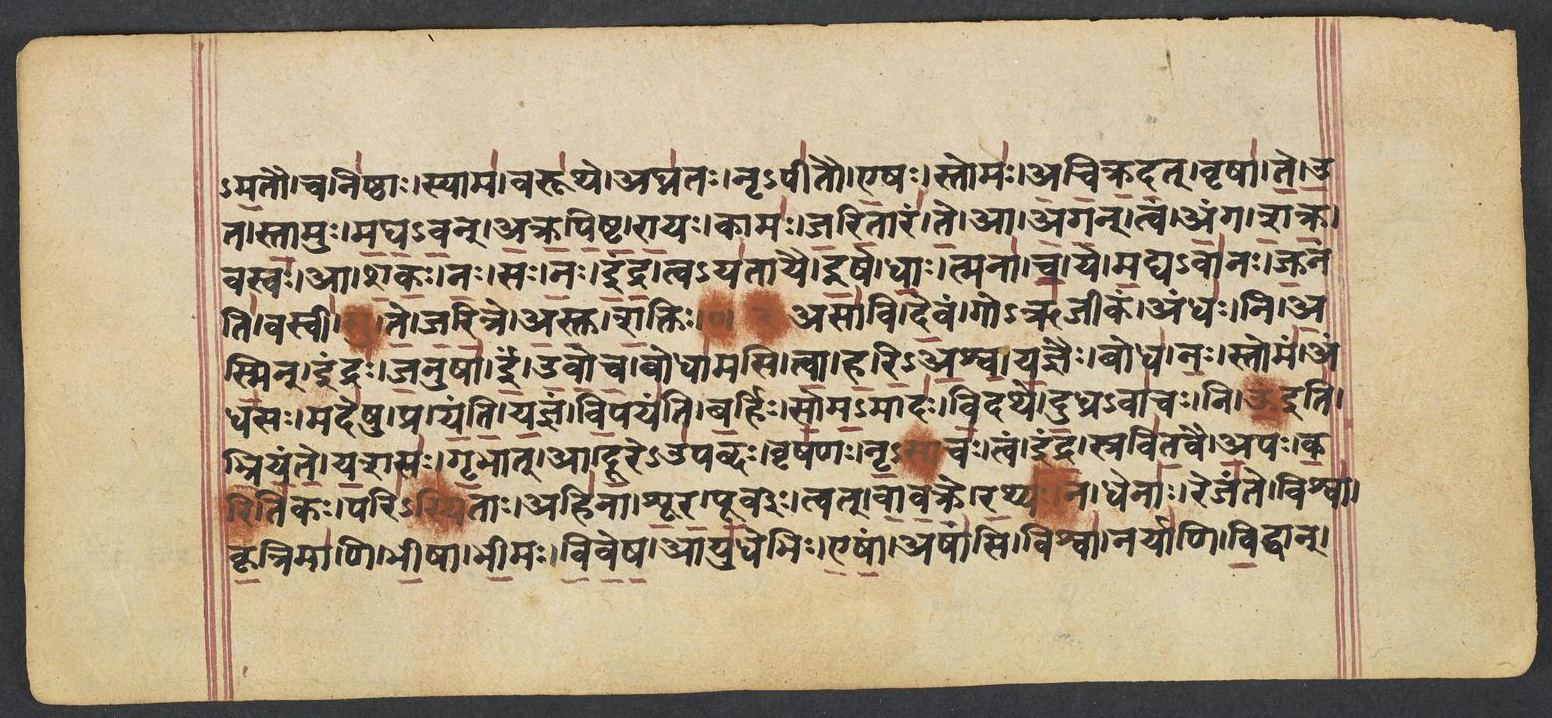
Where on the image
Penn Ms. Coll. 390 Item 41, fol. 507r (numbered 28r by the scribe) (OPenn image 507, lower leaf). Checked on the image: the Rigveda text on this page begins in RV 7.20.8 ‹-su-matau caniṣṭhāḥ syāma varūthe›. The next page with Rigveda text, fol. 507v (numbered 28v by the scribe), begins in RV 7.21.4 ‹indraḥ puraḥ jarhṛṣāṇaḥ vi›. Verses 7.20.8-10 end on this page; 7.20.8 begins on fol. 506v (numbered 27v by the scribe).
8yas ta̍ indra pri̱yo jano̱ dadā̍śa̱d asa̍n nire̱ke a̍driva̱ḥ sakhā̍ te | va̱yaṁ te̍ a̱syāṁ su̍ma̱tau cani̍ṣṭhā̱ḥ syāma̱ varū̍the̱ aghna̍to̱ nṛpī̍tau ||
9e̱ṣa stomo̍ acikrada̱d vṛṣā̍ ta u̱ta stā̱mur ma̍ghavann akrapiṣṭa | rā̱yas kāmo̍ jari̱tāra̍ṁ ta̱ āga̱n tvam a̱ṅga śa̍kra̱ vasva̱ ā śa̍ko naḥ ||
10sa na̍ indra̱ tvaya̍tāyā i̱ṣe dhā̱s tmanā̍ ca̱ ye ma̱ghavā̍no ju̱nanti̍ | vasvī̱ ṣu te̍ jari̱tre a̍stu śa̱ktir yū̱yam pā̍ta sva̱stibhi̱ḥ sadā̍ naḥ ||
Compare: Padapāṭha (word-by-word text written in the manuscript; Sansknet e-text via GRETIL)
8yaḥ | te | indra | priyaḥ | janaḥ | dadāśat | asat | nireke | adri-vaḥ | sakhā | te | vayam | te | asyām | su-matau | caniṣṭhāḥ | syāma | varūthe | aghnataḥ | nṛ-pītau
9eṣaḥ | stomaḥ | acikradat | vṛṣā | te | uta | stāmuḥ | magha-van | akrapiṣṭa | rāyaḥ | kāmaḥ | jaritāram | te | ā | agan | tvam | aṅga | śakra | vasvaḥ | ā | śakaḥ | naḥ
10saḥ | naḥ | indra | tva-yatāyai | iṣe | dhāḥ | tmanā | ca | ye | magha-vānaḥ | junanti | vasvī | su | te | jaritre | astu | śaktiḥ | yūyam | pāta | svasti-bhiḥ | sadā | naḥ
8Thy dear folk, Indra, who present oblations, are, in chief place, thy friends, O Thunder-wielder. May we be best content in this thy favour, sheltered by One who slays not, but preserves us.
9To thee the mighty hymn hath clamoured loudly, and, Maghavan, the eloquent hath besought thee. Desire of wealth hath come upon thy singer: help us then, gakra, to our share of riches.
10Place us by food which thou hast given, O Indra, us and the wealthy patrons who command us. Let thy great power bring good to him who lauds thee. Ye Gods, preserve us evermore with blessings.
Notes
- Sanskrit: Aufrecht's edition (1877) with the Vedic accents, as entered by van Nooten and Holland (GRETIL).
- English: Ralph T. H. Griffith, The Hymns of the Rigveda (1889-1892; 2nd ed. 1896-1897), from the VedaWeb digital text; OCR slips in that text were corrected against the printed 2nd edition (data/sources/rigveda/griffith_errata.json).
- Padapāṭha (edition text): Sansknet e-text via GRETIL (CC BY-NC-SA 4.0).
Cite
Sources
- Source: Penn Ms. Coll. 390 Item 41 (undated (catalogued with Penn's 18th-19th c. Vedic manuscripts)), OPenn, Public Domain Mark + Aufrecht's accented text (GRETIL) + Griffith's English (VedaWeb) (holding institution)
- Critical edition: Aufrecht (1877), accented e-text via GRETIL
← previous · → next · v cycle view · l back to library