Rigveda 7.3: To Agni
Introduction
Rigveda 7.3 is a hymn of 10 verses addressed to Agni. It stands in book (maṇḍala) 7, the family book of Vasiṣṭha. The Rigveda is the oldest collection of Sanskrit hymns, composed in the second half of the second millennium BCE and handed down orally for many centuries before it was written down.
The manuscript shown is Penn Ms. Coll. 390 Item 41 (University of Pennsylvania), an undated paper manuscript of the padapāṭha (the word-by-word recitation text, in which every word is written separately and compounds are split) of the whole Ṛgveda in Devanāgarī, 884 leaves in fascicles, 7-9 lines to the page, accents in red; this hymn stands on fol. 494v-495v. Each section below gives the verses that end on one page; the page boundaries were read on the images (the opening words of every page), not counted out. Where the manuscript is a padapāṭha (the word-by-word recitation text), the section shows Aufrecht's continuous (saṃhitā) text first and, as the edition text, the padapāṭha of the same verses, which is the form written on the page.
How was this verified? (Provenance)
Where on the image
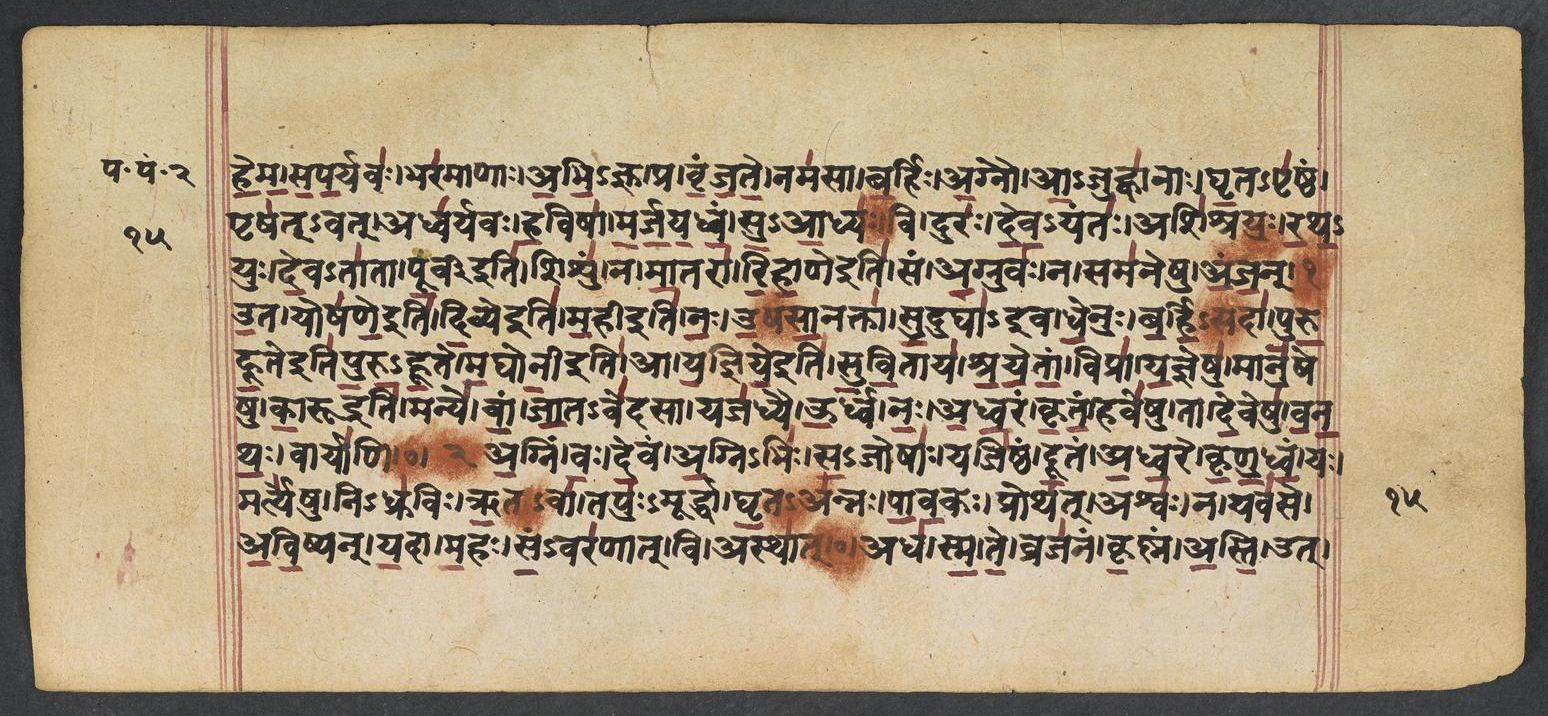
Penn Ms. Coll. 390 Item 41, fol. 494v (numbered 15v by the scribe) (OPenn image 495, upper leaf). Checked on the image: the Rigveda text on this page begins in RV 7.2.3 ‹-mahema›. The next page with Rigveda text, fol. 495r (numbered 16r by the scribe), begins in RV 7.3.3 ‹ut yasya te nava-jātasya›. Verses 7.3.1-2 end on this page.
1a̱gniṁ vo̍ de̱vam a̱gnibhi̍ḥ sa̱joṣā̱ yaji̍ṣṭhaṁ dū̱tam a̍dhva̱re kṛ̍ṇudhvam | yo martye̍ṣu̱ nidhru̍vir ṛ̱tāvā̱ tapu̍rmūrdhā ghṛ̱tānna̍ḥ pāva̱kaḥ ||
2protha̱d aśvo̱ na yava̍se 'vi̱ṣyan ya̱dā ma̱haḥ sa̱ṁvara̍ṇā̱d vy asthā̍t | ād a̍sya̱ vāto̱ anu̍ vāti śo̱cir adha̍ sma te̱ vraja̍naṁ kṛ̱ṣṇam a̍sti ||
Compare: Padapāṭha (word-by-word text written in the manuscript; Sansknet e-text via GRETIL)
1agnim | vaḥ | devam | agni-bhiḥ | sa-joṣāḥ | yajiṣṭham | dūtam | adhvare | kṛṇudhvam | yaḥ | martyeṣu | ni-dhruviḥ | ṛta-vā | tapuḥ-mūrdhā | ghṛta-annaḥ | pāvakaḥ
2prothat | aśvaḥ | na | yavase | aviṣyan | yadā | mahaḥ | sam-varaṇāt | vi | asthāt | āt | asya | vātaḥ | anu | vāti | śociḥ | adha | sma | te | vrajanam | kṛṣṇam | asti
1ASSOCIATE with fires, make your God Agni envoy at sacrifice, best skilled in worship, Established firm among mankind, the Holy, flame-crowned and fed with oil, the Purifier.
2Like a steed neighing eager for the pasture, when he hath stepped forth from the great enclosure: Then the wind following blows upon his splendour, and, straight, the path is black which thou hast travelled.
Where on the image
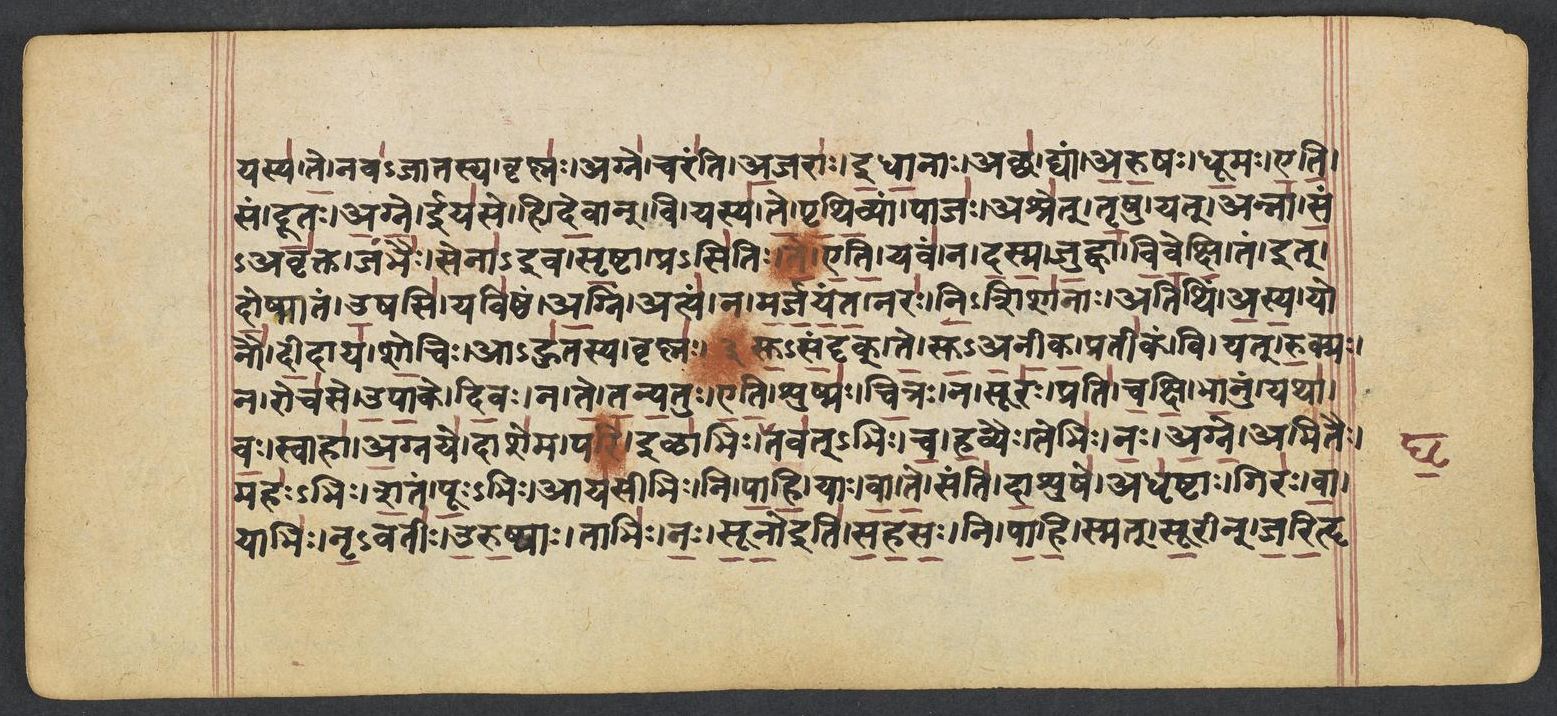
Penn Ms. Coll. 390 Item 41, fol. 495r (numbered 16r by the scribe) (OPenn image 495, lower leaf). Checked on the image: the Rigveda text on this page begins in RV 7.3.3 ‹ut yasya te nava-jātasya›. The next page with Rigveda text, fol. 495v (numbered 16v by the scribe), begins in RV 7.3.8 ‹-jaritṝn jāta-vedaḥ›. Verses 7.3.3-7 end on this page.
3ud yasya̍ te̱ nava̍jātasya̱ vṛṣṇo 'gne̱ cara̍nty a̱jarā̍ idhā̱nāḥ | acchā̱ dyām a̍ru̱ṣo dhū̱ma e̍ti̱ saṁ dū̱to a̍gna̱ īya̍se̱ hi de̱vān ||
4vi yasya̍ te pṛthi̱vyām pājo̱ aśre̍t tṛ̱ṣu yad annā̍ sa̱mavṛ̍kta̱ jambhai̍ḥ | sene̍va sṛ̱ṣṭā prasi̍tiṣ ṭa eti̱ yava̱ṁ na da̍sma ju̱hvā̍ vivekṣi ||
5tam id do̱ṣā tam u̱ṣasi̱ yavi̍ṣṭham a̱gnim atya̱ṁ na ma̍rjayanta̱ nara̍ḥ | ni̱śiśā̍nā̱ ati̍thim asya̱ yonau̍ dī̱dāya̍ śo̱cir āhu̍tasya̱ vṛṣṇa̍ḥ ||
6su̱sa̱ṁdṛk te̍ svanīka̱ pratī̍ka̱ṁ vi yad ru̱kmo na roca̍sa upā̱ke | di̱vo na te̍ tanya̱tur e̍ti̱ śuṣma̍ś ci̱tro na sūra̱ḥ prati̍ cakṣi bhā̱num ||
7yathā̍ va̱ḥ svāhā̱gnaye̱ dāśe̍ma̱ parīḻā̍bhir ghṛ̱tava̍dbhiś ca ha̱vyaiḥ | tebhi̍r no agne̱ ami̍tai̱r maho̍bhiḥ śa̱tam pū̱rbhir āya̍sībhi̱r ni pā̍hi ||
Compare: Padapāṭha (word-by-word text written in the manuscript; Sansknet e-text via GRETIL)
3ut | yasya | te | nava-jātasya | vṛṣṇaḥ | agne | caranti | ajarāḥ | idhānāḥ | accha | dyām | aruṣaḥ | dhūmaḥ | eti | sam | dūtaḥ | agne | īyase | hi | devān
4vi | yasya | te | pṛthivyām | pājaḥ | aśret | tṛṣu | yat | annā | sam-avṛkta | jambhaiḥ | senāiva | sṛṣṭā | pra-sitiḥ | te | eti | yavam | na | dasma | juhvā | vivekṣi
5tam | it | doṣā | tam | uṣasi | yaviṣṭham | agnim | atyam | na | marjayanta | naraḥ | ni-śiśānāḥ | atithim | asya | yonau | dīdāya | śociḥ | āhutasya | vṛṣṇaḥ
6su-sandṛk | te | su-anīka | pratīkam | vi | yat | rukmaḥ | na | rocase | upāke | di vaḥ | na | te | tanyatuḥ | eti | śuṣmaḥ | citraḥ | na | sūraḥ | prati | cakṣibhānum
7yathā | vaḥ | svāhā | agnaye | dāśema | pari | iḷābhiḥ | ghṛtavat-bhiḥ | ca | havyaiḥ | tebhiḥ | naḥ | agne | amitaiḥ | mahaḥ-bhiḥ | śatam | pūḥ-bhiḥ | āyasībhiḥ | ni | pāhi
3From thee a Bull but newly born, O Agni, the kindled everlasting flames rise upward. Aloft to heaven thy ruddy smoke ascendeth: Agni, thou speedest to the Gods as envoy.
4Thou whose fresh lustre o'er the earth advanceth when greedily with thy jaws thy food thou eatest. Like a host hurried onward comes thy lasso: fierce, with thy tongue thou piercest, as 'twere barley.
5The men have decked him both at eve and morning, Most Youthful Agni, as they tend a courser. They kindle him, a guest within his dwelling: bright shines the splendour of the worshipped Hero.
6O fair of face, beautiful is thine aspect when, very near at hand, like gold thou gleamest, Like Heaven's thundering roar thy might approaches, and like the wondrous Sun thy light thou showest.
7That we may worship, with your Hail to Agni! with sacrificial cakes and fat oblations, Guard us, O Agni, with those boundless glories as with a hundred fortresses of iron.
Where on the image
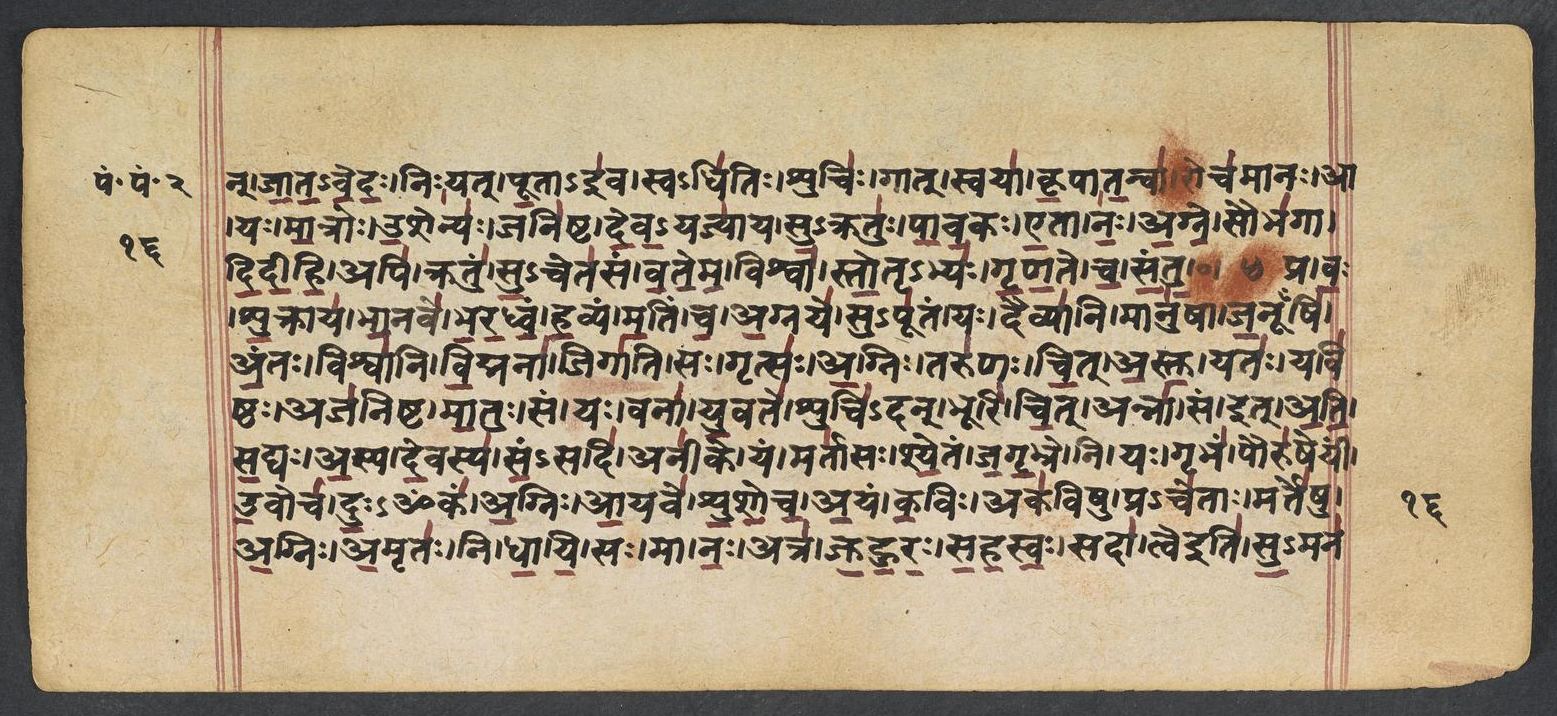
Penn Ms. Coll. 390 Item 41, fol. 495v (numbered 16v by the scribe) (OPenn image 496, upper leaf). Checked on the image: the Rigveda text on this page begins in RV 7.3.8 ‹-jaritṝn jāta-vedaḥ›. The next page with Rigveda text, fol. 496r (numbered 17r by the scribe), begins in RV 7.4.4 ‹-su-manasaḥ syāma›. Verses 7.3.8-10 end on this page; 7.3.8 begins on fol. 495r (numbered 16r by the scribe).
8yā vā̍ te̱ santi̍ dā̱śuṣe̱ adhṛ̍ṣṭā̱ giro̍ vā̱ yābhi̍r nṛ̱vatī̍r uru̱ṣyāḥ | tābhi̍r naḥ sūno sahaso̱ ni pā̍hi̱ smat sū̱rīñ ja̍ri̱tṝñ jā̍tavedaḥ ||
9nir yat pū̱teva̱ svadhi̍ti̱ḥ śuci̱r gāt svayā̍ kṛ̱pā ta̱nvā̱3̱̍ roca̍mānaḥ | ā yo mā̱tror u̱śenyo̱ jani̍ṣṭa deva̱yajyā̍ya su̱kratu̍ḥ pāva̱kaḥ ||
10e̱tā no̍ agne̱ saubha̍gā didī̱hy api̱ kratu̍ṁ su̱ceta̍saṁ vatema | viśvā̍ sto̱tṛbhyo̍ gṛṇa̱te ca̍ santu yū̱yam pā̍ta sva̱stibhi̱ḥ sadā̍ naḥ ||
Compare: Padapāṭha (word-by-word text written in the manuscript; Sansknet e-text via GRETIL)
8yāḥ | vā | te | santi | dāśuṣe | adhṛṣṭāḥ | giraḥ | vā | yābhiḥ | nṛ-vatīḥ | uruṣyāḥ | tābh iḥ | naḥ | sūno iti | sahasaḥ | ni | pāhi | smat | sūrīn | jaritṝn | jāta-vedaḥ
9niḥ | yat | pūtāiva | sva-dhitiḥ | śuciḥ | gāt | svayā | kṛpā | tanvā | rocamānaḥ | ā | yaḥ | mātroḥ | uśenyaḥ | janiṣṭa | deva-yajyāya | su-kratuḥ | pāvakaḥ
10etā | naḥ | agne | saubhagā | didīhi | api | kratum | su-cetasam | vatema | viśvā | stotṛ-bhyaḥ | gṛṇate | ca | santu | yūyam | pāta | svasti-bhiḥ | sadā | naḥ
8Thine are resistless songs for him who offers, and hero-giving hymns wherewith thou savest; With these, O Son of Strength, O Jâtavedas, guard us, preserve these princes and the singers.
9When forth he cometh, like an axe new-sharpened, pure in his form, resplendent in his body, Sprung, sought with eager longing, from his Parents, for the Gods' worship, Sage and Purifier:
10Shine this felicity on us, O Agni: may we attain to perfect understanding. All happiness be theirs who sing and praise thee. Ye Gods, preserve us evermore with blessings.
Notes
- Sanskrit: Aufrecht's edition (1877) with the Vedic accents, as entered by van Nooten and Holland (GRETIL).
- English: Ralph T. H. Griffith, The Hymns of the Rigveda (1889-1892; 2nd ed. 1896-1897), from the VedaWeb digital text; OCR slips in that text were corrected against the printed 2nd edition (data/sources/rigveda/griffith_errata.json).
- Padapāṭha (edition text): Sansknet e-text via GRETIL (CC BY-NC-SA 4.0).
Cite
Sources
- Source: Penn Ms. Coll. 390 Item 41 (undated (catalogued with Penn's 18th-19th c. Vedic manuscripts)), OPenn, Public Domain Mark + Aufrecht's accented text (GRETIL) + Griffith's English (VedaWeb) (holding institution)
- Critical edition: Aufrecht (1877), accented e-text via GRETIL
← previous · → next · v cycle view · l back to library