Rigveda 7.21: To Indra
Introduction
Rigveda 7.21 is a hymn of 10 verses addressed to Indra. It stands in book (maṇḍala) 7, the family book of Vasiṣṭha. The Rigveda is the oldest collection of Sanskrit hymns, composed in the second half of the second millennium BCE and handed down orally for many centuries before it was written down.
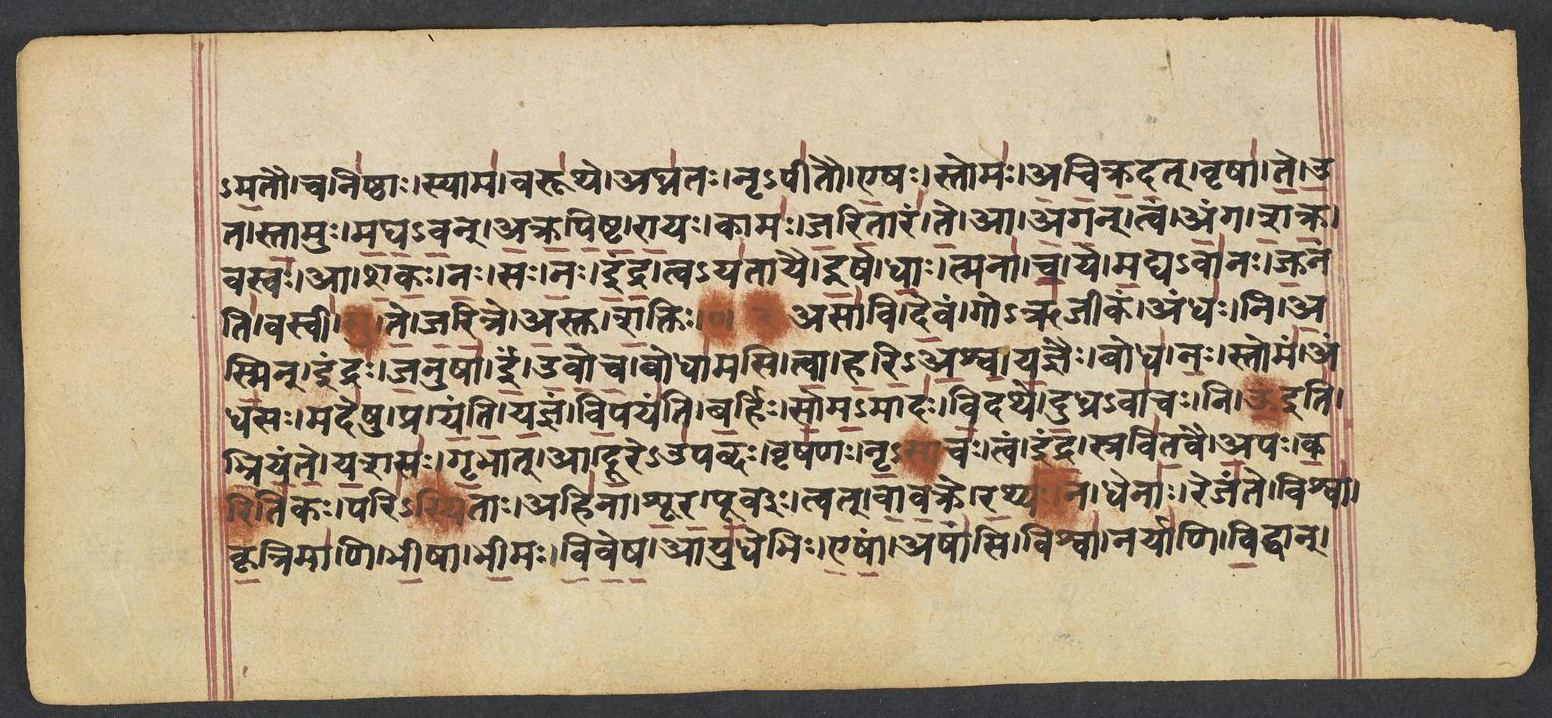
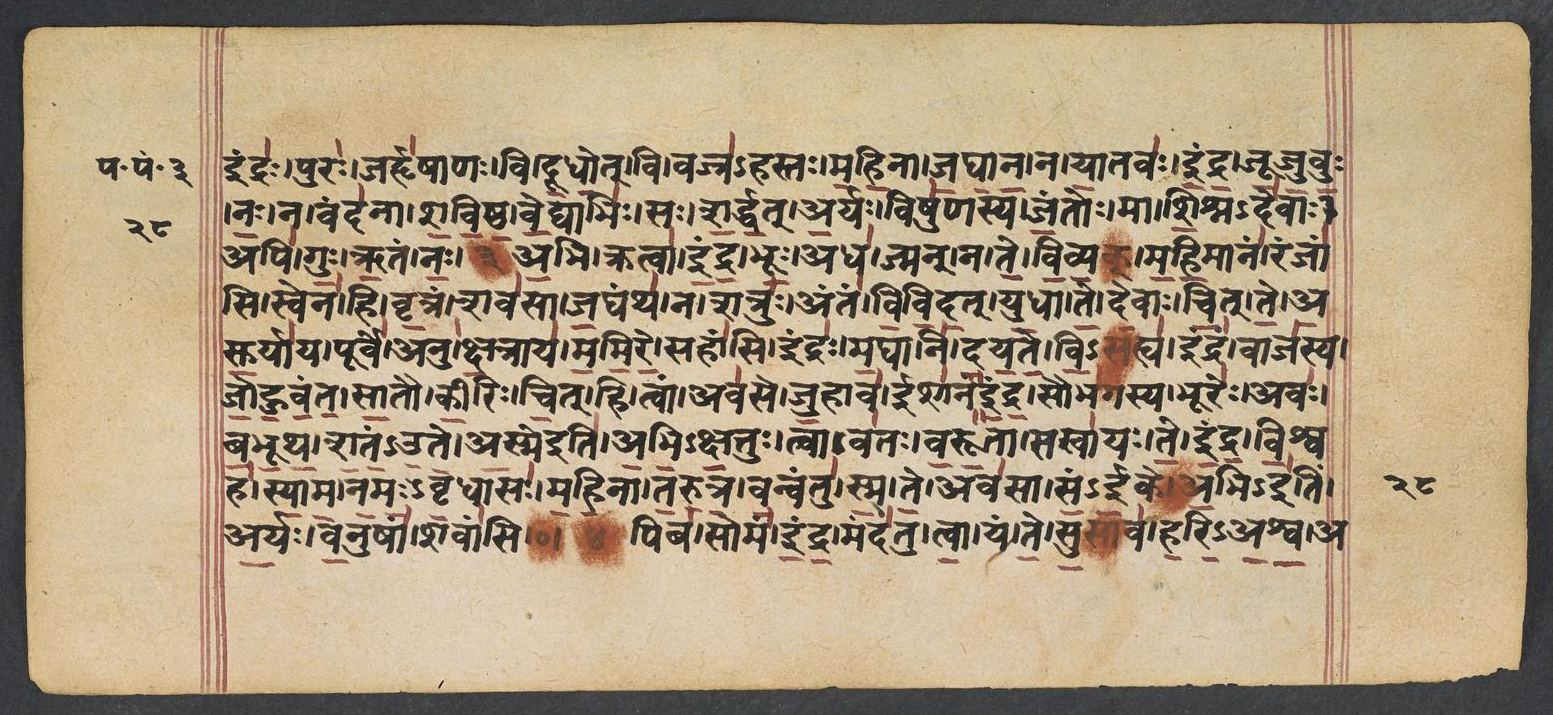
The manuscript shown is Penn Ms. Coll. 390 Item 41 (University of Pennsylvania), an undated paper manuscript of the padapāṭha (the word-by-word recitation text, in which every word is written separately and compounds are split) of the whole Ṛgveda in Devanāgarī, 884 leaves in fascicles, 7-9 lines to the page, accents in red; this hymn stands on fol. 507r-507v. Each section below gives the verses that end on one page; the page boundaries were read on the images (the opening words of every page), not counted out. Where the manuscript is a padapāṭha (the word-by-word recitation text), the section shows Aufrecht's continuous (saṃhitā) text first and, as the edition text, the padapāṭha of the same verses, which is the form written on the page.
How was this verified? (Provenance)
Where on the image
Penn Ms. Coll. 390 Item 41, fol. 507r (numbered 28r by the scribe) (OPenn image 507, lower leaf). Checked on the image: the Rigveda text on this page begins in RV 7.20.8 ‹-su-matau caniṣṭhāḥ syāma varūthe›. The next page with Rigveda text, fol. 507v (numbered 28v by the scribe), begins in RV 7.21.4 ‹indraḥ puraḥ jarhṛṣāṇaḥ vi›. Verses 7.21.1-3 end on this page.
1asā̍vi de̱vaṁ goṛ̍jīka̱m andho̱ ny a̍smi̱nn indro̍ ja̱nuṣe̍m uvoca | bodhā̍masi tvā haryaśva ya̱jñair bodhā̍ na̱ḥ stoma̱m andha̍so̱ made̍ṣu ||
2pra ya̍nti ya̱jñaṁ vi̱paya̍nti ba̱rhiḥ so̍ma̱mādo̍ vi̱dathe̍ du̱dhravā̍caḥ | ny u̍ bhriyante ya̱śaso̍ gṛ̱bhād ā dū̱raü̍pabdo̱ vṛṣa̍ṇo nṛ̱ṣāca̍ḥ ||
3tvam i̍ndra̱ sravi̍ta̱vā a̱pas ka̱ḥ pari̍ṣṭhitā̱ ahi̍nā śūra pū̱rvīḥ | tvad vā̍vakre ra̱thyo̱3̱̍ na dhenā̱ reja̍nte̱ viśvā̍ kṛ̱trimā̍ṇi bhī̱ṣā ||
Compare: Padapāṭha (word-by-word text written in the manuscript; Sansknet e-text via GRETIL)
1asāvi | devam | go--ṛjīkam | andhaḥ | ni | asmin | indraḥ | januṣā | īm | uvoca | bodhāmasi | tvā | haru-aśva | yajñaiḥ | bodha | naḥ | stomam | andhasaḥ | madeṣu
2pra | yanti | yajñam | vipayanti | barhiḥ | soma-mādaḥ | vidathe | dudhra-vācaḥ | ni | oṃ iti | bhriyante | yaśasaḥ | gṛbhāt | ā | dūre--upabdaḥ | vṛṣaṇaḥ | nṛ-sācaḥ
3tvam | indra | sravitavai | apaḥ | karitikaḥ | pari-sthitāḥ | ahinā | śūra | pūrvīḥ | tvat | vāvakre | rathyaḥ | na | dhenāḥ | rejante | viśvā | kṛtrimāṇi | bhīṣā
1PRESSED is the juice divine with milk commingled: thereto hath Indra ever been accustomed. We wake thee, Lord of Bays, with sacrifices: mark this our laud in the wild joy of Soma.
2On to the rite they move, the grass they scatter, these Soma-drinkers eloquent in synod. Hither, for men to grasp, are brought the press-stones, far-thundering, famous, strong, that wait on heroes.
3Indra, thou settest free the many waters that were encompassed, Hero, by the Dragon. Down rolled, as if on chariots borne, the rivers: through fear of thee all things created tremble.
Where on the image
Penn Ms. Coll. 390 Item 41, fol. 507v (numbered 28v by the scribe) (OPenn image 508, upper leaf). Checked on the image: the Rigveda text on this page begins in RV 7.21.4 ‹indraḥ puraḥ jarhṛṣāṇaḥ vi›. The next page with Rigveda text, fol. 508r (numbered 29r by the scribe), begins in RV 7.22.1 ‹-adriḥ sotuḥ bāhu-bhyām su-yataḥ›. Verses 7.21.4-10 end on this page; 7.21.4 begins on fol. 507r (numbered 28r by the scribe).
4bhī̱mo vi̍ve̱ṣāyu̍dhebhir eṣā̱m apā̍ṁsi̱ viśvā̱ naryā̍ṇi vi̱dvān | indra̱ḥ puro̱ jarhṛ̍ṣāṇo̱ vi dū̍dho̱d vi vajra̍hasto mahi̱nā ja̍ghāna ||
5na yā̱tava̍ indra jūjuvur no̱ na vanda̍nā śaviṣṭha ve̱dyābhi̍ḥ | sa śa̍rdhad a̱ryo viṣu̍ṇasya ja̱ntor mā śi̱śnade̍vā̱ api̍ gur ṛ̱taṁ na̍ḥ ||
6a̱bhi kratve̍ndra bhū̱r adha̱ jman na te̍ vivyaṅ mahi̱māna̱ṁ rajā̍ṁsi | svenā̱ hi vṛ̱traṁ śava̍sā ja̱ghantha̱ na śatru̱r anta̍ṁ vividad yu̱dhā te̍ ||
7de̱vāś ci̍t te asu̱ryā̍ya̱ pūrve 'nu̍ kṣa̱trāya̍ mamire̱ sahā̍ṁsi | indro̍ ma̱ghāni̍ dayate vi̱ṣahyendra̱ṁ vāja̍sya johuvanta sā̱tau ||
8kī̱riś ci̱d dhi tvām ava̍se ju̱hāveśā̍nam indra̱ saubha̍gasya̱ bhūre̍ḥ | avo̍ babhūtha śatamūte a̱sme a̍bhikṣa̱ttus tvāva̍to varū̱tā ||
9sakhā̍yas ta indra vi̱śvaha̍ syāma namovṛ̱dhāso̍ mahi̱nā ta̍rutra | va̱nvantu̍ smā̱ te 'va̍sā samī̱ke̱3̱̍ 'bhī̍tim a̱ryo va̱nuṣā̱ṁ śavā̍ṁsi ||
10sa na̍ indra̱ tvaya̍tāyā i̱ṣe dhā̱s tmanā̍ ca̱ ye ma̱ghavā̍no ju̱nanti̍ | vasvī̱ ṣu te̍ jari̱tre a̍stu śa̱ktir yū̱yam pā̍ta sva̱stibhi̱ḥ sadā̍ naḥ ||
Compare: Padapāṭha (word-by-word text written in the manuscript; Sansknet e-text via GRETIL)
4bhīmaḥ | viveṣa | āyudhebhiḥ | eṣām | apāṃsi | viśvā | naryāṇi | vidvān | indraḥ | puraḥ | jarhṛṣāṇaḥ | vi | dūdhot | vi | vajra-hastaḥ | mahinā | jaghāna
5na | yātavaḥ | indra | jūjuvuḥ | naḥ | na | vandanā | śaviṣṭha | vedyābhiḥ | saḥ | śardhat | aryaḥ | viṣuṇasya | jantoḥ | mā | śiśna-devāḥ | api | guḥ | ṛtam | naḥ
6abhi | kratvā | indra | bhūḥ | adha | jman | na | te | vivyak | mahimānam | rajāṃsi | svena | hi | vṛtram | śavasā | jaghantha | na | śatruḥ | antam | vividat | yudhā | te
7devāḥ | cit | te | asuryāya | pūrve | anu | kṣatrāya | mamire | sahāṃsi | indraḥ | maghāni | dayate | vi-sahya | indram | vājasya | johuvanta | sātau
8kīriḥ | cit | hi | tvām | avase | juhāva | īśānam | indra | saubhagasya | bhūreḥ | avaḥ | babhūtha | śatam-ūte | asme iti | abhi-kṣattuḥ | tvāvataḥ | varūtā
9sakhāyaḥ | te | indra | viśvaha | syāma | namaḥ-vṛdhāsaḥ | mahinā | tarutra | vanvantu | sma | te | avasā | samīke | abhi-itim | aryaḥ | vanuṣām | śavāṃsi
10saḥ | naḥ | indra | tva-yatāyai | iṣe | dhāḥ | tmanā | ca | ye | magha-vānaḥ | junanti | vasvī | su | te | jaritre | astu | śaktiḥ | yūyam | pāta | svasti-bhiḥ | sadā | naḥ
4Skilled in all manly deeds the God terrific hath with his weapons mastered these opponents. Indra in rapturous joy shook down their castles he slew them in his might, the Thunder-wielder.
5No evil spirits have impelled us, Indra, nor fiends, O Mightiest God, with their devices. Let our true God subdue the hostile rabble: let not the lewd approach our holy worship.
6Thou in thy strength surpassest Earth and Heaven: the regions comprehend not all thy greatness. With thine own power and might thou slewest Vr̥itra: no foe hath found the end of thee in battle.
7Even the earlier Deities submitted their powers to thy supreme divine dominion. Indra wins wealth and deals it out to other's: men in the strife for booty call on Indra.
8The humble hath invoked thee for protection, thee, Lord of great felicity, O Indra. Thou with a hundred aids hast been our Helper: one who brings gifts like thee hath his defender.
9May we, O Indra, be thy friends for ever, eagerly, Conqueror, yielding greater homage. May, through thy grace, the strength of us who battle quell in the shock the onset of the foeman.
10Place us by food which thou hast given, O Indra, us and the wealthy patrons who command us. Let thy great power bring good to him who lauds thee. Ye Gods, preserve us evermore with blessings.
Notes
- Sanskrit: Aufrecht's edition (1877) with the Vedic accents, as entered by van Nooten and Holland (GRETIL).
- English: Ralph T. H. Griffith, The Hymns of the Rigveda (1889-1892; 2nd ed. 1896-1897), from the VedaWeb digital text; OCR slips in that text were corrected against the printed 2nd edition (data/sources/rigveda/griffith_errata.json).
- Padapāṭha (edition text): Sansknet e-text via GRETIL (CC BY-NC-SA 4.0).
Cite
Sources
- Source: Penn Ms. Coll. 390 Item 41 (undated (catalogued with Penn's 18th-19th c. Vedic manuscripts)), OPenn, Public Domain Mark + Aufrecht's accented text (GRETIL) + Griffith's English (VedaWeb) (holding institution)
- Critical edition: Aufrecht (1877), accented e-text via GRETIL
← previous · → next · v cycle view · l back to library