Rigveda 7.23: To Indra
Introduction
Rigveda 7.23 is a hymn of 6 verses addressed to Indra. It stands in book (maṇḍala) 7, the family book of Vasiṣṭha. The Rigveda is the oldest collection of Sanskrit hymns, composed in the second half of the second millennium BCE and handed down orally for many centuries before it was written down.
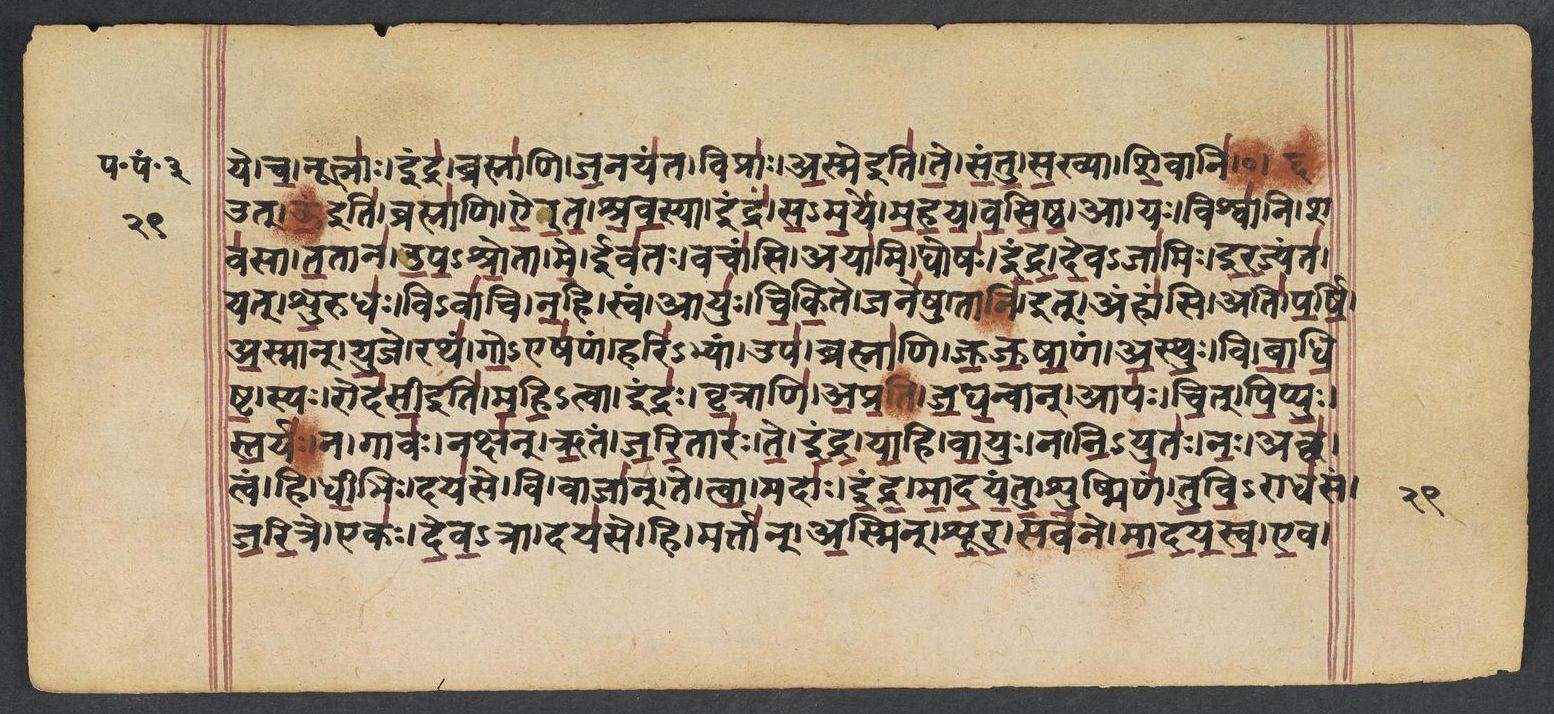
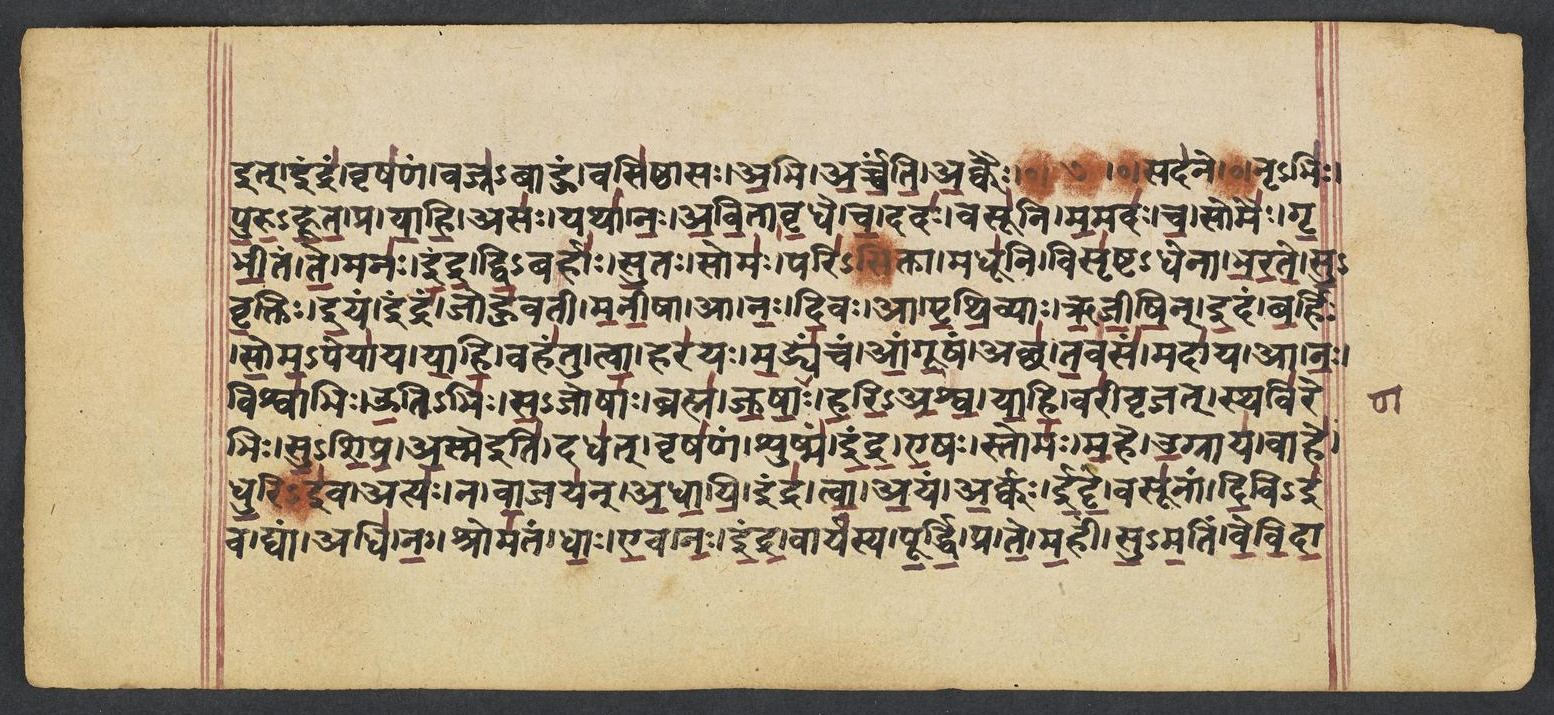
The manuscript shown is Penn Ms. Coll. 390 Item 41 (University of Pennsylvania), an undated paper manuscript of the padapāṭha (the word-by-word recitation text, in which every word is written separately and compounds are split) of the whole Ṛgveda in Devanāgarī, 884 leaves in fascicles, 7-9 lines to the page, accents in red; this hymn stands on fol. 508v-509r. Each section below gives the verses that end on one page; the page boundaries were read on the images (the opening words of every page), not counted out. Where the manuscript is a padapāṭha (the word-by-word recitation text), the section shows Aufrecht's continuous (saṃhitā) text first and, as the edition text, the padapāṭha of the same verses, which is the form written on the page.
How was this verified? (Provenance)
Where on the image
Penn Ms. Coll. 390 Item 41, fol. 508v (numbered 29v by the scribe) (OPenn image 509, upper leaf). Checked on the image: the Rigveda text on this page begins in RV 7.22.9 ‹ye ca nūtnāḥ indra›. The next page with Rigveda text, fol. 509r (numbered 30r by the scribe), begins in RV 7.23.6 ‹it indram vṛṣaṇam vajra-bāhum›. Verses 7.23.1-5 end on this page.
1ud u̱ brahmā̍ṇy airata śrava̱syendra̍ṁ sama̱rye ma̍hayā vasiṣṭha | ā yo viśvā̍ni̱ śava̍sā ta̱tāno̍paśro̱tā ma̱ īva̍to̱ vacā̍ṁsi ||
2ayā̍mi̱ ghoṣa̍ indra de̱vajā̍mir ira̱jyanta̱ yac chu̱rudho̱ vivā̍ci | na̱hi svam āyu̍ś ciki̱te jane̍ṣu̱ tānīd aṁhā̱ṁsy ati̍ parṣy a̱smān ||
3yu̱je ratha̍ṁ ga̱veṣa̍ṇa̱ṁ hari̍bhyā̱m upa̱ brahmā̍ṇi jujuṣā̱ṇam a̍sthuḥ | vi bā̍dhiṣṭa̱ sya roda̍sī mahi̱tvendro̍ vṛ̱trāṇy a̍pra̱tī ja̍gha̱nvān ||
4āpa̍ś cit pipyuḥ sta̱ryo̱3̱̍ na gāvo̱ nakṣa̍nn ṛ̱taṁ ja̍ri̱tāra̍s ta indra | yā̱hi vā̱yur na ni̱yuto̍ no̱ acchā̱ tvaṁ hi dhī̱bhir daya̍se̱ vi vājā̍n ||
5te tvā̱ madā̍ indra mādayantu śu̱ṣmiṇa̍ṁ tuvi̱rādha̍saṁ jari̱tre | eko̍ deva̱trā daya̍se̱ hi martā̍n a̱smiñ chū̍ra̱ sava̍ne mādayasva ||
Compare: Padapāṭha (word-by-word text written in the manuscript; Sansknet e-text via GRETIL)
1ut | oṃ iti | brahmāṇi | airata | śravasyā | indram | sa-marye | mahaya | vasiṣṭha | ā | yaḥ | viśvāni | śavasā | tatāna | upa-śrotā | me | īvataḥ | vacāṃsi
2ayāmi | ghoṣaḥ | indra | deva-jāmiḥ | irajyanta | yat | śurudhaḥ | vi-vāci | nahi | svam | āyuḥ | cikite | janeṣu | tāni | it | aṃhāṃsi | ati | parṣi | asmān
3yuje | ratham | go--eṣaṇam | hari-bhyām | upa | brahmāṇi | jujuṣāṇam | asthuḥ | vi | bādh iṣṭa | syaḥ | rodasī iti | mahi-tvā | indraḥ | vṛtrāṇi | aprati | jaghanvān
4āpaḥ | cit | pipyuḥ | staryaḥ | na | gāvaḥ | nakṣan | ṛtam | jaritāraḥ | te | indra | yāhi | vāyuḥ | na | ni-yutaḥ | naḥ | accha | tvam | hi | dhī-bhiḥ | dayase | vi | vājān
5te | tvā | madāḥ | indra | mādayantu | śuṣmiṇam | tuvi-rādhasam | jaritre | ekaḥ | deva-trā | dayase | hi | martān | asmin | śūra | savane | mādayasva
1PRAYERS have been offered up through love of glory: Vasishṭha, honour Indra in the battle. He who with might extends through all existence hears words which I, his faithful servant, utter.
2A cry was raised which reached the Gods, O Indra, a cry to them to send us strength in combat. None among men knows his own life's duration: bear us in safety over these our troubles.
3The Bays, the booty-seeking car I harness: my prayers have reached him who accepts them gladly. Indra, when he had slain resistless foemen, forced with his might the two world-halves asunder.
4Like barren cows, moreover, swelled the waters: the singers sought thy holy rite, O Indra. Come unto us as with his team comes Vâyu: thou, through our solemn hymns bestowest booty.
5So may these gladdening draughts rejoice thee, Indra, the Mighty, very bounteous to the singer. Alone among the Gods thou pitiest mortals: O Hero, make thee glad at this libation.
Where on the image
Penn Ms. Coll. 390 Item 41, fol. 509r (numbered 30r by the scribe) (OPenn image 509, lower leaf). Checked on the image: the Rigveda text on this page begins in RV 7.23.6 ‹it indram vṛṣaṇam vajra-bāhum›. The next page with Rigveda text, fol. 509v (numbered 30v by the scribe), begins in RV 7.24.6 ‹-vevidāma iṣam pinva maghavat-bhyaḥ›. Verse 7.23.6 ends on this page; 7.23.6 begins on fol. 508v (numbered 29v by the scribe).
6e̱ved indra̱ṁ vṛṣa̍ṇa̱ṁ vajra̍bāhu̱ṁ vasi̍ṣṭhāso a̱bhy a̍rcanty a̱rkaiḥ | sa na̍ḥ stu̱to vī̱rava̍d dhātu̱ goma̍d yū̱yam pā̍ta sva̱stibhi̱ḥ sadā̍ naḥ ||
Compare: Padapāṭha (word-by-word text written in the manuscript; Sansknet e-text via GRETIL)
6eva | it | indram | vṛṣaṇam | vajra-bāhum | vasiṣṭhāsaḥ | abhi | arcanti | arkaiḥ | saḥ | naḥ | stutaḥ | vīra-vat | dhātu | go--mat | yūyam | pāta | svasti-bhiḥ | sadā | naḥ
6Thus the Vasishṭhas glorify with praises Indra, the Powerful whose arm wields thunder. Praised, may he guard our wealth in kine and heroes. Ye Gods, preserve us evermore with blessings.
Notes
- Sanskrit: Aufrecht's edition (1877) with the Vedic accents, as entered by van Nooten and Holland (GRETIL).
- English: Ralph T. H. Griffith, The Hymns of the Rigveda (1889-1892; 2nd ed. 1896-1897), from the VedaWeb digital text; OCR slips in that text were corrected against the printed 2nd edition (data/sources/rigveda/griffith_errata.json).
- Padapāṭha (edition text): Sansknet e-text via GRETIL (CC BY-NC-SA 4.0).
Cite
Sources
- Source: Penn Ms. Coll. 390 Item 41 (undated (catalogued with Penn's 18th-19th c. Vedic manuscripts)), OPenn, Public Domain Mark + Aufrecht's accented text (GRETIL) + Griffith's English (VedaWeb) (holding institution)
- Critical edition: Aufrecht (1877), accented e-text via GRETIL
← previous · → next · v cycle view · l back to library