Rigveda 7.24: To Indra
Introduction
Rigveda 7.24 is a hymn of 6 verses addressed to Indra. It stands in book (maṇḍala) 7, the family book of Vasiṣṭha. The Rigveda is the oldest collection of Sanskrit hymns, composed in the second half of the second millennium BCE and handed down orally for many centuries before it was written down.
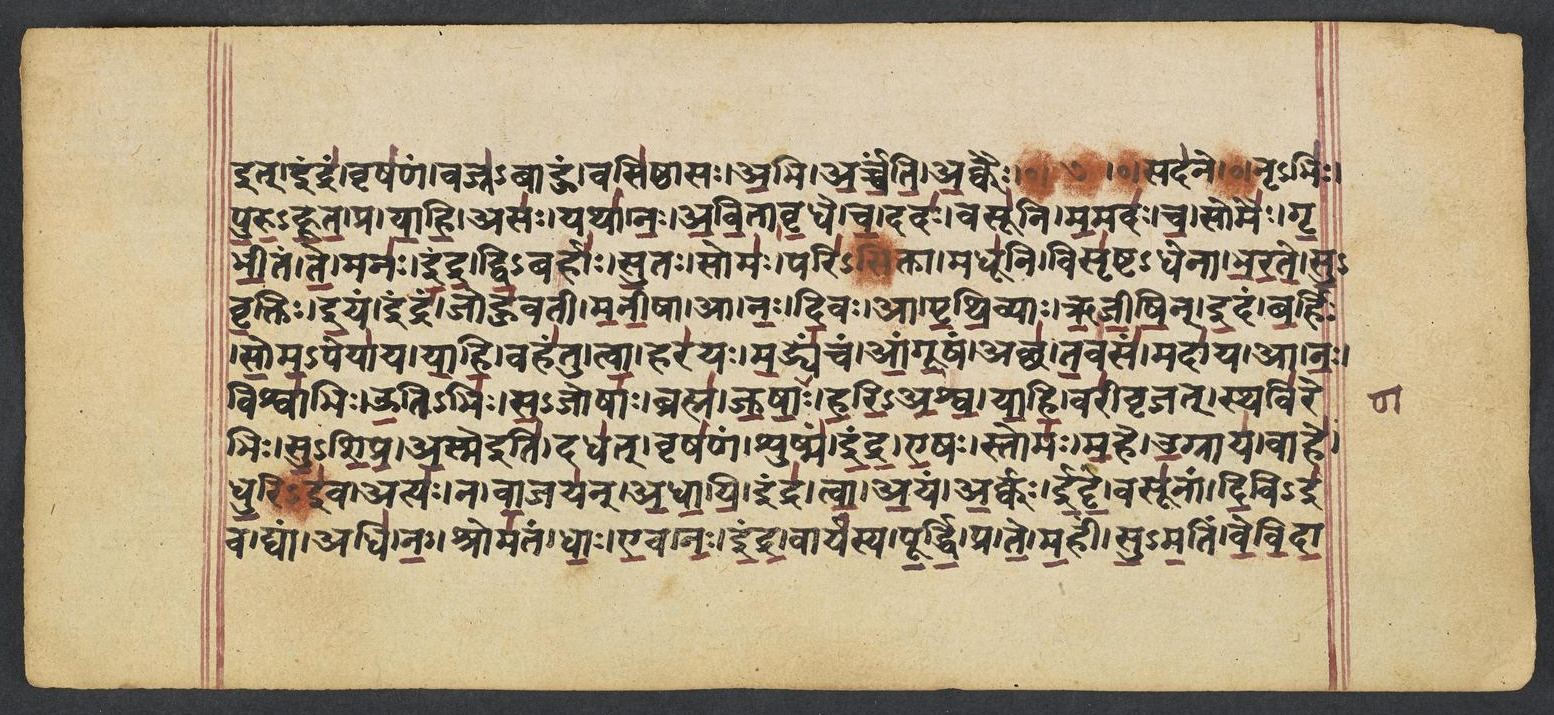
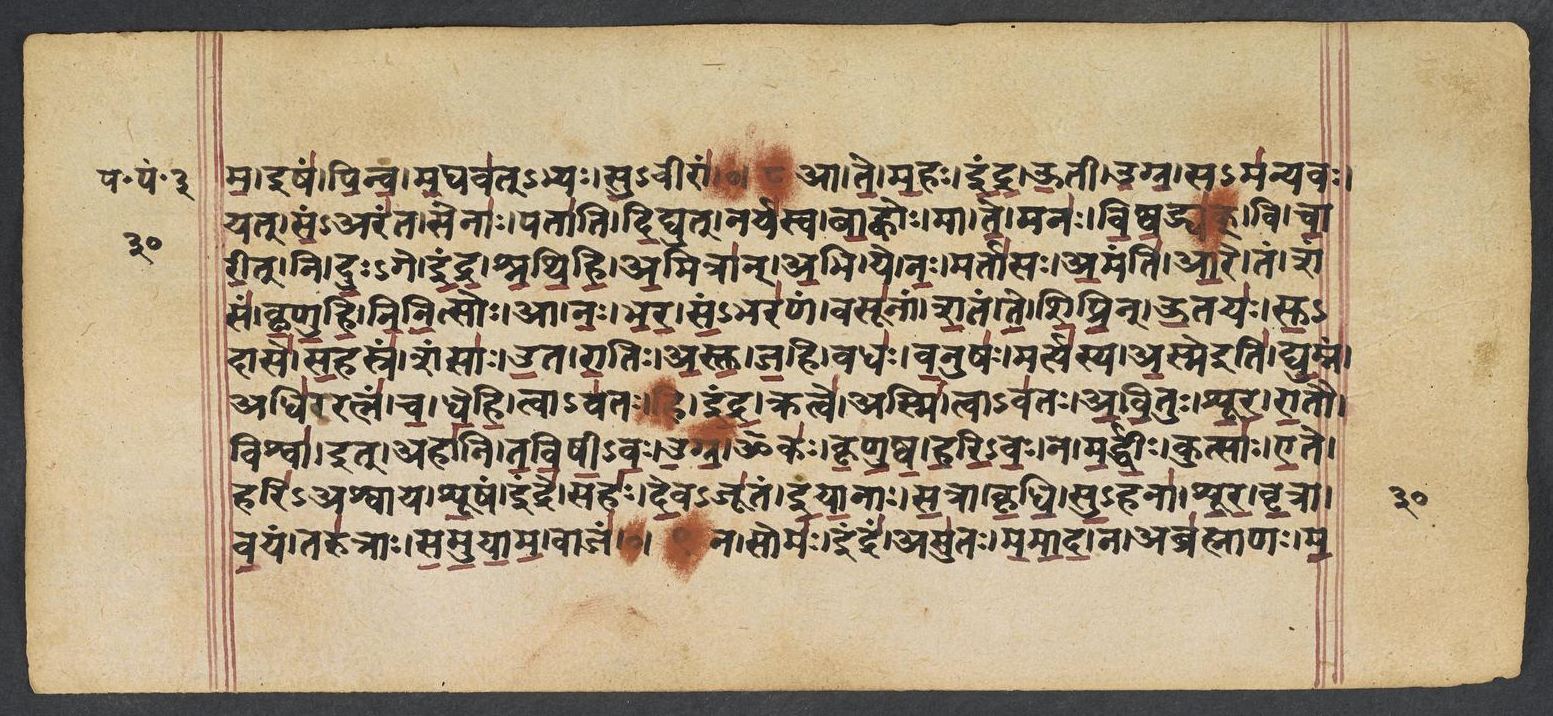
The manuscript shown is Penn Ms. Coll. 390 Item 41 (University of Pennsylvania), an undated paper manuscript of the padapāṭha (the word-by-word recitation text, in which every word is written separately and compounds are split) of the whole Ṛgveda in Devanāgarī, 884 leaves in fascicles, 7-9 lines to the page, accents in red; this hymn stands on fol. 509r-509v. Each section below gives the verses that end on one page; the page boundaries were read on the images (the opening words of every page), not counted out. Where the manuscript is a padapāṭha (the word-by-word recitation text), the section shows Aufrecht's continuous (saṃhitā) text first and, as the edition text, the padapāṭha of the same verses, which is the form written on the page.
How was this verified? (Provenance)
Where on the image
Penn Ms. Coll. 390 Item 41, fol. 509r (numbered 30r by the scribe) (OPenn image 509, lower leaf). Checked on the image: the Rigveda text on this page begins in RV 7.23.6 ‹it indram vṛṣaṇam vajra-bāhum›. The next page with Rigveda text, fol. 509v (numbered 30v by the scribe), begins in RV 7.24.6 ‹-vevidāma iṣam pinva maghavat-bhyaḥ›. Verses 7.24.1-5 end on this page.
1yoni̍ṣ ṭa indra̱ sada̍ne akāri̱ tam ā nṛbhi̍ḥ puruhūta̱ pra yā̍hi | aso̱ yathā̍ no 'vi̱tā vṛ̱dhe ca̱ dado̱ vasū̍ni ma̱mada̍ś ca̱ somai̍ḥ ||
2gṛ̱bhī̱taṁ te̱ mana̍ indra dvi̱barhā̍ḥ su̱taḥ soma̱ḥ pari̍ṣiktā̱ madhū̍ni | visṛ̍ṣṭadhenā bharate suvṛ̱ktir i̱yam indra̱ṁ johu̍vatī manī̱ṣā ||
3ā no̍ di̱va ā pṛ̍thi̱vyā ṛ̍jīṣinn i̱dam ba̱rhiḥ so̍ma̱peyā̍ya yāhi | vaha̍ntu tvā̱ hara̍yo ma̱drya̍ñcam āṅgū̱ṣam acchā̍ ta̱vasa̱m madā̍ya ||
4ā no̱ viśvā̍bhir ū̱tibhi̍ḥ sa̱joṣā̱ brahma̍ juṣā̱ṇo ha̍ryaśva yāhi | varī̍vṛja̱t sthavi̍rebhiḥ suśiprā̱sme dadha̱d vṛṣa̍ṇa̱ṁ śuṣma̍m indra ||
5e̱ṣa stomo̍ ma̱ha u̱grāya̱ vāhe̍ dhu̱rī̱3̱̍vātyo̱ na vā̱jaya̍nn adhāyi | indra̍ tvā̱yam a̱rka ī̍ṭṭe̱ vasū̍nāṁ di̱vī̍va̱ dyām adhi̍ na̱ḥ śroma̍taṁ dhāḥ ||
Compare: Padapāṭha (word-by-word text written in the manuscript; Sansknet e-text via GRETIL)
1yoniḥ | te | indra | sadane | akāri | tam | ā | nṛ-bhiḥ | puru-hūta | pra | yāhi | asaḥ | yathā | naḥ | avitā | vṛdhe | ca | dadaḥ | vasūni | mamadaḥ | ca | somaiḥ
2gṛbhītam | te | manaḥ | indra | dvi-barhāḥ | sutaḥ | somaḥ | pari-siktā | madhūni | visṛṣṭa-dhenā | bharate | su-vṛktiḥ | iyam | indram | johuvatī | manīṣā
3ā | naḥ | divaḥ | ā | pṛthivyāḥ | ṛjīṣin | idam | barhiḥ | sama-peyāya | yāhi | vahantu | tvā | harayaḥ | madryañcam | āṅgūṣam | accha | tavasam | madāya
4ā | naḥ | viśvābhiḥ | ūti-bhiḥ | sa-joṣāḥ | brahma | juṣāṇaḥ | hari-aśva | yāhi | varīvṛjat | sthavirebhiḥ | su-śipra | asme iti | dadhat | vṛṣaṇam | śuṣmam | indra
5eṣaḥ | stomaḥ | mahe | ugrāya | vāhe | dhuri-iva | atyaḥ | na | vājayan | adhāyi | indra | tvā | ayam | arkaḥ | īṭe | vasāūnām | divi-iva | dyām | adhi | naḥ | śromatam | dhāḥ
1A HOME is made for thee to dwell in, Indra: O Much-invoked, go thitherwith the heroes. That thou, to prosper us, mayst be our Helper, vouchsafe us wealth, rejoice with draughts of Soma.
2Indra, thy wish, twice-strong, is comprehended: pressed is the Soma, poured are pleasant juices. This hymn of praise, from loosened tongue, made perfect, draws Indra to itself with loud invoking.
3Come, thou Impetuous; God, from earth or heaven; come to our holy grass to drink the Soma. Hither to me let thy Bay Horses bring thee to listen to our hymns and make thee joyful.
4Come unto us with all thine aids, accordant, Lord of Bay Steeds, accepting our devotions, Fair-helmeted, o'ercoming with the mighty, and lending us the strength of bulls, O Indra.
5As to the chariot pole a vigorous courser, this laud is brought to the great strong Upholder. This hymn solicits wealth of thee: in heaven, as 'twere above the sky, set thou our glory.
Where on the image
Penn Ms. Coll. 390 Item 41, fol. 509v (numbered 30v by the scribe) (OPenn image 510, upper leaf). Checked on the image: the Rigveda text on this page begins in RV 7.24.6 ‹-vevidāma iṣam pinva maghavat-bhyaḥ›. The next page with Rigveda text, fol. 510r (numbered 31r by the scribe), begins in RV 7.26.1 ‹-magha-vānam sutāsaḥ tasmai uktham›. Verse 7.24.6 ends on this page; 7.24.6 begins on fol. 509r (numbered 30r by the scribe).
6e̱vā na̍ indra̱ vārya̍sya pūrdhi̱ pra te̍ ma̱hīṁ su̍ma̱tiṁ ve̍vidāma | iṣa̍m pinva ma̱ghava̍dbhyaḥ su̱vīrā̍ṁ yū̱yam pā̍ta sva̱stibhi̱ḥ sadā̍ naḥ ||
Compare: Padapāṭha (word-by-word text written in the manuscript; Sansknet e-text via GRETIL)
6eva | naḥ | indra | vāryasya | pūrdhi | pra | te | mahīm | su-matim | vevidāma | iṣam | pinva | maghavat-bhyaḥ | su-vīrām | yūyam | pāta | svasti-bhiḥ | sadā | naḥ
6With precious things. O Indra, thus content us: may we attain to thine exalted favour. Send our chiefs plenteous food with hero children. Preserve us evermore, ye Gods, with blessings.
Notes
- Sanskrit: Aufrecht's edition (1877) with the Vedic accents, as entered by van Nooten and Holland (GRETIL).
- English: Ralph T. H. Griffith, The Hymns of the Rigveda (1889-1892; 2nd ed. 1896-1897), from the VedaWeb digital text; OCR slips in that text were corrected against the printed 2nd edition (data/sources/rigveda/griffith_errata.json).
- Padapāṭha (edition text): Sansknet e-text via GRETIL (CC BY-NC-SA 4.0).
Cite
Sources
- Source: Penn Ms. Coll. 390 Item 41 (undated (catalogued with Penn's 18th-19th c. Vedic manuscripts)), OPenn, Public Domain Mark + Aufrecht's accented text (GRETIL) + Griffith's English (VedaWeb) (holding institution)
- Critical edition: Aufrecht (1877), accented e-text via GRETIL
← previous · → next · v cycle view · l back to library