Rigveda 7.29: To Indra
Introduction
Rigveda 7.29 is a hymn of 5 verses addressed to Indra. It stands in book (maṇḍala) 7, the family book of Vasiṣṭha. The Rigveda is the oldest collection of Sanskrit hymns, composed in the second half of the second millennium BCE and handed down orally for many centuries before it was written down.
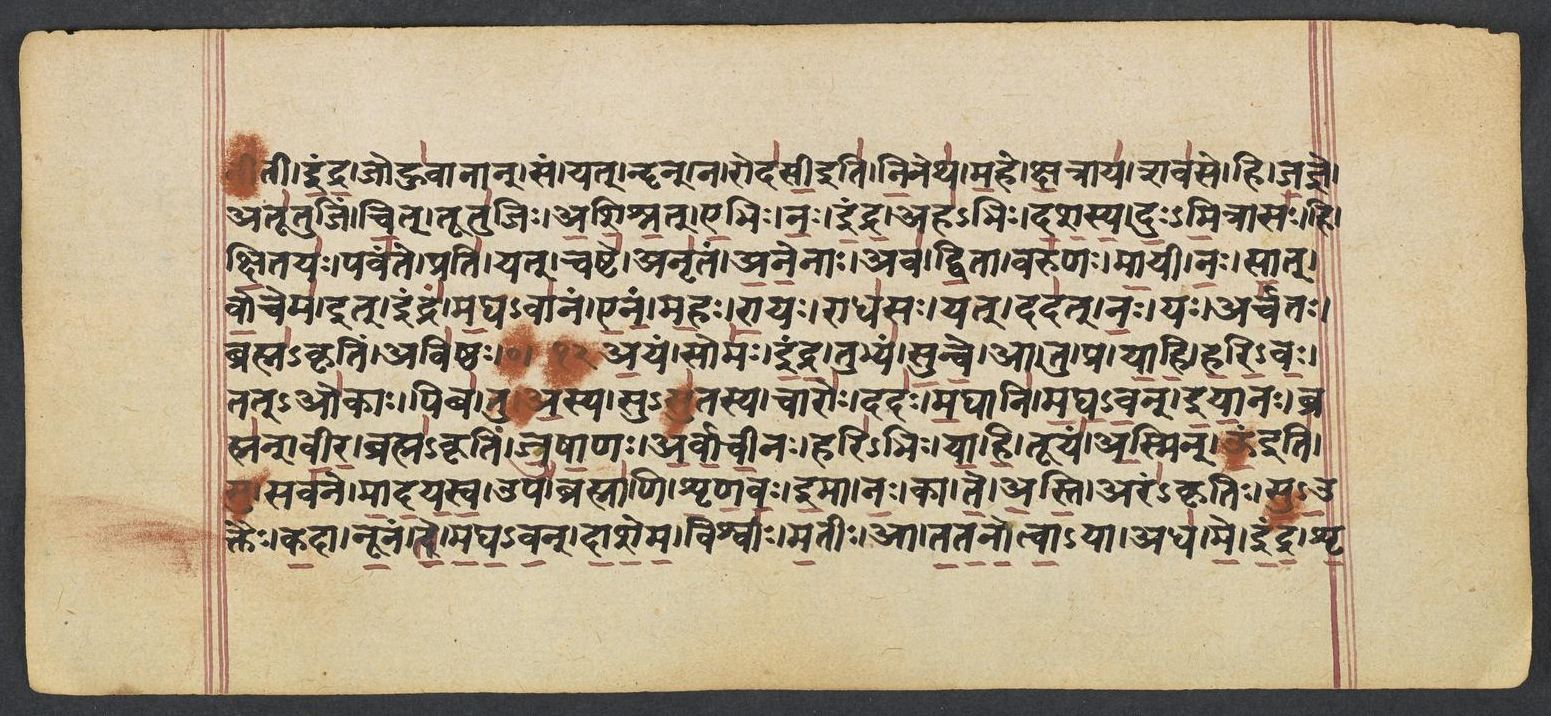
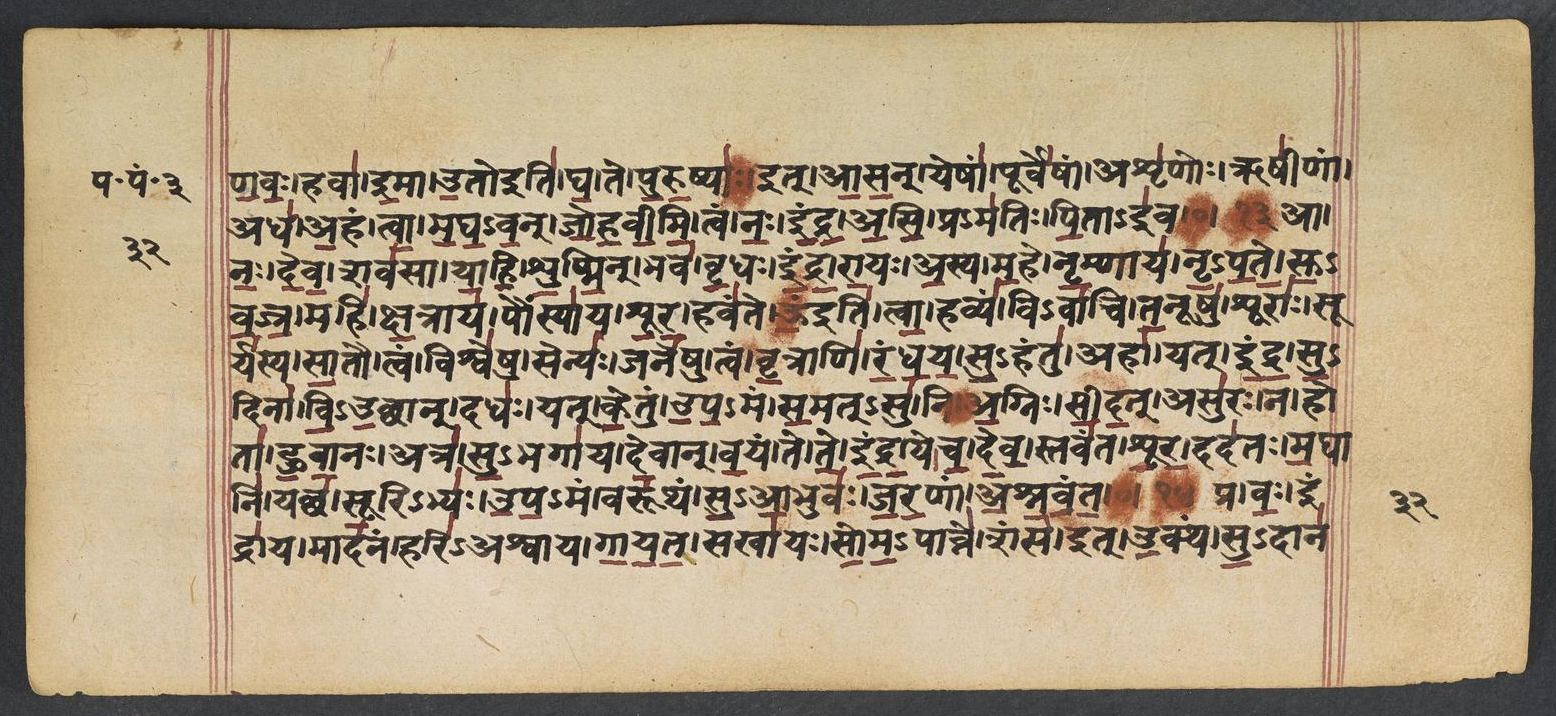
The manuscript shown is Penn Ms. Coll. 390 Item 41 (University of Pennsylvania), an undated paper manuscript of the padapāṭha (the word-by-word recitation text, in which every word is written separately and compounds are split) of the whole Ṛgveda in Devanāgarī, 884 leaves in fascicles, 7-9 lines to the page, accents in red; this hymn stands on fol. 511r-511v. Each section below gives the verses that end on one page; the page boundaries were read on the images (the opening words of every page), not counted out. Where the manuscript is a padapāṭha (the word-by-word recitation text), the section shows Aufrecht's continuous (saṃhitā) text first and, as the edition text, the padapāṭha of the same verses, which is the form written on the page.
How was this verified? (Provenance)
Where on the image
Penn Ms. Coll. 390 Item 41, fol. 511r (numbered 32r by the scribe) (OPenn image 511, lower leaf). Checked on the image: the Rigveda text on this page begins in RV 7.28.3 ‹-pra-nītī indra johuvānān sam›. The next page with Rigveda text, fol. 511v (numbered 32v by the scribe), begins in RV 7.29.3 ‹-śṛṇavaḥ havā imā›. Verses 7.29.1-2 end on this page.
1a̱yaṁ soma̍ indra̱ tubhya̍ṁ sunva̱ ā tu pra yā̍hi hariva̱s tado̍kāḥ | pibā̱ tv a1̱̍sya suṣu̍tasya̱ cāro̱r dado̍ ma̱ghāni̍ maghavann iyā̱naḥ ||
2brahma̍n vīra̱ brahma̍kṛtiṁ juṣā̱ṇo̍ 'rvācī̱no hari̍bhir yāhi̱ tūya̍m | a̱sminn ū̱ ṣu sava̍ne mādaya̱svopa̱ brahmā̍ṇi śṛṇava i̱mā na̍ḥ ||
Compare: Padapāṭha (word-by-word text written in the manuscript; Sansknet e-text via GRETIL)
1ayam | somaḥ | indra | tubhyam | sunve | ā | tu | pra | yāhi | hari-vaḥ | tat-okāḥ | piba | tu | asya | su-sutasya | cāroḥ | dadaḥ | maghāni | magha-van | iyānaḥ
2brahman | vīra | brahma-kṛtim | juṣāṇaḥ | arvācīnaḥ | hari-bhiḥ | yāhi | tūyam | asmin | oṃ iti | su | savane | mādayasva | upa | brahmāṇi | śṛṇavaḥ | imā | naḥ
1THIS Soma hath been pressed for thee, O Indra: come hither, Lord of Bays, for this thou lovest. Drink of this fair, this well-effused libation: Maghavan, give us wealth when we implore thee.
2Come to us quickly with thy Bay Steeds, Hero, come to our prayer, accepting our devotion. Enjoy thyself aright at this libation, and listen thou unto the prayers we offer.
Where on the image
Penn Ms. Coll. 390 Item 41, fol. 511v (numbered 32v by the scribe) (OPenn image 512, upper leaf). Checked on the image: the Rigveda text on this page begins in RV 7.29.3 ‹-śṛṇavaḥ havā imā›. The next page with Rigveda text, fol. 512r (numbered 33r by the scribe), begins in RV 7.31.2 ‹-su-dānave uta dyukṣam yathā›. Verses 7.29.3-5 end on this page; 7.29.3 begins on fol. 511r (numbered 32r by the scribe).
3kā te̍ a̱sty ara̍ṁkṛtiḥ sū̱ktaiḥ ka̱dā nū̱naṁ te̍ maghavan dāśema | viśvā̍ ma̱tīr ā ta̍tane tvā̱yādhā̍ ma indra śṛṇavo̱ have̱mā ||
4u̱to ghā̱ te pu̍ru̱ṣyā̱3̱̍ id ā̍sa̱n yeṣā̱m pūrve̍ṣā̱m aśṛ̍ṇo̱r ṛṣī̍ṇām | adhā̱haṁ tvā̍ maghavañ johavīmi̱ tvaṁ na̍ indrāsi̱ prama̍tiḥ pi̱teva̍ ||
5vo̱cemed indra̍m ma̱ghavā̍nam enam ma̱ho rā̱yo rādha̍so̱ yad dada̍n naḥ | yo arca̍to̱ brahma̍kṛti̱m avi̍ṣṭho yū̱yam pā̍ta sva̱stibhi̱ḥ sadā̍ naḥ ||
Compare: Padapāṭha (word-by-word text written in the manuscript; Sansknet e-text via GRETIL)
3kā | te | asti | aram-kṛtiḥ | su-uktaiḥ | kadā | nūnam | te | magha-van | dāśema | viśvāḥ | matīḥ | ā | tatane | tvāyā | adha | me | indra | śṛṇavaḥ | havā | imā
4uto iti | gha | te | puruṣyāḥ | it | āsan | yeṣām | pūrveṣām | aśṛṇoḥ | ṛṣīṇām | adha | aham | tvā | magha-van | johavīmi | tvam | naḥ | indra | asi | pra-matiḥ | pitāiva
5vocema | it | indram | magha-vānam | enam | mahaḥ | rayaḥ | rādhasaḥ | yat | dadat | naḥ | yaḥ | arcataḥ | brahma-kṛtim | aviṣṭhaḥ | yūyam | pāta | svasti-bhiḥ | sadā | naḥ
3What satisfaction do our hymns afford thee? When, Maghavan? Now let us do thee service. Hymns, only hymns, with love for thee, I weave thee: then hear, O Indra, these mine invocations.
4They, verily, were also human beings whom thou wast wont to hear, those earlier sages. Hence I, O Indra Maghavan, invoke thee: thou art our Providence, even as a Father.
5We will address this liberal Lord, this Indra, that he may grant us gifts of ample riches, Best favourer of the singer's prayer and praises. Preserve us evermore, ye Gods, with blessings.
Notes
- Sanskrit: Aufrecht's edition (1877) with the Vedic accents, as entered by van Nooten and Holland (GRETIL).
- English: Ralph T. H. Griffith, The Hymns of the Rigveda (1889-1892; 2nd ed. 1896-1897), from the VedaWeb digital text; OCR slips in that text were corrected against the printed 2nd edition (data/sources/rigveda/griffith_errata.json).
- Padapāṭha (edition text): Sansknet e-text via GRETIL (CC BY-NC-SA 4.0).
Cite
Sources
- Source: Penn Ms. Coll. 390 Item 41 (undated (catalogued with Penn's 18th-19th c. Vedic manuscripts)), OPenn, Public Domain Mark + Aufrecht's accented text (GRETIL) + Griffith's English (VedaWeb) (holding institution)
- Critical edition: Aufrecht (1877), accented e-text via GRETIL
← previous · → next · v cycle view · l back to library