Rigveda 7.4: To Agni
Introduction
Rigveda 7.4 is a hymn of 10 verses addressed to Agni. It stands in book (maṇḍala) 7, the family book of Vasiṣṭha. The Rigveda is the oldest collection of Sanskrit hymns, composed in the second half of the second millennium BCE and handed down orally for many centuries before it was written down.
The manuscript shown is Penn Ms. Coll. 390 Item 41 (University of Pennsylvania), an undated paper manuscript of the padapāṭha (the word-by-word recitation text, in which every word is written separately and compounds are split) of the whole Ṛgveda in Devanāgarī, 884 leaves in fascicles, 7-9 lines to the page, accents in red; this hymn stands on fol. 495v-496r. Each section below gives the verses that end on one page; the page boundaries were read on the images (the opening words of every page), not counted out. Where the manuscript is a padapāṭha (the word-by-word recitation text), the section shows Aufrecht's continuous (saṃhitā) text first and, as the edition text, the padapāṭha of the same verses, which is the form written on the page.
How was this verified? (Provenance)
Where on the image
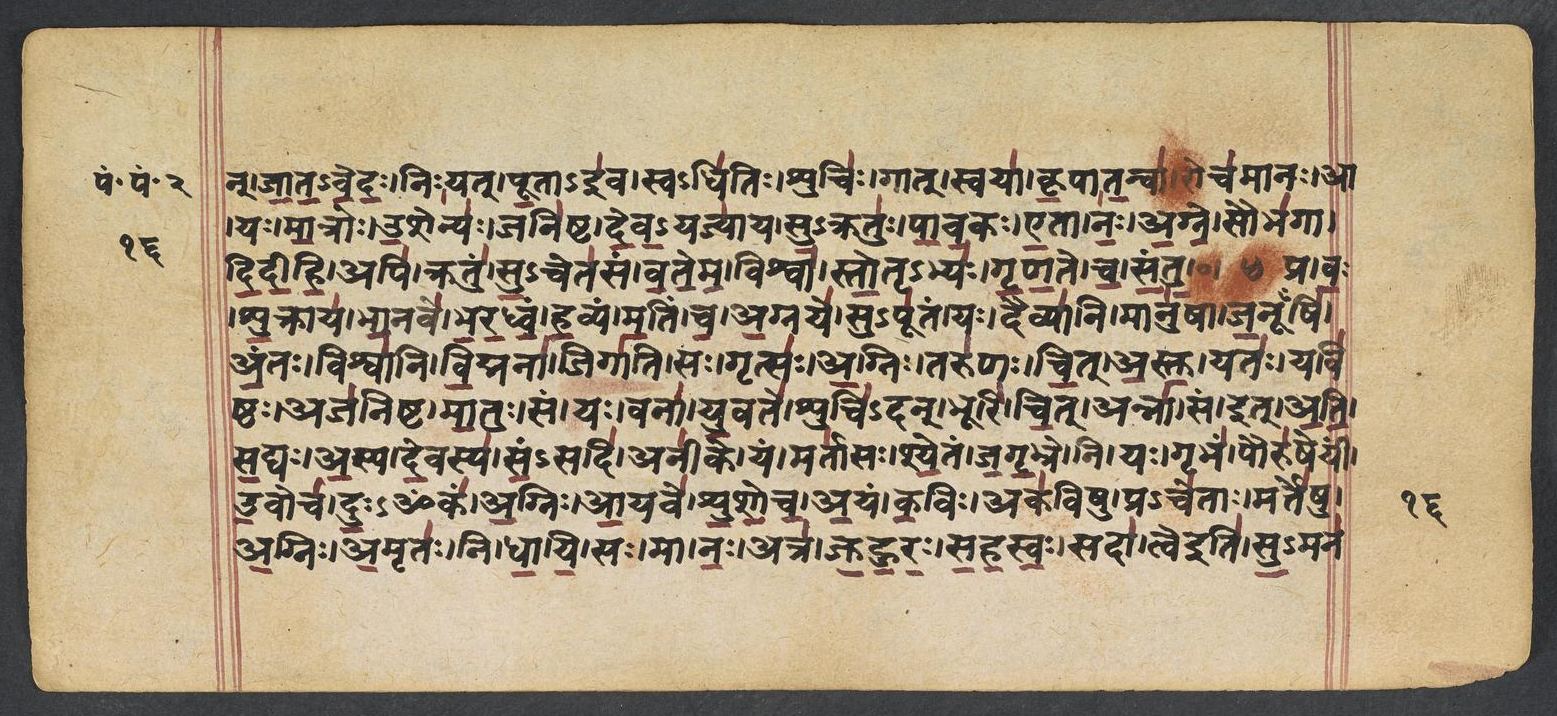
Penn Ms. Coll. 390 Item 41, fol. 495v (numbered 16v by the scribe) (OPenn image 496, upper leaf). Checked on the image: the Rigveda text on this page begins in RV 7.3.8 ‹-jaritṝn jāta-vedaḥ›. The next page with Rigveda text, fol. 496r (numbered 17r by the scribe), begins in RV 7.4.4 ‹-su-manasaḥ syāma›. Verses 7.4.1-3 end on this page.
1pra va̍ḥ śu̱krāya̍ bhā̱nave̍ bharadhvaṁ ha̱vyam ma̱tiṁ cā̱gnaye̱ supū̍tam | yo daivyā̍ni̱ mānu̍ṣā ja̱nūṁṣy a̱ntar viśvā̍ni vi̱dmanā̱ jigā̍ti ||
2sa gṛtso̍ a̱gnis taru̍ṇaś cid astu̱ yato̱ yavi̍ṣṭho̱ aja̍niṣṭa mā̱tuḥ | saṁ yo vanā̍ yu̱vate̱ śuci̍da̱n bhūri̍ ci̱d annā̱ sam id a̍tti sa̱dyaḥ ||
3a̱sya de̱vasya̍ sa̱ṁsady anī̍ke̱ yam martā̍saḥ śye̱taṁ ja̍gṛ̱bhre | ni yo gṛbha̱m pauru̍ṣeyīm u̱voca̍ du̱roka̍m a̱gnir ā̱yave̍ śuśoca ||
Compare: Padapāṭha (word-by-word text written in the manuscript; Sansknet e-text via GRETIL)
1pra | vaḥ | śukrāya | bhānave | bharadhvam | havyam | matim | ca | agnaye | su-pūtam | yaḥ | daivyāni | mānuṣā | janūṃṣi | antaḥ | viśvāni | vidmanā | jigāti
2saḥ | gūtsaḥ | agniḥ | taruṇaḥ | cit | astu | yataḥ | yaviṣṭhaḥ | ajaniṣṭa | mātuḥ | sam | yaḥ | vanā | yuvate | śuci-dam | bhūri | cit | annā | sam | it | atti | sadyaḥ
3asya | devasya | sam-sadi | anīke | yam | martāsaḥ | śyetam | jagṛbhre | ni | yaḥ | gṛbham | pauruṣeyīm | uvoca | duḥ-okam | agniḥ | āyave | śuśoca
1BRING forth your gifts to his refulgent splendour, your hymn as purest offering to Agni, To him who goes as messenger with knowledge between all songs of men and Gods in heaven.
2Wise must this Agni be, though young and tender, since he was born, Most Youthful, of his Mother; He who with bright teeth seizeth fast the forests, and eats his food, though plenteous, in a moment.
3Before his presence must we all assemble, this God's whom men have seized in his white splendour. This Agni who hath brooked that men should seize him hath shone for man with glow insufferable.
Where on the image
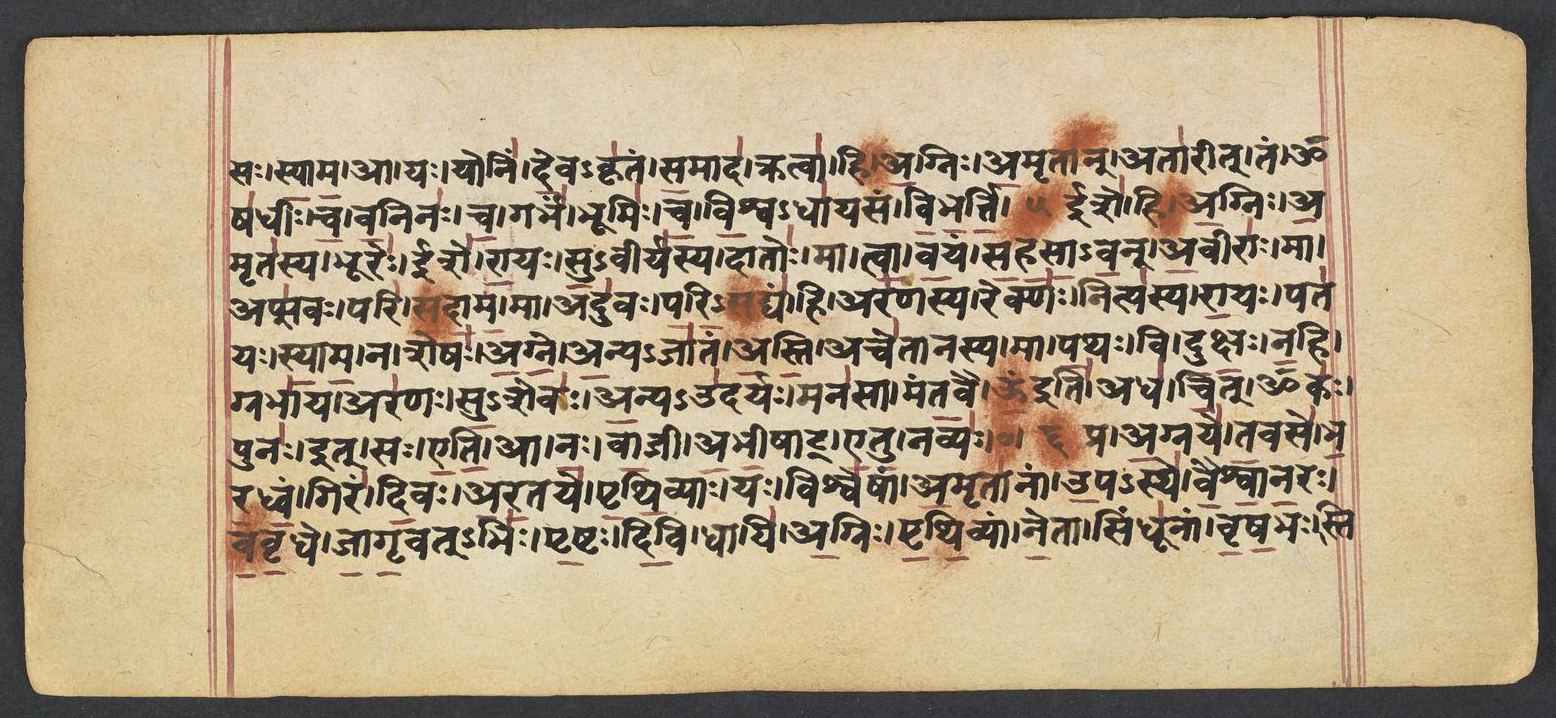
Penn Ms. Coll. 390 Item 41, fol. 496r (numbered 17r by the scribe) (OPenn image 496, lower leaf). Checked on the image: the Rigveda text on this page begins in RV 7.4.4 ‹-su-manasaḥ syāma›. The next page with Rigveda text, fol. 496v (numbered 17v by the scribe), begins in RV 7.5.2 ‹-stiyānām saḥ mānuṣīḥ abhi›. Verses 7.4.4-10 end on this page; 7.4.4 begins on fol. 495v (numbered 16v by the scribe).
4a̱yaṁ ka̱vir aka̍viṣu̱ prace̍tā̱ marte̍ṣv a̱gnir a̱mṛto̱ ni dhā̍yi | sa mā no̱ atra̍ juhuraḥ sahasva̱ḥ sadā̱ tve su̱mana̍saḥ syāma ||
5ā yo yoni̍ṁ de̱vakṛ̍taṁ sa̱sāda̱ kratvā̱ hy a1̱̍gnir a̱mṛtā̱m̐ atā̍rīt | tam oṣa̍dhīś ca va̱nina̍ś ca̱ garbha̱m bhūmi̍ś ca vi̱śvadhā̍yasam bibharti ||
6īśe̱ hy a1̱̍gnir a̱mṛta̍sya̱ bhūre̱r īśe̍ rā̱yaḥ su̱vīrya̍sya̱ dāto̍ḥ | mā tvā̍ va̱yaṁ sa̍hasāvann a̱vīrā̱ māpsa̍va̱ḥ pari̍ ṣadāma̱ mādu̍vaḥ ||
7pa̱ri̱ṣadya̱ṁ hy ara̍ṇasya̱ rekṇo̱ nitya̍sya rā̱yaḥ pata̍yaḥ syāma | na śeṣo̍ agne a̱nyajā̍tam a̱sty ace̍tānasya̱ mā pa̱tho vi du̍kṣaḥ ||
8na̱hi grabhā̱yāra̍ṇaḥ su̱śevo̱ 'nyoda̍ryo̱ mana̍sā̱ manta̱vā u̍ | adhā̍ ci̱d oka̱ḥ puna̱r it sa e̱ty ā no̍ vā̱jy a̍bhī̱ṣāḻ e̍tu̱ navya̍ḥ ||
9tvam a̍gne vanuṣya̱to ni pā̍hi̱ tvam u̍ naḥ sahasāvann ava̱dyāt | saṁ tvā̍ dhvasma̱nvad a̱bhy e̍tu̱ pātha̱ḥ saṁ ra̱yiḥ spṛ̍ha̱yāyya̍ḥ saha̱srī ||
10e̱tā no̍ agne̱ saubha̍gā didī̱hy api̱ kratu̍ṁ su̱ceta̍saṁ vatema | viśvā̍ sto̱tṛbhyo̍ gṛṇa̱te ca̍ santu yū̱yam pā̍ta sva̱stibhi̱ḥ sadā̍ naḥ ||
Compare: Padapāṭha (word-by-word text written in the manuscript; Sansknet e-text via GRETIL)
4ayam | kaviḥ | akaviṣu | pra-cetāḥ | marteṣu | agniḥ | amṛtaḥ | ni | dhāyi | saḥ | mā | naḥ | atra | juhuraḥ | sahasvaḥ | sadā | tve iti | su-manasaḥ | syāma
5ā | yaḥ | yonim | deva-kṛtam | sasāda | kratvā | hi | agniḥ | amṛtān | atārīt | tam | oṣadhīḥ | ca | vaninaḥ | ca | garbham | bhūmiḥ | ca | viśva-dhāyasam | bibharti
6īśe | hi | agniḥ | amṛtasya | bhūreḥ | īśe | rāyaḥ | su-vīryasya | dātoḥ | mā | tvā | vayam | sahasāvan | avīrāḥ | mā | apsavaḥ | pari | sadāma | mā | aduvaḥ
7pari-sadyam | hi | araṇasya | rekṇaḥ | nityasya | rāyaḥ | patayaḥ | syāma | na | śeṣaḥ | agne | anya-jātam | asti | acetānasya | mā | pathaḥ | vi | dukṣaḥ
8nahi | grabhāya | araṇaḥ | su-śevaḥ | anya-udaryaḥ | manasā | mantavai | oṃ iti | adha | cit | okaḥ | punaḥ | it | saḥ | eti | ā | naḥ | vājī | abhīṣāṭ | etu | navyaḥ
9tvam | agne | vanuṣyataḥ | ni | pāhi | tvam | oṃ iti | naḥ | sahasāvan | avadyāt | sam | tvā | dhvasman-vat | abhi | etu | pāthaḥ | sam | rayiḥ | spṛhayāyyaḥ | sahasrī
10etā | naḥ | agne | saubhagā | didīhi | api | kratum | su-cetasam | vatema | viśvā | stotṛ-bhyaḥ | gṛṇate | ca | santu | yūyam | pāta | svasti-bhiḥ | sadā | naḥ
4Far-seeing hath this Agni been established, deathless mid mortals, wise among the foolish. Here, O victorious God, forbear to harm us: may weforever share thy gracious favour.
5He who hath occupied his God-made dwelling, Agni, in wisdom hath surpassed Immortals. A Babe unborn, the plants and trees support him, and the earth beareth him the All-sustainer.
6Agni is Lord of Amrit. in abundance, Lord of the gift of wealth and hero valour, Victorious God, let us not sit about thee like men devoid of strength, beauty, and worship.
7The foeman's treasure may be won with labour: may we be masters of our own possessions. Agni, no son is he who springs from others: lengthen not out the pathways of the foolish.
8Unwelcome for adoption is the stranger, one to be thought of as another's offspring, Though grown familiar by continual presence. May our strong hero come, freshly triumphant.
9Guard us from him who would assail us, Agni; preserve us O thou Victor, from dishonour. Here let the place of darkening come upon thee: may wealth be ours, desirable, in thousands.
10Shine this felicity on us, O Agni: may we attain to perfect understanding. All happiness be theirs who sing and praise thee. Ye Gods, preserve us evermore with blessings.
Notes
- Sanskrit: Aufrecht's edition (1877) with the Vedic accents, as entered by van Nooten and Holland (GRETIL).
- English: Ralph T. H. Griffith, The Hymns of the Rigveda (1889-1892; 2nd ed. 1896-1897), from the VedaWeb digital text; OCR slips in that text were corrected against the printed 2nd edition (data/sources/rigveda/griffith_errata.json).
- Padapāṭha (edition text): Sansknet e-text via GRETIL (CC BY-NC-SA 4.0).
Cite
Sources
- Source: Penn Ms. Coll. 390 Item 41 (undated (catalogued with Penn's 18th-19th c. Vedic manuscripts)), OPenn, Public Domain Mark + Aufrecht's accented text (GRETIL) + Griffith's English (VedaWeb) (holding institution)
- Critical edition: Aufrecht (1877), accented e-text via GRETIL
← previous · → next · v cycle view · l back to library