Rigveda 7.32: To Indra
Introduction
Rigveda 7.32 is a hymn of 27 verses addressed to Indra. It stands in book (maṇḍala) 7, the family book of Vasiṣṭha. The Rigveda is the oldest collection of Sanskrit hymns, composed in the second half of the second millennium BCE and handed down orally for many centuries before it was written down.
The manuscript shown is Penn Ms. Coll. 390 Item 41 (University of Pennsylvania), an undated paper manuscript of the padapāṭha (the word-by-word recitation text, in which every word is written separately and compounds are split) of the whole Ṛgveda in Devanāgarī, 884 leaves in fascicles, 7-9 lines to the page, accents in red; this hymn stands on fol. 512v-514r. Each section below gives the verses that end on one page; the page boundaries were read on the images (the opening words of every page), not counted out. Where the manuscript is a padapāṭha (the word-by-word recitation text), the section shows Aufrecht's continuous (saṃhitā) text first and, as the edition text, the padapāṭha of the same verses, which is the form written on the page.
How was this verified? (Provenance)
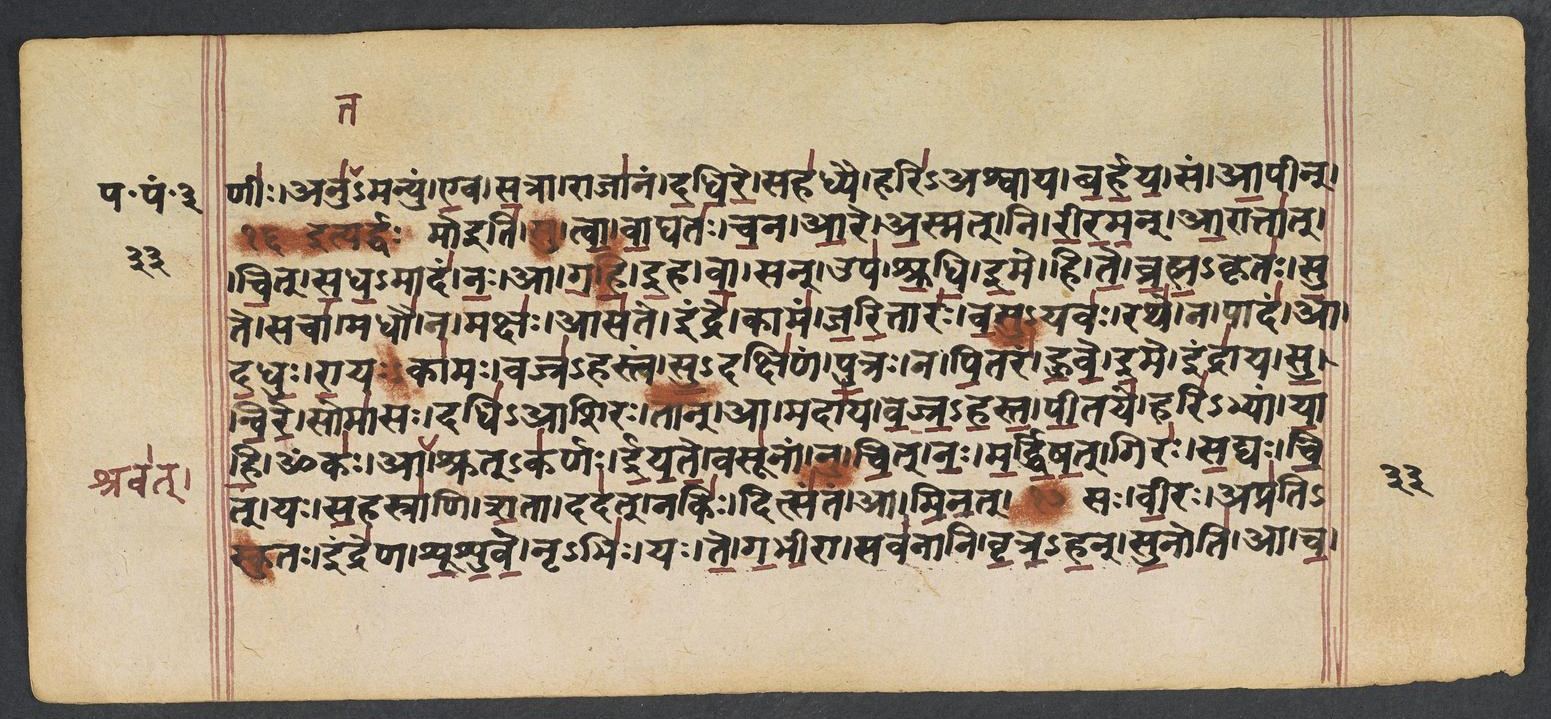
Where on the image
Penn Ms. Coll. 390 Item 41, fol. 512v (numbered 33v by the scribe) (OPenn image 513, upper leaf). Checked on the image: the Rigveda text on this page begins in RV 7.31.12 ‹-vāṇīḥ anutta-manyum eva satrā›. The next page with Rigveda text, fol. 513r (numbered 34r by the scribe), begins in RV 7.32.6 ‹dhāvati›. Verses 7.32.1-5 end on this page.
1mo ṣu tvā̍ vā̱ghata̍ś ca̱nāre a̱sman ni rī̍raman | ā̱rāttā̍c cit sadha̱māda̍ṁ na̱ ā ga̍hī̱ha vā̱ sann upa̍ śrudhi ||
2i̱me hi te̍ brahma̱kṛta̍ḥ su̱te sacā̱ madhau̱ na makṣa̱ āsa̍te | indre̱ kāma̍ṁ jari̱tāro̍ vasū̱yavo̱ rathe̱ na pāda̱m ā da̍dhuḥ ||
3rā̱yaskā̍mo̱ vajra̍hastaṁ su̱dakṣi̍ṇam pu̱tro na pi̱tara̍ṁ huve ||
4i̱ma indrā̍ya sunvire̱ somā̍so̱ dadhyā̍śiraḥ | tām̐ ā madā̍ya vajrahasta pī̱taye̱ hari̍bhyāṁ yā̱hy oka̱ ā ||
5śrava̱c chrutka̍rṇa īyate̱ vasū̍nā̱ṁ nū ci̍n no mardhiṣa̱d gira̍ḥ | sa̱dyaś ci̱d yaḥ sa̱hasrā̍ṇi śa̱tā dada̱n naki̱r ditsa̍nta̱m ā mi̍nat ||
Compare: Padapāṭha (word-by-word text written in the manuscript; Sansknet e-text via GRETIL)
1mo iti | su | tvā | vāghataḥ | cana | āre | asmat | ni | rīraman | ārāttāt | cit | sadha-mādam | naḥ | ā | gahi | iha | vā | san | upa | śrudhi
2ime | hi | te | brahma-kṛtaḥ | sute | sacā | madhau | na | makṣaḥ | āsate | indre | kāmam | jaritāraḥ | vasu-yavaḥ | rathe | na | pādam | ā | dadhuḥ
3rāyaḥ-kāmaḥ | vajra-hastam | su-dakṣiṇam | putraḥ | na | pitaram | huve
4ime | indrāya | sunvire | somāsaḥ | dadhi-āśiraḥ | tān | ā | madāya | vajra-hasta | pītaye | hari-bhyām | yāhi | okaḥ | ā
5śravat | śrut-karṇaḥ | īyate | vasūnām | nu | cit | naḥ | mardhiṣat | giraḥ | sadyaḥ | cit | yaḥ | sahasrāṇi | satā | dadat | nakiḥ | ditsantam | ā | minat
1LET none, no, not thy worshippers, delay thee far away from us. Even from far away come thou unto our feast, or listen if already here.
2For here, like flies on honey, these who pray to thee sit by the juice that they have poured. Wealth-craving singers have on Indra set their hope, as men set foot upon a car.
3Longing for wealth I call on him, the Thunderer with the strong right hand, As a son calleth on his sire.
4These Soma juices, mixed with curd, have been expressed for Indra here. Come with thy Bay Steeds, Thunder-wielder, to our home, to drink them till they make thee glad.
5May he whose ear is open hear us. He is asked for wealth: will he despise our prayer? Him who bestows at once a hundred thousand gifts none shall restrain when he would give.
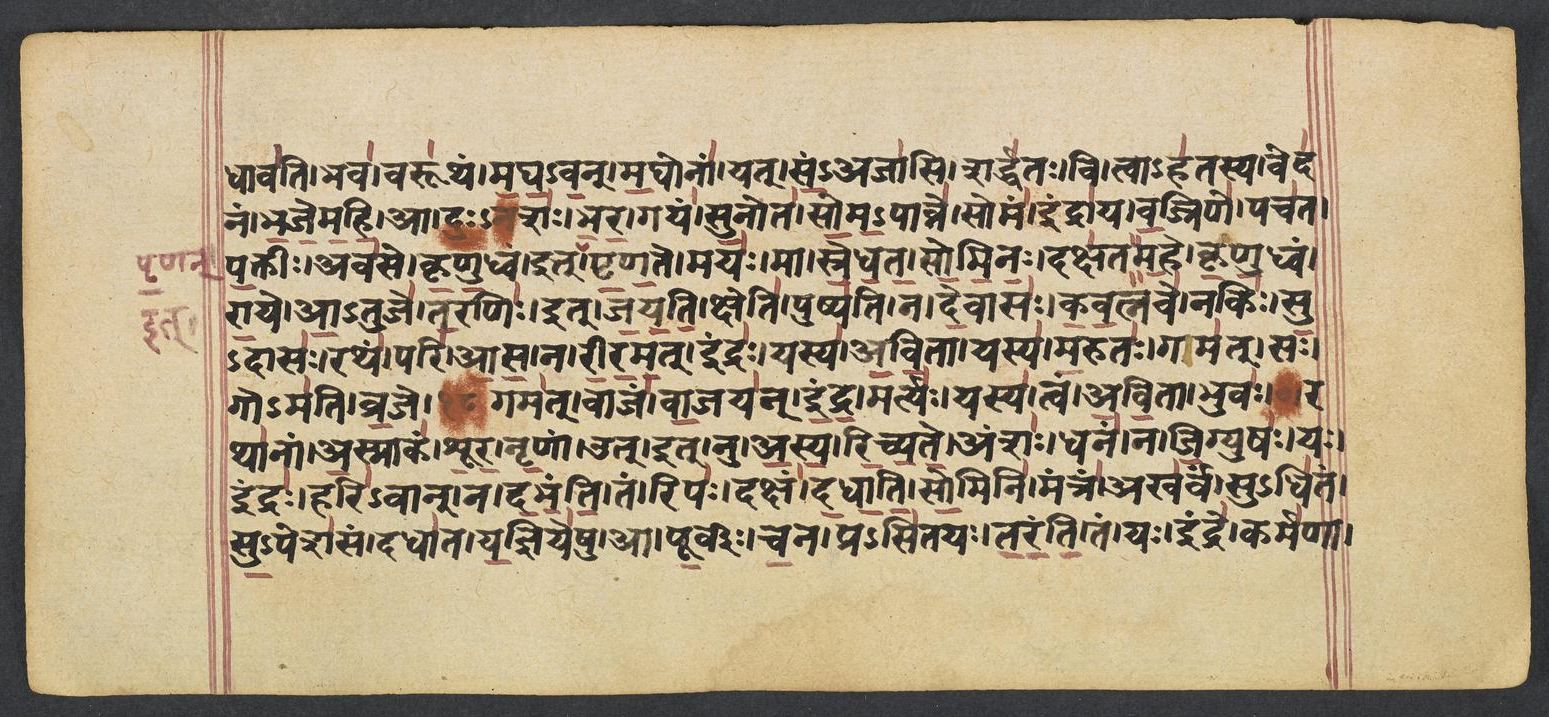
Where on the image
Penn Ms. Coll. 390 Item 41, fol. 513r (numbered 34r by the scribe) (OPenn image 513, lower leaf). Checked on the image: the Rigveda text on this page begins in RV 7.32.6 ‹dhāvati›. The next page with Rigveda text, fol. 513v (numbered 34v by the scribe), begins in RV 7.32.13 ‹bhuvat›. Verses 7.32.6-12 end on this page; 7.32.6 begins on fol. 512v (numbered 33v by the scribe).
6sa vī̱ro apra̍tiṣkuta̱ indre̍ṇa śūśuve̱ nṛbhi̍ḥ | yas te̍ gabhī̱rā sava̍nāni vṛtrahan su̱noty ā ca̱ dhāva̍ti ||
7bhavā̱ varū̍tham maghavan ma̱ghonā̱ṁ yat sa̱majā̍si̱ śardha̍taḥ | vi tvāha̍tasya̱ veda̍nam bhajema̱hy ā dū̱ṇāśo̍ bharā̱ gaya̍m ||
8su̱notā̍ soma̱pāvne̱ soma̱m indrā̍ya va̱jriṇe̍ | paca̍tā pa̱ktīr ava̍se kṛṇu̱dhvam it pṛ̱ṇann it pṛ̍ṇa̱te maya̍ḥ ||
9mā sre̍dhata somino̱ dakṣa̍tā ma̱he kṛ̍ṇu̱dhvaṁ rā̱ya ā̱tuje̍ | ta̱raṇi̱r ij ja̍yati̱ kṣeti̱ puṣya̍ti̱ na de̱vāsa̍ḥ kava̱tnave̍ ||
10naki̍ḥ su̱dāso̱ ratha̱m pary ā̍sa̱ na rī̍ramat | indro̱ yasyā̍vi̱tā yasya̍ ma̱ruto̱ gama̱t sa goma̍ti vra̱je ||
11gama̱d vāja̍ṁ vā̱jaya̍nn indra̱ martyo̱ yasya̱ tvam a̍vi̱tā bhuva̍ḥ | a̱smāka̍m bodhy avi̱tā rathā̍nām a̱smāka̍ṁ śūra nṛ̱ṇām ||
12ud in nv a̍sya ricya̱te 'ṁśo̱ dhana̱ṁ na ji̱gyuṣa̍ḥ | ya indro̱ hari̍vā̱n na da̍bhanti̱ taṁ ripo̱ dakṣa̍ṁ dadhāti so̱mini̍ ||
Compare: Padapāṭha (word-by-word text written in the manuscript; Sansknet e-text via GRETIL)
6saḥ | vīraḥ | aprati-skutaḥ | indreṇa | śūśuve | nṛ-bhiḥ | yaḥ | te | gabhīrā | savanāni | vṛtra-han | sunoti | ā | ca | dhāvati
7bhava | varāūtham | magha-van | maghonām | yat | sam-ajāsi | śardhataḥ | vi | tvāhatasya | vedanam | bhajemahi | ā | duḥ-naśaḥ | bhara | gayam
8sunota | soma-pāvne | somam | indrāya | vajriṇe | pacats | paktīḥ | avase | kṛṇudhvam | it | pṛṇan | it | pṛṇate | mayaḥ
9mā | sredhata | sominaḥ | dakṣata | mahe | kṛṇudhvam | rāye | ātuje | taraṇiḥ | it | jayati | kṣeti | puṣyati | na | devāsaḥ | kavatnave
10nakiḥ | su-dāsaḥ | ratham | pari | āsa | na | rīramat | indraḥ | yasya | avitā | yasya | marutaḥ | gamat | saḥ | go--mati | vraje
11gamat | vājam | vājayan | indra | martyaḥ | yasya | tvam | avitā | bhuvaḥ | asmākam | bodhi | avitā | rathānām | asmākam | śūra | nṛṇām
12ut | it | nu | asya | ricyate | aṃśaḥ | dhanam | na | jigyuṣaḥ | yaḥ | indraḥ | hari-vān | na | dambhanti | tam | ripaḥ | dakṣam | dadhāti | somini
6The hero never checked by men hath gained his strength through Indra, he Who presses out and pours his deep libations forth, O Vr̥itra-slayer, unto thee.
7When thou dost drive the fighting men together be, thou Mighty One, the mighty's shield. May we divide the wealth of him whom thou hast slain: bring us, Unreachable, his goods.
8For Indra, Soma-drinker, armed with thunder, press the Soma juice. Make ready your dressed meats: cause him to favour us. The Giver blesses him who gives.
9Grudge not, ye Soma pourers; stir you, pay the rites, for wealth, to the great Conqueror. Only the active conquers dwells in peace, and thrives: not for the niggard are the Gods.
10No one hath overturned or stayed the car of him who freely gives. The man whom Indra and the Marut host defend comes to a stable full of kine.
11Indra, that man when fighting shall obtain the spoil, whose strong defender thou wilt be. Be thou the gracious helper, Hero I of our cars, be thou the helper of our men.
12His portion is exceeding great like a victorious soldier's spoil. Him who is Indra, Lord of Bays, no foes subdue. He gives the Soma-pourer strength.
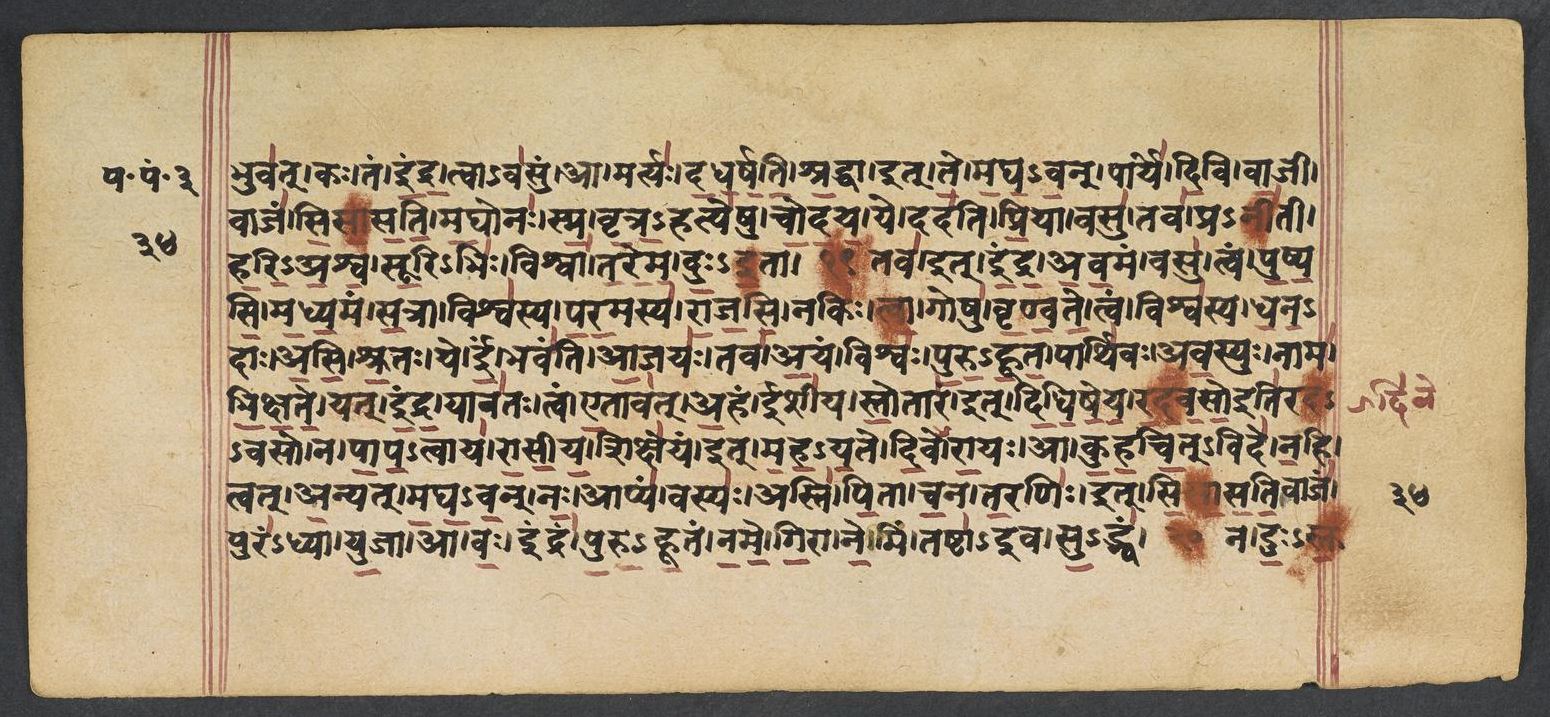
Where on the image
Penn Ms. Coll. 390 Item 41, fol. 513v (numbered 34v by the scribe) (OPenn image 514, upper leaf). Checked on the image: the Rigveda text on this page begins in RV 7.32.13 ‹bhuvat›. The next page with Rigveda text, fol. 514r (numbered 35r by the scribe), begins in RV 7.32.21 ‹-duḥ-stutī martyaḥ vindate vasu›. Verses 7.32.13-20 end on this page; 7.32.13 begins on fol. 513r (numbered 34r by the scribe).
13mantra̱m akha̍rva̱ṁ sudhi̍taṁ su̱peśa̍sa̱ṁ dadhā̍ta ya̱jñiye̱ṣv ā | pū̱rvīś ca̱na prasi̍tayas taranti̱ taṁ ya indre̱ karma̍ṇā̱ bhuva̍t ||
14kas tam i̍ndra̱ tvāva̍su̱m ā martyo̍ dadharṣati | śra̱ddhā it te̍ maghava̱n pārye̍ di̱vi vā̱jī vāja̍ṁ siṣāsati ||
15ma̱ghona̍ḥ sma vṛtra̱hatye̍ṣu codaya̱ ye dada̍ti pri̱yā vasu̍ | tava̱ praṇī̍tī haryaśva sū̱ribhi̱r viśvā̍ tarema duri̱tā ||
16taved i̍ndrāva̱maṁ vasu̱ tvam pu̍ṣyasi madhya̱mam | sa̱trā viśva̍sya para̱masya̍ rājasi̱ naki̍ṣ ṭvā̱ goṣu̍ vṛṇvate ||
17tvaṁ viśva̍sya dhana̱dā a̍si śru̱to ya ī̱m bhava̍nty ā̱jaya̍ḥ | tavā̱yaṁ viśva̍ḥ puruhūta̱ pārthi̍vo 'va̱syur nāma̍ bhikṣate ||
18yad i̍ndra̱ yāva̍ta̱s tvam e̱tāva̍d a̱ham īśī̍ya | sto̱tāra̱m id di̍dhiṣeya radāvaso̱ na pā̍pa̱tvāya̍ rāsīya ||
19śikṣe̍ya̱m in ma̍haya̱te di̱ve-di̍ve rā̱ya ā ku̍haci̱dvide̍ | na̱hi tvad a̱nyan ma̍ghavan na̱ āpya̱ṁ vasyo̱ asti̍ pi̱tā ca̱na ||
20ta̱raṇi̱r it si̍ṣāsati̱ vāja̱m pura̍ṁdhyā yu̱jā | ā va̱ indra̍m puruhū̱taṁ na̍me gi̱rā ne̱miṁ taṣṭe̍va su̱drva̍m ||
Compare: Padapāṭha (word-by-word text written in the manuscript; Sansknet e-text via GRETIL)
13mantram | akharvam | su-dhitam | su-peśasam | dadhāta | yajñiyeṣu | ā | pūrvīḥ | cana | pra-sitayaḥ | taranti | tam | yaḥ | indre | karmaṇā | bhuvat
14kaḥ | tam | indra | tvāvasum | ā | martyaḥ | dadharṣati | śraddhā | it | te | magha-van | pārye | divi | vājī | vājam | sisāsati
15maghonaḥ | sma | vṛtra-hatyeṣu | codaya | ye | dadati | priyā | vasu | tava | pra-nītī | hari-aśva | sūri-bhiḥ | viśvā | tarema | duḥ-itā
16tava | it | indra | avamam | vasu | tvam | puṣyasi | madhyamam | satrā | viśvasya | paramasya | rājasi | nakiḥ | tvā | goṣu | vṛṇvate
17tvam | viśvasya | dhana-dāḥ | asi | śrutaḥ | ye | īm | bhavanti | ājayaḥ | tava | ayam | viśvaḥ | puru-hūta | pārthivaḥ | avasyuḥ | nāma | bhikṣate
18yat | indra | yāvataḥ | tvam | etāvat | aham | īśīya | stotāram | it | didhiṣeya | radavaso itirada-vaso | na | pāpa-tvāya | rāsīya
19śikṣeyam | it | maha-yate | dive--dive | rāyaḥ | ā | kuhacit-vide | nahi | tvat | anyat | magha-van | naḥ | āpyam | vasyaḥ | asti | pitā | cana
20taraṇiḥ | it | sisāsati | vājam | puram-dhyā | yujā | ā | vaḥ | indram | puru-hūtam | name | girā | nemim | taṣṭāiva | su-dram
13Make for the Holy Gods a hymn that is not mean, but well-arranged and fair of form. Even many snares and bonds subdue not him who dwells with Indra through his sacrifice.
14Indra, what mortal will attack the man who hath his wealth in thee? The strong will win the spoil on the decisive day through faith in thee, O Maghavan.
15In battles with the foe urge on our mighty ones who give the treasures dear to thee, And may we with our princes, Lord of Tawny Steeds! pass through all peril, led by thee.
16Thine, Indra, is the lowest wealth, thou cherishest the mid-most wealth, Thou ever rulest all the highest: in the fray for cattle none resisteth thee.
17Thou art renowned as giving wealth to every one in all the battles that are fought. Craving protection, all these people of the earth, O Much-invoked, implore thy name.
18If I, O Indra, were the Lord of riches ample as thine own, I should support the singer, God. who givest wealth! and not abandon him to woe.
19Each day would I enrich the man who sang my praise, in whatsoever place he were. No kinship is there better, Maghavan, than thine: a father even is no more.
20With Plenty for his true ally the active man will gain the spoil. Your Indra, Much-invoked, I bend with song, as bends a wright his wheel of solid wood.
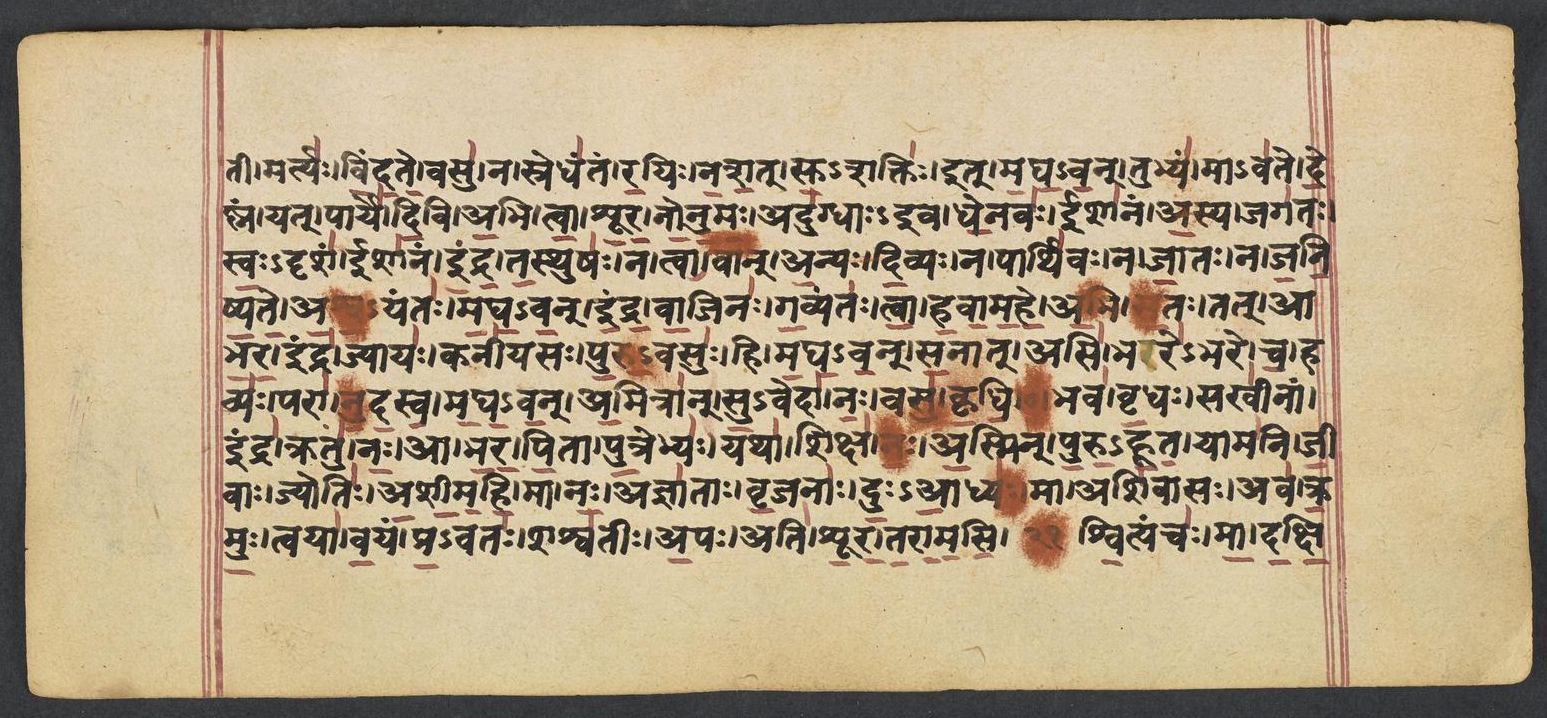
Where on the image
Penn Ms. Coll. 390 Item 41, fol. 514r (numbered 35r by the scribe) (OPenn image 514, lower leaf). Checked on the image: the Rigveda text on this page begins in RV 7.32.21 ‹-duḥ-stutī martyaḥ vindate vasu›. The next page with Rigveda text, fol. 514v (numbered 35v by the scribe), begins in RV 7.33.1 ‹-dakṣiṇataḥ-kapardāḥ dhiyam-jinvāsaḥ abhi hi›. Verses 7.32.21-27 end on this page; 7.32.21 begins on fol. 513v (numbered 34v by the scribe).
21na du̍ṣṭu̱tī martyo̍ vindate̱ vasu̱ na sredha̍ntaṁ ra̱yir na̍śat | su̱śakti̱r in ma̍ghava̱n tubhya̱m māva̍te de̱ṣṇaṁ yat pārye̍ di̱vi ||
22a̱bhi tvā̍ śūra nonu̱mo 'du̍gdhā iva dhe̱nava̍ḥ | īśā̍nam a̱sya jaga̍taḥ sva̱rdṛśa̱m īśā̍nam indra ta̱sthuṣa̍ḥ ||
23na tvāvā̍m̐ a̱nyo di̱vyo na pārthi̍vo̱ na jā̱to na ja̍niṣyate | a̱śvā̱yanto̍ maghavann indra vā̱jino̍ ga̱vyanta̍s tvā havāmahe ||
24a̱bhī ṣa̱tas tad ā bha̱rendra̱ jyāya̱ḥ kanī̍yasaḥ | pu̱rū̱vasu̱r hi ma̍ghavan sa̱nād asi̱ bhare̍-bhare ca̱ havya̍ḥ ||
25parā̍ ṇudasva maghavann a̱mitrā̍n su̱vedā̍ no̱ vasū̍ kṛdhi | a̱smāka̍m bodhy avi̱tā ma̍hādha̱ne bhavā̍ vṛ̱dhaḥ sakhī̍nām ||
26indra̱ kratu̍ṁ na̱ ā bha̍ra pi̱tā pu̱trebhyo̱ yathā̍ | śikṣā̍ ṇo a̱smin pu̍ruhūta̱ yāma̍ni jī̱vā jyoti̍r aśīmahi ||
27mā no̱ ajñā̍tā vṛ̱janā̍ durā̱dhyo̱3̱̍ māśi̍vāso̱ ava̍ kramuḥ | tvayā̍ va̱yam pra̱vata̱ḥ śaśva̍tīr a̱po 'ti̍ śūra tarāmasi ||
Compare: Padapāṭha (word-by-word text written in the manuscript; Sansknet e-text via GRETIL)
21na | duḥ-stutī | martyaḥ | vindate | vasu | na | sredhantam | rayiḥ | naśat | su-śaktiḥ | it | magha-van | tubhyam | māvate | deṣṇam | yat | pārye | divi
22abhi | tvā | śūra | nonumaḥ | adugdhāḥ-iva | dhenavaḥ | īśānam | asya | jagataḥ | svaḥ-dṛśam | īśānam | indra | tasthuṣaḥ
23na | tvāvān | anyaḥ | divyaḥ | na | pārthivaḥ | na | jātaḥ | na | janiṣyate | aśva-yantaḥ | magha-van | indra | vājinaḥ | gavyantaḥ | tvā | havāmahe
24abhi | sataḥ | tat | ā | bhara | indra | jyāyaḥ | kanīyasaḥ | puru-vasuḥ | hi | magha-van | sanāt | asi | bhare--bhare | ca | havyaḥ
25parā | nudasva | magha-van | amitrān | su-vedā | naḥ | vasu | kṛdhi | asmākam | bodhi | avitā | mahādhane | bhava | vṛdhaḥ | sakhīnām
26indra | kratum | naḥ | ā | bhara | pitā | putrebhyaḥ | yathā | śikṣa | naḥ | asmin | puru-hūta | yāmani | jīvāḥ | jyotiḥ | aśīmahi
27mā | naḥ | ajñātāḥ | vṛjanāḥ | duḥ-ādhyaḥ | mā | aśivāsaḥ | ava | kramuḥ | tvayā | vayam | pra-vataḥ śaśvatīḥ | apaḥ | ati | śūra | tarāmasi
21A moral wins no riches by unworthy praise: wealth comes not to the niggard churl. Light is the task to give, O Maghavan, to one like me on the decisive day.
22Like kine unmilked we call aloud, Hero, to thee, and sing thy praise, Looker on heavenly light, Lord of this moving world, Lord, Indra, of what moveth not.
23None other like to thee, of earth or of the heavens, hath been or ever will be born. Desiring horses, Indra Maghavan! and kine, as men of might we call on thee.
24Bring, Indra, the Victorious Ones; bring, elder thou, the younger host. For, Maghavan, thou art rich in treasures from of old, and must be called in every fight.
25Drive thou away our enemies, O Maghavan: make riches easy to be won. Be thou our good Protector in the strife for spoil: Cherisher of our friends be thou.
26O Indra, give us wisdom as a sire gives wisdom to his sons. Guide us, O Much-invoked, in this our way may we still live and look upon the light.
27Grant that no mighty foes, unknown, malevolent, unhallowed, tread us to the ground. With thine assistance, Hero, may we ass through all the waters that are rushing down.
Notes
- Sanskrit: Aufrecht's edition (1877) with the Vedic accents, as entered by van Nooten and Holland (GRETIL).
- English: Ralph T. H. Griffith, The Hymns of the Rigveda (1889-1892; 2nd ed. 1896-1897), from the VedaWeb digital text; OCR slips in that text were corrected against the printed 2nd edition (data/sources/rigveda/griffith_errata.json).
- Padapāṭha (edition text): Sansknet e-text via GRETIL (CC BY-NC-SA 4.0).
Cite
Sources
- Source: Penn Ms. Coll. 390 Item 41 (undated (catalogued with Penn's 18th-19th c. Vedic manuscripts)), OPenn, Public Domain Mark + Aufrecht's accented text (GRETIL) + Griffith's English (VedaWeb) (holding institution)
- Critical edition: Aufrecht (1877), accented e-text via GRETIL
← previous · → next · v cycle view · l back to library