Rigveda 7.5: To Agni Vaisvanara
Introduction
Rigveda 7.5 is a hymn of 9 verses addressed to Agni Vaisvanara. It stands in book (maṇḍala) 7, the family book of Vasiṣṭha. The Rigveda is the oldest collection of Sanskrit hymns, composed in the second half of the second millennium BCE and handed down orally for many centuries before it was written down.
The manuscript shown is Penn Ms. Coll. 390 Item 41 (University of Pennsylvania), an undated paper manuscript of the padapāṭha (the word-by-word recitation text, in which every word is written separately and compounds are split) of the whole Ṛgveda in Devanāgarī, 884 leaves in fascicles, 7-9 lines to the page, accents in red; this hymn stands on fol. 496r-497r. Each section below gives the verses that end on one page; the page boundaries were read on the images (the opening words of every page), not counted out. Where the manuscript is a padapāṭha (the word-by-word recitation text), the section shows Aufrecht's continuous (saṃhitā) text first and, as the edition text, the padapāṭha of the same verses, which is the form written on the page.
How was this verified? (Provenance)
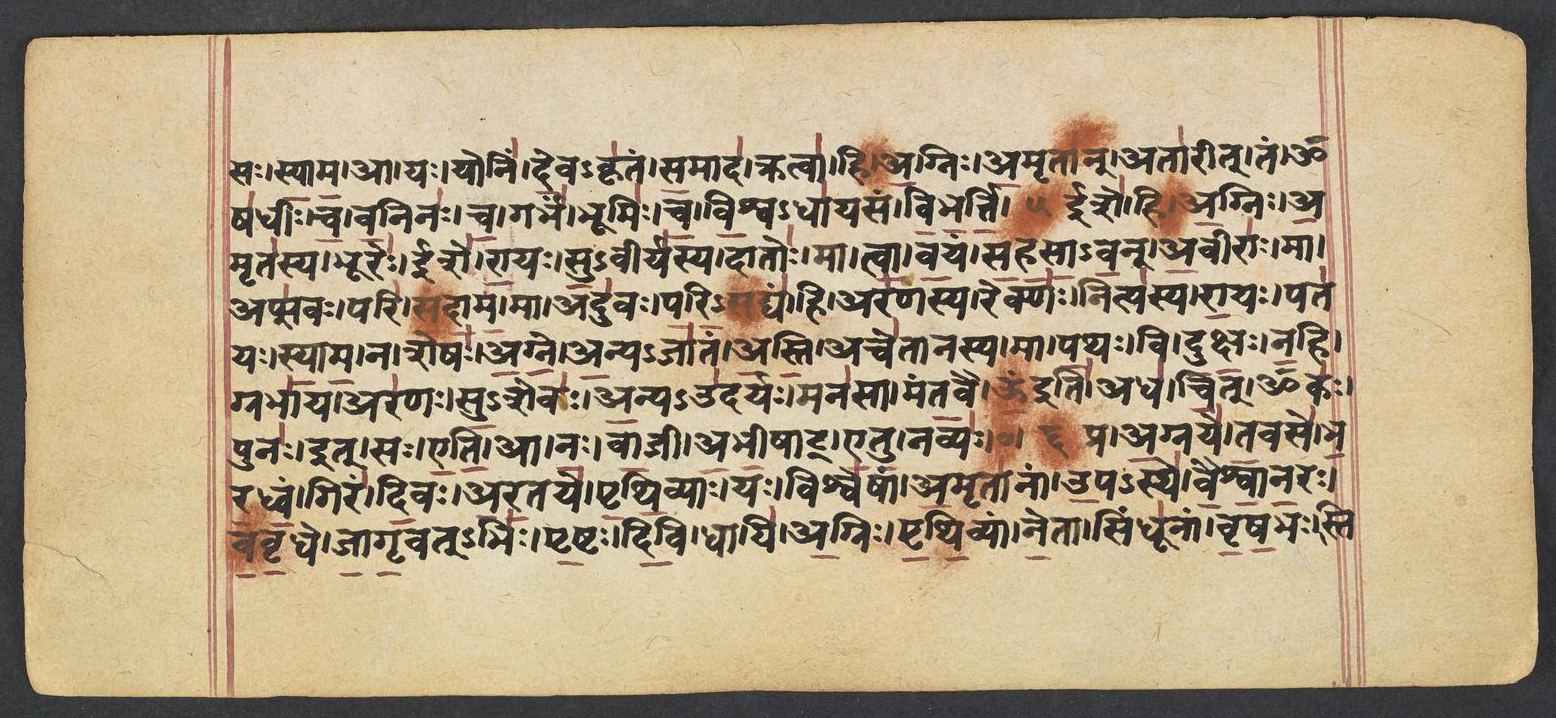
Where on the image
Penn Ms. Coll. 390 Item 41, fol. 496r (numbered 17r by the scribe) (OPenn image 496, lower leaf). Checked on the image: the Rigveda text on this page begins in RV 7.4.4 ‹-su-manasaḥ syāma›. The next page with Rigveda text, fol. 496v (numbered 17v by the scribe), begins in RV 7.5.2 ‹-stiyānām saḥ mānuṣīḥ abhi›. Verse 7.5.1 ends on this page.
1prāgnaye̍ ta̱vase̍ bharadhva̱ṁ gira̍ṁ di̱vo a̍ra̱taye̍ pṛthi̱vyāḥ | yo viśve̍ṣām a̱mṛtā̍nām u̱pasthe̍ vaiśvāna̱ro vā̍vṛ̱dhe jā̍gṛ̱vadbhi̍ḥ ||
Compare: Padapāṭha (word-by-word text written in the manuscript; Sansknet e-text via GRETIL)
1pra | agnaye | tavase | bharadhvam | giram | divaḥ | arataye | pṛthivyāḥ | yaḥ | v iśveṣām | amṛtānām | upa-sthe | vaiśvānaraḥ | vavṛdhe | jāgṛvat-bhiḥ
1BRING forth your song of praise to mighty Agni, the speedy messenger of earth and heaven, Vaiṣvânara, who, with those who wake, hath waxen great in the lap of all the Gods Immortal.
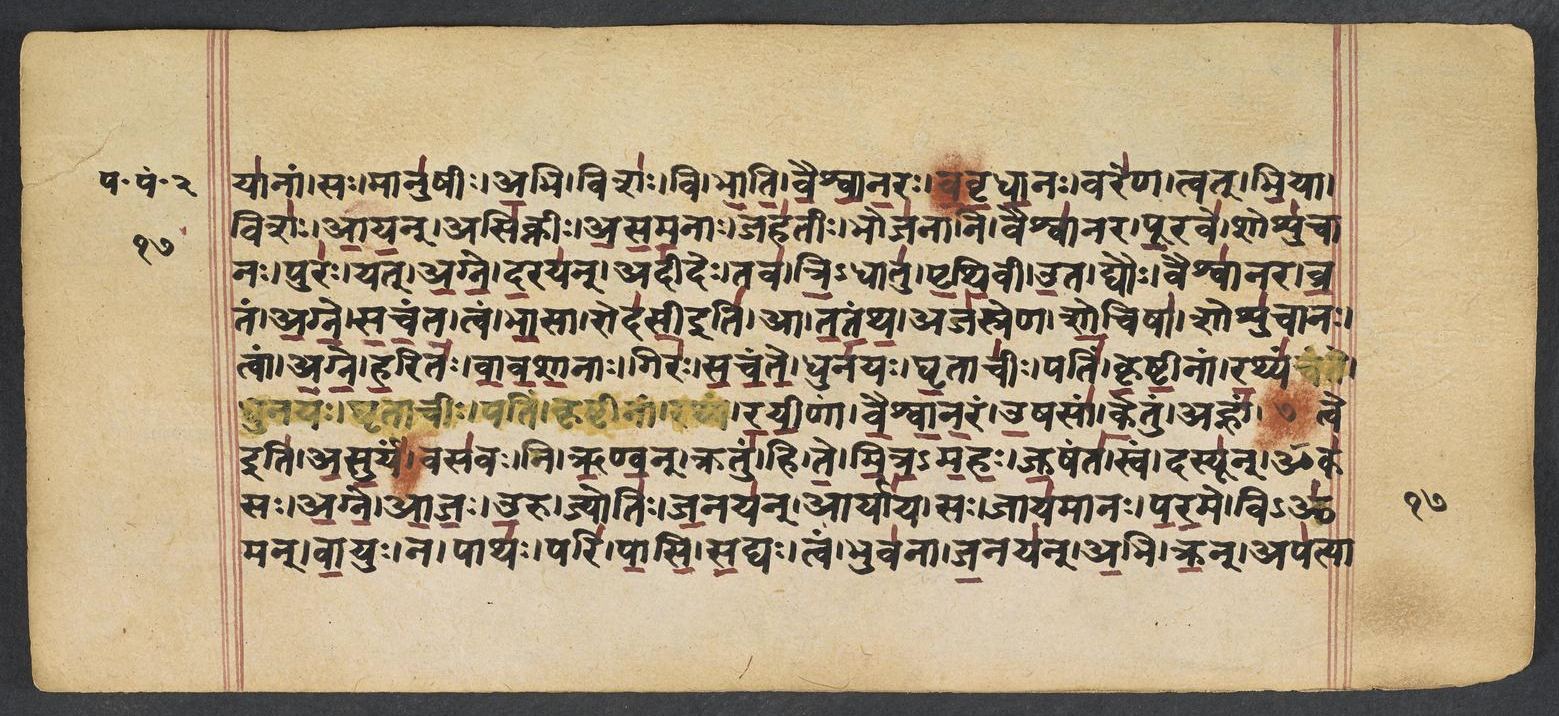
Where on the image
Penn Ms. Coll. 390 Item 41, fol. 496v (numbered 17v by the scribe) (OPenn image 497, upper leaf). Checked on the image: the Rigveda text on this page begins in RV 7.5.2 ‹-stiyānām saḥ mānuṣīḥ abhi›. The next page with Rigveda text, fol. 497r (numbered 18r by the scribe), begins in RV 7.5.7 ‹-apatyāya jāta-vedaḥ daśasyan›. Verses 7.5.2-6 end on this page; 7.5.2 begins on fol. 496r (numbered 17r by the scribe).
2pṛ̱ṣṭo di̱vi dhāyy a̱gniḥ pṛ̍thi̱vyāṁ ne̱tā sindhū̍nāṁ vṛṣa̱bhaḥ stiyā̍nām | sa mānu̍ṣīr a̱bhi viśo̱ vi bhā̍ti vaiśvāna̱ro vā̍vṛdhā̱no vare̍ṇa ||
3tvad bhi̱yā viśa̍ āya̱nn asi̍knīr asama̱nā jaha̍tī̱r bhoja̍nāni | vaiśvā̍nara pū̱rave̱ śośu̍cāna̱ḥ puro̱ yad a̍gne da̱raya̱nn adī̍deḥ ||
4tava̍ tri̱dhātu̍ pṛthi̱vī u̱ta dyaur vaiśvā̍nara vra̱tam a̍gne sacanta | tvam bhā̱sā roda̍sī̱ ā ta̍ta̱nthāja̍sreṇa śo̱ciṣā̱ śośu̍cānaḥ ||
5tvām a̍gne ha̱rito̍ vāvaśā̱nā gira̍ḥ sacante̱ dhuna̍yo ghṛ̱tācī̍ḥ | pati̍ṁ kṛṣṭī̱nāṁ ra̱thya̍ṁ rayī̱ṇāṁ vai̍śvāna̱ram u̱ṣasā̍ṁ ke̱tum ahnā̍m ||
6tve a̍su̱rya1̱̍ṁ vasa̍vo̱ ny ṛ̍ṇva̱n kratu̱ṁ hi te̍ mitramaho ju̱ṣanta̍ | tvaṁ dasyū̱m̐r oka̍so agna āja u̱ru jyoti̍r ja̱naya̱nn āryā̍ya ||
Compare: Padapāṭha (word-by-word text written in the manuscript; Sansknet e-text via GRETIL)
2pṛṣṭaḥ | divi | dhāyi | agniḥ | pṛthivyām | netā | sindhūnām | vṛṣabhaḥ | stiyānām | saḥ | mānuṣīḥ | abhi | viśaḥ | vi | bhāti | vaiśvānaraḥ | vavṛdhānaḥ | vareṇa
3tvat | bhiyā | viśaḥ | āyan | asiknīḥ | asamanāḥ | jahatīḥ | bhojanāni | vaiśvānara | pūrave | śośucānaḥ | puraḥ | yat | agne | darayan | adīdeḥ
4tava | tri-dhātu | pṛthivī | uta | dyauḥ | vaiśvānara | vratam | agne | sacanta | tvam | bhāsā | rodasī iti | ā | tatantha | ajasreṇa | śociṣā | śośucānaḥ
5tvām | agne | haritaḥ | vāvaśānāḥ | giraḥ | sacante | dhunayaḥ | ghṛtācīḥ | patim | kṛṣṭīnām | rathyam | rayīṇām | vaiśvānaram | uṣasām | ketum | ahnām
6tve iti | asuryam | vasavaḥ | ni | ṛṇvan | kratum | hi | te | mitra-mahaḥ | juṣanta | tvam | dasyūn | okasaḥ | agne | ājaḥ | uru | jyotiḥ | janayan | āryāya
2Sought in the heavens, on earth is Agni stablished, leader of rivers, Bull of standing waters. Vaiṣvânara when he hath grown in glory, shines on the tribes of men with light and treasure.
3For fear of thee forth fled the dark-hued races, scattered abroad, deserting their possessions, When, glowing, O Vaiṣvânara, for Pûru, thou Agni didst light up and rend their castles.
4Agni Vaiṣvânara, both Earth and Heaven submit them to thy threefold jurisdiction. Refulgent in thine undecaying lustre thou hast invested both the worlds with splendour.
5Agni, the tawny horses, loudly neighing our resonant hymns that drop with oil, attend thee; Lord of the tribes, our Charioteer of riches, Ensign of days, Vaiṣvânara of mornings.
6In thee, O bright as Mitra, Vasus seated the might of Aduras, for they loved thy spirit. Thou dravest Dasyus from their home, O Agni, and broughtest forth broad light to light the Ârya.
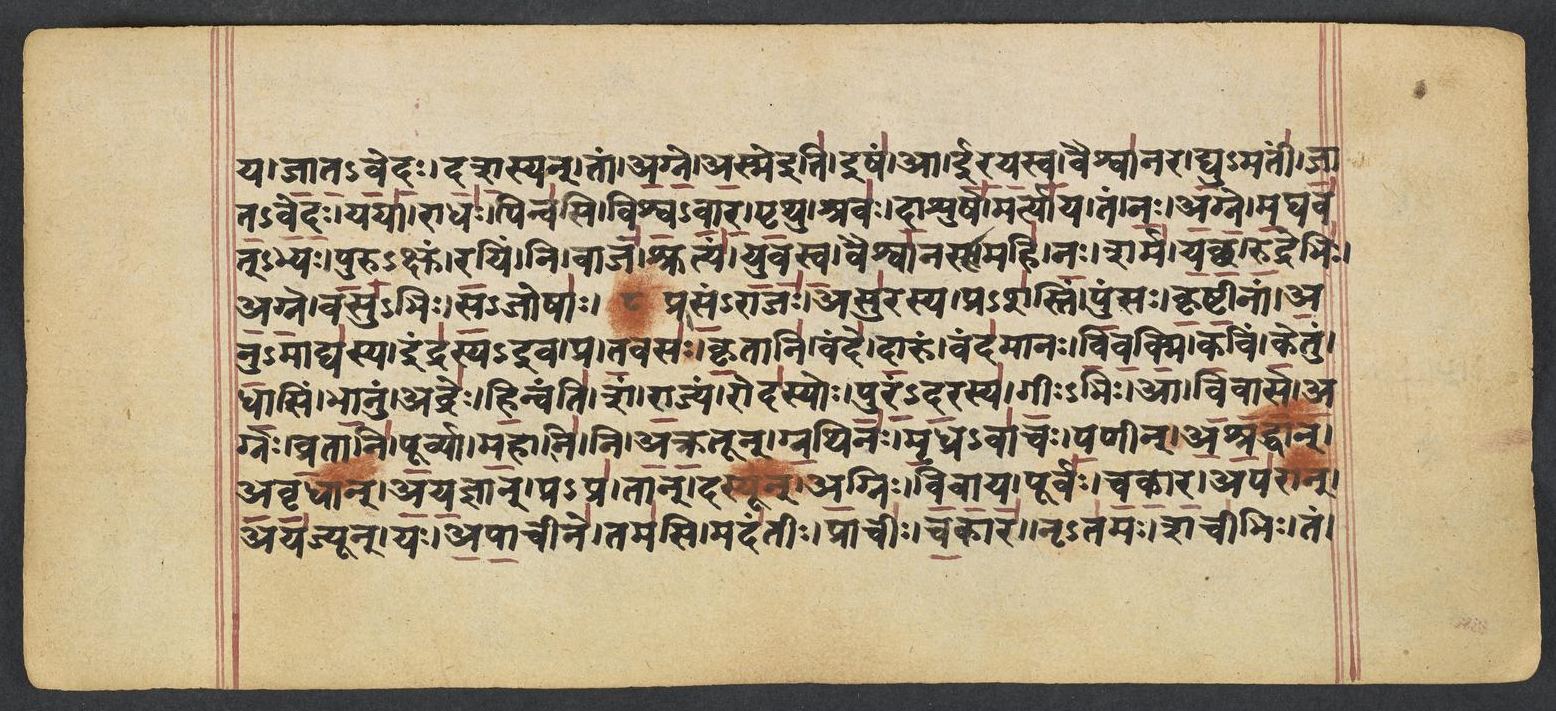
Where on the image
Penn Ms. Coll. 390 Item 41, fol. 497r (numbered 18r by the scribe) (OPenn image 497, lower leaf). Checked on the image: the Rigveda text on this page begins in RV 7.5.7 ‹-apatyāya jāta-vedaḥ daśasyan›. The next page with Rigveda text, fol. 497v (numbered 18v by the scribe), begins in RV 7.6.4 ‹īśānam vasvaḥ agnim gṛṇīṣe›. Verses 7.5.7-9 end on this page; 7.5.7 begins on fol. 496v (numbered 17v by the scribe).
7sa jāya̍mānaḥ para̱me vyo̍man vā̱yur na pātha̱ḥ pari̍ pāsi sa̱dyaḥ | tvam bhuva̍nā ja̱naya̍nn a̱bhi kra̱nn apa̍tyāya jātavedo daśa̱syan ||
8tām a̍gne a̱sme iṣa̱m era̍yasva̱ vaiśvā̍nara dyu̱matī̍ṁ jātavedaḥ | yayā̱ rādha̱ḥ pinva̍si viśvavāra pṛ̱thu śravo̍ dā̱śuṣe̱ martyā̍ya ||
9taṁ no̍ agne ma̱ghava̍dbhyaḥ puru̱kṣuṁ ra̱yiṁ ni vāja̱ṁ śrutya̍ṁ yuvasva | vaiśvā̍nara̱ mahi̍ na̱ḥ śarma̍ yaccha ru̱drebhi̍r agne̱ vasu̍bhiḥ sa̱joṣā̍ḥ ||
Compare: Padapāṭha (word-by-word text written in the manuscript; Sansknet e-text via GRETIL)
7saḥ | jāyamānaḥ | parame | vi-oman | vāyuḥ | na | pāthaḥ | pari | pāsi | sadyaḥ | tvam | bhuvanā | janayan | abhi | ṛn | apatyāya | jāta-vedaḥ | daśasyan
8tām | agne | asme iti | iṣam | ā | īrayasva | vaiśvānara | dyu-matīm | jāta-vedaḥ | yayā | rādhaḥ | pinvasi | viśva-vāra | pṛthu | śravaḥ | dāśuṣe | martyāya
9tam | naḥ | agne | maghavat-bhyaḥ | puru-kṣum | rayim | ni | vājam | śrutyam | yuvasva | vaiśvānara | mahi | naḥ | śarma | yaccha | rudrebhiḥ | agne | vasu-bhiḥ | sa-joṣāḥ
7Born in the loftiest heaven thou in a moment reachest, like wind, the place where Gods inhabit. Thou, favouring thine offspring, roaredst loudly when giving life to creatures, Jâtavedas.
8Send us that strength, Vaiṣvânara, send it, Agni, that strength, O Jâtavedas, full of splendour, Wherewith, all-bounteous God, thou pourest riches, as fame wide-spreading, on the man who offers.
9Agni, bestow upon our chiefs and nobles that famous power, that wealth which feedeth many. Accordant with the Vasus and the Rudras, Agni, Vaiṣvânara, give us sure protection.
Notes
- Sanskrit: Aufrecht's edition (1877) with the Vedic accents, as entered by van Nooten and Holland (GRETIL).
- English: Ralph T. H. Griffith, The Hymns of the Rigveda (1889-1892; 2nd ed. 1896-1897), from the VedaWeb digital text; OCR slips in that text were corrected against the printed 2nd edition (data/sources/rigveda/griffith_errata.json).
- Padapāṭha (edition text): Sansknet e-text via GRETIL (CC BY-NC-SA 4.0).
Cite
Sources
- Source: Penn Ms. Coll. 390 Item 41 (undated (catalogued with Penn's 18th-19th c. Vedic manuscripts)), OPenn, Public Domain Mark + Aufrecht's accented text (GRETIL) + Griffith's English (VedaWeb) (holding institution)
- Critical edition: Aufrecht (1877), accented e-text via GRETIL
← previous · → next · v cycle view · l back to library