Rigveda 7.42: To all the gods
Introduction
Rigveda 7.42 is a hymn of 6 verses addressed to all the gods. It stands in book (maṇḍala) 7, the family book of Vasiṣṭha. The Rigveda is the oldest collection of Sanskrit hymns, composed in the second half of the second millennium BCE and handed down orally for many centuries before it was written down.
The manuscript shown is Penn Ms. Coll. 390 Item 41 (University of Pennsylvania), an undated paper manuscript of the padapāṭha (the word-by-word recitation text, in which every word is written separately and compounds are split) of the whole Ṛgveda in Devanāgarī, 884 leaves in fascicles, 7-9 lines to the page, accents in red; this hymn stands on fol. 522r-522v. Each section below gives the verses that end on one page; the page boundaries were read on the images (the opening words of every page), not counted out. Where the manuscript is a padapāṭha (the word-by-word recitation text), the section shows Aufrecht's continuous (saṃhitā) text first and, as the edition text, the padapāṭha of the same verses, which is the form written on the page.
How was this verified? (Provenance)
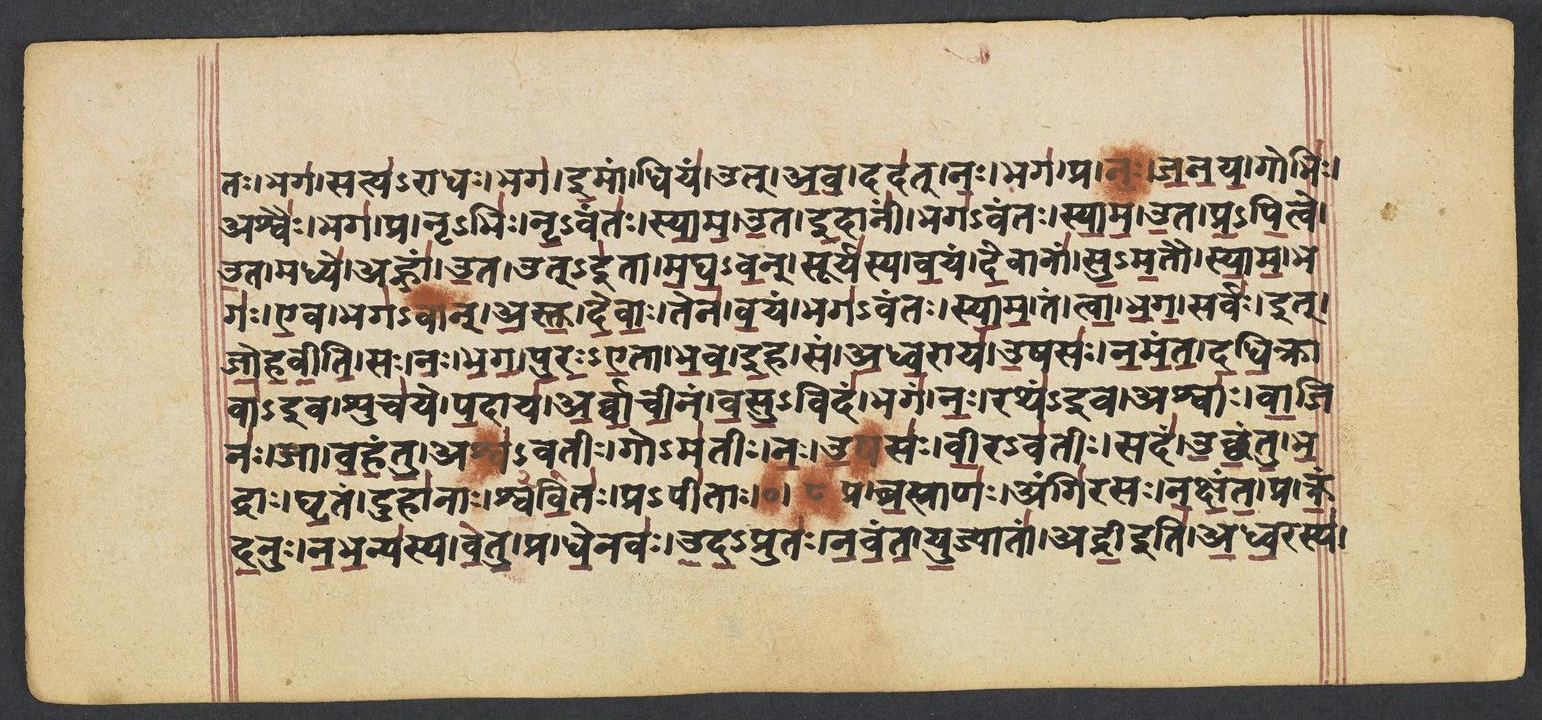
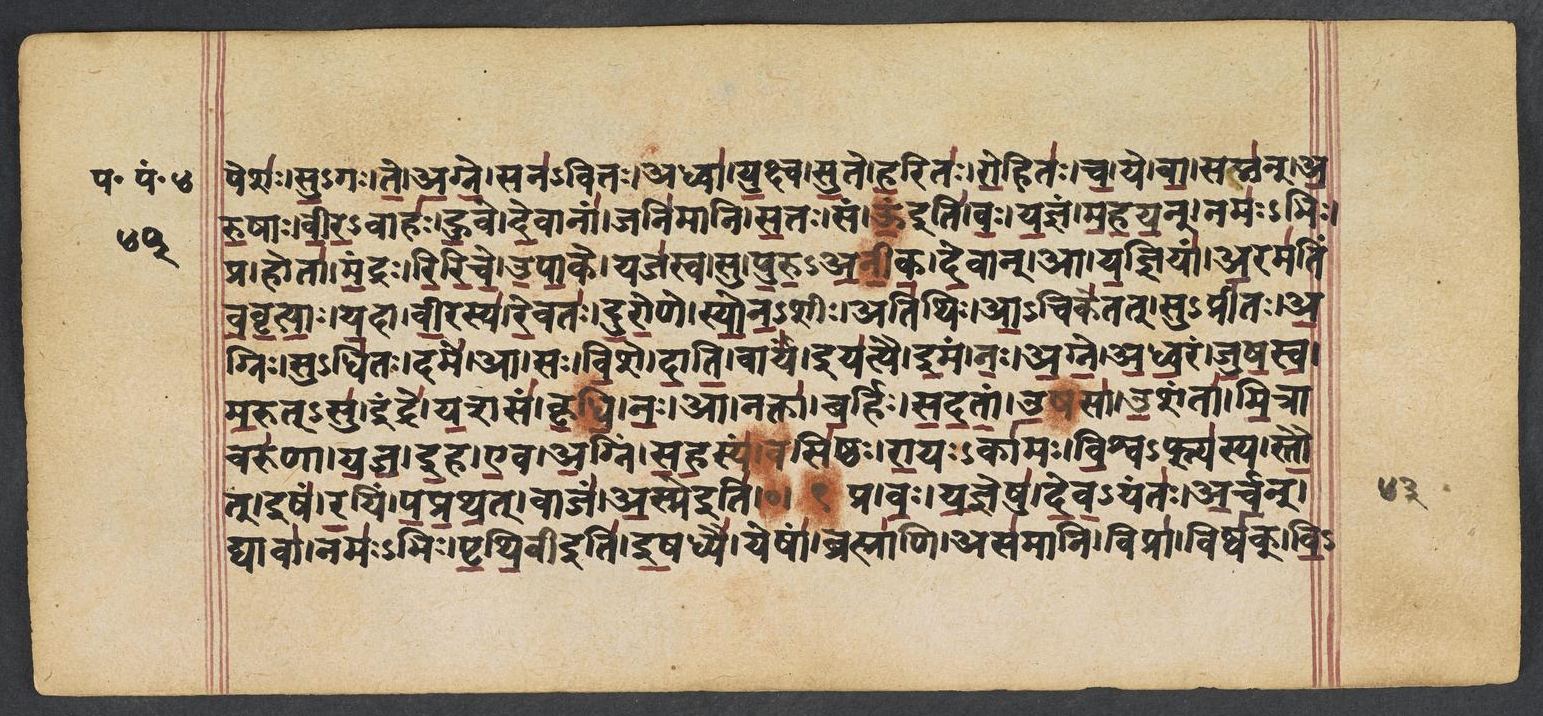
Where on the image
Penn Ms. Coll. 390 Item 41, fol. 522v (numbered 43v by the scribe) (OPenn image 523, upper leaf). Checked on the image: the Rigveda text on this page begins in RV 7.42.1 ‹peśaḥ›. The next page with Rigveda text, fol. 523r (numbered 44r by the scribe), begins in RV 7.43.1 ‹-vi-yanti vaninaḥ na śākhāḥ›. Verses 7.42.1-6 end on this page; 7.42.1 begins on fol. 522r (numbered 43r by the scribe).
1pra bra̱hmāṇo̱ aṅgi̍raso nakṣanta̱ pra kra̍nda̱nur na̍bha̱nya̍sya vetu | pra dhe̱nava̍ uda̱pruto̍ navanta yu̱jyātā̱m adrī̍ adhva̱rasya̱ peśa̍ḥ ||
2su̱gas te̍ agne̱ sana̍vitto̱ adhvā̍ yu̱kṣvā su̱te ha̱rito̍ ro̱hita̍ś ca | ye vā̱ sadma̍nn aru̱ṣā vī̍ra̱vāho̍ hu̱ve de̱vānā̱ṁ jani̍māni sa̱ttaḥ ||
3sam u̍ vo ya̱jñam ma̍haya̱n namo̍bhi̱ḥ pra hotā̍ ma̱ndro ri̍rica upā̱ke | yaja̍sva̱ su pu̍rvaṇīka de̱vān ā ya̱jñiyā̍m a̱rama̍tiṁ vavṛtyāḥ ||
4ya̱dā vī̱rasya̍ re̱vato̍ duro̱ṇe syo̍na̱śīr ati̍thir ā̱cike̍tat | suprī̍to a̱gniḥ sudhi̍to̱ dama̱ ā sa vi̱śe dā̍ti̱ vārya̱m iya̍tyai ||
5i̱maṁ no̍ agne adhva̱raṁ ju̍ṣasva ma̱rutsv indre̍ ya̱śasa̍ṁ kṛdhī naḥ | ā naktā̍ ba̱rhiḥ sa̍datām u̱ṣāso̱śantā̍ mi̱trāvaru̍ṇā yaje̱ha ||
6e̱vāgniṁ sa̍ha̱sya1̱̍ṁ vasi̍ṣṭho rā̱yaskā̍mo vi̱śvapsnya̍sya staut | iṣa̍ṁ ra̱yim pa̍pratha̱d vāja̍m a̱sme yū̱yam pā̍ta sva̱stibhi̱ḥ sadā̍ naḥ ||
Compare: Padapāṭha (word-by-word text written in the manuscript; Sansknet e-text via GRETIL)
1pra | brahmāṇaḥ | aṅgirasaḥ | nakṣanta | pra | krandanuḥ | nabhanyasya | vetu | pra | dhenavaḥ | uda-prutaḥ | navanta | yujyātām | adrī iti | adhvarasya | peśaḥ
2su-gaḥ | te | agne | sana-vittaḥ | adhvā | yukṣva | sute | haritaḥ | rohitaḥ | ca | ye | vā | sadman | aruṣāḥ | vīra-vāhaḥ | huve | devānām | janimāni | sattaḥ
3sam | oṃ iti | vaḥ | yajñam | mahayan | namaḥ-bhiḥ | pra | hotā | mandraḥ | ririce | upāke | yajasva | su | puru-anīka | devān | ā | yajñiyām | ara-matim | vavṛtyāḥ
4yadā | vīrasya | revataḥ | duroṇe | syona-śīḥ | atithiḥ | āciketat | su-prītaḥ | agn iḥ | su-dhitaḥ | dame | ā | saḥ | viśe | dāti | vāryam | iyatyai
5imam | naḥ | agne | adhvaram | juṣasva | marut-su | indre | yaśasam | kṛdhi | naḥ | ā | naktā | barhiḥ | sadatām | uṣasā | uśantā | mitrāvaruṇā | yaja | iha
6eva | agnim | sahasyam | vasiṣṭhaḥ | rāyaḥ-kāmaḥ | viśva-psnyasya | staut | iṣam | rayim | paprathat | vājam | asme iti | yūyam | pāta | svasti-bhiḥ | sadā | naḥ
1LET Brahmans and Angirases come forward, and let the roar of cloudy heaven surround us. Loud low the Milch-kine swimming in the waters: set be the stones that grace our holy service.
2Fair, Agni, is thy long-known path to travel: yoke for the juice tfiy bay, thy ruddy horses, Or red steeds, Hero-bearing, for the chamber. Seated, I call the Deities' generations.
3They glorify your sacrifice with worship, yet the glad Priest near them is left unequalled. Bring the Gods hither, thou of many aspects: turn hitherward Aramati the Holy.
4What time the Guest hath made himself apparent, at ease reclining in the rich man's dwelling, Agni, well-pleased, well-placed within the chamber gives to a house like this wealth worth the choosing.
5Accept this sacrifice of ours, O Agni; glorify it with Indra and the Maruts. Here on our grass let Night and Dawn be seated: bring longing Varuṇa and Mitra hither.
6Thus hath Vasishṭha praised victorious Agni, yearning for wealth that giveth all subsistence. May he bestow on us food, strength, and riches. Preserve us evermore, ye Gods, with blessings.
Notes
- Sanskrit: Aufrecht's edition (1877) with the Vedic accents, as entered by van Nooten and Holland (GRETIL).
- English: Ralph T. H. Griffith, The Hymns of the Rigveda (1889-1892; 2nd ed. 1896-1897), from the VedaWeb digital text; OCR slips in that text were corrected against the printed 2nd edition (data/sources/rigveda/griffith_errata.json).
- Padapāṭha (edition text): Sansknet e-text via GRETIL (CC BY-NC-SA 4.0).
Cite
Sources
- Source: Penn Ms. Coll. 390 Item 41 (undated (catalogued with Penn's 18th-19th c. Vedic manuscripts)), OPenn, Public Domain Mark + Aufrecht's accented text (GRETIL) + Griffith's English (VedaWeb) (holding institution)
- Critical edition: Aufrecht (1877), accented e-text via GRETIL
← previous · → next · v cycle view · l back to library