Rigveda 7.43: To all the gods
Introduction
Rigveda 7.43 is a hymn of 5 verses addressed to all the gods. It stands in book (maṇḍala) 7, the family book of Vasiṣṭha. The Rigveda is the oldest collection of Sanskrit hymns, composed in the second half of the second millennium BCE and handed down orally for many centuries before it was written down.
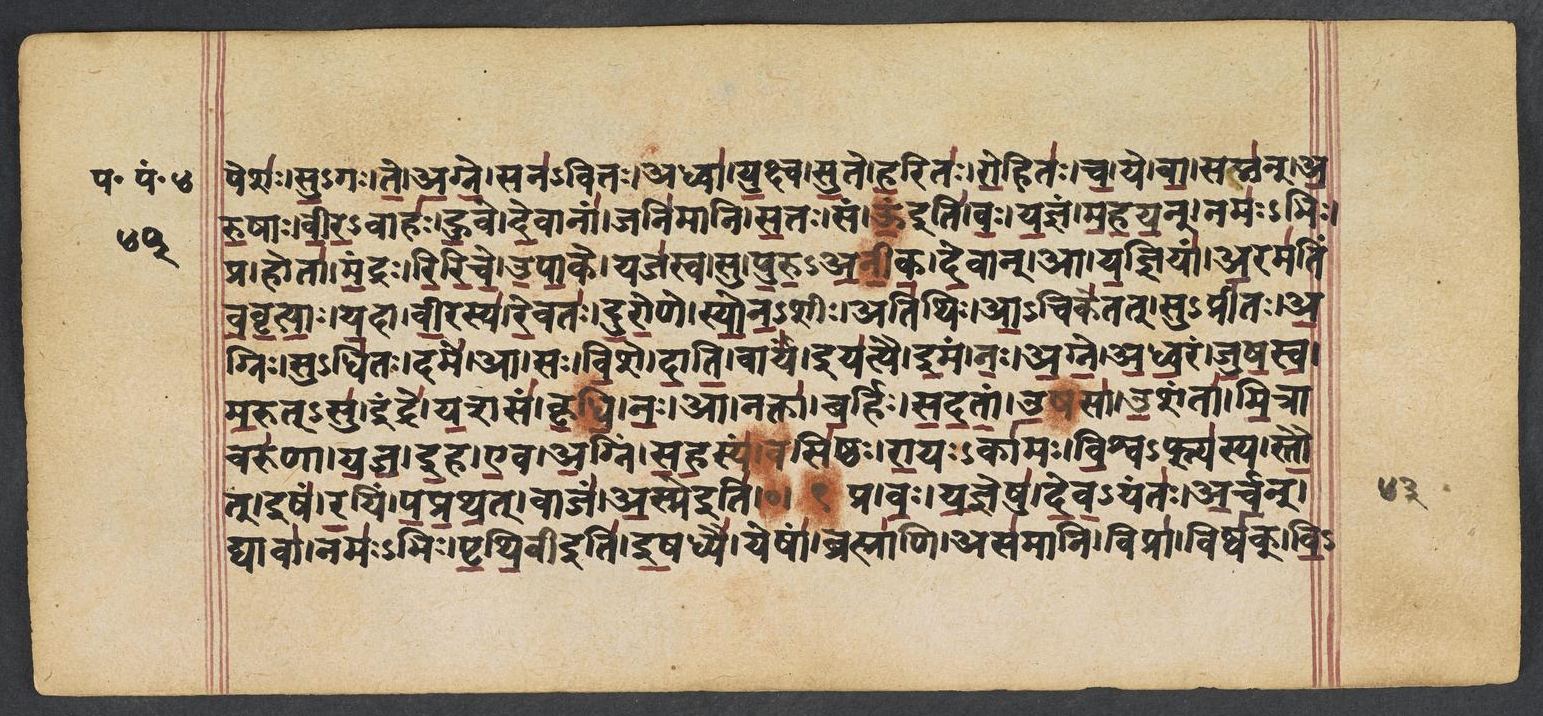
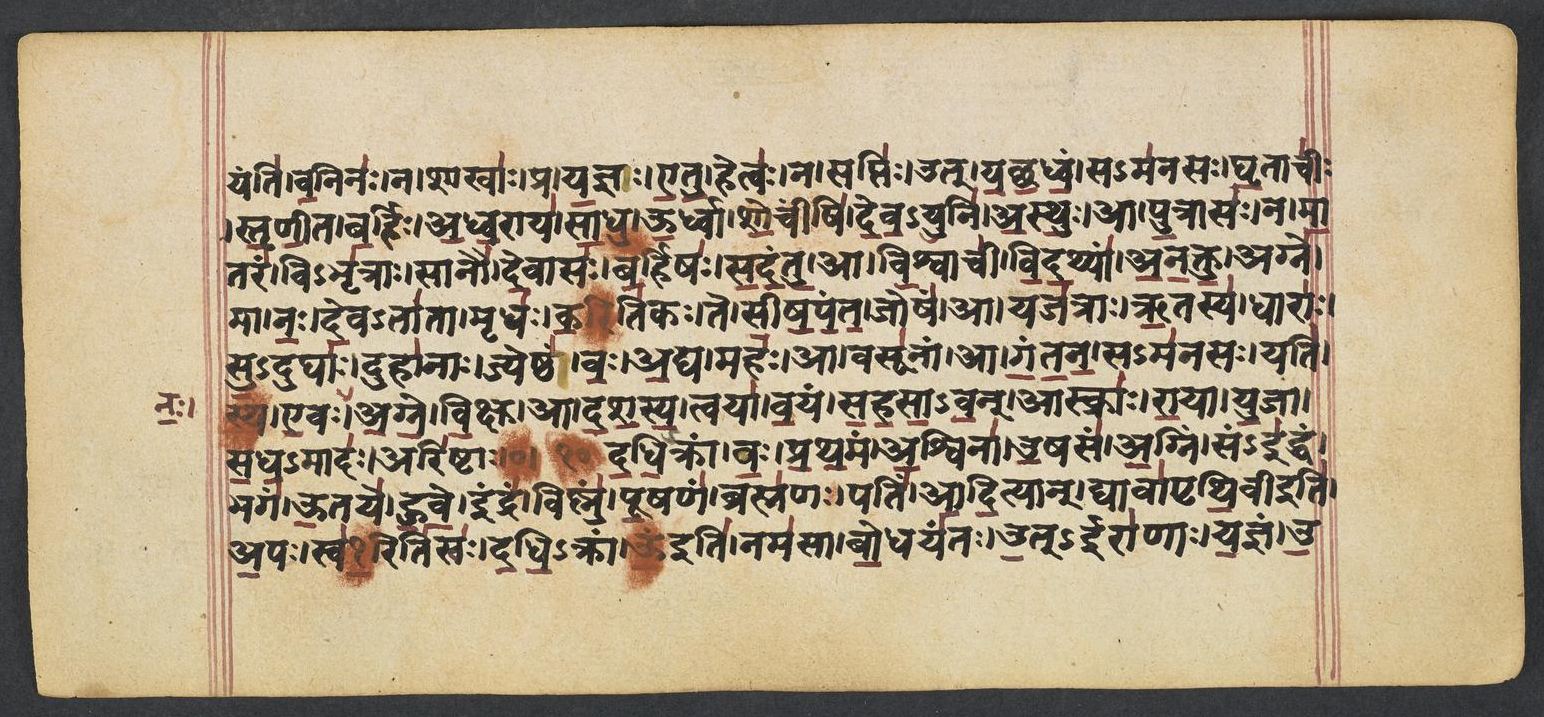
The manuscript shown is Penn Ms. Coll. 390 Item 41 (University of Pennsylvania), an undated paper manuscript of the padapāṭha (the word-by-word recitation text, in which every word is written separately and compounds are split) of the whole Ṛgveda in Devanāgarī, 884 leaves in fascicles, 7-9 lines to the page, accents in red; this hymn stands on fol. 522v-523r. Each section below gives the verses that end on one page; the page boundaries were read on the images (the opening words of every page), not counted out. Where the manuscript is a padapāṭha (the word-by-word recitation text), the section shows Aufrecht's continuous (saṃhitā) text first and, as the edition text, the padapāṭha of the same verses, which is the form written on the page.
How was this verified? (Provenance)
Where on the image
Penn Ms. Coll. 390 Item 41, fol. 523r (numbered 44r by the scribe) (OPenn image 523, lower leaf). Checked on the image: the Rigveda text on this page begins in RV 7.43.1 ‹-vi-yanti vaninaḥ na śākhāḥ›. The next page with Rigveda text, fol. 523v (numbered 44v by the scribe), begins in RV 7.44.2 ‹-upa-prayantaḥ iḷām devīm barhiṣi›. Verses 7.43.1-5 end on this page; 7.43.1 begins on fol. 522v (numbered 43v by the scribe).
1pra vo̍ ya̱jñeṣu̍ deva̱yanto̍ arca̱n dyāvā̱ namo̍bhiḥ pṛthi̱vī i̱ṣadhyai̍ | yeṣā̱m brahmā̱ṇy asa̍māni̱ viprā̱ viṣva̍g vi̱yanti̍ va̱nino̱ na śākhā̍ḥ ||
2pra ya̱jña e̍tu̱ hetvo̱ na sapti̱r ud ya̍cchadhva̱ṁ sama̍naso ghṛ̱tācī̍ḥ | stṛ̱ṇī̱ta ba̱rhir a̍dhva̱rāya̍ sā̱dhūrdhvā śo̱cīṁṣi̍ deva̱yūny a̍sthuḥ ||
3ā pu̱trāso̱ na mā̱tara̱ṁ vibhṛ̍trā̱ḥ sānau̍ de̱vāso̍ ba̱rhiṣa̍ḥ sadantu | ā vi̱śvācī̍ vida̱thyā̍m ana̱ktv agne̱ mā no̍ de̱vatā̍tā̱ mṛdha̍s kaḥ ||
4te sī̍ṣapanta̱ joṣa̱m ā yaja̍trā ṛ̱tasya̱ dhārā̍ḥ su̱dughā̱ duhā̍nāḥ | jyeṣṭha̍ṁ vo a̱dya maha̱ ā vasū̍nā̱m ā ga̍ntana̱ sama̍naso̱ yati̱ ṣṭha ||
5e̱vā no̍ agne vi̱kṣv ā da̍śasya̱ tvayā̍ va̱yaṁ sa̍hasāva̱nn āskrā̍ḥ | rā̱yā yu̱jā sa̍dha̱mādo̱ ari̍ṣṭā yū̱yam pā̍ta sva̱stibhi̱ḥ sadā̍ naḥ ||
Compare: Padapāṭha (word-by-word text written in the manuscript; Sansknet e-text via GRETIL)
1pra | vaḥ | yajñeṣu | deva-yantaḥ | arcan | dyāvā | namaḥ-bhiḥ | pṛthivī iti | iṣadhyai | yeṣām | brahmāṇi | asamāni | viprāḥ | viṣvak | vi-yanti | vaninaḥ | na | śākhāḥ
2pra | yajñaḥ | etu | hetvaḥ | na | saptiḥ | ut | yacchadhvam | sa-manasaḥ | ghṛtācīḥ | stṛṇīta | barhiḥ | adhvarāya | sādhu | ūrdhvā | śocīṃṣi | deva-yūni | asthuḥ
3ā | putrāsaḥ | na | mātaram | vi-bhṛtrāḥ | sānau | devāsaḥ | barhiṣaḥ | sadantu | ā | viśvācī | vidathyām | anaktu | agne | mā | naḥ | deva-tātā | mṛdhaḥ | karitikaḥ
4te | sīṣapanta | joṣam | ā | yajatrāḥ | ṛtasya | dhārāḥ | su-dughāḥ | duhānāḥ | jyeṣṭham | vaḥ | adya | mahaḥ | ā | vasūnām | ā | gantana | sa-manasaḥ | yati | stha
5eva | naḥ | agne | vikṣu | ā | daśasya | tvayā | vayam | sahasāvan | āskrāḥ | rāyā | yujā | sadha-mādaḥ | ariṣṭāḥ | yūyam | pāta | svasti-bhiḥ | sadā | naḥ
1SING out the pious at your sacrifices to move with adorations Earth and Heaven- The Holy Singers, whose unmatched devotions, like a tree's branches, part in all directions.
2Let sacrifice proceed like some fleet courser: with one accord lift ye on high the ladles. Strew sacred grass meet for the solemn service: bright flames that love the Gods have mounted upward.
3Like babes in arms reposing on their mother, let the Gods sit upon the grass's summit. Let general fire make bright the flame of worship: scorn us not, Agni, in the Gods' assembly.
4Gladly the Gods have let themselves be honoured, milking the copious streams of holy Order. The highest might to-day is yours, the Vasus': come ye, as many as ye are, one-minded.
5So, Agni, send us wealth among the people: may we be closely knit to thee, O Victor, Unharmed, and rich, and taking joy together. Preserve us evermore, ye ods, with blessings.
Notes
- Sanskrit: Aufrecht's edition (1877) with the Vedic accents, as entered by van Nooten and Holland (GRETIL).
- English: Ralph T. H. Griffith, The Hymns of the Rigveda (1889-1892; 2nd ed. 1896-1897), from the VedaWeb digital text; OCR slips in that text were corrected against the printed 2nd edition (data/sources/rigveda/griffith_errata.json).
- Padapāṭha (edition text): Sansknet e-text via GRETIL (CC BY-NC-SA 4.0).
Cite
Sources
- Source: Penn Ms. Coll. 390 Item 41 (undated (catalogued with Penn's 18th-19th c. Vedic manuscripts)), OPenn, Public Domain Mark + Aufrecht's accented text (GRETIL) + Griffith's English (VedaWeb) (holding institution)
- Critical edition: Aufrecht (1877), accented e-text via GRETIL
← previous · → next · v cycle view · l back to library