Rigveda 7.44: To Dadhikra
Introduction
Rigveda 7.44 is a hymn of 5 verses addressed to Dadhikra. It stands in book (maṇḍala) 7, the family book of Vasiṣṭha. The Rigveda is the oldest collection of Sanskrit hymns, composed in the second half of the second millennium BCE and handed down orally for many centuries before it was written down.
The manuscript shown is Penn Ms. Coll. 390 Item 41 (University of Pennsylvania), an undated paper manuscript of the padapāṭha (the word-by-word recitation text, in which every word is written separately and compounds are split) of the whole Ṛgveda in Devanāgarī, 884 leaves in fascicles, 7-9 lines to the page, accents in red; this hymn stands on fol. 523r-523v. Each section below gives the verses that end on one page; the page boundaries were read on the images (the opening words of every page), not counted out. Where the manuscript is a padapāṭha (the word-by-word recitation text), the section shows Aufrecht's continuous (saṃhitā) text first and, as the edition text, the padapāṭha of the same verses, which is the form written on the page.
How was this verified? (Provenance)
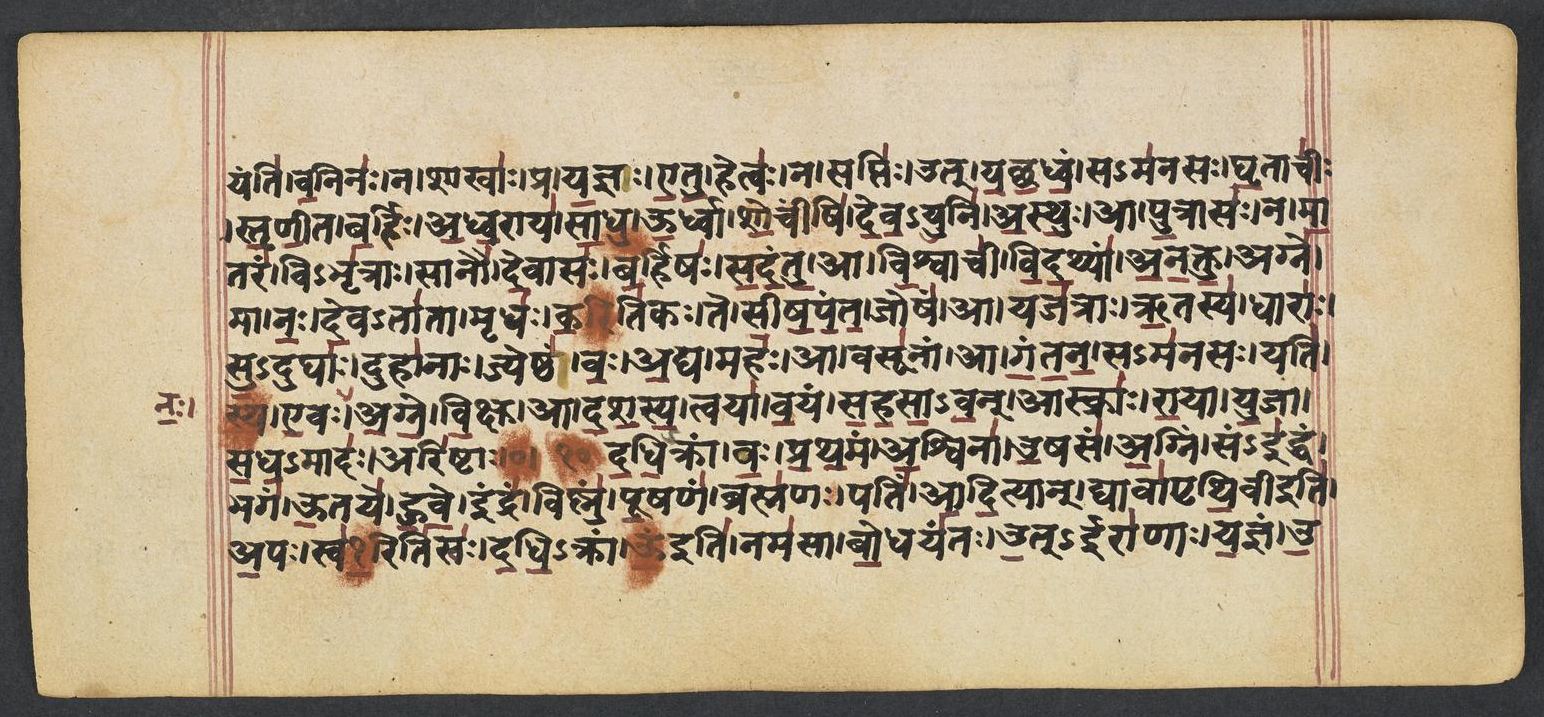
Where on the image
Penn Ms. Coll. 390 Item 41, fol. 523r (numbered 44r by the scribe) (OPenn image 523, lower leaf). Checked on the image: the Rigveda text on this page begins in RV 7.43.1 ‹-vi-yanti vaninaḥ na śākhāḥ›. The next page with Rigveda text, fol. 523v (numbered 44v by the scribe), begins in RV 7.44.2 ‹-upa-prayantaḥ iḷām devīm barhiṣi›. Verse 7.44.1 ends on this page.
1da̱dhi̱krāṁ va̍ḥ pratha̱mam a̱śvino̱ṣasa̍m a̱gniṁ sami̍ddha̱m bhaga̍m ū̱taye̍ huve | indra̱ṁ viṣṇu̍m pū̱ṣaṇa̱m brahma̍ṇa̱s pati̍m ādi̱tyān dyāvā̍pṛthi̱vī a̱paḥ sva̍ḥ ||
Compare: Padapāṭha (word-by-word text written in the manuscript; Sansknet e-text via GRETIL)
1dadhi-krām | vaḥ | prathamam | aśvinā | uṣasam | agnim | sam-iddham | bhagam | ūtaye | huve | indram | viṣṇum | pūṣaṇam | brahmaṇaḥ | patim | ādityān | dyāvāpṛth ivī iti | apaḥ | svaḥ
1I CALL on Dadhikrâs, the first, to give you aid, the Aṣvins, Bhaga, Dawn, and Agni kindled well, Indra, and Vishṇu, Pûshan, Brahmaṇaspati, Âdityas, Heaven and Earth, the Waters, and the Light.
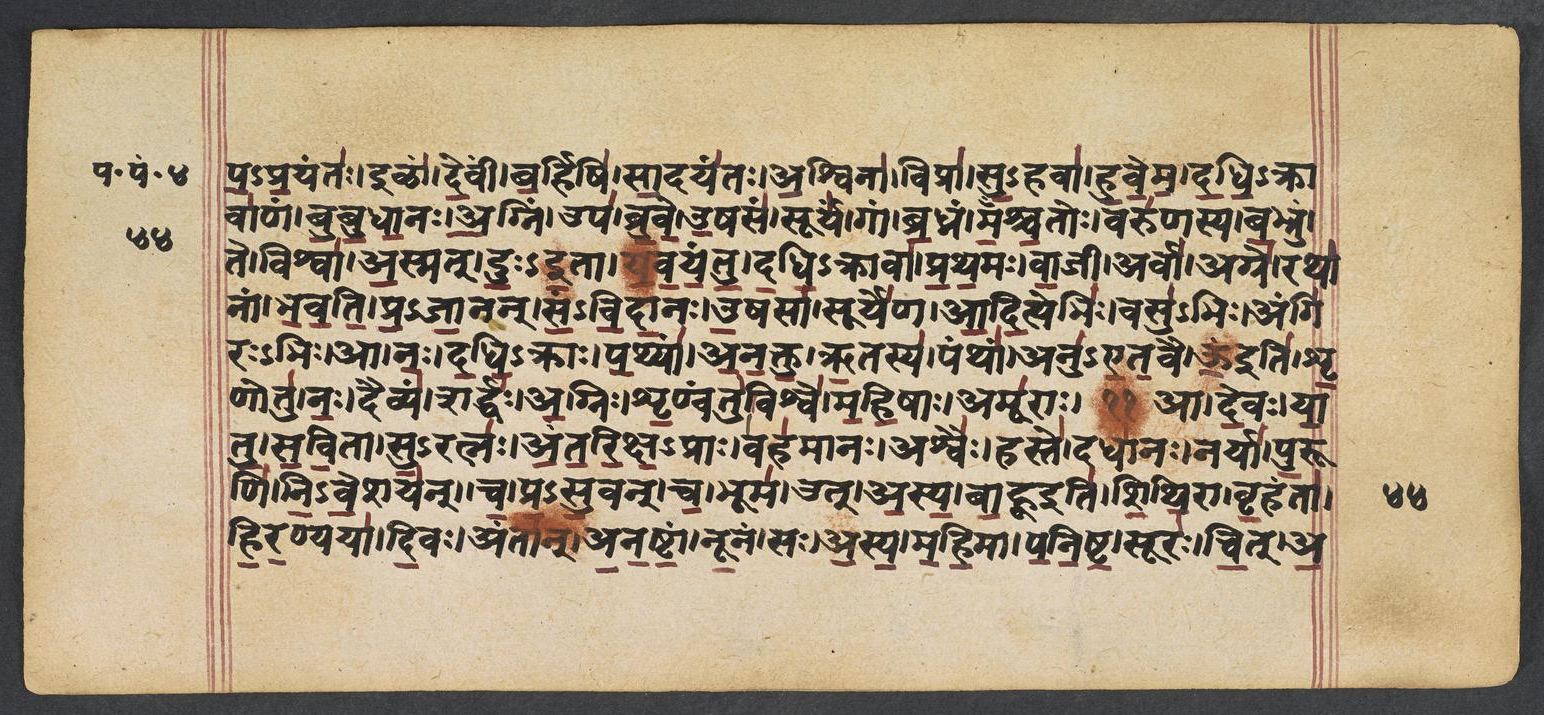
Where on the image
Penn Ms. Coll. 390 Item 41, fol. 523v (numbered 44v by the scribe) (OPenn image 524, upper leaf). Checked on the image: the Rigveda text on this page begins in RV 7.44.2 ‹-upa-prayantaḥ iḷām devīm barhiṣi›. The next page with Rigveda text, fol. 524r (numbered 45r by the scribe), begins in RV 7.45.2 ‹-asmai anu dāt apasyām›. Verses 7.44.2-5 end on this page; 7.44.2 begins on fol. 523r (numbered 44r by the scribe).
2da̱dhi̱krām u̱ nama̍sā bo̱dhaya̍nta u̱dīrā̍ṇā ya̱jñam u̍papra̱yanta̍ḥ | iḻā̍ṁ de̱vīm ba̱rhiṣi̍ sā̱daya̍nto̱ 'śvinā̱ viprā̍ su̱havā̍ huvema ||
3da̱dhi̱krāvā̍ṇam bubudhā̱no a̱gnim upa̍ bruva u̱ṣasa̱ṁ sūrya̱ṁ gām | bra̱dhnam ma̍m̐śca̱tor varu̍ṇasya ba̱bhruṁ te viśvā̱smad du̍ri̱tā yā̍vayantu ||
4da̱dhi̱krāvā̍ pratha̱mo vā̱jy arvāgre̱ rathā̍nām bhavati prajā̱nan | sa̱ṁvi̱dā̱na u̱ṣasā̱ sūrye̍ṇādi̱tyebhi̱r vasu̍bhi̱r aṅgi̍robhiḥ ||
5ā no̍ dadhi̱krāḥ pa̱thyā̍m anaktv ṛ̱tasya̱ panthā̱m anve̍ta̱vā u̍ | śṛ̱ṇotu̍ no̱ daivya̱ṁ śardho̍ a̱gniḥ śṛ̱ṇvantu̱ viśve̍ mahi̱ṣā amū̍rāḥ ||
Compare: Padapāṭha (word-by-word text written in the manuscript; Sansknet e-text via GRETIL)
2dadhi-krām | oṃ iti | namasā | bodhayantaḥ | ut-īrāṇāḥ | yajñam | upa-prayantaḥ | iḷām | devīm | barhiṣi | sādayantaḥ | aśvinā | viprāḥ | su-havā | huvema
3dadhi-krāvāṇam | bubudhānaḥ | agnim | upa | bruve | uṣasam | sūryam | gām | bradhnam | māṃścatoḥ | varuṇasya | babhrum | te | viśvā | asmat | duḥ-itā | yavayantu
4dadhi-krāvā | prathamaḥ | vājī | arvā | agre | rathānām | bhavati | pra-jānan | sam-vidānaḥ | uṣasā | sūryeṇa | ādityebhiḥ | vasu-bhiḥ | aṅgiraḥ-bhiḥ
5ā | naḥ | dadhi-krāḥ | pathyām | anaktu | ṛtasya | panthām | anu-etavai | oṃ iti | śṛṇotu | naḥ | daivyam | śardhaḥ | agniḥ | śṛṇvantu | viśve | mahiṣāḥ | amūrāḥ
2When, rising, to the sacrifice we hasten, awaking Dadhikrâs with adorations. Seating on sacred grass the Goddess Iḷâ. let us invoke the sage swift-hearing Aṣvins.
3While I am thus arousing Dadhikrâvan I speak to Agni, Earth, and Dawn, and Sûrya, The red, the brown of Varuṇa ever mindful: may they ward off from us all grief and trouble.
4Foremost is Dadhikrâvan, vigorous courser; in forefront of the cars, his way he knoweth, Closely allied with Sûrya and with Morning, Âdityas, and Angirases, and Vasus.
5May Dadhikrâs prepare the way we travel that we may pass along the path of Order. May Agni hear us, and the Heavenly Army: hear us all Mighty Ones whom none deceiveth.
Notes
- Sanskrit: Aufrecht's edition (1877) with the Vedic accents, as entered by van Nooten and Holland (GRETIL).
- English: Ralph T. H. Griffith, The Hymns of the Rigveda (1889-1892; 2nd ed. 1896-1897), from the VedaWeb digital text; OCR slips in that text were corrected against the printed 2nd edition (data/sources/rigveda/griffith_errata.json).
- Padapāṭha (edition text): Sansknet e-text via GRETIL (CC BY-NC-SA 4.0).
Cite
Sources
- Source: Penn Ms. Coll. 390 Item 41 (undated (catalogued with Penn's 18th-19th c. Vedic manuscripts)), OPenn, Public Domain Mark + Aufrecht's accented text (GRETIL) + Griffith's English (VedaWeb) (holding institution)
- Critical edition: Aufrecht (1877), accented e-text via GRETIL
← previous · → next · v cycle view · l back to library