Rigveda 7.59: To the Maruts
Introduction
Rigveda 7.59 is a hymn of 12 verses addressed to the Maruts. It stands in book (maṇḍala) 7, the family book of Vasiṣṭha. The Rigveda is the oldest collection of Sanskrit hymns, composed in the second half of the second millennium BCE and handed down orally for many centuries before it was written down.
The manuscript shown is Penn Ms. Coll. 390 Item 41 (University of Pennsylvania), an undated paper manuscript of the padapāṭha (the word-by-word recitation text, in which every word is written separately and compounds are split) of the whole Ṛgveda in Devanāgarī, 884 leaves in fascicles, 7-9 lines to the page, accents in red; this hymn stands on fol. 530r-530v. Each section below gives the verses that end on one page; the page boundaries were read on the images (the opening words of every page), not counted out. Where the manuscript is a padapāṭha (the word-by-word recitation text), the section shows Aufrecht's continuous (saṃhitā) text first and, as the edition text, the padapāṭha of the same verses, which is the form written on the page.
How was this verified? (Provenance)
Where on the image
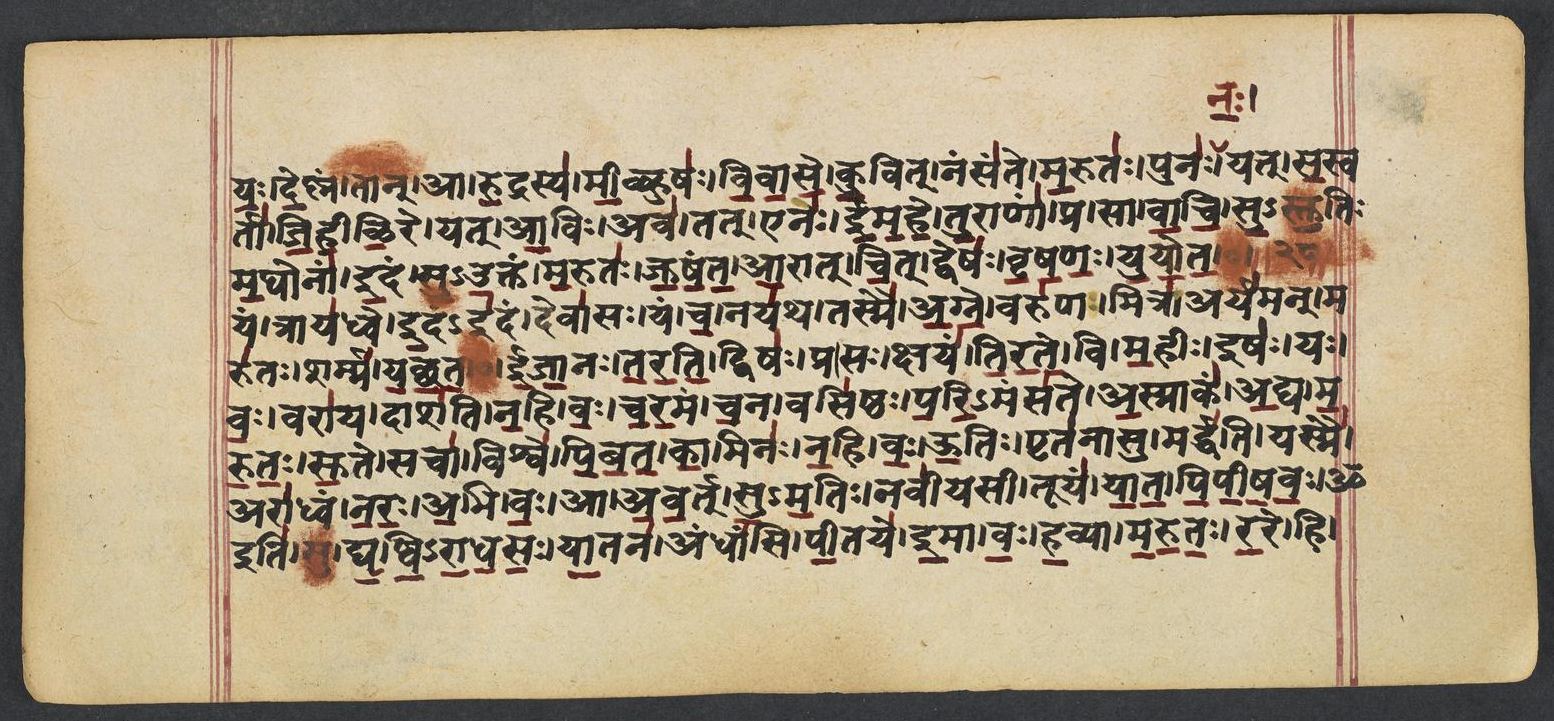
Penn Ms. Coll. 390 Item 41, fol. 530r (numbered 51r by the scribe) (OPenn image 530, lower leaf). Checked on the image: the Rigveda text on this page begins in RV 7.58.4 ‹-dhūtayaḥ deṣṇam›. The next page with Rigveda text, fol. 530v (numbered 51v by the scribe), begins in RV 7.59.5 ‹kam mo iti su›. Verses 7.59.1-4 end on this page.
1yaṁ trāya̍dhva i̱dam-i̍da̱ṁ devā̍so̱ yaṁ ca̱ naya̍tha | tasmā̍ agne̱ varu̍ṇa̱ mitrārya̍ma̱n maru̍ta̱ḥ śarma̍ yacchata ||
2yu̱ṣmāka̍ṁ devā̱ ava̱sāha̍ni pri̱ya ī̍jā̱nas ta̍rati̱ dviṣa̍ḥ | pra sa kṣaya̍ṁ tirate̱ vi ma̱hīr iṣo̱ yo vo̱ varā̍ya̱ dāśa̍ti ||
3na̱hi va̍ś cara̱maṁ ca̱na vasi̍ṣṭhaḥ pari̱maṁsa̍te | a̱smāka̍m a̱dya ma̍rutaḥ su̱te sacā̱ viśve̍ pibata kā̱mina̍ḥ ||
4na̱hi va̍ ū̱tiḥ pṛta̍nāsu̱ mardha̍ti̱ yasmā̱ arā̍dhvaṁ naraḥ | a̱bhi va̱ āva̍rt suma̱tir navī̍yasī̱ tūya̍ṁ yāta pipīṣavaḥ ||
Compare: Padapāṭha (word-by-word text written in the manuscript; Sansknet e-text via GRETIL)
1yam | trāyadhve | idam-idam | devāsaḥ | yam | ca | nayatha | tasmai | agne | varuṇa | mitra | aryaman | marutaḥ | śarma | yacchata
2yuṣmākam | devāḥ | avasā | ahani | priye | ījānaḥ | tarati | dviṣaḥ | pra | saḥ | kṣayam | tirate | vi | mahīḥ | iṣaḥ | yaḥ | vaḥ | varāya | dāśati
3nahi | vaḥ | caramam | cana | vasiṣṭhaḥ | pari-maṃsate | asmākam | adya | marutaḥ | sute | sacā | viśve | pibata | kāminaḥ
4nahi | vaḥ | ūtiḥ | pṛtanāsu | mardhati | yasmai | arādhvam | naraḥ | abhi | vaḥ | ā | avārta | su-matiḥ | navīyasī | tūyam | yāta | pipīṣavaḥ
1WHOMSO ye rescue here and there, whomso ye guide, O Deities, To him give shelter, Agni, Mitra, Varuṇa, ye Maruts, and thou Aryaman.
2Through your kind favour, Gods, on some auspicious day, the worshipper subdues his foes. That man increases home and strengthening ample food who brings you offerings as ye list.
3Vasishṭha will not overlook the lowliest one among you all. O Maruts, of our Soma juice effused to-day drink all of you with eager haste.
4Your succour in the battle injures not the man to whom ye, Heroes, grant your gifts. May your most recent favour turn to us again. Come quickly, ye who fain would drink.
Where on the image
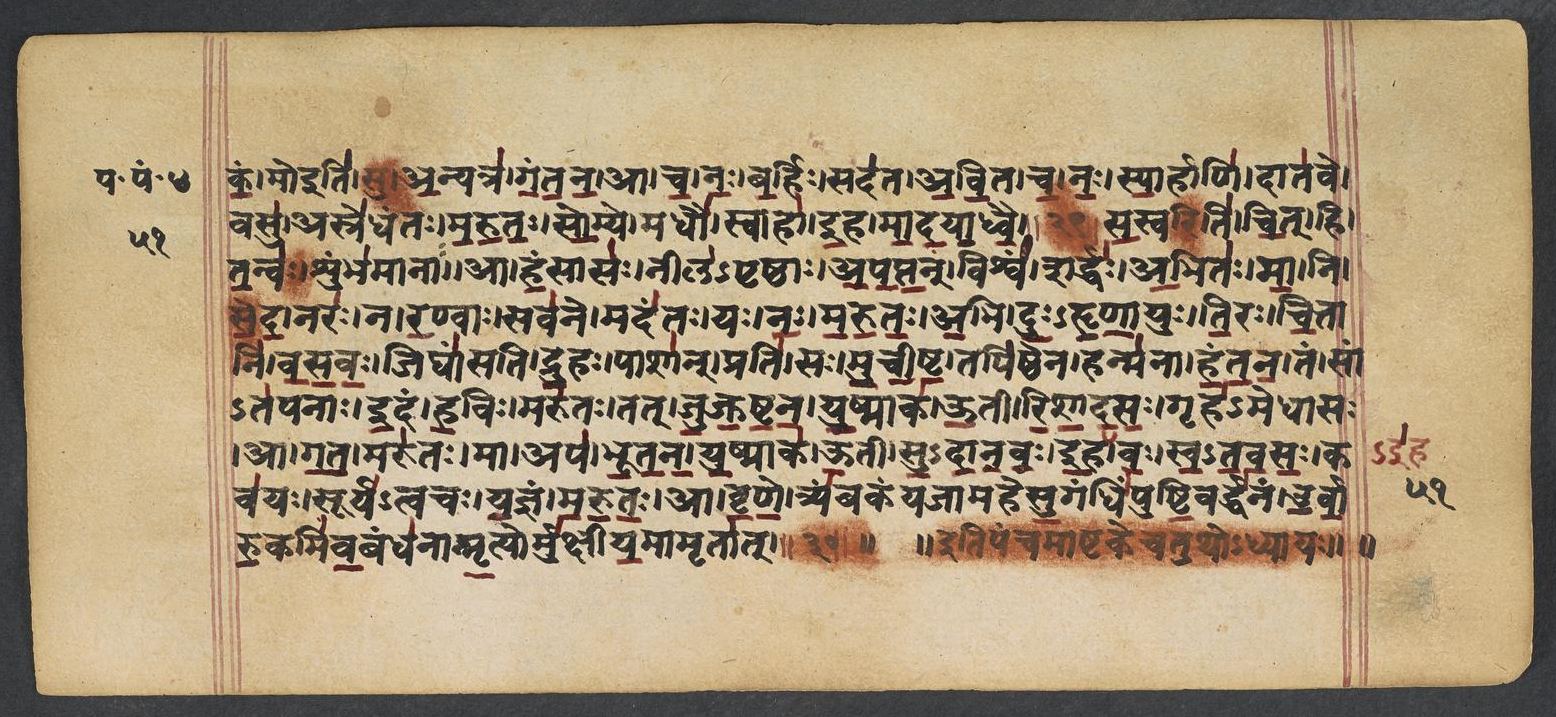
Penn Ms. Coll. 390 Item 41, fol. 530v (numbered 51v by the scribe) (OPenn image 531, upper leaf). Checked on the image: the Rigveda text on this page begins in RV 7.59.5 ‹kam mo iti su›. The next page with Rigveda text, fol. 531r (numbered 52r by the scribe), begins in RV 7.60.1 ‹yat adya sūrya bravaḥ›. Verses 7.59.5-12 end on this page; 7.59.5 begins on fol. 530r (numbered 51r by the scribe).
5o ṣu ghṛ̍ṣvirādhaso yā̱tanāndhā̍ṁsi pī̱taye̍ | i̱mā vo̍ ha̱vyā ma̍ruto ra̱re hi ka̱m mo ṣv a1̱̍nyatra̍ gantana ||
6ā ca̍ no ba̱rhiḥ sada̍tāvi̱tā ca̍ naḥ spā̱rhāṇi̱ dāta̍ve̱ vasu̍ | asre̍dhanto marutaḥ so̱mye madhau̱ svāhe̱ha mā̍dayādhvai ||
7sa̱svaś ci̱d dhi ta̱nva1̱̍ḥ śumbha̍mānā̱ ā ha̱ṁsāso̱ nīla̍pṛṣṭhā apaptan | viśva̱ṁ śardho̍ a̱bhito̍ mā̱ ni ṣe̍da̱ naro̱ na ra̱ṇvāḥ sava̍ne̱ mada̍ntaḥ ||
8yo no̍ maruto a̱bhi du̍rhṛṇā̱yus ti̱raś ci̱ttāni̍ vasavo̱ jighā̍ṁsati | dru̱haḥ pāśā̱n prati̱ sa mu̍cīṣṭa̱ tapi̍ṣṭhena̱ hanma̍nā hantanā̱ tam ||
9sāṁta̍panā i̱daṁ ha̱vir maru̍ta̱s taj ju̍juṣṭana | yu̱ṣmāko̱tī ri̍śādasaḥ ||
10gṛha̍medhāsa̱ ā ga̍ta̱ maru̍to̱ māpa̍ bhūtana | yu̱ṣmāko̱tī su̍dānavaḥ ||
11i̱heha̍ vaḥ svatavasa̱ḥ kava̍ya̱ḥ sūrya̍tvacaḥ | ya̱jñam ma̍ruta̱ ā vṛ̍ṇe ||
12trya̍mbakaṁ yajāmahe su̱gandhi̍m puṣṭi̱vardha̍nam | u̱rvā̱ru̱kam i̍va̱ bandha̍nān mṛ̱tyor mu̍kṣīya̱ māmṛtā̍t ||
Compare: Padapāṭha (word-by-word text written in the manuscript; Sansknet e-text via GRETIL)
5o iti | su | ghṛṣvi-rādhasaḥ | yātana | andhāṃsi | pītaye | imā | vaḥ | havyā | marutaḥ | rare | hi | kam | mo iti | su | anyatra | gantana
6ā | caḥ | naḥ | barhiḥ | sadata | avita | ca | naḥ | spārhāṇi | dātave | vasu | asredhantaḥ | marutaḥ | somye | madhau | svāhā | iha | mādayādhvai
7sasvariti | cit | hi | tanvaḥ | śumbhamānāḥ | ā | haṃsāsaḥ | nīla-pṛṣṭhāḥ | apaptan | viśvam | śardhaḥ | abhitaḥ | mā | ni | seda | naraḥ | na | raṇvāḥ | savane | madantaḥ
8yaḥ | naḥ | marutaḥ | abhi | duḥ-hṛṇāyuḥ | tiraḥ | cittāni | vasavaḥ | jighāṃsati | druhaḥ | pāśān | prati | saḥ | mucīṣṭa | tapiṣṭena | hanmanā | hantana | tam
9sān-tapanāḥ | idam | haviḥ | marutaḥ | tat | jujuṣṭana | yuṣmāka | ūtī | riśādasaḥ
10gṛha-medhāsaḥ | ā | gata | marutaḥ | mā | apa | bhūtana | yuṣmāka | ūtī | su-dānavaḥ
11iha-iha | vaḥ | sva-tavasaḥ | kavayaḥ | sūrya-tvacaḥ | yajñam | marutaḥ | ā | vṛṇe
12tryambakam | yajāmahe | sugandhim | puṣṭi-vardhanam | urvārukam-iva | bandhanāt | mṛtyoḥ | mukṣīya | mā | amṛtāt
5Come hitherward to drink the juice, O ye whose bounties give you joy. These offerings are for you, these, Maruts, I present. Go not to any place but this.
6Sit on our sacred grass, be graciously inclined to give the wealth for which we long, To take delight, ye Maruts, Friends of all, with Svâhâ, in sweet Soma juice.
7Decking the beauty of their forms in secret the Swans with purple backs have flown down hither. Around me all the Company hath settled, like joyous Heroes glad in our libation.
8Maruts, the man whose wrath is hard to master, he who would slay us ere we think, O Vasus, May he be tangled in the toils of mischief; smite ye him down with your most flaming weapon.
9O Maruts, ye consuming Gods, enjoy this offering brought for you, To help us, ye who slay the foe.
10Sharers of household sacrifice, come, Maruts, stay not far away, That ye may help us, Bounteous Ones.
11Here, Self-strong Maruts, yea, even here. ye Sages with your sunbright skins I dedicate your sacrifice.
12Tryambaka we worship, sweet augmenter of prosperity. As from its stem the cucumber, so may I be released from death, not reft of immortality.
Notes
- Sanskrit: Aufrecht's edition (1877) with the Vedic accents, as entered by van Nooten and Holland (GRETIL).
- English: Ralph T. H. Griffith, The Hymns of the Rigveda (1889-1892; 2nd ed. 1896-1897), from the VedaWeb digital text; OCR slips in that text were corrected against the printed 2nd edition (data/sources/rigveda/griffith_errata.json).
- Padapāṭha (edition text): Sansknet e-text via GRETIL (CC BY-NC-SA 4.0).
Cite
Sources
- Source: Penn Ms. Coll. 390 Item 41 (undated (catalogued with Penn's 18th-19th c. Vedic manuscripts)), OPenn, Public Domain Mark + Aufrecht's accented text (GRETIL) + Griffith's English (VedaWeb) (holding institution)
- Critical edition: Aufrecht (1877), accented e-text via GRETIL
← previous · → next · v cycle view · l back to library