Rigveda 7.60: To Mitra and Varuna
Introduction
Rigveda 7.60 is a hymn of 12 verses addressed to Mitra and Varuna. It stands in book (maṇḍala) 7, the family book of Vasiṣṭha. The Rigveda is the oldest collection of Sanskrit hymns, composed in the second half of the second millennium BCE and handed down orally for many centuries before it was written down.
The manuscript shown is Penn Ms. Coll. 390 Item 41 (University of Pennsylvania), an undated paper manuscript of the padapāṭha (the word-by-word recitation text, in which every word is written separately and compounds are split) of the whole Ṛgveda in Devanāgarī, 884 leaves in fascicles, 7-9 lines to the page, accents in red; this hymn stands on fol. 531r-532r. Each section below gives the verses that end on one page; the page boundaries were read on the images (the opening words of every page), not counted out. Where the manuscript is a padapāṭha (the word-by-word recitation text), the section shows Aufrecht's continuous (saṃhitā) text first and, as the edition text, the padapāṭha of the same verses, which is the form written on the page.
How was this verified? (Provenance)
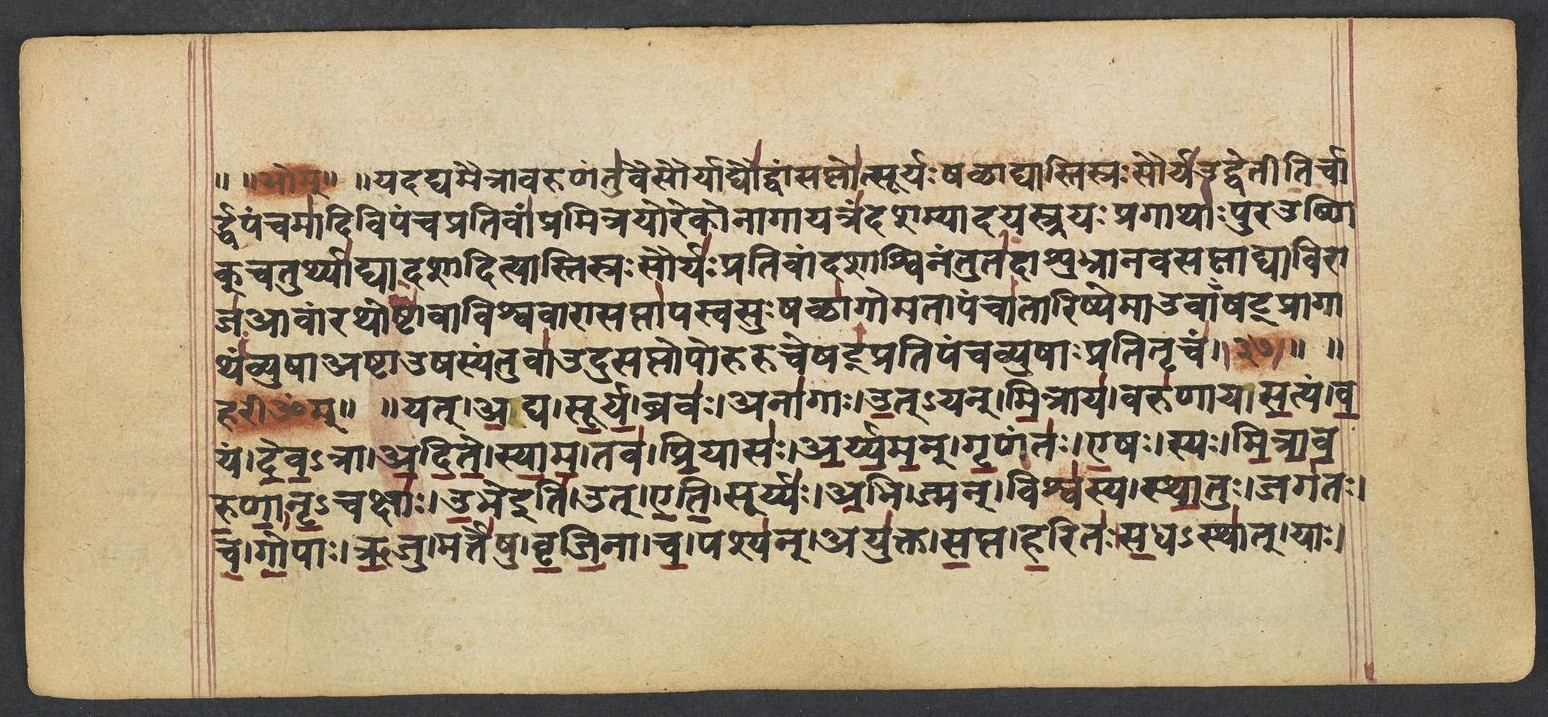
Where on the image
Penn Ms. Coll. 390 Item 41, fol. 531r (numbered 52r by the scribe) (OPenn image 531, lower leaf). Checked on the image: the Rigveda text on this page begins in RV 7.60.1 ‹yat adya sūrya bravaḥ›. Lines 1-5 carry the anukramaṇī for aṣṭaka 5, adhyāya 5; 7.60.1 (yat adya sūrya bravaḥ anāgāḥ) begins in line 6 after hariḥ oṃ. The next page with Rigveda text, fol. 531v (numbered 52v by the scribe), begins in RV 7.60.3 ‹īm vahanti sūryam ghṛtācīḥ›. Verses 7.60.1-2 end on this page.
1yad a̱dya sū̍rya̱ bravo 'nā̍gā u̱dyan mi̱trāya̱ varu̍ṇāya sa̱tyam | va̱yaṁ de̍va̱trādi̍te syāma̱ tava̍ pri̱yāso̍ aryaman gṛ̱ṇanta̍ḥ ||
2e̱ṣa sya mi̍trāvaruṇā nṛ̱cakṣā̍ u̱bhe ud e̍ti̱ sūryo̍ a̱bhi jman | viśva̍sya sthā̱tur jaga̍taś ca go̱pā ṛ̱ju marte̍ṣu vṛji̱nā ca̱ paśya̍n ||
Compare: Padapāṭha (word-by-word text written in the manuscript; Sansknet e-text via GRETIL)
1yat | adya | sūrya | bravaḥ | anāgāḥ | ut-yan | mitrāya | varuṇāya | satyam | vayam | deva-trā | adite | syāma | tava | priyāsaḥ | aryaman | gṛṇantaḥ
2eṣaḥ | syaḥ | mitrāvaruṇā | nṛ-cakṣāḥ | ubhe iti | ut | eti | sūryaḥ | abhi | jman | viśvasya | sthātuḥ | jagataḥ | ca | gopāḥ | ṛju | marteṣu | vṛjinā | ca | paśyan
1WHEN thou, O Sun, this day, arising sinless, shalt speak the truth to Varuṇa and Mitra, O Aditi, may all the Deities love us, and thou, O Aryaman, while we are singing.
2Looking on man, O Varuṇa and Mitra, this Sun ascendeth up by both the pathways, Guardian of all things fixt, of all that moveth, beholding good and evil acts of mortals.
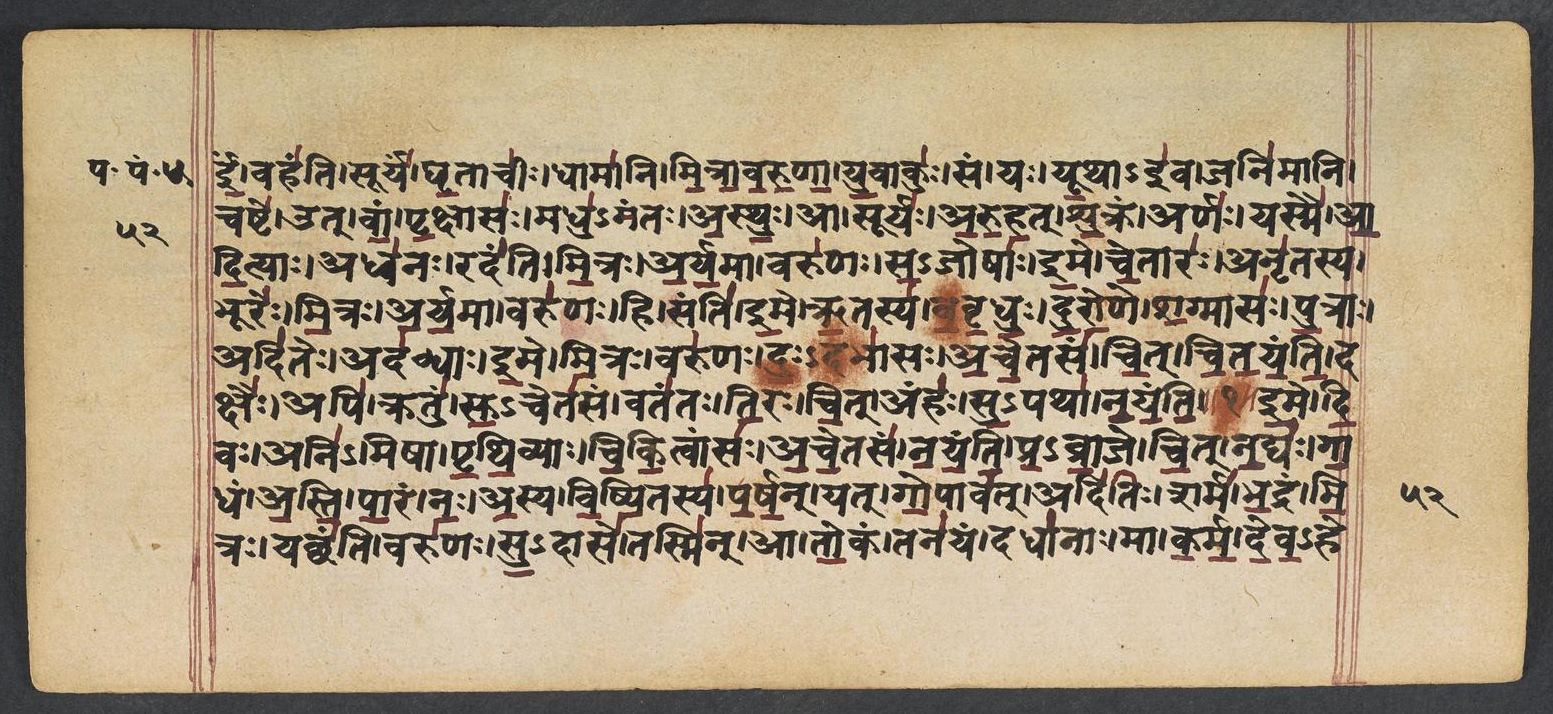
Where on the image
Penn Ms. Coll. 390 Item 41, fol. 531v (numbered 52v by the scribe) (OPenn image 532, upper leaf). Checked on the image: the Rigveda text on this page begins in RV 7.60.3 ‹īm vahanti sūryam ghṛtācīḥ›. The next page with Rigveda text, fol. 532r (numbered 53r by the scribe), begins in RV 7.60.8 ‹-deva-heḷanam turāsaḥ›. Verses 7.60.3-7 end on this page; 7.60.3 begins on fol. 531r (numbered 52r by the scribe).
3ayu̍kta sa̱pta ha̱rita̍ḥ sa̱dhasthā̱d yā ī̱ṁ vaha̍nti̱ sūrya̍ṁ ghṛ̱tācī̍ḥ | dhāmā̍ni mitrāvaruṇā yu̱vāku̱ḥ saṁ yo yū̱theva̱ jani̍māni̱ caṣṭe̍ ||
4ud vā̍m pṛ̱kṣāso̱ madhu̍manto asthu̱r ā sūryo̍ aruhac chu̱kram arṇa̍ḥ | yasmā̍ ādi̱tyā adhva̍no̱ rada̍nti mi̱tro a̍rya̱mā varu̍ṇaḥ sa̱joṣā̍ḥ ||
5i̱me ce̱tāro̱ anṛ̍tasya̱ bhūre̍r mi̱tro a̍rya̱mā varu̍ṇo̱ hi santi̍ | i̱ma ṛ̱tasya̍ vāvṛdhur duro̱ṇe śa̱gmāsa̍ḥ pu̱trā adi̍te̱r ada̍bdhāḥ ||
6i̱me mi̱tro varu̍ṇo dū̱ḻabhā̍so 'ce̱tasa̍ṁ cic citayanti̱ dakṣai̍ḥ | api̱ kratu̍ṁ su̱ceta̍sa̱ṁ vata̍ntas ti̱raś ci̱d aṁha̍ḥ su̱pathā̍ nayanti ||
7i̱me di̱vo ani̍miṣā pṛthi̱vyāś ci̍ki̱tvāṁso̍ ace̱tasa̍ṁ nayanti | pra̱vrā̱je ci̍n na̱dyo̍ gā̱dham a̍sti pā̱raṁ no̍ a̱sya vi̍ṣpi̱tasya̍ parṣan ||
Compare: Padapāṭha (word-by-word text written in the manuscript; Sansknet e-text via GRETIL)
3ayukta | sapta | haritaḥ | sadha-sthāt | yāḥ | īm | vahanti | sūryam | ghṛtācīḥ | dhāmāni | mitrāvaruṇā | yuvākuḥ | sam | yaḥ | yūthāiva | janimāni | caṣṭe
4ut | vām | pṛkṣāsaḥ | madhu-mantaḥ | asthuḥ | ā | sūryaḥ | aruhat | śukram | arṇaḥ | yasmai | ādityāḥ | adhvanaḥ | radanti | mitraḥ | aryamā | varuṇaḥ | sa-joṣāḥ
5ime | cetāraḥ | anṛtasya | bhūreḥ | mitraḥ | aryamā | varuṇaḥ | hi | santi | ime | ṛtasya | vavṛdhuḥ | duroṇe | śagmāsaḥ | putrāḥ | aditeḥ | adabdhāḥ
6ime | mitraḥ | varuṇaḥ | duḥ-dabhāsaḥ | acetasam | cit | citayanti | dakṣaiḥ | api | kratum | sucetasam | vatantaḥ | tiraḥ | cit | aṃhaḥ | su-pathā | nayanti
7ime | divaḥ | ani-miṣā | pṛthivyāḥ | cikitvāṃsaḥ | acetasam | nayanti | pra-vrāje | cit | nadyaḥ | gādham | asi | pāram | naḥ | asya | viṣpitasya | parṣan
3He from their home hath yoked the Seven gold Coursers who, dropping oil and fatness, carry Sûrya. Yours, Varuṇa and Mitra, he surveyeth the worlds and living creatures like a herdsman.
4Your coursers rich in store of sweets have mounted: to the bright ocean Sûrya hath ascended, For whom the Âdityas make his pathway ready, Aryaman, Mitra, Varuṇa, accordant.
5For these, even Aryaman, Varuṇa and Mitra, are the chastisers of all guile and falsehood. These, Aditi's Sons, infallible and mighty, have waxen in the home of law Eternal.
6These, Mitra, Varuṇa whom none deceiveth, with great power quicken even the fool to wisdom, And, wakening, moreover, thoughtful insight, lead it by easy paths o'er grief and trouble.
7They ever vigilant, with eyes that close not, caring for heaven and earth, lead on the thoughtless. Even in the river's bed there is a shallow. across this broad expanse may they conduct us.
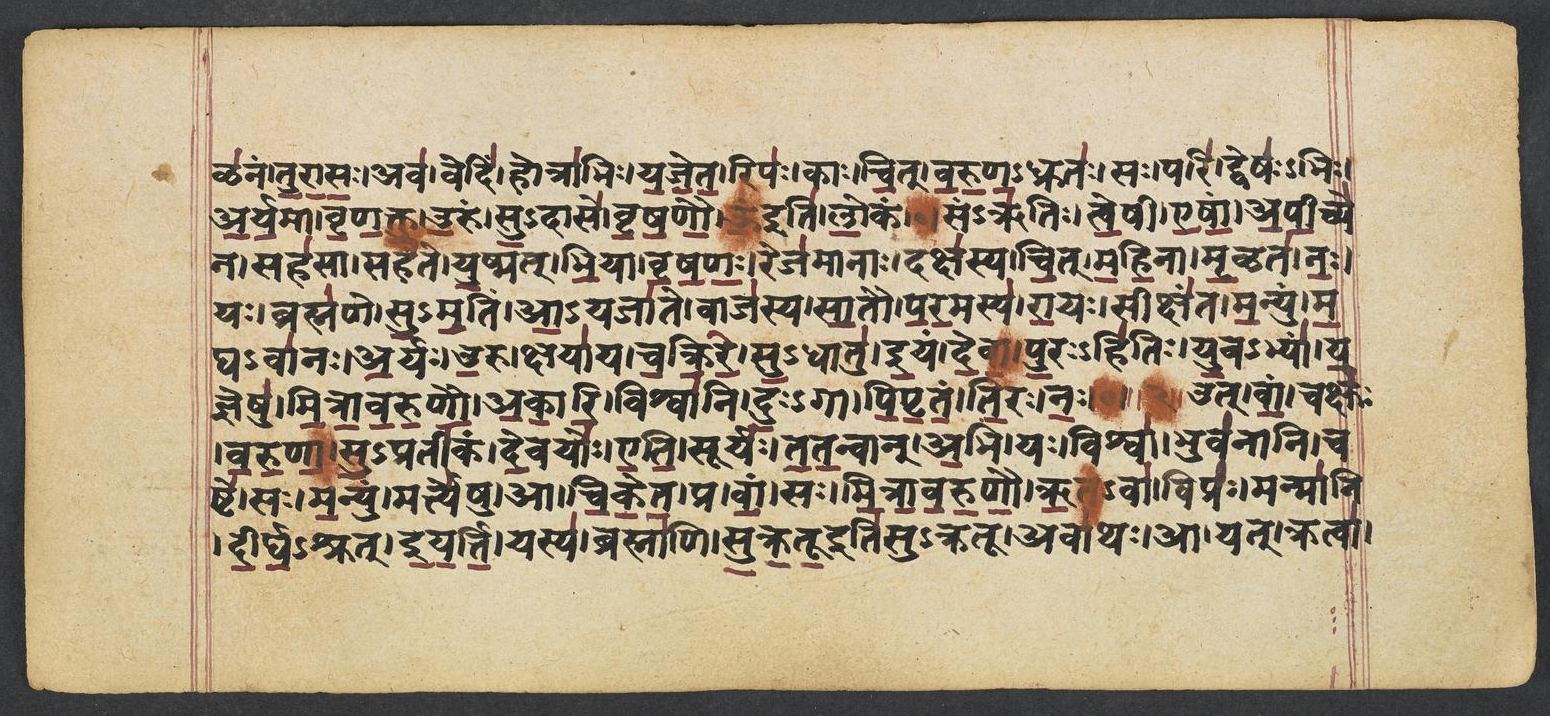
Where on the image
Penn Ms. Coll. 390 Item 41, fol. 532r (numbered 53r by the scribe) (OPenn image 532, lower leaf). Checked on the image: the Rigveda text on this page begins in RV 7.60.8 ‹-deva-heḷanam turāsaḥ›. The next page with Rigveda text, fol. 532v (numbered 53v by the scribe), begins in RV 7.61.2 ‹na śaradaḥ pṛṇaithe›. Verses 7.60.8-12 end on this page; 7.60.8 begins on fol. 531v (numbered 52v by the scribe).
8yad go̱pāva̱d adi̍ti̱ḥ śarma̍ bha̱dram mi̱tro yaccha̍nti̱ varu̍ṇaḥ su̱dāse̍ | tasmi̱nn ā to̱kaṁ tana̍ya̱ṁ dadhā̍nā̱ mā ka̍rma deva̱heḻa̍naṁ turāsaḥ ||
9ava̱ vedi̱ṁ hotrā̍bhir yajeta̱ ripa̱ḥ kāś ci̍d varuṇa̱dhruta̱ḥ saḥ | pari̱ dveṣo̍bhir arya̱mā vṛ̍ṇaktū̱ruṁ su̱dāse̍ vṛṣaṇā u lo̱kam ||
10sa̱svaś ci̱d dhi samṛ̍tis tve̱ṣy e̍ṣām apī̱cye̍na̱ saha̍sā̱ saha̍nte | yu̱ṣmad bhi̱yā vṛ̍ṣaṇo̱ reja̍mānā̱ dakṣa̍sya cin mahi̱nā mṛ̱ḻatā̍ naḥ ||
11yo brahma̍ṇe suma̱tim ā̱yajā̍te̱ vāja̍sya sā̱tau pa̍ra̱masya̍ rā̱yaḥ | sīkṣa̍nta ma̱nyum ma̱ghavā̍no a̱rya u̱ru kṣayā̍ya cakrire su̱dhātu̍ ||
12i̱yaṁ de̍va pu̱rohi̍tir yu̱vabhyā̍ṁ ya̱jñeṣu̍ mitrāvaruṇāv akāri | viśvā̍ni du̱rgā pi̍pṛtaṁ ti̱ro no̍ yū̱yam pā̍ta sva̱stibhi̱ḥ sadā̍ naḥ ||
Compare: Padapāṭha (word-by-word text written in the manuscript; Sansknet e-text via GRETIL)
8yat | gopāvat | aditiḥ | śarma | bhadram | mitraḥ | yacchanti | varuṇaḥ | su-dāse | tasmin | ā | tokam | tanayam | dadhānāḥ | mā | karma | deva-heḷanam | turāsaḥ
9ava | vedim | hotrābhiḥ | yajeta | ripaḥ | kāḥ | cit | varuṇa-dhritaḥ | saḥ | pari | dveṣaḥ-bhiḥ | aryamā | vṛṇaktu | urum | su-dāse | vṛṣaṇau | oṃ iti | lokam
10sasvariti | cit | hi | sam-ṛtiḥ | tveṣī | eṣām | apīcyena | sahasā | sahante | yuṣmat | bhiyā | vṛṣaṇaḥ | rejamānāḥ | dakṣasya | cit | mahinā | mṛḷata | naḥ
11yaḥ | brahmaṇe | su-matim | āyajāte | vājasya | sātau | paramasya | rāyaḥ | sīkṣanta | manyum | magha-vānaḥ | aryaḥ | uru | kṣayāya | cakrire | su-dhātu
12iyam | deva | puraḥ-hitiḥ | yuva-bhyām | yajñeṣu | mitrāvaruṇau | akāri | viśvāni | duḥ-gā | pipṛtam | tiraḥ | naḥ | yūyam | pāta | svasti-bhiḥ | sadā | naḥ
8When Aditi and Varuṇa and Mitra, like guardians, give Sudâs their friendly shelter, Granting him sons and lineal succession, let us not, bold ones! move the Gods to anger.
9May he with offerings purify the altar from any stains of Varuṇa's reviler. Aryaman save us us all those who hate us: give room and freedom to Sudâs, ye Mighty.
10Hid from our eyes is their resplendent meeting: by their mysterious might they hold dominion. Heroes! we cry trembling in fear before you, even in the greatness of your power have mercy.
11He who wins favour for his prayer by worship, that he may gain him strength and highest riches, That good man's mind the Mighty Ones will follow: they have brought comfort to his spacious dwelling.
12This priestly task, Gods! Varuṇa and Mitra! hath been performed for you at sacrifices. Convey us safely over every peril. Preserve us evermore, ye Gods, with blessings.
Notes
- Sanskrit: Aufrecht's edition (1877) with the Vedic accents, as entered by van Nooten and Holland (GRETIL).
- English: Ralph T. H. Griffith, The Hymns of the Rigveda (1889-1892; 2nd ed. 1896-1897), from the VedaWeb digital text; OCR slips in that text were corrected against the printed 2nd edition (data/sources/rigveda/griffith_errata.json).
- Padapāṭha (edition text): Sansknet e-text via GRETIL (CC BY-NC-SA 4.0).
Cite
Sources
- Source: Penn Ms. Coll. 390 Item 41 (undated (catalogued with Penn's 18th-19th c. Vedic manuscripts)), OPenn, Public Domain Mark + Aufrecht's accented text (GRETIL) + Griffith's English (VedaWeb) (holding institution)
- Critical edition: Aufrecht (1877), accented e-text via GRETIL
← previous · → next · v cycle view · l back to library