Rigveda 7.61: To Mitra and Varuna
Introduction
Rigveda 7.61 is a hymn of 7 verses addressed to Mitra and Varuna. It stands in book (maṇḍala) 7, the family book of Vasiṣṭha. The Rigveda is the oldest collection of Sanskrit hymns, composed in the second half of the second millennium BCE and handed down orally for many centuries before it was written down.
The manuscript shown is Penn Ms. Coll. 390 Item 41 (University of Pennsylvania), an undated paper manuscript of the padapāṭha (the word-by-word recitation text, in which every word is written separately and compounds are split) of the whole Ṛgveda in Devanāgarī, 884 leaves in fascicles, 7-9 lines to the page, accents in red; this hymn stands on fol. 532r-532v. Each section below gives the verses that end on one page; the page boundaries were read on the images (the opening words of every page), not counted out. Where the manuscript is a padapāṭha (the word-by-word recitation text), the section shows Aufrecht's continuous (saṃhitā) text first and, as the edition text, the padapāṭha of the same verses, which is the form written on the page.
How was this verified? (Provenance)
Where on the image
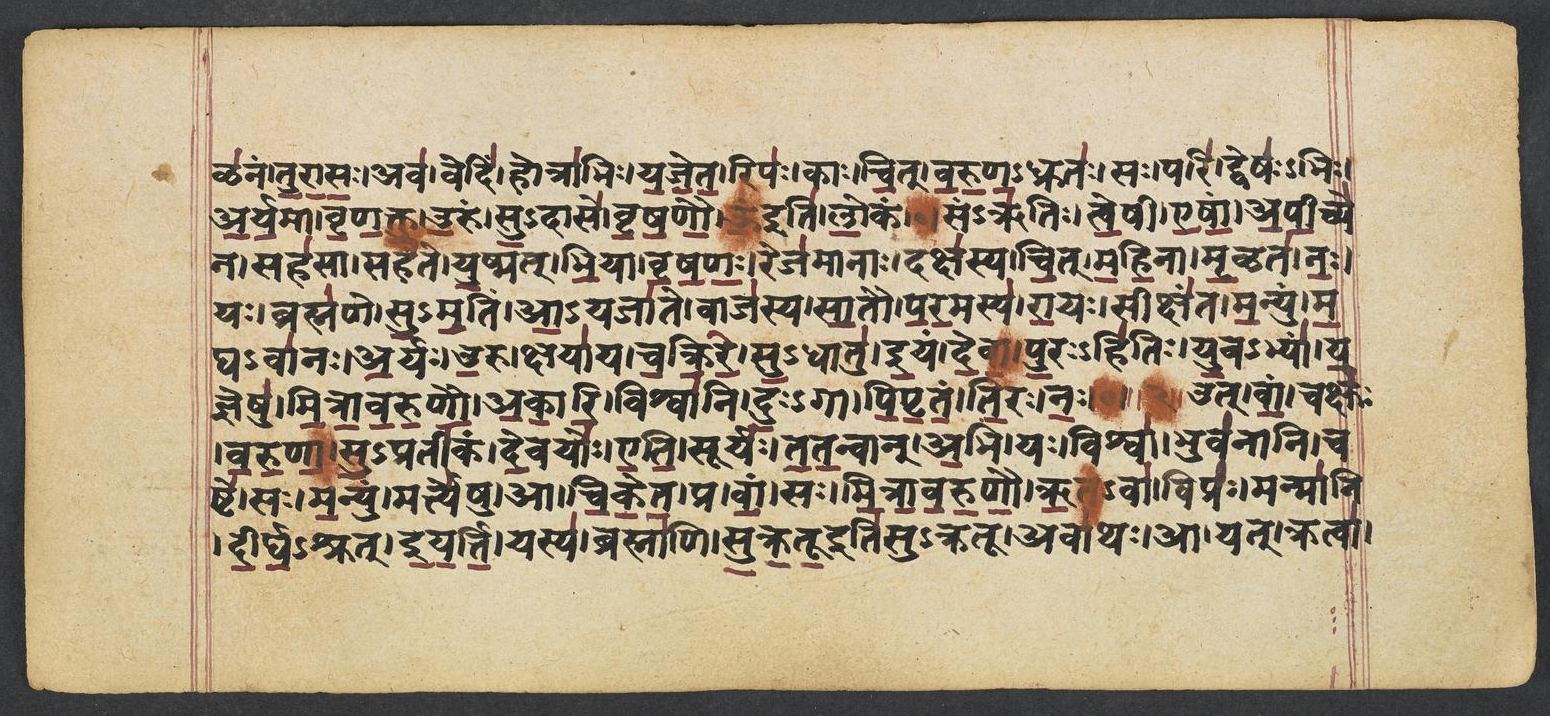
Penn Ms. Coll. 390 Item 41, fol. 532r (numbered 53r by the scribe) (OPenn image 532, lower leaf). Checked on the image: the Rigveda text on this page begins in RV 7.60.8 ‹-deva-heḷanam turāsaḥ›. The next page with Rigveda text, fol. 532v (numbered 53v by the scribe), begins in RV 7.61.2 ‹na śaradaḥ pṛṇaithe›. Verse 7.61.1 ends on this page.
1ud vā̱ṁ cakṣu̍r varuṇa su̱pratī̍kaṁ de̱vayo̍r eti̱ sūrya̍s tata̱nvān | a̱bhi yo viśvā̱ bhuva̍nāni̱ caṣṭe̱ sa ma̱nyum martye̱ṣv ā ci̍keta ||
Compare: Padapāṭha (word-by-word text written in the manuscript; Sansknet e-text via GRETIL)
1ut | vām | cakṣuḥ | varuṇā | su-pratīkam | devayoḥ | eti | sūryaḥ | tatanvān | abhi | yaḥ | viśvā | bhuvanāni | caṣṭe | saḥ | manyum | martyeṣu | ā | ciketa
1O Varuṇa and Mitra, Sûrya spreading the beauteous light of you Twain Gods ariseth. He who beholdeth all existing creatures observeth well the zeal that is in mortals.
Where on the image
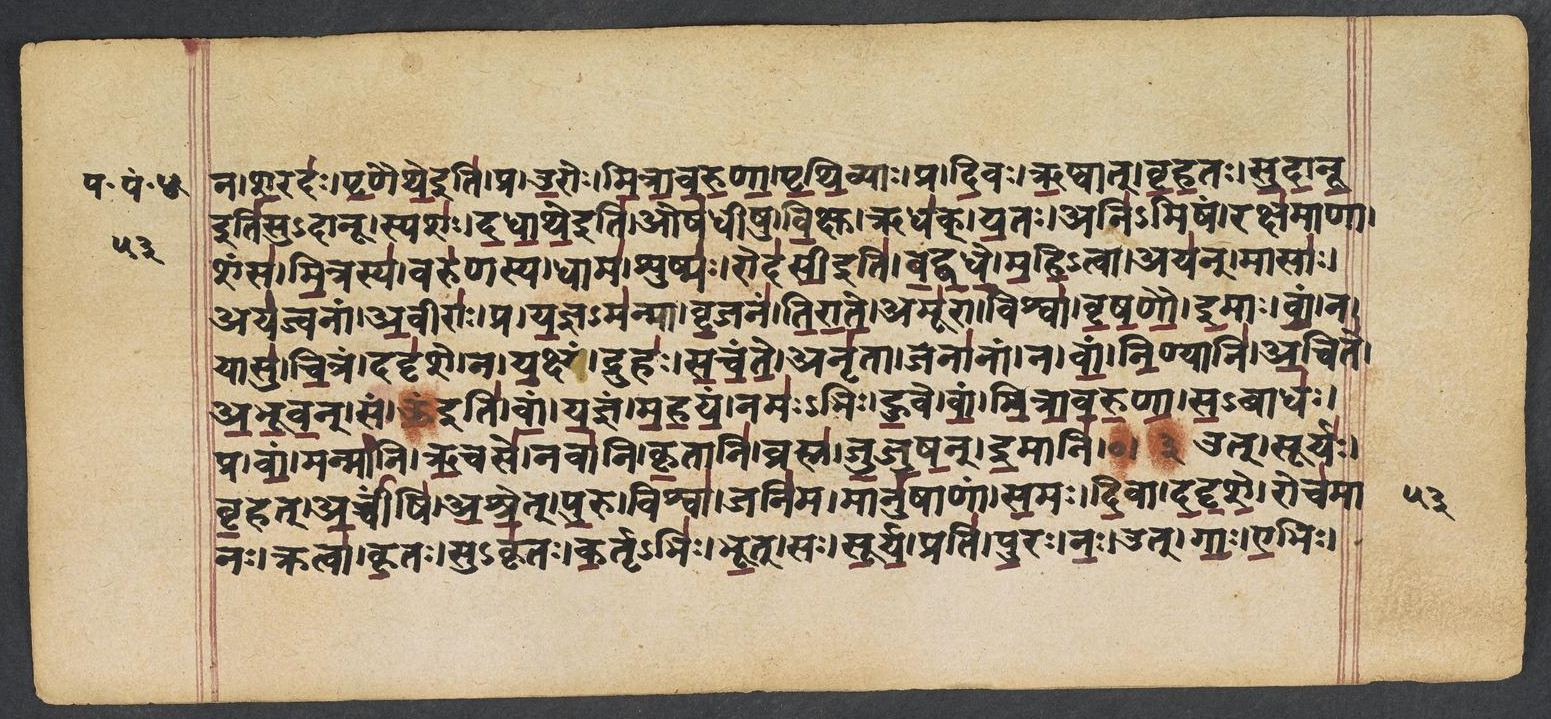
Penn Ms. Coll. 390 Item 41, fol. 532v (numbered 53v by the scribe) (OPenn image 533, upper leaf). Checked on the image: the Rigveda text on this page begins in RV 7.61.2 ‹na śaradaḥ pṛṇaithe›. The next page with Rigveda text, fol. 533r (numbered 54r by the scribe), begins in RV 7.62.2 ‹stomebhiḥ etaśebhiḥ evaiḥ pra›. Verses 7.61.2-7 end on this page; 7.61.2 begins on fol. 532r (numbered 53r by the scribe).
2pra vā̱ṁ sa mi̍trāvaruṇāv ṛ̱tāvā̱ vipro̱ manmā̍ni dīrgha̱śrud i̍yarti | yasya̱ brahmā̍ṇi sukratū̱ avā̍tha̱ ā yat kratvā̱ na śa̱rada̍ḥ pṛ̱ṇaithe̍ ||
3proror mi̍trāvaruṇā pṛthi̱vyāḥ pra di̱va ṛ̱ṣvād bṛ̍ha̱taḥ su̍dānū | spaśo̍ dadhāthe̱ oṣa̍dhīṣu vi̱kṣv ṛdha̍g ya̱to ani̍miṣa̱ṁ rakṣa̍māṇā ||
4śaṁsā̍ mi̱trasya̱ varu̍ṇasya̱ dhāma̱ śuṣmo̱ roda̍sī badbadhe mahi̱tvā | aya̱n māsā̱ aya̍jvanām a̱vīrā̱ḥ pra ya̱jñama̍nmā vṛ̱jana̍ṁ tirāte ||
5amū̍rā̱ viśvā̍ vṛṣaṇāv i̱mā vā̱ṁ na yāsu̍ ci̱traṁ dadṛ̍śe̱ na ya̱kṣam | druha̍ḥ sacante̱ anṛ̍tā̱ janā̍nā̱ṁ na vā̍ṁ ni̱ṇyāny a̱cite̍ abhūvan ||
6sam u̍ vāṁ ya̱jñam ma̍haya̱ṁ namo̍bhir hu̱ve vā̍m mitrāvaruṇā sa̱bādha̍ḥ | pra vā̱m manmā̍ny ṛ̱case̱ navā̍ni kṛ̱tāni̱ brahma̍ jujuṣann i̱māni̍ ||
7i̱yaṁ de̍va pu̱rohi̍tir yu̱vabhyā̍ṁ ya̱jñeṣu̍ mitrāvaruṇāv akāri | viśvā̍ni du̱rgā pi̍pṛtaṁ ti̱ro no̍ yū̱yam pā̍ta sva̱stibhi̱ḥ sadā̍ naḥ ||
Compare: Padapāṭha (word-by-word text written in the manuscript; Sansknet e-text via GRETIL)
2pra | vām | saḥ | mitrāvaruṇau | ṛta-vā | vipraḥ | manmāni | dīrgha-śrut | iyarti | yasya | brahmāṇi | sukratūitisu-kratū | avāthaḥ | ā | yat | kratvā | na | śaradaḥ | pṛṇaithe
3pra | uroḥ | mitrāvaruṇā | pṛthivyāḥ | pra | divaḥ | ṛṣvāt | bṛhataḥ | sudānūitisu-dānū | spaśaḥ | dadhātheiti | oṣadhīṣu | vikṣu | ṛdhak | yataḥ | ani-miṣam | rakṣamāṇā
4śaṃsā | mitrasya | varuṇasya | dhāma | śuṣmaḥ | rodasī iti | badbadhe | mahi-tvā | ayan | māsāḥ | ayajvanām | avīrāḥ | pra | yajña-manmā | vṛjanam | tirāte
5amūrā | viśvā | vṛṣaṇau | imāḥ | vām | na | yāsu | citram | dadṛśe | na | yakṣam | duhaḥ | sacante | anṛtā | janānām | na | vām | niṇyāni | acite | abhūvan
6sam | oṃ iti | vām | yajñam | mahayam | namaḥ-bhiḥ | huve | vām | mitrāvaruṇā | sa-bādhaḥ | pra | vām | manmāni | ṛcase | navāni | kṛtāni | brahma | jujuṣan | imāni
7iyam | deva | puraḥ-hitiḥ | yuva-bhyām | yajñeṣu | mitrāvaruṇau | akāri | viśvāni | duḥ-gā | pipṛtam | tiraḥ | naḥ | yūyam | pāta | svasti-bhiḥ | sadā | naḥ
2The holy sage, renowned afar, directeth his hymns to you, O Varuṇa and Mitra,– He whose devotions, sapient Gods, ye favour so that ye fill, as 'twere, with power his autumns.
3From the wide earth, O Varuṇa and Mitra from the great lofty heaven, ye, Bounteous Givers, – Have in the fields and houses set your warder-, who visit every spot and watch unceasing.
4I praise the strength of Varuṇa and Mitra that strength, by mightiness, keeps both worlds asunder. Heroless pass the months of the ungodly he who loves sacrifice makes his home enduring.
5Steers, all infallible are these your people in whom no wondrous thing is seen, no worship. Guile follows close the men who are untruthful: no secrets may be hidden from your knowledge.
6I will exalt your sacrifice with homage: as priest, I, Mitra-Varuṇa, invoke you. May these new hymns and prayers that I have fashioned delight you to the profit of the singer.
7This priestly task, Gods! Varuṇa and Mitra! hath been performed for you at sacrifices. Convey us safely over every peril. Preserve us evermore, ye Gods, with blessings.
Notes
- Sanskrit: Aufrecht's edition (1877) with the Vedic accents, as entered by van Nooten and Holland (GRETIL).
- English: Ralph T. H. Griffith, The Hymns of the Rigveda (1889-1892; 2nd ed. 1896-1897), from the VedaWeb digital text; OCR slips in that text were corrected against the printed 2nd edition (data/sources/rigveda/griffith_errata.json).
- Padapāṭha (edition text): Sansknet e-text via GRETIL (CC BY-NC-SA 4.0).
Cite
Sources
- Source: Penn Ms. Coll. 390 Item 41 (undated (catalogued with Penn's 18th-19th c. Vedic manuscripts)), OPenn, Public Domain Mark + Aufrecht's accented text (GRETIL) + Griffith's English (VedaWeb) (holding institution)
- Critical edition: Aufrecht (1877), accented e-text via GRETIL
← previous · → next · v cycle view · l back to library