Rigveda 7.62: To Surya, Mitra and Varuna
Introduction
Rigveda 7.62 is a hymn of 6 verses addressed to Surya, Mitra and Varuna. It stands in book (maṇḍala) 7, the family book of Vasiṣṭha. The Rigveda is the oldest collection of Sanskrit hymns, composed in the second half of the second millennium BCE and handed down orally for many centuries before it was written down.
The manuscript shown is Penn Ms. Coll. 390 Item 41 (University of Pennsylvania), an undated paper manuscript of the padapāṭha (the word-by-word recitation text, in which every word is written separately and compounds are split) of the whole Ṛgveda in Devanāgarī, 884 leaves in fascicles, 7-9 lines to the page, accents in red; this hymn stands on fol. 532v-533r. Each section below gives the verses that end on one page; the page boundaries were read on the images (the opening words of every page), not counted out. Where the manuscript is a padapāṭha (the word-by-word recitation text), the section shows Aufrecht's continuous (saṃhitā) text first and, as the edition text, the padapāṭha of the same verses, which is the form written on the page.
How was this verified? (Provenance)
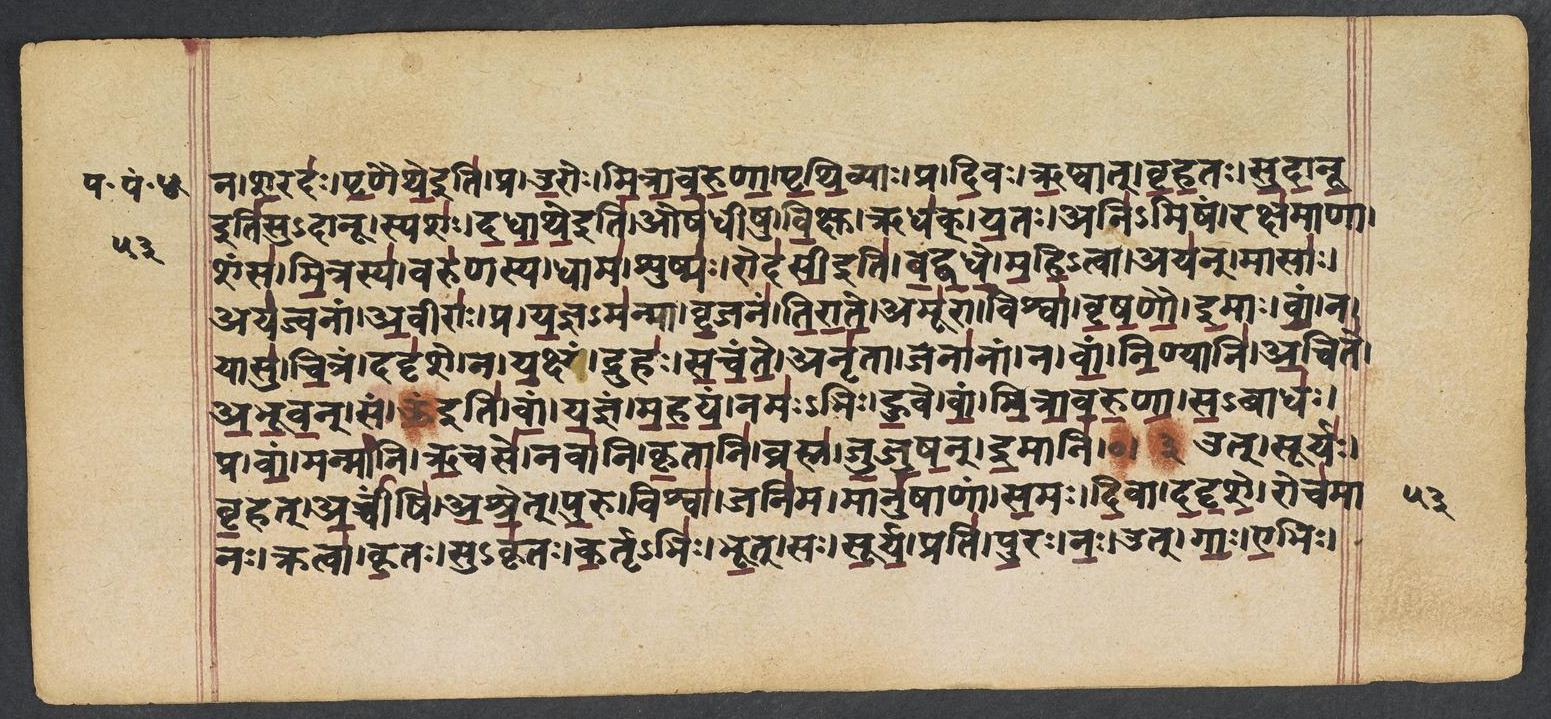
Where on the image
Penn Ms. Coll. 390 Item 41, fol. 532v (numbered 53v by the scribe) (OPenn image 533, upper leaf). Checked on the image: the Rigveda text on this page begins in RV 7.61.2 ‹na śaradaḥ pṛṇaithe›. The next page with Rigveda text, fol. 533r (numbered 54r by the scribe), begins in RV 7.62.2 ‹stomebhiḥ etaśebhiḥ evaiḥ pra›. Verse 7.62.1 ends on this page.
1ut sūryo̍ bṛ̱had a̱rcīṁṣy a̍śret pu̱ru viśvā̱ jani̍ma̱ mānu̍ṣāṇām | sa̱mo di̱vā da̍dṛśe̱ roca̍māna̱ḥ kratvā̍ kṛ̱taḥ sukṛ̍taḥ ka̱rtṛbhi̍r bhūt ||
Compare: Padapāṭha (word-by-word text written in the manuscript; Sansknet e-text via GRETIL)
1ut | sūryaḥ | bṛhat | arcīṃṣi | aśret | puru | viśvā | janima | mānuṣāṇām | samaḥ | divā | dadṛśe | rocamānaḥ | kratvā | kṛtaḥ | su-kṛtaḥ | kartṛ-bhiḥ | bhūt
1Sûrya hath sent aloft his beams of splendour o'er all the tribes of men in countless places. Together with the heaven he shines apparent, formed by his Makers well with power and wisdom.
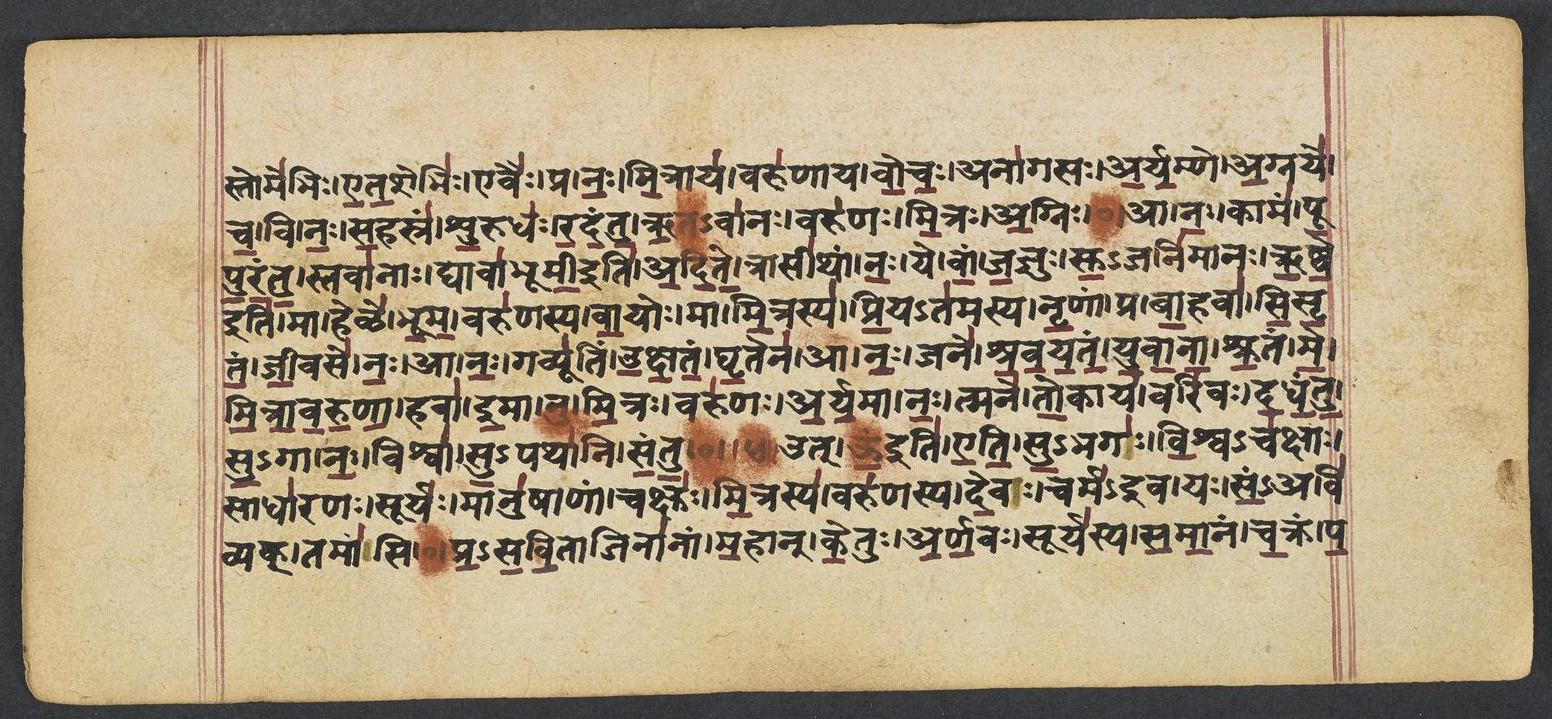
Where on the image
Penn Ms. Coll. 390 Item 41, fol. 533r (numbered 54r by the scribe) (OPenn image 533, lower leaf). Checked on the image: the Rigveda text on this page begins in RV 7.62.2 ‹stomebhiḥ etaśebhiḥ evaiḥ pra›. The next page with Rigveda text, fol. 533v (numbered 54v by the scribe), begins in RV 7.63.2 ‹-pari-āvivṛtsan yat etaśaḥ vahati›. Verses 7.62.2-6 end on this page; 7.62.2 begins on fol. 532v (numbered 53v by the scribe).
2sa sū̍rya̱ prati̍ pu̱ro na̱ ud gā̍ e̱bhiḥ stome̍bhir eta̱śebhi̱r evai̍ḥ | pra no̍ mi̱trāya̱ varu̍ṇāya vo̱co 'nā̍gaso arya̱mṇe a̱gnaye̍ ca ||
3vi na̍ḥ sa̱hasra̍ṁ śu̱rudho̍ radantv ṛ̱tāvā̍no̱ varu̍ṇo mi̱tro a̱gniḥ | yaccha̍ntu ca̱ndrā u̍pa̱maṁ no̍ a̱rkam ā na̱ḥ kāma̍m pūpurantu̱ stavā̍nāḥ ||
4dyāvā̍bhūmī adite̱ trāsī̍thāṁ no̱ ye vā̍ṁ ja̱jñuḥ su̱jani̍māna ṛṣve | mā heḻe̍ bhūma̱ varu̍ṇasya vā̱yor mā mi̱trasya̍ pri̱yata̍masya nṛ̱ṇām ||
5pra bā̱havā̍ sisṛtaṁ jī̱vase̍ na̱ ā no̱ gavyū̍tim ukṣataṁ ghṛ̱tena̍ | ā no̱ jane̍ śravayataṁ yuvānā śru̱tam me̍ mitrāvaruṇā̱ have̱mā ||
6nū mi̱tro varu̍ṇo arya̱mā na̱s tmane̍ to̱kāya̱ vari̍vo dadhantu | su̱gā no̱ viśvā̍ su̱pathā̍ni santu yū̱yam pā̍ta sva̱stibhi̱ḥ sadā̍ naḥ ||
Compare: Padapāṭha (word-by-word text written in the manuscript; Sansknet e-text via GRETIL)
2saḥ | sūrya | prati | puraḥ | naḥ | ut | gāḥ | ebhiḥ | stomebhiḥ | etaśebhiḥ | evaiḥ | pra | naḥ | mitrāya | varuṇāya | vocaḥ | anāgasaḥ | aryamṇe | agnaye | ca
3vi | naḥ | sahasram | śurudhaḥ | radantu | ṛta-vānaḥ | varuṇaḥ | mitraḥ | agniḥ | yacchantu | candrāḥ | upa-mam | naḥ | arkam | ā | naḥ | kāmam | pūpurantu | stavānāḥ
4dyāvābhūmī iti | adite | trāsīthām | naḥ | ye | vām | jajñuḥ | su-janimānaḥ | ṛṣveiti | mā | heḷe | bhūma | varuṇasya | vāyoḥ | mā | mitrasya | priya-tamasya | nṛṇām
5pra | bāhavā | sisṛtam | jīvase | naḥ | ā | naḥ | gavyūtim | ukṣatam | ghṛtena | ā | naḥ | jane | śravayatam | yuvānā | śrutam | me | mitrāvaruṇā | havā | imā
6nu | mitraḥ | varuṇaḥ | aryamā | naḥ | tmane | tokāya | varivaḥ | dadhantu | su-gā | naḥ | viśvā | su-pathāni | santu | yūyam | pāta | svasti-bhiḥ | sadā | naḥ
2So hast thou mounted up before us, Sûrya, through these our praises, with fleet dappled horses. Declare us free from all offence to Mitra, and Varuṇa, and Aryaman, and Agni.
3May holy Agni, Varuṇa, and Mitra send down their riches upon us in thousands. May they, the Bright Ones, make our praise-song perfect, and, when we laud them, grant us all our wishes.
4O undivided Heaven and Earth, preserve us, us, Lofty Ones! your nobly-born descendants. Let us not anger Varuṇa, nor Vâyu, nor him, the dearest Friend of mortals, Mitra.
5Stretch forth your arms and let our lives be lengthened: with fatness dew the pastures of our cattle. Ye Youthful, make us famed among the people: hear, Mitra-Varuṇa, these mine invocations.
6Now Mitra, Varuṇa, Aryaman vouchsafe us freedom and room, for us and for our children. May we find paths all fair and good to travel. Preserve us evermore, ye Gods, with blessings.
Notes
- Sanskrit: Aufrecht's edition (1877) with the Vedic accents, as entered by van Nooten and Holland (GRETIL).
- English: Ralph T. H. Griffith, The Hymns of the Rigveda (1889-1892; 2nd ed. 1896-1897), from the VedaWeb digital text; OCR slips in that text were corrected against the printed 2nd edition (data/sources/rigveda/griffith_errata.json).
- Padapāṭha (edition text): Sansknet e-text via GRETIL (CC BY-NC-SA 4.0).
Cite
Sources
- Source: Penn Ms. Coll. 390 Item 41 (undated (catalogued with Penn's 18th-19th c. Vedic manuscripts)), OPenn, Public Domain Mark + Aufrecht's accented text (GRETIL) + Griffith's English (VedaWeb) (holding institution)
- Critical edition: Aufrecht (1877), accented e-text via GRETIL
← previous · → next · v cycle view · l back to library