Rigveda 7.63: To Surya, Mitra and Varuna
Introduction
Rigveda 7.63 is a hymn of 6 verses addressed to Surya, Mitra and Varuna. It stands in book (maṇḍala) 7, the family book of Vasiṣṭha. The Rigveda is the oldest collection of Sanskrit hymns, composed in the second half of the second millennium BCE and handed down orally for many centuries before it was written down.
The manuscript shown is Penn Ms. Coll. 390 Item 41 (University of Pennsylvania), an undated paper manuscript of the padapāṭha (the word-by-word recitation text, in which every word is written separately and compounds are split) of the whole Ṛgveda in Devanāgarī, 884 leaves in fascicles, 7-9 lines to the page, accents in red; this hymn stands on fol. 533r-533v. Each section below gives the verses that end on one page; the page boundaries were read on the images (the opening words of every page), not counted out. Where the manuscript is a padapāṭha (the word-by-word recitation text), the section shows Aufrecht's continuous (saṃhitā) text first and, as the edition text, the padapāṭha of the same verses, which is the form written on the page.
How was this verified? (Provenance)
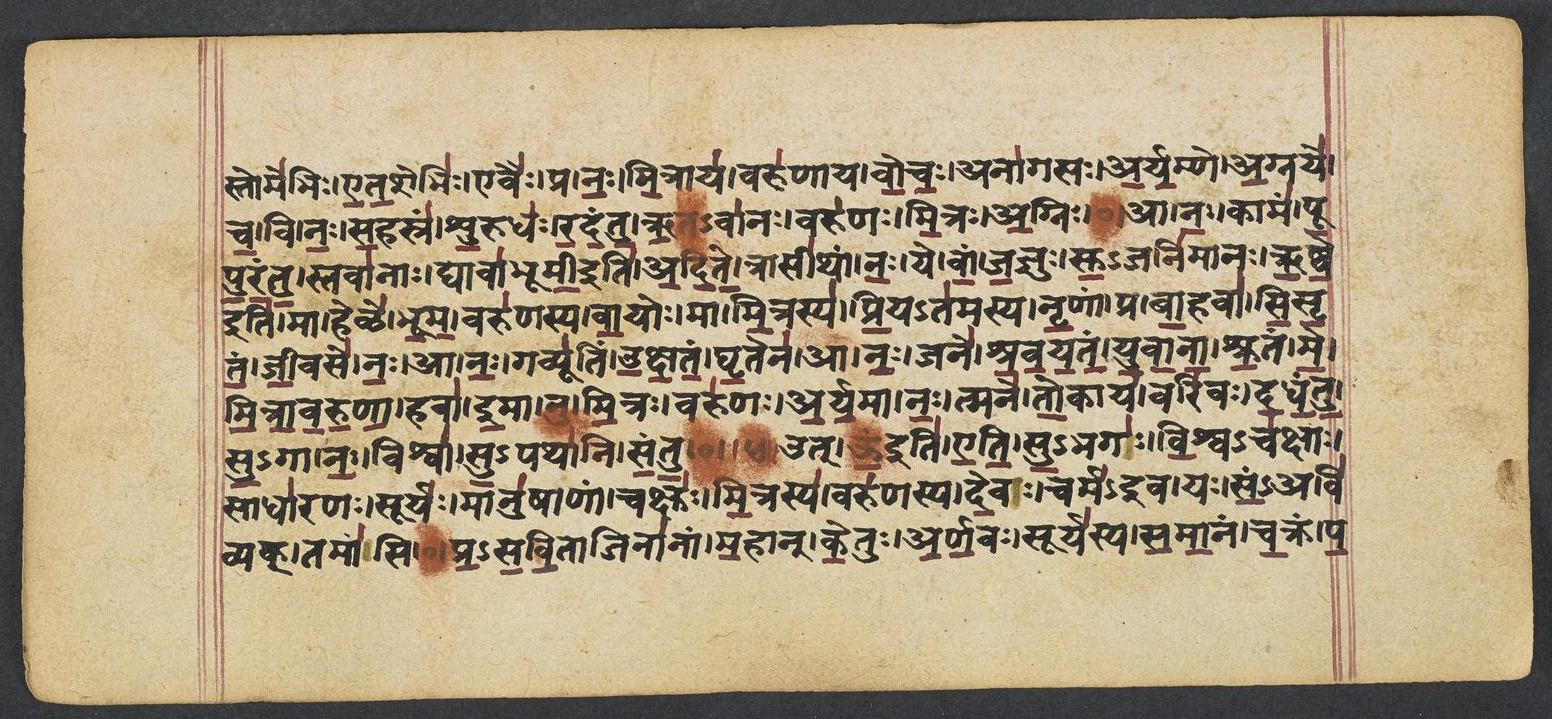
Where on the image
Penn Ms. Coll. 390 Item 41, fol. 533r (numbered 54r by the scribe) (OPenn image 533, lower leaf). Checked on the image: the Rigveda text on this page begins in RV 7.62.2 ‹stomebhiḥ etaśebhiḥ evaiḥ pra›. The next page with Rigveda text, fol. 533v (numbered 54v by the scribe), begins in RV 7.63.2 ‹-pari-āvivṛtsan yat etaśaḥ vahati›. Verse 7.63.1 ends on this page.
1ud v e̍ti su̱bhago̍ vi̱śvaca̍kṣā̱ḥ sādhā̍raṇa̱ḥ sūryo̱ mānu̍ṣāṇām | cakṣu̍r mi̱trasya̱ varu̍ṇasya de̱vaś carme̍va̱ yaḥ sa̱mavi̍vya̱k tamā̍ṁsi ||
Compare: Padapāṭha (word-by-word text written in the manuscript; Sansknet e-text via GRETIL)
1ut | oṃ iti | eti | su-bhagaḥ | viśva-cakṣāḥ | sādhāraṇaḥ | sūryaḥ | mānuṣāṇām | cakṣuḥ | mitrasya | varuṇasya | devaḥ | carma-iva | yaḥ | sam-avivyak | tamāṃsi
1COMMON to all mankind, auspicious Sûrya, he who beholdeth all, is mounting upward; The God, the eye of Varuṇa and Mitra, who rolled up darkness like a piece of leather.
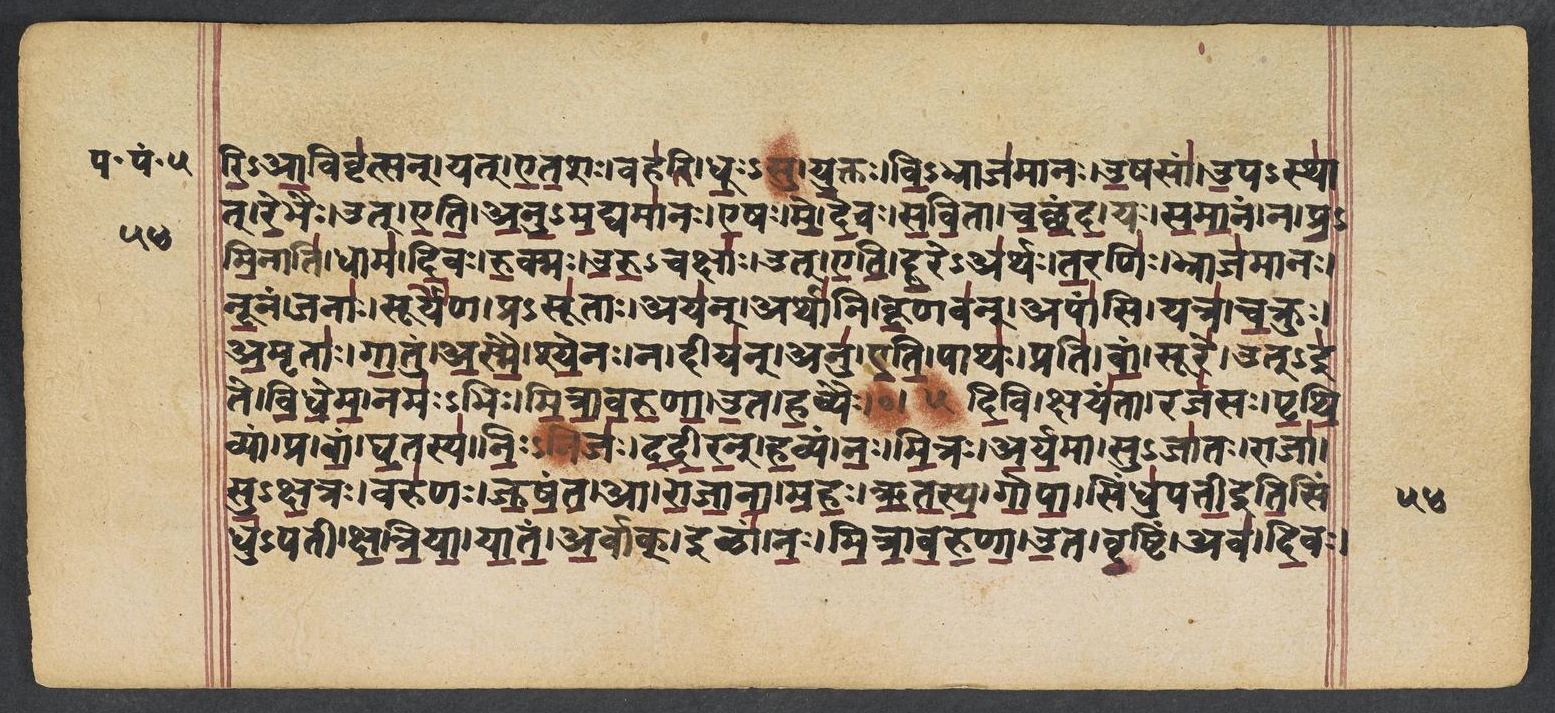
Where on the image
Penn Ms. Coll. 390 Item 41, fol. 533v (numbered 54v by the scribe) (OPenn image 534, upper leaf). Checked on the image: the Rigveda text on this page begins in RV 7.63.2 ‹-pari-āvivṛtsan yat etaśaḥ vahati›. The next page with Rigveda text, fol. 534r (numbered 55r by the scribe), begins in RV 7.64.2 ‹invatam jīradānū iti jīra-dānū›. Verses 7.63.2-6 end on this page; 7.63.2 begins on fol. 533r (numbered 54r by the scribe).
2ud v e̍ti prasavī̱tā janā̍nām ma̱hān ke̱tur a̍rṇa̱vaḥ sūrya̍sya | sa̱mā̱naṁ ca̱kram pa̍ryā̱vivṛ̍tsa̱n yad e̍ta̱śo vaha̍ti dhū̱rṣu yu̱ktaḥ ||
3vi̱bhrāja̍māna u̱ṣasā̍m u̱pasthā̍d re̱bhair ud e̍ty anuma̱dyamā̍naḥ | e̱ṣa me̍ de̱vaḥ sa̍vi̱tā ca̍cchanda̱ yaḥ sa̍mā̱naṁ na pra̍mi̱nāti̱ dhāma̍ ||
4di̱vo ru̱kma u̍ru̱cakṣā̱ ud e̍ti dū̱rea̍rthas ta̱raṇi̱r bhrāja̍mānaḥ | nū̱naṁ janā̱ḥ sūrye̍ṇa̱ prasū̍tā̱ aya̱nn arthā̍ni kṛ̱ṇava̱nn apā̍ṁsi ||
5yatrā̍ ca̱krur a̱mṛtā̍ gā̱tum a̍smai śye̱no na dīya̱nn anv e̍ti̱ pātha̍ḥ | prati̍ vā̱ṁ sūra̱ udi̍te vidhema̱ namo̍bhir mitrāvaruṇo̱ta ha̱vyaiḥ ||
6nū mi̱tro varu̍ṇo arya̱mā na̱s tmane̍ to̱kāya̱ vari̍vo dadhantu | su̱gā no̱ viśvā̍ su̱pathā̍ni santu yū̱yam pā̍ta sva̱stibhi̱ḥ sadā̍ naḥ ||
Compare: Padapāṭha (word-by-word text written in the manuscript; Sansknet e-text via GRETIL)
2ut | oṃ iti | eti | pra-savītā | janānām | mahān | ketuḥ | arṇavaḥ | sūryasya | samānam | cakram | pari-āvivṛtsan | yat | etaśaḥ | vahati | dhūrṣu | yuktaḥ
3vi-bhrājamānaḥ | uṣasām | upa-sthāt | rebhaiḥ | ut | eti | anu-madyamānaḥ | eṣaḥ | me | devaḥ | savitā | cacchanda | yaḥ | samānam | na | pra-mināti | dhāma
4divaḥ | rukmaḥ | uru-cakṣāḥ | ut | eti | dūre--arthaḥ | taraṇiḥ | bhrājamānaḥ | nūnam | janāḥ | sūryeṇa | pra-sūtāḥ | ayan | arthāni | kṛṇavan | apāṃsi
5yatra | cakruḥ | amṛtāḥ | gātum | asmai | śyenaḥ | na | dīyan | anu | eti | pāthaḥ | prati | vām | sūre | ut-ite | vidhema | namaḥ-bhiḥ | mitrāvaruṇā | uta | havyaiḥ
6nu | mitraḥ | varuṇaḥ | aryamā | naḥ | tmane | tokāya | varivaḥ | dadhantu | su-gā | naḥ | viśvā | su-pathāni | santu | yūyam | pāta | svasti-bhiḥ | sadā | naḥ
2Sûrya's great ensign, restless as the billow, that urgeth men to action, is advancing: Onward he still would roll the wheel well-rounded, which Etaṣa, harnessed to the car-pole, moveth.
3Refulgent from the bosom of the Mornings, he in Whom singers take delight ascendeth. This Savitar, God, is my chief joy and pleasure, who breaketh not the universal statute.
4Golden, far-seeing, from the heaven he riseth: far is his goal, he hasteth on resplendent. Men, verily, inspirited by Sûrya speed to their aims and do the work assigned them.
5Where the Immortals have prepared his pathway he flieth through the region like a falcon. With homage and oblations will we serve you, O Mitra-Varuṇa, when the Sun hath risen.
6Now Mitra, Varuṇa, Aryaman vouchsafe us freedom and room, for us and for our children. May we find paths all fair and good to travel. Preserve us evermore, ye Gods, with blessings.
Notes
- Sanskrit: Aufrecht's edition (1877) with the Vedic accents, as entered by van Nooten and Holland (GRETIL).
- English: Ralph T. H. Griffith, The Hymns of the Rigveda (1889-1892; 2nd ed. 1896-1897), from the VedaWeb digital text; OCR slips in that text were corrected against the printed 2nd edition (data/sources/rigveda/griffith_errata.json).
- Padapāṭha (edition text): Sansknet e-text via GRETIL (CC BY-NC-SA 4.0).
Cite
Sources
- Source: Penn Ms. Coll. 390 Item 41 (undated (catalogued with Penn's 18th-19th c. Vedic manuscripts)), OPenn, Public Domain Mark + Aufrecht's accented text (GRETIL) + Griffith's English (VedaWeb) (holding institution)
- Critical edition: Aufrecht (1877), accented e-text via GRETIL
← previous · → next · v cycle view · l back to library