Rigveda 7.64: To Mitra and Varuna
Introduction
Rigveda 7.64 is a hymn of 5 verses addressed to Mitra and Varuna. It stands in book (maṇḍala) 7, the family book of Vasiṣṭha. The Rigveda is the oldest collection of Sanskrit hymns, composed in the second half of the second millennium BCE and handed down orally for many centuries before it was written down.
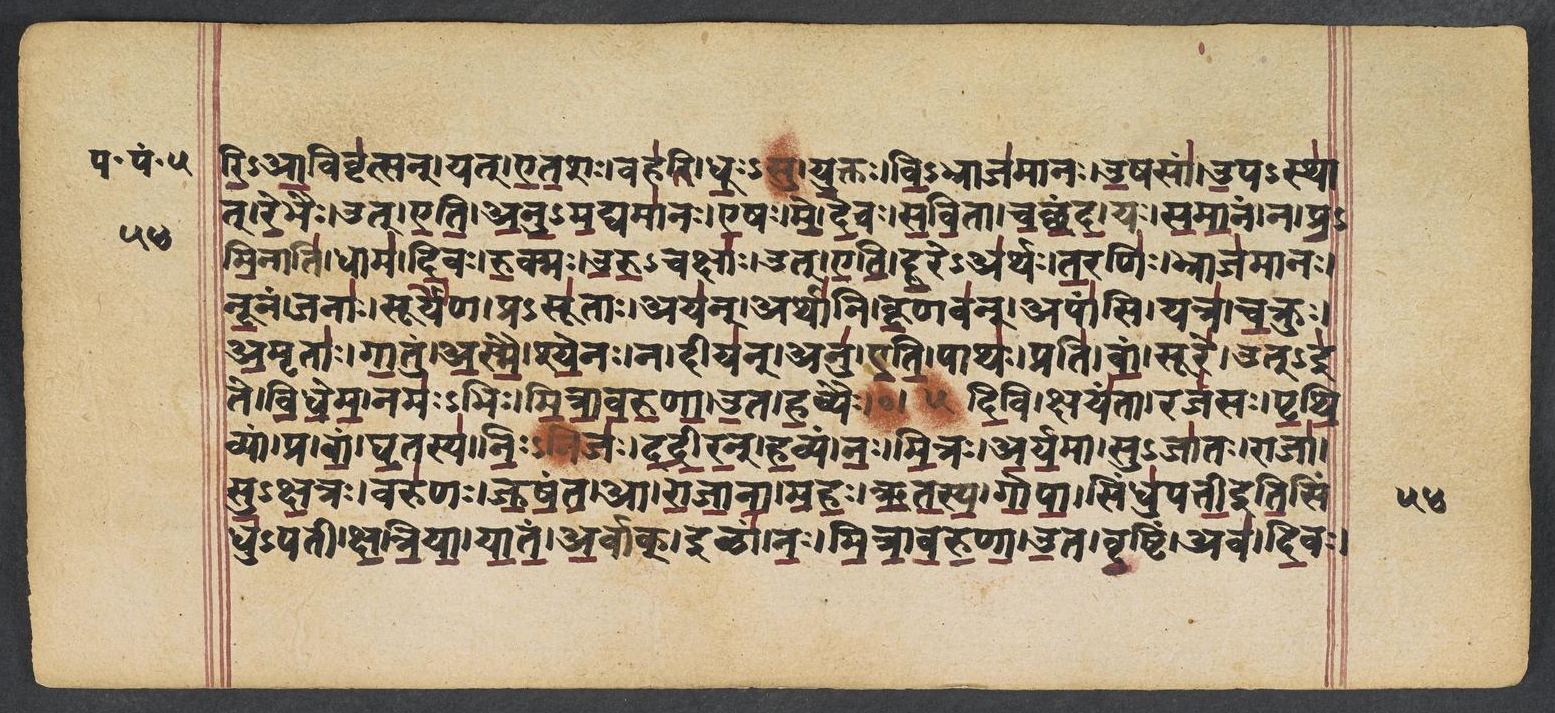
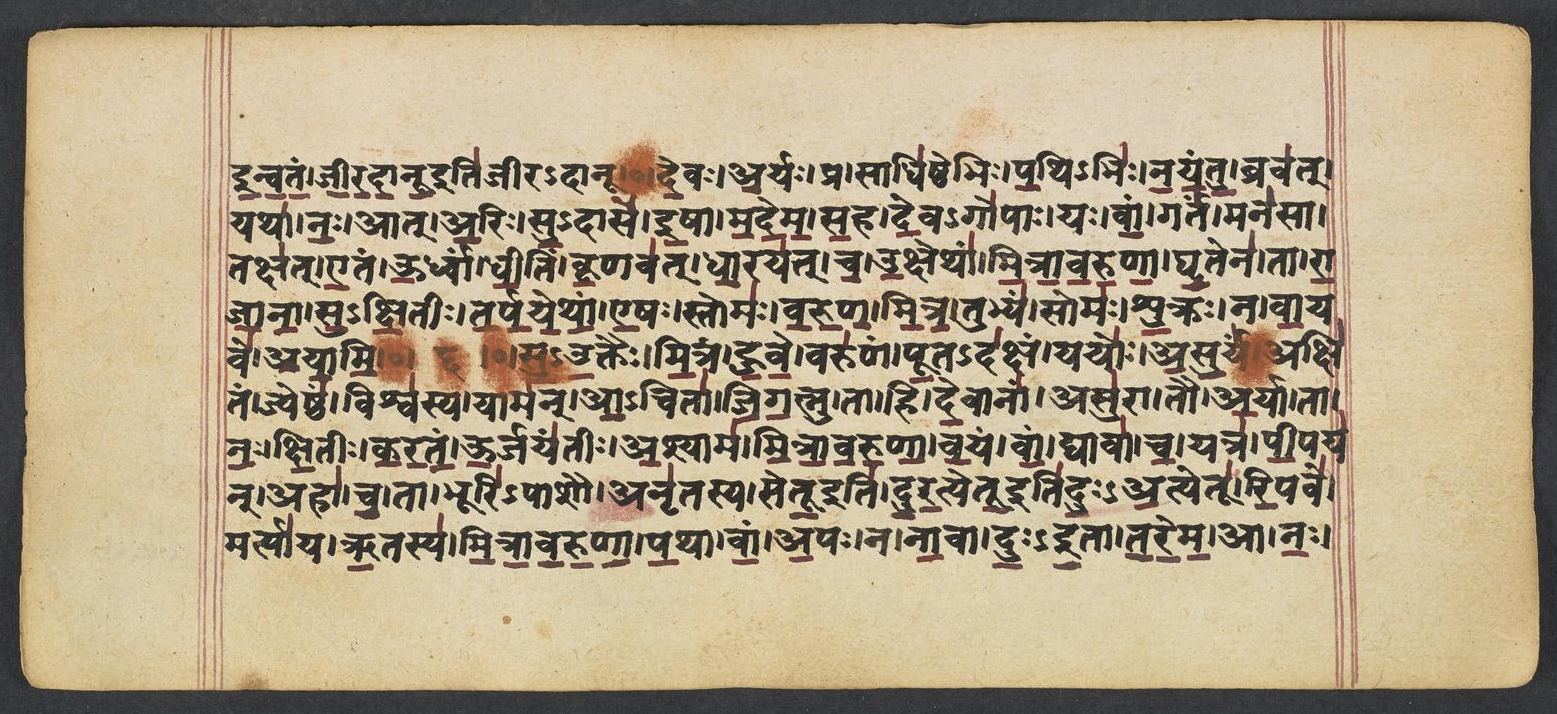
The manuscript shown is Penn Ms. Coll. 390 Item 41 (University of Pennsylvania), an undated paper manuscript of the padapāṭha (the word-by-word recitation text, in which every word is written separately and compounds are split) of the whole Ṛgveda in Devanāgarī, 884 leaves in fascicles, 7-9 lines to the page, accents in red; this hymn stands on fol. 533v-534r. Each section below gives the verses that end on one page; the page boundaries were read on the images (the opening words of every page), not counted out. Where the manuscript is a padapāṭha (the word-by-word recitation text), the section shows Aufrecht's continuous (saṃhitā) text first and, as the edition text, the padapāṭha of the same verses, which is the form written on the page.
How was this verified? (Provenance)
Where on the image
Penn Ms. Coll. 390 Item 41, fol. 533v (numbered 54v by the scribe) (OPenn image 534, upper leaf). Checked on the image: the Rigveda text on this page begins in RV 7.63.2 ‹-pari-āvivṛtsan yat etaśaḥ vahati›. The next page with Rigveda text, fol. 534r (numbered 55r by the scribe), begins in RV 7.64.2 ‹invatam jīradānū iti jīra-dānū›. Verse 7.64.1 ends on this page.
1di̱vi kṣaya̍ntā̱ raja̍saḥ pṛthi̱vyām pra vā̍ṁ ghṛ̱tasya̍ ni̱rṇijo̍ dadīran | ha̱vyaṁ no̍ mi̱tro a̍rya̱mā sujā̍to̱ rājā̍ sukṣa̱tro varu̍ṇo juṣanta ||
Compare: Padapāṭha (word-by-word text written in the manuscript; Sansknet e-text via GRETIL)
1divi | kṣayantā | rajasaḥ | pṛthivyām | pra | vām | ghṛtasya | niḥ-nijaḥ | dadīran | havyam | naḥ | mitraḥ | aryamā | su-jātaḥ | rājā | su-kṣatraḥ | varuṇaḥ | juṣanta
1YE Twain who rule, in heaven and earth, the region, clothed be your clouds in robes of oil and fatness. May the imperial Varuṇa, and Mitra, and high-born Aryaman accept our presents.
Where on the image
Penn Ms. Coll. 390 Item 41, fol. 534r (numbered 55r by the scribe) (OPenn image 534, lower leaf). Checked on the image: the Rigveda text on this page begins in RV 7.64.2 ‹invatam jīradānū iti jīra-dānū›. The next page with Rigveda text, fol. 534v (numbered 55v by the scribe), begins in RV 7.65.4 ‹mitrāvaruṇā havya-juṣṭim ghṛtaiḥ gavyūtim›. Verses 7.64.2-5 end on this page; 7.64.2 begins on fol. 533v (numbered 54v by the scribe).
2ā rā̍jānā maha ṛtasya gopā̱ sindhu̍patī kṣatriyā yātam a̱rvāk | iḻā̍ṁ no mitrāvaruṇo̱ta vṛ̱ṣṭim ava̍ di̱va i̍nvataṁ jīradānū ||
3mi̱tras tan no̱ varu̍ṇo de̱vo a̱ryaḥ pra sādhi̍ṣṭhebhiḥ pa̱thibhi̍r nayantu | brava̱d yathā̍ na̱ ād a̱riḥ su̱dāsa̍ i̱ṣā ma̍dema sa̱ha de̱vago̍pāḥ ||
4yo vā̱ṁ garta̱m mana̍sā̱ takṣa̍d e̱tam ū̱rdhvāṁ dhī̱tiṁ kṛ̱ṇava̍d dhā̱raya̍c ca | u̱kṣethā̍m mitrāvaruṇā ghṛ̱tena̱ tā rā̍jānā sukṣi̱tīs ta̍rpayethām ||
5e̱ṣa stomo̍ varuṇa mitra̱ tubhya̱ṁ soma̍ḥ śu̱kro na vā̱yave̍ 'yāmi | a̱vi̱ṣṭaṁ dhiyo̍ jigṛ̱tam pura̍ṁdhīr yū̱yam pā̍ta sva̱stibhi̱ḥ sadā̍ naḥ ||
Compare: Padapāṭha (word-by-word text written in the manuscript; Sansknet e-text via GRETIL)
2ā | rājānā | mahaḥ | ṛtasya | gopā | sindhupatī itisindhu-patī | kṣatriyā | yātam | arvāk | iḷām | naḥ | mitrāvaruṇā | uta | vṛṣṭim | ava | divaḥ | invatam | jīradānū iti jīra-dānū
3mitraḥ | tat | naḥ | varuṇaḥ | devaḥ | aryaḥ | pra | sādhiṣṭhebhiḥ | pathi-bhiḥ | nayantu | bravat | yathā | naḥ | āt | ariḥ | su-dāse | iṣā | madema | saha | deva-gopāḥ
4yaḥ | vām | gartam | manasā | takṣat | etam | ūrdhvām | dhītim | kṛṇavat | dhārayat | ca | ukṣethām | mitrāvaruṇā | ghṛtena | tā | rājānā | su-kṣitīḥ | tarpayethām
5eṣaḥ | stomaḥ | varuṇa | mitra | tubhyam | somaḥ | śukraḥ | na | vāyave | ayāmi | aviṣṭam | dhiyaḥ | jigṛtam | puram-dhīḥ | yūyam | pāta | svasti-bhiḥ | sadā | naḥ
2Kings, guards of mighty everlasting Order, come hitherward, ye Princes, Lords of Rivers. Send us from heaven, O Varuṇa and Mitra, rain and sweet food, ye who pour down your bounties.
3May the dear God, and Varuṇa and Mitra conduct us by the most effective pathways, That foes may say unto Sudâs our chieftain, May, we, too, joy in food with Gods to guard us.
4Him who hath wrought for you this car in spirit, who makes the song rise upward and sustains it, Bedew with fatness, Varuṇa nd Mitra ye Kings, make glad the pleasant dwelling-places.
5To you this laud, O Varuṇa and Mitra is offered like bright Soma juice to Vâyu. Favour our songs of praise, wake thought and spirit. Preserve us evermore, ye Gods, with blessings.
Notes
- Sanskrit: Aufrecht's edition (1877) with the Vedic accents, as entered by van Nooten and Holland (GRETIL).
- English: Ralph T. H. Griffith, The Hymns of the Rigveda (1889-1892; 2nd ed. 1896-1897), from the VedaWeb digital text; OCR slips in that text were corrected against the printed 2nd edition (data/sources/rigveda/griffith_errata.json).
- Padapāṭha (edition text): Sansknet e-text via GRETIL (CC BY-NC-SA 4.0).
Cite
Sources
- Source: Penn Ms. Coll. 390 Item 41 (undated (catalogued with Penn's 18th-19th c. Vedic manuscripts)), OPenn, Public Domain Mark + Aufrecht's accented text (GRETIL) + Griffith's English (VedaWeb) (holding institution)
- Critical edition: Aufrecht (1877), accented e-text via GRETIL
← previous · → next · v cycle view · l back to library