Rigveda 7.7: To Agni
Introduction
Rigveda 7.7 is a hymn of 7 verses addressed to Agni. It stands in book (maṇḍala) 7, the family book of Vasiṣṭha. The Rigveda is the oldest collection of Sanskrit hymns, composed in the second half of the second millennium BCE and handed down orally for many centuries before it was written down.
The manuscript shown is Penn Ms. Coll. 390 Item 41 (University of Pennsylvania), an undated paper manuscript of the padapāṭha (the word-by-word recitation text, in which every word is written separately and compounds are split) of the whole Ṛgveda in Devanāgarī, 884 leaves in fascicles, 7-9 lines to the page, accents in red; this hymn stands on fol. 497v-498r. Each section below gives the verses that end on one page; the page boundaries were read on the images (the opening words of every page), not counted out. Where the manuscript is a padapāṭha (the word-by-word recitation text), the section shows Aufrecht's continuous (saṃhitā) text first and, as the edition text, the padapāṭha of the same verses, which is the form written on the page.
How was this verified? (Provenance)
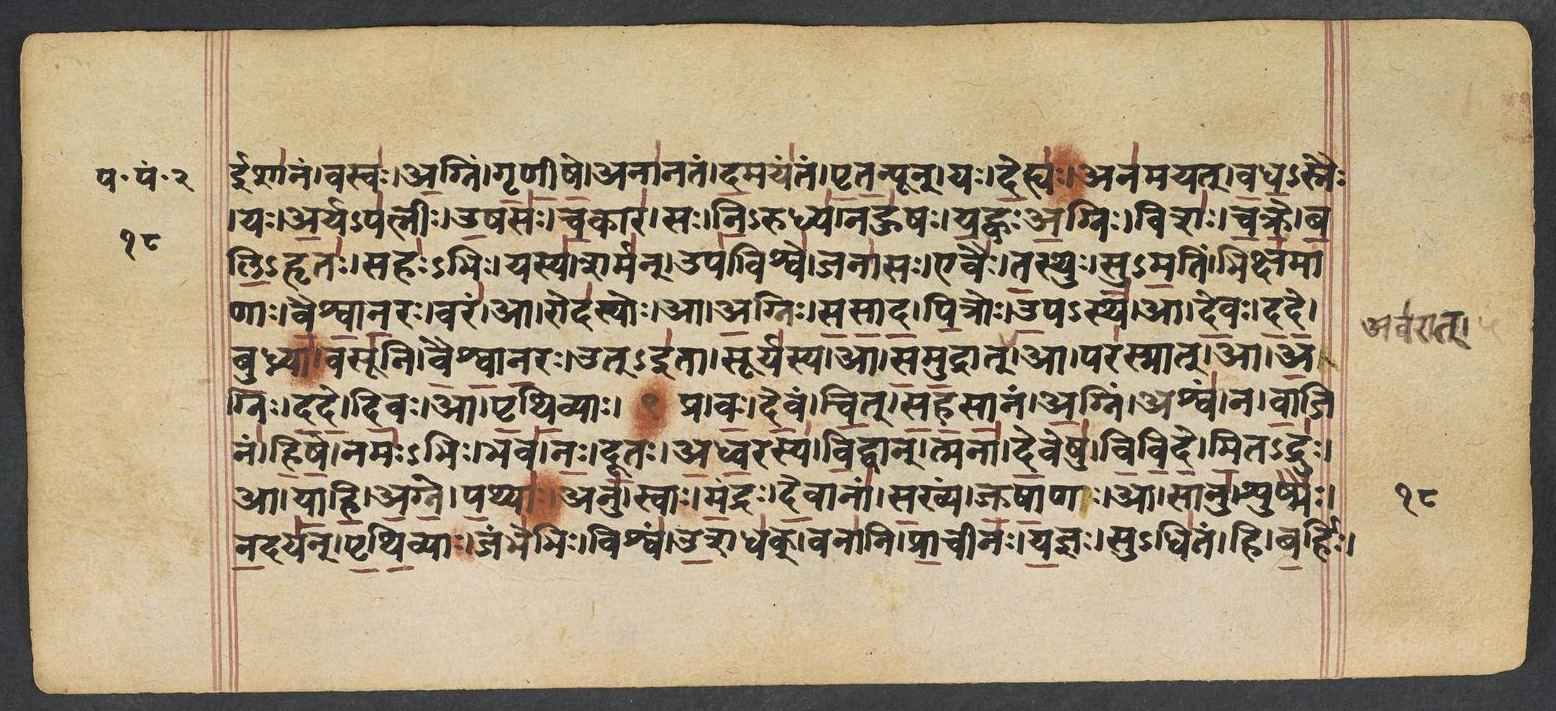
Where on the image
Penn Ms. Coll. 390 Item 41, fol. 497v (numbered 18v by the scribe) (OPenn image 498, upper leaf). Checked on the image: the Rigveda text on this page begins in RV 7.6.4 ‹īśānam vasvaḥ agnim gṛṇīṣe›. The next page with Rigveda text, fol. 498r (numbered 19r by the scribe), begins in RV 7.7.3 ‹prīṇīte agniḥ īḷitaḥ na›. Verses 7.7.1-2 end on this page.
1pra vo̍ de̱vaṁ ci̍t sahasā̱nam a̱gnim aśva̱ṁ na vā̱jina̍ṁ hiṣe̱ namo̍bhiḥ | bhavā̍ no dū̱to a̍dhva̱rasya̍ vi̱dvān tmanā̍ de̱veṣu̍ vivide mi̱tadru̍ḥ ||
2ā yā̍hy agne pa̱thyā̱3̱̍ anu̱ svā ma̱ndro de̱vānā̍ṁ sa̱khyaṁ ju̍ṣā̱ṇaḥ | ā sānu̱ śuṣmai̍r na̱daya̍n pṛthi̱vyā jambhe̍bhi̱r viśva̍m u̱śadha̱g vanā̍ni ||
Compare: Padapāṭha (word-by-word text written in the manuscript; Sansknet e-text via GRETIL)
1pra | vaḥ | devam | cit | sahasānam | agnim | aśvam | na | vājinam | hiṣe | namaḥ-bhiḥ | bhava | naḥ | dūtaḥ | adhvarasya | vidvān | tmanā | deveṣu | vivide | mita-duḥ
2ā | yāhi | agne | pathyāḥ | anu | svāḥ | mandraḥ | devānām | sakhyam | juṣāṇaḥ | ā | sānu | śuṣmaiḥ | nadayan | pṛthivyāḥ | jambhebhiḥ | viśvam | uśadhak | vanāni
1I SEND forth even your God, victorious Agni, like a strong courser, with mine adoration. Herald of sacrifice be he who knoweth he hath reached Gods, himself, with measured motion.
2By paths that are thine own come hither, Agni, joyous, delighting in the Gods' alliance, Making the heights of earth roar with thy fury, burning with eager teeth the woods and forests.
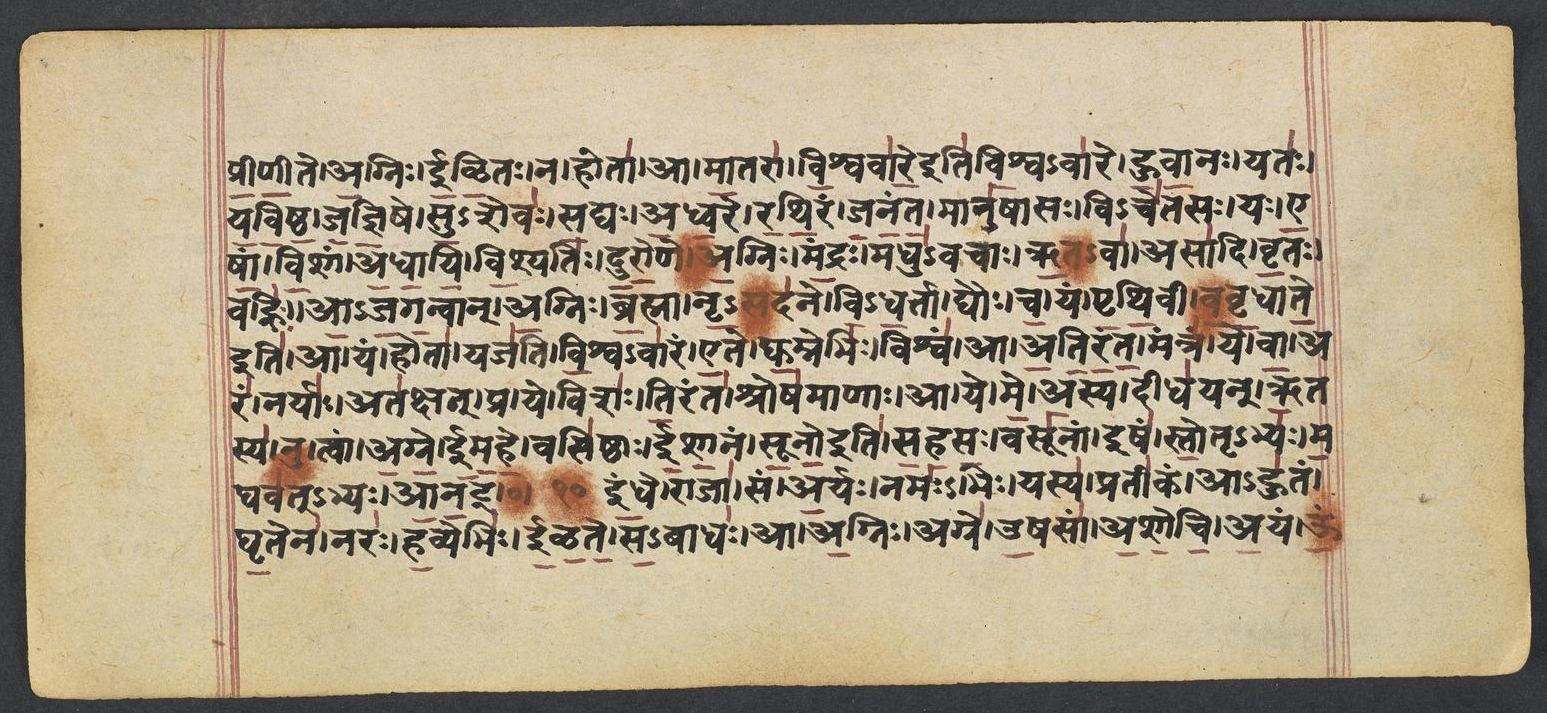
Where on the image
Penn Ms. Coll. 390 Item 41, fol. 498r (numbered 19r by the scribe) (OPenn image 498, lower leaf). Checked on the image: the Rigveda text on this page begins in RV 7.7.3 ‹prīṇīte agniḥ īḷitaḥ na›. The next page with Rigveda text, fol. 498v (numbered 19v by the scribe), begins in RV 7.8.2 ‹iti syaḥ su-mahān avedi›. Verses 7.7.3-7 end on this page; 7.7.3 begins on fol. 497v (numbered 18v by the scribe).
3prā̱cīno̍ ya̱jñaḥ sudhi̍ta̱ṁ hi ba̱rhiḥ prī̍ṇī̱te a̱gnir ī̍ḻi̱to na hotā̍ | ā mā̱tarā̍ vi̱śvavā̍re huvā̱no yato̍ yaviṣṭha jajñi̱ṣe su̱śeva̍ḥ ||
4sa̱dyo a̍dhva̱re ra̍thi̱raṁ ja̍nanta̱ mānu̍ṣāso̱ vice̍taso̱ ya e̍ṣām | vi̱śām a̍dhāyi vi̱śpati̍r duro̱ṇe̱3̱̍ 'gnir ma̱ndro madhu̍vacā ṛ̱tāvā̍ ||
5asā̍di vṛ̱to vahni̍r ājaga̱nvān a̱gnir bra̱hmā nṛ̱ṣada̍ne vidha̱rtā | dyauś ca̱ yam pṛ̍thi̱vī vā̍vṛ̱dhāte̱ ā yaṁ hotā̱ yaja̍ti vi̱śvavā̍ram ||
6e̱te dyu̱mnebhi̱r viśva̱m āti̍ranta̱ mantra̱ṁ ye vāra̱ṁ naryā̱ ata̍kṣan | pra ye viśa̍s ti̱ranta̱ śroṣa̍māṇā̱ ā ye me̍ a̱sya dīdha̍yann ṛ̱tasya̍ ||
7nū tvām a̍gna īmahe̱ vasi̍ṣṭhā īśā̱naṁ sū̍no sahaso̱ vasū̍nām | iṣa̍ṁ sto̱tṛbhyo̍ ma̱ghava̍dbhya ānaḍ yū̱yam pā̍ta sva̱stibhi̱ḥ sadā̍ naḥ ||
Compare: Padapāṭha (word-by-word text written in the manuscript; Sansknet e-text via GRETIL)
3prācīnaḥ | yajñaḥ | su-dhitam | hi | barhiḥ | prīṇīte | agniḥ | īḷitaḥ | na | hotā | ā | mātarā | viśvavāreitiviśva-vāre | huvānaḥ | yataḥ | yaviṣṭha | jajñiṣe | su-śevaḥ
4sadyaḥ | adhvare | rathiram | jananta | mānuṣāsaḥ | vi-cetasaḥ | yaḥ | eṣām | viśām | adhāyi | viśpatiḥ | duroṇe | agniḥ | mandraḥ | madhu-vacāḥ | ṛta-vā
5asādi | vṛtaḥ | vahniḥ | ājaganvān | agniḥ | brahmā | nṛ-sadane | vi-dhartā | dyauḥ | ca | yam | pṛthivī | vavṛdhāteiti | ā | yam | hotā | yajati | viśva-vāram
6ete | dyumnebhiḥ | viśvam | ā | atiranta | mantram | ye | vā | aram | naryāḥ | atakṣan | pra | ye | viśaḥ | tiranta | śroṣamāṇāḥ | ā | ye | me | asya | dīdhayan | ṛtasya
7nu | tvām | agne | īmahe | vasiṣṭhāḥ | īśānam | sūno iti | sahasaḥ | vasūnām | iṣam | stotṛ-bhyaḥ | maghavat-bhyaḥ | ānaṭ | yūyam | pāta | svasti-bhiḥ | sadā | naḥ
3The grass is strewn; the sacrifice advances adored as Priest, Agni is made propitious, Invoking both All-boon-bestowing Mothers of whom, Most Youthful! thou wast born to help us.
4Forthwith the men, the best of these for wisdom, have made him leader in the solemn worship. As Lord in homes of men is Agni stablished, the Holy One, the joyous, sweetly speaking.
5He hath come, chosen bearer, and is seated in man's home, Brahman, Agni, the Supporter, He whom both Heaven anct Earth exalt and strengthenwhom, Giver of all boons, the Hotar worships.
6These have passed all in glory, who, the manly, have wrought with skill the hymn of adoration; Who, listening, have advanced the people's welfare, and set their thoughts on this my holy statute.
7We, the Vasishṭhas, now implore thee, Agni, O Son of Strength, the Lord of wealth and treasure. Thou hast brought food to singers and to nobles. Ye Gods, preserve us evermore with blessings.
Notes
- Sanskrit: Aufrecht's edition (1877) with the Vedic accents, as entered by van Nooten and Holland (GRETIL).
- English: Ralph T. H. Griffith, The Hymns of the Rigveda (1889-1892; 2nd ed. 1896-1897), from the VedaWeb digital text; OCR slips in that text were corrected against the printed 2nd edition (data/sources/rigveda/griffith_errata.json).
- Padapāṭha (edition text): Sansknet e-text via GRETIL (CC BY-NC-SA 4.0).
Cite
Sources
- Source: Penn Ms. Coll. 390 Item 41 (undated (catalogued with Penn's 18th-19th c. Vedic manuscripts)), OPenn, Public Domain Mark + Aufrecht's accented text (GRETIL) + Griffith's English (VedaWeb) (holding institution)
- Critical edition: Aufrecht (1877), accented e-text via GRETIL
← previous · → next · v cycle view · l back to library