Rigveda 7.9: To Agni
Introduction
Rigveda 7.9 is a hymn of 6 verses addressed to Agni. It stands in book (maṇḍala) 7, the family book of Vasiṣṭha. The Rigveda is the oldest collection of Sanskrit hymns, composed in the second half of the second millennium BCE and handed down orally for many centuries before it was written down.
The manuscript shown is Penn Ms. Coll. 390 Item 41 (University of Pennsylvania), an undated paper manuscript of the padapāṭha (the word-by-word recitation text, in which every word is written separately and compounds are split) of the whole Ṛgveda in Devanāgarī, 884 leaves in fascicles, 7-9 lines to the page, accents in red; this hymn stands on fol. 498v-499r. Each section below gives the verses that end on one page; the page boundaries were read on the images (the opening words of every page), not counted out. Where the manuscript is a padapāṭha (the word-by-word recitation text), the section shows Aufrecht's continuous (saṃhitā) text first and, as the edition text, the padapāṭha of the same verses, which is the form written on the page.
How was this verified? (Provenance)
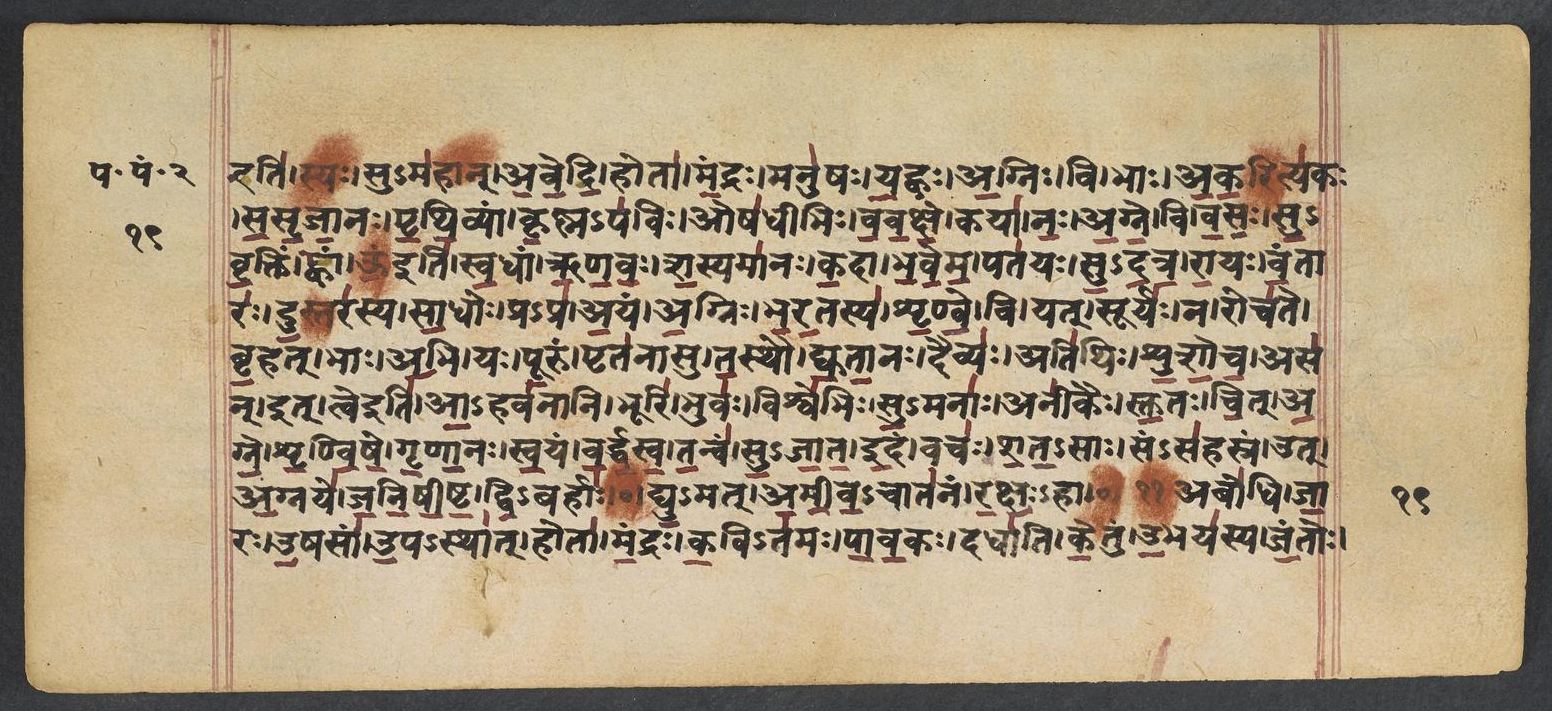
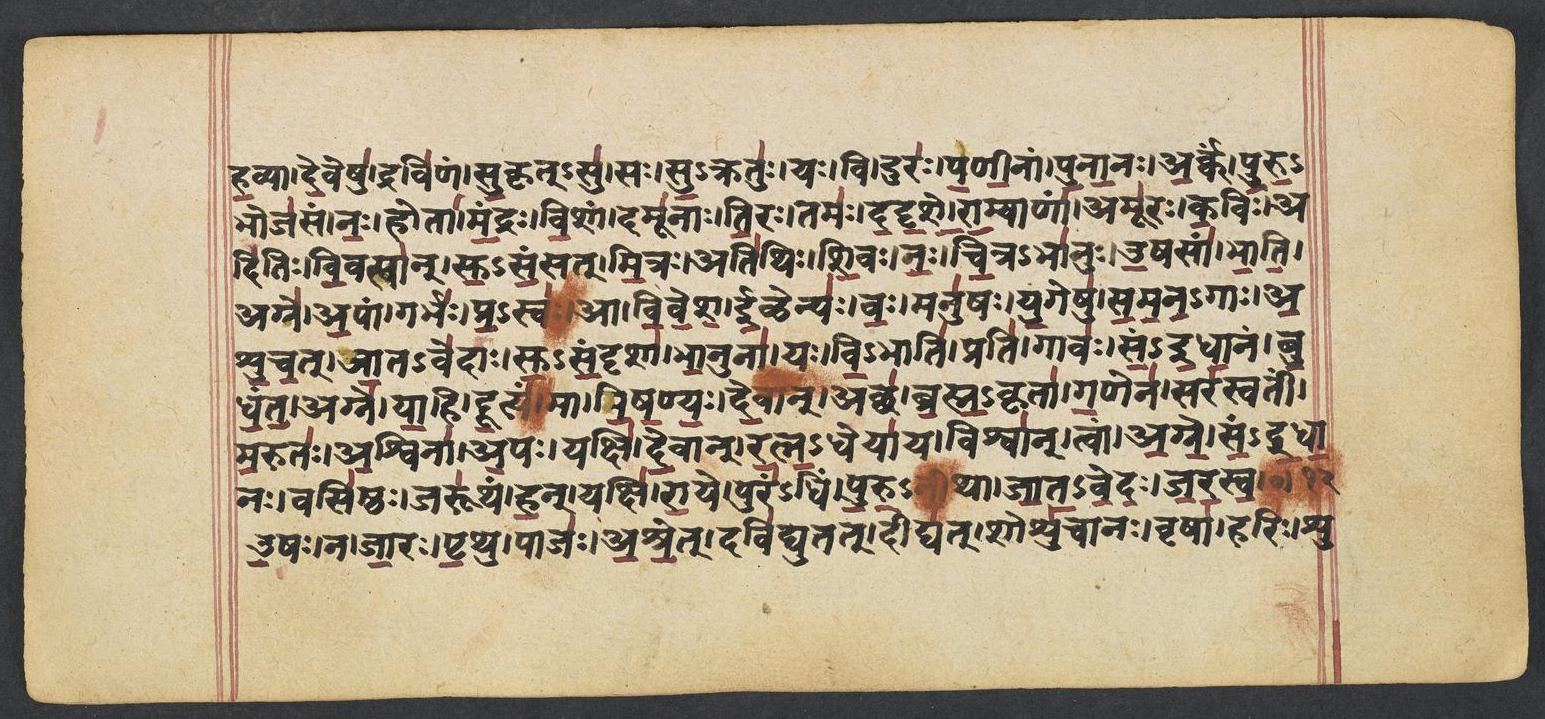
Where on the image
Penn Ms. Coll. 390 Item 41, fol. 499r (numbered 20r by the scribe) (OPenn image 499, lower leaf). Checked on the image: the Rigveda text on this page begins in RV 7.9.1 ‹havyā deveṣu draviṇam sukṛt-su›. The next page with Rigveda text, fol. 499v (numbered 20v by the scribe), begins in RV 7.10.1 ‹-śuciḥ ā bhāti bhāsā›. Verses 7.9.1-6 end on this page; 7.9.1 begins on fol. 498v (numbered 19v by the scribe).
1abo̍dhi jā̱ra u̱ṣasā̍m u̱pasthā̱d dhotā̍ ma̱ndraḥ ka̱vita̍maḥ pāva̱kaḥ | dadhā̍ti ke̱tum u̱bhaya̍sya ja̱ntor ha̱vyā de̱veṣu̱ dravi̍ṇaṁ su̱kṛtsu̍ ||
2sa su̱kratu̱r yo vi dura̍ḥ paṇī̱nām pu̍nā̱no a̱rkam pu̍ru̱bhoja̍saṁ naḥ | hotā̍ ma̱ndro vi̱śāṁ damū̍nās ti̱ras tamo̍ dadṛśe rā̱myāṇā̍m ||
3amū̍raḥ ka̱vir adi̍tir vi̱vasvā̍n susa̱ṁsan mi̱tro ati̍thiḥ śi̱vo na̍ḥ | ci̱trabhā̍nur u̱ṣasā̍m bhā̱ty agre̱ 'pāṁ garbha̍ḥ pra̱sva1̱̍ ā vi̍veśa ||
4ī̱ḻenyo̍ vo̱ manu̍ṣo yu̱geṣu̍ samana̱gā a̍śucaj jā̱tave̍dāḥ | su̱sa̱ṁdṛśā̍ bhā̱nunā̱ yo vi̱bhāti̱ prati̱ gāva̍ḥ samidhā̱nam bu̍dhanta ||
5agne̍ yā̱hi dū̱tya1̱̍m mā ri̍ṣaṇyo de̱vām̐ acchā̍ brahma̱kṛtā̍ ga̱ṇena̍ | sara̍svatīm ma̱ruto̍ a̱śvinā̱po yakṣi̍ de̱vān ra̍tna̱dheyā̍ya̱ viśvā̍n ||
6tvām a̍gne samidhā̱no vasi̍ṣṭho̱ jarū̍thaṁ ha̱n yakṣi̍ rā̱ye pura̍ṁdhim | pu̱ru̱ṇī̱thā jā̍tavedo jarasva yū̱yam pā̍ta sva̱stibhi̱ḥ sadā̍ naḥ ||
Compare: Padapāṭha (word-by-word text written in the manuscript; Sansknet e-text via GRETIL)
1abodhi | jāraḥ | uṣasām | upa-sthāt | hotā | mandraḥ | kavi-tamaḥ | pāvakaḥ | dadhāti | ketum | ubhayasya | jantoḥ | havyā | deveṣu | draviṇam sukṛt-su
2saḥ | su-kratuḥ | yaḥ | vi | duraḥ | paṇīnām | punānaḥ | arkam | puru-bhojasam | naḥ | hotā | mandraḥ | viśām | damūnāḥ | tiraḥ | tamaḥ | dadṛśe | rāmyāṇām
3amūraḥ | kaviḥ | aditiḥ | vivasvān | su-saṃsat | mitraḥ | atithiḥ | śivaḥ | naḥ | citra-bhānuḥ | uṣasām | bhāti | agre | apām | garbhaḥ | pra-svaḥ | ā | viveśa
4īḷenyaḥ | vaḥ | manuṣaḥ | yugeṣu | samana-gāḥ | aśucat | jāta-vedāḥ | su-sandṛśā | bhānunā | yaḥ | vi-bhāti | prati | gāvaḥ | sam-idhānam | budhanta
5agne | yāhi | dūtyam | mā | riṣaṇyaḥ | devām | accha | brahma-kṛtā | gaṇena | sarasvatīm | marutaḥ | aśvinā | apaḥ | yakṣi | devān | ratna-dheyāya | viśvān
6tvām | agne | sam-idhānaḥ | vasiṣṭhaḥ | jarūtham | han | yakṣi | rāye | puram-dhim | puru-nīthā | jāta-vedaḥ | jarasva | yūyam | pāta | svasti-bhiḥ | sadā | naḥ
1ROUSED from their bosom is the Dawns' beloved, the joyous Priest, most sapient, Purifier. He gives a signal both to Gods and mortals, to Gods oblations, riches to the pious.
2Most wise is he who, forcing doors of Paṇis, brought the bright Sun to us who feedeth many. The cheerful Priest, men's Friend and home-companion, through still night's darkness he is made apparent.
3Wise, ne.'er deceived, uncircumscribed, refulgent, our gracious guest, a Friend with good attendants, Shines forth with wondrous light before the Mornings; the young plants hath he entered, Child of Waters.
4Seeking our gatherings, he, your Jâtavedas, hath shone adorable through human ages, Who gleams refulgent with his lovely lustre: the kine have waked to meet him when enkindled.
5Go on thy message to the Gods, and fail not, O Agni, with their band who pray and worship. Bring all the Gods that they may give us riches, Sarasvatî, the Maruts, Aṣvins, Waters.
6Vasishṭha, when enkindling thee, O Agni, hath slain Jarûtha. Give us wealth in plenty. Sing praise in choral song, O Jâtavedas. Ye Gods, preserve us evermore with blessings.
Notes
- Sanskrit: Aufrecht's edition (1877) with the Vedic accents, as entered by van Nooten and Holland (GRETIL).
- English: Ralph T. H. Griffith, The Hymns of the Rigveda (1889-1892; 2nd ed. 1896-1897), from the VedaWeb digital text; OCR slips in that text were corrected against the printed 2nd edition (data/sources/rigveda/griffith_errata.json).
- Padapāṭha (edition text): Sansknet e-text via GRETIL (CC BY-NC-SA 4.0).
Cite
Sources
- Source: Penn Ms. Coll. 390 Item 41 (undated (catalogued with Penn's 18th-19th c. Vedic manuscripts)), OPenn, Public Domain Mark + Aufrecht's accented text (GRETIL) + Griffith's English (VedaWeb) (holding institution)
- Critical edition: Aufrecht (1877), accented e-text via GRETIL
← previous · → next · v cycle view · l back to library