Rigveda 8.2: To Indra
Introduction
Rigveda 8.2 is a hymn of 42 verses addressed to Indra. It stands in book (maṇḍala) 8, the book of the Kaṇva and Aṅgiras poets. The Rigveda is the oldest collection of Sanskrit hymns, composed in the second half of the second millennium BCE and handed down orally for many centuries before it was written down.
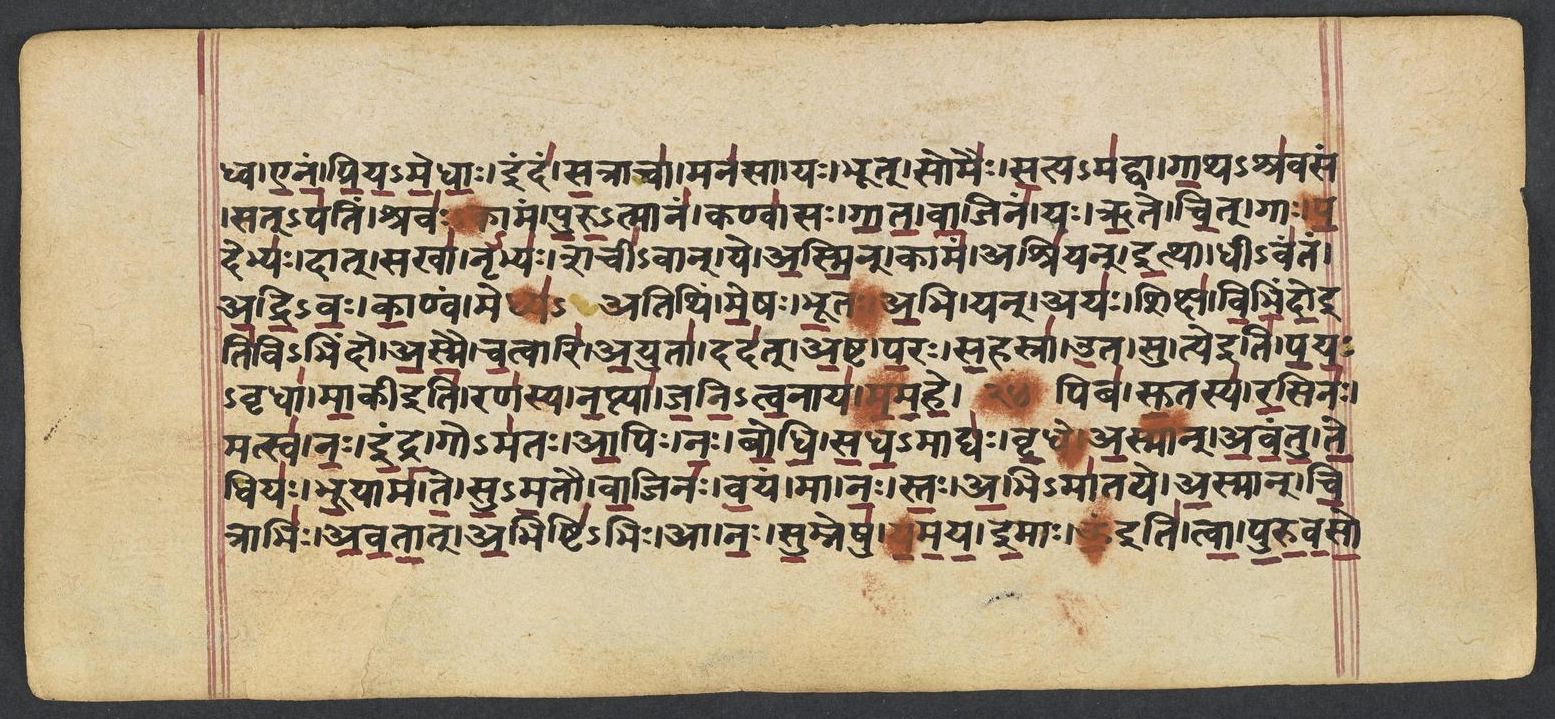
The manuscript shown is Penn Ms. Coll. 390 Item 41 (University of Pennsylvania), an undated paper manuscript of the padapāṭha (the word-by-word recitation text, in which every word is written separately and compounds are split) of the whole Ṛgveda in Devanāgarī, 884 leaves in fascicles, 7-9 lines to the page, accents in red; this hymn stands on fol. 562r-564r. Each section below gives the verses that end on one page; the page boundaries were read on the images (the opening words of every page), not counted out. Where the manuscript is a padapāṭha (the word-by-word recitation text), the section shows Aufrecht's continuous (saṃhitā) text first and, as the edition text, the padapāṭha of the same verses, which is the form written on the page.
How was this verified? (Provenance)
Where on the image
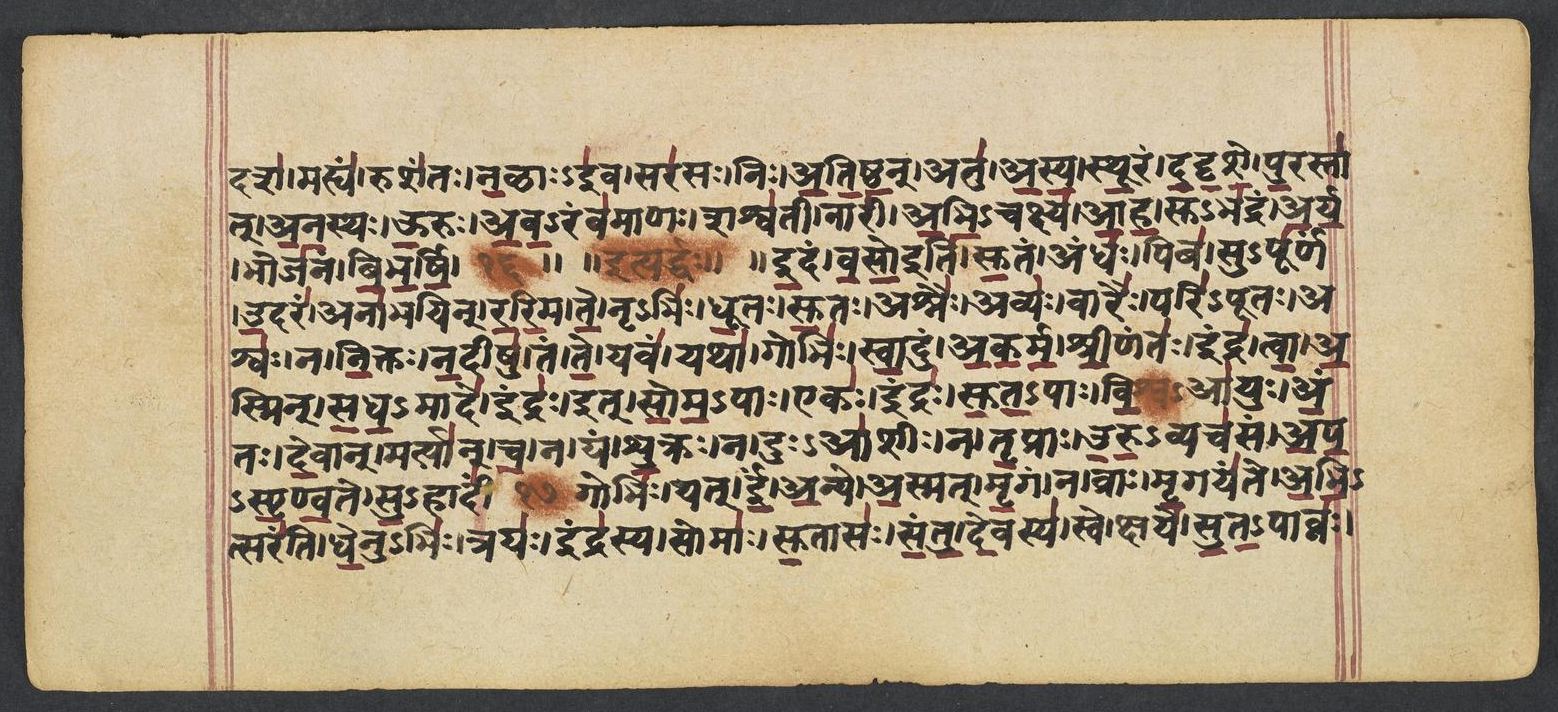
Penn Ms. Coll. 390 Item 41, fol. 562r (numbered 83r by the scribe) (OPenn image 562, lower leaf). Checked on the image: the Rigveda text on this page begins in RV 8.1.33 ‹daśa mahyam ruśantaḥ naḷāḥ-iva›. The next page with Rigveda text, fol. 562v (numbered 83v by the scribe), begins in RV 8.2.8 ‹trayaḥ kośāsaḥ ścotanti tisraḥ›. Verses 8.2.1-7 end on this page.
1i̱daṁ va̍so su̱tam andha̱ḥ pibā̱ supū̍rṇam u̱dara̍m | anā̍bhayin rari̱mā te̍ ||
2nṛbhi̍r dhū̱taḥ su̱to aśnai̱r avyo̱ vārai̱ḥ pari̍pūtaḥ | aśvo̱ na ni̱kto na̱dīṣu̍ ||
3taṁ te̱ yava̱ṁ yathā̱ gobhi̍ḥ svā̱dum a̍karma śrī̱ṇanta̍ḥ | indra̍ tvā̱smin sa̍dha̱māde̍ ||
4indra̱ it so̍ma̱pā eka̱ indra̍ḥ suta̱pā vi̱śvāyu̍ḥ | a̱ntar de̱vān martyā̍m̐ś ca ||
5na yaṁ śu̱kro na durā̍śī̱r na tṛ̱prā u̍ru̱vyaca̍sam | a̱pa̱spṛ̱ṇva̱te su̱hārda̍m ||
6gobhi̱r yad ī̍m a̱nye a̱sman mṛ̱gaṁ na vrā mṛ̱gaya̍nte | a̱bhi̱tsara̍nti dhe̱nubhi̍ḥ ||
7traya̱ indra̍sya̱ somā̍ḥ su̱tāsa̍ḥ santu de̱vasya̍ | sve kṣaye̍ suta̱pāvna̍ḥ ||
Compare: Padapāṭha (word-by-word text written in the manuscript; Sansknet e-text via GRETIL)
1idam | vaso iti | sutam | andhaḥ | piba | su-pūrṇam | udaram | anābhayin | rarima | te
2nṛ-bhiḥ | dhūtaḥ | sutaḥ | aśnaiḥ | avyaḥ | vāraiḥ | pari-pūtaḥ | aśvaḥ | na | niktaḥ | nadīṣu
3tam | te | yavam | yathā | gobhiḥ | svādum | akarma | śrīṇantaḥ | indra | tvā | asmin | sadha-māde
4indra | it | soma-pāḥ | ekaḥ | indraḥ | suta-pāḥ | viśva-āyuḥ | antaḥ | devān | martyān | ca
5na | yam | śukraḥ | na | duḥ-āśīḥ | na | tṛprāḥ | uru-vyacasam | apa-spṛṇvate | su-hārdam
6gobhiḥ | yat | īm | anye | asmat | mṛgam | na | vrāḥ | mṛgayante | abhi-tsaranti | dhenu-bhiḥ
7trayaḥ | indrasya | somāḥ | sutāsaḥ | santu | devasya | sve | kṣaye | suta-pāvnaḥ
1HERE is the Soma juice expressed; O Vasu, drink till thou art full: Undaunted God, we give it thee.
2Washed by the men, pressed out with stones, strained through the filter made of wool, 'Tis like a courser bathed in stream.
3This juice have we made sweet for thee like barley, blending it with milk. Indra, I call thee to our feast.
4Beloved of all, Indra alone drinks up the flowing Soma juice Among the Gods andmortal men.
5The Friend, whom not the brilliant-hued, the badly-mixt or bitter draught, Repels, the far-extending God;
6While other men than we with milk chase him as hunters chase a deer, And with their kine inveigle him.
7For him, for Indra, for the God, be pressed three draughts of Soma juice In the juice-drinker's own abode.
Where on the image
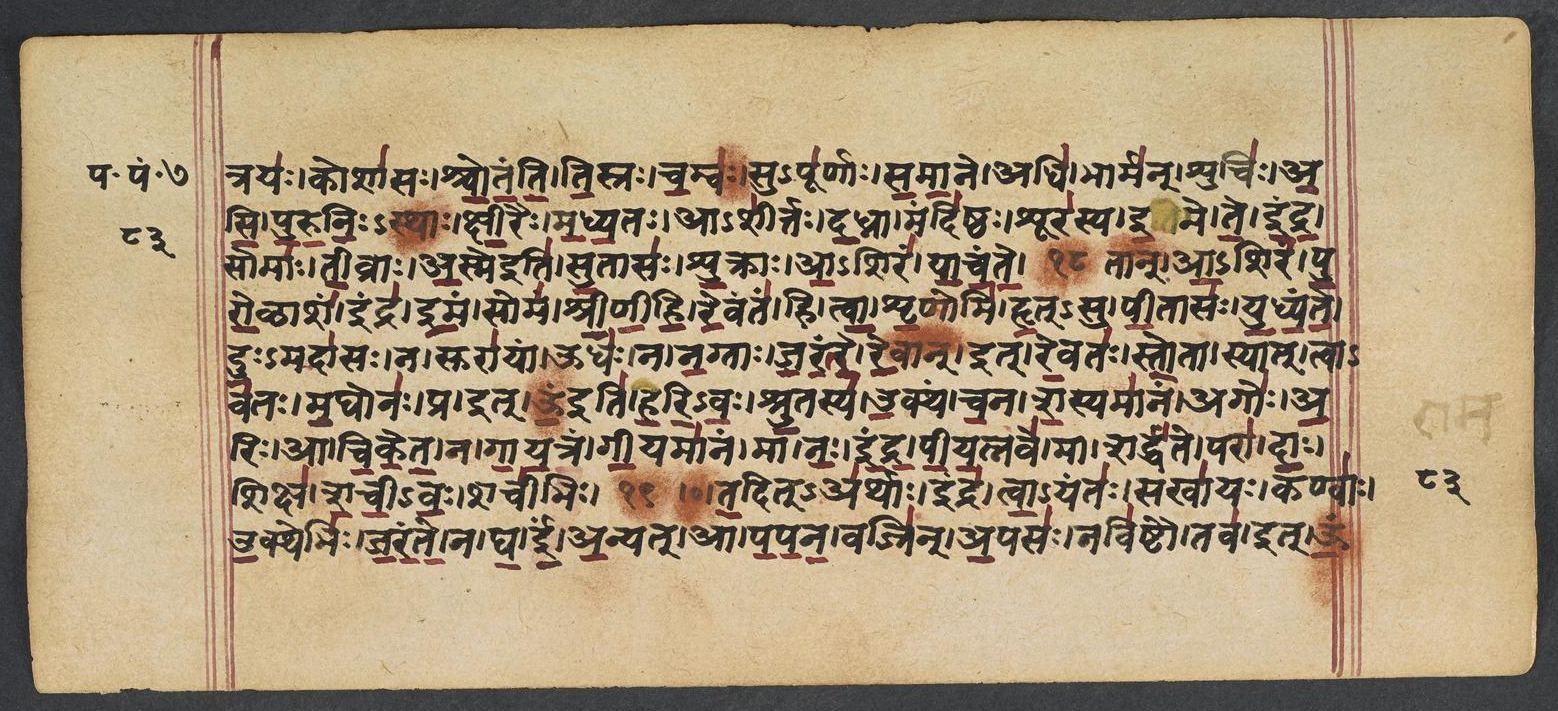
Penn Ms. Coll. 390 Item 41, fol. 562v (numbered 83v by the scribe) (OPenn image 563, upper leaf). Checked on the image: the Rigveda text on this page begins in RV 8.2.8 ‹trayaḥ kośāsaḥ ścotanti tisraḥ›. The next page with Rigveda text, fol. 563r (numbered 84r by the scribe), begins in RV 8.2.17 ‹iti stomam ciketa›. Verses 8.2.8-16 end on this page.
8traya̱ḥ kośā̍saḥ ścotanti ti̱sraś ca̱mva1̱̍ḥ supū̍rṇāḥ | sa̱mā̱ne adhi̱ bhārma̍n ||
9śuci̍r asi puruni̱ḥṣṭhāḥ kṣī̱rair ma̍dhya̱ta āśī̍rtaḥ | da̱dhnā mandi̍ṣṭha̱ḥ śūra̍sya ||
10i̱me ta̍ indra̱ somā̍s tī̱vrā a̱sme su̱tāsa̍ḥ | śu̱krā ā̱śira̍ṁ yācante ||
11tām̐ ā̱śira̍m puro̱ḻāśa̱m indre̱maṁ soma̍ṁ śrīṇīhi | re̱vanta̱ṁ hi tvā̍ śṛ̱ṇomi̍ ||
12hṛ̱tsu pī̱tāso̍ yudhyante du̱rmadā̍so̱ na surā̍yām | ūdha̱r na na̱gnā ja̍rante ||
13re̱vām̐ id re̱vata̍ḥ sto̱tā syāt tvāva̍to ma̱ghona̍ḥ | pred u̍ harivaḥ śru̱tasya̍ ||
14u̱kthaṁ ca̱na śa̱syamā̍na̱m ago̍r a̱rir ā ci̍keta | na gā̍ya̱traṁ gī̱yamā̍nam ||
15mā na̍ indra pīya̱tnave̱ mā śardha̍te̱ parā̍ dāḥ | śikṣā̍ śacīva̱ḥ śacī̍bhiḥ ||
16va̱yam u̍ tvā ta̱dida̍rthā̱ indra̍ tvā̱yanta̱ḥ sakhā̍yaḥ | kaṇvā̍ u̱kthebhi̍r jarante ||
Compare: Padapāṭha (word-by-word text written in the manuscript; Sansknet e-text via GRETIL)
8trayaḥ | kośāsaḥ | ścotanti | tisraḥ | camvaḥ | su-pūrṇāḥ | samāne | adhi | bhārman
9śuciḥ | asi | puruniḥ-sthāḥ | kṣīraiḥ | madhyataḥ | āśīrtaḥ | dadhnā | mandiṣṭhaḥ | śūrasya
10ime | te | indra | somāḥ | tīvrāḥ | asme iti | sutāsaḥ | śukrāḥ | āśiram | yācante
11tān | āśiram | puroḷāśam | indra | imam | somam | śrīṇīhi | revantam | hi | tvā | śṛṇomi
12hṛt-su | pītāsaḥ | yudhyante | duḥ-madāsaḥ | na | surāyām | ūdhaḥ | na | nagnāḥ | jarante
13revān | it | revataḥ | stotā | syāt | tvāvataḥ | maghonaḥ | pra | it | oṃ iti | hari-vaḥ | śrutasya
14uktham | cana | śasyamānam | agoḥ | ariḥ | ā | ciketa | na | gāyatram | gīyamānam
15mā | naḥ | indra | pīyatnave | mā | śardhate | parā | dāḥ | śikṣā | śacī-vaḥ | śacībhi ḥ
16vayam | oṃ iti | tvā | tatit-arthāḥ | indra | tvāyantaḥ | sakhāyaḥ | kaṇvāḥ | ukthebhiḥ | jarante
8Three reservoirs exude their drops, filled are three beakers to the brim, All for one offering to the God.
9Pure art thou, set in many a place, and blended in the midst with milk And curd, to cheer the Hero best.
10Here, Indra, are thy Soma-draughts pressed out by us, the strong, the pure: They crave admixture of the milk.
11O Indra, pour in milk, prepare the cake, and mix the Soma-draught. I hear them say that thou art rich.
12Quaffed juices fight within the breast. The drunken praise not by their wine, The naked praise not when it rains.
13Rich be the praiser of one rich, munificent and famed like thee: High rank be his, O Lord of Bays.
14Foe of the man who adds no milk, he heeds not any chanted hymn Or holy psalm that may he sung.
15Give us not, Indra, as a prey unto the scornful or the proud: Help, Mighty One, with power and might.
16This, even this, O Indra, we implore. as thy devoted friends, The Kaṇvas praise thee with their hymns.
Where on the image
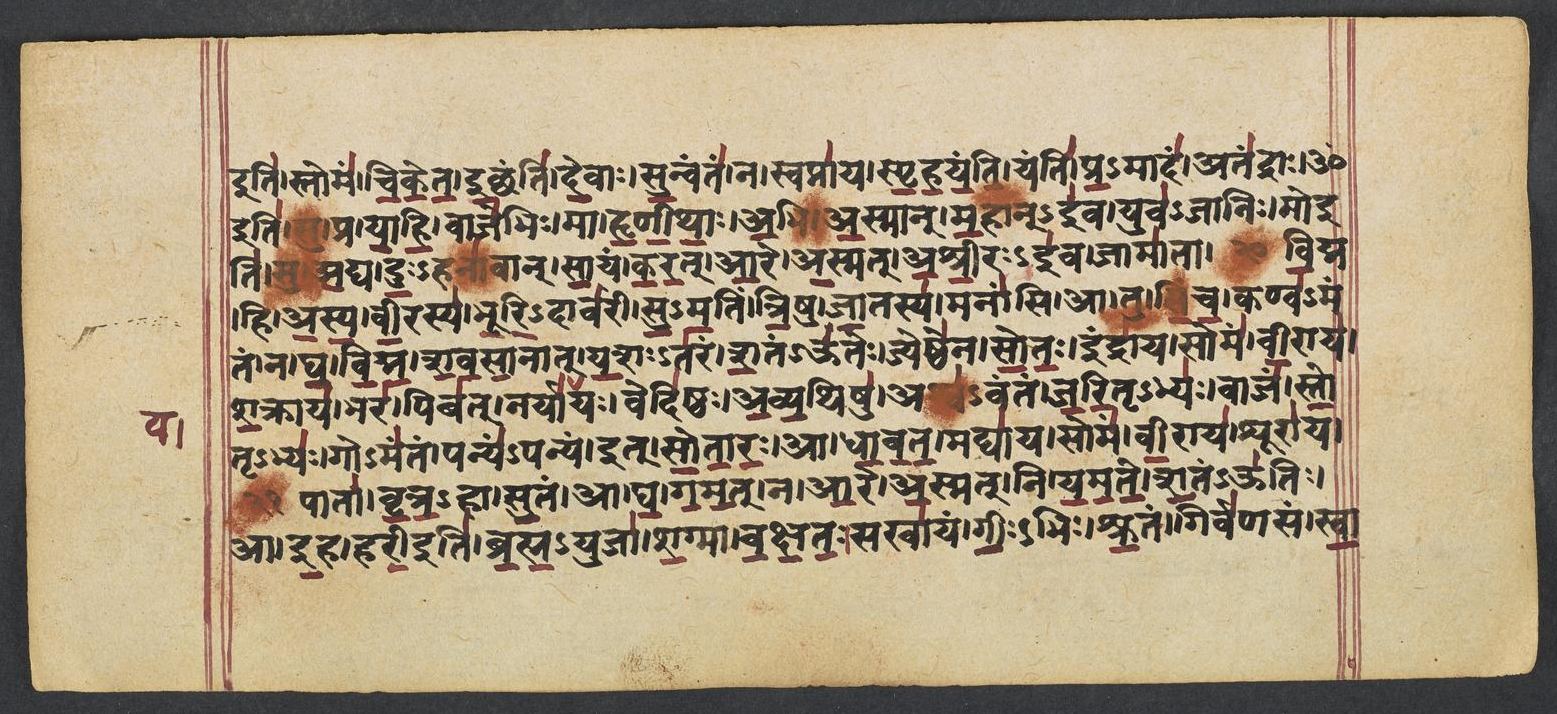
Penn Ms. Coll. 390 Item 41, fol. 563r (numbered 84r by the scribe) (OPenn image 563, lower leaf). Checked on the image: the Rigveda text on this page begins in RV 8.2.17 ‹iti stomam ciketa›. The next page with Rigveda text, fol. 563v (numbered 84v by the scribe), begins in RV 8.2.28 ‹-svādavaḥ somāḥ ā yāhi›. Verses 8.2.17-27 end on this page; 8.2.17 begins on fol. 562v (numbered 83v by the scribe).
17na ghe̍m a̱nyad ā pa̍pana̱ vajri̍nn a̱paso̱ navi̍ṣṭau | taved u̱ stoma̍ṁ ciketa ||
18i̱cchanti̍ de̱vāḥ su̱nvanta̱ṁ na svapnā̍ya spṛhayanti | yanti̍ pra̱māda̱m ata̍ndrāḥ ||
19o ṣu pra yā̍hi̱ vāje̍bhi̱r mā hṛ̍ṇīthā a̱bhy a1̱̍smān | ma̱hām̐ i̍va̱ yuva̍jāniḥ ||
20mo ṣv a1̱̍dya du̱rhaṇā̍vān sā̱yaṁ ka̍rad ā̱re a̱smat | a̱śrī̱ra i̍va̱ jāmā̍tā ||
21vi̱dmā hy a̍sya vī̱rasya̍ bhūri̱dāva̍rīṁ suma̱tim | tri̱ṣu jā̱tasya̱ manā̍ṁsi ||
22ā tū ṣi̍ñca̱ kaṇva̍manta̱ṁ na ghā̍ vidma śavasā̱nāt | ya̱śasta̍raṁ śa̱tamū̍teḥ ||
23jyeṣṭhe̍na sota̱r indrā̍ya̱ soma̍ṁ vī̱rāya̍ śa̱krāya̍ | bharā̱ piba̱n naryā̍ya ||
24yo vedi̍ṣṭho avya̱thiṣv aśvā̍vantaṁ jari̱tṛbhya̍ḥ | vāja̍ṁ sto̱tṛbhyo̱ goma̍ntam ||
25panya̍m-panya̱m it so̍tāra̱ ā dhā̍vata̱ madyā̍ya | soma̍ṁ vī̱rāya̱ śūrā̍ya ||
26pātā̍ vṛtra̱hā su̱tam ā ghā̍ gama̱n nāre a̱smat | ni ya̍mate śa̱tamū̍tiḥ ||
27eha harī̍ brahma̱yujā̍ śa̱gmā va̍kṣata̱ḥ sakhā̍yam | gī̱rbhiḥ śru̱taṁ girva̍ṇasam ||
Compare: Padapāṭha (word-by-word text written in the manuscript; Sansknet e-text via GRETIL)
17na | gha | īm | anyat | ā | papana | vajrin | apasaḥ | naviṣṭau | tava | it | oṃ iti | stomam | ciketa
18icchanti | devāḥ | sunvantam | na | svapnāya | spṛhayanti | yanti | pra-mādam | atandrāḥ
19o iti | su | pra | yāhi | vājebhiḥ | mā | hṛṇīthāḥ | abhi | asmān | mahān-iva | yuva-jāni ḥ
20mo iti | su | adya | duḥ-hanāvān | sāyam | karat | āre | asmat | aśrīraḥ-iva | jāmātā
21vidma | hi | asya | vīrasya | bhūri-dāvārīm | su-matim | triṣu | jātasya | manāṃs i
22ā | tu | siñca | kaṇva-mantam | na | gha | vidma | śavasānāt | yaśaḥ-taram | śatam-ūteḥ
23jyeṣṭhena | sotaḥ | indrāya | somam | vīrāya | śakrāya | bhara | pibat | naryāya
24yaḥ | vediṣṭhaḥ | avyathiṣu | aśva-vantam | jaritṛ-bhyaḥ | vājam | stotṛ-bhyaḥ | go--mantam
25panyam-panyam | it | sotāraḥ | ā | dhāvata | madyāya | somam | vīrāya | śūrāya
26pātā | vṛtra-hā | sutam | ā | gha | gamat | na | āre | asmat | ni | yamate | śatam-ūtiḥ
27ā | iha | harī iti | brahma-yujā | śagmā | vakṣataḥ | sakhāyam | gīḥ-bhiḥ | śrutam | girvaṇasam
17Naught else, O Thunderer, have I praised in the skilled singer's eulogy: On thy laud only have I thought.
18The Gods seek him who presses out the Soma; they desire not sleep They punish sloth unweariedly.
19Come hither swift with gifts of wealth – be not thou angry with us-like A great man with a youthful bride.
20Let him not, wrathful with us, spend the evening far from us to-day, Like some unpleasant son-in-law.
21For well we know this Hero's love, most liberal of the boons he gives, His plans whom the three worlds display.
22Pour forth the gift which Kaṇvas bring, for none more glorious do we know Than the Strong Lord with countless aids.
23O presser, offer Soma first to Indra, Hero, Ṣakra, him The Friend of man, that he may drink;
24Who, in untroubled ways, is best provider, for his worshippers. Of strength in horses and in kine.
25Pressers, for him blend Soma juice, each draught most excellent, for him The Brave, the Hero, for his joy.
26The Vr̥itra-slayer drinks the juice. May he who gives a hundred aids Approach, nor stay afar from us.
27May the strong Bay Steeds, yoked by prayer, bring hither unto us our Friend, Lover of Song, renowned by songs.
Where on the image
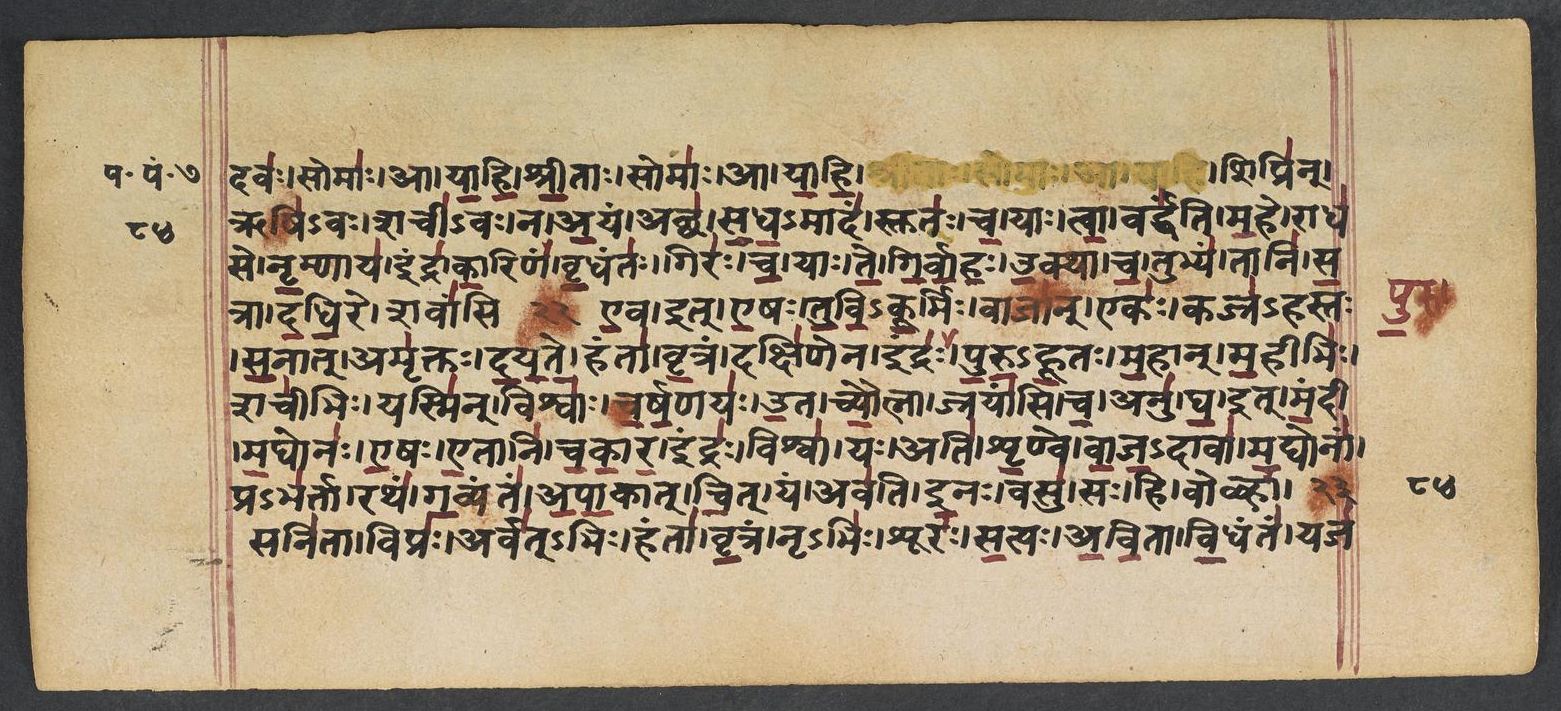
Penn Ms. Coll. 390 Item 41, fol. 563v (numbered 84v by the scribe) (OPenn image 564, upper leaf). Checked on the image: the Rigveda text on this page begins in RV 8.2.28 ‹-svādavaḥ somāḥ ā yāhi›. The next page with Rigveda text, fol. 564r (numbered 85r by the scribe), begins in RV 8.2.37 ‹-yajadhva enam priya-medhāḥ indram›. Verses 8.2.28-36 end on this page; 8.2.28 begins on fol. 563r (numbered 84r by the scribe).
28svā̱dava̱ḥ somā̱ ā yā̍hi śrī̱tāḥ somā̱ ā yā̍hi | śipri̱nn ṛṣī̍va̱ḥ śacī̍vo̱ nāyam acchā̍ sadha̱māda̍m ||
29stuta̍ś ca̱ yās tvā̱ vardha̍nti ma̱he rādha̍se nṛ̱mṇāya̍ | indra̍ kā̱riṇa̍ṁ vṛ̱dhanta̍ḥ ||
30gira̍ś ca̱ yās te̍ girvāha u̱kthā ca̱ tubhya̱ṁ tāni̍ | sa̱trā da̍dhi̱re śavā̍ṁsi ||
31e̱ved e̱ṣa tu̍vikū̱rmir vājā̱m̐ eko̱ vajra̍hastaḥ | sa̱nād amṛ̍kto dayate ||
32hantā̍ vṛ̱traṁ dakṣi̍ṇe̱nendra̍ḥ pu̱rū pu̍ruhū̱taḥ | ma̱hān ma̱hībhi̱ḥ śacī̍bhiḥ ||
33yasmi̱n viśvā̍ś carṣa̱ṇaya̍ u̱ta cyau̱tnā jrayā̍ṁsi ca | anu̱ ghen ma̱ndī ma̱ghona̍ḥ ||
34e̱ṣa e̱tāni̍ cakā̱rendro̱ viśvā̱ yo 'ti̍ śṛ̱ṇve | vā̱ja̱dāvā̍ ma̱ghonā̍m ||
35prabha̍rtā̱ ratha̍ṁ ga̱vyanta̍m apā̱kāc ci̱d yam ava̍ti | i̱no vasu̱ sa hi voḻhā̍ ||
36sani̍tā̱ vipro̱ arva̍dbhi̱r hantā̍ vṛ̱traṁ nṛbhi̱ḥ śūra̍ḥ | sa̱tyo̍ 'vi̱tā vi̱dhanta̍m ||
Compare: Padapāṭha (word-by-word text written in the manuscript; Sansknet e-text via GRETIL)
28svādavaḥ | somāḥ | ā | yāhi | śrītāḥ | somāḥ | ā | yāhi | śiprin | ṛṣi-vaḥ | śacī-vaḥ | na | ayam | accha | sadha-mādam
29stutaḥ | ca | yāḥ | tvā | vardhanti | mahe | rādhase | nṛmṇāya | indra | kāriṇam | vṛdhantaḥ
30giraḥ | ca | yāḥ | te | girvāhaḥ | ukthā | ca | tubhyam | tāni | satrā | dadhire | śavāṃsi
31eva | it | eṣaḥ | tuvi-kūrmiḥ | vājān | ekaḥ | vajra-hastaḥ | sanāt | amṛktaḥ | dayate
32hanta | vṛtram | dakṣiṇena | indraḥ | puru | puru-hūtaḥ | mahān | mahībhiḥ | śacībhiḥ
33yasmin | viśvāḥ | carṣaṇayaḥ | uta | cyautnā | jrayāṃsi | ca | anu | gha | it | mandī | maghonaḥ
34eṣaḥ | etāni | cakāra | indraḥ | viśvā | yaḥ | ati | śṛṇve | vāja-dāvā | maghonām
35pra-bhartā | ratham | gavyantam | apākāt | cit | yam | avati | inaḥ | vasu | saḥ | hi | voḷhā
36sanitā | vipraḥ | arvat-bhiḥ | hantā | vṛtram | nṛ-bhiḥ | śūraḥ | satyaḥ | avitā | vidhantam
28Sweet are the Soma juices, come! Blent are the Soma juices, come! R̥ishi-like, mighty, fair of cheek, come hither quickly to the feast.
29And lauds which strengthen thee for great bounty and valour, and exalt Indra who doeth glorious deeds,
30And songs to thee who lovest song, and all those hymns addressed to thee- These evermore confirm thy might.
31Thus he, sole doer of great deeds whose hand holds thunder, gives us strength, He who hath never been subdued.
32Vr̥itra he slays with his right hand, even Indra, great with mighty power, And much-invoked in many a place.
33He upon whom all men depend, all regions, all achievements, he Takes pleasure in our wealthy chiefs.
34All this hath he accomplished, yea, Indra, most gloriously renowned, Who gives our wealthy princes strength.
35Who drives his chariot seeking spoil, from afar, to him he loves: For swift is he to bring men wealth.
36The Sage who, winning spoil with steeds, slays Vr̥itra, Hero with the men, His servant's faithful succourer.
Where on the image
Penn Ms. Coll. 390 Item 41, fol. 564r (numbered 85r by the scribe) (OPenn image 564, lower leaf). Checked on the image: the Rigveda text on this page begins in RV 8.2.37 ‹-yajadhva enam priya-medhāḥ indram›. The next page with Rigveda text, fol. 564v (numbered 85v by the scribe), begins in RV 8.3.3 ‹itipuru-vaso giraḥ vardhantu yāḥ›. Verses 8.2.37-42 end on this page; 8.2.37 begins on fol. 563v (numbered 84v by the scribe).
37yaja̍dhvainam priyamedhā̱ indra̍ṁ sa̱trācā̱ mana̍sā | yo bhūt somai̍ḥ sa̱tyama̍dvā ||
38gā̱thaśra̍vasa̱ṁ satpa̍ti̱ṁ śrava̍skāmam puru̱tmāna̍m | kaṇvā̍so gā̱ta vā̱jina̍m ||
39ya ṛ̱te ci̱d gās pa̱debhyo̱ dāt sakhā̱ nṛbhya̱ḥ śacī̍vān | ye a̍smi̱n kāma̱m aśri̍yan ||
40i̱tthā dhīva̍ntam adrivaḥ kā̱ṇvam medhyā̍tithim | me̱ṣo bhū̱to̱3̱̍ 'bhi yann aya̍ḥ ||
41śikṣā̍ vibhindo asmai ca̱tvāry a̱yutā̱ dada̍t | a̱ṣṭā pa̱raḥ sa̱hasrā̍ ||
42u̱ta su tye pa̍yo̱vṛdhā̍ mā̱kī raṇa̍sya na̱ptyā̍ | ja̱ni̱tva̱nāya̍ māmahe ||
Compare: Padapāṭha (word-by-word text written in the manuscript; Sansknet e-text via GRETIL)
37yajadhva | enam | priya-medhāḥ | indram | satrācā | manasā | yaḥ | bhūt | somaiḥ | satya-madvā
38gātha-śravasam | sat-patim śravaḥ-kāmam | puru-tmānam | kaṇvāsaḥ | gāta | vājinam
39yaḥ | ṛte | cit | gāḥ | padebhyaḥ | dāt | sakhā | nṛ-bhyaḥ | śacī-vān | ye | asmin | kāmam | aśriyan
40itthā | dhī-vantam | adri-vaḥ | kāṇvam | medhya-atithim | meṣaḥ | bhūtaḥ | abhi | yan | ayaḥ
41śikṣa | vibhindo itivi-bhindo | asmai | catvāri | ayutā | dadat | aṣṭa | paraḥ | sahasrā
42uta | su | tye iti | payaḥ-vṛdhā | mākī iti | raṇasya | naptyā | jani-tvanāya | mamahe
37O Priyamedhas, worship with collected mind this Indra whom The Soma hath full well inspired.
38Ye Kaṇvas, sing the Mighty One, Lord of the Brave, who loves renown, All-present, glorified by song.
39Strong Friend, who, with no trace of feet, restores the cattle to the men, Who rest their wish and hope on him.
40Shaped as a Ram, Stone-hurler I once thou camest hither to the son Of Kaṇva, wise Medhyâtithi.
41Vibhindu, thou hast helped this man, giving him thousands four times ten, And afterward eight thousand more.
42And these twain pouring streams of milk, creative, daughters of delight, For wedlock sake I glorify.
Notes
- Sanskrit: Aufrecht's edition (1877) with the Vedic accents, as entered by van Nooten and Holland (GRETIL).
- English: Ralph T. H. Griffith, The Hymns of the Rigveda (1889-1892; 2nd ed. 1896-1897), from the VedaWeb digital text; OCR slips in that text were corrected against the printed 2nd edition (data/sources/rigveda/griffith_errata.json).
- Padapāṭha (edition text): Sansknet e-text via GRETIL (CC BY-NC-SA 4.0).
Cite
Sources
- Source: Penn Ms. Coll. 390 Item 41 (undated (catalogued with Penn's 18th-19th c. Vedic manuscripts)), OPenn, Public Domain Mark + Aufrecht's accented text (GRETIL) + Griffith's English (VedaWeb) (holding institution)
- Critical edition: Aufrecht (1877), accented e-text via GRETIL
← previous · → next · v cycle view · l back to library