Rigveda 8.10: To Asvins
Introduction
Rigveda 8.10 is a hymn of 6 verses addressed to Asvins. It stands in book (maṇḍala) 8, the book of the Kaṇva and Aṅgiras poets. The Rigveda is the oldest collection of Sanskrit hymns, composed in the second half of the second millennium BCE and handed down orally for many centuries before it was written down.
The manuscript shown is Penn Ms. Coll. 390 Item 41 (University of Pennsylvania), an undated paper manuscript of the padapāṭha (the word-by-word recitation text, in which every word is written separately and compounds are split) of the whole Ṛgveda in Devanāgarī, 884 leaves in fascicles, 7-9 lines to the page, accents in red; this hymn stands on fol. 577r-577v. Each section below gives the verses that end on one page; the page boundaries were read on the images (the opening words of every page), not counted out. Where the manuscript is a padapāṭha (the word-by-word recitation text), the section shows Aufrecht's continuous (saṃhitā) text first and, as the edition text, the padapāṭha of the same verses, which is the form written on the page.
How was this verified? (Provenance)
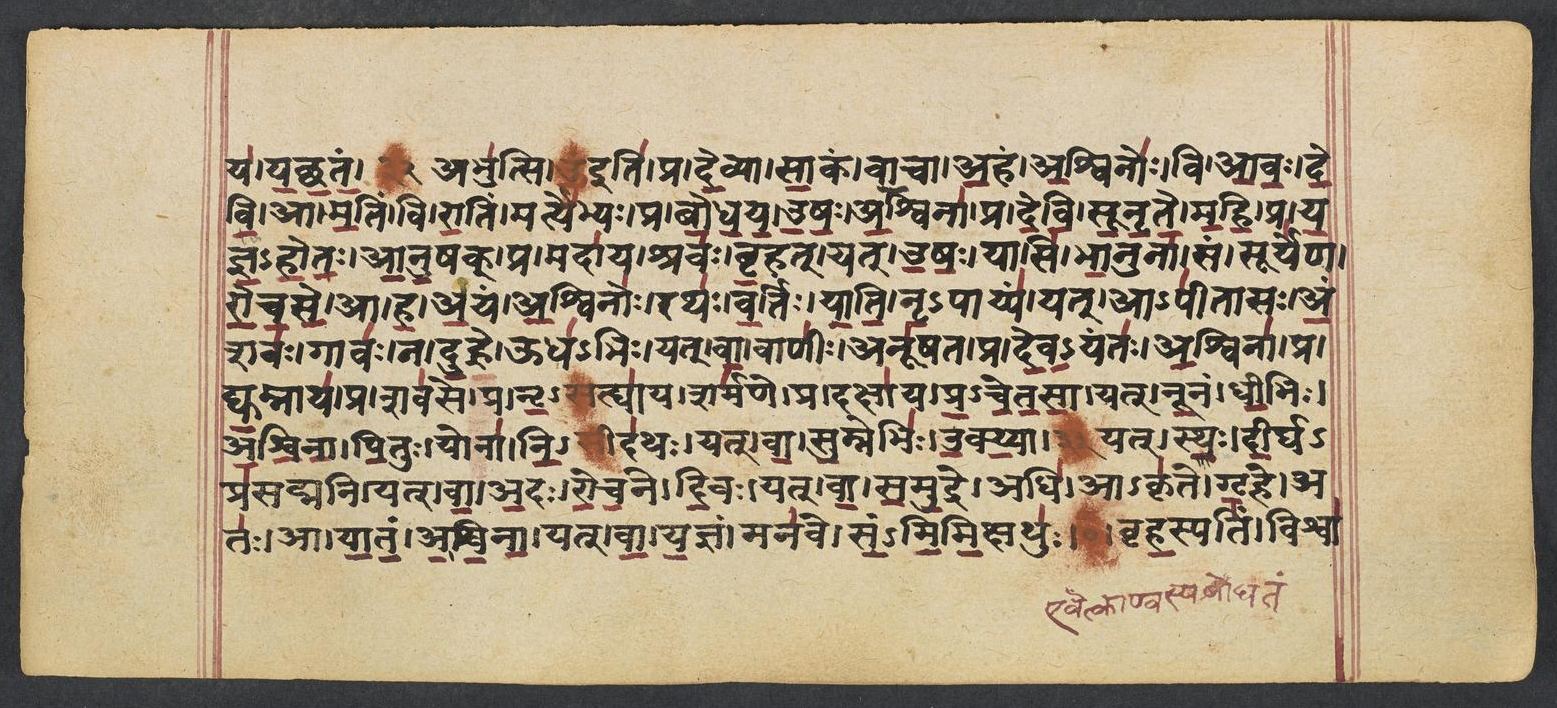
Where on the image
Penn Ms. Coll. 390 Item 41, fol. 577r (numbered 98r by the scribe) (OPenn image 577, lower leaf). Checked on the image: the Rigveda text on this page begins in RV 8.9.15 ‹-vatsāya yacchatam›. The next page with Rigveda text, fol. 577v (numbered 98v by the scribe), begins in RV 8.10.2 ‹-viśvān devān aham huve›. Verse 8.10.1 ends on this page.
1yat stho dī̱rghapra̍sadmani̱ yad vā̱do ro̍ca̱ne di̱vaḥ | yad vā̍ samu̱dre adhy ākṛ̍te gṛ̱he 'ta̱ ā yā̍tam aśvinā ||
Compare: Padapāṭha (word-by-word text written in the manuscript; Sansknet e-text via GRETIL)
1yat | sthaḥ | dīrgha-prasadmani | yat | vā | adaḥ | rocane | divaḥ | yat | vā | samudre | adhi | ākṛte | gṛhe | ataḥ | ā | yātam | aśvinā
1WHETHER ye travel far away or dwell in yonder light of heaven, Or in a mansion that is built above the sea, come thence, ye Aṣvins, hitherward.
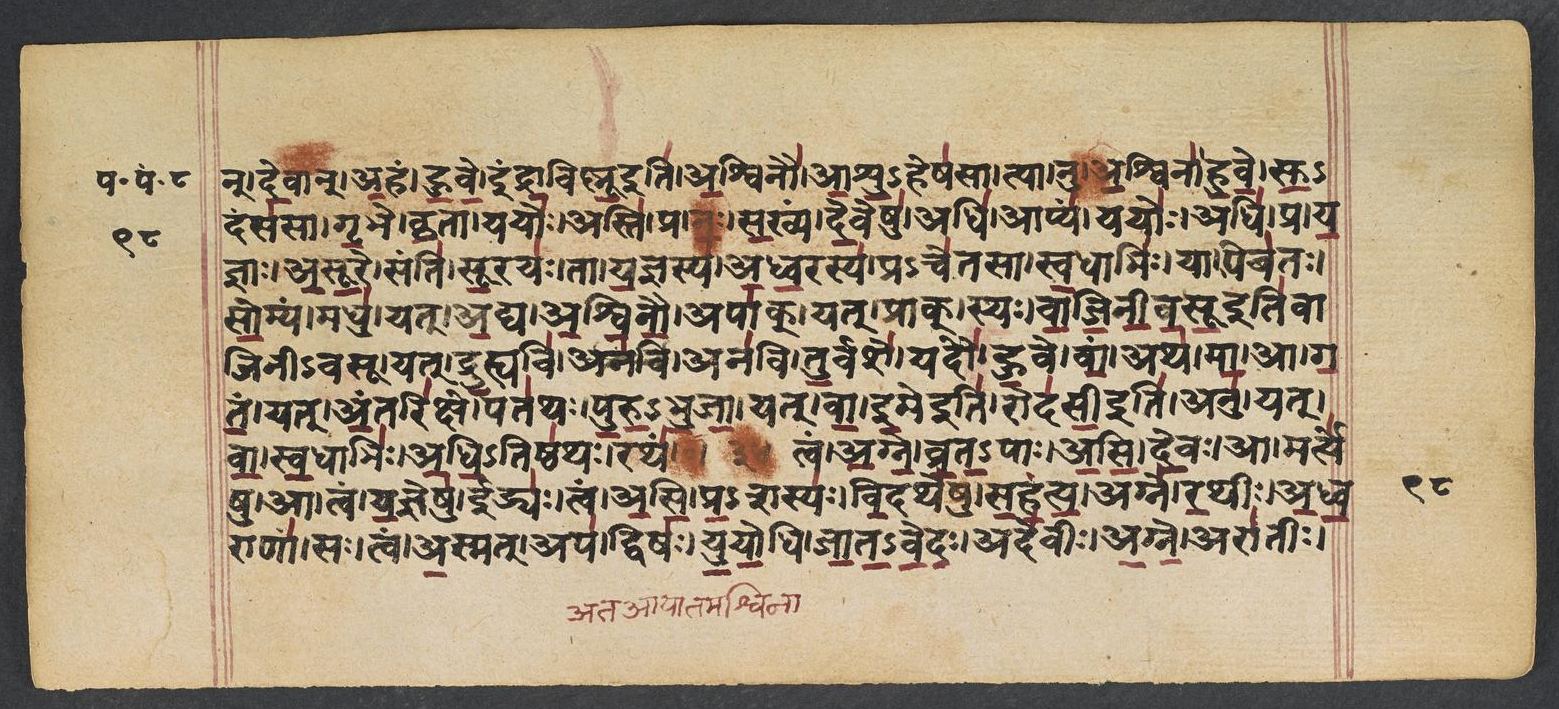
Where on the image
Penn Ms. Coll. 390 Item 41, fol. 577v (numbered 98v by the scribe) (OPenn image 578, upper leaf). Checked on the image: the Rigveda text on this page begins in RV 8.10.2 ‹-viśvān devān aham huve›. The next page with Rigveda text, fol. 578r (numbered 99r by the scribe), begins in RV 8.11.4 ‹anti cit santam aha›. Verses 8.10.2-6 end on this page; 8.10.2 begins on fol. 577r (numbered 98r by the scribe).
2yad vā̍ ya̱jñam mana̍ve sammimi̱kṣathu̍r e̱vet kā̱ṇvasya̍ bodhatam | bṛha̱spati̱ṁ viśvā̍n de̱vām̐ a̱haṁ hu̍va̱ indrā̱viṣṇū̍ a̱śvinā̍v āśu̱heṣa̍sā ||
3tyā nv a1̱̍śvinā̍ huve su̱daṁsa̍sā gṛ̱bhe kṛ̱tā | yayo̱r asti̱ pra ṇa̍ḥ sa̱khyaṁ de̱veṣv adhy āpya̍m ||
4yayo̱r adhi̱ pra ya̱jñā a̍sū̱re santi̍ sū̱raya̍ḥ | tā ya̱jñasyā̍dhva̱rasya̱ prace̍tasā sva̱dhābhi̱r yā piba̍taḥ so̱myam madhu̍ ||
5yad a̱dyāśvi̍nā̱v apā̱g yat prāk stho vā̍jinīvasū | yad dru̱hyavy ana̍vi tu̱rvaśe̱ yadau̍ hu̱ve vā̱m atha̱ mā ga̍tam ||
6yad a̱ntari̍kṣe̱ pata̍thaḥ purubhujā̱ yad ve̱me roda̍sī̱ anu̍ | yad vā̍ sva̱dhābhi̍r adhi̱tiṣṭha̍tho̱ ratha̱m ata̱ ā yā̍tam aśvinā ||
Compare: Padapāṭha (word-by-word text written in the manuscript; Sansknet e-text via GRETIL)
2yat | vā | yajñam | manave | sam-mimikṣathuḥ | eva | it | kāṇvasya | bodhatam | bṛhaspatim | viśvān | devān | aham | huve | indrāviṣṇūiti | aśvinau | āśu-heṣasā
3tyā | nu | aśvinā | huve | su-daṃsasā | gṛbhe | kṛtā | yayoḥ | asti | pra | naḥ | sakhyam | deveṣu | adhi | āpyam
4yayoḥ | adhi | pra | yajñāḥ | asūre | santi | sūrayaḥ | tā | yajñasya | adhvarasya | pra-cetasā | svadhābhiḥ | yā | pibataḥ | somyam | madhu
5yat | adya | aśvinau | apāk | yat | prāk | sthaḥ | vājinīvasūitivājinī-vasū | yat | druhyavi | anavi | turvaśe | yadau | huve | vām | atha | mā | ā | gatam
6yat | antarikṣe | patathaḥ | puru-bhujā | yat | vā | ime iti | rodasī iti | anu | yat | vā | svadhābhiḥ | adhi-tiṣṭhathaḥ | ratham | ataḥ | ā | yātam | aśvinā
2Or if for Manu.ye prepared the sacrifice, remember also Kaṇva's son. I call Br̥ihaspati, Indra, Vishṇu, all the gods, the Aṣvins borne by rapid steeds.
3Those Aṣvins I invoke who work marvels, brought hither to receive, With whom our friendship is most famed, and kinship passing that of Gods.
4On whom the solemn rites depend, whose worshippers rise without the Sun: These who foreknow the holy work of sacrifice, and by their Godhead drink the sweets of Soma juice.
5Whether ye, Lords of ample wealth, now linger in the east or west, With Druhyu, or with Anu, Yadu, Turvaga, I call you hither; come to me.
6Lords of great riches, whether through the firmament ye fly or speed through heaven and earth, Or with your Godlike natures stand upon your cars, come thence, O Aṣvins, hitherward.
Notes
- Sanskrit: Aufrecht's edition (1877) with the Vedic accents, as entered by van Nooten and Holland (GRETIL).
- English: Ralph T. H. Griffith, The Hymns of the Rigveda (1889-1892; 2nd ed. 1896-1897), from the VedaWeb digital text; OCR slips in that text were corrected against the printed 2nd edition (data/sources/rigveda/griffith_errata.json).
- Padapāṭha (edition text): Sansknet e-text via GRETIL (CC BY-NC-SA 4.0).
Cite
Sources
- Source: Penn Ms. Coll. 390 Item 41 (undated (catalogued with Penn's 18th-19th c. Vedic manuscripts)), OPenn, Public Domain Mark + Aufrecht's accented text (GRETIL) + Griffith's English (VedaWeb) (holding institution)
- Critical edition: Aufrecht (1877), accented e-text via GRETIL
← previous · → next · v cycle view · l back to library