Rigveda 8.9: To Asvins
Introduction
Rigveda 8.9 is a hymn of 21 verses addressed to Asvins. It stands in book (maṇḍala) 8, the book of the Kaṇva and Aṅgiras poets. The Rigveda is the oldest collection of Sanskrit hymns, composed in the second half of the second millennium BCE and handed down orally for many centuries before it was written down.
The manuscript shown is Penn Ms. Coll. 390 Item 41 (University of Pennsylvania), an undated paper manuscript of the padapāṭha (the word-by-word recitation text, in which every word is written separately and compounds are split) of the whole Ṛgveda in Devanāgarī, 884 leaves in fascicles, 7-9 lines to the page, accents in red; this hymn stands on fol. 575v-577r. Each section below gives the verses that end on one page; the page boundaries were read on the images (the opening words of every page), not counted out. Where the manuscript is a padapāṭha (the word-by-word recitation text), the section shows Aufrecht's continuous (saṃhitā) text first and, as the edition text, the padapāṭha of the same verses, which is the form written on the page.
How was this verified? (Provenance)
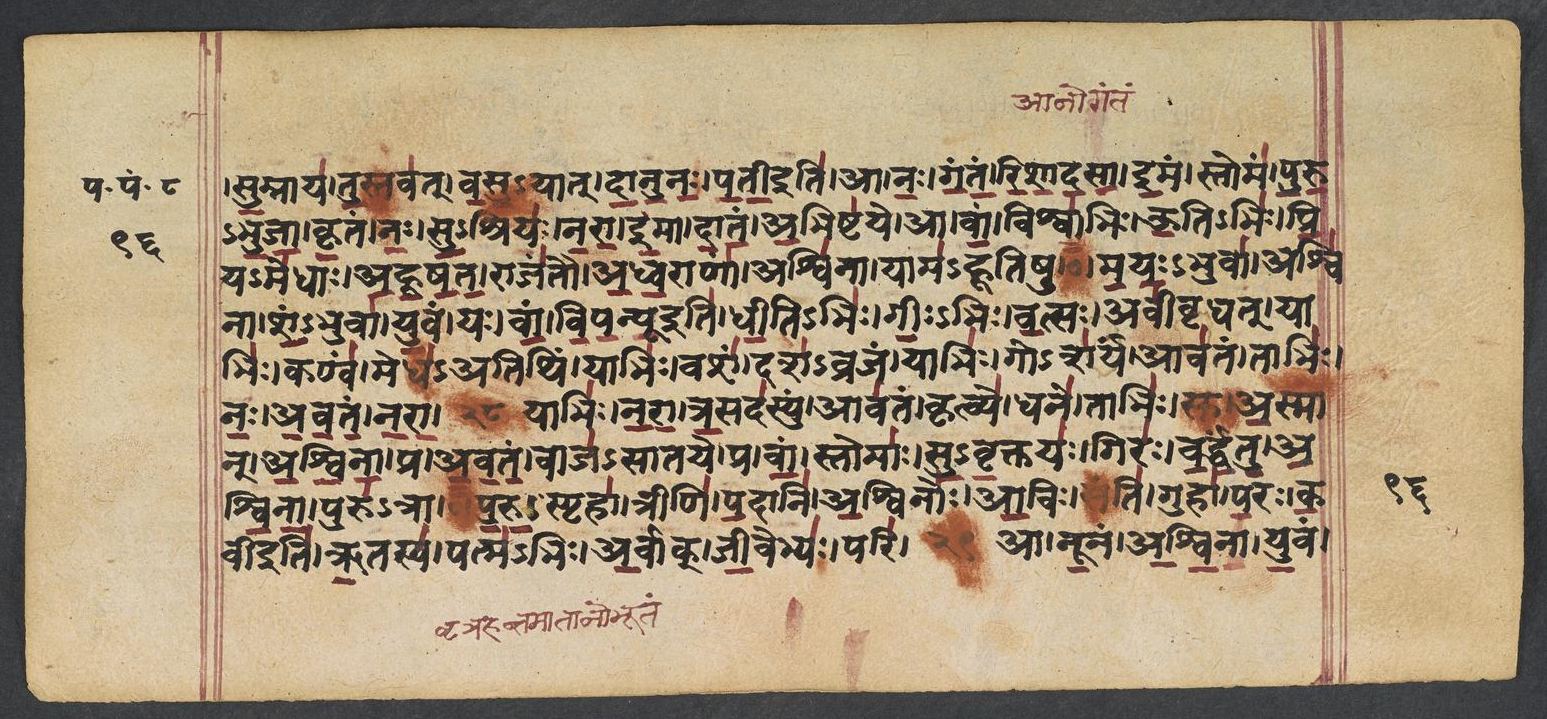
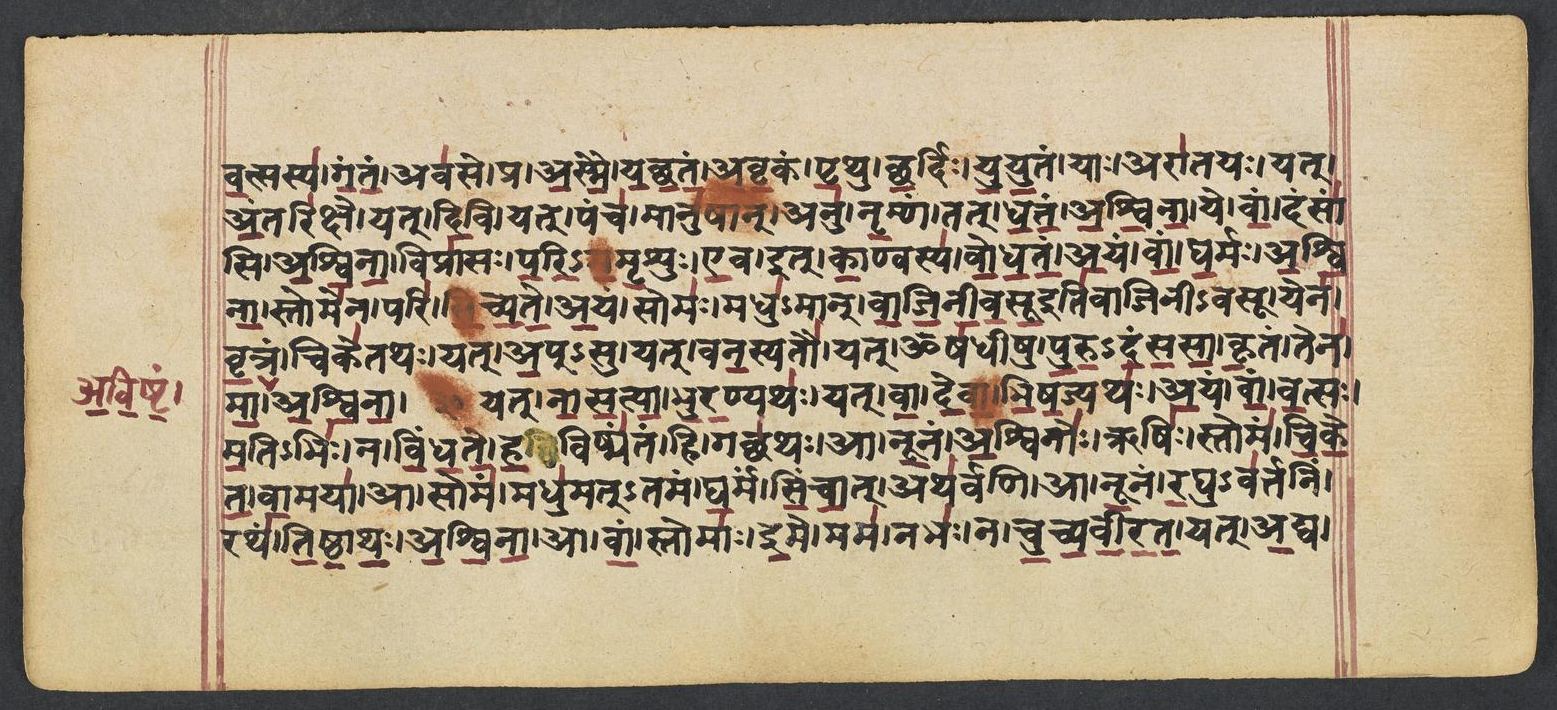
Where on the image
Penn Ms. Coll. 390 Item 41, fol. 576r (numbered 97r by the scribe) (OPenn image 576, lower leaf). Checked on the image: the Rigveda text on this page begins in RV 8.9.1 ‹vatsasya gantam avase pra›. The next page with Rigveda text, fol. 576v (numbered 97v by the scribe), begins in RV 8.9.9 ‹vām nāsatyā ukthaiḥ ācucyuvīmahi›. Verses 8.9.1-8 end on this page; 8.9.1 begins on fol. 575v (numbered 96v by the scribe).
1ā nū̱nam a̍śvinā yu̱vaṁ va̱tsasya̍ ganta̱m ava̍se | prāsmai̍ yacchatam avṛ̱kam pṛ̱thu ccha̱rdir yu̍yu̱taṁ yā arā̍tayaḥ ||
2yad a̱ntari̍kṣe̱ yad di̱vi yat pañca̱ mānu̍ṣā̱m̐ anu̍ | nṛ̱mṇaṁ tad dha̍ttam aśvinā ||
3ye vā̱ṁ daṁsā̍ṁsy aśvinā̱ viprā̍saḥ parimāmṛ̱śuḥ | e̱vet kā̱ṇvasya̍ bodhatam ||
4a̱yaṁ vā̍ṁ gha̱rmo a̍śvinā̱ stome̍na̱ pari̍ ṣicyate | a̱yaṁ somo̱ madhu̍mān vājinīvasū̱ yena̍ vṛ̱traṁ cike̍tathaḥ ||
5yad a̱psu yad vana̱spatau̱ yad oṣa̍dhīṣu purudaṁsasā kṛ̱tam | tena̍ māviṣṭam aśvinā ||
6yan nā̍satyā bhura̱ṇyatho̱ yad vā̍ deva bhiṣa̱jyatha̍ḥ | a̱yaṁ vā̍ṁ va̱tso ma̱tibhi̱r na vi̍ndhate ha̱viṣma̍nta̱ṁ hi gaccha̍thaḥ ||
7ā nū̱nam a̱śvino̱r ṛṣi̱ḥ stoma̍ṁ ciketa vā̱mayā̍ | ā soma̱m madhu̍mattamaṁ gha̱rmaṁ si̍ñcā̱d atha̍rvaṇi ||
8ā nū̱naṁ ra̱ghuva̍rtani̱ṁ ratha̍ṁ tiṣṭhātho aśvinā | ā vā̱ṁ stomā̍ i̱me mama̱ nabho̱ na cu̍cyavīrata ||
Compare: Padapāṭha (word-by-word text written in the manuscript; Sansknet e-text via GRETIL)
1ā | nūnam | aśvinā | yuvam | vatsasya | gantam | avase | pra | asmai | yacchatam | avṛkam | pṛthu | chardiḥ | yuyutam | yāḥ | arātayaḥ
2yat | antarikṣe | yat | divi | yat | pañca | mānuṣān | anu | nṛmṇam | tat | dhattam | aśv inā
3ye | vām | daṃsāṃsi | aśvinā | viprāsaḥ | pari-mamṛśuḥ | eva | it | kāṇvasya | bodhatam
4ayam | vām | gharmaḥ | aśvinā | stomena | pari | sicyate | ayam | somaḥ | madhu-mān | vājinīvasūitivājinī-vasū | yena | vṛtram | ciketathaḥ
5yat | ap-su | yat | vanaspatau | yat | oṣadhīṣu | puru-daṃsasā | kṛtam | tena | mā | aviṣṭam | aśvinā
6yat | nāsatyā | bhuraṇyathaḥ | yat | vā | deva | bhiṣajyathaḥ | ayam | vām | vatsaḥ | mati-bhiḥ | na | vindhate | haviṣmantam | hi | gacchathaḥ
7ā | nūnam | aśvinoḥ | ṛṣiḥ | stomam | ciketa | vāmayā | ā | somam | madhumat-tamam | gharmam | siñcāt | atharvaṇi
8ā | nūnam | raghu-vartanim | ratham | tiṣṭhāthaḥ | aśvinā | ā | vām | stomāḥ | ime | mama | nabhaḥ | na | cucyavīrata
1To help and favour Vatsa now, O Aṣvins, come ye hitherward. Bestow on him a dwelling spacious and secure, and keep malignities away.
2All manliness that is in heaven, with the Five Tribes, or in mid-air, Bestow, ye Aṣvins, upon us.
3Remember Kaṇva first of all among the singers, Aṣvins, who Have thought upon your wondrous deeds.
4Aṣvins, for you with song of praise this hot oblation is effused, This your sweet Soma juice, ye Lords of ample wealth, through which ye think upon the foe.
5Whatever ye have done in floods, in the tree, Wonder-Workers, and in growing plants, Therewith, O Aṣvins, succour me.
6What force, Nâsatyas, ye exert, whatever, Gods, ye tend and heal, This your own Vatsa gains not by his hymns alone: ye visit him who offers gifts.
7Now hath the R̥ishi splendidly thought out the Aṣvins' hymn of praise. Let the Atharvan pour the warm oblation forth, and Soma very rich in sweets.
8Ye Aṣvins, now ascend your car that lightly rolls upon its way. May these my praises make you speed hitherward like a cloud of heaven.
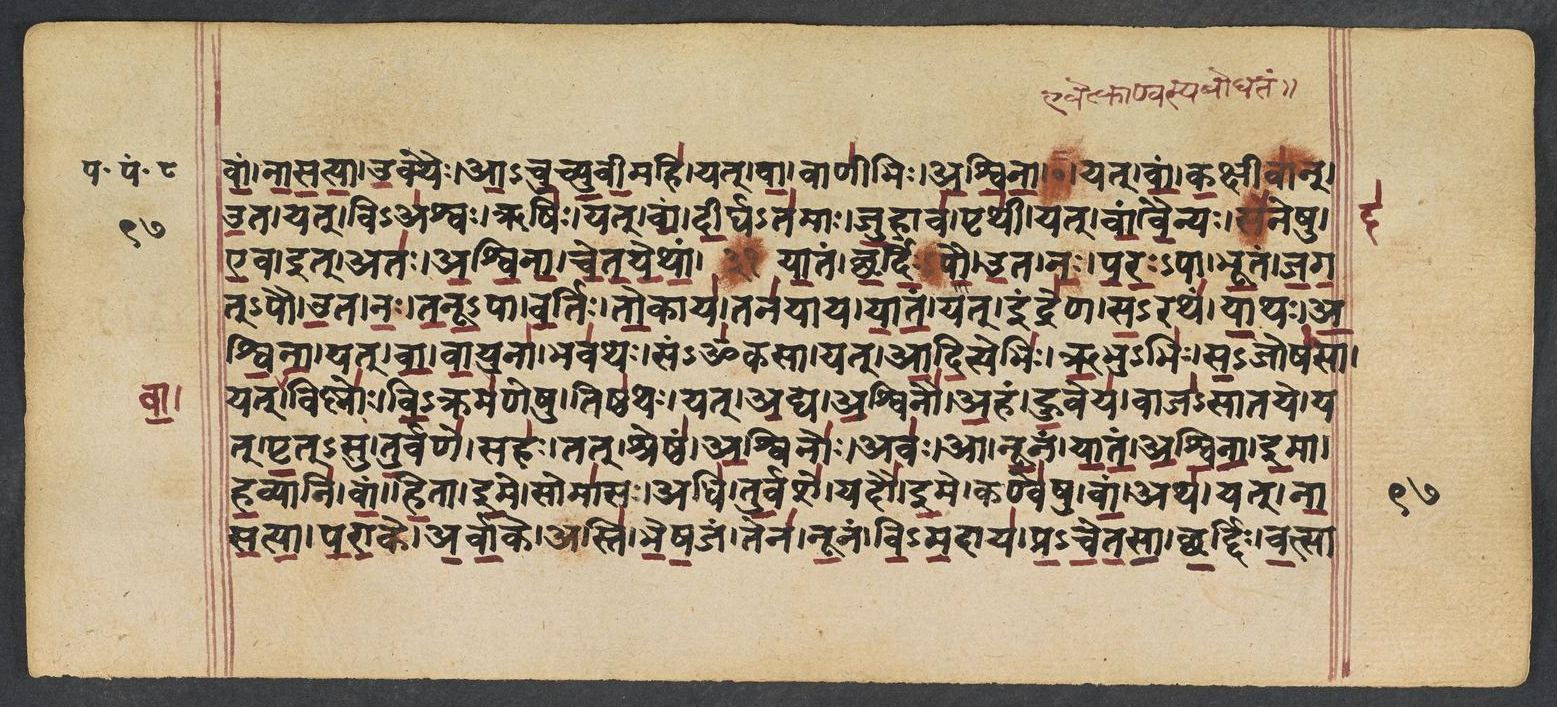
Where on the image
Penn Ms. Coll. 390 Item 41, fol. 576v (numbered 97v by the scribe) (OPenn image 577, upper leaf). Checked on the image: the Rigveda text on this page begins in RV 8.9.9 ‹vām nāsatyā ukthaiḥ ācucyuvīmahi›. The next page with Rigveda text, fol. 577r (numbered 98r by the scribe), begins in RV 8.9.15 ‹-vatsāya yacchatam›. Verses 8.9.9-14 end on this page; 8.9.9 begins on fol. 576r (numbered 97r by the scribe).
9yad a̱dya vā̍ṁ nāsatyo̱kthair ā̍cucyuvī̱mahi̍ | yad vā̱ vāṇī̍bhir aśvine̱vet kā̱ṇvasya̍ bodhatam ||
10yad vā̍ṁ ka̱kṣīvā̍m̐ u̱ta yad vya̍śva̱ ṛṣi̱r yad vā̍ṁ dī̱rghata̍mā ju̱hāva̍ | pṛthī̱ yad vā̍ṁ vai̱nyaḥ sāda̍neṣv e̱ved ato̍ aśvinā cetayethām ||
11yā̱taṁ cha̍rdi̱ṣpā u̱ta na̍ḥ para̱spā bhū̱taṁ ja̍ga̱tpā u̱ta na̍s tanū̱pā | va̱rtis to̱kāya̱ tana̍yāya yātam ||
12yad indre̍ṇa sa̱ratha̍ṁ yā̱tho a̍śvinā̱ yad vā̍ vā̱yunā̱ bhava̍tha̱ḥ samo̍kasā | yad ā̍di̱tyebhi̍r ṛ̱bhubhi̍ḥ sa̱joṣa̍sā̱ yad vā̱ viṣṇo̍r vi̱krama̍ṇeṣu̱ tiṣṭha̍thaḥ ||
13yad a̱dyāśvinā̍v a̱haṁ hu̱veya̱ vāja̍sātaye | yat pṛ̱tsu tu̱rvaṇe̱ saha̱s tac chreṣṭha̍m a̱śvino̱r ava̍ḥ ||
14ā nū̱naṁ yā̍tam aśvine̱mā ha̱vyāni̍ vāṁ hi̱tā | i̱me somā̍so̱ adhi̍ tu̱rvaśe̱ yadā̍v i̱me kaṇve̍ṣu vā̱m atha̍ ||
Compare: Padapāṭha (word-by-word text written in the manuscript; Sansknet e-text via GRETIL)
9yat | adya | vām | nāsatyā | ukthaiḥ | ācucyuvīmahi | yat | vā | vāṇībhiḥ | aśvinā | eva | it | kāṇvasya | bodhatam
10yat | vām | kakṣīvān | uta | yat | vi-aśvaḥ | ṛṣiḥ | yat | vām | dīrgha-tamāḥ | juhāva | pṛthī | yat | vām | vainyaḥ | sadaneṣu | eva | it | ataḥ | aśvinā | cetayethām
11yātam | chardiḥ-pau | uta | naḥ | paraḥ-pāḥ | bhūtam | jagat-pau | uta | naḥ | tanū-pā | vartiḥ | tokāya | tanayāya | yātam
12yat | indreṇa | saratham | yāthaḥ | aśvinā | yat | vā | vāyunā | bhavathaḥ | sam-okasā | yat | ādityebhiḥ | ṛbhu-bhiḥ | sa-joṣasā | yat | vā | viṣṇoḥ | vi-kramaṇeṣu | tiṣṭhathaḥ
13yat | adya | aśvinau | aham | huveya | vāja-sātaye | yat | pṛt-su | turvaṇe | sahaḥ | tat | śreṣṭham | aśvinoḥ | avaḥ
14ā | nūnam | yātam | aśvinā | imā | havyāni | vām | hitā | ime | somāsaḥ | adhi | turvaśe | yadau | ime | kaṇveṣu | vām | atha
9When, O Nâsatyas, we this day make you speed hither with our hymns, Or, Aṣvins, with our songs of praise, remember Kanya specially.
10As erst Kakshîvân and the R̥ishi Vyaṣva, as erst Dîrghatamas invoked your presence, Or, in the sacrificial chambers, Vainya Pr̥ithî, so be ye mindful of us here, O Aṣvins.
11Come as home-guardians, saving us from foemen, guarding our living creatures and our bodies, Come to the house to give us seed and offspring,
12Whether with Indra ye be faring, Aṣvins, or resting in one dwelling-place with Vâyu, In concord with the R̥ibhus or Âdityas, or standing still in Vishṇu's striding-places.
13When I, O Aṣvins, call on you to-day that I may gather strength, Or as all-conquering might in war, be that the Aṣvins' noblest grace.
14Now come, ye Aṣvins, hitherward: here are oblations set for you; These Soma-draughts to aid Yadu and Turvaṣa, these offered you mid Kaṇva's Sons.
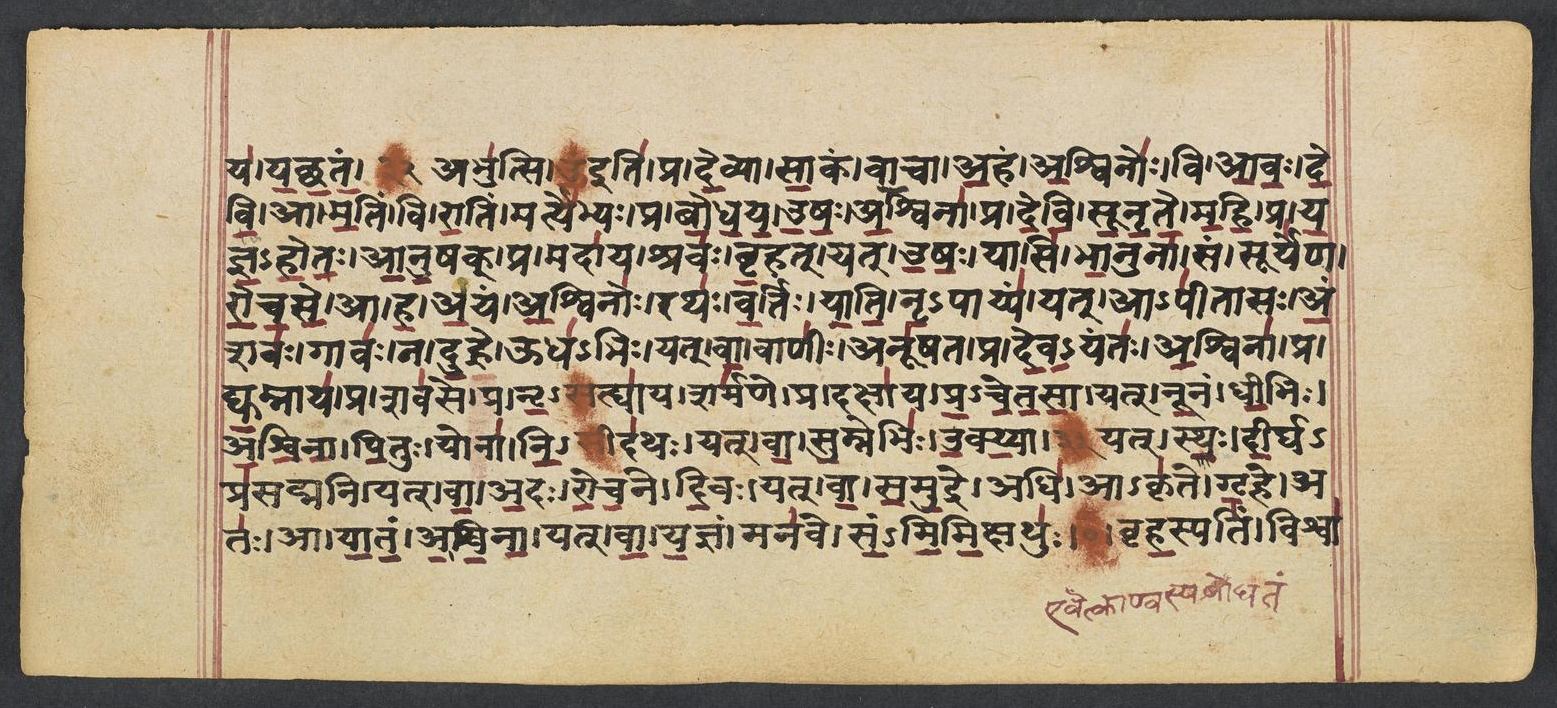
Where on the image
Penn Ms. Coll. 390 Item 41, fol. 577r (numbered 98r by the scribe) (OPenn image 577, lower leaf). Checked on the image: the Rigveda text on this page begins in RV 8.9.15 ‹-vatsāya yacchatam›. The next page with Rigveda text, fol. 577v (numbered 98v by the scribe), begins in RV 8.10.2 ‹-viśvān devān aham huve›. Verses 8.9.15-21 end on this page; 8.9.15 begins on fol. 576v (numbered 97v by the scribe).
15yan nā̍satyā parā̱ke a̍rvā̱ke asti̍ bheṣa̱jam | tena̍ nū̱naṁ vi̍ma̱dāya̍ pracetasā cha̱rdir va̱tsāya̍ yacchatam ||
16abhu̍tsy u̱ pra de̱vyā sā̱kaṁ vā̱cāham a̱śvino̍ḥ | vy ā̍var de̱vy ā ma̱tiṁ vi rā̱tim martye̍bhyaḥ ||
17pra bo̍dhayoṣo a̱śvinā̱ pra de̍vi sūnṛte mahi | pra ya̍jñahotar ānu̱ṣak pra madā̍ya̱ śravo̍ bṛ̱hat ||
18yad u̍ṣo̱ yāsi̍ bhā̱nunā̱ saṁ sūrye̍ṇa rocase | ā hā̱yam a̱śvino̱ ratho̍ va̱rtir yā̍ti nṛ̱pāyya̍m ||
19yad āpī̍tāso a̱ṁśavo̱ gāvo̱ na du̱hra ūdha̍bhiḥ | yad vā̱ vāṇī̱r anū̍ṣata̱ pra de̍va̱yanto̍ a̱śvinā̍ ||
20pra dyu̱mnāya̱ pra śava̍se̱ pra nṛ̱ṣāhyā̍ya̱ śarma̍ṇe | pra dakṣā̍ya pracetasā ||
21yan nū̱naṁ dhī̱bhir a̍śvinā pi̱tur yonā̍ ni̱ṣīda̍thaḥ | yad vā̍ su̱mnebhi̍r ukthyā ||
Compare: Padapāṭha (word-by-word text written in the manuscript; Sansknet e-text via GRETIL)
15yat | nāsatyā | parāke | ārvāke | asti | bheṣajam | tena | nūnam | vi-madāya | pra-cetasā | chardiḥ | vatsāya | yacchatam
16abhutsi | oṃ iti | pra | devyā | sākam | vācā | aham | aśvinoḥ | vi | āvaḥ | devi | ā | matim | vi | rātim | martyebhyaḥ
17pra | bodhaya | uṣaḥ | aśvinā | pra | devi | sūnṛte | mahi | pra | yajña-hotaḥ | ānuṣak | pra | madāya | śravaḥ | bṛhat
18yat | uṣaḥ | yāsi | bhānunā | sam | sūryeṇa | rocase | ā | ha | ayam | aśvinoḥ | rathaḥ | vartiḥ | yāti | nṛ-pāyyam
19yat | āpītāsaḥ | aṃśavaḥ | gāvaḥ | na | duhre | ūdha-bhiḥ | yat | vā | vāṇīḥ | anūṣata | pra | deva-yantaḥ | aśvinā
20pra | dyumnāya | pra | śavase | pra | nṛ-sahyāya | śarmaṇe | pra | dakṣāya | pra-cetasā
21yat | nūnam | dhībhiḥ | aśvinā | pituḥ | yonā | ni-sīdathaḥ | yat | vā | sumnebhiḥ | ukthyā
15Whatever healing balm is yours, Nisatyas, near or far away, Therewith, great Sages, grant a home to Vatsa and to Vimada.
16Together with the Goddess, with the Aṣvins' Speech have I awoke. Thou, Goddess, hast disclosed the hymn, and holy gift from mortal men.
17Awake the Aṣvins, Goddess Dawn! Up Mighty Lady of sweet strains! Rise, straightway, priest of sacrifice! High glory to the gladdening draught!
18Thou, Dawn, approaching with thy light shinest together with the Sun, And to this man-protecting home the chariot ofthe Aṣvins comes.
19When yellow stalks give forth the juice, as cows from udders pour their milk, And voices sound the song of praise, the Aṣvins' worshippers show first.
20Forward for glory and for strength, protection that shall conquer men, And power and skill, most sapient Ones!
21When Aṣvins, worthy of our lauds, ye seat you in the father's house. With wisdom or the bliss ye bring.
Notes
- Sanskrit: Aufrecht's edition (1877) with the Vedic accents, as entered by van Nooten and Holland (GRETIL).
- English: Ralph T. H. Griffith, The Hymns of the Rigveda (1889-1892; 2nd ed. 1896-1897), from the VedaWeb digital text; OCR slips in that text were corrected against the printed 2nd edition (data/sources/rigveda/griffith_errata.json).
- Padapāṭha (edition text): Sansknet e-text via GRETIL (CC BY-NC-SA 4.0).
Cite
Sources
- Source: Penn Ms. Coll. 390 Item 41 (undated (catalogued with Penn's 18th-19th c. Vedic manuscripts)), OPenn, Public Domain Mark + Aufrecht's accented text (GRETIL) + Griffith's English (VedaWeb) (holding institution)
- Critical edition: Aufrecht (1877), accented e-text via GRETIL
← previous · → next · v cycle view · l back to library