Rigveda 8.100: To Indra and Vak
Introduction
Rigveda 8.100 is a hymn of 12 verses addressed to Indra and Vak. It stands in book (maṇḍala) 8, the book of the Kaṇva and Aṅgiras poets. The Rigveda is the oldest collection of Sanskrit hymns, composed in the second half of the second millennium BCE and handed down orally for many centuries before it was written down.
The manuscript shown is Penn Ms. Coll. 390 Item 41 (University of Pennsylvania), an undated paper manuscript of the padapāṭha (the word-by-word recitation text, in which every word is written separately and compounds are split) of the whole Ṛgveda in Devanāgarī, 884 leaves in fascicles, 7-9 lines to the page, accents in red; this hymn stands on fol. 662v-663v. Each section below gives the verses that end on one page; the page boundaries were read on the images (the opening words of every page), not counted out. Where the manuscript is a padapāṭha (the word-by-word recitation text), the section shows Aufrecht's continuous (saṃhitā) text first and, as the edition text, the padapāṭha of the same verses, which is the form written on the page.
How was this verified? (Provenance)
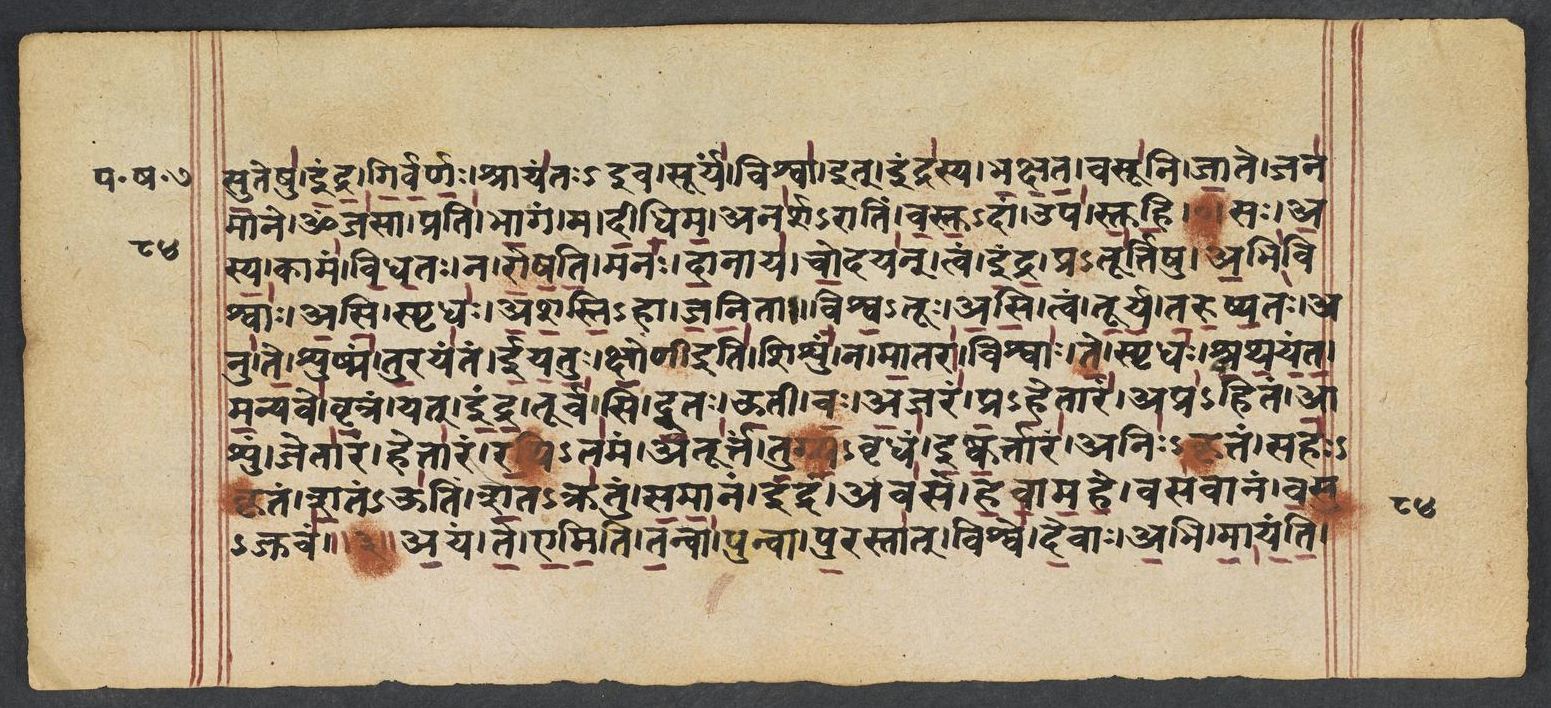
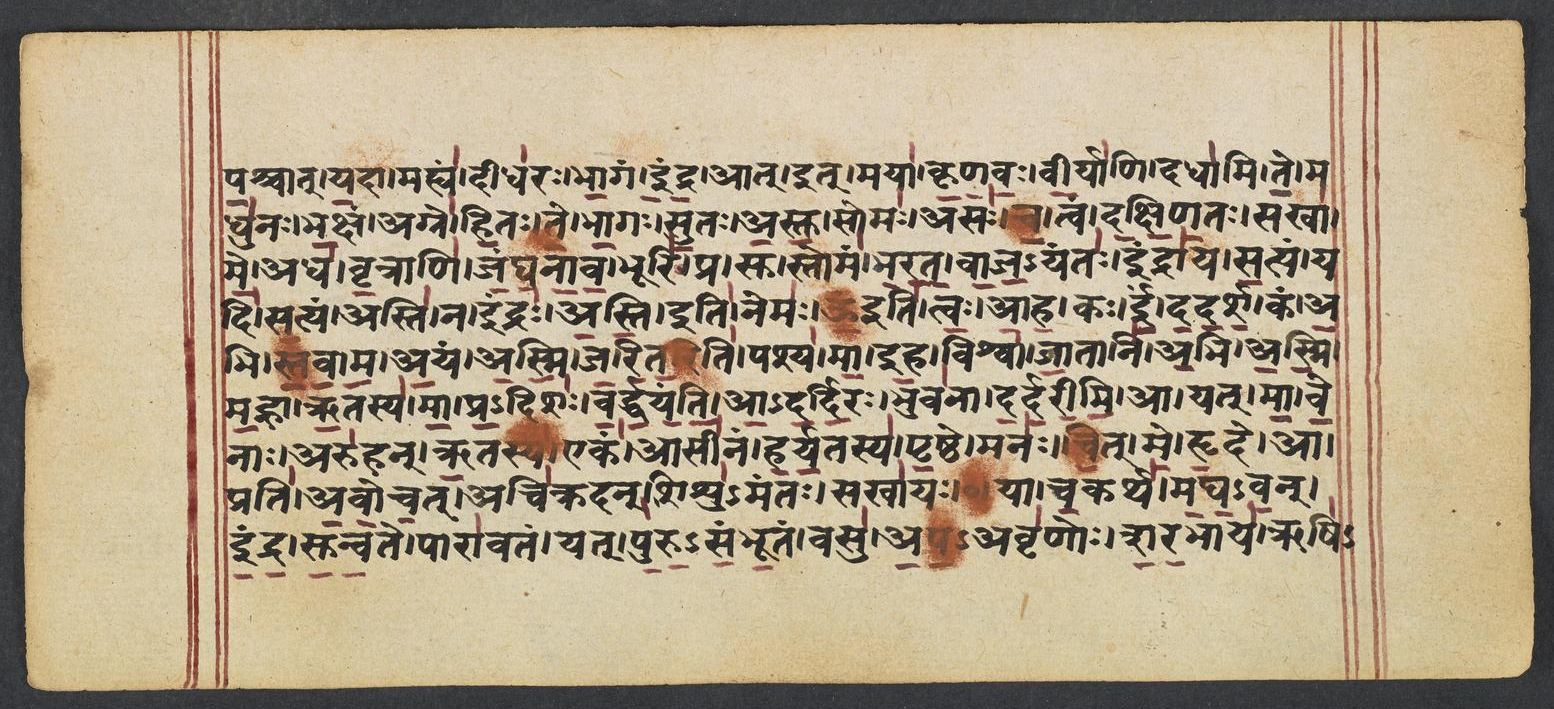
Where on the image
Penn Ms. Coll. 390 Item 41, fol. 663r (numbered 85r by the scribe) (OPenn image 663, lower leaf). Checked on the image: the Rigveda text on this page begins in RV 8.100.1 ‹paścāt yadā mahyam dīdharaḥ›. The next page with Rigveda text, fol. 663v (numbered 85v by the scribe), begins in RV 8.100.6 ‹-ṛṣi-bandhave›. Verses 8.100.1-5 end on this page; 8.100.1 begins on fol. 662v (numbered 84v by the scribe).
1a̱yaṁ ta̍ emi ta̱nvā̍ pu̱rastā̱d viśve̍ de̱vā a̱bhi mā̍ yanti pa̱ścāt | ya̱dā mahya̱ṁ dīdha̍ro bhā̱gam i̱ndrād in mayā̍ kṛṇavo vī̱ryā̍ṇi ||
2dadhā̍mi te̱ madhu̍no bha̱kṣam agre̍ hi̱tas te̍ bhā̱gaḥ su̱to a̍stu̱ soma̍ḥ | asa̍ś ca̱ tvaṁ da̍kṣiṇa̱taḥ sakhā̱ me 'dhā̍ vṛ̱trāṇi̍ jaṅghanāva̱ bhūri̍ ||
3pra su stoma̍m bharata vāja̱yanta̱ indrā̍ya sa̱tyaṁ yadi̍ sa̱tyam asti̍ | nendro̍ a̱stīti̱ nema̍ u tva āha̱ ka ī̍ṁ dadarśa̱ kam a̱bhi ṣṭa̍vāma ||
4a̱yam a̍smi jarita̱ḥ paśya̍ me̱ha viśvā̍ jā̱tāny a̱bhy a̍smi ma̱hnā | ṛ̱tasya̍ mā pra̱diśo̍ vardhayanty ādardi̱ro bhuva̍nā dardarīmi ||
5ā yan mā̍ ve̱nā aru̍hann ṛ̱tasya̱m̐ eka̱m āsī̍naṁ harya̱tasya̍ pṛ̱ṣṭhe | mana̍ś cin me hṛ̱da ā praty a̍voca̱d aci̍krada̱ñ chiśu̍manta̱ḥ sakhā̍yaḥ ||
Compare: Padapāṭha (word-by-word text written in the manuscript; Sansknet e-text via GRETIL)
1ayam | te | emi | tanvā | purastāt | viśve | devāḥ | abhi | mā | yanti | paścāt | yadā | mahyam | dīdharaḥ | bhāgam | indra | āt | it | mayā | kṛṇavaḥ | vīryāṇi
2dadhāmi | te | madhunaḥ | bhakṣam | agre | hitaḥ | te | bhāgaḥ | sutaḥ | astu | somaḥ | asaḥ | ca | tvam | dakṣiṇataḥ | sakhā | me | adha | vṛtrāṇi | jaṅghanāva | bhūri
3pra | su | stomam | bharata | vāja-yantaḥ | indrāya | satyam | yadi | satyam | asti | na | indraḥ | asti | iti | nemaḥ | oṃ iti | tvaḥ | āha | kaḥ | īm | dadarśa | kam | abhi | stavāma
4ayam | asti | jaritariti | paśya | mā | iha | viśvā | jātāni | abhi | asmi | mahnā | ṛtasya | mā | pra-diśaḥ | vardhayanti | ādardiraḥ | bhuvanā | dardarīmi
5ā | yat | mā | venāḥ | aruhan | ṛtasya | ekam | āsīnam | haryatasya | pṛṣṭhe | manaḥ | cit | me | hṛde | ā | prati | avocat | acikradan | śiśu-mantaḥ | sakhāyaḥ
1I MOVE before thee here present in person, and all the Deities follow behind me.
2The food of meath in foremost place I give thee, thy Soma shall be pressed, thy share appointed.
3Striving for strength bring forth a laud to Indra, a truthful hymn if he in truth existeth.
4Here am I, look upon me here, O singer. All that existeth I surpass in greatness.
5When the Law's lovers mounted and approached me as I sate lone upon the dear sky's summit.
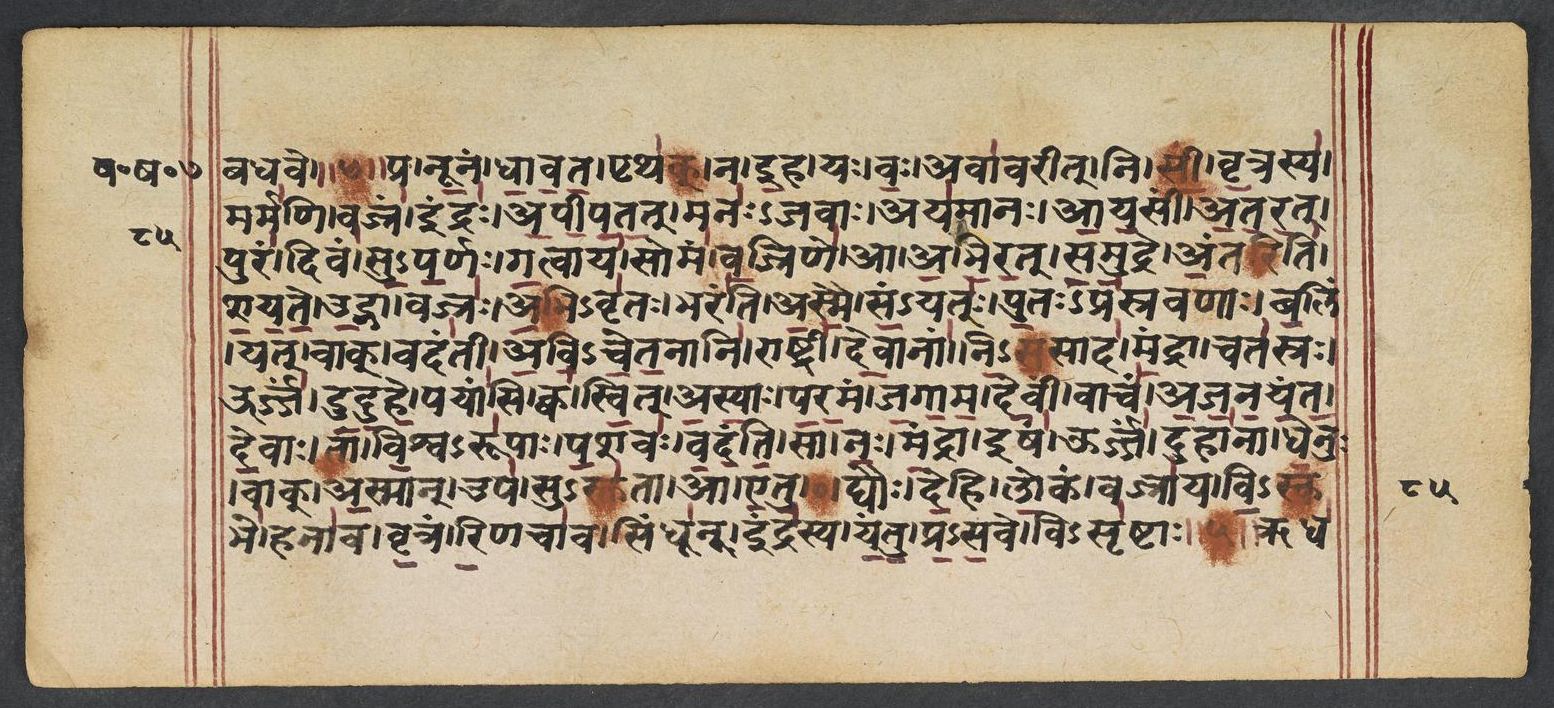
Where on the image
Penn Ms. Coll. 390 Item 41, fol. 663v (numbered 85v by the scribe) (OPenn image 664, upper leaf). Checked on the image: the Rigveda text on this page begins in RV 8.100.6 ‹-ṛṣi-bandhave›. The next page with Rigveda text, fol. 664r (numbered 86r by the scribe), begins in RV 8.101.1 ‹-ṛdhak itthā saḥ martyaḥ›. Verses 8.100.6-12 end on this page; 8.100.6 begins on fol. 663r (numbered 85r by the scribe).
6viśvet tā te̱ sava̍neṣu pra̱vācyā̱ yā ca̱kartha̍ maghavann indra sunva̱te | pārā̍vata̱ṁ yat pu̍rusambhṛ̱taṁ vasv a̱pāvṛ̍ṇoḥ śara̱bhāya̱ ṛṣi̍bandhave ||
7pra nū̱naṁ dhā̍vatā̱ pṛtha̱ṅ neha yo vo̱ avā̍varīt | ni ṣī̍ṁ vṛ̱trasya̱ marma̍ṇi̱ vajra̱m indro̍ apīpatat ||
8mano̍javā̱ aya̍māna āya̱sīm a̍tara̱t pura̍m | diva̍ṁ supa̱rṇo ga̱tvāya̱ soma̍ṁ va̱jriṇa̱ ābha̍rat ||
9sa̱mu̱dre a̱ntaḥ śa̍yata u̱dnā vajro̍ a̱bhīvṛ̍taḥ | bhara̍nty asmai sa̱ṁyata̍ḥ pu̱raḥpra̍sravaṇā ba̱lim ||
10yad vāg vada̍nty aviceta̱nāni̱ rāṣṭrī̍ de̱vānā̍ṁ niṣa̱sāda̍ ma̱ndrā | cata̍sra̱ ūrja̍ṁ duduhe̱ payā̍ṁsi̱ kva̍ svid asyāḥ para̱maṁ ja̍gāma ||
11de̱vīṁ vāca̍m ajanayanta de̱vās tāṁ vi̱śvarū̍pāḥ pa̱śavo̍ vadanti | sā no̍ ma̱ndreṣa̱m ūrja̱ṁ duhā̍nā dhe̱nur vāg a̱smān upa̱ suṣṭu̱taitu̍ ||
12sakhe̍ viṣṇo vita̱raṁ vi kra̍masva̱ dyaur de̱hi lo̱kaṁ vajrā̍ya vi̱ṣkabhe̍ | hanā̍va vṛ̱traṁ ri̱ṇacā̍va̱ sindhū̱n indra̍sya yantu prasa̱ve visṛ̍ṣṭāḥ ||
Compare: Padapāṭha (word-by-word text written in the manuscript; Sansknet e-text via GRETIL)
6viśvā | it | tā | te | savaneṣu | pra-vācyā | yā | cakartha | magha-van | indra | sunvate | pārāvatam | yat | puru-sambhṛtam | vasu | apa-avṛṇoḥ | śarabhāyaḥ | ṛṣi-bandhave
7pra | nūnam | dhāvata | pṛthak | na | iha | yaḥ | vaḥ | avāvarīt | ni | sīm | vṛtrasya | marmaṇi | vajram | indraḥ | apīpatat
8manaḥ-javāḥ | ayamānaḥ | āyasīm | atarat | puram | divam | su-parṇaḥ | gatvāya | somam | vajriṇaḥ | ā | abharat
9samudre | antariti | śayate | udnā | vajraḥ | abhi-vṛtaḥ | bharanti | asmai | sam-yataḥ | puraḥ-prasravaṇāḥ | balim
10yat | vāk | vadantī | avi-cetanāni | rāṣṭrī | devānām | ni-sasāda | mandrā | catasraḥ | ūrjam | duduhe | payāṃsi | kva | svit | asyāḥ | paramam | jagāma
11devīm | vācam | ajanayanta | devāḥ | tām | viśva-rūpāḥ | paśavaḥ | vadanti | sā | naḥ | mandrā | iṣam | ūrjam | duhānā | dhenuḥ | vāk | asmān | upa | su-stutā | etu
12sakhe | viṣṇo iti | vi-taram | vi | kramasva | dyauḥ | dehi | lokam | vajrāya | vi-skabhe | hanāva | vṛtram | riṇacāva | sindhūn | indrasya | yantu | pra-save | vi-sṛṣṭāḥ
6All these thy deeds must be declared at Soma-feasts, wrought, Indra, Bounteous Lord, for him who sheds the juice,
7Now run ye forth your several ways: he is not here who kept you back.
8On-rushing with the speed of thought within the iron fort he pressed :
9Deep in the ocean lies the bolt with waters compassed round about,
10When, uttering words which no one comprehended, Vâk, Queen of Gods, the Gladdener, was seated,
11The Deities generated Vâk the Goddess, and animals of every figure speak her.
12Step forth with wider stride, my comrade Vishṇu; make room, Dyaus, for the leaping of the lightning.
Notes
- Sanskrit: Aufrecht's edition (1877) with the Vedic accents, as entered by van Nooten and Holland (GRETIL).
- English: Ralph T. H. Griffith, The Hymns of the Rigveda (1889-1892; 2nd ed. 1896-1897), from the VedaWeb digital text; OCR slips in that text were corrected against the printed 2nd edition (data/sources/rigveda/griffith_errata.json).
- Padapāṭha (edition text): Sansknet e-text via GRETIL (CC BY-NC-SA 4.0).
Cite
Sources
- Source: Penn Ms. Coll. 390 Item 41 (undated (catalogued with Penn's 18th-19th c. Vedic manuscripts)), OPenn, Public Domain Mark + Aufrecht's accented text (GRETIL) + Griffith's English (VedaWeb) (holding institution)
- Critical edition: Aufrecht (1877), accented e-text via GRETIL
← previous · → next · v cycle view · l back to library