Rigveda 8.99: To Indra
Introduction
Rigveda 8.99 is a hymn of 8 verses addressed to Indra. It stands in book (maṇḍala) 8, the book of the Kaṇva and Aṅgiras poets. The Rigveda is the oldest collection of Sanskrit hymns, composed in the second half of the second millennium BCE and handed down orally for many centuries before it was written down.
The manuscript shown is Penn Ms. Coll. 390 Item 41 (University of Pennsylvania), an undated paper manuscript of the padapāṭha (the word-by-word recitation text, in which every word is written separately and compounds are split) of the whole Ṛgveda in Devanāgarī, 884 leaves in fascicles, 7-9 lines to the page, accents in red; this hymn stands on fol. 662r-662v. Each section below gives the verses that end on one page; the page boundaries were read on the images (the opening words of every page), not counted out. Where the manuscript is a padapāṭha (the word-by-word recitation text), the section shows Aufrecht's continuous (saṃhitā) text first and, as the edition text, the padapāṭha of the same verses, which is the form written on the page.
How was this verified? (Provenance)
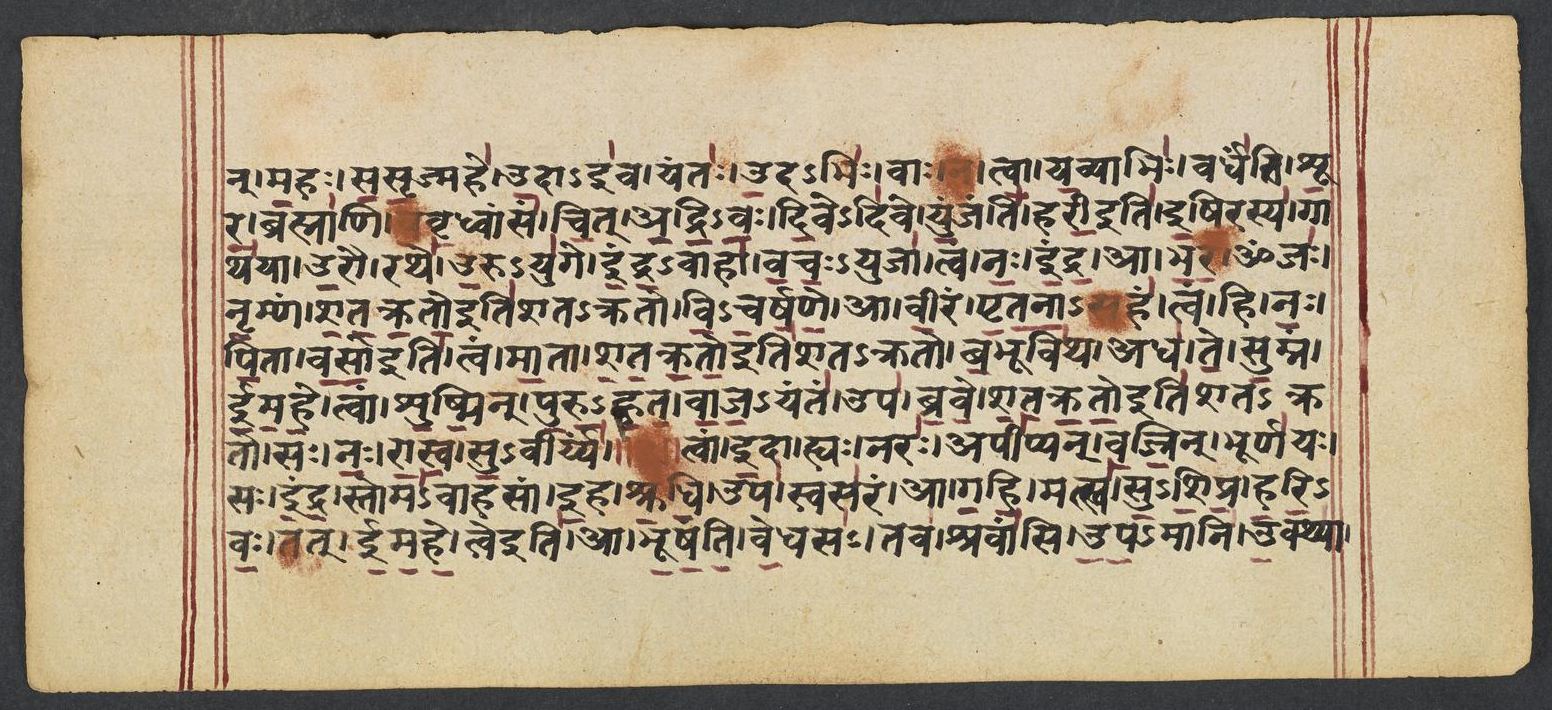
Where on the image
Penn Ms. Coll. 390 Item 41, fol. 662r (numbered 84r by the scribe) (OPenn image 662, lower leaf). Checked on the image: the Rigveda text on this page begins in RV 8.98.7 ‹mahaḥ sasṛjmahe ut eva›. The next page with Rigveda text, fol. 662v (numbered 84v by the scribe), begins in RV 8.99.2 ‹suteṣu indra girvaṇaḥ›. Verse 8.99.1 ends on this page.
1tvām i̱dā hyo naro 'pī̍pyan vajri̱n bhūrṇa̍yaḥ | sa i̍ndra̱ stoma̍vāhasām i̱ha śru̱dhy upa̱ svasa̍ra̱m ā ga̍hi ||
Compare: Padapāṭha (word-by-word text written in the manuscript; Sansknet e-text via GRETIL)
1tvām | idā | hyaḥ | naraḥ | apīpyan | vajrin | bhūrṇayaḥ | saḥ | indra | stoma-vāhasām | iha | śrudhi | upa | svasaram | ā | gahi
1O THUNDERER, zealous worshippers gave thee drink this time yesterday. So, Indra, listen here to those who bring the laud: come near unto our dwellingplace.
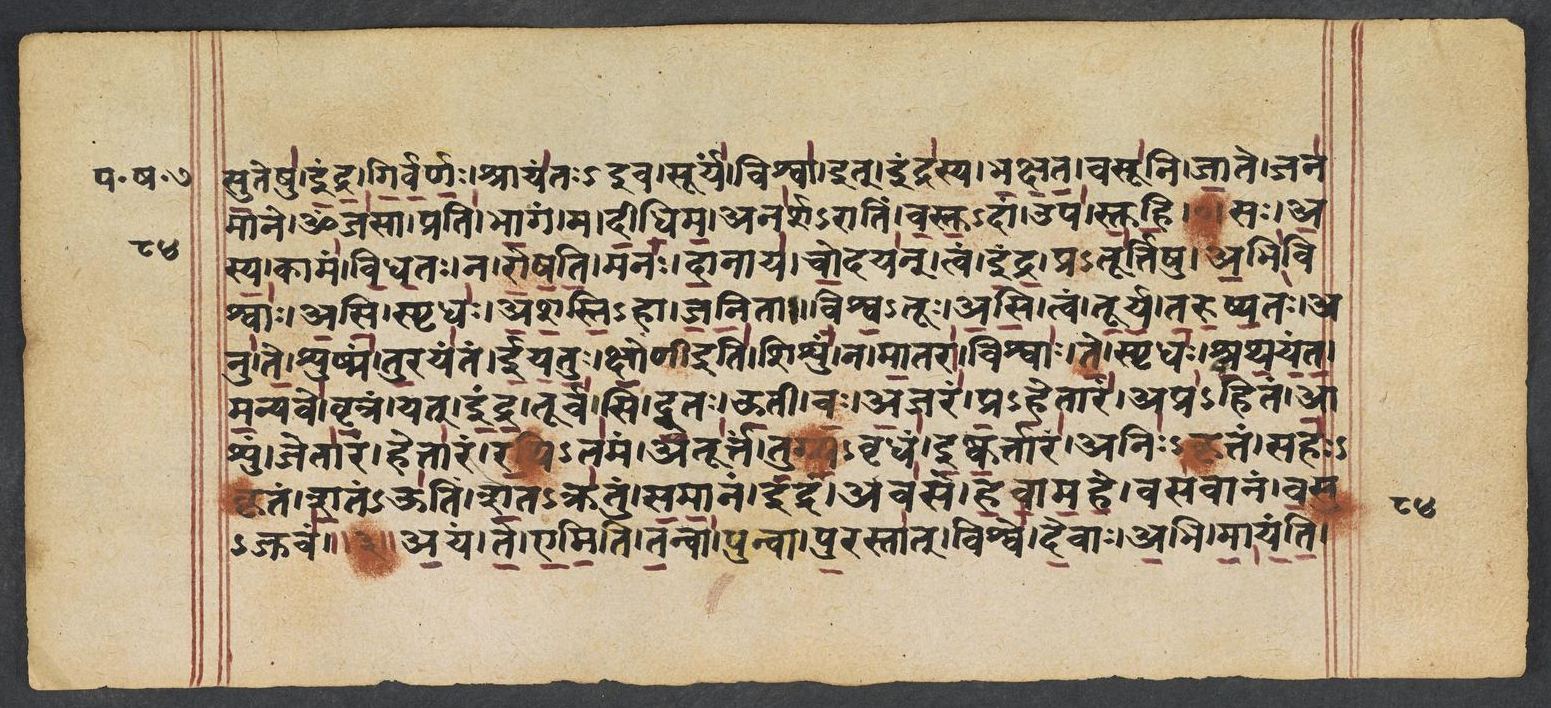
Where on the image
Penn Ms. Coll. 390 Item 41, fol. 662v (numbered 84v by the scribe) (OPenn image 663, upper leaf). Checked on the image: the Rigveda text on this page begins in RV 8.99.2 ‹suteṣu indra girvaṇaḥ›. The next page with Rigveda text, fol. 663r (numbered 85r by the scribe), begins in RV 8.100.1 ‹paścāt yadā mahyam dīdharaḥ›. Verses 8.99.2-8 end on this page; 8.99.2 begins on fol. 662r (numbered 84r by the scribe).
2matsvā̍ suśipra hariva̱s tad ī̍mahe̱ tve ā bhū̍ṣanti ve̱dhasa̍ḥ | tava̱ śravā̍ṁsy upa̱māny u̱kthyā̍ su̱teṣv i̍ndra girvaṇaḥ ||
3śrāya̍nta iva̱ sūrya̱ṁ viśved indra̍sya bhakṣata | vasū̍ni jā̱te jana̍māna̱ oja̍sā̱ prati̍ bhā̱gaṁ na dī̍dhima ||
4ana̍rśarātiṁ vasu̱dām upa̍ stuhi bha̱drā indra̍sya rā̱taya̍ḥ | so a̍sya̱ kāma̍ṁ vidha̱to na ro̍ṣati̱ mano̍ dā̱nāya̍ co̱daya̍n ||
5tvam i̍ndra̱ pratū̍rtiṣv a̱bhi viśvā̍ asi̱ spṛdha̍ḥ | a̱śa̱sti̱hā ja̍ni̱tā vi̍śva̱tūr a̍si̱ tvaṁ tū̍rya taruṣya̱taḥ ||
6anu̍ te̱ śuṣma̍ṁ tu̱raya̍ntam īyatuḥ kṣo̱ṇī śiśu̱ṁ na mā̱tarā̍ | viśvā̍s te̱ spṛdha̍ḥ śnathayanta ma̱nyave̍ vṛ̱traṁ yad i̍ndra̱ tūrva̍si ||
7i̱ta ū̱tī vo̍ a̱jara̍m prahe̱tāra̱m apra̍hitam | ā̱śuṁ jetā̍ra̱ṁ hetā̍raṁ ra̱thīta̍ma̱m atū̍rtaṁ tugryā̱vṛdha̍m ||
8i̱ṣka̱rtāra̱m ani̍ṣkṛta̱ṁ saha̍skṛtaṁ śa̱tamū̍tiṁ śa̱takra̍tum | sa̱mā̱nam indra̱m ava̍se havāmahe̱ vasa̍vānaṁ vasū̱juva̍m ||
Compare: Padapāṭha (word-by-word text written in the manuscript; Sansknet e-text via GRETIL)
2matsva | su-śipra | hari-vaḥ | tat | īmahe | tve iti | ā | bhūṣanti | vedhasaḥ | tava | śravāṃsi | upa-māni | ukthyā | suteṣu | indra | girvaṇaḥ
3śrāyantaḥ-iva | sūryam | viśvā | it | indrasya | bhakṣata | vasūni | jāte | janamāne | ojasā | prati | bhāgam | na | dīdhima
4anarśa-rātim | vasu-dām | upa | stuhi | bhadrāḥ | indrasya | rātayaḥ | saḥ | asya | kāmam | vidhataḥ | na | roṣati | manaḥ | dānāya | codayan
5tvam | indra | pra-tūrtiṣu | abhi | viśvāḥ | asi | spṛdhaḥ | aśasti-hā | janitā | vi śva-tūḥ | asi | tvam | tūrya | taruṣyataḥ
6anu | te | śuṣmam | turayantam | īyatuḥ | kṣoṇī iti | śiśum | na | mātarā | viśvāḥ | te | spṛdhaḥ | śnathayanta | manyave | vṛtram | yat | indra | tūrvasi
7itaḥ | ūtī | vaḥ | ajaram | pra-hetāram | apra-hitam | āśum | jetāram | hetāram | rathi-tamam | atūrtam | tugrya-vṛdham
8iṣkartāram | aniḥ-kṛtam | sahaḥ-kṛtam | śatam-ūtim | śata-kratum | samānam | indram | avase | havāmahe | vasavānam | vasu-juvam
2Lord of Bay Steeds, fair-helmed, rejoice thee: this we crave. Here the disposers wait on thee. Thy loftiest glories claim our lauds beside the juice, O Indra, Lover of the Song.
3Turning, as 'twere, to meet the Sun, enjoy from Indra all good things. When he who will be born is born with power we look to treasures as our heritage.
4Praise him who sends us wealth, whose bounties injure none: good are the gifts which Indra grants. He is not wroth with one who satisfies his wish: he turns his mind to giving boons.
5Thou in thy battles, Indra, art subduer of all hostile bands. Father art thou, all-conquering, cancelling the curse, thou victor of the vanquisher.
6The Earth and Heaven clung close to thy victorious might as to their calf two mother-cows. When thou attackest Vritra all the hostile bands shrink and faint, Indra, at thy wrath.
7Bring to your aid the Eternal One, who shoots and none may shoot at him, Inciter, swift, victorious, best of Charioteers, Tugrya’s unvanquished Strengthener;
8Arranger of things unarranged, e’en Ṣatakratu, source of might, Indra, the Friend of all, for succour we invoke, Guardian of treasure, sending wealth.
Notes
- Sanskrit: Aufrecht's edition (1877) with the Vedic accents, as entered by van Nooten and Holland (GRETIL).
- English: Ralph T. H. Griffith, The Hymns of the Rigveda (1889-1892; 2nd ed. 1896-1897), from the VedaWeb digital text; OCR slips in that text were corrected against the printed 2nd edition (data/sources/rigveda/griffith_errata.json).
- Padapāṭha (edition text): Sansknet e-text via GRETIL (CC BY-NC-SA 4.0).
Cite
Sources
- Source: Penn Ms. Coll. 390 Item 41 (undated (catalogued with Penn's 18th-19th c. Vedic manuscripts)), OPenn, Public Domain Mark + Aufrecht's accented text (GRETIL) + Griffith's English (VedaWeb) (holding institution)
- Critical edition: Aufrecht (1877), accented e-text via GRETIL
← previous · → next · v cycle view · l back to library