Rigveda 8.101: Diverse gods
Introduction
Rigveda 8.101 is a hymn of 16 verses addressed to diverse gods. It stands in book (maṇḍala) 8, the book of the Kaṇva and Aṅgiras poets. The Rigveda is the oldest collection of Sanskrit hymns, composed in the second half of the second millennium BCE and handed down orally for many centuries before it was written down.
The manuscript shown is Penn Ms. Coll. 390 Item 41 (University of Pennsylvania), an undated paper manuscript of the padapāṭha (the word-by-word recitation text, in which every word is written separately and compounds are split) of the whole Ṛgveda in Devanāgarī, 884 leaves in fascicles, 7-9 lines to the page, accents in red; this hymn stands on fol. 663v-665r. Each section below gives the verses that end on one page; the page boundaries were read on the images (the opening words of every page), not counted out. Where the manuscript is a padapāṭha (the word-by-word recitation text), the section shows Aufrecht's continuous (saṃhitā) text first and, as the edition text, the padapāṭha of the same verses, which is the form written on the page.
How was this verified? (Provenance)
Where on the image
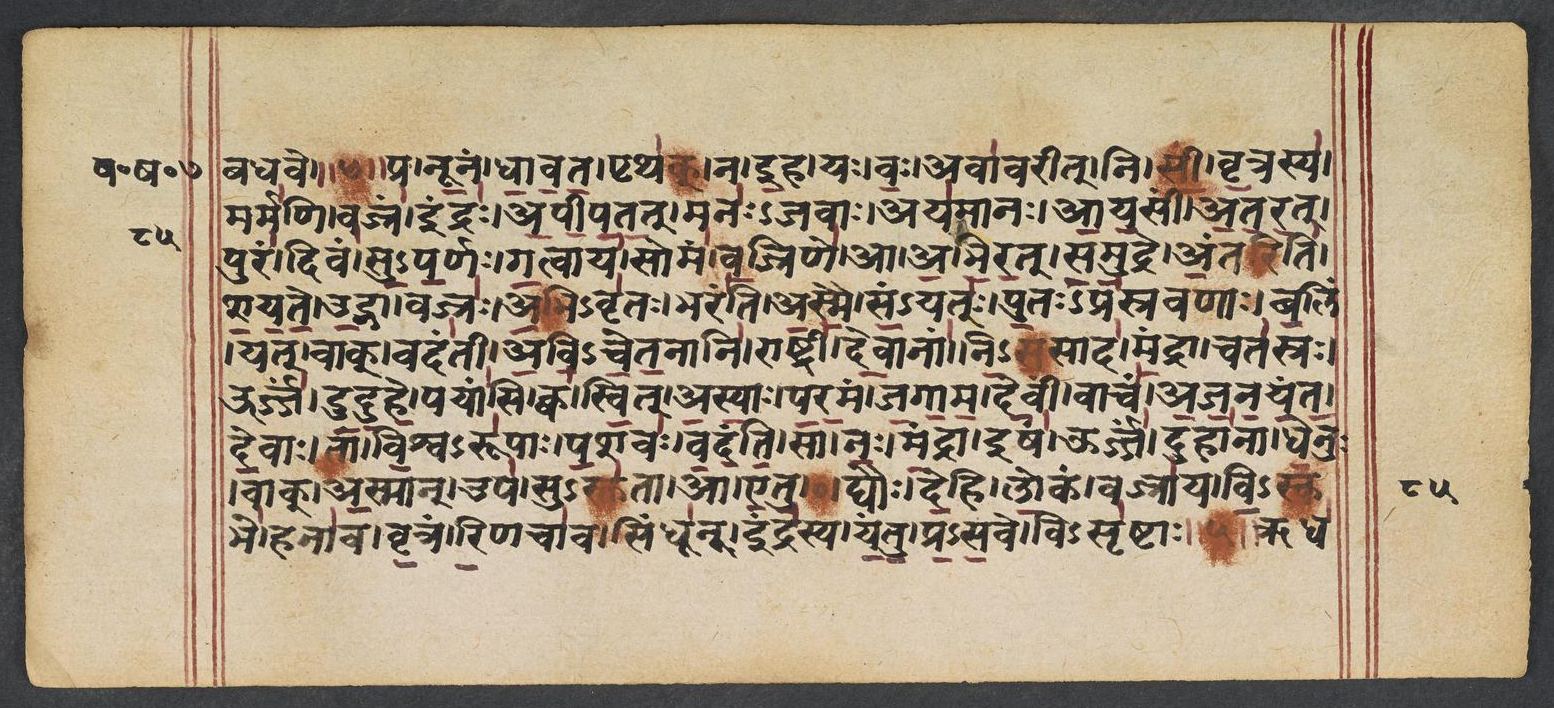
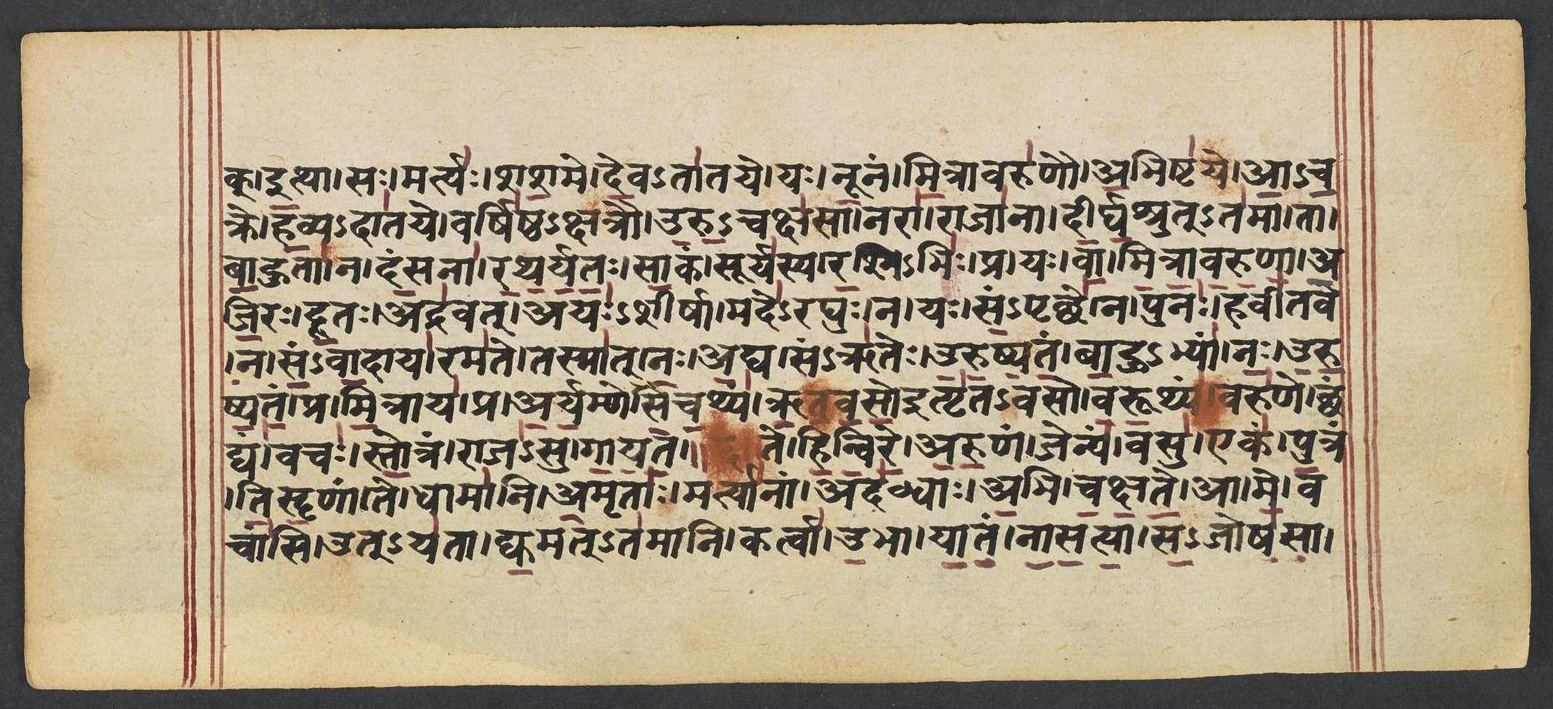
Penn Ms. Coll. 390 Item 41, fol. 664r (numbered 86r by the scribe) (OPenn image 664, lower leaf). Checked on the image: the Rigveda text on this page begins in RV 8.101.1 ‹-ṛdhak itthā saḥ martyaḥ›. The next page with Rigveda text, fol. 664v (numbered 86v by the scribe), begins in RV 8.101.7 ‹prati havyāni vītaye›. Verses 8.101.1-6 end on this page; 8.101.1 begins on fol. 663v (numbered 85v by the scribe).
1ṛdha̍g i̱tthā sa martya̍ḥ śaśa̱me de̱vatā̍taye | yo nū̱nam mi̱trāvaru̍ṇāv a̱bhiṣṭa̍ya āca̱kre ha̱vyadā̍taye ||
2varṣi̍ṣṭhakṣatrā uru̱cakṣa̍sā̱ narā̱ rājā̍nā dīrgha̱śrutta̍mā | tā bā̱hutā̱ na da̱ṁsanā̍ ratharyataḥ sā̱kaṁ sūrya̍sya ra̱śmibhi̍ḥ ||
3pra yo vā̍m mitrāvaruṇāji̱ro dū̱to adra̍vat | aya̍ḥśīrṣā̱ made̍raghuḥ ||
4na yaḥ sa̱mpṛcche̱ na puna̱r havī̍tave̱ na sa̍ṁvā̱dāya̱ rama̍te | tasmā̍n no a̱dya samṛ̍ter uruṣyatam bā̱hubhyā̍ṁ na uruṣyatam ||
5pra mi̱trāya̱ prārya̱mṇe sa̍ca̱thya̍m ṛtāvaso | va̱rū̱thya1̱̍ṁ varu̍ṇe̱ chandya̱ṁ vaca̍ḥ sto̱traṁ rāja̍su gāyata ||
6te hi̍nvire aru̱ṇaṁ jenya̱ṁ vasv eka̍m pu̱traṁ ti̍sṝ̱ṇām | te dhāmā̍ny a̱mṛtā̱ martyā̍nā̱m ada̍bdhā a̱bhi ca̍kṣate ||
Compare: Padapāṭha (word-by-word text written in the manuscript; Sansknet e-text via GRETIL)
1ṛdhak | itthā | saḥ | martyaḥ | śaśame | deva-tātaye | yaḥ | nūnam | mitrāvaruṇau | abhiṣṭaye | ācakre | havya-dātaye
2varṣiṣṭha-kṣatrau | uru-cakṣasā | narā | rājānā | dīrghaśrut-tamā | tā | bāhutā | na | daṃsanā | ratharyataḥ | sākam | sūryasya | raśmi-bhiḥ
3pra | yaḥ | vām | mitrāvaruṇā | ajiraḥ | dūtaḥ | adravat | ayaḥ-śīrṣā | made--raghuḥ
4na | yaḥ | sam-pṛcche | na | punaḥ | havītave | na | sam-vādāya | ramate | tasmāt | naḥ | adya | sam-ṛteḥ | uruṣyatam | bāhu-bhyām | naḥ | uruṣyatam
5pra | mitrāya | pra | aryamṇe | sacathyam | ṛtavaso ity ṛta-vaso | varūthyam | varuṇe | chandyam | vacaḥ | stotram | rāja-su | gāyata
6te | hinvire | aruṇam | jenyam | vasu | ekam | putram | tisṝṇām | te | dhāmāni | amṛtāḥ | martyānām | adabdhāḥ | abhi | cakṣate
1YEA, specially that mortal man hath toiled for service of the Gods, Who quickly hath brought near Mitra and Varuṇa. to share his sacrificial gifts.
2Supreme in sovran power, far-sighted, Chiefs and Kings, most swift to hear from far away, Both, wondrously, set them in motion as with arms, in company with Sûrya's beams.
3The rapid messenger who runs before you, Mitra-Varuṇa, with iron head, swift to the draught,
4He whom no man may question, none may summon back, who stands not still for colloquy,– From hostile clash with him keep ye us safe this day: keep us in safety with your arms.
5To Aryaman and Mitra sing a reverent song, O pious one, A pleasant hymn that shall protect to Varuṇa: sing forth a laud unto the Kings.
6The true, Red Treasure they have sent, one only Son born of the Three. They, the Immortal Ones, never deceived, survey the families of mortal men.
Where on the image
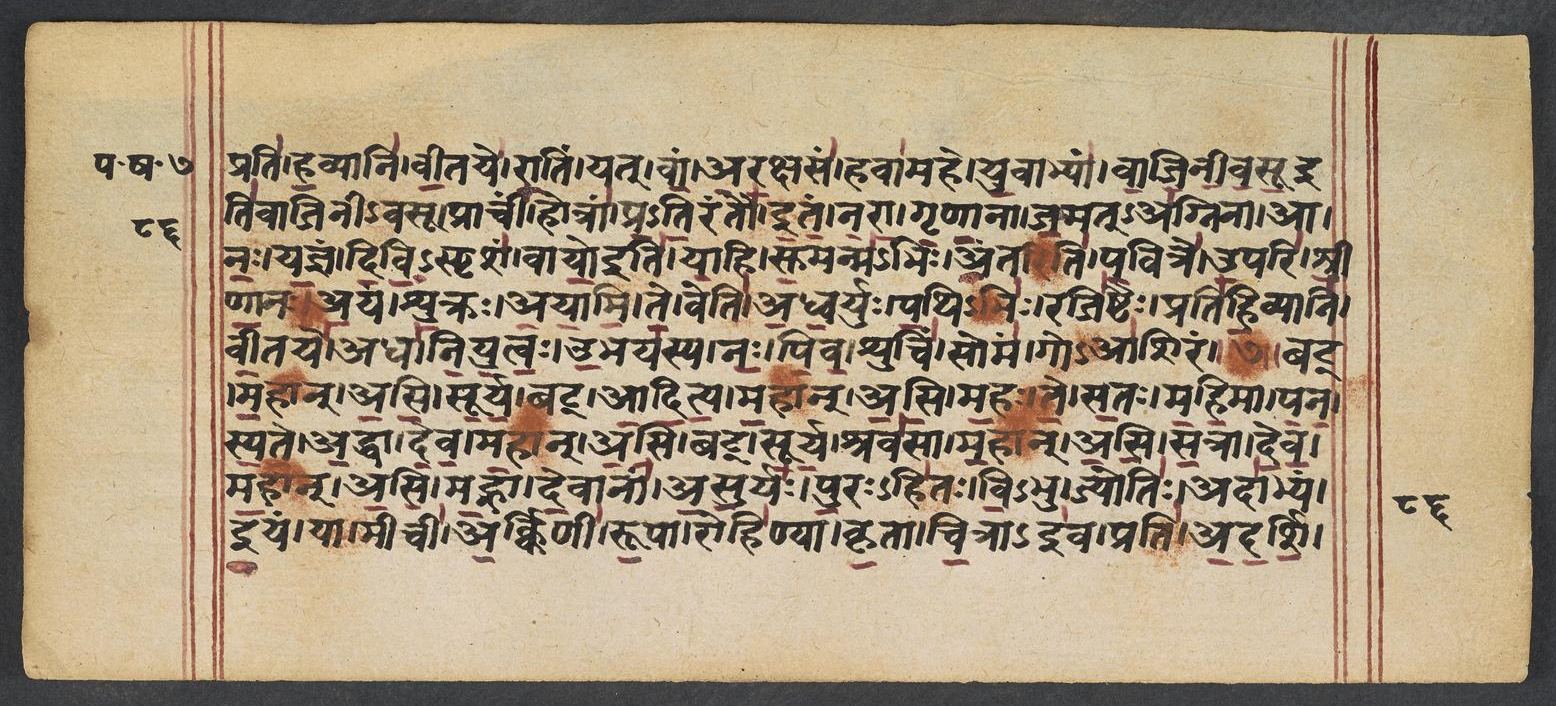
Penn Ms. Coll. 390 Item 41, fol. 664v (numbered 86v by the scribe) (OPenn image 665, upper leaf). Checked on the image: the Rigveda text on this page begins in RV 8.101.7 ‹prati havyāni vītaye›. The next page with Rigveda text, fol. 665r (numbered 87r by the scribe), begins in RV 8.101.13 ‹āyatī antaḥ daśa-su bāhuṣu›. Verses 8.101.7-12 end on this page; 8.101.7 begins on fol. 664r (numbered 86r by the scribe).
7ā me̱ vacā̱ṁsy udya̍tā dyu̱matta̍māni̱ kartvā̍ | u̱bhā yā̍taṁ nāsatyā sa̱joṣa̍sā̱ prati̍ ha̱vyāni̍ vī̱taye̍ ||
8rā̱tiṁ yad vā̍m ara̱kṣasa̱ṁ havā̍mahe yu̱vābhyā̍ṁ vājinīvasū | prācī̱ṁ hotrā̍m prati̱rantā̍v itaṁ narā gṛṇā̱nā ja̱mada̍gninā ||
9ā no̍ ya̱jñaṁ di̍vi̱spṛśa̱ṁ vāyo̍ yā̱hi su̱manma̍bhiḥ | a̱ntaḥ pa̱vitra̍ u̱pari̍ śrīṇā̱no̱3̱̍ 'yaṁ śu̱kro a̍yāmi te ||
10vety a̍dhva̱ryuḥ pa̱thibhī̱ raji̍ṣṭhai̱ḥ prati̍ ha̱vyāni̍ vī̱taye̍ | adhā̍ niyutva u̱bhaya̍sya naḥ piba̱ śuci̱ṁ soma̱ṁ gavā̍śiram ||
11baṇ ma̱hām̐ a̍si sūrya̱ baḻ ā̍ditya ma̱hām̐ a̍si | ma̱has te̍ sa̱to ma̍hi̱mā pa̍nasyate̱ 'ddhā de̍va ma̱hām̐ a̍si ||
12baṭ sū̍rya̱ śrava̍sā ma̱hām̐ a̍si sa̱trā de̍va ma̱hām̐ a̍si | ma̱hnā de̱vānā̍m asu̱rya̍ḥ pu̱rohi̍to vi̱bhu jyoti̱r adā̍bhyam ||
Compare: Padapāṭha (word-by-word text written in the manuscript; Sansknet e-text via GRETIL)
7ā | me | vacāṃsi | ut-yatā | dyumat-tamāni | kartvā | ubhā | yātam | nāsatyā | sa-joṣasā | prati | havyāni | vītaye
8rātim | yat | vām | arakṣasam | havāmahe | yuvābhyām | vājinīvasūitivājinī-vasū | prācīm | hotrām | pra-tirantau | itam | narā | gṛṇānā | jamat-agninā
9ā | naḥ | yajñam | divi-spṛśam | vāyo iti | yāhi | sumanma-bhiḥ | antariti | pavitre | upari | śrīṇānaḥ | ayam | śukraḥ | ayāmi | te
10veti | adhvaryuḥ | pathi-bhiḥ | rajiṣṭhaiḥ | prati | havyāni | vītaye | adha | niyutvaḥ | ubhyasya | naḥ | piba | śucim | somam | go--āśiram
11baṭ | mahān | asi | sūrya | baṭ | āditya | mahān | asi | mahaḥ | te | sataḥ | mahimā | panasyate | addhā | deva | mahān | asi
12baṭ | sūrya | śravasā | mahān | asi | satrā | deva | mahān | asi | mahnā | devānām | asuryaḥ | puraḥ-hitaḥ | vi-bhu | jyotiḥ | adābhyam
7My songs are lifted up, and acts most splendid are to be performed. Come hither, ye Nâsatyas, with accordant mind, to meet and to enjoy my gifts.
8Lords of great wealth, when we invoke your bounty which no demon checks, Both of you, furthering our eastward-offered praise, come, Chiefs whom Jamadagni lauds!
9Come, Vâyu, drawn by fair hymns, to our sacrifice that reaches heaven. Poured on the middle of the straining-cloth, and cooked, this bright drink hath been offered thee.
10He comes by straightest paths, as ministering Priest, to taste the sacrificial gifts. Then, Lord of harnessed teams! drink of the twofold draught, bright Soma mingled with the milk.
11Verily, Sûrya, thou art great; truly, Âditya, thou art great. As thou art great indeed, thy greatness is admired: yea, verily, thou, God, art great.
12Yea, Sûrya, thou art great in fame: thou evermore, O God, art great. Thou by thy greatness art the Gods' High Priest, divine, far-spread unconquerable light.
Where on the image
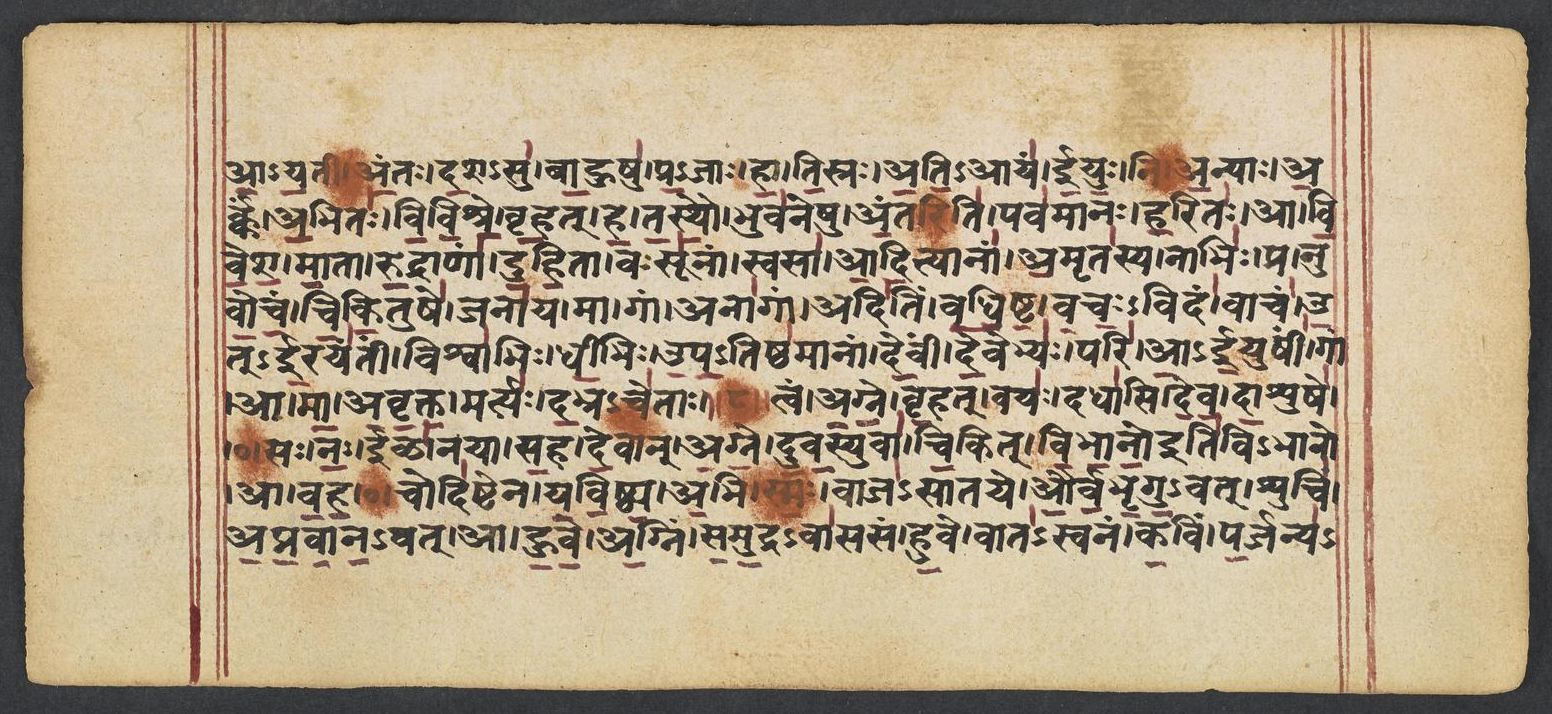
Penn Ms. Coll. 390 Item 41, fol. 665r (numbered 87r by the scribe) (OPenn image 665, lower leaf). Checked on the image: the Rigveda text on this page begins in RV 8.101.13 ‹āyatī antaḥ daśa-su bāhuṣu›. The next page with Rigveda text, fol. 665v (numbered 87v by the scribe), begins in RV 8.102.5 ‹-parjanya-krandyam sahaḥ agnim samudra-vāsasam›. Verses 8.101.13-16 end on this page; 8.101.13 begins on fol. 664v (numbered 86v by the scribe).
13i̱yaṁ yā nīcy a̱rkiṇī̍ rū̱pā rohi̍ṇyā kṛ̱tā | ci̱treva̱ praty a̍darśy āya̱ty a1̱̍ntar da̱śasu̍ bā̱huṣu̍ ||
14pra̱jā ha̍ ti̱sro a̱tyāya̍m īyu̱r ny a1̱̍nyā a̱rkam a̱bhito̍ viviśre | bṛ̱had dha̍ tasthau̱ bhuva̍neṣv a̱ntaḥ pava̍māno ha̱rita̱ ā vi̍veśa ||
15mā̱tā ru̱drāṇā̍ṁ duhi̱tā vasū̍nā̱ṁ svasā̍di̱tyānā̍m a̱mṛta̍sya̱ nābhi̍ḥ | pra nu vo̍caṁ ciki̱tuṣe̱ janā̍ya̱ mā gām anā̍gā̱m adi̍tiṁ vadhiṣṭa ||
16va̱co̱vida̱ṁ vāca̍m udī̱raya̍ntī̱ṁ viśvā̍bhir dhī̱bhir u̍pa̱tiṣṭha̍mānām | de̱vīṁ de̱vebhya̱ḥ pary e̱yuṣī̱ṁ gām ā mā̍vṛkta̱ martyo̍ da̱bhrace̍tāḥ ||
Compare: Padapāṭha (word-by-word text written in the manuscript; Sansknet e-text via GRETIL)
13iyam | yā | nīcī | arkiṇī | rūpā | rohiṇyā | kṛtā | citrāiva | prati | adarśi | āyatī | antaḥ | daśa-su | bāhuṣu
14pra-jāḥ | ha | tisraḥ | ati-āyam | īyuḥ | ni | anyāḥ | arkam | abhitaḥ | viviśre | bṛhat | ha | tasthau bhuvaneṣu | antariti | pavamānaḥ | haritaḥ | ā | viveśa
15mātā | rudrāṇām | duhitā | vasūnām | svasā | ādityānām | amṛtasya | nābhiḥ | pra | nu | vocam | cikituṣe | janāya | mā | gām | anāgām | aditim | vadhiṣṭa
16vacaḥ-vidam | vācam | ut-īrayantīm | viśvābhiḥ | dhībhiḥ | upa-tiṣṭhamānām | devīm | devebhyaḥ | pari | āīyuṣīm | gām | ā | mā | avṛkta | martyaḥ | dabhra-cetāḥ
13She yonder, bending lowly down, clothed in red hues and rich in rays, Is seen, advancing as it were with various tints, amid the ten surrounding arms.
14Past and gone are three mortal generations: the fourth and last into the Sun hath entered. He mid the worlds his lofty place hath taken. Into green plants is gone the Purifying.
15The Rudras' Mother, Daughter of the Vasus, centre of nectar, the Âdityas' Sister — To folk who understand will I proclaim it — injure not Aditi, the Cow, the sinless.
16Weak-minded men have as a cow adopted me who came hither from the Gods, a Goddess, Who, skilled in eloquence, her voice uplifteth, who standeth near at hand with all devotions.
Notes
- Sanskrit: Aufrecht's edition (1877) with the Vedic accents, as entered by van Nooten and Holland (GRETIL).
- English: Ralph T. H. Griffith, The Hymns of the Rigveda (1889-1892; 2nd ed. 1896-1897), from the VedaWeb digital text; OCR slips in that text were corrected against the printed 2nd edition (data/sources/rigveda/griffith_errata.json).
- Padapāṭha (edition text): Sansknet e-text via GRETIL (CC BY-NC-SA 4.0).
Cite
Sources
- Source: Penn Ms. Coll. 390 Item 41 (undated (catalogued with Penn's 18th-19th c. Vedic manuscripts)), OPenn, Public Domain Mark + Aufrecht's accented text (GRETIL) + Griffith's English (VedaWeb) (holding institution)
- Critical edition: Aufrecht (1877), accented e-text via GRETIL
← previous · → next · v cycle view · l back to library