Rigveda 8.102: To Agni
Introduction
Rigveda 8.102 is a hymn of 22 verses addressed to Agni. It stands in book (maṇḍala) 8, the book of the Kaṇva and Aṅgiras poets. The Rigveda is the oldest collection of Sanskrit hymns, composed in the second half of the second millennium BCE and handed down orally for many centuries before it was written down.
The manuscript shown is Penn Ms. Coll. 390 Item 41 (University of Pennsylvania), an undated paper manuscript of the padapāṭha (the word-by-word recitation text, in which every word is written separately and compounds are split) of the whole Ṛgveda in Devanāgarī, 884 leaves in fascicles, 7-9 lines to the page, accents in red; this hymn stands on fol. 665r-666r. Each section below gives the verses that end on one page; the page boundaries were read on the images (the opening words of every page), not counted out. Where the manuscript is a padapāṭha (the word-by-word recitation text), the section shows Aufrecht's continuous (saṃhitā) text first and, as the edition text, the padapāṭha of the same verses, which is the form written on the page.
How was this verified? (Provenance)
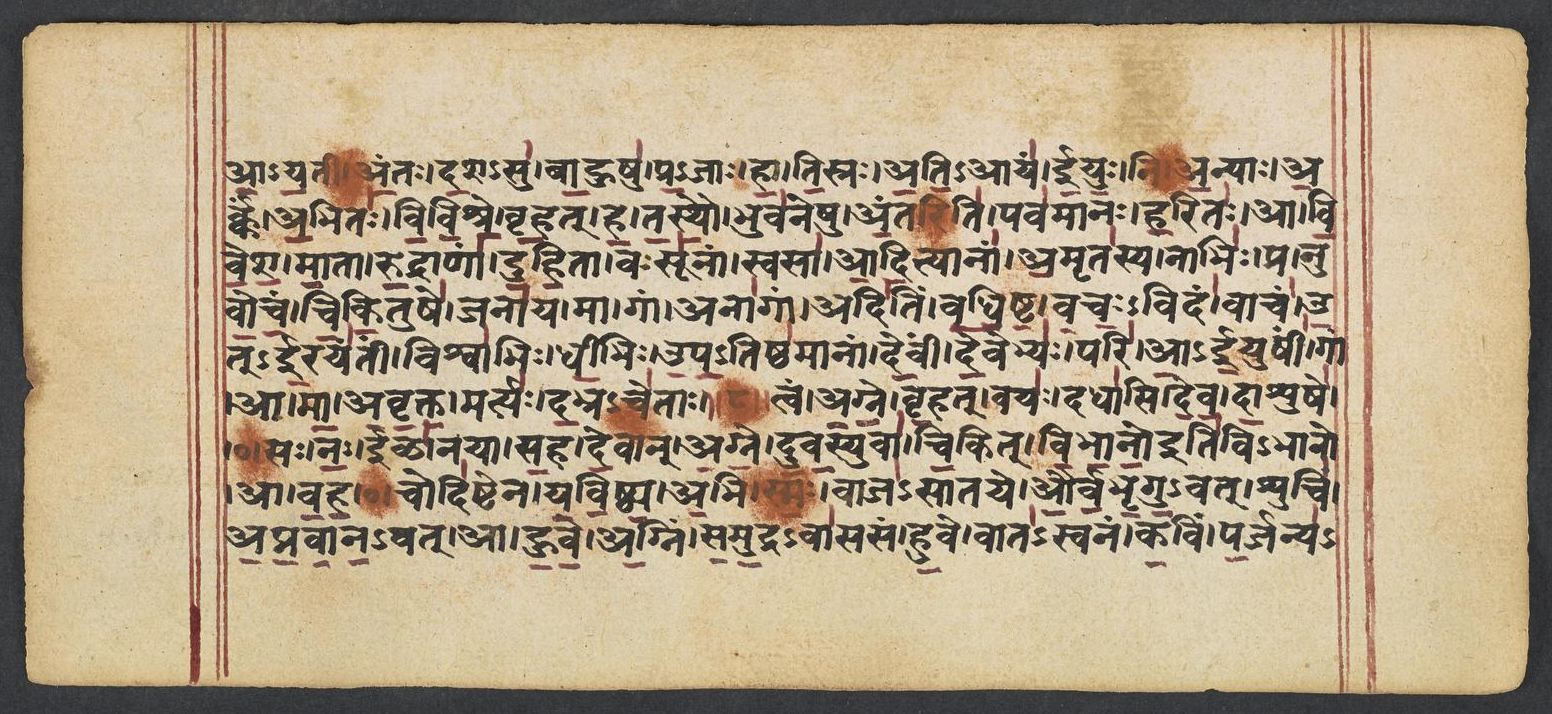
Where on the image
Penn Ms. Coll. 390 Item 41, fol. 665r (numbered 87r by the scribe) (OPenn image 665, lower leaf). Checked on the image: the Rigveda text on this page begins in RV 8.101.13 ‹āyatī antaḥ daśa-su bāhuṣu›. The next page with Rigveda text, fol. 665v (numbered 87v by the scribe), begins in RV 8.102.5 ‹-parjanya-krandyam sahaḥ agnim samudra-vāsasam›. Verses 8.102.1-4 end on this page.
1tvam a̍gne bṛ̱had vayo̱ dadhā̍si deva dā̱śuṣe̍ | ka̱vir gṛ̱hapa̍ti̱r yuvā̍ ||
2sa na̱ īḻā̍nayā sa̱ha de̱vām̐ a̍gne duva̱syuvā̍ | ci̱kid vi̍bhāna̱v ā va̍ha ||
3tvayā̍ ha svid yu̱jā va̱yaṁ codi̍ṣṭhena yaviṣṭhya | a̱bhi ṣmo̱ vāja̍sātaye ||
4au̱rva̱bhṛ̱gu̱vac chuci̍m apnavāna̱vad ā hu̍ve | a̱gniṁ sa̍mu̱dravā̍sasam ||
Compare: Padapāṭha (word-by-word text written in the manuscript; Sansknet e-text via GRETIL)
1tvam | agne | bṛhat | vayaḥ | dadhāsi | deva | dāśuṣe | kaviḥ | gṛha-patiḥ | yuvā
2saḥ | naḥ | īḷānayā | saha | devān | agne | duvasyuvā | cikit | vibhāno itivi-bhāno | ā | vaha
3tvayā | ha | svit | yujā | vayam | codiṣṭhena | yaviṣṭhya | abhi | smaḥ | vāja-sātaye
4aurvabhṛgu-vat | śucim | apnavāna-vat | ā | huve | agnim | samudra-vāsasam
1LORD of the house, Sage, ever young, high power of life, O Agni, God, Thou givest to thy worshipper.
2So with our song that prays and serves, attentive, Lord of spreading light, Agni, bring hitherward the Gods.
3For, Ever-Youthful One, with thee, best Furtherer, as our ally, We overcome, to win the spoil.
4As Aurva Bhrigu used, as Apnavâna used, I call the pure Agni who clothes him with the sea.
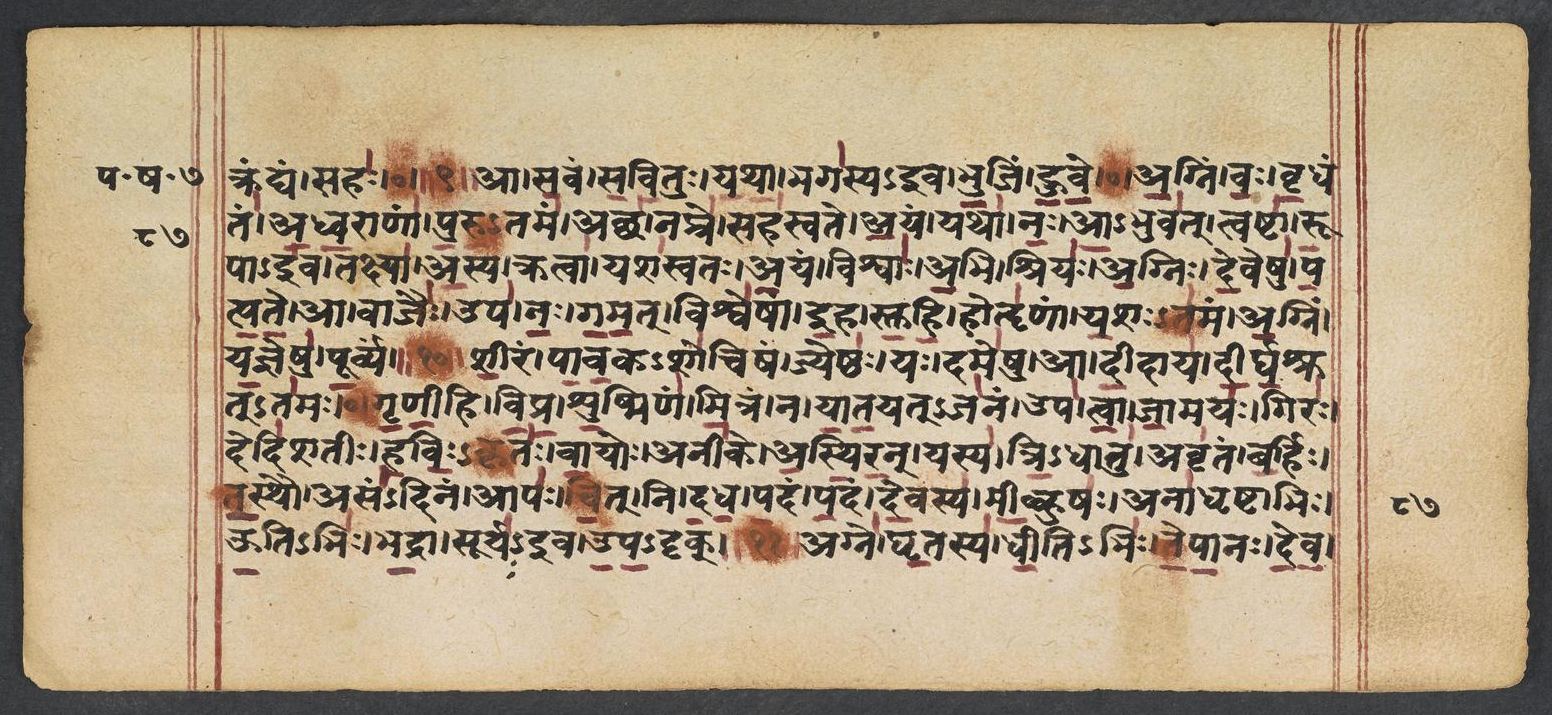
Where on the image
Penn Ms. Coll. 390 Item 41, fol. 665v (numbered 87v by the scribe) (OPenn image 666, upper leaf). Checked on the image: the Rigveda text on this page begins in RV 8.102.5 ‹-parjanya-krandyam sahaḥ agnim samudra-vāsasam›. The next page with Rigveda text, fol. 666r (numbered 88r by the scribe), begins in RV 8.102.16 ‹-yakṣi ca›. Verses 8.102.5-15 end on this page; 8.102.5 begins on fol. 665r (numbered 87r by the scribe).
5hu̱ve vāta̍svanaṁ ka̱vim pa̱rjanya̍krandya̱ṁ saha̍ḥ | a̱gniṁ sa̍mu̱dravā̍sasam ||
6ā sa̱vaṁ sa̍vi̱tur ya̍thā̱ bhaga̍syeva bhu̱jiṁ hu̍ve | a̱gniṁ sa̍mu̱dravā̍sasam ||
7a̱gniṁ vo̍ vṛ̱dhanta̍m adhva̱rāṇā̍m purū̱tama̍m | acchā̱ naptre̱ saha̍svate ||
8a̱yaṁ yathā̍ na ā̱bhuva̱t tvaṣṭā̍ rū̱peva̱ takṣyā̍ | a̱sya kratvā̱ yaśa̍svataḥ ||
9a̱yaṁ viśvā̍ a̱bhi śriyo̱ 'gnir de̱veṣu̍ patyate | ā vājai̱r upa̍ no gamat ||
10viśve̍ṣām i̱ha stu̍hi̱ hotṝ̍ṇāṁ ya̱śasta̍mam | a̱gniṁ ya̱jñeṣu̍ pū̱rvyam ||
11śī̱ram pā̍va̱kaśo̍ciṣa̱ṁ jyeṣṭho̱ yo dame̱ṣv ā | dī̱dāya̍ dīrgha̱śrutta̍maḥ ||
12tam arva̍nta̱ṁ na sā̍na̱siṁ gṛ̍ṇī̱hi vi̍pra śu̱ṣmiṇa̍m | mi̱traṁ na yā̍ta̱yajja̍nam ||
13upa̍ tvā jā̱mayo̱ giro̱ dedi̍śatīr havi̱ṣkṛta̍ḥ | vā̱yor anī̍ke asthiran ||
14yasya̍ tri̱dhātv avṛ̍tam ba̱rhis ta̱sthāv asa̍ṁdinam | āpa̍ś ci̱n ni da̍dhā pa̱dam ||
15pa̱daṁ de̱vasya̍ mī̱ḻhuṣo 'nā̍dhṛṣṭābhir ū̱tibhi̍ḥ | bha̱drā sūrya̍ ivopa̱dṛk ||
Compare: Padapāṭha (word-by-word text written in the manuscript; Sansknet e-text via GRETIL)
5huve | vāta-svanam | kavim | parjanya-krandyam | sahaḥ | agnim | samudra-vāsasam
6ā | savam | savituḥ | yathā | bhagasya-iva | bhujim | huve | agnim | samudra-vāsasam
7agnim | vaḥ | vṛdhantam | adhvarāṇām | puru-tamam | accha | naptre | sahasvate
8ayam | yathā | naḥ | ābhuvat | tvaṣṭā | rūpāiva | takṣyā | asya | kratvā | yaśasvataḥ
9ayam | viśvāḥ | abhi | śriyaḥ | agniḥ | deveṣu | patyate | ā | vājaiḥ | upa | naḥ | gamat
10viśveṣām | iha | stuhi | hotṛṝṇām | yaśaḥ-tamam | agnim | yajñeṣu | pūrvyam
11śīram | pāvaka-śociṣam | jyeṣṭhaḥ | yaḥ | dameṣu | ā | dīdāya | dīrghaśrut-tamaḥ
12tam | arvantam | na | sānasim | gṛṇīhi | vipra | śuṣmiṇam | mitram | na | yātayat-janam
13upa | tvā | jāmayaḥ | giraḥ | dediśatīḥ | haviḥ-kṛtaḥ | vāyoḥ | anīke | asthiran
14yasya | tri-dhātu | avṛtam | barhiḥ | tasthau | asam-dinam | āpaḥ | cit | ni | dadha | padam
15padam | devasya | mīḷhuṣaḥ | anādhṛṣṭābhiḥ | ūti-bhiḥ | bhadrā | sūryaḥ-iva | upa-dṛk
5I call the Sage who sounds like wind, the Might that like Parjanya roars, Agni who clothes him with the sea.
6As Savitar's productive Power, as him who sends down bliss, I call Agni who clothes him with the sea.
7Hither, for powerful kinship, I call Agni, him Who prospers you, Most frequent at our solemn rites
8That through this famed One's power, he may stand by us even as Tvashṭar comes Unto the forms that must be shaped.
9This Agni is the Lord supreme above all glories mid the Gods: May he come nigh to us with strength.
10Here praise ye him the most renowned of all the ministering Priests, Agni, the Chief at sacrifice;
11Piercing, with purifying flame, enkindled in our homes, most high, Swiftest to hear from far away.
12Sage, laud the Mighty One who wins the spoil of victory like a steed, And, Mitra-like, unites the folk.
13Still turning to their aim in thee, the oblation-bearer's sister hymns Have come to thee before the wind.
14The waters find their place in him, for whom the threefold sacred grass Is spread unbound, unlimited.
15The station of the Bounteous God hath, through his aid which none impair, A pleasant aspect like the Sun.
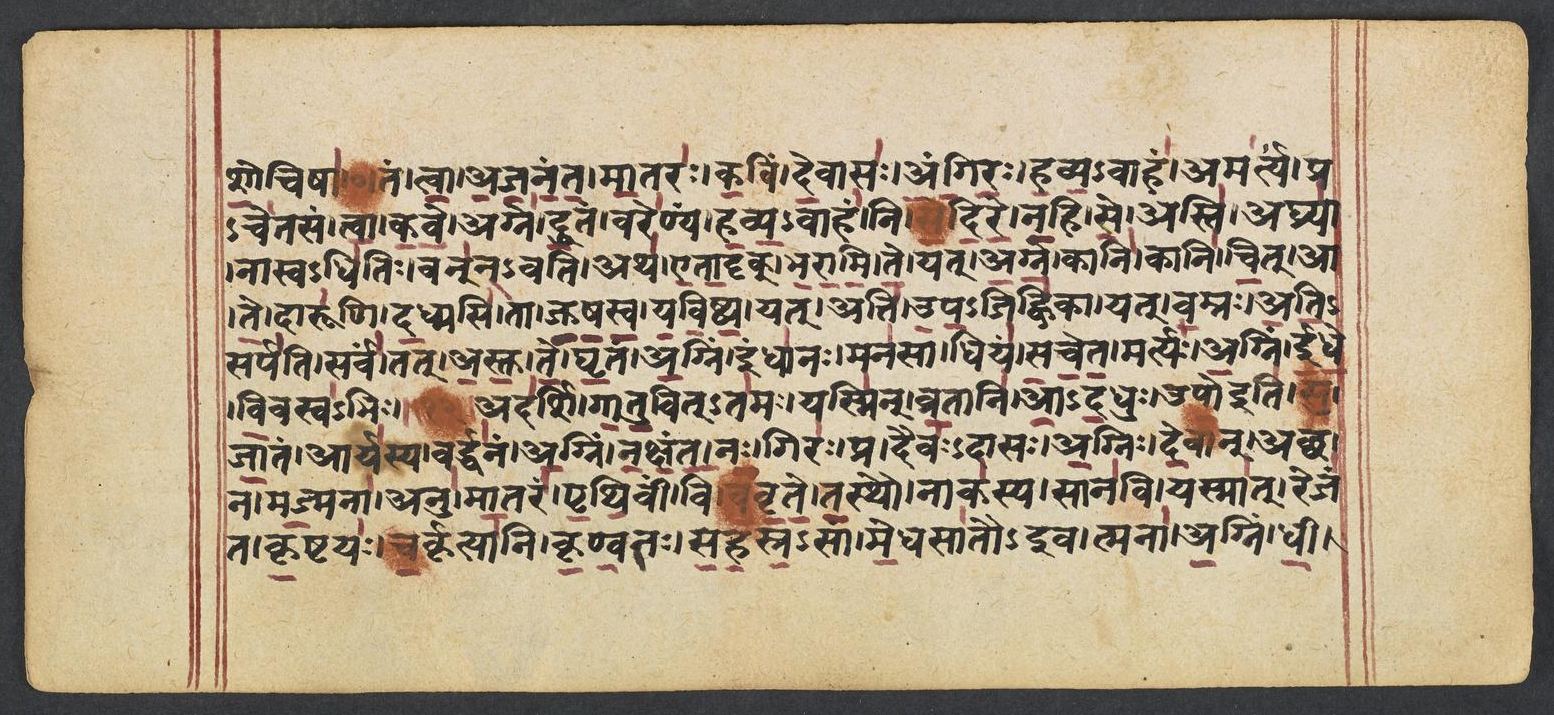
Where on the image
Penn Ms. Coll. 390 Item 41, fol. 666r (numbered 88r by the scribe) (OPenn image 666, lower leaf). Checked on the image: the Rigveda text on this page begins in RV 8.102.16 ‹-yakṣi ca›. The next page with Rigveda text, fol. 666v (numbered 88v by the scribe), begins in RV 8.103.3 ‹-dhībhiḥ saparyata›. Verses 8.102.16-22 end on this page; 8.102.16 begins on fol. 665v (numbered 87v by the scribe).
16agne̍ ghṛ̱tasya̍ dhī̱tibhi̍s tepā̱no de̍va śo̱ciṣā̍ | ā de̱vān va̍kṣi̱ yakṣi̍ ca ||
17taṁ tvā̍jananta mā̱tara̍ḥ ka̱viṁ de̱vāso̍ aṅgiraḥ | ha̱vya̱vāha̱m ama̍rtyam ||
18prace̍tasaṁ tvā ka̱ve 'gne̍ dū̱taṁ vare̍ṇyam | ha̱vya̱vāha̱ṁ ni ṣe̍dire ||
19na̱hi me̱ asty aghnyā̱ na svadhi̍ti̱r vana̍nvati | athai̍tā̱dṛg bha̍rāmi te ||
20yad a̍gne̱ kāni̱ kāni̍ ci̱d ā te̱ dārū̍ṇi da̱dhmasi̍ | tā ju̍ṣasva yaviṣṭhya ||
21yad atty u̍pa̱jihvi̍kā̱ yad va̱mro a̍ti̱sarpa̍ti | sarva̱ṁ tad a̍stu te ghṛ̱tam ||
22a̱gnim indhā̍no̱ mana̍sā̱ dhiya̍ṁ saceta̱ martya̍ḥ | a̱gnim ī̍dhe vi̱vasva̍bhiḥ ||
Compare: Padapāṭha (word-by-word text written in the manuscript; Sansknet e-text via GRETIL)
16agne | ghṛtasya | dhīti-bhiḥ | tepānaḥ | deva | śociṣā | ā | devān | vakṣi | yakṣi | ca
17tam | tvā | ajananta | mātaraḥ | kavim | devāsaḥ | aṅgiraḥ | havya-vāham | amartyam
18pra-cetasam | tvā | kave | agne | dūtam | vareṇyam | havya-vāham | ni | sedire
19nahi | me | asti | aghnyā | na | sva-dhitiḥ | vanan-vati | atha | etādṛk | bharāmi | te
20yat | agne | kāni | kāni | cit | ā | te | dārūṇi | dadhmasi | tā | juṣasva | yaviṣṭhya
21yat | atti | upa-jihvikā | yat | vamraḥ | ati-sarpati | sarvam | tat | astu | te | ghṛtam
22agnim | indhānaḥ | manasā | dhiyam | saceta | martyaḥ | agnim | īdhe | vivasva-bhiḥ
16Blazing with splendour, Agni, God, through pious gifts of sacred oil, Bring thou the Gods and worship them.
17The Gods as mothers brought thee forth, the Immortal Sage, O Angiras, The bearer of our gifts to heaven.
18Wise Agni, Gods established thee, the Seer, noblest messenger, As bearer of our sacred gifts.
19No cow have I to call mine own, no axe at hand wherewith to work, Yet what is here I bring to thee.
20O Agni, whatsoever be the fuel that we lay for thee, Be pleased therewith, Most Youthful God.
21That which the white-ant eats away, that over which the emmet crawls — May all of this be oil to thee.
22When he enkindles Agni, man should with his heart attend the song: I with the priests have kindled him.
Notes
- Sanskrit: Aufrecht's edition (1877) with the Vedic accents, as entered by van Nooten and Holland (GRETIL).
- English: Ralph T. H. Griffith, The Hymns of the Rigveda (1889-1892; 2nd ed. 1896-1897), from the VedaWeb digital text; OCR slips in that text were corrected against the printed 2nd edition (data/sources/rigveda/griffith_errata.json).
- Padapāṭha (edition text): Sansknet e-text via GRETIL (CC BY-NC-SA 4.0).
Cite
Sources
- Source: Penn Ms. Coll. 390 Item 41 (undated (catalogued with Penn's 18th-19th c. Vedic manuscripts)), OPenn, Public Domain Mark + Aufrecht's accented text (GRETIL) + Griffith's English (VedaWeb) (holding institution)
- Critical edition: Aufrecht (1877), accented e-text via GRETIL
← previous · → next · v cycle view · l back to library