Rigveda 8.103: To Agni
Introduction
Rigveda 8.103 is a hymn of 14 verses addressed to Agni. It stands in book (maṇḍala) 8, the book of the Kaṇva and Aṅgiras poets. The Rigveda is the oldest collection of Sanskrit hymns, composed in the second half of the second millennium BCE and handed down orally for many centuries before it was written down.
The manuscript shown is Penn Ms. Coll. 390 Item 41 (University of Pennsylvania), an undated paper manuscript of the padapāṭha (the word-by-word recitation text, in which every word is written separately and compounds are split) of the whole Ṛgveda in Devanāgarī, 884 leaves in fascicles, 7-9 lines to the page, accents in red; this hymn stands on fol. 666r-667r. Each section below gives the verses that end on one page; the page boundaries were read on the images (the opening words of every page), not counted out. Where the manuscript is a padapāṭha (the word-by-word recitation text), the section shows Aufrecht's continuous (saṃhitā) text first and, as the edition text, the padapāṭha of the same verses, which is the form written on the page.
How was this verified? (Provenance)
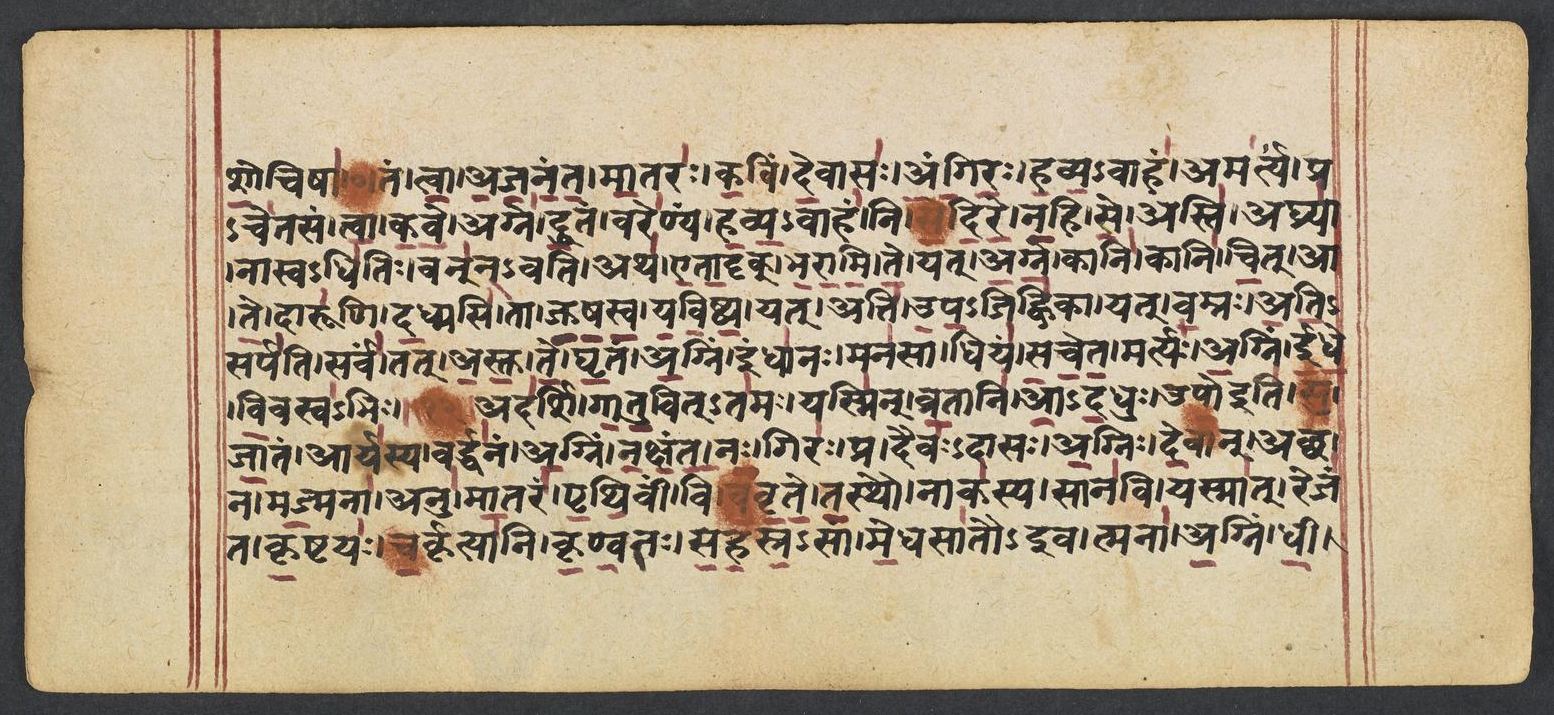
Where on the image
Penn Ms. Coll. 390 Item 41, fol. 666r (numbered 88r by the scribe) (OPenn image 666, lower leaf). Checked on the image: the Rigveda text on this page begins in RV 8.102.16 ‹-yakṣi ca›. The next page with Rigveda text, fol. 666v (numbered 88v by the scribe), begins in RV 8.103.3 ‹-dhībhiḥ saparyata›. Verses 8.103.1-2 end on this page.
1ada̍rśi gātu̱vitta̍mo̱ yasmi̍n vra̱tāny ā̍da̱dhuḥ | upo̱ ṣu jā̱tam ārya̍sya̱ vardha̍nam a̱gniṁ na̍kṣanta no̱ gira̍ḥ ||
2pra daivo̍dāso a̱gnir de̱vām̐ acchā̱ na ma̱jmanā̍ | anu̍ mā̱tara̍m pṛthi̱vīṁ vi vā̍vṛte ta̱sthau nāka̍sya̱ sāna̍vi ||
Compare: Padapāṭha (word-by-word text written in the manuscript; Sansknet e-text via GRETIL)
1adarśi | gātuvit-tamaḥ | yasmin | vratāni | ādadhuḥ | upo iti | su | jātam | āryasya | vardhanam | agnim | nakṣanta | naḥ | giraḥ
2pra | daivaḥ-dāsaḥ | agniḥ | devān | accha | na | majmanā | anu | mātaram | pṛthivīm | vi | vavṛte | tasthau | nākasya | sānavi
1THAT noblest Furtherer hath appeared, to whom men bring their holy works. Our songs of praise have risen aloft to Agni who was barn to give the Ârya strength.
2Agni of Divodâsa turned, as 'twere in majesty, to the Gods. Onward he sped along the mother earth, and took his station in the height of heaven.
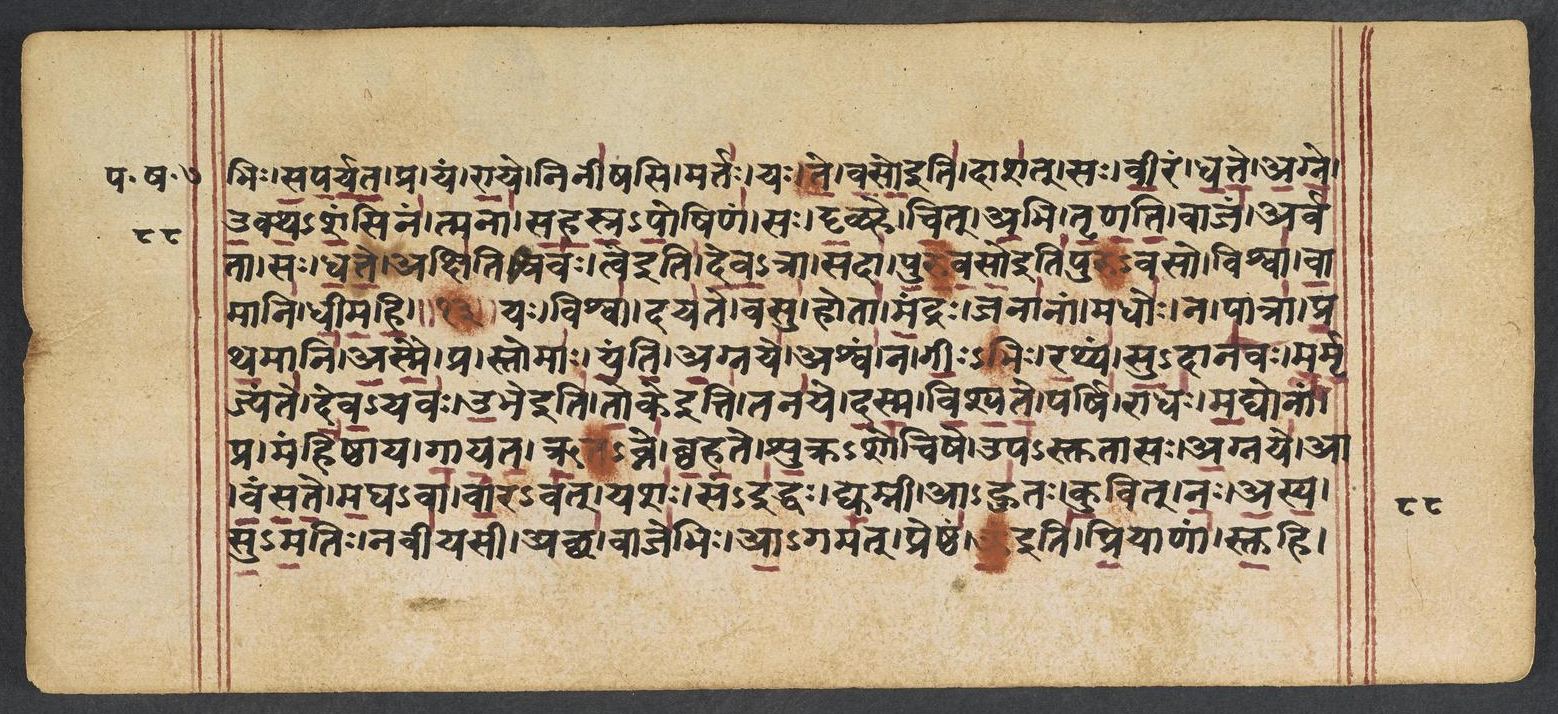
Where on the image
Penn Ms. Coll. 390 Item 41, fol. 666v (numbered 88v by the scribe) (OPenn image 667, upper leaf). Checked on the image: the Rigveda text on this page begins in RV 8.103.3 ‹-dhībhiḥ saparyata›. The next page with Rigveda text, fol. 667r (numbered 89r by the scribe), begins in RV 8.103.10 ‹āsāva atithim agnim rathānām›. Verses 8.103.3-9 end on this page; 8.103.3 begins on fol. 666r (numbered 88r by the scribe).
3yasmā̱d reja̍nta kṛ̱ṣṭaya̍ś ca̱rkṛtyā̍ni kṛṇva̱taḥ | sa̱ha̱sra̱sām me̱dhasā̍tāv iva̱ tmanā̱gniṁ dhī̱bhiḥ sa̍paryata ||
4pra yaṁ rā̱ye ninī̍ṣasi̱ marto̱ yas te̍ vaso̱ dāśa̍t | sa vī̱raṁ dha̍tte agna ukthaśa̱ṁsina̱ṁ tmanā̍ sahasrapo̱ṣiṇa̍m ||
5sa dṛ̱ḻhe ci̍d a̱bhi tṛ̍ṇatti̱ vāja̱m arva̍tā̱ sa dha̍tte̱ akṣi̍ti̱ śrava̍ḥ | tve de̍va̱trā sadā̍ purūvaso̱ viśvā̍ vā̱māni̍ dhīmahi ||
6yo viśvā̱ daya̍te̱ vasu̱ hotā̍ ma̱ndro janā̍nām | madho̱r na pātrā̍ pratha̱māny a̍smai̱ pra stomā̍ yanty a̱gnaye̍ ||
7aśva̱ṁ na gī̱rbhī ra̱thya̍ṁ su̱dāna̍vo marmṛ̱jyante̍ deva̱yava̍ḥ | u̱bhe to̱ke tana̍ye dasma viśpate̱ parṣi̱ rādho̍ ma̱ghonā̍m ||
8pra maṁhi̍ṣṭhāya gāyata ṛ̱tāvne̍ bṛha̱te śu̱kraśo̍ciṣe | upa̍stutāso a̱gnaye̍ ||
9ā va̍ṁsate ma̱ghavā̍ vī̱rava̱d yaśa̱ḥ sami̍ddho dyu̱mny āhu̍taḥ | ku̱vin no̍ asya suma̱tir navī̍ya̱sy acchā̱ vāje̍bhir ā̱gama̍t ||
Compare: Padapāṭha (word-by-word text written in the manuscript; Sansknet e-text via GRETIL)
3yasmāt | rejanta | kṛṣṭayaḥ | carkṛtyāni | kṛṇvataḥ | sahasra-sām | medhasātau-iva | tmanā | agnim | dhībhiḥ | saparyata
4pra | yam | rāye | ninīṣasi | martaḥ | yaḥ | te | vaso iti | dāśat | saḥ | vīram | dhatte | agne | uktha-śaṃsinam | tmanā | sahasra-poṣi ṇam
5saḥ | dṛḷhe | cit | abhi | tṛṇatti | vājam | arvatā | saḥ | dhatte | akṣiti | śravaḥ | tve iti | deva-trā | sadā | puruvaso itipuru-vaso | viśvā | vāmāni | dhīmahi
6yaḥ | viśvā | dayate | vasu | hotā | mandraḥ | janānām | madhoḥ | na | pātrā | pra-thamāni | asmai | pra | stomāḥ | yanti | agnaye
7aśvam | na | gīḥ-bhiḥ | rathyam | su-dānavaḥ | marmṛjyante | deva-yavaḥ | ubhe iti | toke iti | tanaye | dasma | viśpate | parṣi | rādhaḥ | maghonām
8pra | maṃhiṣṭhāya | gāyata | ṛta-vne | bṛhate | śukra-śociṣe | upa-stutāsaḥ | agnaye
9ā | vaṃsate | magha-vā | vīra-vat | yaśaḥ | sam-iddhaḥ | dyumnī | āhutaḥ | kuv it | naḥ | asya | su-matiḥ | navīyasī | accha | vājebhiḥ | āgamat
3Him before whom the people shrink when he performs his glorious deeds, Him who wins thousands at the worship of the Gods, himself, that Agni, serve with son s.
4The mortal man whom thou wouldst lead to opulence, O Vasu, he who brings thee gifts. He, Agni, wins himself a hero singing lauds, yea, one who feeds a thousand men.
5He with the steed wins spoil even in the fenced fort, and gains imperishable fame. In thee, O Lord of wealth, continually we lay all precious offerings to the Gods.
6To him who dealeth out all wealth, who is the cheerful Priest of men, To him, like the first vessels filled with savoury juice, to Agni go the songs of praise.
7Votaries, richly-gifted, deck him with their songs, even as the steed who draws the car. On both, Strong Lord of men! on child and grandson pour the bounties which our nobles give.
8Sing forth to him, the Holy, most munificent, sublime with his refulgent glow, To Agni, ye Upastutas.
9Worshipped with gifts, enkindled, splendid, Maghavan shall win himself heroic fame. And will not his most newly shown benevolence come to us with abundant strength?
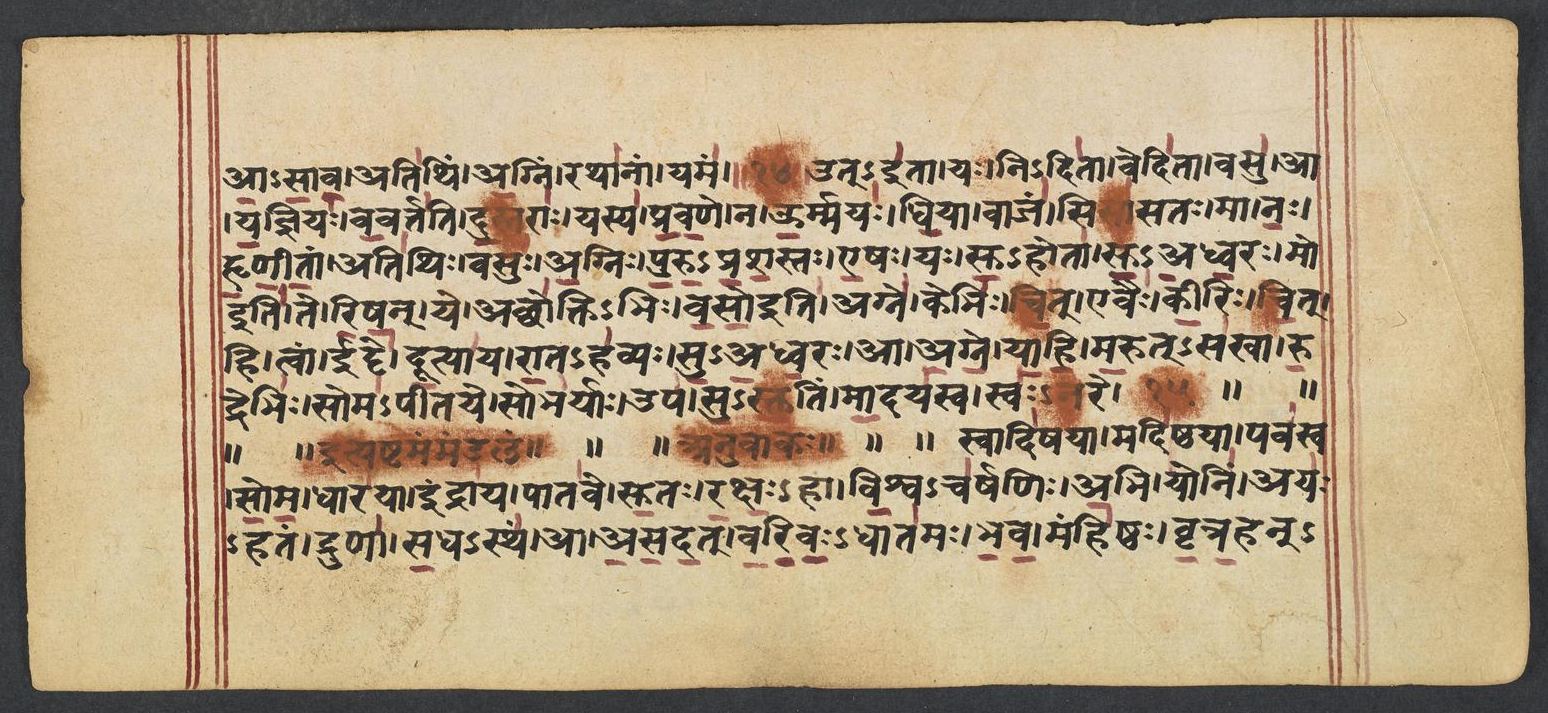
Where on the image
Penn Ms. Coll. 390 Item 41, fol. 667r (numbered 89r by the scribe) (OPenn image 667, lower leaf). Checked on the image: the Rigveda text on this page begins in RV 8.103.10 ‹āsāva atithim agnim rathānām›. The next page with Rigveda text, fol. 667v (numbered 89v by the scribe), begins in RV 9.1.3 ‹-vṛtrahan-tamaḥ parṣi rādhaḥ maghonām›. Verses 8.103.10-14 end on this page; 8.103.10 begins on fol. 666v (numbered 88v by the scribe).
10preṣṭha̍m u pri̱yāṇā̍ṁ stu̱hy ā̍sā̱vāti̍thim | a̱gniṁ rathā̍nā̱ṁ yama̍m ||
11udi̍tā̱ yo nidi̍tā̱ vedi̍tā̱ vasv ā ya̱jñiyo̍ va̱varta̍ti | du̱ṣṭarā̱ yasya̍ prava̱ṇe normayo̍ dhi̱yā vāja̱ṁ siṣā̍sataḥ ||
12mā no̍ hṛṇītā̱m ati̍thi̱r vasu̍r a̱gniḥ pu̍rupraśa̱sta e̱ṣaḥ | yaḥ su̱hotā̍ svadhva̱raḥ ||
13mo te ri̍ṣa̱n ye accho̍ktibhir va̱so 'gne̱ kebhi̍ś ci̱d evai̍ḥ | kī̱riś ci̱d dhi tvām īṭṭe̍ dū̱tyā̍ya rā̱taha̍vyaḥ svadhva̱raḥ ||
14āgne̍ yāhi ma̱rutsa̍khā ru̱drebhi̱ḥ soma̍pītaye | sobha̍ryā̱ upa̍ suṣṭu̱tim mā̱daya̍sva̱ sva̍rṇare ||
Compare: Padapāṭha (word-by-word text written in the manuscript; Sansknet e-text via GRETIL)
10preṣṭham | oṃ iti | priyāṇām | stuhi | āsāva | atithim | agnim | rathānām | yamam
11ut-itā | yaḥ | ni-ditā | veditā | vasu | ā | yajñiyaḥ | vavartati | dustarāḥ | yasya | pravaṇe | na | ūrmayaḥ | dhiyā | vājam | sisāsataḥ
12mā | naḥ | haṇītām | atithiḥ | vasuḥ | agniḥ | puru-praśastaḥ | eṣaḥ | yaḥ | su-hotā | su-adhvaraḥ
13mo iti | te | riṣan | ye | acchokti-bhiḥ | vaso iti | agne | kebhiḥ | cit | evaiḥ | kīriḥ | cit | hi | tvām | īṭe | dūtyāya | rāta-havyaḥ | su-adhvaraḥ
14ā | agne | yāhi | marut-sakhā | rudrebhiḥ | soma-pītaye | sobharyāḥ | upa | su-stuti m | mādayasva | svaḥ-nare
10Priest, presser of the juice! praise now the dearest Guest of all our friends, Agni, the driver of the cars.
11Who, finder-out of treasures open and concealed, bringeth them hither, Holy One; Whose waves, as in a cataract, are hard to pass, when he, through song, would win him strength.
12Let not the noble Guest, Agni, be wroth with us: by many a man his praise is sung, Good Herald, skilled in sacrifice.
13O Vasu, Agni, let not them be harmed who come in any way with lauds to thee. Even the lowly, skilled in rites, with offered gifts, seeketh thee for the envoy's task.
14Friend of the Maruts, Agni, come with Rudras to the Soma-draught, To Sobharî's fair song of praise, and be thou joyful in the light.
Notes
- Sanskrit: Aufrecht's edition (1877) with the Vedic accents, as entered by van Nooten and Holland (GRETIL).
- English: Ralph T. H. Griffith, The Hymns of the Rigveda (1889-1892; 2nd ed. 1896-1897), from the VedaWeb digital text; OCR slips in that text were corrected against the printed 2nd edition (data/sources/rigveda/griffith_errata.json).
- Padapāṭha (edition text): Sansknet e-text via GRETIL (CC BY-NC-SA 4.0).
Cite
Sources
- Source: Penn Ms. Coll. 390 Item 41 (undated (catalogued with Penn's 18th-19th c. Vedic manuscripts)), OPenn, Public Domain Mark + Aufrecht's accented text (GRETIL) + Griffith's English (VedaWeb) (holding institution)
- Critical edition: Aufrecht (1877), accented e-text via GRETIL
← previous · → next · v cycle view · l back to library