Rigveda 8.17: To Indra
Introduction
Rigveda 8.17 is a hymn of 15 verses addressed to Indra. It stands in book (maṇḍala) 8, the book of the Kaṇva and Aṅgiras poets. The Rigveda is the oldest collection of Sanskrit hymns, composed in the second half of the second millennium BCE and handed down orally for many centuries before it was written down.
The manuscript shown is Penn Ms. Coll. 390 Item 41 (University of Pennsylvania), an undated paper manuscript of the padapāṭha (the word-by-word recitation text, in which every word is written separately and compounds are split) of the whole Ṛgveda in Devanāgarī, 884 leaves in fascicles, 7-9 lines to the page, accents in red; this hymn stands on fol. 585r-586r. Each section below gives the verses that end on one page; the page boundaries were read on the images (the opening words of every page), not counted out. Where the manuscript is a padapāṭha (the word-by-word recitation text), the section shows Aufrecht's continuous (saṃhitā) text first and, as the edition text, the padapāṭha of the same verses, which is the form written on the page.
How was this verified? (Provenance)
Where on the image
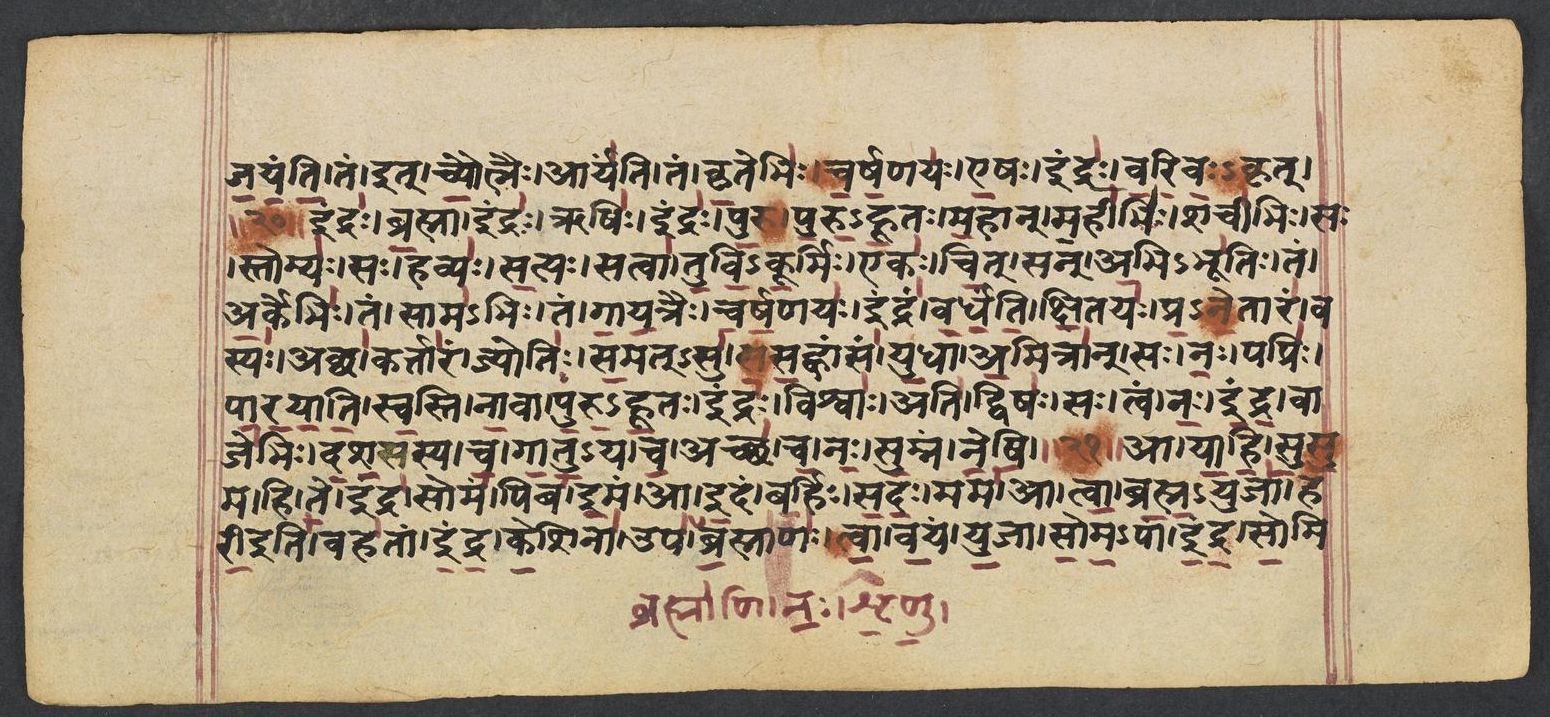
Penn Ms. Coll. 390 Item 41, fol. 585r (numbered 7r by the scribe) (OPenn image 585, lower leaf). Checked on the image: the Rigveda text on this page begins in RV 8.16.5 ‹jayanti›. The next page with Rigveda text, fol. 585v (numbered 7v by the scribe), begins in RV 8.17.3 ‹-sominaḥ suta-vantaḥ havāmahe›. Verses 8.17.1-2 end on this page.
1ā yā̍hi suṣu̱mā hi ta̱ indra̱ soma̱m pibā̍ i̱mam | edam ba̱rhiḥ sa̍do̱ mama̍ ||
2ā tvā̍ brahma̱yujā̱ harī̱ vaha̍tām indra ke̱śinā̍ | upa̱ brahmā̍ṇi naḥ śṛṇu ||
Compare: Padapāṭha (word-by-word text written in the manuscript; Sansknet e-text via GRETIL)
1ā | yāhi | susuma | hi | te | indra | somam | piba | imam | ā | idam | barhiḥ | sadaḥ | mama
2ā | tvā | brahma-yujā | harī iti | vahatām | indra | keśinā | upa | brahmāṇi | naḥ | śṛṇu
1COME, we have pressed the juice for thee; O Indra, drink this Soma here Sit thou on this my sacred grass.
2O Indra, let thy long-maned Bays, yoked by prayer, bring thee hitherward Give ear and listen to our prayers.
Where on the image
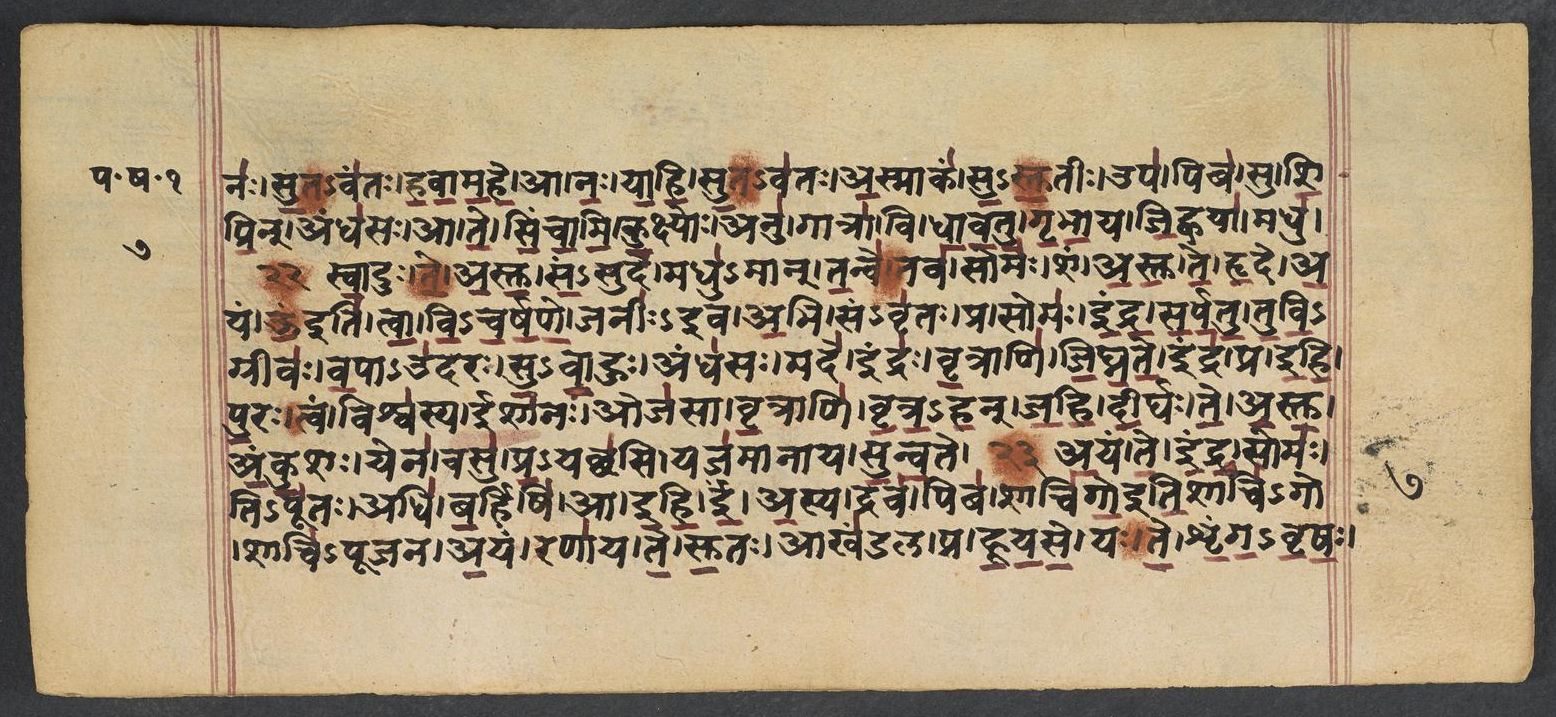
Penn Ms. Coll. 390 Item 41, fol. 585v (numbered 7v by the scribe) (OPenn image 586, upper leaf). Checked on the image: the Rigveda text on this page begins in RV 8.17.3 ‹-sominaḥ suta-vantaḥ havāmahe›. The next page with Rigveda text, fol. 586r (numbered 8r by the scribe), begins in RV 8.17.13 ‹napāt pranapād itipra-napāt kuṇḍa-pāyyaḥ›. Verses 8.17.3-12 end on this page; 8.17.3 begins on fol. 585r (numbered 7r by the scribe).
3bra̱hmāṇa̍s tvā va̱yaṁ yu̱jā so̍ma̱pām i̍ndra so̱mina̍ḥ | su̱tāva̍nto havāmahe ||
4ā no̍ yāhi su̱tāva̍to̱ 'smāka̍ṁ suṣṭu̱tīr upa̍ | pibā̱ su śi̍pri̱nn andha̍saḥ ||
5ā te̍ siñcāmi ku̱kṣyor anu̱ gātrā̱ vi dhā̍vatu | gṛ̱bhā̱ya ji̱hvayā̱ madhu̍ ||
6svā̱duṣ ṭe̍ astu sa̱ṁsude̱ madhu̍mān ta̱nve̱3̱̍ tava̍ | soma̱ḥ śam a̍stu te hṛ̱de ||
7a̱yam u̍ tvā vicarṣaṇe̱ janī̍r ivā̱bhi saṁvṛ̍taḥ | pra soma̍ indra sarpatu ||
8tu̱vi̱grīvo̍ va̱poda̍raḥ subā̱hur andha̍so̱ made̍ | indro̍ vṛ̱trāṇi̍ jighnate ||
9indra̱ prehi̍ pu̱ras tvaṁ viśva̱syeśā̍na̱ oja̍sā | vṛ̱trāṇi̍ vṛtrahañ jahi ||
10dī̱rghas te̍ astv aṅku̱śo yenā̱ vasu̍ pra̱yaccha̍si | yaja̍mānāya sunva̱te ||
11a̱yaṁ ta̍ indra̱ somo̱ nipū̍to̱ adhi̍ ba̱rhiṣi̍ | ehī̍m a̱sya dravā̱ piba̍ ||
12śāci̍go̱ śāci̍pūjanā̱yaṁ raṇā̍ya te su̱taḥ | ākha̍ṇḍala̱ pra hū̍yase ||
Compare: Padapāṭha (word-by-word text written in the manuscript; Sansknet e-text via GRETIL)
3brahmāṇaḥ | tvā | vayam | yujā | soma-pām | indra | sominaḥ | suta-vantaḥ | havāmahe
4ā | naḥ | yāhi | suta-vataḥ | asmākam | su-stutīḥ | upa | piba | su | śiprin | andhasaḥ
5ā | te | siñcāmi | kukṣyoḥ | anu | gātrā | vi | dhāvatu | gṛbhāya | jihvayā | madhu
6svāduḥ | te | astu | sam-sude | madhu-mān | tanve | tava | somaḥ | śam | astu | te | hṛde
7ayam | oṃ iti | tvā | vi-carṣaṇe | janīḥ-iva | abhi | sam-vṛtaḥ | pra | somaḥ | indra | sarpatu
8tuvi-grīvaḥ | vapāudaraḥ | su-bāhuḥ | andhasaḥ | made | indraḥ | vṛtrāṇi | j ighnate
9indra | pra | ihi | puraḥ | tvam | viśvasya | īśānaḥ | ojasā | vṛtrāṇi | vṛtra-han | jahi
10dīrghaḥ | te | astu | aṅkuśaḥ | yena | vasu | pra-yacchasi | yajamānāya | sunvate
11ayam | te | indra | somaḥ | ni-pūtaḥ | adhi | barhiṣi | ā | ihi | īm | asya | drava | piba
12śācigo itiśāci-go | śāci-pūjana | ayam | raṇāya | te | sutaḥ | ākhaṇḍala | pra | hūyase
3We Soma-bearing Brahmans call thee Soma-drinker with thy friend, We, Indra, bringing Soma juice.
4Come unto us who bring the juice, come unto this our eulogy, Fair-visored! drink thou of the juice.
5I pour it down within thee, so through all thy members let it spread: Take with. thy tongue the pleasant drink.
6Sweet to thy body let it be, delicious be the savoury juice: Sweet be the Soma to thine heart.
7Like women, let this Soma-draught, invested with its robe, approach, O active Indra, close to thee.
8Indra, transported with the juice, vast in his bulk, strong in his neck And stout arms, smites the Vr̥itras down.
9O Indra, go thou forward, thou who rulest over all by might: Thou Vr̥itra-slayer slay the fiends,
10Long be thy grasping-hook wherewith thou givest ample wealth to him Who sheds the juice and worships thee.
11Here, Indra, is thy Soma-draught, made pure upon the sacred grass: Run hither, come and drink thereof.
12Famed for thy radiance, worshipped well this juice is shed for thy delight Thou art invoked, Âkhaṇḍala!
Where on the image
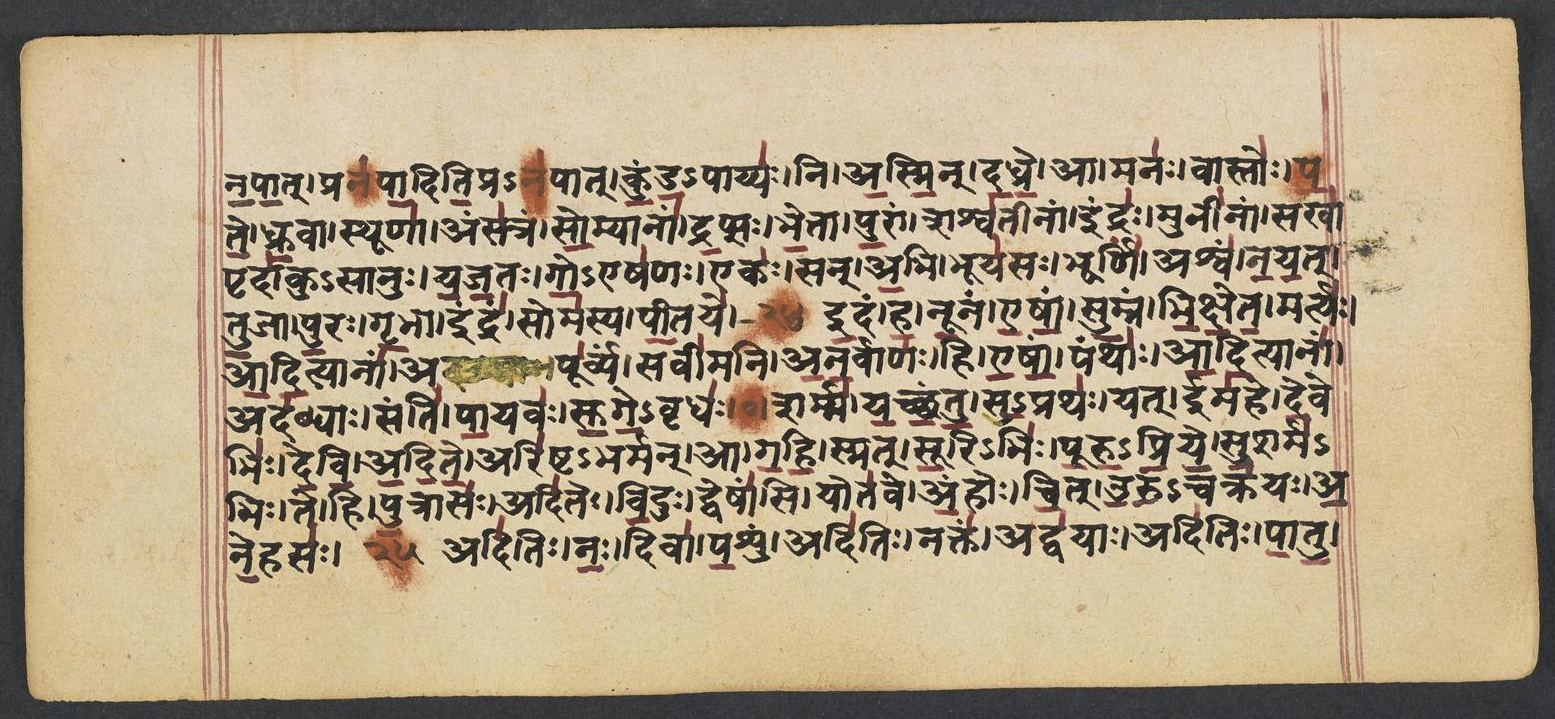
Penn Ms. Coll. 390 Item 41, fol. 586r (numbered 8r by the scribe) (OPenn image 586, lower leaf). Checked on the image: the Rigveda text on this page begins in RV 8.17.13 ‹napāt pranapād itipra-napāt kuṇḍa-pāyyaḥ›. The next page with Rigveda text, fol. 586v (numbered 8v by the scribe), begins in RV 8.18.6 ‹aṃhasaḥ sadāvṛdhā›. Verses 8.17.13-15 end on this page; 8.17.13 begins on fol. 585v (numbered 7v by the scribe).
13yas te̍ śṛṅgavṛṣo napā̱t praṇa̍pāt kuṇḍa̱pāyya̍ḥ | ny a̍smin dadhra̱ ā mana̍ḥ ||
14vāsto̍ṣ pate dhru̱vā sthūṇāṁsa̍traṁ so̱myānā̍m | dra̱pso bhe̱ttā pu̱rāṁ śaśva̍tīnā̱m indro̱ munī̍nā̱ṁ sakhā̍ ||
15pṛdā̍kusānur yaja̱to ga̱veṣa̍ṇa̱ eka̱ḥ sann a̱bhi bhūya̍saḥ | bhūrṇi̱m aśva̍ṁ nayat tu̱jā pu̱ro gṛ̱bhendra̱ṁ soma̍sya pī̱taye̍ ||
Compare: Padapāṭha (word-by-word text written in the manuscript; Sansknet e-text via GRETIL)
13yaḥ | te | śṛṅga-vṛṣaḥ | napāt | pranapād itipra-napāt | kuṇḍa-pāyyaḥ | ni | asmin | dadhre | ā | manaḥ
14vāstoḥ | pate | dhruvā | sthūṇā | aṃsatram | somyānām | drapsaḥ | bhettā | purām | śaśvatīnām | indraḥ | munīnām | sakhā
15pṛdāku-sānuḥ | yajataḥ | go--eṣaṇaḥ | ekaḥ | san | abhi | bhūyasaḥ | bhūrṇim | aśvam | nayat | tujā | puraḥ | gṛbhā | indram | somasya | pītaye
13To Kuṇḍapâyya, grandson's son, grandson of Ṣringavr̥ish! to thee, To him have I addressed my thought.
14Strong pillar thou, Lord of the home armour of Soma-offerers: The drop of Soma breaketh all the strongholds down, and Indra is the R̥ishis' Friend.
15Holy Pr̥idâkusânu, winner of the spoil, one eminent o'er many men, Lead on the wild horse Indra with his vigorous grasp forward to drink the Soma juice.
Notes
- Sanskrit: Aufrecht's edition (1877) with the Vedic accents, as entered by van Nooten and Holland (GRETIL).
- English: Ralph T. H. Griffith, The Hymns of the Rigveda (1889-1892; 2nd ed. 1896-1897), from the VedaWeb digital text; OCR slips in that text were corrected against the printed 2nd edition (data/sources/rigveda/griffith_errata.json).
- Padapāṭha (edition text): Sansknet e-text via GRETIL (CC BY-NC-SA 4.0).
Cite
Sources
- Source: Penn Ms. Coll. 390 Item 41 (undated (catalogued with Penn's 18th-19th c. Vedic manuscripts)), OPenn, Public Domain Mark + Aufrecht's accented text (GRETIL) + Griffith's English (VedaWeb) (holding institution)
- Critical edition: Aufrecht (1877), accented e-text via GRETIL
← previous · → next · v cycle view · l back to library