Rigveda 8.3: To Indra
Introduction
Rigveda 8.3 is a hymn of 24 verses addressed to Indra. It stands in book (maṇḍala) 8, the book of the Kaṇva and Aṅgiras poets. The Rigveda is the oldest collection of Sanskrit hymns, composed in the second half of the second millennium BCE and handed down orally for many centuries before it was written down.
The manuscript shown is Penn Ms. Coll. 390 Item 41 (University of Pennsylvania), an undated paper manuscript of the padapāṭha (the word-by-word recitation text, in which every word is written separately and compounds are split) of the whole Ṛgveda in Devanāgarī, 884 leaves in fascicles, 7-9 lines to the page, accents in red; this hymn stands on fol. 564r-566r. Each section below gives the verses that end on one page; the page boundaries were read on the images (the opening words of every page), not counted out. Where the manuscript is a padapāṭha (the word-by-word recitation text), the section shows Aufrecht's continuous (saṃhitā) text first and, as the edition text, the padapāṭha of the same verses, which is the form written on the page.
How was this verified? (Provenance)
Where on the image
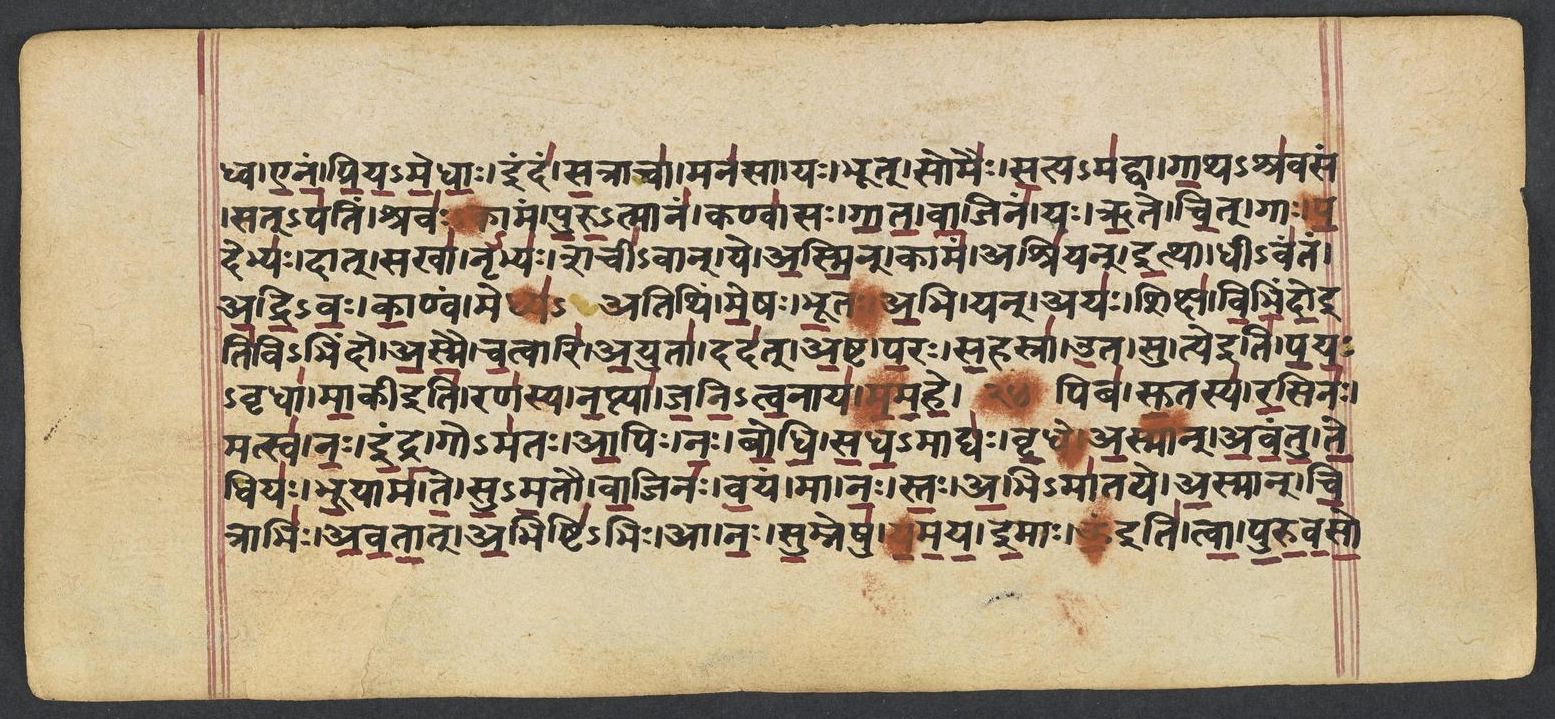
Penn Ms. Coll. 390 Item 41, fol. 564r (numbered 85r by the scribe) (OPenn image 564, lower leaf). Checked on the image: the Rigveda text on this page begins in RV 8.2.37 ‹-yajadhva enam priya-medhāḥ indram›. The next page with Rigveda text, fol. 564v (numbered 85v by the scribe), begins in RV 8.3.3 ‹itipuru-vaso giraḥ vardhantu yāḥ›. Verses 8.3.1-2 end on this page.
1pibā̍ su̱tasya̍ ra̱sino̱ matsvā̍ na indra̱ goma̍taḥ | ā̱pir no̍ bodhi sadha̱mādyo̍ vṛ̱dhe̱3̱̍ 'smām̐ a̍vantu te̱ dhiya̍ḥ ||
2bhū̱yāma̍ te suma̱tau vā̱jino̍ va̱yam mā na̍ḥ star a̱bhimā̍taye | a̱smāñ ci̱trābhi̍r avatād a̱bhiṣṭi̍bhi̱r ā na̍ḥ su̱mneṣu̍ yāmaya ||
Compare: Padapāṭha (word-by-word text written in the manuscript; Sansknet e-text via GRETIL)
1pibāa | sutasya | rasinaḥ | matsva | naḥ | indra | go--mataḥ | āpiḥ | naḥ | bodhi | sadha-mādyaḥ | vṛdhe | asmān | avantu | te | dhiyaḥ
2bhūyāma | te | su-matau | vājinaḥ | vayam | mā | naḥ | staḥ | abhi-mātaye | asmān | c itrābhiḥ | avatāt | abhiṣṭi-bhiḥ | ā | naḥ | sumneṣu | yamaya
1DRINK, Indra, of the savoury juice, and cheer thee with our milky draught. Be, for our weal, our Friend and sharer of the feast, and let thy wisdom guard us well.
2In thy kind grace and favour may we still be strong: expose us not to foe's attack. With manifold assistance guard and succour us, and bring us to felicity.
Where on the image
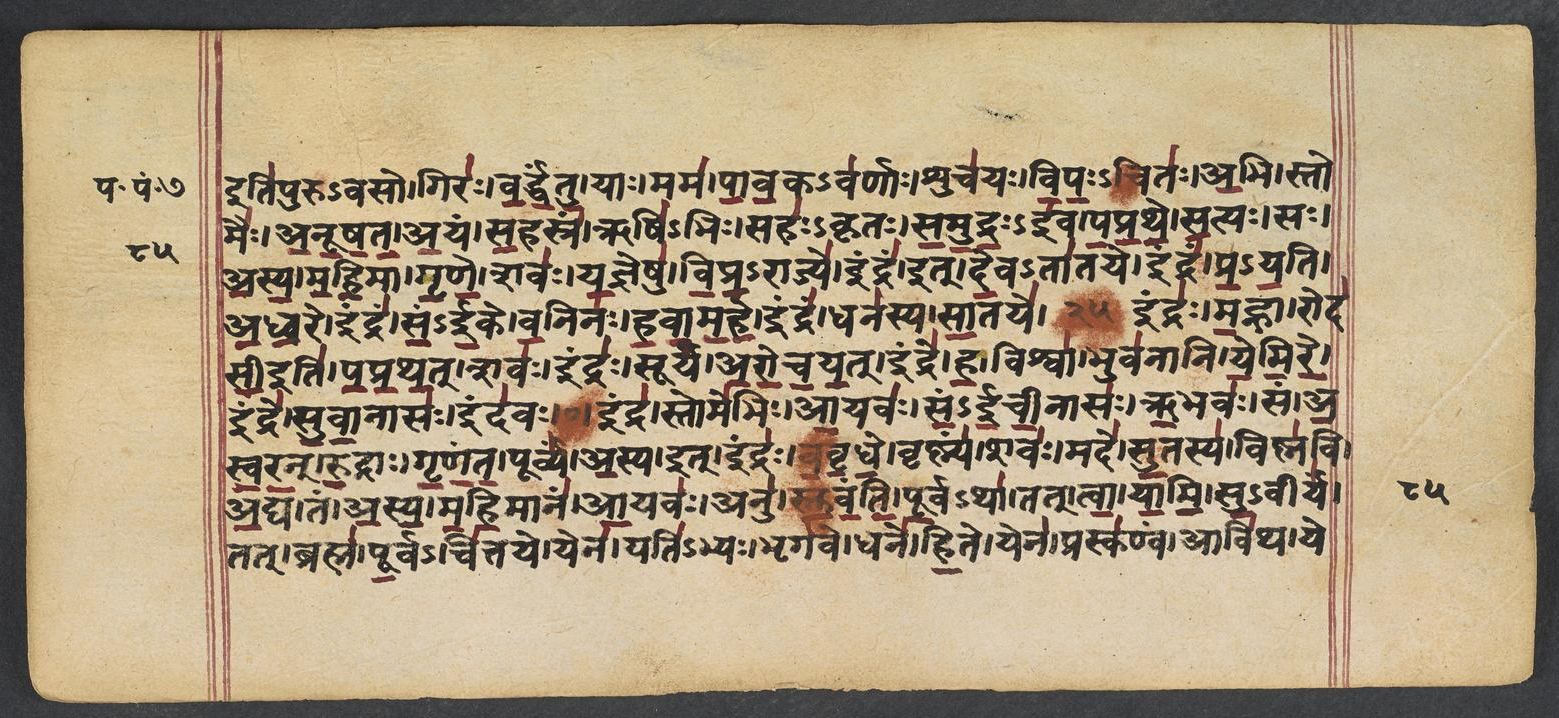
Penn Ms. Coll. 390 Item 41, fol. 564v (numbered 85v by the scribe) (OPenn image 565, upper leaf). Checked on the image: the Rigveda text on this page begins in RV 8.3.3 ‹itipuru-vaso giraḥ vardhantu yāḥ›. The next page with Rigveda text, fol. 565r (numbered 86r by the scribe), begins in RV 8.3.10 ‹yena samudram asṛjaḥ mahīḥ›. Verses 8.3.3-9 end on this page; 8.3.3 begins on fol. 564r (numbered 85r by the scribe).
3i̱mā u̍ tvā purūvaso̱ giro̍ vardhantu̱ yā mama̍ | pā̱va̱kava̍rṇā̱ḥ śuca̍yo vipa̱ścito̱ 'bhi stomai̍r anūṣata ||
4a̱yaṁ sa̱hasra̱m ṛṣi̍bhi̱ḥ saha̍skṛtaḥ samu̱dra i̍va paprathe | sa̱tyaḥ so a̍sya mahi̱mā gṛ̍ṇe̱ śavo̍ ya̱jñeṣu̍ vipra̱rājye̍ ||
5indra̱m id de̱vatā̍taya̱ indra̍m praya̱ty a̍dhva̱re | indra̍ṁ samī̱ke va̱nino̍ havāmaha̱ indra̱ṁ dhana̍sya sā̱taye̍ ||
6indro̍ ma̱hnā roda̍sī papratha̱c chava̱ indra̱ḥ sūrya̍m arocayat | indre̍ ha̱ viśvā̱ bhuva̍nāni yemira̱ indre̍ suvā̱nāsa̱ inda̍vaḥ ||
7a̱bhi tvā̍ pū̱rvapī̍taya̱ indra̱ stome̍bhir ā̱yava̍ḥ | sa̱mī̱cī̱nāsa̍ ṛ̱bhava̱ḥ sam a̍svaran ru̱drā gṛ̍ṇanta̱ pūrvya̍m ||
8a̱syed indro̍ vāvṛdhe̱ vṛṣṇya̱ṁ śavo̱ made̍ su̱tasya̱ viṣṇa̍vi | a̱dyā tam a̍sya mahi̱māna̍m ā̱yavo 'nu̍ ṣṭuvanti pū̱rvathā̍ ||
9tat tvā̍ yāmi su̱vīrya̱ṁ tad brahma̍ pū̱rvaci̍ttaye | yenā̱ yati̍bhyo̱ bhṛga̍ve̱ dhane̍ hi̱te yena̱ praska̍ṇva̱m āvi̍tha ||
Compare: Padapāṭha (word-by-word text written in the manuscript; Sansknet e-text via GRETIL)
3imāḥ | oṃ iti | tvā | puruvaso itipuru-vaso | giraḥ | vardhantu | yāḥ | mama | pāvaka-varṇāḥ | śucayaḥ | vipaḥ-citaḥ | abhi | stomaiḥ | anūṣata
4ayam | sahasram | ṛṣi-bhiḥ | sahaḥ-kṛtaḥ | samudraḥ-iva | paprathe | satyaḥ | saḥ | asya | mahimā | gṛṇe | śavaḥ | yajñeṣu | vipra-rājye
5indram | it | deva-tātaye | indram | pra-yati | adhvare | indram | sam-īke | vaninaḥ | havāmahe | indram | dhanasya | sātaye
6indraḥ | mahnā | rodasī iti | paprathat | śavaḥ | indraḥ | sūryam | arocayat | indre | ha | viśvā | bhuvanāni | yemire | indre | suvānāsaḥ | indavaḥ
7abhi | tvā | pūrva-pītaye | indra | stomebhiḥ | āyavaḥ | sam-īcīnāsaḥ | ṛbhavaḥ | sam | asvaran | rudrāḥ | gṛṇanta | pūrvyam
8asya | it | indraḥ | vavṛdhe | vṛṣṇyam | śavaḥ | made | sutasya | viṣṇavi | adya | tam | asya | mahimānam | āyavaḥ | anu | stuvanti | pūrva-thā
9tat | tva | yāmi | su-vīryam | tat | brahma | pūrva-cittaye | yena | yati-bhyaḥ | bhṛgave | dhane | hite | yena | praskaṇvam | āvitha
3May these my songs of praise exalt thee, Lord, who hast abundant wealth. Men skilled in holy hymns, pure, with the hues of fire, have sung them with their lauds to thee.
4He, with his might enhanced by R̥ishis thousandfold, hath like an ocean spread himself. His majesty is praised as true at solemn rites, his power where holy singers rule.
5Indra for worship of the Gods, Indra while sacrifice proceeds, Indra, as worshippers in battle-shock, we call, Indra that we may win the spoil.
6With might hath Indra spread out heaven and earth, with power hath Indra lighted up the Sun. In Indra are all creatures closely held; in him meet the distilling Soma-drops.
7Men with their lauds are urging thee, Indra, to drink the Soma first. The R̥ibhus in accord have lifted up their voice, and Rudras sung thee as the first.
8Indra increased his manly strength at sacrifice, in the wild rapture of this juice. And living men to-day, even as of old, sing forth their praises to his majesty.
9I crave of thee that hero strength, that thou mayst first regard this prayer, Wherewith thou holpest Bhr̥igu and the Yatis and Praskaṇva when the prize was staked.
Where on the image
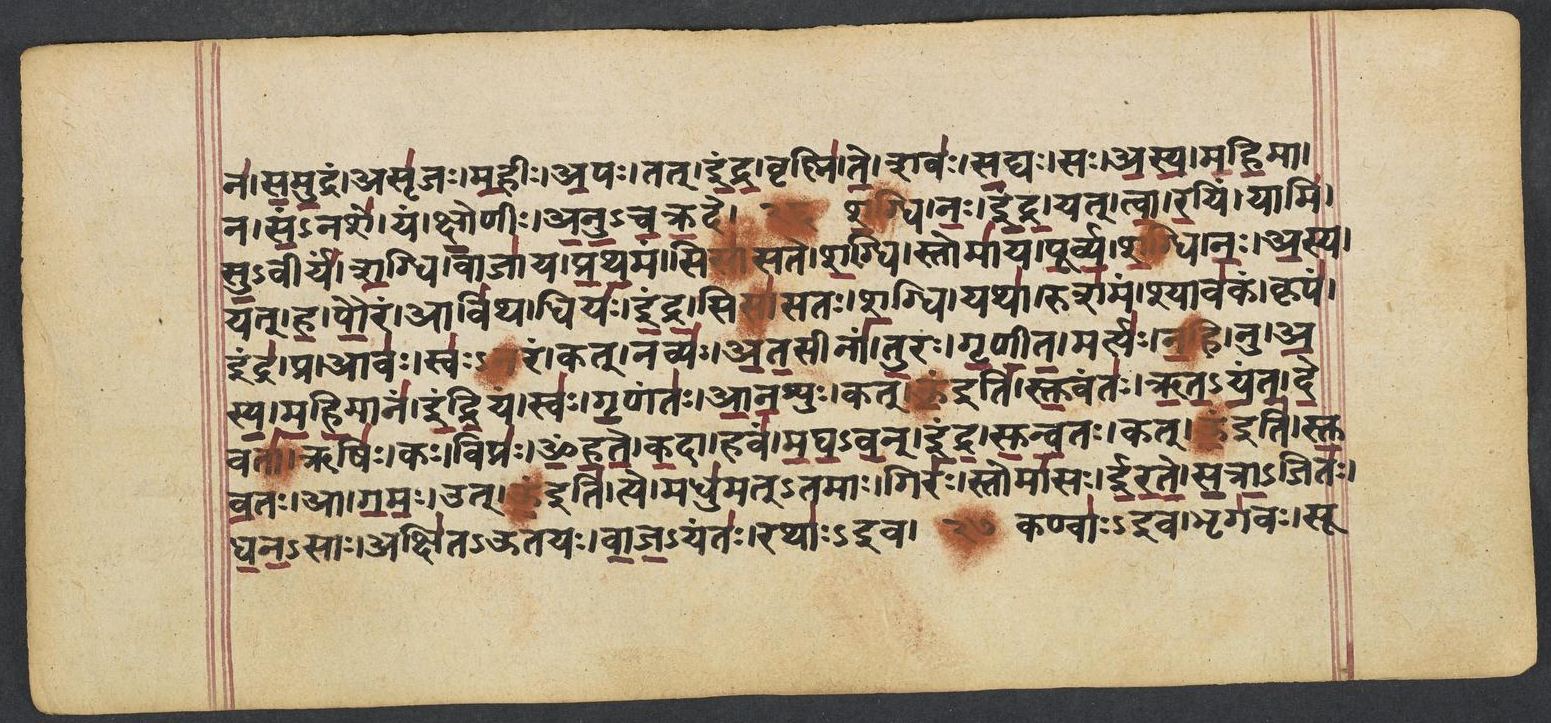
Penn Ms. Coll. 390 Item 41, fol. 565r (numbered 86r by the scribe) (OPenn image 565, lower leaf). Checked on the image: the Rigveda text on this page begins in RV 8.3.10 ‹yena samudram asṛjaḥ mahīḥ›. The next page with Rigveda text, fol. 565v (numbered 86v by the scribe), begins in RV 8.3.16 ‹-sūryāiva viśvam it dhītan›. Verses 8.3.10-15 end on this page.
10yenā̍ samu̱dram asṛ̍jo ma̱hīr a̱pas tad i̍ndra̱ vṛṣṇi̍ te̱ śava̍ḥ | sa̱dyaḥ so a̍sya mahi̱mā na sa̱ṁnaśe̱ yaṁ kṣo̱ṇīr a̍nucakra̱de ||
11śa̱gdhī na̍ indra̱ yat tvā̍ ra̱yiṁ yāmi̍ su̱vīrya̍m | śa̱gdhi vājā̍ya pratha̱maṁ siṣā̍sate śa̱gdhi stomā̍ya pūrvya ||
12śa̱gdhī no̍ a̱sya yad dha̍ pau̱ram āvi̍tha̱ dhiya̍ indra̱ siṣā̍sataḥ | śa̱gdhi yathā̱ ruśa̍ma̱ṁ śyāva̍ka̱ṁ kṛpa̱m indra̱ prāva̱ḥ sva̍rṇaram ||
13kan navyo̍ ata̱sīnā̍ṁ tu̱ro gṛ̍ṇīta̱ martya̍ḥ | na̱hī nv a̍sya mahi̱māna̍m indri̱yaṁ sva̍r gṛ̱ṇanta̍ āna̱śuḥ ||
14kad u̍ stu̱vanta̍ ṛtayanta de̱vata̱ ṛṣi̱ḥ ko vipra̍ ohate | ka̱dā hava̍m maghavann indra sunva̱taḥ kad u̍ stuva̱ta ā ga̍maḥ ||
15ud u̱ tye madhu̍mattamā̱ gira̱ḥ stomā̍sa īrate | sa̱trā̱jito̍ dhana̱sā akṣi̍totayo vāja̱yanto̱ rathā̍ iva ||
Compare: Padapāṭha (word-by-word text written in the manuscript; Sansknet e-text via GRETIL)
10yena | samudram | asṛjaḥ | mahīḥ | apaḥ | tat | indra | vṛṣṇi | te | śavaḥ | sadyaḥ | saḥ | asya | mahimā | na | sam-naśe | yam | kṣoṇīḥ | anu-cakrade
11śagdhi | naḥ | indra | yat | tvā | rayim | yāmi | su-vīryam | śagdhi | vājāya | prathamam | sisāsate | śagdhi | stomāya | pūrvya
12śagdhi | naḥ | asya | yat | ha | pauram | āvitha | dhiyaḥ | indra | sisāsataḥ | śagdhi | yathā | ruśamam | śyāvakam | kṛpam | indra | pra | āvaḥ | svaḥ-naram
13kat | navyaḥ | atasīnām | turaḥ | gṛṇīta | martyaḥ | nah | nu | asya | mahimānam | indriyam | svaḥ | gṛṇantaḥ | ānaśuḥ
14kat | oṃ iti | stuvantaḥ | ṛta-yanta | devatā | ṛṣiḥ | kaḥ | vipraḥ | ohate | kadā | havam | maghavan | indra | sunvataḥ | kat | oṃ iti | stuvataḥ | ā | gamaḥ
15ut | oṃ iti | tye | madhumat-tamāḥ | giraḥ | stomāsaḥ | īrate | satrājitaḥ | dhana-sāḥ | akṣita-ūtayaḥ | vājayantaḥ | rathāḥ-iva
10Wherewith thou sentest mighty waters to the sea, that, Indra, is thy manly strength. For ever unattainable is this power of him to whom the worlds have cried aloud.
11Help us, O Indra, when we pray to thee for wealth and hero might. First help thou on to strength the man who strives to win, and aid our laud, O Ancient One.
12Help for us, Indra, as thou holpest Paura once, this man's devotions bent on gain. Help, as thou gavest Ruṣama and Ṣyâvaka and Svarṇara and Kr̥ipa aid.
13What newest of imploring prayers shall, then, the zealous mortal sing? For have not they who laud his might, and Indra-power won for themselves the light of heaven?
14When shall they keep the Law and praise thee mid the Gods? Who counts as R̥ishi and as sage? When ever wilt thou, Indra Maghavan, come nigh to presser's or to praiser's call?
15These songs of ours exceeding sweet, these hymns of praise ascend to thee, Like ever-conquering chariots that display their strength, gain wealth, and give unfailing aid.
Where on the image
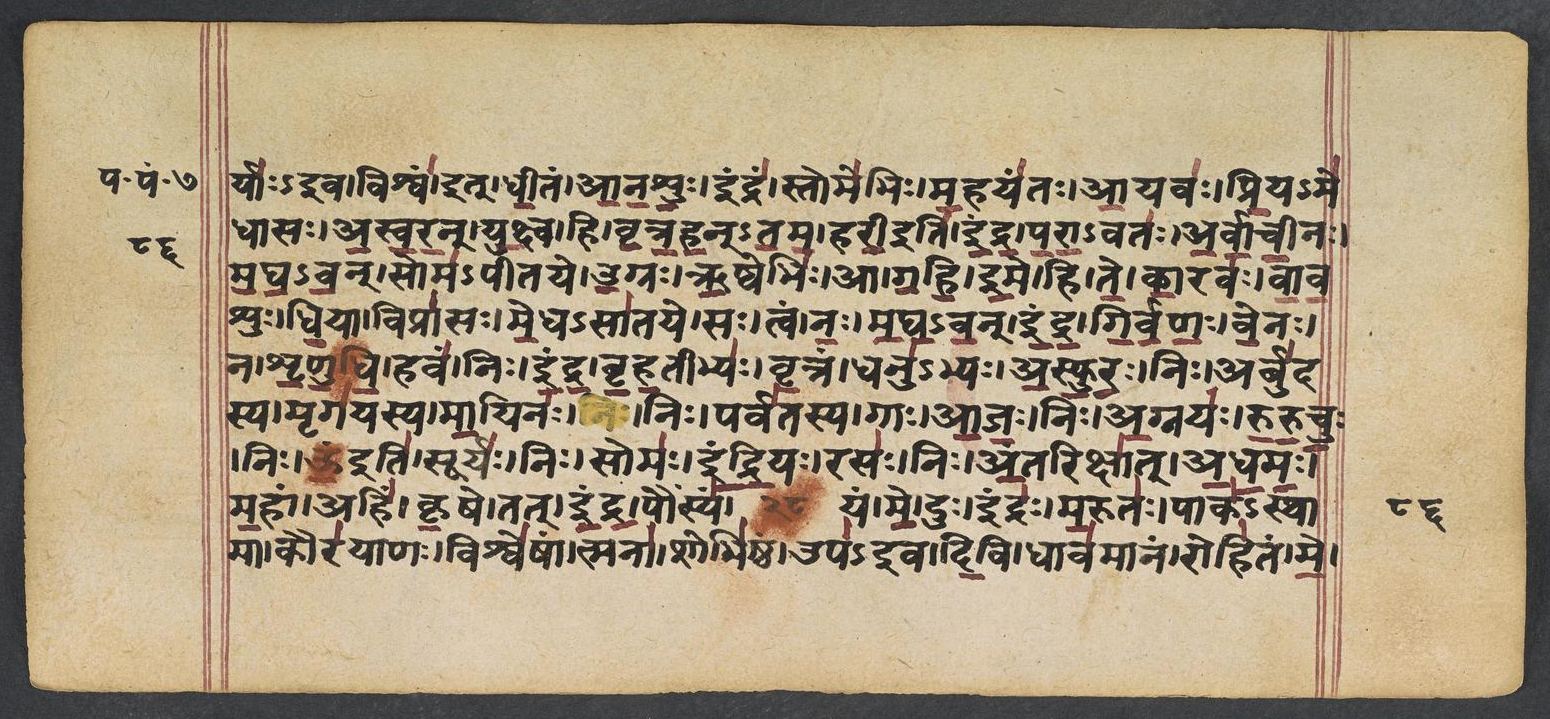
Penn Ms. Coll. 390 Item 41, fol. 565v (numbered 86v by the scribe) (OPenn image 566, upper leaf). Checked on the image: the Rigveda text on this page begins in RV 8.3.16 ‹-sūryāiva viśvam it dhītan›. The next page with Rigveda text, fol. 566r (numbered 87r by the scribe), begins in RV 8.3.22 ‹pāka-sthāmā su-dhuram kakṣya-prām adāt›. Verses 8.3.16-21 end on this page; 8.3.16 begins on fol. 565r (numbered 86r by the scribe).
16kaṇvā̍ iva̱ bhṛga̍va̱ḥ sūryā̍ iva̱ viśva̱m id dhī̱tam ā̍naśuḥ | indra̱ṁ stome̍bhir ma̱haya̍nta ā̱yava̍ḥ pri̱yame̍dhāso asvaran ||
17yu̱kṣvā hi vṛ̍trahantama̱ harī̍ indra parā̱vata̍ḥ | a̱rvā̱cī̱no ma̍ghava̱n soma̍pītaya u̱gra ṛ̱ṣvebhi̱r ā ga̍hi ||
18i̱me hi te̍ kā̱ravo̍ vāva̱śur dhi̱yā viprā̍so me̱dhasā̍taye | sa tvaṁ no̍ maghavann indra girvaṇo ve̱no na śṛ̍ṇudhī̱ hava̍m ||
19nir i̍ndra bṛha̱tībhyo̍ vṛ̱traṁ dhanu̍bhyo asphuraḥ | nir arbu̍dasya̱ mṛga̍yasya mā̱yino̱ niḥ parva̍tasya̱ gā ā̍jaḥ ||
20nir a̱gnayo̍ rurucu̱r nir u̱ sūryo̱ niḥ soma̍ indri̱yo rasa̍ḥ | nir a̱ntari̍kṣād adhamo ma̱hām ahi̍ṁ kṛ̱ṣe tad i̍ndra̱ pauṁsya̍m ||
21yam me̱ dur indro̍ ma̱ruta̱ḥ pāka̍sthāmā̱ kaura̍yāṇaḥ | viśve̍ṣā̱ṁ tmanā̱ śobhi̍ṣṭha̱m upe̍va di̱vi dhāva̍mānam ||
Compare: Padapāṭha (word-by-word text written in the manuscript; Sansknet e-text via GRETIL)
16kaṇvāḥ-iva | bhṛgavaḥ | sūryāiva | viśvam | it | dhītan | ānaśuḥ | indram | stomebhiḥ | mahayantaḥ | āyavaḥ | priya-medhāsaḥ | asvaran
17yukṣva | hi | vṛtrahan-tama | harī iti | indra | parāvataḥ | arvācīnaḥ | magha-van | soma-pītaye | ugraḥ | ṛṣvebhiḥ | ā | gahi
18ime | hi | te | kāravaḥ | vāvaśuḥ | dhiyā | viprāsaḥ | medha-sātaye | saḥ | tvam | naḥ | magha-van | indra | girvaṇaḥ | venaḥ | na | śṛṇudhi | havam
19niḥ | indra | bṛhatībhyaḥ | vṛtram | dhanu-bhyaḥ | asphuraḥ | niḥ | arbudasya | mṛgayasya | māyinaḥ | niḥ | parvatasya | gāḥ | ājaḥ
20niḥ | agnayaḥ | rurucuḥ | niḥ | oṃ iti | sūryaḥ | niḥ | somaḥ | indriyaḥ | rasaḥ | niḥ | antarikṣāt | adhamaḥ | mahām | ahim | kṛṣe | tat | indra | paiṃsyam
21yam | me | duḥ | indraḥ | marutaḥ | pāka-sthāmā | kaurayāṇaḥ | viśveṣām | tmanā | śobh iṣṭham | upa-iva | divi | dhāvamānam
16The Bhr̥igus are like Suns, like Kaṇvas, and have gained all that their thoughts were bent upon. The living men of Priyamedha's race have sung exalting Indra with their lauds.
17Best slayer of the Vr̥itras, yoke thy Bay Steeds, Indra, from afar. Come with the High Ones hither, Maghavan, to us, Mighty, to drink the Soma juice.
18For these, the bards and singers, have cried out to thee with prayer, to gain the sacrifice. As such, O Maghavan, Indra, who lovest song, even as a lover hear my call.
19Thou from the lofty plains above, O Indra, hurledst Vr̥itra down. Thou dravest forth the kine of guileful Mr̥igaya and Arbuda from the mountain's hold.
20Bright were the flaming fires, the Sun gave forth his shine, and Soma, Indra's juice, shone clear. Indra, thou blewest the great Dragon from the air -. men must regard that valorous deed.
21The fairest courser of them all, who runneth on as 'twere to heaven. Which Indra and the Maruts gave, and Pâkasthâman Kaurayâṇ.
Where on the image
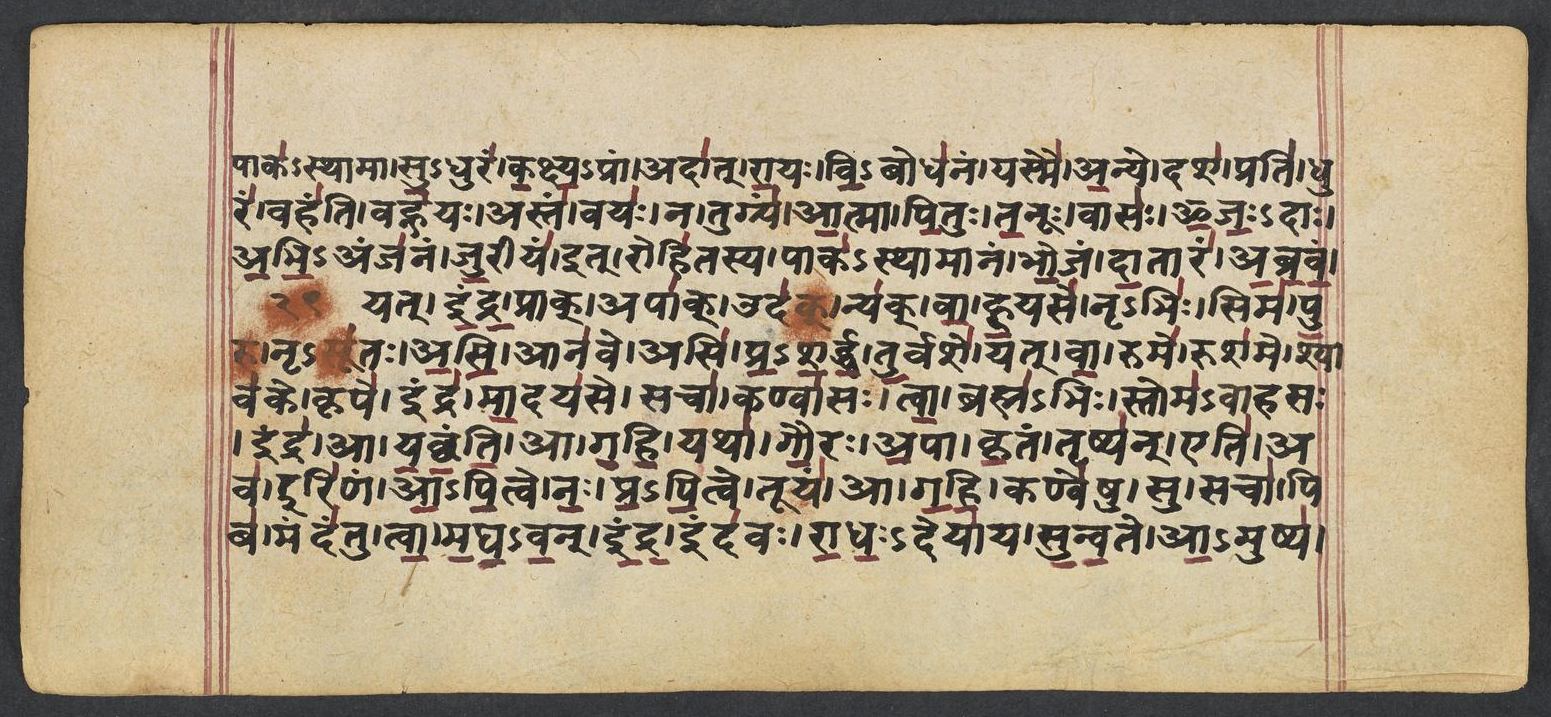
Penn Ms. Coll. 390 Item 41, fol. 566r (numbered 87r by the scribe) (OPenn image 566, lower leaf). Checked on the image: the Rigveda text on this page begins in RV 8.3.22 ‹pāka-sthāmā su-dhuram kakṣya-prām adāt›. The next page with Rigveda text, fol. 566v (numbered 87v by the scribe), begins in RV 8.4.4 ‹somam apibaḥ camū iti›. Verses 8.3.22-24 end on this page; 8.3.22 begins on fol. 565v (numbered 86v by the scribe).
22rohi̍tam me̱ pāka̍sthāmā su̱dhura̍ṁ kakṣya̱prām | adā̍d rā̱yo vi̱bodha̍nam ||
23yasmā̍ a̱nye daśa̱ prati̱ dhura̱ṁ vaha̍nti̱ vahna̍yaḥ | asta̱ṁ vayo̱ na tugrya̍m ||
24ā̱tmā pi̱tus ta̱nūr vāsa̍ ojo̱dā a̱bhyañja̍nam | tu̱rīya̱m id rohi̍tasya̱ pāka̍sthāmānam bho̱jaṁ dā̱tāra̍m abravam ||
Compare: Padapāṭha (word-by-word text written in the manuscript; Sansknet e-text via GRETIL)
22rohitam | me | pāka-sthāmā | su-dhuram | kakṣya-prām | adāt | rāyaḥ | vi-bodhanam
23yasmai | anye | daśa | prati | dhuram | vahanti | vahnayaḥ | astam | vayaḥ | na | tugryam
24atmā | pituḥ | tanūḥ | vāsaḥ | ojaḥ-dāḥ | abhi-añjanam | turīyam | it | rohitasya | pāka-sthāmānam | bhojam | dātāram | abravam
22To me hath Pâkasthâman given, a ruddy horse,good at the pole, Filling is girth and rousing wealth;
23Compared with whom no other ten strong coursers, harnessed to the pole, Bear Tugrya to his dwelling place.
24Raiment is body, food is life, and healing ointment giveth strength. As the free-handed giver of the ruddy steed, I have named Pâkasthâman fourth.
Notes
- Sanskrit: Aufrecht's edition (1877) with the Vedic accents, as entered by van Nooten and Holland (GRETIL).
- English: Ralph T. H. Griffith, The Hymns of the Rigveda (1889-1892; 2nd ed. 1896-1897), from the VedaWeb digital text; OCR slips in that text were corrected against the printed 2nd edition (data/sources/rigveda/griffith_errata.json).
- Padapāṭha (edition text): Sansknet e-text via GRETIL (CC BY-NC-SA 4.0).
Cite
Sources
- Source: Penn Ms. Coll. 390 Item 41 (undated (catalogued with Penn's 18th-19th c. Vedic manuscripts)), OPenn, Public Domain Mark + Aufrecht's accented text (GRETIL) + Griffith's English (VedaWeb) (holding institution)
- Critical edition: Aufrecht (1877), accented e-text via GRETIL
← previous · → next · v cycle view · l back to library