Rigveda 8.23: To Agni
Introduction
Rigveda 8.23 is a hymn of 30 verses addressed to Agni. It stands in book (maṇḍala) 8, the book of the Kaṇva and Aṅgiras poets. The Rigveda is the oldest collection of Sanskrit hymns, composed in the second half of the second millennium BCE and handed down orally for many centuries before it was written down.
The manuscript shown is Penn Ms. Coll. 390 Item 41 (University of Pennsylvania), an undated paper manuscript of the padapāṭha (the word-by-word recitation text, in which every word is written separately and compounds are split) of the whole Ṛgveda in Devanāgarī, 884 leaves in fascicles, 7-9 lines to the page, accents in red; this hymn stands on fol. 595r-596v. Each section below gives the verses that end on one page; the page boundaries were read on the images (the opening words of every page), not counted out. Where the manuscript is a padapāṭha (the word-by-word recitation text), the section shows Aufrecht's continuous (saṃhitā) text first and, as the edition text, the padapāṭha of the same verses, which is the form written on the page.
How was this verified? (Provenance)
Where on the image
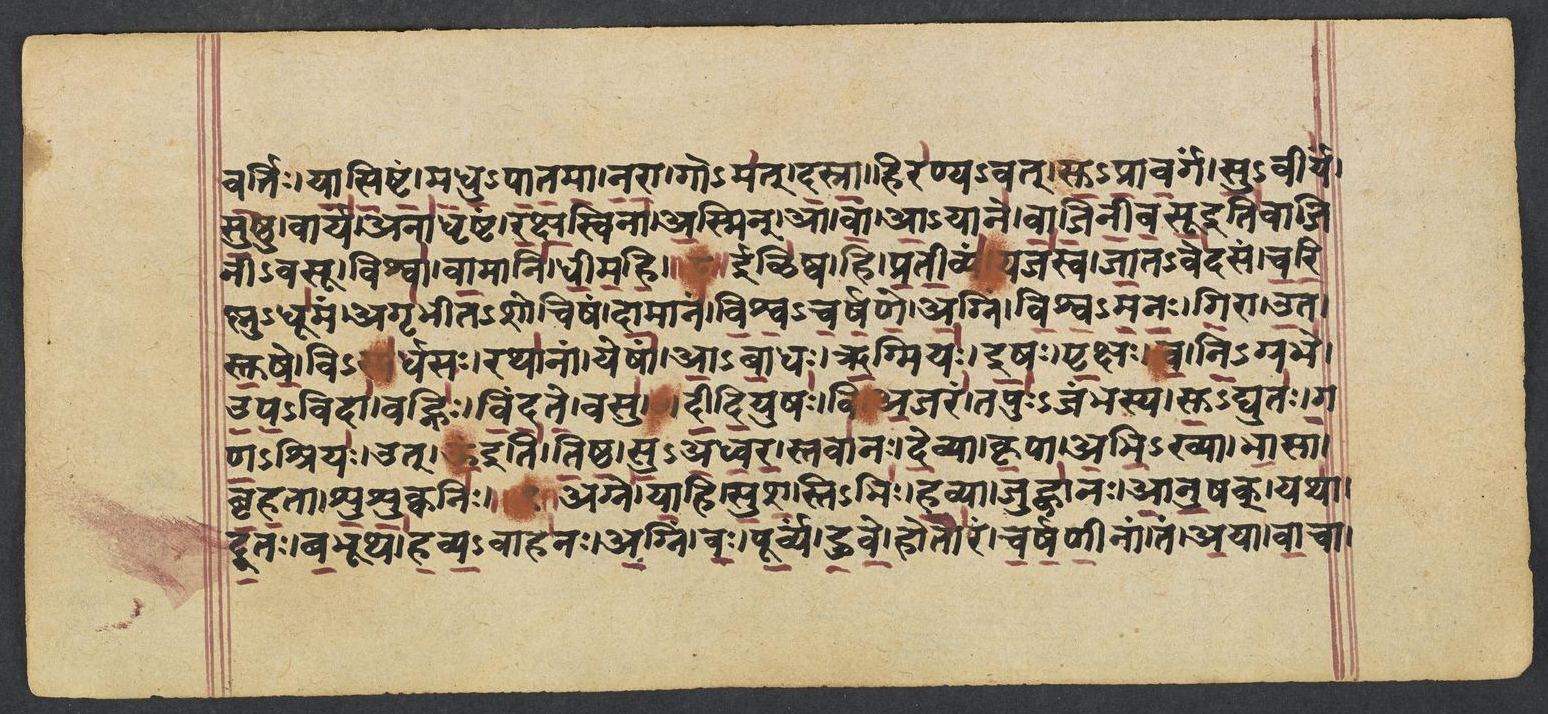
Penn Ms. Coll. 390 Item 41, fol. 595r (numbered 17r by the scribe) (OPenn image 595, lower leaf). Checked on the image: the Rigveda text on this page begins in RV 8.22.17 ‹vartiḥ yāsiṣṭam madhu-pātamā narā›. The next page with Rigveda text, fol. 595v (numbered 17v by the scribe), begins in RV 8.23.7 ‹gṛṇe tam oṃ iti›. Verses 8.23.1-6 end on this page.
1īḻi̍ṣvā̱ hi pra̍tī̱vya1̱̍ṁ yaja̍sva jā̱tave̍dasam | ca̱ri̱ṣṇudhū̍ma̱m agṛ̍bhītaśociṣam ||
2dā̱māna̍ṁ viśvacarṣaṇe̱ 'gniṁ vi̍śvamano gi̱rā | u̱ta stu̍ṣe̱ viṣpa̍rdhaso̱ rathā̍nām ||
3yeṣā̍m ābā̱dha ṛ̱gmiya̍ i̱ṣaḥ pṛ̱kṣaś ca̍ ni̱grabhe̍ | u̱pa̱vidā̱ vahni̍r vindate̱ vasu̍ ||
4ud a̍sya śo̱cir a̍sthād dīdi̱yuṣo̱ vy a1̱̍jara̍m | tapu̍rjambhasya su̱dyuto̍ gaṇa̱śriya̍ḥ ||
5ud u̍ tiṣṭha svadhvara̱ stavā̍no de̱vyā kṛ̱pā | a̱bhi̱khyā bhā̱sā bṛ̍ha̱tā śu̍śu̱kvani̍ḥ ||
6agne̍ yā̱hi su̍śa̱stibhi̍r ha̱vyā juhvā̍na ānu̱ṣak | yathā̍ dū̱to ba̱bhūtha̍ havya̱vāha̍naḥ ||
Compare: Padapāṭha (word-by-word text written in the manuscript; Sansknet e-text via GRETIL)
1īḷiṣva | hi | pratīvyam | yajasva | jāta-vedasam | cariṣṇu-dhāūmam | agṛbhīta-śociṣam
2dāmānam | viśva-carṣaṇe | agnim | viśva-manaḥ | girā | uta | stuṣe | vi-spadharsaḥ | rathānām
3yeṣām | ābādhaḥ | ṛgmiyaḥ | iṣaḥ | pṛkṣaḥ | ca | ni-grabhe | upa-vidā | vahniḥ | vindate | vasu
4ut | asya | śociḥ | asthāt | dīdiyuṣaḥ | vi | ajaram | tapuḥ-jambhasya | su-dyutaḥ | gaṇa-śriyaḥ
5ut | oṃ iti | tiṣṭha | su-adhvara | stavānaḥ | devyā | kṛpā | abhi-khyā | bhāsā | bṛhatā | śuśukvaniḥ
6agne | yāhi | suśasti-bhiḥ | havyā | juhvānaḥ | ānuṣak | yathā | dūtaḥ | babhūtha | havya-vāhanaḥ
1WORSHIP thou Jâtavedas, pray to him who willingly accepts, Whose smoke wanders at will, and none may grasp his flame.
2Thou, all men's friend, Viṣvamanas, exaltest Agni with thy song, The Giver, and his flames with which no cars contend.
3Whose resolute assault, to win vigour and food, deserves our praise,– Through whose discovering power the priest obtaineth wealth.
4Up springs the imperishable flame, the flame of the Refulgent One Most bright, with glowing jaws and glory in his train.
5Skilled in fair sacrifice, extolled, arise in Godlike loveliness, Shining with lofty splendour, with effulgent light.
6Called straight to our oblations, come, O Agni, through our eulogies, As thou hast been our envoy bearing up our gifts.
Where on the image
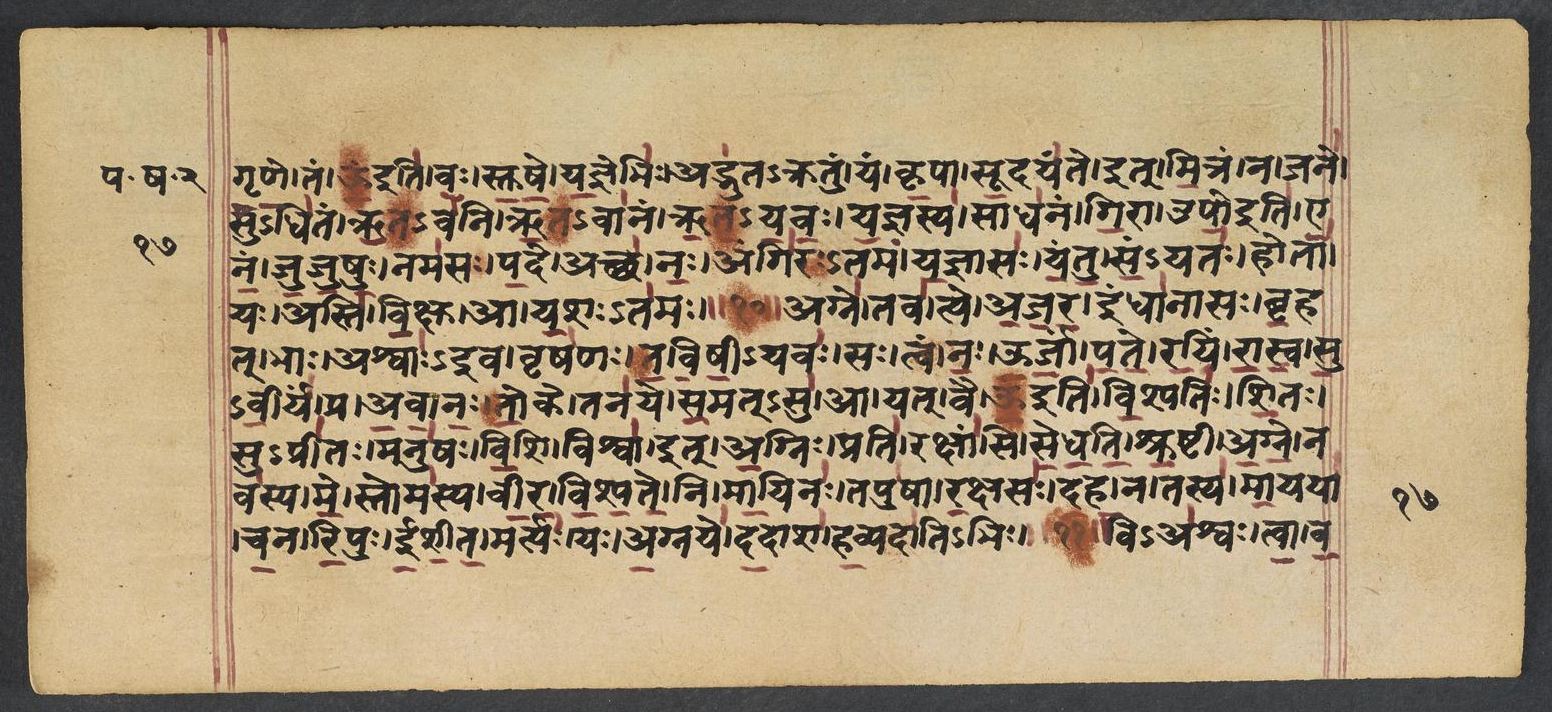
Penn Ms. Coll. 390 Item 41, fol. 595v (numbered 17v by the scribe) (OPenn image 596, upper leaf). Checked on the image: the Rigveda text on this page begins in RV 8.23.7 ‹gṛṇe tam oṃ iti›. The next page with Rigveda text, fol. 596r (numbered 18r by the scribe), begins in RV 8.23.16 ‹-vasu-vidam ukṣaṇyuḥ aprīṇāt ṛṣiḥ›. Verses 8.23.7-15 end on this page; 8.23.7 begins on fol. 595r (numbered 17r by the scribe).
7a̱gniṁ va̍ḥ pū̱rvyaṁ hu̍ve̱ hotā̍raṁ carṣaṇī̱nām | tam a̱yā vā̱cā gṛ̍ṇe̱ tam u̍ vaḥ stuṣe ||
8ya̱jñebhi̱r adbhu̍takratu̱ṁ yaṁ kṛ̱pā sū̱daya̍nta̱ it | mi̱traṁ na jane̱ sudhi̍tam ṛ̱tāva̍ni ||
9ṛ̱tāvā̍nam ṛtāyavo ya̱jñasya̱ sādha̍naṁ gi̱rā | upo̍ enaṁ jujuṣu̱r nama̍sas pa̱de ||
10acchā̍ no̱ aṅgi̍rastamaṁ ya̱jñāso̍ yantu sa̱ṁyata̍ḥ | hotā̱ yo asti̍ vi̱kṣv ā ya̱śasta̍maḥ ||
11agne̱ tava̱ tye a̍ja̱rendhā̍nāso bṛ̱had bhāḥ | aśvā̍ iva̱ vṛṣa̍ṇas taviṣī̱yava̍ḥ ||
12sa tvaṁ na̍ ūrjām pate ra̱yiṁ rā̍sva su̱vīrya̍m | prāva̍ nas to̱ke tana̍ye sa̱matsv ā ||
13yad vā u̍ vi̱śpati̍ḥ śi̱taḥ suprī̍to̱ manu̍ṣo vi̱śi | viśved a̱gniḥ prati̱ rakṣā̍ṁsi sedhati ||
14śru̱ṣṭy a̍gne̱ nava̍sya me̱ stoma̍sya vīra viśpate | ni mā̱yina̱s tapu̍ṣā ra̱kṣaso̍ daha ||
15na tasya̍ mā̱yayā̍ ca̱na ri̱pur ī̍śīta̱ martya̍ḥ | yo a̱gnaye̍ da̱dāśa̍ ha̱vyadā̍tibhiḥ ||
Compare: Padapāṭha (word-by-word text written in the manuscript; Sansknet e-text via GRETIL)
7agnim | vaḥ | pūrvyam | huve | hotāram | carṣaṇīnām | tam | ayā | vācā | gṛṇe | tam | oṃ iti | vaḥ | stuṣe
8yajñebhiḥ | adbhuta-kratum | yam | kṛpā | sūdayante | it | mitram | na | jane | su-dhi tam | ṛta-vani
9ṛta-vānam | ṛta-yavaḥ | yajñasya | sādhanam | girā | uṣaḥ | enam | jujuṣuḥ | namasaḥ | pade
10accha | naḥ | aṅgiraḥ-tamam | yajñāsaḥ | yantu | sam-yataḥ | hotā | yaḥ | asti | vikṣu | ā | yaśaḥ-tamaḥ
11agne | tava | tye | ajara | indhānāsaḥ | bṛhat | bhāḥ | aśvāḥ-iva | vṛṣaṇaḥ | tavi ṣī-yavaḥ
12saḥ | tvam | naḥ | ūrjām | pate | rayim | rāsva | su-vīryam | pra | ava | naḥ | toke | tanaye | samat-su | ā
13yat | vai | oṃ iti | viśpatiḥ | śitaḥ | su-prītaḥ | manuṣaḥ | viśi | viśvā | it | agniḥ | prati | rakṣāṃsi | sedhati
14śruṣṭī | agne | navasya | me | stomasya | vīra | viśpate | ni | māyinaḥ | tapuṣā | rakṣasaḥ | daha
15na | tasya | māyayā | cana | ripuḥ | īśīta | martyaḥ | yaḥ | agnaye | dadāśa | havyadāti-bhiḥ
7I call your Agni, from of old Invoking Priest of living men: Him with this song I laud and magnify for you.
8Whom, wondrous wise, they animate with solemn rites and his fair form, Kind as a friend to men who keep the holy Law.
9Him, true to Law, who perfecteth the sacrifice,. Law-loving ones! Ye with your song have gratified in the place of prayer.
10May all our sacrifices go to him the truest Angiras, Who is among mankind the most illustrious Priest.
11Imperishable Agni, thine are all these high enkindled lights, Like horses and like stallions showing forth their strength.
12So give us, Lord of Power and Might, riches combined with hero strength, And guard us with our sons and grand. sons in our frays.
13Soon as the eager Lord of men is friendly unto Manti's race, Agni averteth from us all the demon host.
14O Hero Agni, Lord of men, on hearing this new laud of mine, Burn down the Râkshasas, enchanters, with thy flame.
15No mortal foe can e'er prevail by arts of magic over him Who serveth Agni well with sacrificial gifts.
Where on the image
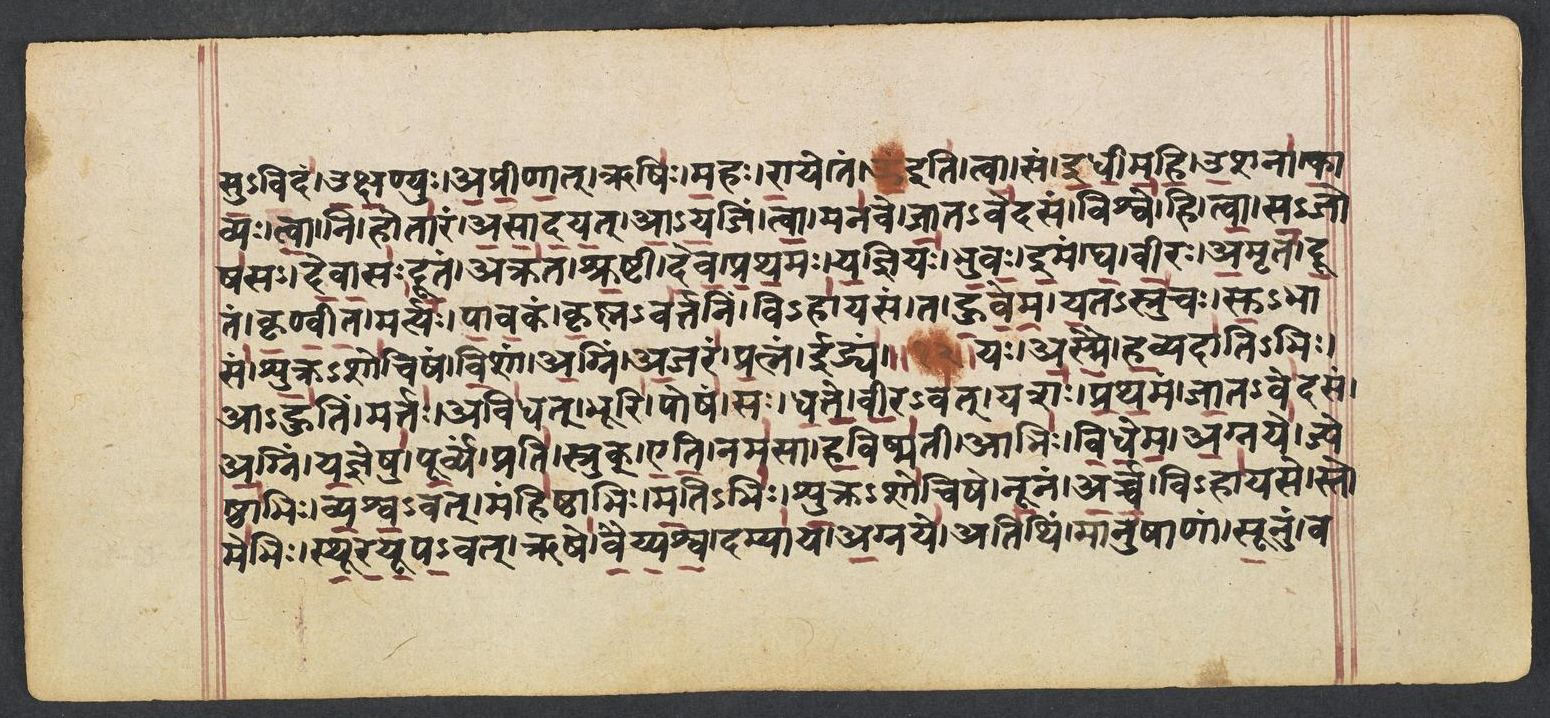
Penn Ms. Coll. 390 Item 41, fol. 596r (numbered 18r by the scribe) (OPenn image 596, lower leaf). Checked on the image: the Rigveda text on this page begins in RV 8.23.16 ‹-vasu-vidam ukṣaṇyuḥ aprīṇāt ṛṣiḥ›. The next page with Rigveda text, fol. 596v (numbered 18v by the scribe), begins in RV 8.23.25 ‹-vanaspatīnām viprāḥ agnim avase›. Verses 8.23.16-24 end on this page; 8.23.16 begins on fol. 595v (numbered 17v by the scribe).
16vya̍śvas tvā vasu̱vida̍m ukṣa̱ṇyur a̍prīṇā̱d ṛṣi̍ḥ | ma̱ho rā̱ye tam u̍ tvā̱ sam i̍dhīmahi ||
17u̱śanā̍ kā̱vyas tvā̱ ni hotā̍ram asādayat | ā̱ya̱jiṁ tvā̱ mana̍ve jā̱tave̍dasam ||
18viśve̱ hi tvā̍ sa̱joṣa̍so de̱vāso̍ dū̱tam akra̍ta | śru̱ṣṭī de̍va pratha̱mo ya̱jñiyo̍ bhuvaḥ ||
19i̱maṁ ghā̍ vī̱ro a̱mṛta̍ṁ dū̱taṁ kṛ̍ṇvīta̱ martya̍ḥ | pā̱va̱kaṁ kṛ̱ṣṇava̍rtani̱ṁ vihā̍yasam ||
20taṁ hu̍vema ya̱tasru̍caḥ su̱bhāsa̍ṁ śu̱kraśo̍ciṣam | vi̱śām a̱gnim a̱jara̍m pra̱tnam īḍya̍m ||
21yo a̍smai ha̱vyadā̍tibhi̱r āhu̍ti̱m marto 'vi̍dhat | bhūri̱ poṣa̱ṁ sa dha̍tte vī̱rava̱d yaśa̍ḥ ||
22pra̱tha̱maṁ jā̱tave̍dasam a̱gniṁ ya̱jñeṣu̍ pū̱rvyam | prati̱ srug e̍ti̱ nama̍sā ha̱viṣma̍tī ||
23ābhi̍r vidhemā̱gnaye̱ jyeṣṭhā̍bhir vyaśva̱vat | maṁhi̍ṣṭhābhir ma̱tibhi̍ḥ śu̱kraśo̍ciṣe ||
24nū̱nam a̍rca̱ vihā̍yase̱ stome̍bhiḥ sthūrayūpa̱vat | ṛṣe̍ vaiyaśva̱ damyā̍yā̱gnaye̍ ||
Compare: Padapāṭha (word-by-word text written in the manuscript; Sansknet e-text via GRETIL)
16vi-aśvaḥ | tvā | vasu-vidam | ukṣaṇyuḥ | aprīṇāt | ṛṣiḥ | mahaḥ | rāye | tam | oṃ iti | tvā | sam | idhīmahi
17uśanā | kāvyaḥ | tvā | ni | hotāram | asādayat | āyajim | tvā | manave | jāta-vedasam
18viśve | hi | tvā | sa-joṣasaḥ | devāsaḥ | dūtam | akrata | śruṣṭī | deva | prathamaḥ | yajñiyaḥ | bhuvaḥ
19imam | gha | vīraḥ | amṛtam | dūtam | kṛṇvīta | martyaḥ | pāvakam | kṛṣṇa-vartani m | vi-hāyasam
20tam | huvema | yata-srucaḥ | su-bhāsam | śukra-śociṣam | viśām | agnim | ajaram | pratnam | īḍyam
21yaḥ | asmai | havyadāti-bhiḥ | āhutim | martaḥ | avidhat | bhūri | poṣam | saḥ | dhatte | vīra-vat | yaśaḥ
22prathamam | jāta-vedasam | agnim | yajñeṣu | pūrvyam | prati | sruk | eti | namasā | haviṣmatī
23ābhiḥ | vidhema | agnaye | jyeṣṭhābhiḥ | vyaśva-vat | maṃhiṣṭhābhiḥ | mati-bhiḥ | śukra-śociṣe
24nūnam | arca | vi-hāyase | stomebhiḥ | sthūrayūpa-vat | ṛṣe | vaiyaśva | damyāya | agnaye
16Vyaṣva the sage, who sought the Bull, hath won thee, finder of good things: As such may we enkindle thee for ample wealth.
17Uṣanâ Kâvya stablished thee, O Agni, as Invoking Priest: Thee, Jâtavedas, Sacrificing Priest for man.
18All Deities of one accord appointed thee their messenger: Thou, God, through hearing, hadst first claim to sacrifice.
19Him may the mortal hero make his own immortal messenger. Far-spreading, Purifier, him whose path is black.
20With lifted ladles let us call him splendid with his brilliant flame, Men's ancient Agni, wasting not, adorable.
21The man who pays the worship due to him with sacrificial gifts Obtains both plenteous nourishment and hero fame.
22To Jâtavedas Agni, chief in sacrifices, first of all With homage goes the ladle rich with sacred gifts.
23Even as Vyaṣva did, may we with these most high and liberal hymns Pay worship unto Agni of the splendid flame.
24Now sing, as Sthurayupa sang, with lauds to him who spreadeth far, To Agni of the home, O R̥ishi, Vyaṣva's son.
Where on the image
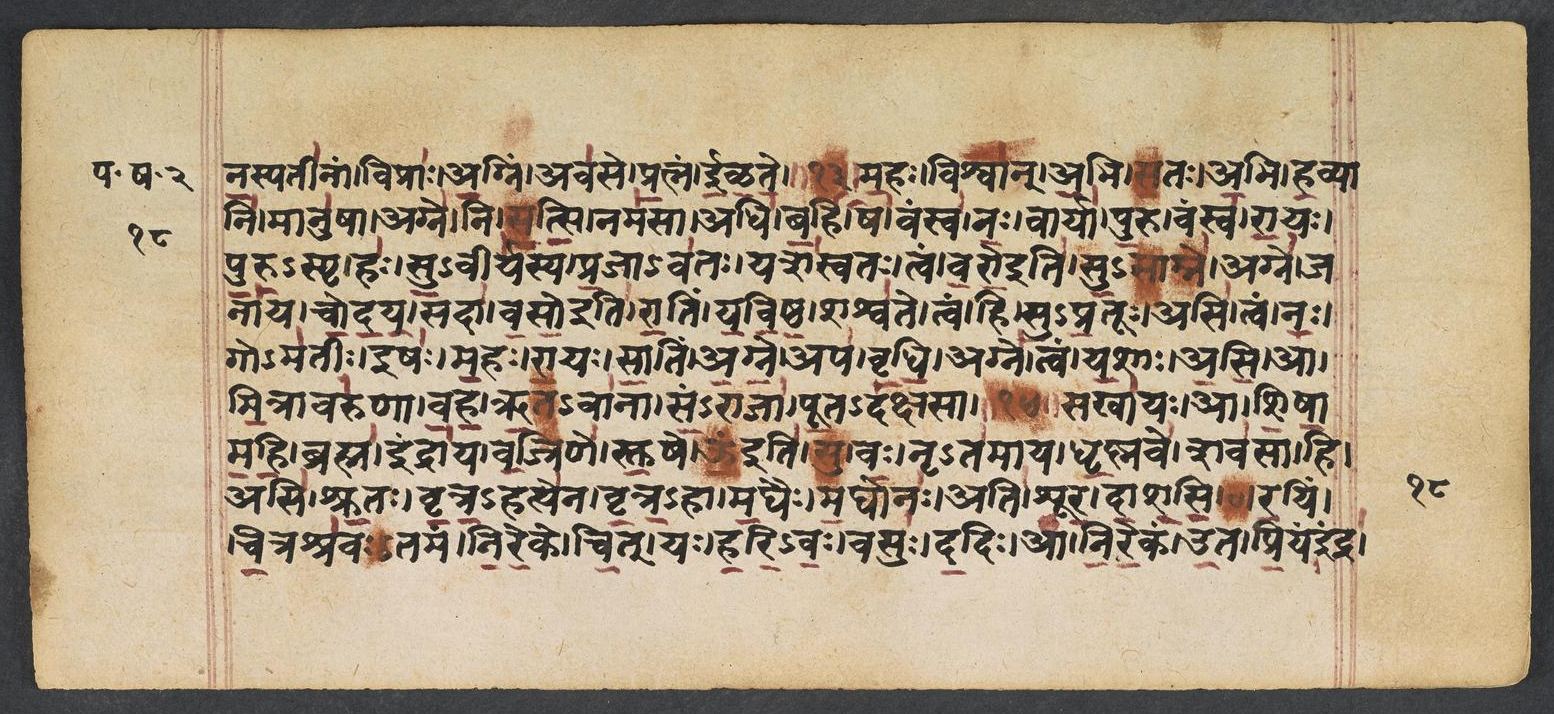
Penn Ms. Coll. 390 Item 41, fol. 596v (numbered 18v by the scribe) (OPenn image 597, upper leaf). Checked on the image: the Rigveda text on this page begins in RV 8.23.25 ‹-vanaspatīnām viprāḥ agnim avase›. The next page with Rigveda text, fol. 597r (numbered 19r by the scribe), begins in RV 8.24.4 ‹darṣi janānām dhṛṣatā dhṛṣṇo›. Verses 8.23.25-30 end on this page; 8.23.25 begins on fol. 596r (numbered 18r by the scribe).
25ati̍thi̱m mānu̍ṣāṇāṁ sū̱nuṁ vana̱spatī̍nām | viprā̍ a̱gnim ava̍se pra̱tnam ī̍ḻate ||
26ma̱ho viśvā̍m̐ a̱bhi ṣa̱to̱3̱̍ 'bhi ha̱vyāni̱ mānu̍ṣā | agne̱ ni ṣa̍tsi̱ nama̱sādhi̍ ba̱rhiṣi̍ ||
27vaṁsvā̍ no̱ vāryā̍ pu̱ru vaṁsva̍ rā̱yaḥ pu̍ru̱spṛha̍ḥ | su̱vīrya̍sya pra̱jāva̍to̱ yaśa̍svataḥ ||
28tvaṁ va̍ro su̱ṣāmṇe 'gne̱ janā̍ya codaya | sadā̍ vaso rā̱tiṁ ya̍viṣṭha̱ śaśva̍te ||
29tvaṁ hi su̍pra̱tūr asi̱ tvaṁ no̱ goma̍tī̱r iṣa̍ḥ | ma̱ho rā̱yaḥ sā̱tim a̍gne̱ apā̍ vṛdhi ||
30agne̱ tvaṁ ya̱śā a̱sy ā mi̱trāvaru̍ṇā vaha | ṛ̱tāvā̍nā sa̱mrājā̍ pū̱tada̍kṣasā ||
Compare: Padapāṭha (word-by-word text written in the manuscript; Sansknet e-text via GRETIL)
25atithim | mānuṣāṇām | sūnum | vanaspatīnām | viprāḥ | agnim | avase | pratnam | īḷate
26mahaḥ | viśvān | abhi | sataḥ | abhi | havyāni | mānuṣā | agne | ni | satsi | namasā | adhi | barhiṣi
27vaṃsva | naḥ | vāryā | puru | vaṃsva | rāyaḥ | puru-spṛhaḥ | su-vīryasya | prajāvataḥ | yaśasvataḥ
28tvam | varo iti | su-ṣāmṇe | agne | janāya | codaya | sadā | vaso iti | rātim | yaviṣṭha | śaśvate
29tvam | hi | su-pratūḥ | asi | tvam | naḥ | go--matīḥ | iṣaḥ | mahaḥ | rāyaḥ | sāt im | agne | apa | vṛdhi
30agne | tvam | yaśāḥ | asi | ā | mitrāvaruṇā | vaha | ṛta-vānā | sam-rājā | pūta-dakṣasā
25As welcome guest of human kind, as offspring of the forest kings, The sages worship ancient Agni for his aid.
26For men's oblations brought to him who is the mighty Lord of all, Sit, Agni, mid our homage, on the sacred grass.
27Grant us abundant. treasures, grant the opulence which many crave, With store of heroes, progeny, and high renown.
28Agni, Most Youthful of the Gods, send evermore the gift of wealth Unto Varosushâman and to all his folk.
29A mighty Conqueror art thou, O Agni, so disclose to us Food in our herds of kine and gain of ample wealth.
30Thou, Agni, art a glorious God: bring hither Mitra, Varuṇa, Imperial Sovrans, holy-minded, true to Law.
Notes
- Sanskrit: Aufrecht's edition (1877) with the Vedic accents, as entered by van Nooten and Holland (GRETIL).
- English: Ralph T. H. Griffith, The Hymns of the Rigveda (1889-1892; 2nd ed. 1896-1897), from the VedaWeb digital text; OCR slips in that text were corrected against the printed 2nd edition (data/sources/rigveda/griffith_errata.json).
- Padapāṭha (edition text): Sansknet e-text via GRETIL (CC BY-NC-SA 4.0).
Cite
Sources
- Source: Penn Ms. Coll. 390 Item 41 (undated (catalogued with Penn's 18th-19th c. Vedic manuscripts)), OPenn, Public Domain Mark + Aufrecht's accented text (GRETIL) + Griffith's English (VedaWeb) (holding institution)
- Critical edition: Aufrecht (1877), accented e-text via GRETIL
← previous · → next · v cycle view · l back to library