Rigveda 8.24: To Indra
Introduction
Rigveda 8.24 is a hymn of 30 verses addressed to Indra. It stands in book (maṇḍala) 8, the book of the Kaṇva and Aṅgiras poets. The Rigveda is the oldest collection of Sanskrit hymns, composed in the second half of the second millennium BCE and handed down orally for many centuries before it was written down.
The manuscript shown is Penn Ms. Coll. 390 Item 41 (University of Pennsylvania), an undated paper manuscript of the padapāṭha (the word-by-word recitation text, in which every word is written separately and compounds are split) of the whole Ṛgveda in Devanāgarī, 884 leaves in fascicles, 7-9 lines to the page, accents in red; this hymn stands on fol. 596v-598v. Each section below gives the verses that end on one page; the page boundaries were read on the images (the opening words of every page), not counted out. Where the manuscript is a padapāṭha (the word-by-word recitation text), the section shows Aufrecht's continuous (saṃhitā) text first and, as the edition text, the padapāṭha of the same verses, which is the form written on the page.
How was this verified? (Provenance)
Where on the image
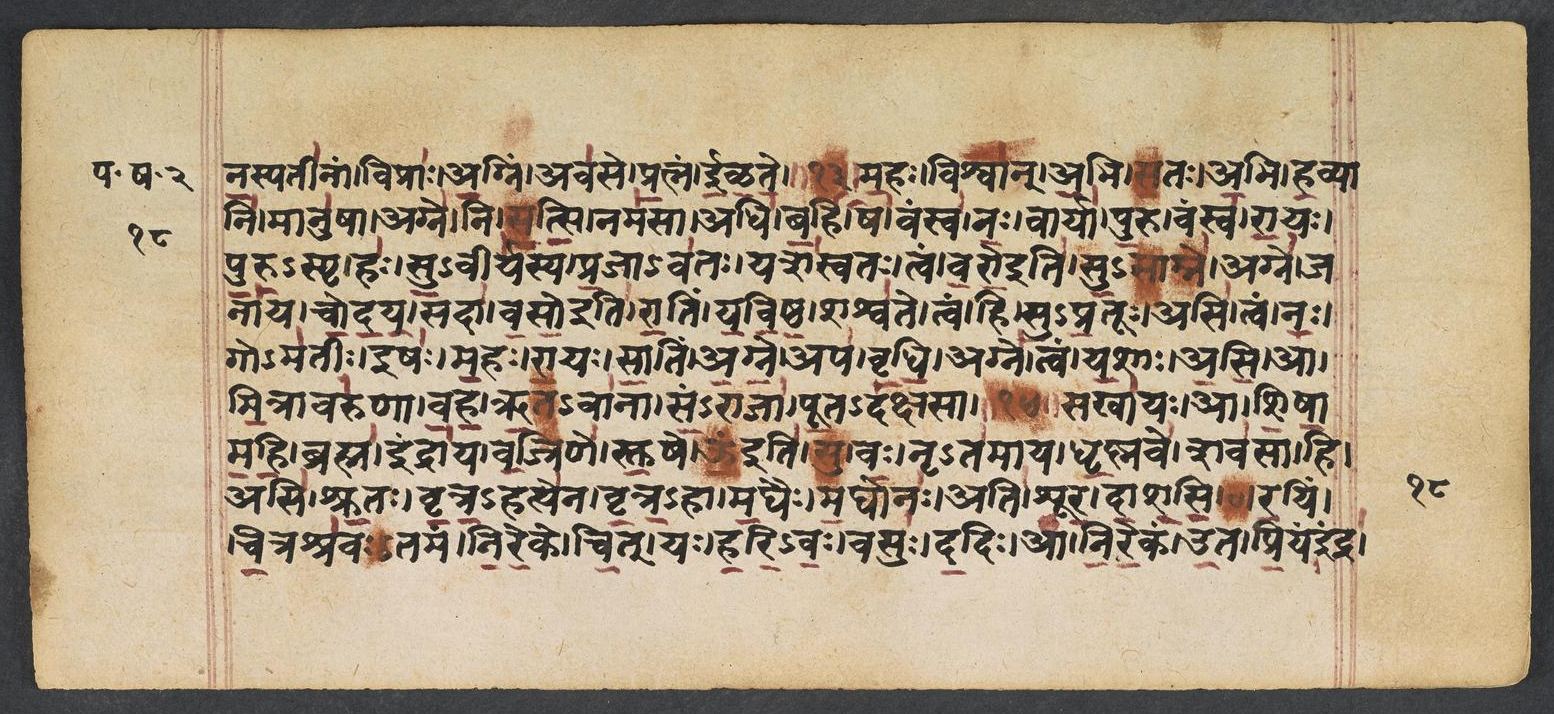
Penn Ms. Coll. 390 Item 41, fol. 596v (numbered 18v by the scribe) (OPenn image 597, upper leaf). Checked on the image: the Rigveda text on this page begins in RV 8.23.25 ‹-vanaspatīnām viprāḥ agnim avase›. The next page with Rigveda text, fol. 597r (numbered 19r by the scribe), begins in RV 8.24.4 ‹darṣi janānām dhṛṣatā dhṛṣṇo›. Verses 8.24.1-3 end on this page.
1sakhā̍ya̱ ā śi̍ṣāmahi̱ brahmendrā̍ya va̱jriṇe̍ | stu̱ṣa ū̱ ṣu vo̱ nṛta̍māya dhṛ̱ṣṇave̍ ||
2śava̍sā̱ hy asi̍ śru̱to vṛ̍tra̱hatye̍na vṛtra̱hā | ma̱ghair ma̱ghono̱ ati̍ śūra dāśasi ||
3sa na̱ḥ stavā̍na̱ ā bha̍ra ra̱yiṁ ci̱traśra̍vastamam | ni̱re̱ke ci̱d yo ha̍rivo̱ vasu̍r da̱diḥ ||
Compare: Padapāṭha (word-by-word text written in the manuscript; Sansknet e-text via GRETIL)
1sakhāyaḥ | ā | śiṣāmahi | brahma | indrāya | vajriṇe | stuṣe | oṃ iti | su | vaḥ | nṛ-tamāya | dhṛṣṇave
2śavasā | hi | asi | śrutaḥ | vṛtra-hatyena | vṛtra-hā | maghaiḥ | maghonaḥ | ati | śūra | dāśasi
3saḥ | naḥ | stavānaḥ | ā | bhara | rayim | citraśravaḥ-tamam | nireke | cit | yaḥ | hari-vaḥ | vasuḥ | dadiḥ
1COMPANIONS, let us learn a prayer to Indra. whom the thunder arms, To glorify your bold and most heroic Friend.
2For thou by slaying Vr̥itra art the Vr̥itra-slayer, famed for might. Thou, Hero, in rich gifts surpassest wealthy chiefs.
3As such, when glorified, bring us riches of very wondrous fame, Set in the highest rank, Wealth-giver, Lord of Bays!
Where on the image
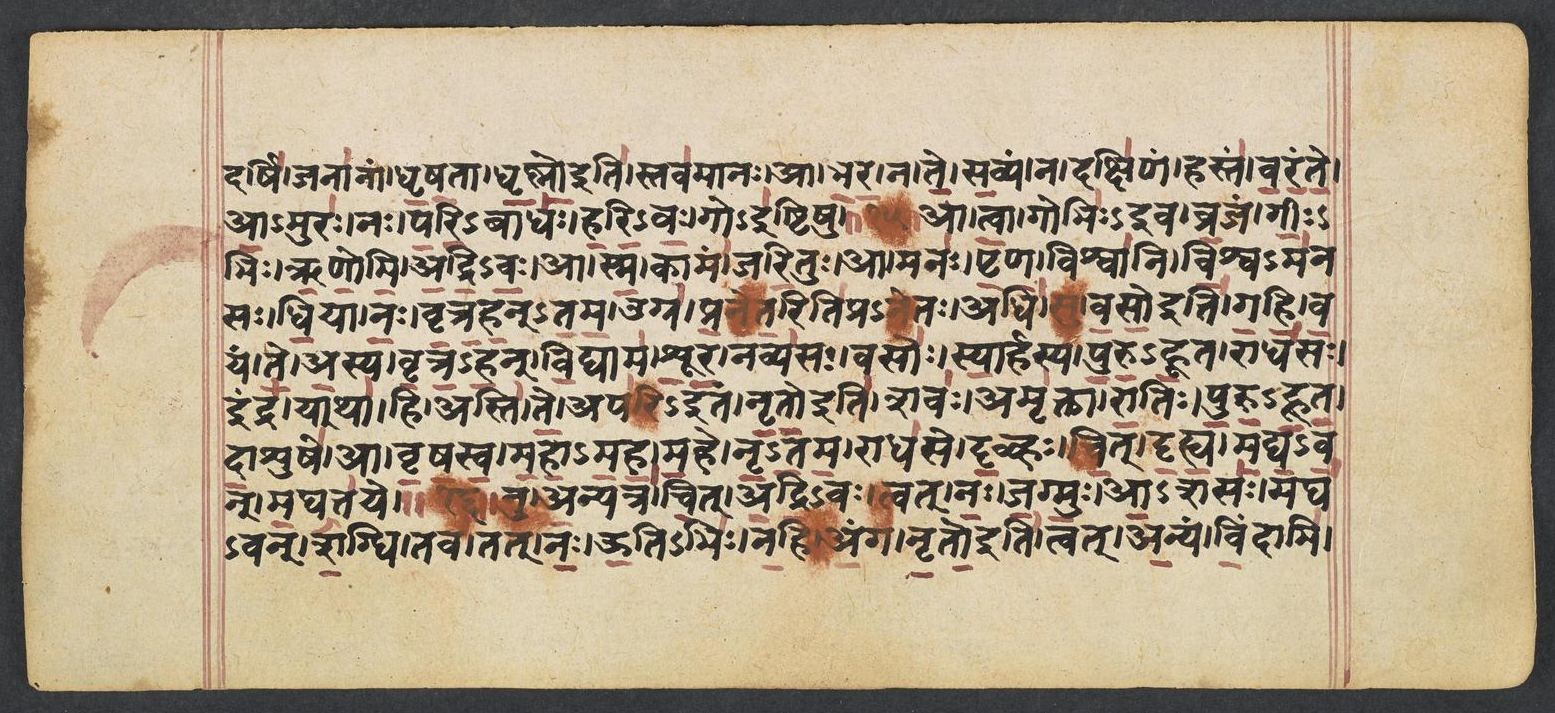
Penn Ms. Coll. 390 Item 41, fol. 597r (numbered 19r by the scribe) (OPenn image 597, lower leaf). Checked on the image: the Rigveda text on this page begins in RV 8.24.4 ‹darṣi janānām dhṛṣatā dhṛṣṇo›. The next page with Rigveda text, fol. 597v (numbered 19v by the scribe), begins in RV 8.24.12 ‹rādhase rāye dyumnāya śavase›. Verses 8.24.4-11 end on this page; 8.24.4 begins on fol. 596v (numbered 18v by the scribe).
4ā ni̍re̱kam u̱ta pri̱yam indra̱ darṣi̱ janā̍nām | dhṛ̱ṣa̱tā dhṛ̍ṣṇo̱ stava̍māna̱ ā bha̍ra ||
5na te̍ sa̱vyaṁ na dakṣi̍ṇa̱ṁ hasta̍ṁ varanta ā̱mura̍ḥ | na pa̍ri̱bādho̍ harivo̱ gavi̍ṣṭiṣu ||
6ā tvā̱ gobhi̍r iva vra̱jaṁ gī̱rbhir ṛ̍ṇomy adrivaḥ | ā smā̱ kāma̍ṁ jari̱tur ā mana̍ḥ pṛṇa ||
7viśvā̍ni vi̱śvama̍naso dhi̱yā no̍ vṛtrahantama | ugra̍ praṇeta̱r adhi̱ ṣū va̍so gahi ||
8va̱yaṁ te̍ a̱sya vṛ̍trahan vi̱dyāma̍ śūra̱ navya̍saḥ | vaso̍ḥ spā̱rhasya̍ puruhūta̱ rādha̍saḥ ||
9indra̱ yathā̱ hy asti̱ te 'pa̍rītaṁ nṛto̱ śava̍ḥ | amṛ̍ktā rā̱tiḥ pu̍ruhūta dā̱śuṣe̍ ||
10ā vṛ̍ṣasva mahāmaha ma̱he nṛ̍tama̱ rādha̍se | dṛ̱ḻhaś ci̍d dṛhya maghavan ma̱ghatta̍ye ||
11nū a̱nyatrā̍ cid adriva̱s tvan no̍ jagmur ā̱śasa̍ḥ | magha̍vañ cha̱gdhi tava̱ tan na̍ ū̱tibhi̍ḥ ||
Compare: Padapāṭha (word-by-word text written in the manuscript; Sansknet e-text via GRETIL)
4ā | nirekam | uta | priyam | indra | darṣi | janānām | dhṛṣatā | dhṛṣṇo iti | stavamānaḥ | ā | bhara
5na | te | savyam | na | dakṣiṇam | hastam | varante | āmuraḥ | na | pari-bādhaḥ | hari-vaḥ | go--iṣṭiṣu
6ā | tvā | gobhiḥ-iva | vrajam | gīḥ-bhiḥ | ṛṇomi | adri-vaḥ | ā | sma | kāmam | jarituḥ | ā | manaḥ | pṛṇa
7viśvāni | viśva-manasaḥ | dhiyā | naḥ | vṛtrahan-tama | ugra | pranetarit ipra-netaḥ | adhi | su | vaso iti | gahi
8vayam | te | asya | vṛtra-han | vidyāma | śūra | navyasaḥ | vasoḥ | spārhasya | puru-hūta | rādhasaḥ
9indra | yathā | hi | asti | te | apari-itam | nṛto iti | śavaḥ | amṛktā | rātiḥ | puru-hūta | dāśuṣe
10ā | vṛṣasva | mahāmaha | mahe | nṛ-tama | rādhase | dṛḷhaḥ | cit | dṛhya | magha-van | maghattaye
11nu | anyatra | cit | adri-vaḥ | tvat | naḥ | jagmuḥ | āśasaḥ | magha-van | śagdhi | tava | tat | naḥ | ūti-bhiḥ
4Yea, Indra, thou disclosest that preeminent dear wealth of men: Boldly, O Bold One, glorified, bring it to us.
5The workers of destruction stay neither thy right hand nor thy left: Nor hosts that press about thee, Lord of Bays, in fight.
6O Thunder-armed, I come with songs to thee as to a stall with kine: Fulfil the wish and thought of him who sings thy praise.
7Chief Vr̥itra-slayer, through the hymn of Viṣvamanas think of all, All that concerneth us, Excellent, Mighty Guide.
8May we, O Vr̥itra-slayer, O Hero, find this thy newest boon, Longed-for, and excellent, thou who art much invoked!
9O Indra, Dancer, Much-invoked! as thy great power is unsurpassed, So be thy bounty to the worshipper unchecked.
10Most Mighty, most heroic One, for mighty bounty fill thee full. Though strong, strengthen thyself to win wealth, Maghavan!
11O Thunderer, never have our prayers gone forth to any God but thee: So help us, Maghavan, with thine assistance now.
Where on the image
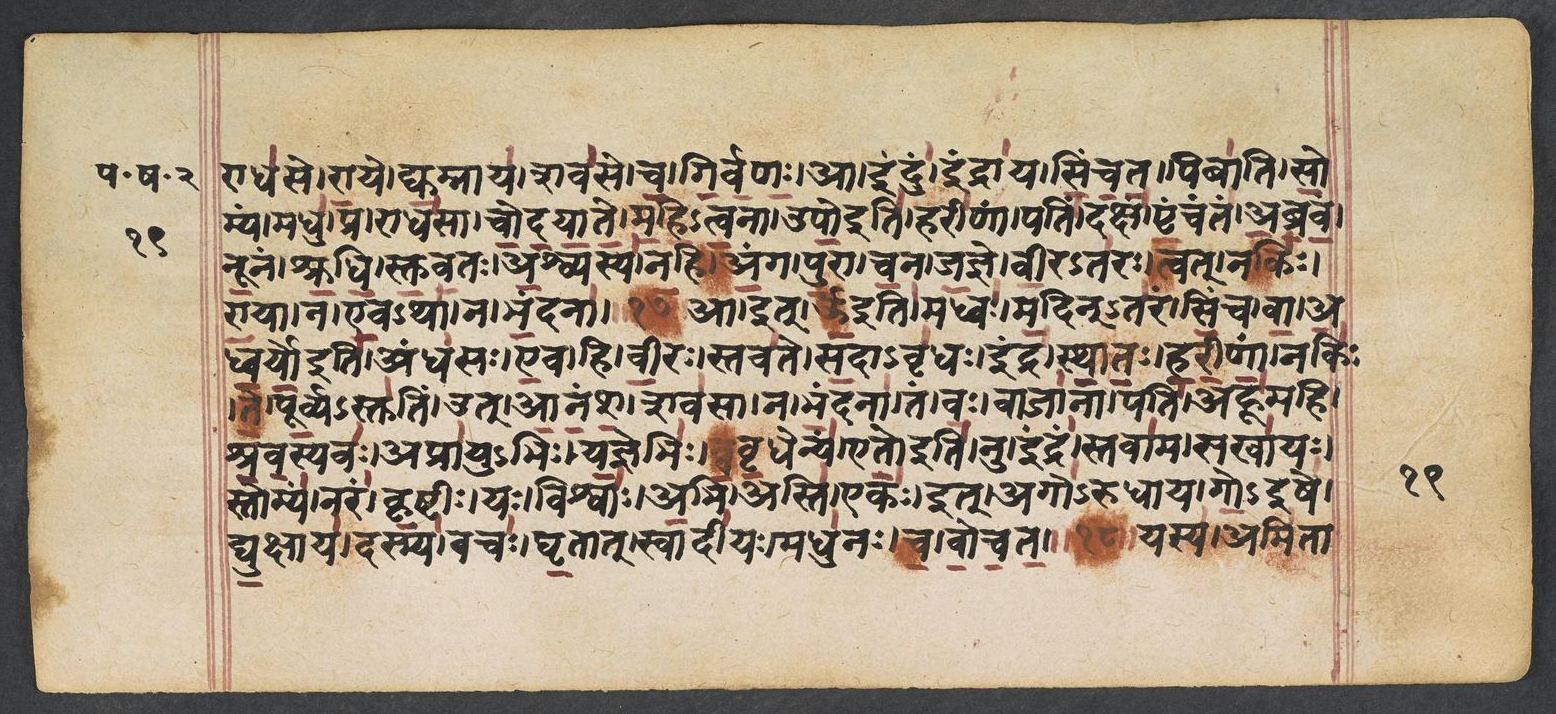
Penn Ms. Coll. 390 Item 41, fol. 597v (numbered 19v by the scribe) (OPenn image 598, upper leaf). Checked on the image: the Rigveda text on this page begins in RV 8.24.12 ‹rādhase rāye dyumnāya śavase›. The next page with Rigveda text, fol. 598r (numbered 20r by the scribe), begins in RV 8.24.21 ‹-amitāni vīryā na rādhaḥ›. Verses 8.24.12-20 end on this page; 8.24.12 begins on fol. 597r (numbered 19r by the scribe).
12na̱hy a1̱̍ṅga nṛ̍to̱ tvad a̱nyaṁ vi̱ndāmi̱ rādha̍se | rā̱ye dyu̱mnāya̱ śava̍se ca girvaṇaḥ ||
13endu̱m indrā̍ya siñcata̱ pibā̍ti so̱myam madhu̍ | pra rādha̍sā codayāte mahitva̱nā ||
14upo̱ harī̍ṇā̱m pati̱ṁ dakṣa̍m pṛ̱ñcanta̍m abravam | nū̱naṁ śru̍dhi stuva̱to a̱śvyasya̍ ||
15na̱hy a1̱̍ṅga pu̱rā ca̱na ja̱jñe vī̱rata̍ra̱s tvat | nakī̍ rā̱yā naivathā̱ na bha̱ndanā̍ ||
16ed u̱ madhvo̍ ma̱dinta̍raṁ si̱ñca vā̍dhvaryo̱ andha̍saḥ | e̱vā hi vī̱raḥ stava̍te sa̱dāvṛ̍dhaḥ ||
17indra̍ sthātar harīṇā̱ṁ naki̍ṣ ṭe pū̱rvyastu̍tim | ud ā̍naṁśa̱ śava̍sā̱ na bha̱ndanā̍ ||
18taṁ vo̱ vājā̍nā̱m pati̱m ahū̍mahi śrava̱syava̍ḥ | aprā̍yubhir ya̱jñebhi̍r vāvṛ̱dhenya̍m ||
19eto̱ nv indra̱ṁ stavā̍ma̱ sakhā̍ya̱ḥ stomya̱ṁ nara̍m | kṛ̱ṣṭīr yo viśvā̍ a̱bhy asty eka̱ it ||
20ago̍rudhāya ga̱viṣe̍ dyu̱kṣāya̱ dasmya̱ṁ vaca̍ḥ | ghṛ̱tāt svādī̍yo̱ madhu̍naś ca vocata ||
Compare: Padapāṭha (word-by-word text written in the manuscript; Sansknet e-text via GRETIL)
12nahi | aṅga | nṛto iti | tvat | anyam | vindāmi | rādhase | rāye | dyumnāya | śavase | ca | girvaṇaḥ
13ā | indum | indrāya | siñcata | pibāti | somyam | madhu | pra | rādhasā | codayāte | mahi-tvanā
14upo iti | harīṇām | patim | dakṣam | pṛñcantam | abravam | nūnam | śrudhi | stuvataḥ | aśvyasya
15nahi | aṅga | purā | cana | jajñe | vīra-taraḥ | tvat | nakiḥ | rāyā | na | eva-thā | na | bhandanā
16ā | it | oṃ iti | madhvaḥ | madin-taram | siñca | vā | adhvaryo iti | andhasaḥ | eva | hi | vīraḥ | stavate | sadāvṛdhaḥ
17indra | sthātaḥ | harīṇām | nakiḥ | te | pūrvya-stutim | ut | ānaṃśa | śavasā | na | bhandanā
18tam | vaḥ | vājānām | patim | ahūmahi | śravasyavaḥ | aprāyu-bhiḥ | yajñebhiḥ | vavṛdhenyam
19eto iti | nu | indram | stavāma | sakhāyaḥ | stomyam | naram | kṛṣṭīḥ | yaḥ | viśvāḥ | abhi | asti | ekaḥ | it
20ago--rudhāya | go--iṣe | dyukṣāya | dasmyam | vacaḥ | ghṛtāt | svādīyaḥ | madhunaḥ | ca | vocata
12For, Dancer, verily I find none else for bounty, saving thee, For splendid wealth and power, thou Lover of the Song.
13For Indra pour ye out the drops meath blent with Soma let him drink With bounty and with majesty will he further us.
14I spake to the Bay Coursers' Lord, to him who gives ability: Now hear the son of Aṣva as he praises thee.
15Never was any Hero born before thee mightier than thou: None certainly like thee in goodness and in wealth.
16O ministering priest, pour out of the sweet juice what gladdens most: So is the Hero praised who ever prospers us.
17Indra, whom Tawny Coursers bear, praise such as thine, preeminent, None by his power or by his goodness hath attained.
18We, seeking glory, have invoked this Master of all power and might Who must be glorified by constant sacri fice.
19Come, sing we praise to Indra, friends, the Hero who deserves the laud, Him who with none to aid o'ercomes all tribes of men.
20To him who wins the kine, who keeps no cattle back, Celestial God, Speak wondrous speech more sweet than butter and than meath.
Where on the image
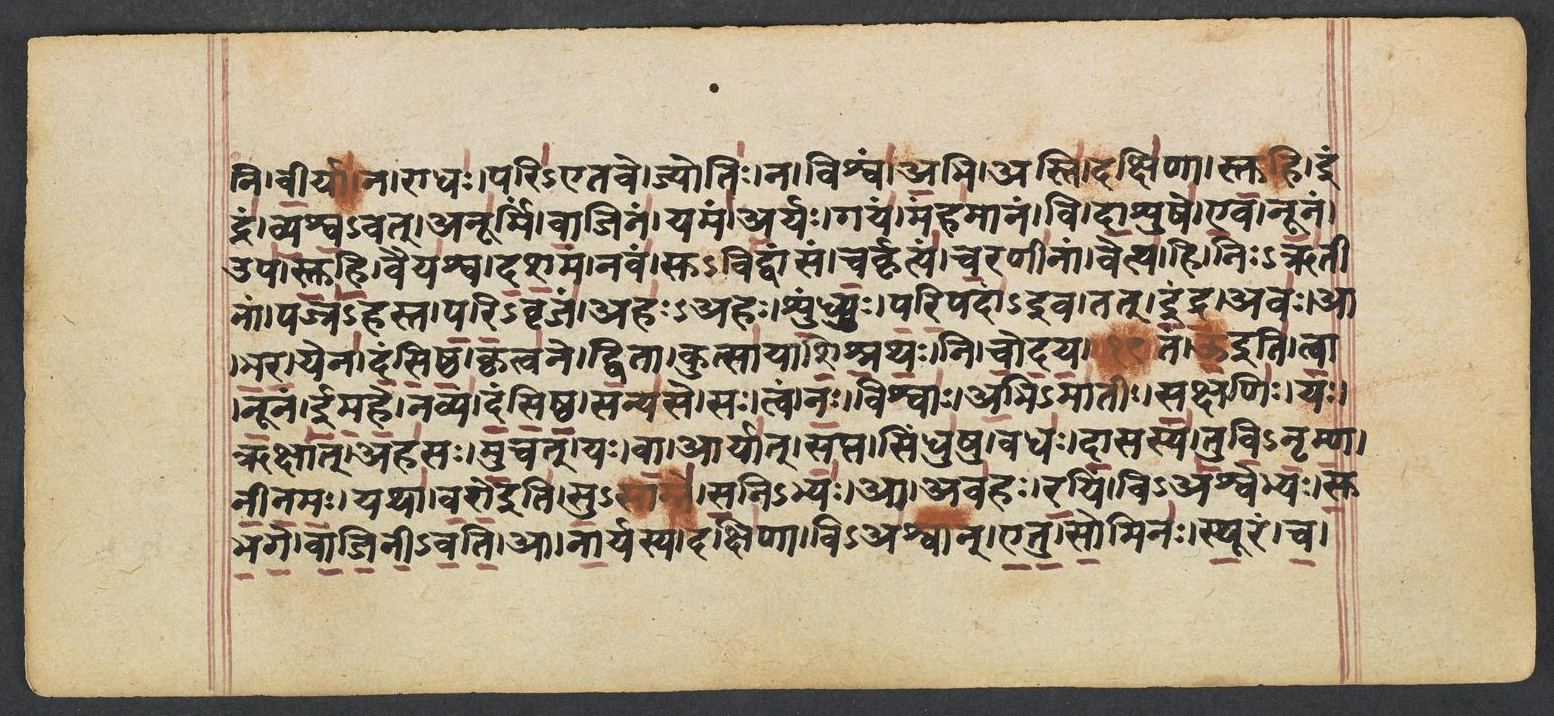
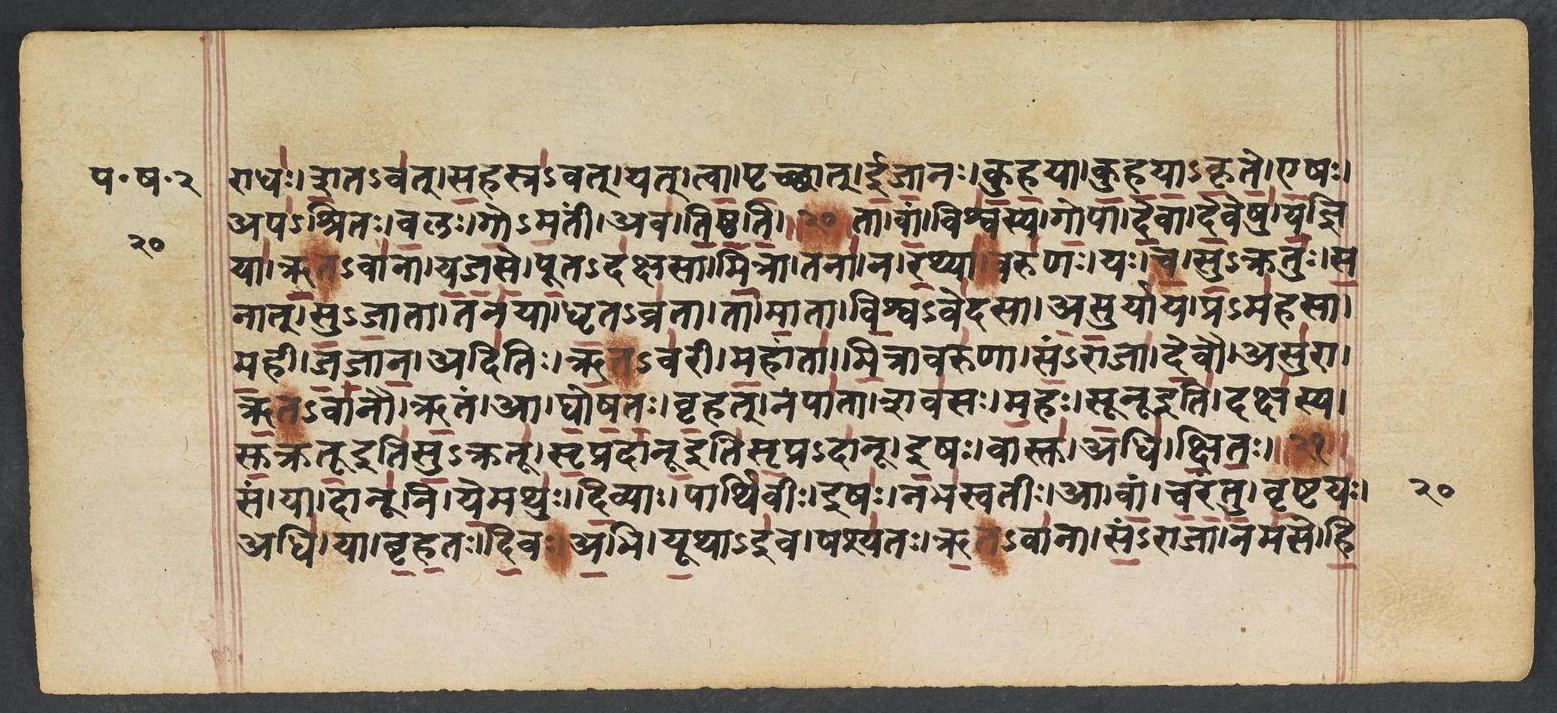
Penn Ms. Coll. 390 Item 41, fol. 598r (numbered 20r by the scribe) (OPenn image 598, lower leaf). Checked on the image: the Rigveda text on this page begins in RV 8.24.21 ‹-amitāni vīryā na rādhaḥ›. The next page with Rigveda text, fol. 598v (numbered 20v by the scribe), begins in RV 8.24.29 ‹rādhaḥ śata-vat sahasra-vat›. Verses 8.24.21-28 end on this page; 8.24.21 begins on fol. 597v (numbered 19v by the scribe).
21yasyāmi̍tāni vī̱ryā̱3̱̍ na rādha̱ḥ parye̍tave | jyoti̱r na viśva̍m a̱bhy asti̱ dakṣi̍ṇā ||
22stu̱hīndra̍ṁ vyaśva̱vad anū̍rmiṁ vā̱jina̱ṁ yama̍m | a̱ryo gaya̱m maṁha̍māna̱ṁ vi dā̱śuṣe̍ ||
23e̱vā nū̱nam upa̍ stuhi̱ vaiya̍śva daśa̱maṁ nava̍m | suvi̍dvāṁsaṁ ca̱rkṛtya̍ṁ ca̱raṇī̍nām ||
24vetthā̱ hi nirṛ̍tīnā̱ṁ vajra̍hasta pari̱vṛja̍m | aha̍r-ahaḥ śu̱ndhyuḥ pa̍ri̱padā̍m iva ||
25tad i̱ndrāva̱ ā bha̍ra̱ yenā̍ daṁsiṣṭha̱ kṛtva̍ne | dvi̱tā kutsā̍ya śiśnatho̱ ni co̍daya ||
26tam u̍ tvā nū̱nam ī̍mahe̱ navya̍ṁ daṁsiṣṭha̱ sanya̍se | sa tvaṁ no̱ viśvā̍ a̱bhimā̍tīḥ sa̱kṣaṇi̍ḥ ||
27ya ṛkṣā̱d aṁha̍so mu̱cad yo vāryā̍t sa̱pta sindhu̍ṣu | vadha̍r dā̱sasya̍ tuvinṛmṇa nīnamaḥ ||
28yathā̍ varo su̱ṣāmṇe̍ sa̱nibhya̱ āva̍ho ra̱yim | vya̍śvebhyaḥ subhage vājinīvati ||
Compare: Padapāṭha (word-by-word text written in the manuscript; Sansknet e-text via GRETIL)
21yasya | amitāni | vīryā | na | rādhaḥ | pari-etave | jyotiḥ | na | viśvam | abhi | asti | dakṣiṇā
22stuhi | indram | vyaśva-vat | anūrmim | vājinam | yamam | aryaḥ | gayam | maṃhamānam | vi | dāśuṣe
23eva | nūnam | upa | stuhi | vaiyaśva | daśamam | navam | su-vidvāṃsam | carkṛtyam | caraṇīnām
24vettha | hi | niḥ-ṛtīnām | vajra-hasta | pari-vṛjam | ahaḥ-ahaḥ | śundhyuḥ | paripadām-iva
25tat | indra | avaḥ | ā | bhara | yena | daṃsiṣṭha | kṛtvane | dvitā | kutsāya | śiśnathaḥ | ni | codaya
26tam | oṃ iti | tvā | nūnam | īmahe | navyam | daṃsiṣṭha | sanyase | saḥ | tvam | naḥ | vi śvāḥ | abhi-mātīḥ | sakṣaṇiḥ
27yaḥ | ṛkṣāt | aṃhasaḥ | mucat | yaḥ | vā | āryāt | sapta | sindhuṣu | vadhaḥ | dāsasya | tuvi-nṛmṇa | nīnamaḥ
28yathā | varo iti | su-sāmṇe | sani-bhyaḥ | ā | avahaḥ | rayim | vi-aśvebhyaḥ | su-bhage | vāj inī-vati
21Whose hero powers are measureless, whose bounty ne'er may be surpassed, Whose liberality, like light, is over all.
22As Vyaṣva did, praise Indra, praise the Strong unfluctuating Guide, Who gives the foe's possessions to the worshipper.
23Now, son of Vyaṣva, praise thou him who to the tenth time still is new, The very Wise, whom living men must glorify
24Thou knowest, Indra, Thunder-armed, how to avoid destructive powers, As one secure from pitfalls each returning day.
25O Indra, bring that aid wherewith of old, Most Wondrous! thou didst slay His foes for active Kutsa: send it down to us.
26So now we seek thee fresh in might, Most Wonderful in act! for gain: For thou art he who conquers all our foes for us.
27Who will set free from ruinous woe, or Ârya on the Seven Streams: O valiant Hero, bend the Dâsa's weapon down.
28As to Varosushâman thou broughtest great riches, for their gain, To Vyaṣva's sons, Blest Lady, rich in ample wealth!
Where on the image
Penn Ms. Coll. 390 Item 41, fol. 598v (numbered 20v by the scribe) (OPenn image 599, upper leaf). Checked on the image: the Rigveda text on this page begins in RV 8.24.29 ‹rādhaḥ śata-vat sahasra-vat›. The next page with Rigveda text, fol. 599r (numbered 21r by the scribe), begins in RV 8.25.7 ‹-hitā›. Verses 8.24.29-30 end on this page; 8.24.29 begins on fol. 598r (numbered 20r by the scribe).
29ā nā̱ryasya̱ dakṣi̍ṇā̱ vya̍śvām̐ etu so̱mina̍ḥ | sthū̱raṁ ca̱ rādha̍ḥ śa̱tava̍t sa̱hasra̍vat ||
30yat tvā̍ pṛ̱cchād ī̍jā̱naḥ ku̍ha̱yā ku̍hayākṛte | e̱ṣo apa̍śrito va̱lo go̍ma̱tīm ava̍ tiṣṭhati ||
Compare: Padapāṭha (word-by-word text written in the manuscript; Sansknet e-text via GRETIL)
29ā | nāryasya | dakṣiṇā | vi-aśvān | etu | sominaḥ | sthūram | ca | rādhaḥ | śata-vat | sahasra-vat
30yat | tvā | pṛcchāt | ījānaḥ | kuhayā | kuhayākṛte | eṣaḥ | apa-śritaḥ | valaḥ | go--matīm | ava | tiṣṭhati
29Let Nârya's sacrificial meed reach Vyaṣva's Soma-bearing sons: In hundreds and in thousands be the great reward.
30If one should ask thee, Where is he who sacrificed? Whither lookest thou? Like Vala he hath passed away and dwelleth now on Gomatî.
Notes
- Sanskrit: Aufrecht's edition (1877) with the Vedic accents, as entered by van Nooten and Holland (GRETIL).
- English: Ralph T. H. Griffith, The Hymns of the Rigveda (1889-1892; 2nd ed. 1896-1897), from the VedaWeb digital text; OCR slips in that text were corrected against the printed 2nd edition (data/sources/rigveda/griffith_errata.json).
- Padapāṭha (edition text): Sansknet e-text via GRETIL (CC BY-NC-SA 4.0).
Cite
Sources
- Source: Penn Ms. Coll. 390 Item 41 (undated (catalogued with Penn's 18th-19th c. Vedic manuscripts)), OPenn, Public Domain Mark + Aufrecht's accented text (GRETIL) + Griffith's English (VedaWeb) (holding institution)
- Critical edition: Aufrecht (1877), accented e-text via GRETIL
← previous · → next · v cycle view · l back to library