Rigveda 8.25: To Mitra and Varuna and other gods
Introduction
Rigveda 8.25 is a hymn of 24 verses addressed to Mitra and Varuna and other gods. It stands in book (maṇḍala) 8, the book of the Kaṇva and Aṅgiras poets. The Rigveda is the oldest collection of Sanskrit hymns, composed in the second half of the second millennium BCE and handed down orally for many centuries before it was written down.
The manuscript shown is Penn Ms. Coll. 390 Item 41 (University of Pennsylvania), an undated paper manuscript of the padapāṭha (the word-by-word recitation text, in which every word is written separately and compounds are split) of the whole Ṛgveda in Devanāgarī, 884 leaves in fascicles, 7-9 lines to the page, accents in red; this hymn stands on fol. 598v-599v. Each section below gives the verses that end on one page; the page boundaries were read on the images (the opening words of every page), not counted out. Where the manuscript is a padapāṭha (the word-by-word recitation text), the section shows Aufrecht's continuous (saṃhitā) text first and, as the edition text, the padapāṭha of the same verses, which is the form written on the page.
How was this verified? (Provenance)
Where on the image
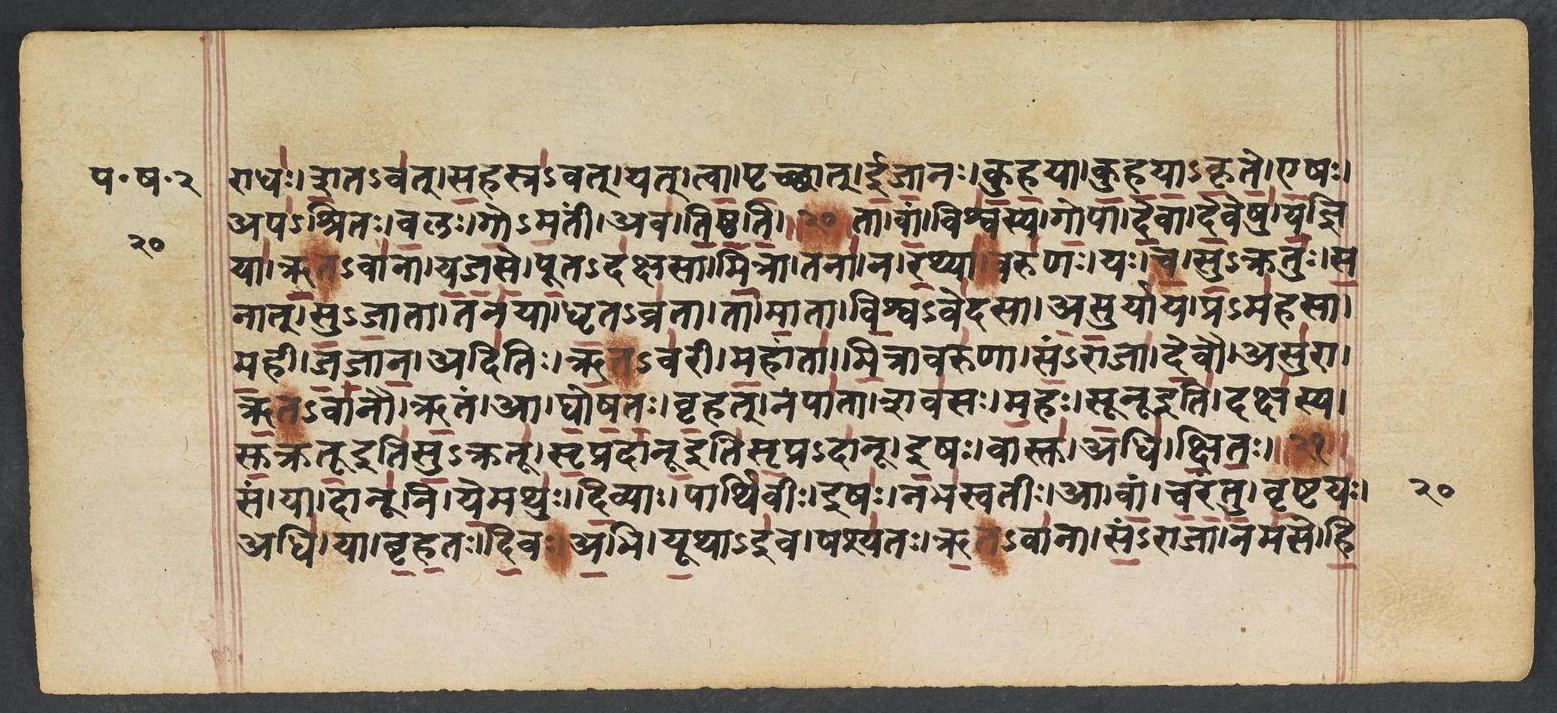
Penn Ms. Coll. 390 Item 41, fol. 598v (numbered 20v by the scribe) (OPenn image 599, upper leaf). Checked on the image: the Rigveda text on this page begins in RV 8.24.29 ‹rādhaḥ śata-vat sahasra-vat›. The next page with Rigveda text, fol. 599r (numbered 21r by the scribe), begins in RV 8.25.7 ‹-hitā›. Verses 8.25.1-6 end on this page.
1tā vā̱ṁ viśva̍sya go̱pā de̱vā de̱veṣu̍ ya̱jñiyā̍ | ṛ̱tāvā̍nā yajase pū̱tada̍kṣasā ||
2mi̱trā tanā̱ na ra̱thyā̱3̱̍ varu̍ṇo̱ yaś ca̍ su̱kratu̍ḥ | sa̱nāt su̍jā̱tā tana̍yā dhṛ̱tavra̍tā ||
3tā mā̱tā vi̱śvave̍dasāsu̱ryā̍ya̱ prama̍hasā | ma̱hī ja̍jā̱nādi̍tir ṛ̱tāva̍rī ||
4ma̱hāntā̍ mi̱trāvaru̍ṇā sa̱mrājā̍ de̱vāv asu̍rā | ṛ̱tāvā̍nāv ṛ̱tam ā gho̍ṣato bṛ̱hat ||
5napā̍tā̱ śava̍so ma̱haḥ sū̱nū dakṣa̍sya su̱kratū̍ | sṛ̱pradā̍nū i̱ṣo vāstv adhi̍ kṣitaḥ ||
6saṁ yā dānū̍ni ye̱mathu̍r di̱vyāḥ pārthi̍vī̱r iṣa̍ḥ | nabha̍svatī̱r ā vā̍ṁ carantu vṛ̱ṣṭaya̍ḥ ||
Compare: Padapāṭha (word-by-word text written in the manuscript; Sansknet e-text via GRETIL)
1tā | vām | viśvasya | gopā | devā | deveṣu | yajñiyā | ṛta-vānā | yajase | pūta-dakṣasā
2mitrā | tanā | na | rathyā | varuṇaḥ | yaḥ | ca | su-kratuḥ | sanāt | su-jātā | tanayā | dhṛta-vratā
3tā | mātā | viśva-vedasā | asuryāya | pra-mahasā | mahī | jajāna | aditiḥ | ṛta-varī
4mahāntā | mitrāvaruṇā | sam-rājā | devau | asurā | ṛta-vānau | ṛtam | ā | ghoṣataḥ | bṛhat
5napātā | śavasaḥ | mahaḥ | sūnū iti | dakṣasya | sukratūitisu-kratū | sṛpradānūitisṛpra-dānū | iṣaḥ | vāstu | adhi | kṣitaḥ
6sam | yā | dānūni | yemathuḥ | divyāḥ | pārthivīḥ | iṣaḥ | nabhasvatīḥ | ā | vām | carantu | vṛṣṭayaḥ
1I WORSHIP you who guard this All, Gods, holiest among the Gods, You, faithful to the Law, whose power is sanctified.
2So, too, like charioteers are they, Mitra and sapient Varuṇa, Sons high-born from of old, whose holy laws stand fast.
3These Twain, possessors of all wealth, most glorious, for supremest sway Aditi, Mighty Mother, true to Law, brought forth.
4Great Varuṇa and Mitra, Gods, Asuras and imperial Lords, True to Eternal Law proclaim the high decree.
5The offspring of a lofty Power, Daksha's Two Sons exceeding strong, Who, Lords of flowing rain, dwell in the place of food.
6Ye who have gathered up your gifts, celestial and terrestrial food, Let your rain come to us fraught with the mist of heaven.
Where on the image
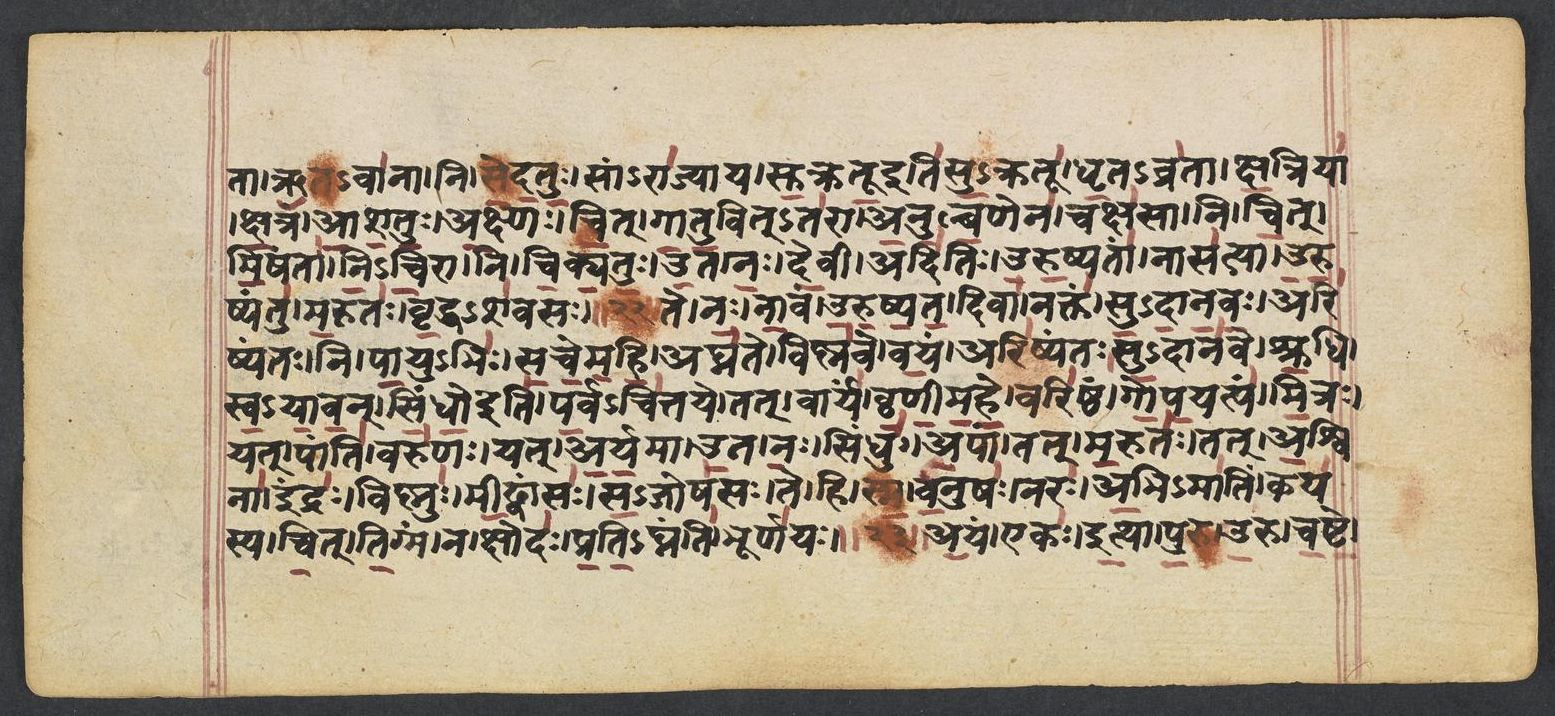
Penn Ms. Coll. 390 Item 41, fol. 599r (numbered 21r by the scribe) (OPenn image 599, lower leaf). Checked on the image: the Rigveda text on this page begins in RV 8.25.7 ‹-hitā›. The next page with Rigveda text, fol. 599v (numbered 21v by the scribe), begins in RV 8.25.16 ‹vi viśpatiḥ tasya vratāni›. Verses 8.25.7-15 end on this page; 8.25.7 begins on fol. 598v (numbered 20v by the scribe).
7adhi̱ yā bṛ̍ha̱to di̱vo̱3̱̍ 'bhi yū̱theva̱ paśya̍taḥ | ṛ̱tāvā̍nā sa̱mrājā̱ nama̍se hi̱tā ||
8ṛ̱tāvā̍nā̱ ni ṣe̍datu̱ḥ sāmrā̍jyāya su̱kratū̍ | dhṛ̱tavra̍tā kṣa̱triyā̍ kṣa̱tram ā̍śatuḥ ||
9a̱kṣṇaś ci̍d gātu̱vitta̍rānulba̱ṇena̱ cakṣa̍sā | ni ci̍n mi̱ṣantā̍ nici̱rā ni ci̍kyatuḥ ||
10u̱ta no̍ de̱vy adi̍tir uru̱ṣyatā̱ṁ nāsa̍tyā | u̱ru̱ṣyantu̍ ma̱ruto̍ vṛ̱ddhaśa̍vasaḥ ||
11te no̍ nā̱vam u̍ruṣyata̱ divā̱ nakta̍ṁ sudānavaḥ | ari̍ṣyanto̱ ni pā̱yubhi̍ḥ sacemahi ||
12aghna̍te̱ viṣṇa̍ve va̱yam ari̍ṣyantaḥ su̱dāna̍ve | śru̱dhi sva̍yāvan sindho pū̱rvaci̍ttaye ||
13tad vārya̍ṁ vṛṇīmahe̱ vari̍ṣṭhaṁ gopa̱yatya̍m | mi̱tro yat pānti̱ varu̍ṇo̱ yad a̍rya̱mā ||
14u̱ta na̱ḥ sindhu̍r a̱pāṁ tan ma̱ruta̱s tad a̱śvinā̍ | indro̱ viṣṇu̍r mī̱ḍhvāṁsa̍ḥ sa̱joṣa̍saḥ ||
15te hi ṣmā̍ va̱nuṣo̱ naro̱ 'bhimā̍ti̱ṁ kaya̍sya cit | ti̱gmaṁ na kṣoda̍ḥ prati̱ghnanti̱ bhūrṇa̍yaḥ ||
Compare: Padapāṭha (word-by-word text written in the manuscript; Sansknet e-text via GRETIL)
7adhi | yā | bṛhataḥ | divaḥ | abhi | yūthāiva | paśyataḥ | ṛta-vānā | sam-rājā | namase | hitā
8ṛta-vānā | ni | sedatuḥ | sām-rājyāya | sukratūitisu-kratū | dhṛta-vratā | kṣatriyā | kṣatram | āśatuḥ
9akṣṇaḥ | cit | gātuvit-tarā | anulbaṇena | cakṣasā | ni | cit | miṣantā | ni-cirā | ni | cikyatuḥ
10uta | naḥ | devī | aditiḥ | uruṣyatām | nāsatyā | uruṣyantu | marutaḥ | vṛddha-śavasaḥ
11te | naḥ | nāvam | uruṣyata | divā | naktam | su-dānavaḥ | ariṣyantaḥ | ni | pāyu-bhiḥ | sacemahi
12aghnate | viṣṇave | vayam | ariṣyantaḥ | su-dānave | śrudhi | sva-yāvan | sindho iti | pūrva-cittaye
13tat | vāryam | vṛṇīmahe | variṣṭham | gopayatyam | mitraḥ | yat | pānti | varuṇaḥ | yat | aryamā
14uta | naḥ | sindhuḥ | apām | tat | marutaḥ | tat | aśvinā | indraḥ | viṣṇuḥ | mīḍhavāṃsaḥ | sa-joṣasaḥ
15te | hi | sma | vanuṣaḥ | naraḥ | abhi-mātim | kayasya | cit | tigmam | na | kṣodaḥ | prati-ghnanti | bhūrṇayaḥ
7The Twain, who from the lofty sky seem to look down on herds below, Holy, imperial Lords, are set to be revered.
8They, true to Law, exceeding strong, have sat them down for sovran rule: Princes whose laws stand fast, they have obtained their sway.
9Pathfinders even better than the eye, with unobstructed sight, Even when they close their lids, observant, they perceive.
10So may the Goddess Aditi, may the Nâsatyas guard us well, The Martits guard us well,.endowed with mighty strength.
11Do ye, O Bounteous Gods, protect our dwelling lace by day and night: With you for our defenders may we go unharmed.
12May we, unharmed, serve bountiful Vishṇu, the God who slayeth none: Self-moving Sindhu hear and be the first to mark.
13This sure protection we elect, desirable and reaching far, Which Mitra, Varuṇa, and Aryaman afford.
14And may the Sindhu of the floods, the Maruts, and the ASvin Pair, Boon Indra, and boon Vishṇu have one mind with us.
15Because these warring Heroes stay the enmity of every foe, As the fierce water-flood repels the furious ones.
Where on the image
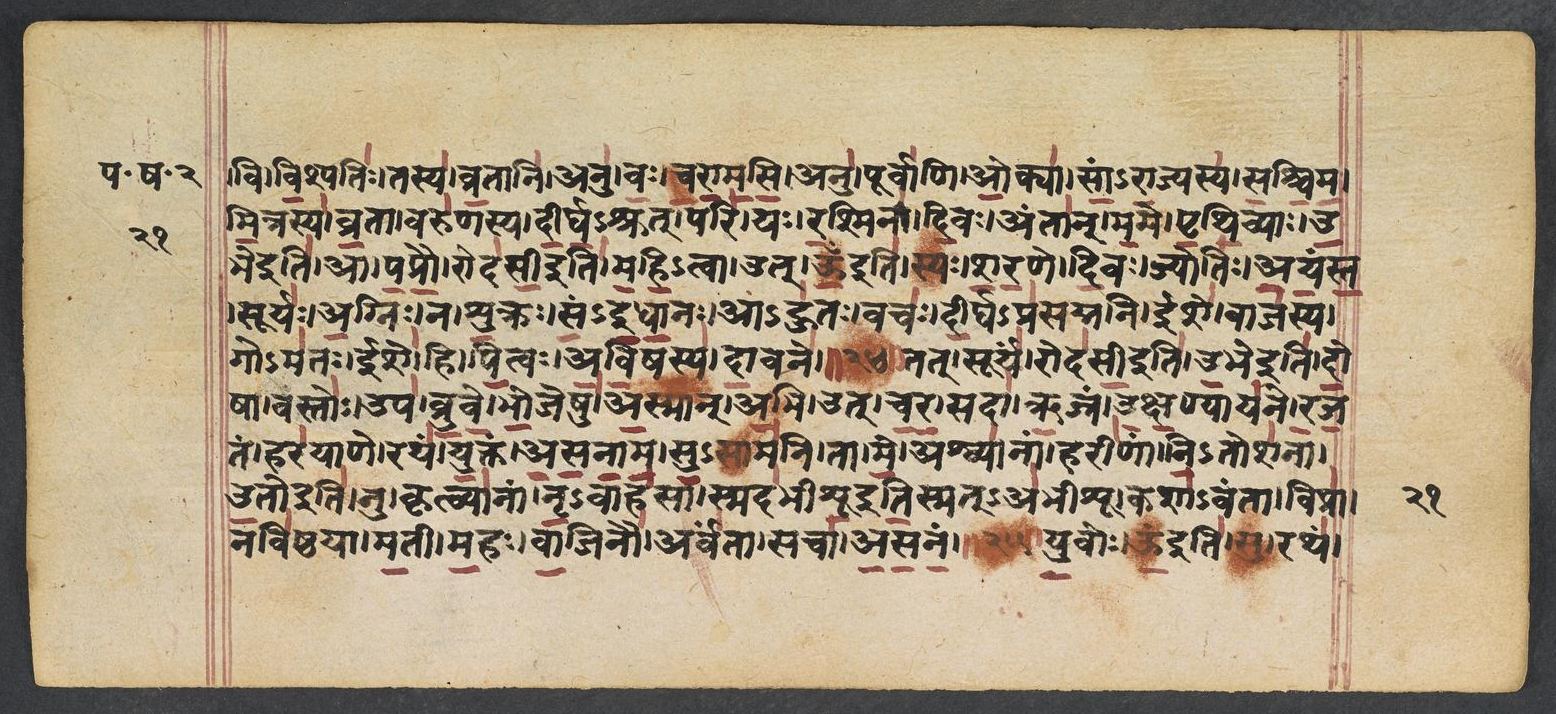
Penn Ms. Coll. 390 Item 41, fol. 599v (numbered 21v by the scribe) (OPenn image 600, upper leaf). Checked on the image: the Rigveda text on this page begins in RV 8.25.16 ‹vi viśpatiḥ tasya vratāni›. The next page with Rigveda text, fol. 600r (numbered 22r by the scribe), begins in RV 8.26.1 ‹huve sadha-stutyāya sūriṣu atūrta-dakṣā›. Verses 8.25.16-24 end on this page; 8.25.16 begins on fol. 599r (numbered 21r by the scribe).
16a̱yam eka̍ i̱tthā pu̱rūru ca̍ṣṭe̱ vi vi̱śpati̍ḥ | tasya̍ vra̱tāny anu̍ vaś carāmasi ||
17anu̱ pūrvā̍ṇy o̱kyā̍ sāmrā̱jyasya̍ saścima | mi̱trasya̍ vra̱tā varu̍ṇasya dīrgha̱śrut ||
18pari̱ yo ra̱śminā̍ di̱vo 'ntā̍n ma̱me pṛ̍thi̱vyāḥ | u̱bhe ā pa̍prau̱ roda̍sī mahi̱tvā ||
19ud u̱ ṣya śa̍ra̱ṇe di̱vo jyoti̍r ayaṁsta̱ sūrya̍ḥ | a̱gnir na śu̱kraḥ sa̍midhā̱na āhu̍taḥ ||
20vaco̍ dī̱rghapra̍sadma̱nīśe̱ vāja̍sya̱ goma̍taḥ | īśe̱ hi pi̱tvo̍ 'vi̱ṣasya̍ dā̱vane̍ ||
21tat sūrya̱ṁ roda̍sī u̱bhe do̱ṣā vasto̱r upa̍ bruve | bho̱jeṣv a̱smām̐ a̱bhy uc ca̍rā̱ sadā̍ ||
22ṛ̱jram u̍kṣa̱ṇyāya̍ne raja̱taṁ hara̍yāṇe | ratha̍ṁ yu̱ktam a̍sanāma su̱ṣāma̍ṇi ||
23tā me̱ aśvyā̍nā̱ṁ harī̍ṇāṁ ni̱tośa̍nā | u̱to nu kṛtvyā̍nāṁ nṛ̱vāha̍sā ||
24smada̍bhīśū̱ kaśā̍vantā̱ viprā̱ navi̍ṣṭhayā ma̱tī | ma̱ho vā̱jinā̱v arva̍ntā̱ sacā̍sanam ||
Compare: Padapāṭha (word-by-word text written in the manuscript; Sansknet e-text via GRETIL)
16ayam | ekaḥ | itthā | puru | uru | caṣṭe | vi | viśpatiḥ | tasya | vratāni | anu | vaḥ | carāmasi
17anu | pūrvāṇi | okyā | sām-rājyasya | saścima | mitrasya | vratā | varuṇasya | dīrgha-śrut
18pari | yaḥ | raśminā | divaḥ | antān | mame | pṛthivyāḥ | ubhe iti | ā | paprau | rodasī iti | mahitvā
19ut | oṃ iti | syaḥ | śaraṇe | divaḥ | jyotiḥ | ayaṃsta | sūryaḥ | agniḥ | na | śukraḥ | sam-idhānaḥ | āhutaḥ
20vacaḥ | dīrgha-prasadmani | īśe | vājasya | go--mataḥ | īśe | hi | pitvaḥ | aviṣasya | dāvane
21tat | sūryam | rodasī iti | ubhe iti | doṣā | vastoḥ | upa | bruve | bhojeṣu | asmān | abhi | ut | cara | sadā
22ṛjram | ukṣaṇyāyane | rajatam | harayāṇe | ratham | yuktam | asanāma | su-sāmani
23tā | me | aśvyānām | harīṇām | ni-tośanā | uto iti | nu | kṛtvyānām | nṛ-vāhasā
24smadabhīśūitismat-abhīśū | kaśāvantā | viprā | naviṣṭhayā | matī | mahaḥ | vāji nau | arvantā | sacā | asanam
16Here this one God, the Lord of men, looks forth exceeding far and wide: And we, for your advantage, keep his holy laws.
17We keep the old accustomed laws, the statutes of supremacy, The Iong-known laws of Mitra and of Varuṇa.
18He who hath measured with his ray the boundaries of heaven and earth, And with his majesty hath filled the two worlds full,
19Sûrya hath spread his light aloft up to the region of the sky, Like Agni all aflame when gifts are offered him.
20With him who sits afar the word is lord of food that comes from kine, Controller of the gift of unempoisoned food.
21So unto Sûrya, Heaven, and Earth at morning and at eve I speak. Bringing enjoyments ever rise thou up for us.
22From Ukshaṇyâyana a bay, from Harayâṇa a white steed, And from Sushâman we obtained a harnessed car.
23These two shall bring me further gain of troops of tawny-coloured steeds, The carriers shall they be of active men of war.
24And the two sages have I gained who hold the reins and bear the whip, And the two great strong coursers, with my newest song.
Notes
- Sanskrit: Aufrecht's edition (1877) with the Vedic accents, as entered by van Nooten and Holland (GRETIL).
- English: Ralph T. H. Griffith, The Hymns of the Rigveda (1889-1892; 2nd ed. 1896-1897), from the VedaWeb digital text; OCR slips in that text were corrected against the printed 2nd edition (data/sources/rigveda/griffith_errata.json).
- Padapāṭha (edition text): Sansknet e-text via GRETIL (CC BY-NC-SA 4.0).
Cite
Sources
- Source: Penn Ms. Coll. 390 Item 41 (undated (catalogued with Penn's 18th-19th c. Vedic manuscripts)), OPenn, Public Domain Mark + Aufrecht's accented text (GRETIL) + Griffith's English (VedaWeb) (holding institution)
- Critical edition: Aufrecht (1877), accented e-text via GRETIL
← previous · → next · v cycle view · l back to library