Rigveda 8.26: To Asvins and Vayu
Introduction
Rigveda 8.26 is a hymn of 25 verses addressed to Asvins and Vayu. It stands in book (maṇḍala) 8, the book of the Kaṇva and Aṅgiras poets. The Rigveda is the oldest collection of Sanskrit hymns, composed in the second half of the second millennium BCE and handed down orally for many centuries before it was written down.
The manuscript shown is Penn Ms. Coll. 390 Item 41 (University of Pennsylvania), an undated paper manuscript of the padapāṭha (the word-by-word recitation text, in which every word is written separately and compounds are split) of the whole Ṛgveda in Devanāgarī, 884 leaves in fascicles, 7-9 lines to the page, accents in red; this hymn stands on fol. 599v-601r. Each section below gives the verses that end on one page; the page boundaries were read on the images (the opening words of every page), not counted out. Where the manuscript is a padapāṭha (the word-by-word recitation text), the section shows Aufrecht's continuous (saṃhitā) text first and, as the edition text, the padapāṭha of the same verses, which is the form written on the page.
How was this verified? (Provenance)
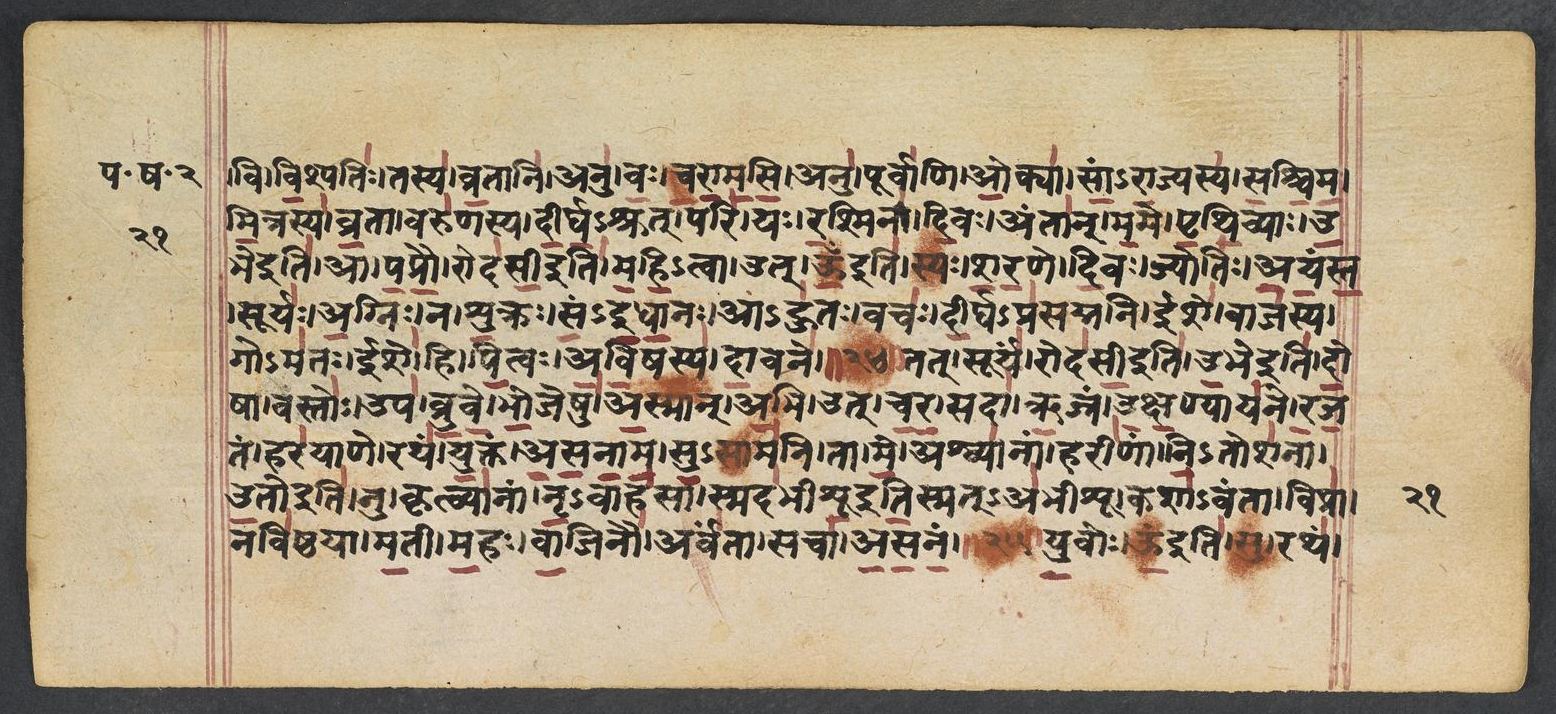
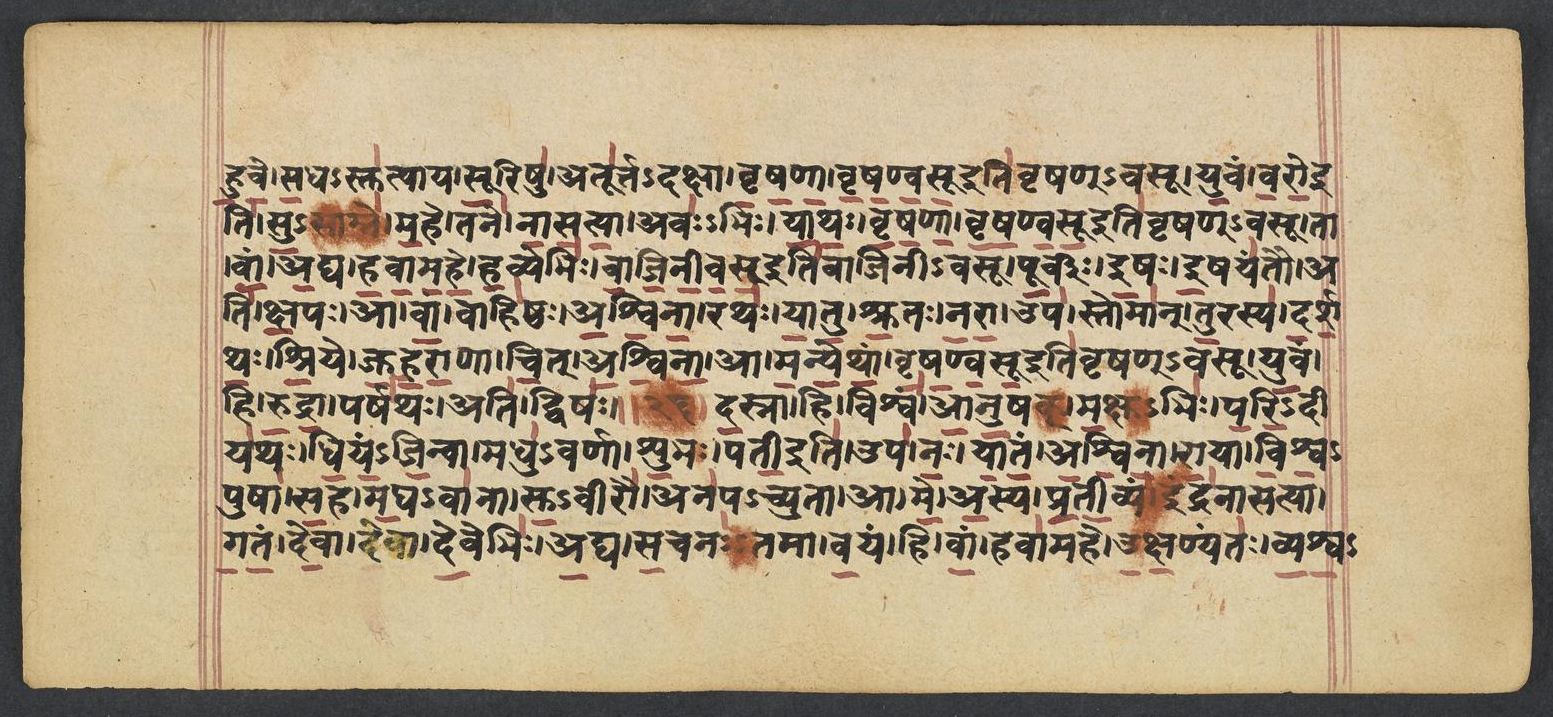
Where on the image
Penn Ms. Coll. 390 Item 41, fol. 600r (numbered 22r by the scribe) (OPenn image 600, lower leaf). Checked on the image: the Rigveda text on this page begins in RV 8.26.1 ‹huve sadha-stutyāya sūriṣu atūrta-dakṣā›. The next page with Rigveda text, fol. 600v (numbered 22v by the scribe), begins in RV 8.26.9 ‹-vyaśva-vat sumati-bhiḥ upa viprau›. Verses 8.26.1-8 end on this page; 8.26.1 begins on fol. 599v (numbered 21v by the scribe).
1yu̱vor u̱ ṣū ratha̍ṁ huve sa̱dhastu̍tyāya sū̱riṣu̍ | atū̍rtadakṣā vṛṣaṇā vṛṣaṇvasū ||
2yu̱vaṁ va̍ro su̱ṣāmṇe̍ ma̱he tane̍ nāsatyā | avo̍bhir yātho vṛṣaṇā vṛṣaṇvasū ||
3tā vā̍m a̱dya ha̍vāmahe ha̱vyebhi̍r vājinīvasū | pū̱rvīr i̱ṣa i̱ṣaya̍ntā̱v ati̍ kṣa̱paḥ ||
4ā vā̱ṁ vāhi̍ṣṭho aśvinā̱ ratho̍ yātu śru̱to na̍rā | upa̱ stomā̍n tu̱rasya̍ darśathaḥ śri̱ye ||
5ju̱hu̱rā̱ṇā ci̍d aśvi̱nā ma̍nyethāṁ vṛṣaṇvasū | yu̱vaṁ hi ru̍drā̱ parṣa̍tho̱ ati̱ dviṣa̍ḥ ||
6da̱srā hi viśva̍m ānu̱ṣaṅ ma̱kṣūbhi̍ḥ pari̱dīya̍thaḥ | dhi̱ya̱ṁji̱nvā madhu̍varṇā śu̱bhas patī̍ ||
7upa̍ no yātam aśvinā rā̱yā vi̍śva̱puṣā̍ sa̱ha | ma̱ghavā̍nā su̱vīrā̱v ana̍pacyutā ||
8ā me̍ a̱sya pra̍tī̱vya1̱̍m indra̍nāsatyā gatam | de̱vā de̱vebhi̍r a̱dya sa̱cana̍stamā ||
Compare: Padapāṭha (word-by-word text written in the manuscript; Sansknet e-text via GRETIL)
1yuvor oṃ iti | su | ratham | huve | sadha-stutyāya | sūriṣu | atūrta-dakṣā | vṛṣaṇā | vṛṣaṇvasūitivṛṣaṇ-vasū
2yuvam | varo iti | su-sāmṇe | mahe | tane | nāsatyā | avaḥ-bhiḥ | yāthaḥ | vṛṣaṇā | vṛṣaṇvasūitivṛṣaṇ-vasū
3tā | vām | adya | havāmahe | havyebhiḥ | vājinīvasūitivājinī-vasū | pūrvīḥ | iṣaḥ | iṣayantau | ati | kṣapaḥ
4ā | vām | vāhiṣṭhaḥ | aśvinā | rathaḥ | yātu | śrutaḥ | narā | upa | stomān | turasya | darśathaḥ | śriye
5juhurāṇā | cit | aśvinā | ā | manyethām | vṛṣaṇvasūitivṛṣaṇ-vasū | yuvam | hi | rudrā | parṣathaḥ | ati | dviṣaḥ
6dasrā | hi | viśvam | ānuṣak | makṣu-bhiḥ | pari-dīyathaḥ | dhiyam-jinvā | madhu-varṇā | śubhaḥ | patī iti
7upa | naḥ | yātam | aśvinā | rāyā | viśva-puṣā | saha | magha-vānā | su-vīrau | anapa-cyutā
8ā | me | asya | pratīvyam | indranāsatyā | gatam | devā | devebhiḥ | adya | sacanaḥ-tamā
1I CALL your chariot to receive united praise mid princely men, Strong Gods who pour down wealth, of never vanquished might!
2Ye to Varosushâman come, Nâsatyas, for this glorious rite. With your protecting aid. Strong Gods, who pour down wealth.
3So with oblations we invoke you, rich in ample wealth, to-day, When night hath passed, O ye who send us plenteous food. O Aṣvins, Heroes, let your car, famed, best to travel, come to us, And, for his glory, mark your zealous servant's lauds.
4O Aṣvins, Heroes, let your car, famed, best to travel, come to us, And, for his glory, mark your zealous servant's lauds.
5Aṣvins, who send us precious gifts, even when offended, think of him: For ye, O Rudras, lead us safe beyond our foes.
6For, Wonder-Workers, with fleet steeds ye fly completely round this All, Stirring our thoughts, ye Lords of splendour, honey-hued.
7With all-sustaining opulence, Aṣvins, come hitherward to us, Ye rich and noble Heroes, ne'er to be o'erthrown.
8To welcome this mine offering, O ye Indra-like Nâsatyas, come As Gods of best accord this day with other Gods.
Where on the image
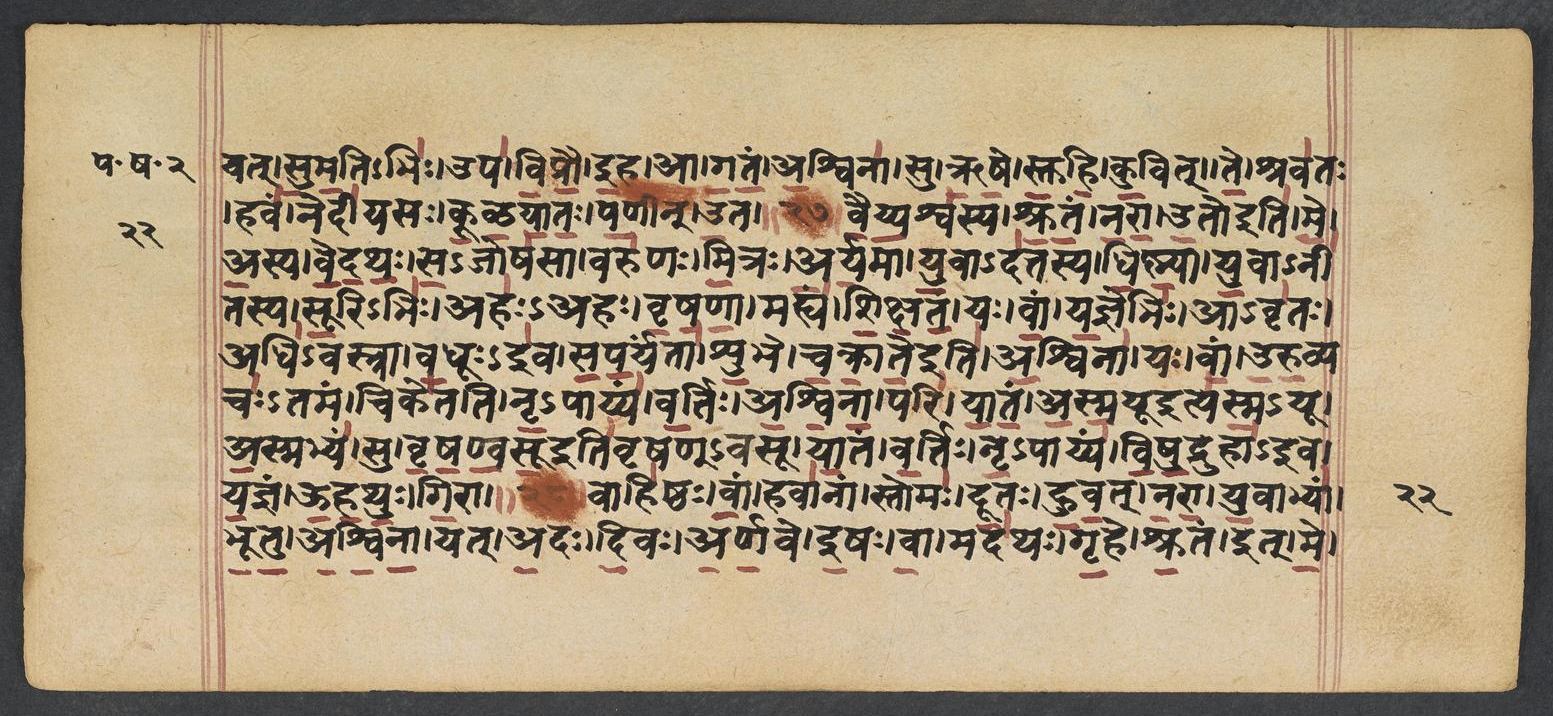
Penn Ms. Coll. 390 Item 41, fol. 600v (numbered 22v by the scribe) (OPenn image 601, upper leaf). Checked on the image: the Rigveda text on this page begins in RV 8.26.9 ‹-vyaśva-vat sumati-bhiḥ upa viprau›. The next page with Rigveda text, fol. 601r (numbered 23r by the scribe), begins in RV 8.26.17 ‹amartyā›. Verses 8.26.9-16 end on this page; 8.26.9 begins on fol. 600r (numbered 22r by the scribe).
9va̱yaṁ hi vā̱ṁ havā̍maha ukṣa̱ṇyanto̍ vyaśva̱vat | su̱ma̱tibhi̱r upa̍ viprāv i̱hā ga̍tam ||
10a̱śvinā̱ sv ṛ̍ṣe stuhi ku̱vit te̱ śrava̍to̱ hava̍m | nedī̍yasaḥ kūḻayātaḥ pa̱ṇīm̐r u̱ta ||
11vai̱ya̱śvasya̍ śrutaṁ naro̱to me̍ a̱sya ve̍dathaḥ | sa̱joṣa̍sā̱ varu̍ṇo mi̱tro a̍rya̱mā ||
12yu̱vāda̍ttasya dhiṣṇyā yu̱vānī̍tasya sū̱ribhi̍ḥ | aha̍r-ahar vṛṣaṇa̱ mahya̍ṁ śikṣatam ||
13yo vā̍ṁ ya̱jñebhi̱r āvṛ̱to 'dhi̍vastrā va̱dhūr i̍va | sa̱pa̱ryantā̍ śu̱bhe ca̍krāte a̱śvinā̍ ||
14yo vā̍m uru̱vyaca̍stama̱ṁ cike̍tati nṛ̱pāyya̍m | va̱rtir a̍śvinā̱ pari̍ yātam asma̱yū ||
15a̱smabhya̱ṁ su vṛ̍ṣaṇvasū yā̱taṁ va̱rtir nṛ̱pāyya̍m | vi̱ṣu̱druhe̍va ya̱jñam ū̍hathur gi̱rā ||
16vāhi̍ṣṭho vā̱ṁ havā̍nā̱ṁ stomo̍ dū̱to hu̍van narā | yu̱vābhyā̍m bhūtv aśvinā ||
Compare: Padapāṭha (word-by-word text written in the manuscript; Sansknet e-text via GRETIL)
9vayam | hi | vām | havāmahe | ukṣaṇyantaḥ | vyaśva-vat | sumati-bhiḥ | upa | viprau | iha | ā | gatam
10aśvinā | su | ṛṣe | stuhi | kuvit | te | śravataḥ | havam | nedīyasaḥ | kūḷayātaḥ | paṇīn | uta
11vaiyaśvasya | śrutam | narā | uto iti | me | asya | vedathaḥ | sa-joṣasā | varuṇaḥ | mitraḥ | aryamā
12yuvādattasya | dhiṣṇyā | yuvānītasya | sūri-bhiḥ | ahaḥ-ahaḥ | vṛṣaṇā | mahyam | śikṣatam
13yaḥ | vām | yajñebhiḥ | āvṛtaḥ | adhi-vastrā | vadhūḥ-iva | saparyantā | śubhe | cakrāteiti | aśvinā
14yaḥ | vām | uruvyacaḥ-tamam | ciketati | nṛ-pāyyam | vartiḥ | aśvinā | pari | yātam | asmayū ity asma-yū
15asmabhyam | su | vṛṣaṇvasūitivṛṣaṇ-vasū | yātam | vartiḥ | nṛ-pāyyam | viṣudruhāiva | yajñam | ūhathuḥ | girā
16vāhiṣṭhaḥ | vām | havānām | stomaḥ | dūtaḥ | huvat | narā | yuvābhyām | bhūtu | aśvinā
9For we, like Vyaṣva, lifting up our voice like oxen, call on you: With all your loving kindness, Sages, come to us.
10O R̥ishi, laud the Aṣvins well. Will they not listen to thy call? Will they not bum the Paṇis who are nearer them?
11O Heroes, listen to the son of Vyaṣva, and regard me here, Varuṇa, Mitra, Aryaman, of one accord.
12Gods whom we yearn for, of your gifts, of what ye bring to us, bestow By princes' hands on me, ye Mighty, day by day.
13Him whom your sacrifices clothe, even as a woman with her robe, The Aṣvins help to glory honouring him well.
14Whoso regards your care of men as succour widest in its reach, About his dwelling go, ye Aṣvins, loving us.
15Come to us ye who pour down wealth, come to the home which men must guard: Like shafts, ye are made meet for sacrifice by song.
16Most fetching of all calls, the laud, as envoy, Heroes, called to you Be it your own, O Aṣvin Pair.
Where on the image
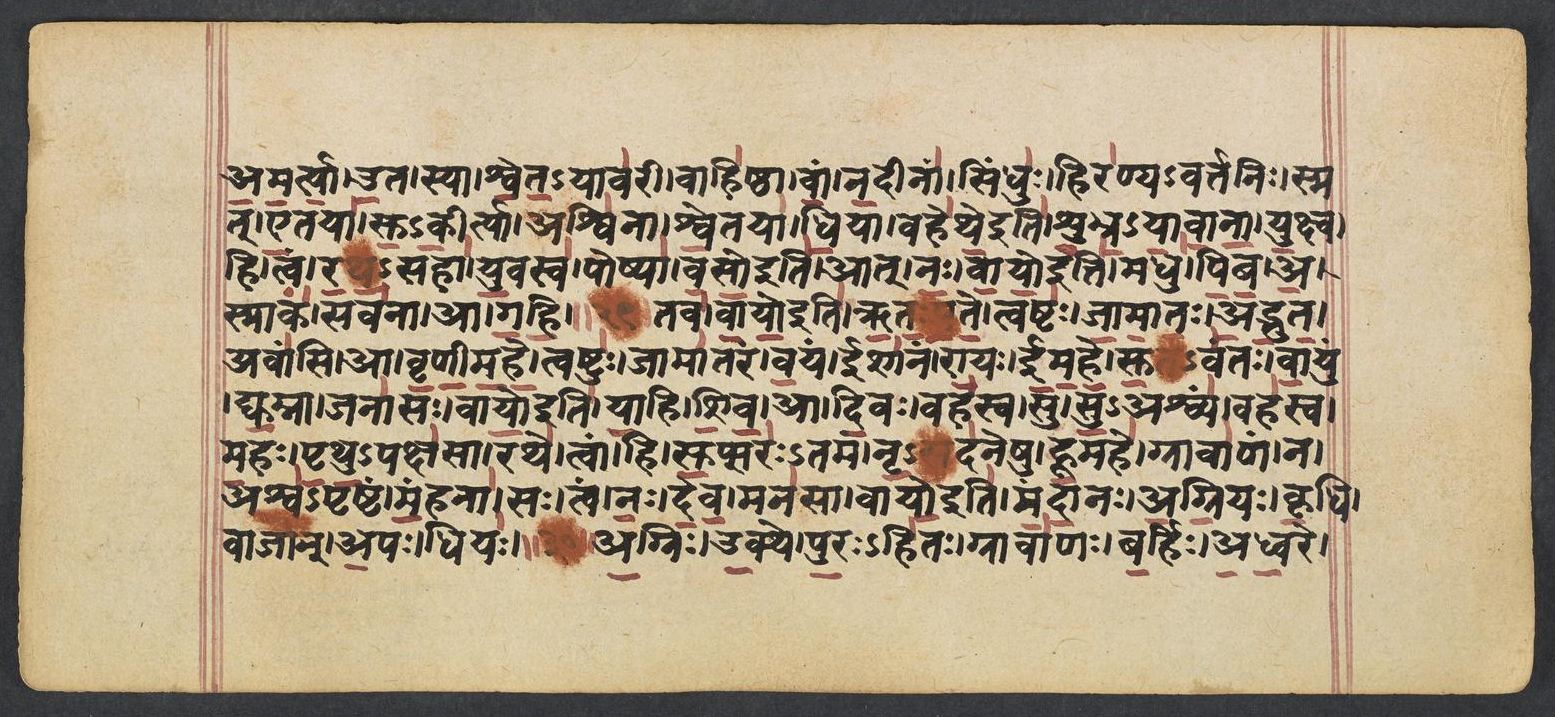
Penn Ms. Coll. 390 Item 41, fol. 601r (numbered 23r by the scribe) (OPenn image 601, lower leaf). Checked on the image: the Rigveda text on this page begins in RV 8.26.17 ‹amartyā›. The next page with Rigveda text, fol. 601v (numbered 23v by the scribe), begins in RV 8.27.1 ‹ṛcā yāmi marutaḥ brahmaṇaḥ›. Verses 8.26.17-25 end on this page; 8.26.17 begins on fol. 600v (numbered 22v by the scribe).
17yad a̱do di̱vo a̍rṇa̱va i̱ṣo vā̱ mada̍tho gṛ̱he | śru̱tam in me̍ amartyā ||
18u̱ta syā śve̍ta̱yāva̍rī̱ vāhi̍ṣṭhā vāṁ na̱dīnā̍m | sindhu̱r hira̍ṇyavartaniḥ ||
19smad e̱tayā̍ sukī̱rtyāśvi̍nā śve̱tayā̍ dhi̱yā | vahe̍the śubhrayāvānā ||
20yu̱kṣvā hi tvaṁ ra̍thā̱sahā̍ yu̱vasva̱ poṣyā̍ vaso | ān no̍ vāyo̱ madhu̍ pibā̱smāka̱ṁ sava̱nā ga̍hi ||
21tava̍ vāyav ṛtaspate̱ tvaṣṭu̍r jāmātar adbhuta | avā̱ṁsy ā vṛ̍ṇīmahe ||
22tvaṣṭu̱r jāmā̍taraṁ va̱yam īśā̍naṁ rā̱ya ī̍mahe | su̱tāva̍nto vā̱yuṁ dyu̱mnā janā̍saḥ ||
23vāyo̍ yā̱hi śi̱vā di̱vo vaha̍svā̱ su svaśvya̍m | vaha̍sva ma̱haḥ pṛ̍thu̱pakṣa̍sā̱ rathe̍ ||
24tvāṁ hi su̱psara̍stamaṁ nṛ̱ṣada̍neṣu hū̱mahe̍ | grāvā̍ṇa̱ṁ nāśva̍pṛṣṭham ma̱ṁhanā̍ ||
25sa tvaṁ no̍ deva̱ mana̍sā̱ vāyo̍ mandā̱no a̍gri̱yaḥ | kṛ̱dhi vājā̍m̐ a̱po dhiya̍ḥ ||
Compare: Padapāṭha (word-by-word text written in the manuscript; Sansknet e-text via GRETIL)
17yat | adaḥ | divaḥ | arṇave | iṣaḥ | vā | madathaḥ | gṛhe | śrutam | it | me | amartyā
18uta | syā | śveta-yāvarī | vāhiṣṭhā | vām | nadīnām | sindhuḥ | hiraṇya-vartani ḥ
19smat | etayā | su-kīrtyā | aśvinā | śvetayā | dhiyā | vahetheiti | śubhra-yāvānā
20yukṣva | hi | tvam | ratha-sahā | yuvasva | poṣyā | vaso iti | āt | naḥ | vāyo iti | madhu | piba | asmākam | savanā | ā | gahi
21tava | vāyo iti | ṛtaḥ-pate | tvaṣṭuḥ | jāmātaḥ | adbhuta | avāṃsi | ā | vṛṇīmahe
22tvaṣṭuḥ | jāmātaram | vayam | īśānam | rāyaḥ | īmahe | suta-vantaḥ | vāyum | dyumnā | janāsaḥ
23vāyo iti | yāhi | śiva | ā | divaḥ | vahasva | su | su-aśvyam | vahasva | mahaḥ | pṛthu-pakṣasā | rathe
24tvām | hi | supsaraḥ-tamam | nṛ-sadaneṣu | hūmahe | grāvāṇam | na | aśva-pṛṣṭham | maṃhanā
25saḥ | tvam | naḥ | deva | manasā | vāyo iti | mandānaḥ | agriyaḥ | kṛdhi | vājān | apaḥ | dhiyaḥ
17Be ye in yonder sea of heaven, or joying in the home of food, Listen to me, Immortal Ones.
18This river with his lucid flow attracts you, more than all the streams,– Even Sindhu with his path of gold.
19O Aṣvins, with that glorious fame come hither, through our brilliant song, Come ye whose ways are marked with light.
20Harness the steeds who draw the car, O Vasu, bring the well-fed pair. O Vâyu, drink thou of our meath: come unto our drink-offerings.
21Wonderful Vâyu, Lord of Right, thou who art Tvashṭar's son-in-law, Thy saving succour we elect.
22To Tvashṭar's son-in-law we pray for wealth whereof he hath control: For glory we seek Vâyu, men with juice effused.
23From heaven, auspicious Vâyu, come drive hither with thy noble steeds: Come on thy mighty car with wide-extending seat.
24We call thee to the homes of men, thee wealthiest in noble food, And liberal as a press-stone with a horse's back.
25So, glad and joyful in thine heart, do thou, God, Vâyu, first of all Vouchsafe us water, strength, and thought.
Notes
- Sanskrit: Aufrecht's edition (1877) with the Vedic accents, as entered by van Nooten and Holland (GRETIL).
- English: Ralph T. H. Griffith, The Hymns of the Rigveda (1889-1892; 2nd ed. 1896-1897), from the VedaWeb digital text; OCR slips in that text were corrected against the printed 2nd edition (data/sources/rigveda/griffith_errata.json).
- Padapāṭha (edition text): Sansknet e-text via GRETIL (CC BY-NC-SA 4.0).
Cite
Sources
- Source: Penn Ms. Coll. 390 Item 41 (undated (catalogued with Penn's 18th-19th c. Vedic manuscripts)), OPenn, Public Domain Mark + Aufrecht's accented text (GRETIL) + Griffith's English (VedaWeb) (holding institution)
- Critical edition: Aufrecht (1877), accented e-text via GRETIL
← previous · → next · v cycle view · l back to library