Rigveda 8.27: To all the gods
Introduction
Rigveda 8.27 is a hymn of 22 verses addressed to all the gods. It stands in book (maṇḍala) 8, the book of the Kaṇva and Aṅgiras poets. The Rigveda is the oldest collection of Sanskrit hymns, composed in the second half of the second millennium BCE and handed down orally for many centuries before it was written down.
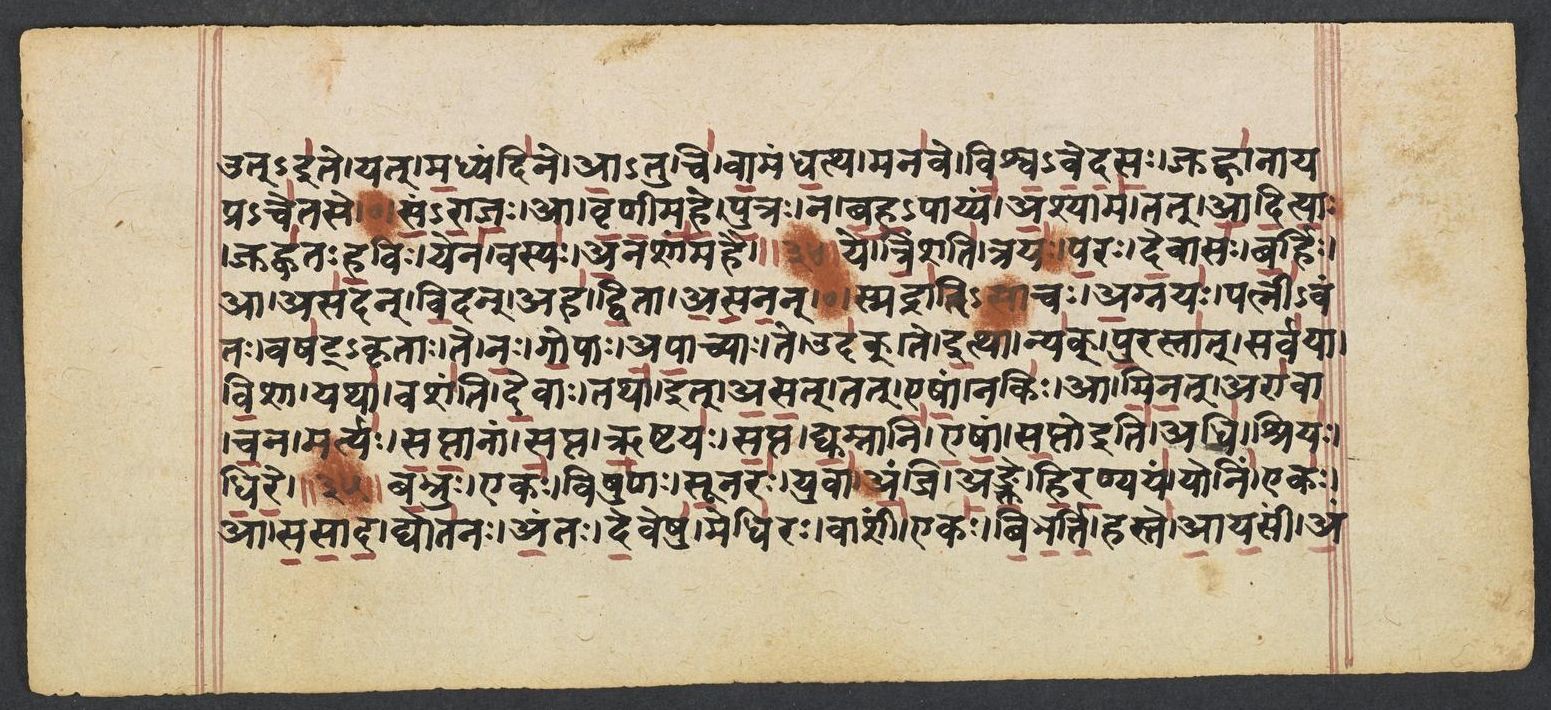
The manuscript shown is Penn Ms. Coll. 390 Item 41 (University of Pennsylvania), an undated paper manuscript of the padapāṭha (the word-by-word recitation text, in which every word is written separately and compounds are split) of the whole Ṛgveda in Devanāgarī, 884 leaves in fascicles, 7-9 lines to the page, accents in red; this hymn stands on fol. 601r-603r. Each section below gives the verses that end on one page; the page boundaries were read on the images (the opening words of every page), not counted out. Where the manuscript is a padapāṭha (the word-by-word recitation text), the section shows Aufrecht's continuous (saṃhitā) text first and, as the edition text, the padapāṭha of the same verses, which is the form written on the page.
How was this verified? (Provenance)
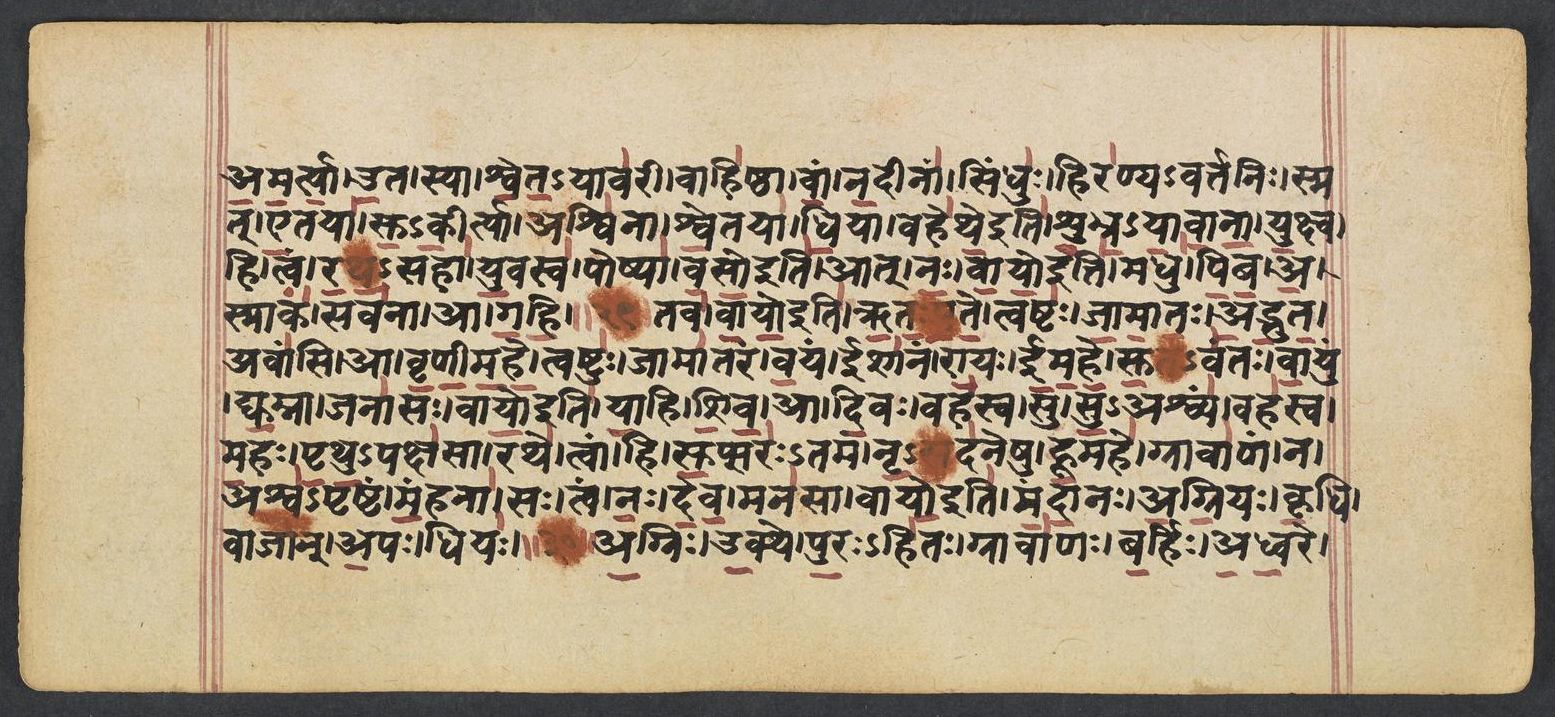
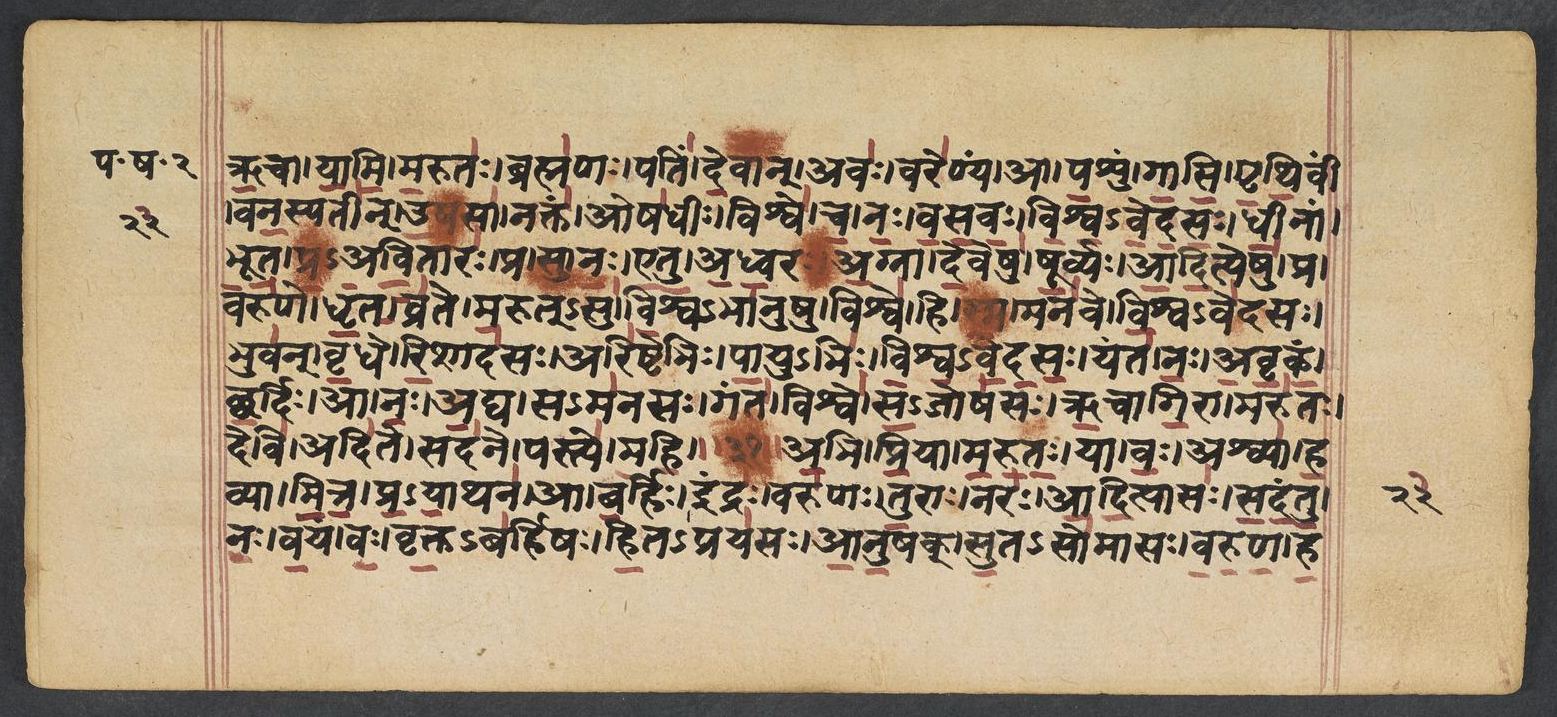
Where on the image
Penn Ms. Coll. 390 Item 41, fol. 601v (numbered 23v by the scribe) (OPenn image 602, upper leaf). Checked on the image: the Rigveda text on this page begins in RV 8.27.1 ‹ṛcā yāmi marutaḥ brahmaṇaḥ›. The next page with Rigveda text, fol. 602r (numbered 24r by the scribe), begins in RV 8.27.7 ‹-havāmahe manuṣvat iddha-agnayaḥ›. Verses 8.27.1-6 end on this page; 8.27.1 begins on fol. 601r (numbered 23r by the scribe).
1a̱gnir u̱kthe pu̱rohi̍to̱ grāvā̍ṇo ba̱rhir a̍dhva̱re | ṛ̱cā yā̍mi ma̱ruto̱ brahma̍ṇa̱s pati̍ṁ de̱vām̐ avo̱ vare̍ṇyam ||
2ā pa̱śuṁ gā̍si pṛthi̱vīṁ vana̱spatī̍n u̱ṣāsā̱ nakta̱m oṣa̍dhīḥ | viśve̍ ca no vasavo viśvavedaso dhī̱nām bhū̍ta prāvi̱tāra̍ḥ ||
3pra sū na̍ etv adhva̱ro̱3̱̍ 'gnā de̱veṣu̍ pū̱rvyaḥ | ā̱di̱tyeṣu̱ pra varu̍ṇe dhṛ̱tavra̍te ma̱rutsu̍ vi̱śvabhā̍nuṣu ||
4viśve̱ hi ṣmā̱ mana̍ve vi̱śvave̍daso̱ bhuva̍n vṛ̱dhe ri̱śāda̍saḥ | ari̍ṣṭebhiḥ pā̱yubhi̍r viśvavedaso̱ yantā̍ no 'vṛ̱kaṁ cha̱rdiḥ ||
5ā no̍ a̱dya sama̍naso̱ gantā̱ viśve̍ sa̱joṣa̍saḥ | ṛ̱cā gi̱rā maru̍to̱ devy adi̍te̱ sada̍ne̱ pastye̍ mahi ||
6a̱bhi pri̱yā ma̍ruto̱ yā vo̱ aśvyā̍ ha̱vyā mi̍tra prayā̱thana̍ | ā ba̱rhir indro̱ varu̍ṇas tu̱rā nara̍ ādi̱tyāsa̍ḥ sadantu naḥ ||
Compare: Padapāṭha (word-by-word text written in the manuscript; Sansknet e-text via GRETIL)
1agniḥ | ukthe | puraḥ-hitaḥ | grāvāṇaḥ | barhiḥ | adhvare | ṛcā | yāmi | marutaḥ | brahmaṇaḥ | patim | devān | avaḥ | vareṇyam
2ā | paśum | gāsi | pṛthivīm | vanaspatīn | uṣasā | naktam | oṣadhīḥ | viśve | ca | naḥ | vasavaḥ | viśva-vedasaḥ | dhīnām | bhūta | pra-avitāraḥ
3pra | su | naḥ | etu | adhvaraḥ | agnā | deveṣu | pūrvyaḥ | ādityeṣu | pra | varuṇe | dhṛta-vrate | marut-su | viśva-bhānuṣu
4viśve | hi | sma | manave | viśva-vedasaḥ | bhuvan | vṛdhe | riśādasaḥ | ariṣṭebhiḥ | pāyu-bhiḥ | viśva-vedasaḥ | yanta | naḥ | avṛkam | chardiḥ
5ā | naḥ | adya | sa-manasaḥ | ganta | viśve | sa-joṣasaḥ | ṛcā | girā | marutaḥ | devi | adite | sadane | pastye | mahi
6abhi | priyā | marutaḥ | yā | vaḥ | aśvyā | havyā | mitra | pra-yāthana | ā | barhiḥ | indraḥ | varuṇaḥ | turāḥ | naraḥ | ādityāsaḥ | sadantu | naḥ
1CHEIF Priest is Agni at the laud, as stones and grass at sacrifice: With song I seek the Maruts, Brahmaṇaspati, Gods for help much to be desired.
2I sing to cattle and to Earth, to trees, to Dawns, to Night, to plants. O all ye Vasus, ye possessors of all wealth, be ye the furtherers of our thoughts.
3Forth go, with Agni, to the Gods our sacrifice of ancient use, To the Âdityas, Varuṇa whose Law stands fast, and the all-lightening Marut troop.
4Lords of all wealth, may they be strengtheners of man, destroyers of his enemies. Lords of all wealth, do ye, with guards which none may harm, preserve our dwelling free from foes.
5Come to us with one mind to-day, come to us all with one accord, Maruts with holy song, and, Goddess Aditi, Mighty One, to our house and home.
6Send us delightful things, ye Maruts, on your steeds: come ye, O Mitra, to our gifts. Let Indra, Varuṇa, and the Âdityas sit, swift Heroes, on our sacred grass.
Where on the image
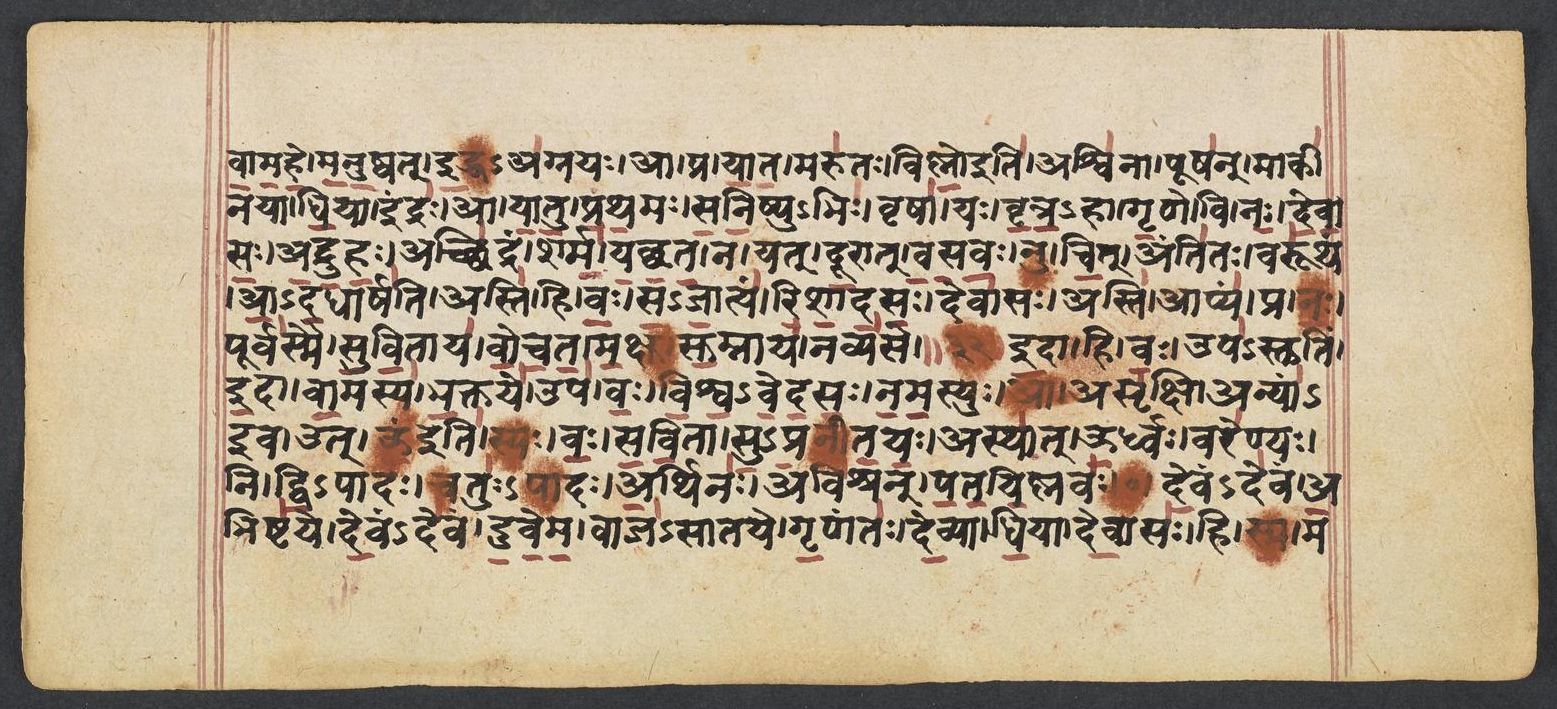
Penn Ms. Coll. 390 Item 41, fol. 602r (numbered 24r by the scribe) (OPenn image 602, lower leaf). Checked on the image: the Rigveda text on this page begins in RV 8.27.7 ‹-havāmahe manuṣvat iddha-agnayaḥ›. The next page with Rigveda text, fol. 602v (numbered 24v by the scribe), begins in RV 8.27.14 ‹-manave sa-manyavaḥ viśve sākam›. Verses 8.27.7-13 end on this page; 8.27.7 begins on fol. 601v (numbered 23v by the scribe).
7va̱yaṁ vo̍ vṛ̱ktaba̍rhiṣo hi̱tapra̍yasa ānu̱ṣak | su̱taso̍māso varuṇa havāmahe manu̱ṣvad i̱ddhāgna̍yaḥ ||
8ā pra yā̍ta̱ maru̍to̱ viṣṇo̱ aśvi̍nā̱ pūṣa̱n mākī̍nayā dhi̱yā | indra̱ ā yā̍tu pratha̱maḥ sa̍ni̱ṣyubhi̱r vṛṣā̱ yo vṛ̍tra̱hā gṛ̱ṇe ||
9vi no̍ devāso adru̱ho 'cchi̍dra̱ṁ śarma̍ yacchata | na yad dū̱rād va̍savo̱ nū ci̱d anti̍to̱ varū̍tham āda̱dharṣa̍ti ||
10asti̱ hi va̍ḥ sajā̱tya̍ṁ riśādaso̱ devā̍so̱ asty āpya̍m | pra ṇa̱ḥ pūrva̍smai suvi̱tāya̍ vocata ma̱kṣū su̱mnāya̱ navya̍se ||
11i̱dā hi va̱ upa̍stutim i̱dā vā̱masya̍ bha̱ktaye̍ | upa̍ vo viśvavedaso nama̱syur ām̐ asṛ̱kṣy anyā̍m iva ||
12ud u̱ ṣya va̍ḥ savi̱tā su̍praṇīta̱yo 'sthā̍d ū̱rdhvo vare̍ṇyaḥ | ni dvi̱pāda̱ś catu̍ṣpādo a̱rthino 'vi̍śran patayi̱ṣṇava̍ḥ ||
13de̱vaṁ-de̍va̱ṁ vo 'va̍se de̱vaṁ-de̍vam a̱bhiṣṭa̍ye | de̱vaṁ-de̍vaṁ huvema̱ vāja̍sātaye gṛ̱ṇanto̍ de̱vyā dhi̱yā ||
Compare: Padapāṭha (word-by-word text written in the manuscript; Sansknet e-text via GRETIL)
7vayam | vaḥ | vṛkta-barhiṣaḥ | hita-prayasaḥ | ānuṣak | suta-somāsaḥ | varuṇa | havāmahe | manuṣvat | iddha-agnayaḥ
8ā | pra | yāta | marutaḥ | viṣṇo iti | aśvinā | pūṣan | mākīnayā | dhiyā | indraḥ | ā | yātu | prathamaḥ | saniṣyu-bh iḥ | vṛṣā | yaḥ | vṛtra-hā | gṛṇe
9vi | naḥ | devāsaḥ | adruhaḥ | acchidram | śarma | yacchata | na | yat | dūrāt | vasavaḥ | nu | cit | antitaḥ | varāūtham | ādadharṣati
10asti | hi | vaḥ | sajātyam | riśādasaḥ | devāsaḥ | asti | āpyam | pra | naḥ | pūrvasmai | suvitāya | vocata | makṣu | sumnāya | navyase
11idā | hi | vaḥ | upa-stutim | idā | vāmasya | bhaktaye | upa | vaḥ | viśva-vedasaḥ | namasyuḥ | ā | asṛkṣi | anyām-iva
12ut | oṃ iti | syaḥ | vaḥ | savitā | su-pranītayaḥ | asthāt | ūrdhvaḥ | vareṇyaḥ | ni | dv i-pādaḥ | catuḥ-pādaḥ | arthinaḥ | aviśran | patayiṣṇavaḥ
13devam-devam | vaḥ | avase | devam-devam | abhiṣṭaye | devam-devam | huvema | vāja-sātaye | gṛṇantaḥ | devyā | dhiyā
7We who have trimmed the grass for you, and set the banquet in array, And pressed the Soma, call you, Varuṇa, like men, with sacrificial fires aflame.
8O Maruts, Vishṇu, Aṣvins, Pûshan, haste away with minds turned hitherward to Me. Let the Strong Indra, famed as Vr̥itra's slayer, come first with the winners of the spoil.
9Ye Guileless Gods, bestow on us a refuge strong on every side, A sure protection, Vasus, unassailable from near at hand or from afar.
10Kinship have I with you, and close alliance O ye Gods, destroyers of our foes. Call us to our prosperity of former days, and soon to new klicity.
11For now have I sent forth to you, that I may win a fair reward, Lords of all wealth, with homage, this my song of praise. like a milch-cow that faileth not.
12Excellent Savitar hath mounted up on high for you, ye sure and careful Guides. Bipeds and quadrupeds, with several hopes and aims, and birds have settled to their tasks.
13Singing their praise with God-like thought let us invoke each God for grace, Each God to bring you help, each God to strengthen you.
Where on the image
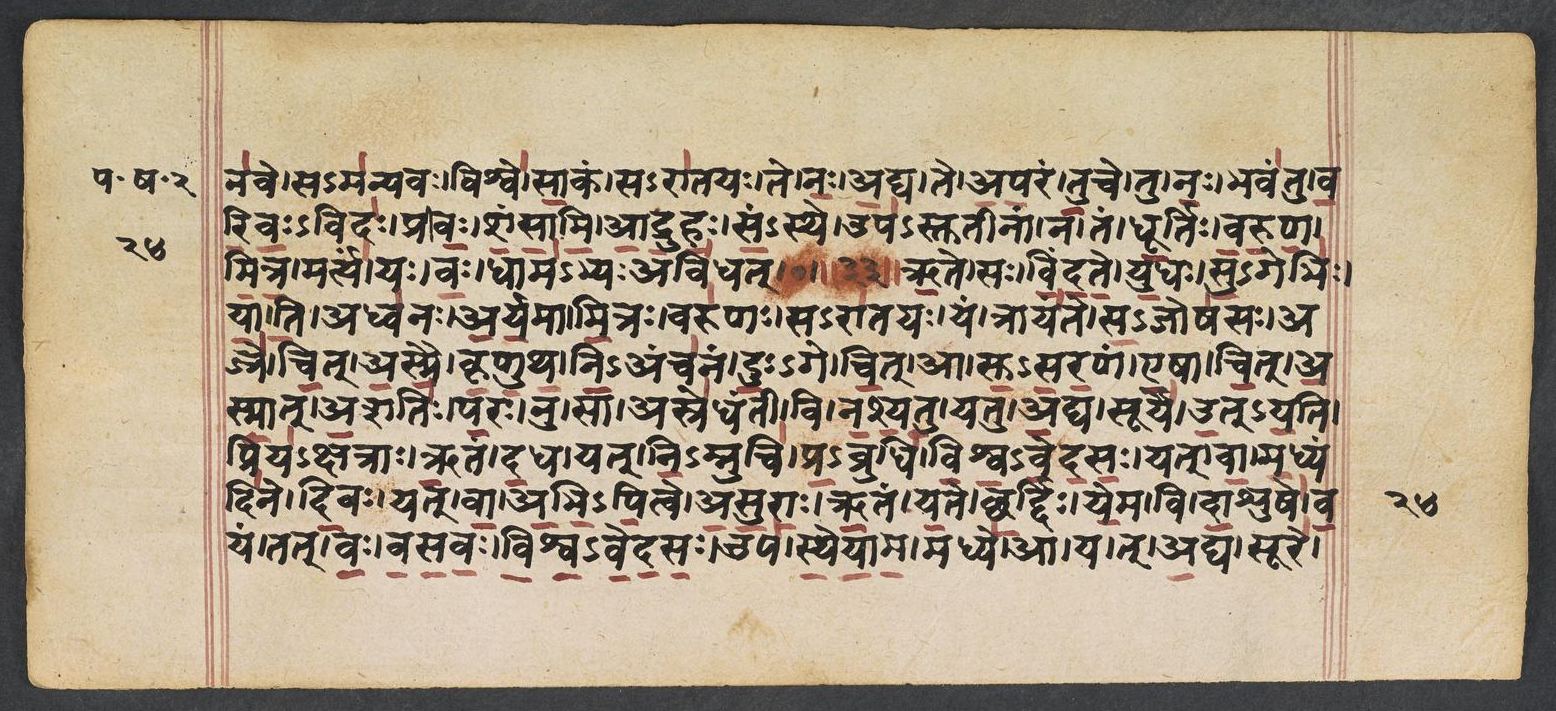
Penn Ms. Coll. 390 Item 41, fol. 602v (numbered 24v by the scribe) (OPenn image 603, upper leaf). Checked on the image: the Rigveda text on this page begins in RV 8.27.14 ‹-manave sa-manyavaḥ viśve sākam›. The next page with Rigveda text, fol. 603r (numbered 25r by the scribe), begins in RV 8.27.21 ‹ut-ite yat madhyandine ātuci›. Verses 8.27.14-20 end on this page; 8.27.14 begins on fol. 602r (numbered 24r by the scribe).
14de̱vāso̱ hi ṣmā̱ mana̍ve̱ sama̍nyavo̱ viśve̍ sā̱kaṁ sarā̍tayaḥ | te no̍ a̱dya te a̍pa̱raṁ tu̱ce tu no̱ bhava̍ntu varivo̱vida̍ḥ ||
15pra va̍ḥ śaṁsāmy adruhaḥ sa̱ṁstha upa̍stutīnām | na taṁ dhū̱rtir va̍ruṇa mitra̱ martya̱ṁ yo vo̱ dhāma̱bhyo 'vi̍dhat ||
16pra sa kṣaya̍ṁ tirate̱ vi ma̱hīr iṣo̱ yo vo̱ varā̍ya̱ dāśa̍ti | pra pra̱jābhi̍r jāyate̱ dharma̍ṇa̱s pary ari̍ṣṭa̱ḥ sarva̍ edhate ||
17ṛ̱te sa vi̍ndate yu̱dhaḥ su̱gebhi̍r yā̱ty adhva̍naḥ | a̱rya̱mā mi̱tro varu̍ṇa̱ḥ sarā̍tayo̱ yaṁ trāya̍nte sa̱joṣa̍saḥ ||
18ajre̍ cid asmai kṛṇuthā̱ nyañca̍naṁ du̱rge ci̱d ā su̍sara̱ṇam | e̱ṣā ci̍d asmād a̱śani̍ḥ pa̱ro nu sāsre̍dhantī̱ vi na̍śyatu ||
19yad a̱dya sūrya̍ udya̱ti priya̍kṣatrā ṛ̱taṁ da̱dha | yan ni̱mruci̍ pra̱budhi̍ viśvavedaso̱ yad vā̍ ma̱dhyaṁdi̍ne di̱vaḥ ||
20yad vā̍bhipi̱tve a̍surā ṛ̱taṁ ya̱te cha̱rdir ye̱ma vi dā̱śuṣe̍ | va̱yaṁ tad vo̍ vasavo viśvavedasa̱ upa̍ stheyāma̱ madhya̱ ā ||
Compare: Padapāṭha (word-by-word text written in the manuscript; Sansknet e-text via GRETIL)
14devāsaḥ | hi | sma | manave | sa-manyavaḥ | viśve | sākam | sa-rātayaḥ | te | naḥ | adya | te | aparam | tuce | tu | naḥ | bhavantu | varivaḥ-vidaḥ
15pra | vaḥ | śaṃsāmi | adruhaḥ | sam-sthe | upa-stutīnām | na | tam | dhūrtiḥ | varuṇa | mitra | martyam | yaḥ | vaḥ | dhāma-bhyaḥ | avidhat
16pra | saḥ | kṣayam | tirate | vi | mahīḥ | iṣaḥ | yaḥ | vaḥ | varāya | dāśati | pra | pra-jābhiḥ | jāyate | dharmaṇaḥ | pari | ariṣṭaḥ | sarvaḥ | edhate
17ṛte | saḥ | vindate | yudhaḥ | su-gebhiḥ | yāti | adhvanaḥ | aryamā | mitraḥ | varuṇaḥ | sa-rātayaḥ | yam | trāyante | sa-joṣasaḥ
18ajre | cit | asmai | kṛṇutha | ni-añcanam | duḥ-ge | cit | ā | su-saraṇam | eṣā | cit | asmāt | aśaniḥ | paraḥ | nu | sā | asredhantī | vi | naśyatu
19yat | adya | sūryaḥ | ut-yati | priya-kṣatrāḥ | ṛtam | dadha | yat | ni-mruci | pra-budhi | viśva-vedasaḥ | yat | vā | madhyandine | divaḥ
20yat | vā | abhi-pitve | asurāḥ | ṛtam | yate | chardiḥ | yema | vi | dāśuṣe | vayam | tat | vaḥ | vasavaḥ | viśva-vedasaḥ | upa | stheyāma | madhye | ā
14For of one spirit are the Gods with mortal man, co-sharers all of gracious gifts. May they increase our strength hereafter and to-day, providing case and ample room.
15I laud you, O ye Guileless Gods, here where we meet to render praise. None, Varuṇa and Mitra, harms the mortal, man who honours and obeys your laws.
16He makes his house endure, he gathers plenteous food who pays obedience to your will. Born in his sons anew he spreads as Law commands, and prospers every way unharmed.
17E'en without war he gathers wealth, and goes hisway on pleasant paths, Whom Mitra, Varuṇa and Aryaman protect, sharing the gift,of one accord.
18E'en on the plain for him ye make a sloping path, an easy way where road is none: And far away from him the ineffectual shaft must vanish, shot at him in vain.
19If ye appoint the rite to-day, kind Rulers, when the Sun ascends, Lords of all wealth, at sunset or at wakingtime, or be it at the noon of day,
20Or, Asuras, when ye have sheltered the worshipper who goes to sacrifice, at eve may we, O Vasus, ye possessors of all wealth, come then into the midst of You.
Where on the image
Penn Ms. Coll. 390 Item 41, fol. 603r (numbered 25r by the scribe) (OPenn image 603, lower leaf). Checked on the image: the Rigveda text on this page begins in RV 8.27.21 ‹ut-ite yat madhyandine ātuci›. The next page with Rigveda text, fol. 603v (numbered 25v by the scribe), begins in RV 8.29.3 ‹-antaḥ deveṣu ni-dhruviḥ›. Verses 8.27.21-22 end on this page; 8.27.21 begins on fol. 602v (numbered 24v by the scribe).
21yad a̱dya sūra̱ udi̍te̱ yan ma̱dhyaṁdi̍na ā̱tuci̍ | vā̱maṁ dha̱ttha mana̍ve viśvavedaso̱ juhvā̍nāya̱ prace̍tase ||
22va̱yaṁ tad va̍ḥ samrāja̱ ā vṛ̍ṇīmahe pu̱tro na ba̍hu̱pāyya̍m | a̱śyāma̱ tad ā̍dityā̱ juhva̍to ha̱vir yena̱ vasyo̱ 'naśā̍mahai ||
Compare: Padapāṭha (word-by-word text written in the manuscript; Sansknet e-text via GRETIL)
21yat | adya | sūre | ut-ite | yat | madhyandine | ātuci | vāmam | dhattha | manave | vi śva-vedasaḥ | juhvānāya | pra-cetase
22vayam | tat | vaḥ | sam-rājaḥ | ā | vṛṇīmahe | putraḥ | na | bahu-pāyyam | aśyāma | tat | ādityāḥ | juhvataḥ | haviḥ | yena | vasyaḥ | anaśāmahai
21If ye to-day at sunrise, or at noon, or in the gloom of eve, Lords of all riches, give fair treasure to the man, the wise man who hath sacrificed,
22Then we, imperial Rulers, claim of you this boon, your wide protection, as a son. May we, Âdityas, offering holy gifts, obtain that which shall bring us greater bliss.
Notes
- Sanskrit: Aufrecht's edition (1877) with the Vedic accents, as entered by van Nooten and Holland (GRETIL).
- English: Ralph T. H. Griffith, The Hymns of the Rigveda (1889-1892; 2nd ed. 1896-1897), from the VedaWeb digital text; OCR slips in that text were corrected against the printed 2nd edition (data/sources/rigveda/griffith_errata.json).
- Padapāṭha (edition text): Sansknet e-text via GRETIL (CC BY-NC-SA 4.0).
Cite
Sources
- Source: Penn Ms. Coll. 390 Item 41 (undated (catalogued with Penn's 18th-19th c. Vedic manuscripts)), OPenn, Public Domain Mark + Aufrecht's accented text (GRETIL) + Griffith's English (VedaWeb) (holding institution)
- Critical edition: Aufrecht (1877), accented e-text via GRETIL
← previous · → next · v cycle view · l back to library