Rigveda 8.4: To Indra
Introduction
Rigveda 8.4 is a hymn of 21 verses addressed to Indra. It stands in book (maṇḍala) 8, the book of the Kaṇva and Aṅgiras poets. The Rigveda is the oldest collection of Sanskrit hymns, composed in the second half of the second millennium BCE and handed down orally for many centuries before it was written down.
The manuscript shown is Penn Ms. Coll. 390 Item 41 (University of Pennsylvania), an undated paper manuscript of the padapāṭha (the word-by-word recitation text, in which every word is written separately and compounds are split) of the whole Ṛgveda in Devanāgarī, 884 leaves in fascicles, 7-9 lines to the page, accents in red; this hymn stands on fol. 566r-567v. Each section below gives the verses that end on one page; the page boundaries were read on the images (the opening words of every page), not counted out. Where the manuscript is a padapāṭha (the word-by-word recitation text), the section shows Aufrecht's continuous (saṃhitā) text first and, as the edition text, the padapāṭha of the same verses, which is the form written on the page.
How was this verified? (Provenance)
Where on the image
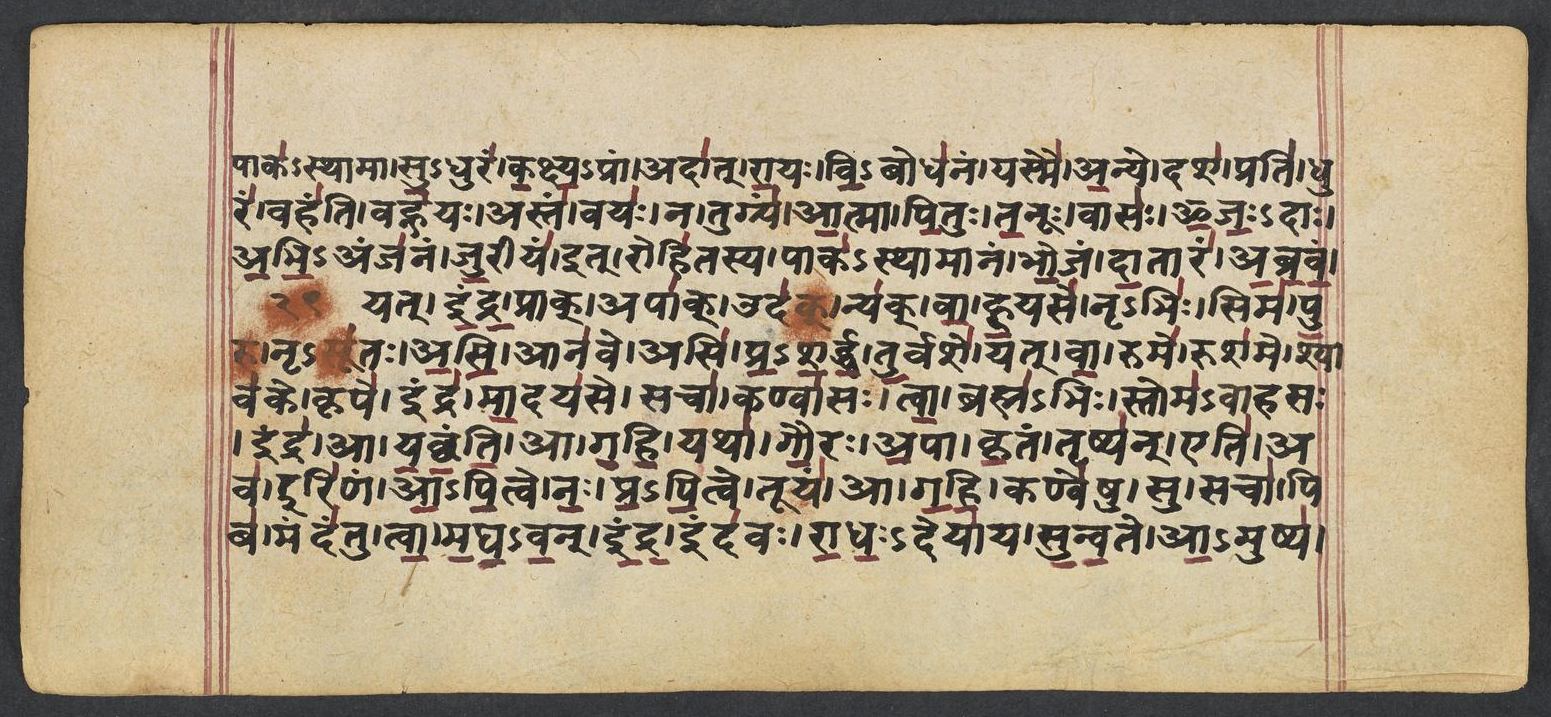
Penn Ms. Coll. 390 Item 41, fol. 566r (numbered 87r by the scribe) (OPenn image 566, lower leaf). Checked on the image: the Rigveda text on this page begins in RV 8.3.22 ‹pāka-sthāmā su-dhuram kakṣya-prām adāt›. The next page with Rigveda text, fol. 566v (numbered 87v by the scribe), begins in RV 8.4.4 ‹somam apibaḥ camū iti›. Verses 8.4.1-3 end on this page.
1yad i̍ndra̱ prāg apā̱g uda̱ṅ nya̍g vā hū̱yase̱ nṛbhi̍ḥ | simā̍ pu̱rū nṛṣū̍to a̱sy āna̱ve 'si̍ praśardha tu̱rvaśe̍ ||
2yad vā̱ rume̱ ruśa̍me̱ śyāva̍ke̱ kṛpa̱ indra̍ mā̱daya̍se̱ sacā̍ | kaṇvā̍sas tvā̱ brahma̍bhi̱ḥ stoma̍vāhasa̱ indrā ya̍ccha̱nty ā ga̍hi ||
3yathā̍ gau̱ro a̱pā kṛ̱taṁ tṛṣya̱nn ety averi̍ṇam | ā̱pi̱tve na̍ḥ prapi̱tve tūya̱m ā ga̍hi̱ kaṇve̍ṣu̱ su sacā̱ piba̍ ||
Compare: Padapāṭha (word-by-word text written in the manuscript; Sansknet e-text via GRETIL)
1yat | indra | prāk | apāk | udak | nyak | vā | hūyase | nṛ-bhiḥ | sima | puru | nṛ-sūtaḥ | asi | ānave | asi | pra-śardha | turvaśe
2yat | vā | rume | ruśame | śyāvake | kṛpe | indra | mādayase | sacā | kaṇvāsaḥ | tvā | brahma-bhiḥ | stoma-vāhasaḥ | indra | ā | yacchanti | ā | gahi
3yathā | gauraḥ | apā | kṛtam | tṛṣyan | eti | ava | iriṇam | āpitve | naḥ | pra-pitve | tūyam | ā | gahi | kaṇveṣu | su | sacā | piba
1THOUGH, Indra, thou art called by men eastward and westward, north and south, Thou chiefly art with Anava and Turvaṣa, brave Champion I urged by men to Come.
2Or, Indra, when with Ruma, Ruṣama, Ṣyâvaka, and Kr̥ipa thou rejoicest thee, Still do the Kaṇvas, bringing praises, with their prayers, O Indra, draw thee hither: come.
3Even as the wild-bull, when he thirsts, goes to the desert's watery pool, Come hither quickly both at morning and at eve, and with the Kaṇvas drink thy fill.
Where on the image
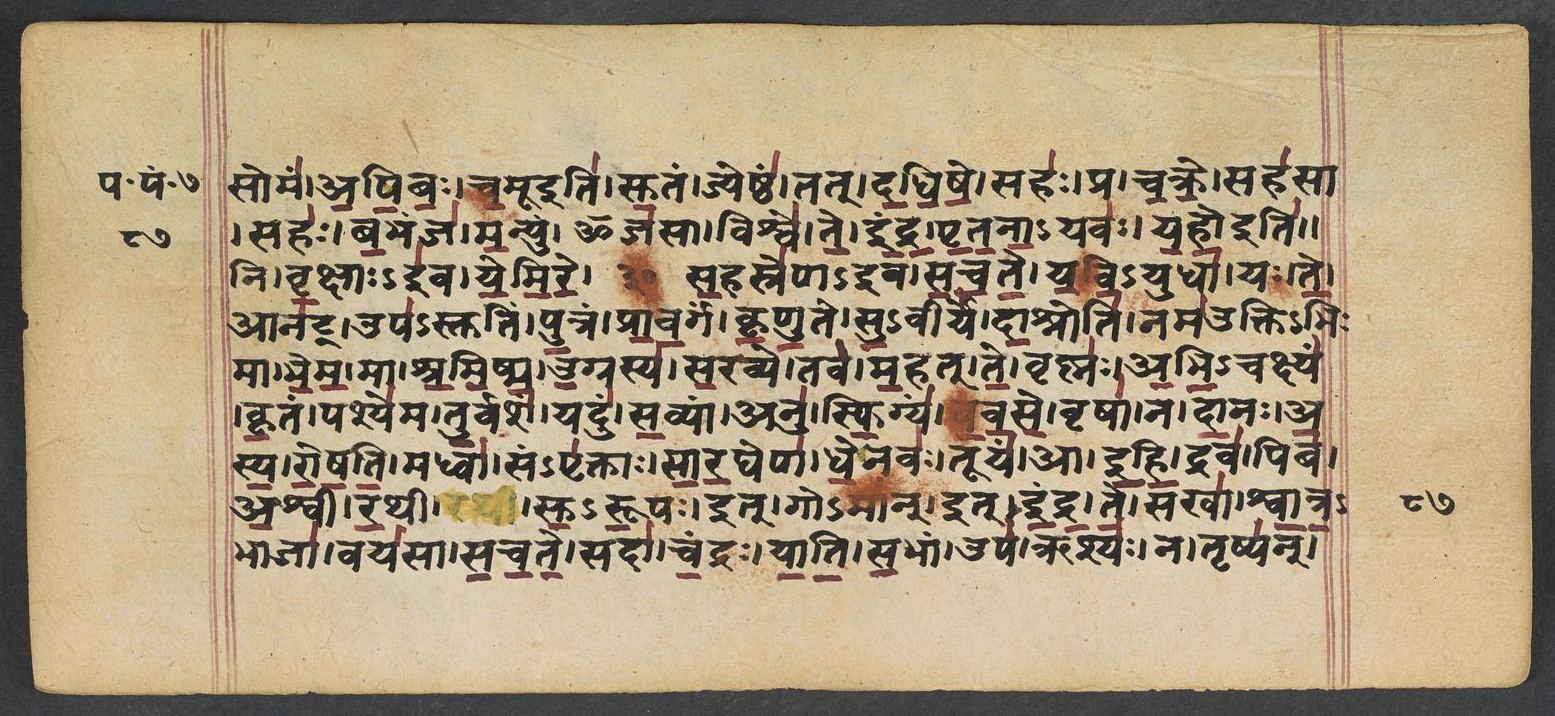
Penn Ms. Coll. 390 Item 41, fol. 566v (numbered 87v by the scribe) (OPenn image 567, upper leaf). Checked on the image: the Rigveda text on this page begins in RV 8.4.4 ‹somam apibaḥ camū iti›. The next page with Rigveda text, fol. 567r (numbered 88r by the scribe), begins in RV 8.4.10 ‹ava-pānam ā gahi piba›. Verses 8.4.4-9 end on this page; 8.4.4 begins on fol. 566r (numbered 87r by the scribe).
4manda̍ntu tvā maghavann i̱ndrenda̍vo rādho̱deyā̍ya sunva̱te | ā̱muṣyā̱ soma̍m apibaś ca̱mū su̱taṁ jyeṣṭha̱ṁ tad da̍dhiṣe̱ saha̍ḥ ||
5pra ca̍kre̱ saha̍sā̱ saho̍ ba̱bhañja̍ ma̱nyum oja̍sā | viśve̍ ta indra pṛtanā̱yavo̍ yaho̱ ni vṛ̱kṣā i̍va yemire ||
6sa̱hasre̍ṇeva sacate yavī̱yudhā̱ yas ta̱ āna̱ḻ upa̍stutim | pu̱tram prā̍va̱rgaṁ kṛ̍ṇute su̱vīrye̍ dā̱śnoti̱ nama̍üktibhiḥ ||
7mā bhe̍ma̱ mā śra̍miṣmo̱grasya̍ sa̱khye tava̍ | ma̱hat te̱ vṛṣṇo̍ abhi̱cakṣya̍ṁ kṛ̱tam paśye̍ma tu̱rvaśa̱ṁ yadu̍m ||
8sa̱vyām anu̍ sphi̱gya̍ṁ vāvase̱ vṛṣā̱ na dā̱no a̍sya roṣati | madhvā̱ sampṛ̍ktāḥ sāra̱gheṇa̍ dhe̱nava̱s tūya̱m ehi̱ dravā̱ piba̍ ||
9a̱śvī ra̱thī su̍rū̱pa id gomā̱m̐ id i̍ndra te̱ sakhā̍ | śvā̱tra̱bhājā̱ vaya̍sā sacate̱ sadā̍ ca̱ndro yā̍ti sa̱bhām upa̍ ||
Compare: Padapāṭha (word-by-word text written in the manuscript; Sansknet e-text via GRETIL)
4mandantu | tvā | magha-van | indra | indavaḥ | rādhaḥ-dayāya | sunvate | āmuṣya | somam | apibaḥ | camū iti | sutam | jyeṣṭham | tat | dadhiṣe | sahaḥ
5pra | cakre | sahasā | sahaḥ | babhañja | manyum | ojasā | viśve | te | indra | pṛtanāyavaḥ | yaho iti | ni | vṛkṣāḥ-iva | yemire
6sahasreṇa-iva | sacate | yavi-yudhā | yaḥ | te | ānaṭ | upa-stutim | putram | prāvargam | kṛṇute | su-vīrye | dāśnoti | nama-ukti-bhiḥ
7mā | bhema | mā | śramiṣma | ugrasya | sakhye | tava | mahat | te | vṛṣṇaḥ | abhi-cakṣyam | kṛtam | paśyema | turvaśam | yadum
8savyām | anu | sphigyam | vavase | vṛṣā | na | dānaḥ | asya | roṣati | madhvā | sam-pṛktāḥ | sāragheṇa | dhenavaḥ | tūyam | ā | ihi | drava | piba
9aśvī | rathī | su-rūpaḥ | it | go--mān | it | indra | te | sakhā | śvātra-bhājā | vayasā | sacate | sadā | candraḥ | yāti | sabhām | upa
4May the drops gladden thee, rich Indra, and obtain bounty for him who pours the juice. Soma pressed in the mortar didst thou take and drink, and hence hast won surpassing might.
5With mightier strength he conquered strength, with energy he crushed their wrath. O Indra, Strong in youth, all those who sought the fray bent and bowed down to thee like trees.
6He who wins promise of thine aid goes girt as with a thousand mighty men of war. He makes his son preeminent in hero might – he serves with reverential prayer.
7With thee, the Mighty, for our Friend, we will riot fear or feel fatigue. May we see Turvaṣa and Yadu: thy great deed, O Hero, must be glorified.
8On his left hip the Hero hath reclined himself: the proffered feast offends him not. The milk is blended with the honey of the bee: quickly come hither, haste, and drink.
9Indra, thy friend is fair of form and rich in horses, cars, and kine. He evermore hath food accompanied by wealth, and radiant joins the company.
Where on the image
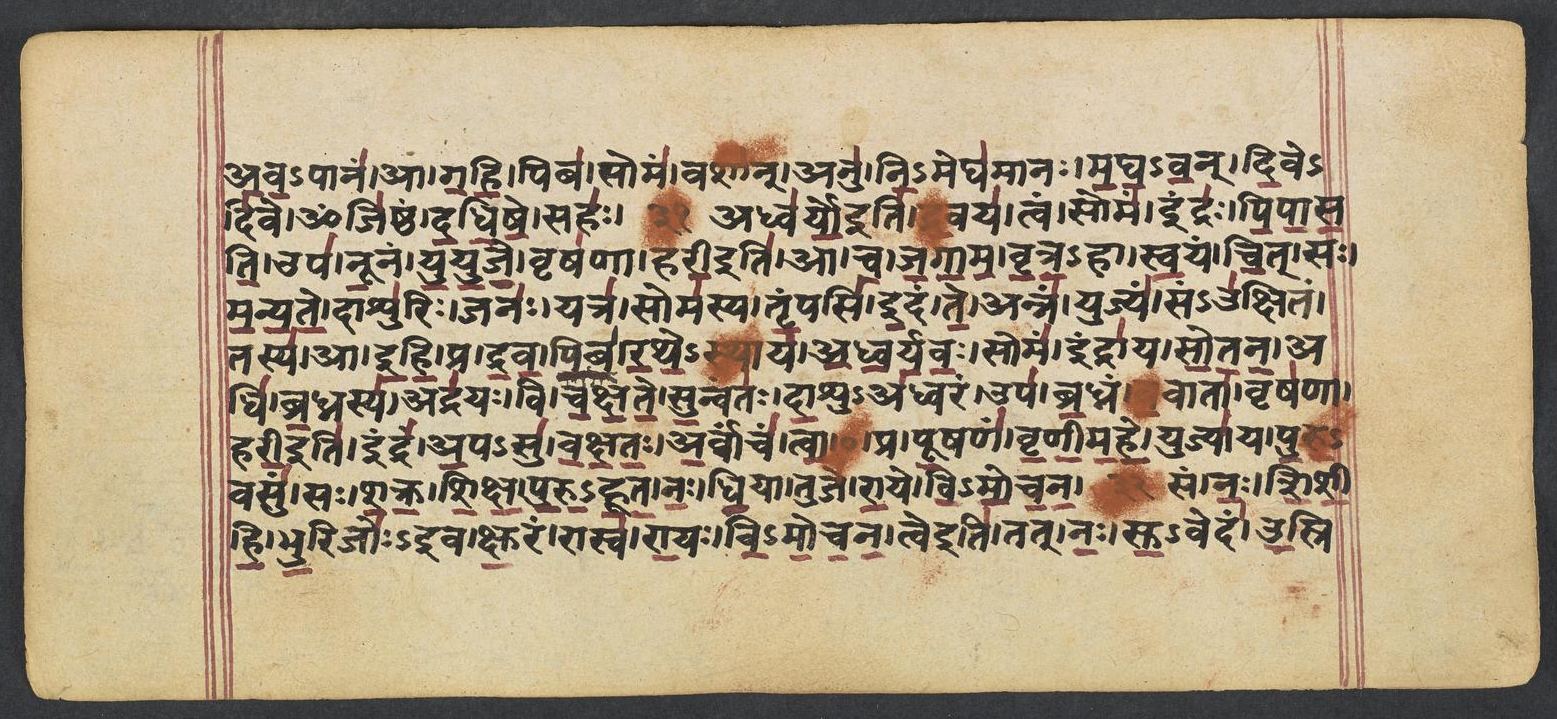
Penn Ms. Coll. 390 Item 41, fol. 567r (numbered 88r by the scribe) (OPenn image 567, lower leaf). Checked on the image: the Rigveda text on this page begins in RV 8.4.10 ‹ava-pānam ā gahi piba›. The next page with Rigveda text, fol. 567v (numbered 88v by the scribe), begins in RV 8.4.16 ‹-usriyam vasu yam tvam›. Verses 8.4.10-15 end on this page; 8.4.10 begins on fol. 566v (numbered 87v by the scribe).
10ṛśyo̱ na tṛṣya̍nn ava̱pāna̱m ā ga̍hi̱ pibā̱ soma̱ṁ vaśā̱m̐ anu̍ | ni̱megha̍māno maghavan di̱ve-di̍va̱ oji̍ṣṭhaṁ dadhiṣe̱ saha̍ḥ ||
11adhva̍ryo drā̱vayā̱ tvaṁ soma̱m indra̍ḥ pipāsati | upa̍ nū̱naṁ yu̍yuje̱ vṛṣa̍ṇā̱ harī̱ ā ca̍ jagāma vṛtra̱hā ||
12sva̱yaṁ ci̱t sa ma̍nyate̱ dāśu̍ri̱r jano̱ yatrā̱ soma̍sya tṛ̱mpasi̍ | i̱daṁ te̱ anna̱ṁ yujya̱ṁ samu̍kṣita̱ṁ tasyehi̱ pra dra̍vā̱ piba̍ ||
13ra̱the̱ṣṭhāyā̍dhvaryava̱ḥ soma̱m indrā̍ya sotana | adhi̍ bra̱dhnasyādra̍yo̱ vi ca̍kṣate su̱nvanto̍ dā̱śva̍dhvaram ||
14upa̍ bra̱dhnaṁ vā̱vātā̱ vṛṣa̍ṇā̱ harī̱ indra̍m a̱pasu̍ vakṣataḥ | a̱rvāñca̍ṁ tvā̱ sapta̍yo 'dhvara̱śriyo̱ vaha̍ntu̱ sava̱ned upa̍ ||
15pra pū̱ṣaṇa̍ṁ vṛṇīmahe̱ yujyā̍ya purū̱vasu̍m | sa śa̍kra śikṣa puruhūta no dhi̱yā tuje̍ rā̱ye vi̍mocana ||
Compare: Padapāṭha (word-by-word text written in the manuscript; Sansknet e-text via GRETIL)
10ṛśyaḥ | na | tṛṣyan | ava-pānam | ā | gahi | piba | somam | vaśān | anu | ni-meghamānaḥ | magha-van | dive--dive | ojiṣṭham | dadhiṣe | sahaḥ
11adhvaryo iti | drāvaya | tvam | somam | indraḥ | pipāsati | upa | nūnam | yuyuje | vṛṣaṇā | harī iti | ā | ca | jagāma | vṛtra-hā
12svayam | cit | saḥ | manyate | dāśuriḥ | janaḥ | yatra | somasya | tṛmpasi | idam | te | annam | yujyam | sam-ukṣitam | tasya | ihi | pra | drava | piba
13ratheṣṭhāya | adhvaryavaḥ | somam | indrāya | sotana | adhi | bradhnasya | adrayaḥ | vi | cakṣate | sunvantaḥ | dāśu-adhvaram
14upa | bradhnam | vavātā | vṛṣaṇā | harī iti | indram | apa-su | vakṣataḥ | arvāñcam | tvā | saptayaḥ | adhvara-śriyaḥ | vahantu | savanā | it | upa
15pra | pūṣaṇam | vṛṇīmahe | yujyāya | puru-vasum | saḥ | śakra | śikṣa | puru-hūta | naḥ | dhiyā | tuje | rāye | vi-mocana
10Come like a thirsty antelope to the drinking-place: drink Soma to thy heart's desire. Raining it down, O Maghavan, day after day, thou gainest thy surpassing might.
11Priest, let the Soma juice flow forth, for Indra longs to drink thereof. He even now hath yoked his vigorous Bay Steeds: the Vr̥itra-slayer hath come near.
12The man with whom thou fillest thee with Soma deems himself a pious worshipper. This thine appropriate food is here poured out for thee: come, hasten forward. drink of it,
13Press out the Soma juice, ye priests, for Indra borne upon his car. The pressing-stones speak loud of Indra, while they shed the juice which, offered, honours him.
14To the brown juice may his dear vigorous Bay Steeds bring Indra, to our holy task. Hither let thy Car-steeds who seek the sacrifice bring thee to our drink-offerings.
15Pûshan, the Lord of ample wealth, for firm alliance we elect. May he with wisdom, Ṣakra! Looser! Much-invoked! aid us to riches and to seed.
Where on the image
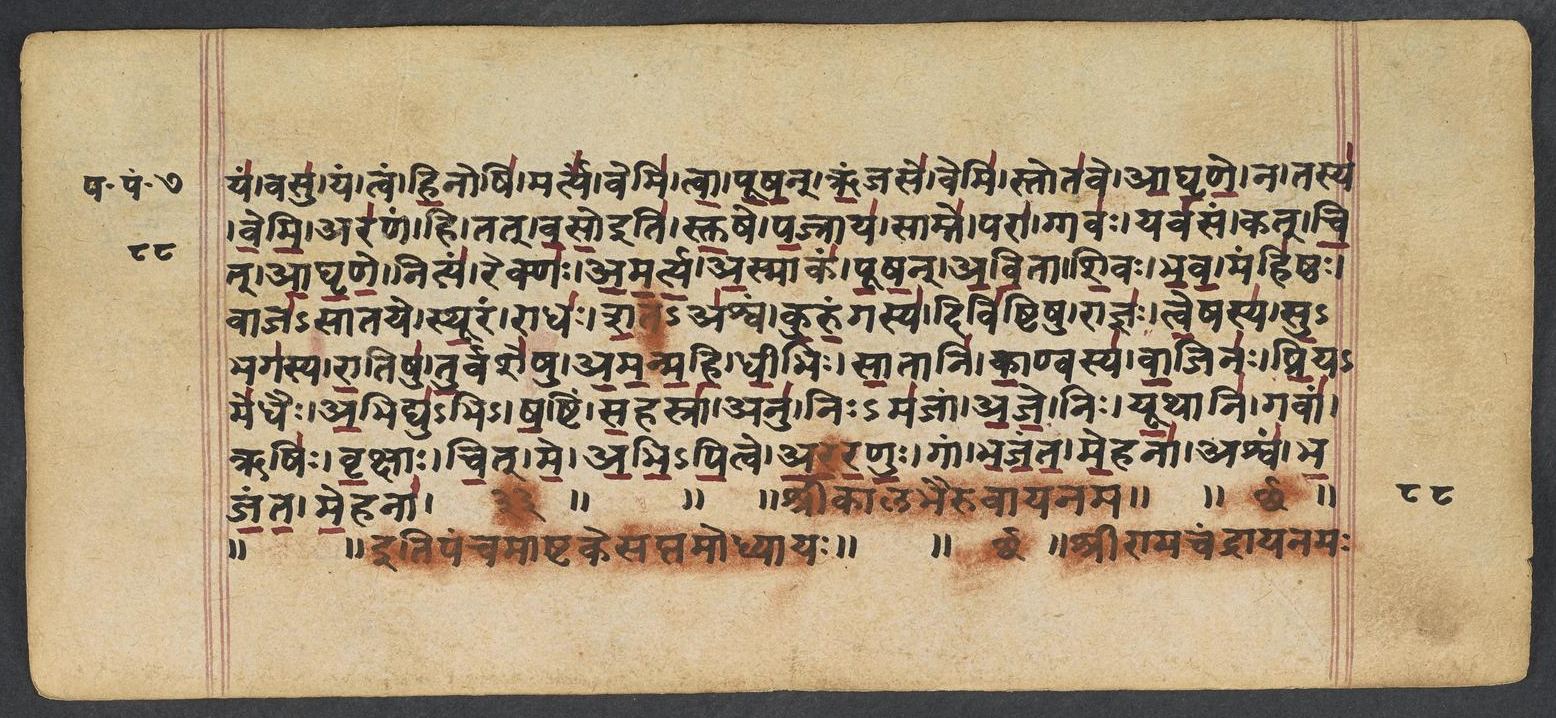
Penn Ms. Coll. 390 Item 41, fol. 567v (numbered 88v by the scribe) (OPenn image 568, upper leaf). Checked on the image: the Rigveda text on this page begins in RV 8.4.16 ‹-usriyam vasu yam tvam›. The next page with Rigveda text, fol. 568r (numbered 89r by the scribe), begins in RV 8.5.1 ‹dūrāt iha-iva yat satī›. Verses 8.4.16-21 end on this page; 8.4.16 begins on fol. 567r (numbered 88r by the scribe).
16saṁ na̍ḥ śiśīhi bhu̱rijo̍r iva kṣu̱raṁ rāsva̍ rā̱yo vi̍mocana | tve tan na̍ḥ su̱veda̍m u̱sriya̱ṁ vasu̱ yaṁ tvaṁ hi̱noṣi̱ martya̍m ||
17vemi̍ tvā pūṣann ṛ̱ñjase̱ vemi̱ stota̍va āghṛṇe | na tasya̍ ve̱my ara̍ṇa̱ṁ hi tad va̍so stu̱ṣe pa̱jrāya̱ sāmne̍ ||
18parā̱ gāvo̱ yava̍sa̱ṁ kac ci̍d āghṛṇe̱ nitya̱ṁ rekṇo̍ amartya | a̱smāka̍m pūṣann avi̱tā śi̱vo bha̍va̱ maṁhi̍ṣṭho̱ vāja̍sātaye ||
19sthū̱raṁ rādha̍ḥ śa̱tāśva̍ṁ kuru̱ṅgasya̱ divi̍ṣṭiṣu | rājña̍s tve̱ṣasya̍ su̱bhaga̍sya rā̱tiṣu̍ tu̱rvaśe̍ṣv amanmahi ||
20dhī̱bhiḥ sā̱tāni̍ kā̱ṇvasya̍ vā̱jina̍ḥ pri̱yame̍dhair a̱bhidyu̍bhiḥ | ṣa̱ṣṭiṁ sa̱hasrānu̱ nirma̍jām aje̱ nir yū̱thāni̱ gavā̱m ṛṣi̍ḥ ||
21vṛ̱kṣāś ci̍n me abhipi̱tve a̍rāraṇuḥ | gām bha̍janta me̱hanāśva̍m bhajanta me̱hanā̍ ||
Compare: Padapāṭha (word-by-word text written in the manuscript; Sansknet e-text via GRETIL)
16sam | naḥ | śiśīhi | bhurijoḥ-iva | kṣuram | rāsva | rāyaḥ | vi-mocana | tve iti | tat | naḥ | su-vedam | usriyam | vasu | yam | tvam | hinoṣi | martyam
17vemi | tvā | pūṣan | ṛñjase | vemi | stotave | āghṛṇe | na | tasya | vemi | araṇam | hi | tat | vaso iti | stuṣe | pajrāya | sāmne
18parā | gāvaḥ | yavasam | kat | cit | āghṛṇe | nityam | rekṇaḥ | amartya | asmākam | pūṣan | avitā | śivaḥ | bhava | maṃhiṣṭhaḥ | vāja-sātaye
19sthūram | rādhaḥ | śata-aśvam | kuruṅgasya | diviṣṭiṣu | rājñaḥ | tveṣasya | su-bhagasya | rātiṣu | turvaśeṣu | amanmahi
20dhībhiḥ | sātāni | kāṇvasya | vājinaḥ | priya-medhaiḥ | abhidyu-bhiḥ | ṣaṣṭim | sahasrā | anu | niḥ-majām | aje | niḥ | yūthāni | gavām | ṛṣiḥ
21vṛkṣāḥ | cit | me | abhi-pitve | araraṇuḥ | gām | bhajanta | mehanā | aśvam | bhajanta | mehanā
16Sharpen us like a razor in the barber's hands: send riches thou who settest free. Easy to find with thee are treasures of the Dawn for mortal man whom thou dost speed.
17Pûshan, I long to win thy love, I long to praise thee, Radiant God. Excellent Lord, 'tis strange tome, no wish have I to sing the psalm that Pajra sings.
18My kine, O Radiant God, seek pasture where they will, my during wealth, Immortal One. Be our protector, Pûshan! be, most liberal Lord, propitious to our gathering strength.
19Rich was the gift Kurunga gave, a hundred steeds at morning rites. Among the gifts of Turvaṣas we thought of him, the opulent, the splendid King.
20What by his morning songs Kaṇva, the powerful, hath, with the Priyamedhas, gained-
21The very trees were joyful at my coming: kine they obtained in plenty, steeds in plenty.
Notes
- Sanskrit: Aufrecht's edition (1877) with the Vedic accents, as entered by van Nooten and Holland (GRETIL).
- English: Ralph T. H. Griffith, The Hymns of the Rigveda (1889-1892; 2nd ed. 1896-1897), from the VedaWeb digital text; OCR slips in that text were corrected against the printed 2nd edition (data/sources/rigveda/griffith_errata.json).
- Padapāṭha (edition text): Sansknet e-text via GRETIL (CC BY-NC-SA 4.0).
Cite
Sources
- Source: Penn Ms. Coll. 390 Item 41 (undated (catalogued with Penn's 18th-19th c. Vedic manuscripts)), OPenn, Public Domain Mark + Aufrecht's accented text (GRETIL) + Griffith's English (VedaWeb) (holding institution)
- Critical edition: Aufrecht (1877), accented e-text via GRETIL
← previous · → next · v cycle view · l back to library