Rigveda 8.31: Praise of the sacrificer and his wife
Introduction
Rigveda 8.31 is a hymn of 18 verses addressed to praise of the sacrificer and his wife. It stands in book (maṇḍala) 8, the book of the Kaṇva and Aṅgiras poets. The Rigveda is the oldest collection of Sanskrit hymns, composed in the second half of the second millennium BCE and handed down orally for many centuries before it was written down.
The manuscript shown is Penn Ms. Coll. 390 Item 41 (University of Pennsylvania), an undated paper manuscript of the padapāṭha (the word-by-word recitation text, in which every word is written separately and compounds are split) of the whole Ṛgveda in Devanāgarī, 884 leaves in fascicles, 7-9 lines to the page, accents in red; this hymn stands on fol. 604r-604v. Each section below gives the verses that end on one page; the page boundaries were read on the images (the opening words of every page), not counted out. Where the manuscript is a padapāṭha (the word-by-word recitation text), the section shows Aufrecht's continuous (saṃhitā) text first and, as the edition text, the padapāṭha of the same verses, which is the form written on the page.
How was this verified? (Provenance)
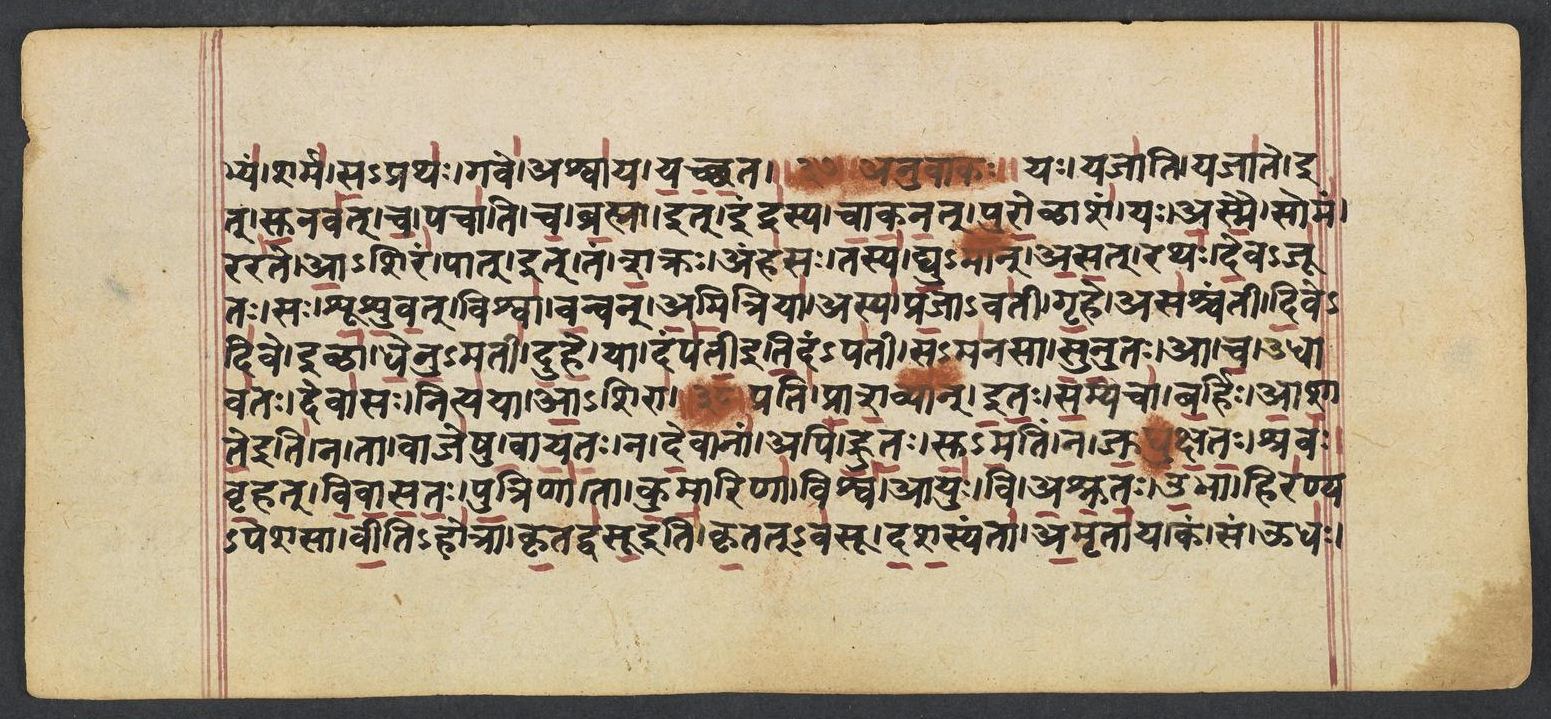
Where on the image
Penn Ms. Coll. 390 Item 41, fol. 604r (numbered 26r by the scribe) (OPenn image 604, lower leaf). Checked on the image: the Rigveda text on this page begins in RV 8.30.4 ‹-asmabhyam śarma sa-prathaḥ gave›. The next page with Rigveda text, fol. 604v (numbered 26v by the scribe), begins in RV 8.31.9 ‹romaśam hataḥ deveṣu kṛṇutaḥ›. Verses 8.31.1-8 end on this page.
1yo yajā̍ti̱ yajā̍ta̱ it su̱nava̍c ca̱ pacā̍ti ca | bra̱hmed indra̍sya cākanat ||
2pu̱ro̱ḻāśa̱ṁ yo a̍smai̱ soma̱ṁ rara̍ta ā̱śira̍m | pād it taṁ śa̱kro aṁha̍saḥ ||
3tasya̍ dyu̱mām̐ a̍sa̱d ratho̍ de̱vajū̍ta̱ḥ sa śū̍śuvat | viśvā̍ va̱nvann a̍mi̱triyā̍ ||
4asya̍ pra̱jāva̍tī gṛ̱he 'sa̍ścantī di̱ve-di̍ve | iḻā̍ dhenu̱matī̍ duhe ||
5yā dampa̍tī̱ sama̍nasā sunu̱ta ā ca̱ dhāva̍taḥ | devā̍so̱ nitya̍yā̱śirā̍ ||
6prati̍ prāśa̱vyā̍m̐ itaḥ sa̱myañcā̍ ba̱rhir ā̍śāte | na tā vāje̍ṣu vāyataḥ ||
7na de̱vānā̱m api̍ hnutaḥ suma̱tiṁ na ju̍gukṣataḥ | śravo̍ bṛ̱had vi̍vāsataḥ ||
8pu̱triṇā̱ tā ku̍mā̱riṇā̱ viśva̱m āyu̱r vy a̍śnutaḥ | u̱bhā hira̍ṇyapeśasā ||
Compare: Padapāṭha (word-by-word text written in the manuscript; Sansknet e-text via GRETIL)
1yaḥ | yajāti | yajāte | it | sunavat | ca | pacāti | ca | brahmā | it | indrasya | cākanat
2puroḷāśam | yaḥ | asmai | somam | rarate | āśiram | pāt | it | tam | śakraḥ | aṃhasaḥ
3tasya | dyu-mām | asat | rathaḥ | deva-jūtaḥ | saḥ | śūśuvat | viśvā | vanvan | amitriyā
4asya | prajāvatī | gṛhe | asaścantī | dive--dive | iḷā | dhenu-matī | duhe
5yā | dampatī itidam-patī | sa-manasā | sunutaḥ | ā | ca | dhāvataḥ | devāsaḥ | nityayā | āś irā
6prati | prāśavyān | itaḥ | samyañcā | barhiḥ | āśāteiti | na | tā | vājeṣu | vāyataḥ
7na | devānām | api | hnutaḥ | su-matim | na | jugukṣataḥ | śravaḥ | bṛhat | vivāsataḥ
8putriṇā | tā | kumāriṇā | viśvam | āyuḥ | vi | aśnutaḥ | ubhā | hiraṇya-peśasā
1THAT Brahman pleases Indra well, who worships, sacrifices, pours Libation, and prepares the meal.
2Ṣakra protects from woe the man who gives him sacrificial cake. And offers Soma blent with milk.
3His chariot shall be glorious, sped by Gods, and mighty shall he be, Subduing all hostilities.
4Each day that passes, in his house flows his libation, rich in milk, Exhaustless, bringing progeny.
5O Gods, with constant draught of milk, husband and wife with one accord Press out and wash the Soma juice.
6They gain sufficient food: they come united to the sacred grass, And never do they fail in strength.
7Never do they deny or seek to hide the favour of the Gods: They win high glory for themselves.
8With sons and daughters by their side they reach their full extent of life, Both decked with ornaments of gold.
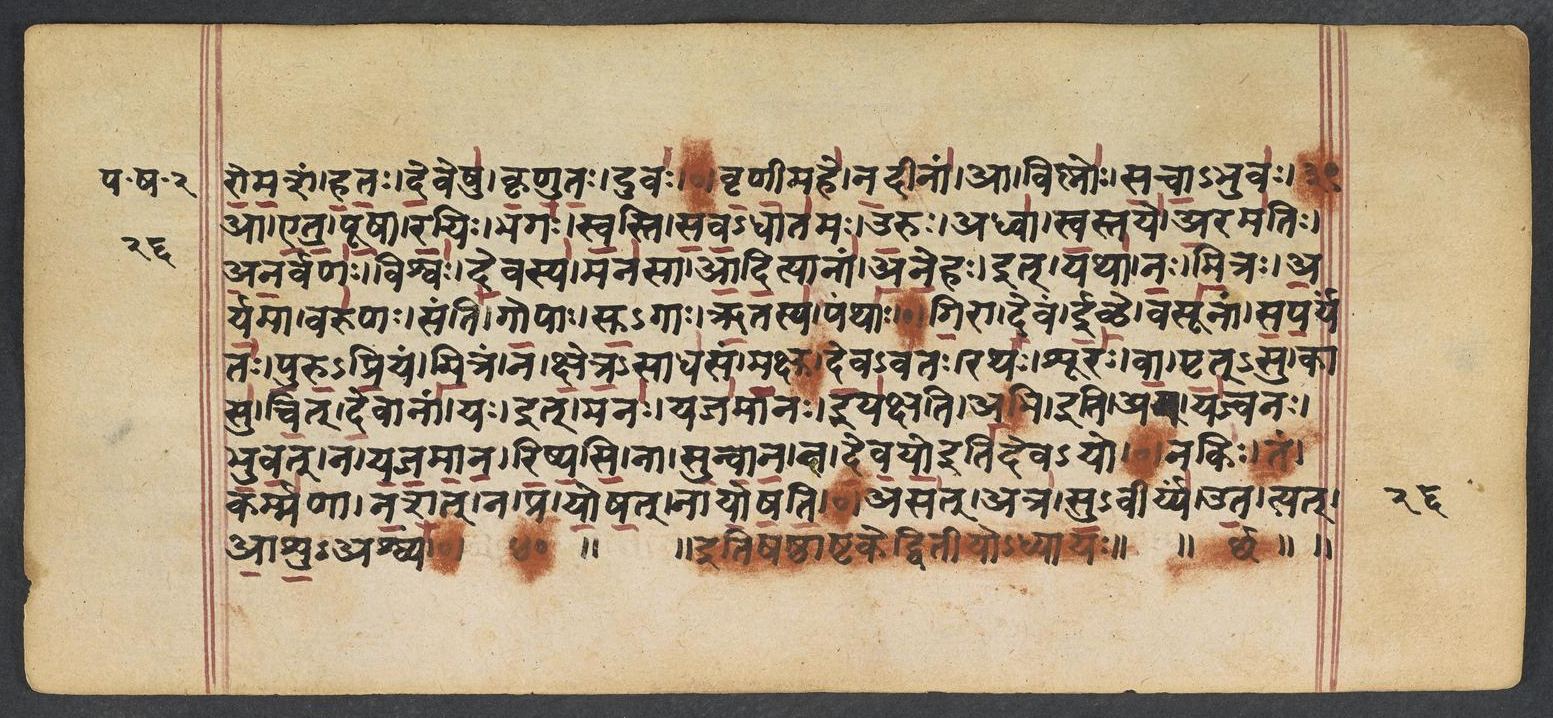
Where on the image
Penn Ms. Coll. 390 Item 41, fol. 604v (numbered 26v by the scribe) (OPenn image 605, upper leaf). Checked on the image: the Rigveda text on this page begins in RV 8.31.9 ‹romaśam hataḥ deveṣu kṛṇutaḥ›. The next page with Rigveda text, fol. 605r (numbered 27r by the scribe), begins in RV 8.32.1 ‹pra kṛtāni ṛjīṣiṇaḥ kaṇvāḥ›. Verses 8.31.9-18 end on this page; 8.31.9 begins on fol. 604r (numbered 26r by the scribe).
9vī̱tiho̍trā kṛ̱tadva̍sū daśa̱syantā̱mṛtā̍ya̱ kam | sam ūdho̍ roma̱śaṁ ha̍to de̱veṣu̍ kṛṇuto̱ duva̍ḥ ||
10ā śarma̱ parva̍tānāṁ vṛṇī̱mahe̍ na̱dīnā̍m | ā viṣṇo̍ḥ sacā̱bhuva̍ḥ ||
11aitu̍ pū̱ṣā ra̱yir bhaga̍ḥ sva̱sti sa̍rva̱dhāta̍maḥ | u̱rur adhvā̍ sva̱staye̍ ||
12a̱rama̍tir ana̱rvaṇo̱ viśvo̍ de̱vasya̱ mana̍sā | ā̱di̱tyānā̍m ane̱ha it ||
13yathā̍ no mi̱tro a̍rya̱mā varu̍ṇa̱ḥ santi̍ go̱pāḥ | su̱gā ṛ̱tasya̱ panthā̍ḥ ||
14a̱gniṁ va̍ḥ pū̱rvyaṁ gi̱rā de̱vam ī̍ḻe̱ vasū̍nām | sa̱pa̱ryanta̍ḥ purupri̱yam mi̱traṁ na kṣe̍tra̱sādha̍sam ||
15ma̱kṣū de̱vava̍to̱ ratha̱ḥ śūro̍ vā pṛ̱tsu kāsu̍ cit | de̱vānā̱ṁ ya in mano̱ yaja̍māna̱ iya̍kṣaty a̱bhīd aya̍jvano bhuvat ||
16na ya̍jamāna riṣyasi̱ na su̍nvāna̱ na de̍vayo | de̱vānā̱ṁ ya in mano̱ yaja̍māna̱ iya̍kṣaty a̱bhīd aya̍jvano bhuvat ||
17naki̱ṣ ṭaṁ karma̍ṇā naśa̱n na pra yo̍ṣa̱n na yo̍ṣati | de̱vānā̱ṁ ya in mano̱ yaja̍māna̱ iya̍kṣaty a̱bhīd aya̍jvano bhuvat ||
18asa̱d atra̍ su̱vīrya̍m u̱ta tyad ā̱śvaśvya̍m | de̱vānā̱ṁ ya in mano̱ yaja̍māna̱ iya̍kṣaty a̱bhīd aya̍jvano bhuvat ||
Compare: Padapāṭha (word-by-word text written in the manuscript; Sansknet e-text via GRETIL)
9vīti-hotrā | kṛtadvasūitikṛtat-vasū | daśasyantā | amṛtāya | kam | sam | ūdhaḥ | romaśam | hataḥ | deveṣu | kṛṇutaḥ | duvaḥ
10ā | śarma | parvatānām | vṛṇīmahe | nadīnām | ā | viṣṇoḥ | sacābhuvaḥ
11ā | etu | pūṣā | rayiḥ | bhagaḥ | svasti | sarva-dhātamaḥ | uruḥ | adhvā | svastaye
12aramatiḥ | anarvaṇaḥ | viśvaḥ | devasya | manasā | ādityānām | anehaḥ | it
13yathā | naḥ | mitraḥ | aryamā | varuṇaḥ | santi | gopāḥ | su-gāḥ | ṛtasya | panthāḥ
14agnim | vaḥ | pūrvyam | girā | devam | īḷe | vasūnām | saparyantaḥ | puru-priyam | mitram | na | kṣetra-sādhasam
15makṣu | deva-vataḥ | rathaḥ | śūraḥ | vā | pṛt-su | kāsu | cit | devānām | yaḥ | it | manaḥ | yajamānaḥ | iyakṣati | abhi | it | ayajvanaḥ | bhuvat
16na | yajamāna | riṣyasi | na | sunvāna | na | devayo itideva-yo | devānām | yaḥ | it | manaḥ | yajamānaḥ | iyakṣati | abhi | it | ayajvanaḥ | bhuvat
17nakiḥ | tam | karmaṇā | naśat | na | pra | yoṣat | na | yoṣati | devānām | yaḥ | it | manaḥ | yajamānaḥ | iyakṣati | abhi | it | ayajvanaḥ | bhuvat
18asat | atra | su-vīryam | uta | tyat | āśu-aśvyam | devānām | yaḥ | it | manaḥ | yajamānaḥ | iyakṣati | abhi | it | ayajvanaḥ | bhuvat
9Serving the Immortal One with gifts of sacrificial meal and wealth, They satisfy the claims of love and pay due honour to the Gods.
10We claim protection from the Hills, we claim protection of the Floods, Of him who stands by Vishṇu's side.
11May Pûshan come, and Bhaga, Lord of wealth, All-bounteous, for our weal Broad be the path that leads to bliss:
12Aramati, and, free from foes, Viṣva with spirit of a God, And the Âdityas' peerless might.
13Seeing that Mitra, Aryaman, and Varuṇa are guarding us, The paths of Law are fair to tread.
14I glorify with song, for wealth, Agni the God, the first of you. We honour as a well-loved Friend the God who prospereth our fields.
15As in all frays the hero, so swift moves his car whom Gods attend. The man who, sacrificing, strives to win the heart of Deities will conquer those who worship not.
16Ne'er are ye injured, worshipper, presser of juice, or pious man. The man who, sacrificing, strives to win the heart of Deities will conquer those who worship not.
17None in his action equals him, none holds him far or keeps him off. The man who, sacrificing, strives to win the heart of Deities will conquer those who worship not.
18Such strength of heroes shall be his, such mastery of fleet-foot steeds. The man who, sacrificing, strives to win the heart of Deities will conquer those who worship not.
Notes
- Sanskrit: Aufrecht's edition (1877) with the Vedic accents, as entered by van Nooten and Holland (GRETIL).
- English: Ralph T. H. Griffith, The Hymns of the Rigveda (1889-1892; 2nd ed. 1896-1897), from the VedaWeb digital text; OCR slips in that text were corrected against the printed 2nd edition (data/sources/rigveda/griffith_errata.json).
- Padapāṭha (edition text): Sansknet e-text via GRETIL (CC BY-NC-SA 4.0).
Cite
Sources
- Source: Penn Ms. Coll. 390 Item 41 (undated (catalogued with Penn's 18th-19th c. Vedic manuscripts)), OPenn, Public Domain Mark + Aufrecht's accented text (GRETIL) + Griffith's English (VedaWeb) (holding institution)
- Critical edition: Aufrecht (1877), accented e-text via GRETIL
← previous · → next · v cycle view · l back to library