Rigveda 8.32: To Indra
Introduction
Rigveda 8.32 is a hymn of 30 verses addressed to Indra. It stands in book (maṇḍala) 8, the book of the Kaṇva and Aṅgiras poets. The Rigveda is the oldest collection of Sanskrit hymns, composed in the second half of the second millennium BCE and handed down orally for many centuries before it was written down.
The manuscript shown is Penn Ms. Coll. 390 Item 41 (University of Pennsylvania), an undated paper manuscript of the padapāṭha (the word-by-word recitation text, in which every word is written separately and compounds are split) of the whole Ṛgveda in Devanāgarī, 884 leaves in fascicles, 7-9 lines to the page, accents in red; this hymn stands on fol. 605r-606v. Each section below gives the verses that end on one page; the page boundaries were read on the images (the opening words of every page), not counted out. Where the manuscript is a padapāṭha (the word-by-word recitation text), the section shows Aufrecht's continuous (saṃhitā) text first and, as the edition text, the padapāṭha of the same verses, which is the form written on the page.
How was this verified? (Provenance)
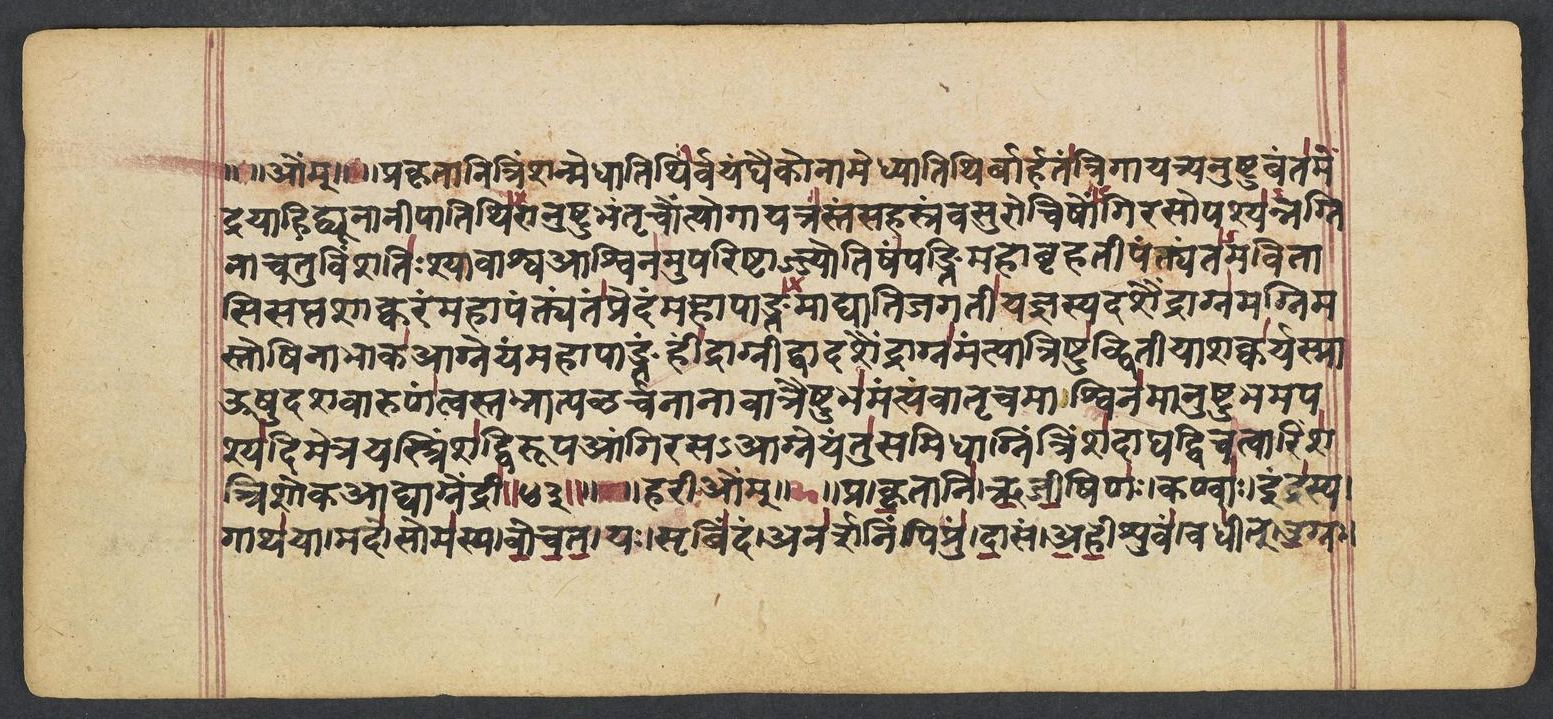
Where on the image
Penn Ms. Coll. 390 Item 41, fol. 605r (numbered 27r by the scribe) (OPenn image 605, lower leaf). Checked on the image: the Rigveda text on this page begins in RV 8.32.1 ‹pra kṛtāni ṛjīṣiṇaḥ kaṇvāḥ›. Lines 1-8 carry oṃ and the anukramaṇī for aṣṭaka 6, adhyāya 3; 8.32.1 (pra kṛtāni ṛjīṣiṇaḥ) begins in line 8. The next page with Rigveda text, fol. 605v (numbered 27v by the scribe), begins in RV 8.32.2 ‹riṇan apaḥ›. Verse 8.32.1 ends on this page.
1pra kṛ̱tāny ṛ̍jī̱ṣiṇa̱ḥ kaṇvā̱ indra̍sya̱ gātha̍yā | made̱ soma̍sya vocata ||
Compare: Padapāṭha (word-by-word text written in the manuscript; Sansknet e-text via GRETIL)
1pra | kṛtāni | ṛjīṣiṇaḥ | kaṇvāḥ | indrasya | gāthayā | made | somasya | vocata
1Kaṇvas, tell forth with song the deeds of Indra, the Impetuous, Wrought in the Soma's wild delight.
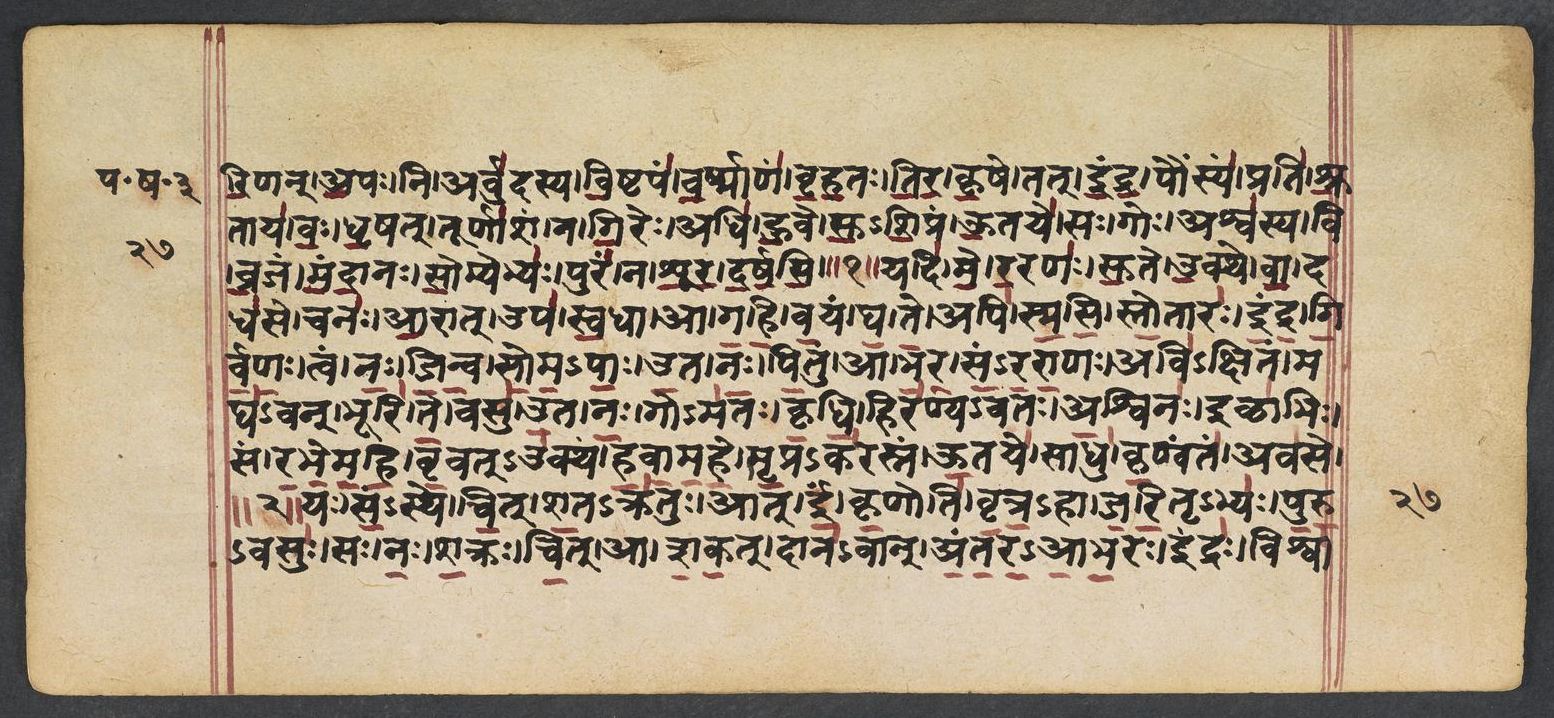
Where on the image
Penn Ms. Coll. 390 Item 41, fol. 605v (numbered 27v by the scribe) (OPenn image 606, upper leaf). Checked on the image: the Rigveda text on this page begins in RV 8.32.2 ‹riṇan apaḥ›. The next page with Rigveda text, fol. 606r (numbered 28r by the scribe), begins in RV 8.32.12 ‹-viśvābhiḥ ūti-bhiḥ›. Verses 8.32.2-11 end on this page; 8.32.2 begins on fol. 605r (numbered 27r by the scribe).
2yaḥ sṛbi̍nda̱m ana̍rśani̱m pipru̍ṁ dā̱sam a̍hī̱śuva̍m | vadhī̍d u̱gro ri̱ṇann a̱paḥ ||
3ny arbu̍dasya vi̱ṣṭapa̍ṁ va̱rṣmāṇa̍m bṛha̱tas ti̍ra | kṛ̱ṣe tad i̍ndra̱ pauṁsya̍m ||
4prati̍ śru̱tāya̍ vo dhṛ̱ṣat tūrṇā̍śa̱ṁ na gi̱rer adhi̍ | hu̱ve su̍śi̱pram ū̱taye̍ ||
5sa gor aśva̍sya̱ vi vra̱jam ma̍ndā̱naḥ so̱myebhya̍ḥ | pura̱ṁ na śū̍ra darṣasi ||
6yadi̍ me rā̱raṇa̍ḥ su̱ta u̱kthe vā̱ dadha̍se̱ cana̍ḥ | ā̱rād upa̍ sva̱dhā ga̍hi ||
7va̱yaṁ ghā̍ te̱ api̍ ṣmasi sto̱tāra̍ indra girvaṇaḥ | tvaṁ no̍ jinva somapāḥ ||
8u̱ta na̍ḥ pi̱tum ā bha̍ra saṁrarā̱ṇo avi̍kṣitam | magha̍va̱n bhūri̍ te̱ vasu̍ ||
9u̱ta no̱ goma̍tas kṛdhi̱ hira̍ṇyavato a̱śvina̍ḥ | iḻā̍bhi̱ḥ saṁ ra̍bhemahi ||
10bṛ̱badu̍kthaṁ havāmahe sṛ̱praka̍rasnam ū̱taye̍ | sādhu̍ kṛ̱ṇvanta̱m ava̍se ||
11yaḥ sa̱ṁsthe ci̍c cha̱takra̍tu̱r ād ī̍ṁ kṛ̱ṇoti̍ vṛtra̱hā | ja̱ri̱tṛbhya̍ḥ purū̱vasu̍ḥ ||
Compare: Padapāṭha (word-by-word text written in the manuscript; Sansknet e-text via GRETIL)
2yaḥ | sṛbindam | anarśanim | piprum | dāsam | ahīśuvam | vadhīt | ugraḥ | riṇan | apaḥ
3ni | arbudasya | viṣṭapam | varṣmāṇam | bṛhataḥ | tira | kṛṣe | tat | indra | paiṃsyam
4prati | śrutāya | vaḥ | dhṛṣat | tūrṇāśam | na | gireḥ | adhi | huve | su-śipram | ūtaye
5saḥ | goḥ | aśvasya | vi | vrajam | mandānaḥ | somyebhyaḥ | puram | na | śūra | darṣasi
6yadi | me | raraṇaḥ | sute | ukthe | vā | dadhase | canaḥ | ārāt | upa | svadhā | ā | gahi
7vayam | gha | te | api | smasi | stotāraḥ | indra | girvaṇaḥ | tvam | naḥ | jinva | soma-pāḥ
8uta | naḥ | pitum | ā | bhara | sam-rarāṇaḥ | avi-kṣitam | magha-van | bhūri | te | vasu
9uta | naḥ | go-mataḥ | kṛdhi | hiraṇya-vataḥ | aśvinaḥ | iḷābhiḥ | sam | rabhemahi
10bṛbat-uktham | havāmahe | sṛpra-karasnam | ūtaye | sādhu | kṛṇvantam | avase
11yaḥ | sam-sthe | cit | śata-kratuḥ | āt | īm | kṛṇoti | vṛtra-hā | jaritṛ-bhyaḥ | puru-vasuḥ
2Strong God, he slew Anarṣani, Sr̥ibinda, Pipru, and the fiend, Ahîṣuva, and loosed the floods.
3Thou broughtest down the dwelling-place, the height of lofty Arbuda. That exploit, Indra, must be famed.
4Bold, to your famous Soma I call the fair-visored God for aid, Down like a torrent from the hill.
5Rejoicing in the Soma-draughts, Hero, burst open, like a fort, The stall of horses and of kine.
6If my libation gladdens, if thou takest pleasure in my laud, Come with thy Godhead from afar.
7O Indra, Lover of the Song, the singers of thy praise are we: O Soma-drinker, quicken us.
8And, taking thy delight with us bring us still undiminished food: Great is thy wealth, O Maghavan.
9Make thou us rich in herds of kine, in steeds, in gold: let us exert Our strength in sacrificial gifts.
10Let us call him to aid whose hands stretch far, to whom high laud is due. Who worketh well to succour us.
11He, Ṣatakratu, even in fight acts as a Vr̥itra-slayer s,till: He gives his worshippers much wealth.
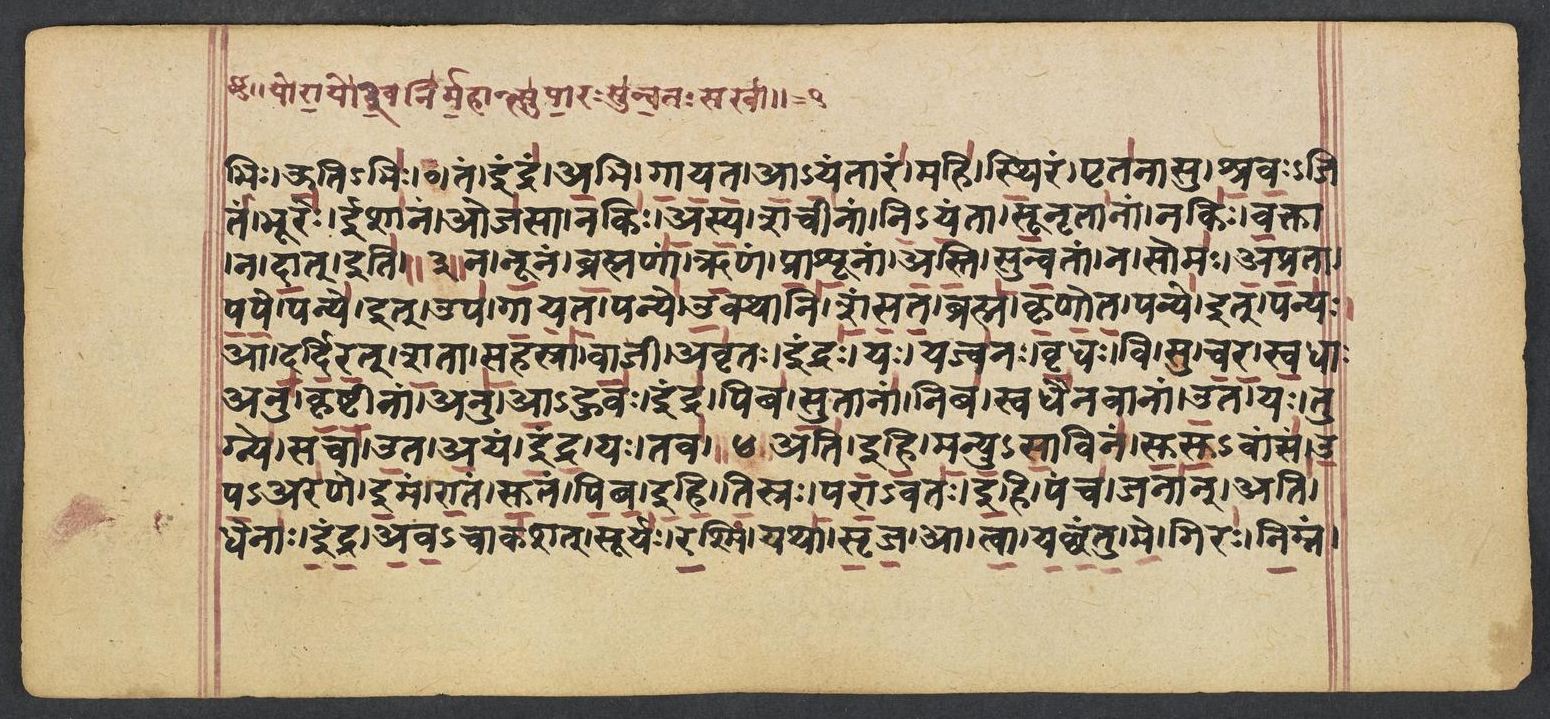
Where on the image
Penn Ms. Coll. 390 Item 41, fol. 606r (numbered 28r by the scribe) (OPenn image 606, lower leaf). Checked on the image: the Rigveda text on this page begins in RV 8.32.12 ‹-viśvābhiḥ ūti-bhiḥ›. The next page with Rigveda text, fol. 606v (numbered 28v by the scribe), begins in RV 8.32.23 ‹āpaḥ na sadhryak›. Verses 8.32.12-22 end on this page; 8.32.12 begins on fol. 605v (numbered 27v by the scribe).
12sa na̍ḥ śa̱kraś ci̱d ā śa̍ka̱d dāna̍vām̐ antarābha̱raḥ | indro̱ viśvā̍bhir ū̱tibhi̍ḥ ||
13yo rā̱yo̱3̱̍ 'vani̍r ma̱hān su̍pā̱raḥ su̍nva̱taḥ sakhā̍ | tam indra̍m a̱bhi gā̍yata ||
14ā̱ya̱ntāra̱m mahi̍ sthi̱ram pṛta̍nāsu śravo̱jita̍m | bhūre̱r īśā̍na̱m oja̍sā ||
15naki̍r asya̱ śacī̍nāṁ niya̱ntā sū̱nṛtā̍nām | naki̍r va̱ktā na dā̱d iti̍ ||
16na nū̱nam bra̱hmaṇā̍m ṛ̱ṇam prā̍śū̱nām a̍sti sunva̱tām | na somo̍ apra̱tā pa̍pe ||
17panya̱ id upa̍ gāyata̱ panya̍ u̱kthāni̍ śaṁsata | brahmā̍ kṛṇota̱ panya̱ it ||
18panya̱ ā da̍rdirac cha̱tā sa̱hasrā̍ vā̱jy avṛ̍taḥ | indro̱ yo yajva̍no vṛ̱dhaḥ ||
19vi ṣū ca̍ra sva̱dhā anu̍ kṛṣṭī̱nām anv ā̱huva̍ḥ | indra̱ piba̍ su̱tānā̍m ||
20piba̱ svadhai̍navānām u̱ta yas tugrye̱ sacā̍ | u̱tāyam i̍ndra̱ yas tava̍ ||
21atī̍hi manyuṣā̱viṇa̍ṁ suṣu̱vāṁsa̍m u̱pāra̍ṇe | i̱maṁ rā̱taṁ su̱tam pi̍ba ||
22i̱hi ti̱sraḥ pa̍rā̱vata̍ i̱hi pañca̱ janā̱m̐ ati̍ | dhenā̍ indrāva̱cāka̍śat ||
Compare: Padapāṭha (word-by-word text written in the manuscript; Sansknet e-text via GRETIL)
12saḥ | naḥ | śakraḥ | cit | ā | śakat | dāna-vān | antara-ābharaḥ | indraḥ | viśvābhiḥ | ūti-bhiḥ
13yaḥ | rāyaḥ | avaniḥ | mahān | su-pāraḥ | sunvataḥ | sakhā | tam | indram | abhi | gāyata
14āyantāram | mahi | sthiram | pṛtanāsu | śravaḥ-jitam | bhūreḥ | īśānam | ojasā
15nakiḥ | asya | śacīnām | ni-yantā | sūnṛtānām | nakiḥ | vaktā | na | dāt | iti
16na | nūnam | brahmaṇām | ṛṇam | prāśūnām | asti | sunvatām | na | somaḥ | apratā | pape
17panye | it | upa | gāyata | panye | ukthāni | śaṃsata | brahma | kṛṇota | panye | it
18panyaḥ | ā | dardirat | śatā | sahasrā | vājī | avṛtaḥ | indraḥ | yaḥ | yajvanaḥ | vṛdhaḥ
19vi | su | cara | svadhāḥ | anu | kṛṣṭīnām | anu | āhuvaḥ | indra | piba | sutānām
20piba | sva-dhainavānām | uta | yaḥ | tugrye | sacā | uta | ayam | indra | yaḥ | tava
21ati | ihi | manyu-sāvinam | susu-vāṃsam | upa-araṇe | imam | rātam | sutam | piba
22ihi | tisraḥ | parāvataḥ | ihi | pañca | janān | ati | dhenāḥ | indra | ava-cākaśat
12May he, this Ṣakra, strengthen us, Boon God who satisfies our needs, Indra, with all his saving helps.
13To him, the mighty stream of wealth, the Soma-presser's rescuing Friend, To Indra sing your song of praise;
14Who bringeth what is great and firm, who winneth glory in his wars, Lord of vast wealth through power and might.
15There liveth none to check or stay his energies and gracious deeds: None who can say, He giveth not.
16No debt is due by Brahmans now, by active men who press the juice: Well hath each Soma-draught been paid.
17Sing ye to him who must be praised, say lauds to him who must be praised, Bring prayer to him who must be praised.
18May be, unchecked, strong, meet for praise, bring hundreds, thousands forth to light, Indra who aids the worshipper.
19Go with thy God-like nature forth, go where the folk are calling thee: Drink, Indra, of the drops we pour.
20Drink milky draughts which are thine own, this too which was with Tugrya once, This is it, Indra, that is thine.
21Pass him who pours libations out in angry mood or after sin: Here drink the juice we offer thee.
22Over the three great distances, past the Five Peoples go thy way, O Indra, noticing our voice.
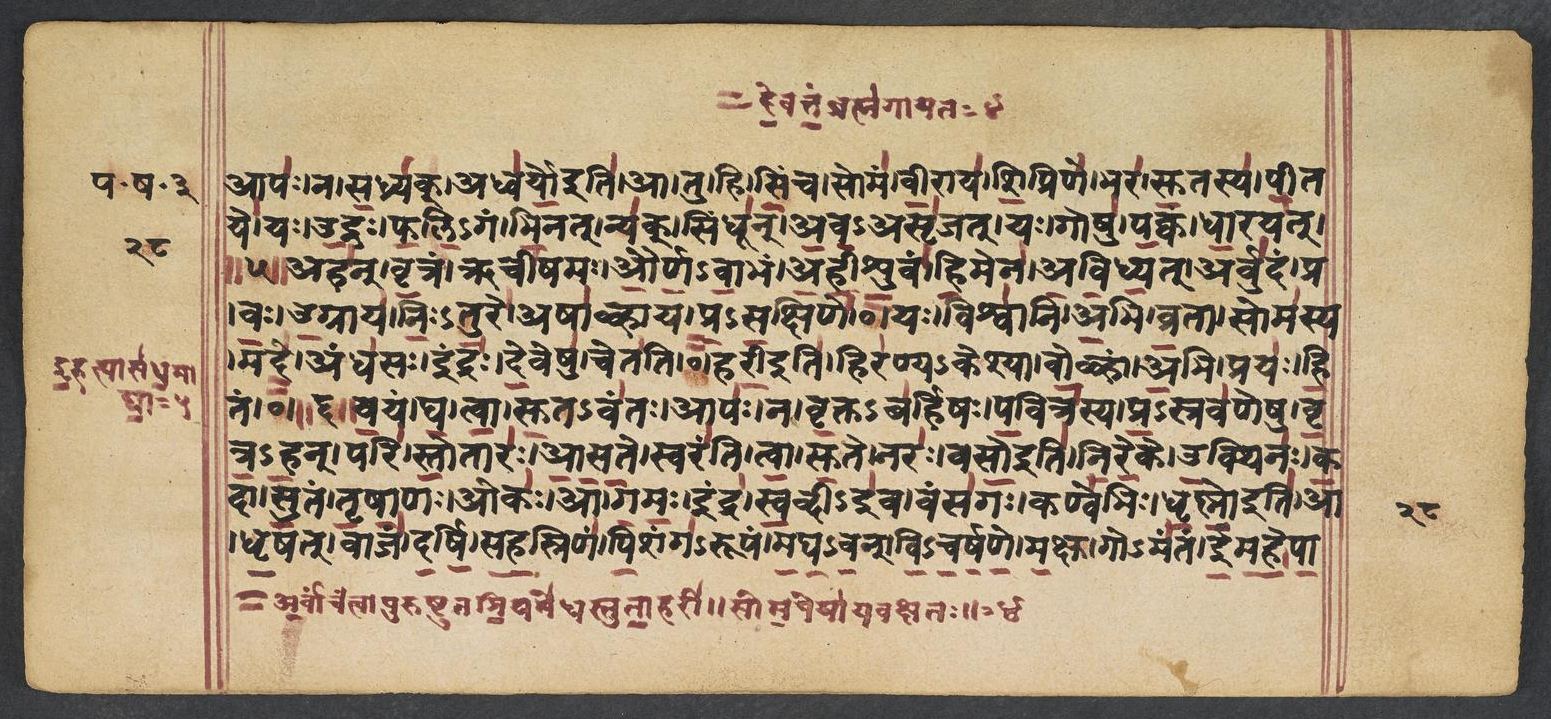
Where on the image
Penn Ms. Coll. 390 Item 41, fol. 606v (numbered 28v by the scribe) (OPenn image 607, upper leaf). Checked on the image: the Rigveda text on this page begins in RV 8.32.23 ‹āpaḥ na sadhryak›. The next page with Rigveda text, fol. 607r (numbered 29r by the scribe), begins in RV 8.33.4 ‹pāhi gāya andhasaḥ made›. Verses 8.32.23-30 end on this page; 8.32.23 begins on fol. 606r (numbered 28r by the scribe).
23sūryo̍ ra̱śmiṁ yathā̍ sṛ̱jā tvā̍ yacchantu me̱ gira̍ḥ | ni̱mnam āpo̱ na sa̱dhrya̍k ||
24adhva̍rya̱v ā tu hi ṣi̱ñca soma̍ṁ vī̱rāya̍ śi̱priṇe̍ | bharā̍ su̱tasya̍ pī̱taye̍ ||
25ya u̱dnaḥ pha̍li̱gam bhi̱nan nya1̱̍k sindhū̍m̐r a̱vāsṛ̍jat | yo goṣu̍ pa̱kvaṁ dhā̱raya̍t ||
26aha̍n vṛ̱tram ṛcī̍ṣama aurṇavā̱bham a̍hī̱śuva̍m | hi̱menā̍vidhya̱d arbu̍dam ||
27pra va̍ u̱grāya̍ ni̱ṣṭure 'ṣā̍ḻhāya prasa̱kṣiṇe̍ | de̱vatta̱m brahma̍ gāyata ||
28yo viśvā̍ny a̱bhi vra̱tā soma̍sya̱ made̱ andha̍saḥ | indro̍ de̱veṣu̱ ceta̍ti ||
29i̱ha tyā sa̍dha̱mādyā̱ harī̱ hira̍ṇyakeśyā | vo̱ḻhām a̱bhi prayo̍ hi̱tam ||
30a̱rvāñca̍ṁ tvā puruṣṭuta pri̱yame̍dhastutā̱ harī̍ | so̱ma̱peyā̍ya vakṣataḥ ||
Compare: Padapāṭha (word-by-word text written in the manuscript; Sansknet e-text via GRETIL)
23sūryaḥ | raśmim | yathā | sṛja | tvā | yacchantu | me | giraḥ | nimnam | āpaḥ | na | sadhryak
24adhvaryo iti | ā | tu | hi | siñca | somam | vīrāya | śipriṇe | bhara | sutasya | pītaye
25yaḥ | udnaḥ | phali-gam | bhinat | nyak | sindhūn | ava-asṛjat | yaḥ | goṣu | pakvam | dhārayat
26ahan | vṛtram | ṛcīṣamaḥ | aurṇa-vābham | ahīśuvam | himena | avidhyat | arbudam
27pra | vaḥ | ugrāya | niḥ-ture | aṣāḷhāya | pra-sakṣiṇe | devattam | brahma | gāyata
28yaḥ | viśvāni | abhi | vratā | somasya | made | andhasaḥ | indraḥ | deveṣu | cetati
29iha | tyā | sadha-mādyā | harī iti | hiraṇya-keśyā | voḷhām | abhi | prayaḥ | hitam
30arvāñcam | tvā | puru-stuta | priyamedha-stutā | harī iti | soma-peyāya | vakṣataḥ
23Send forth thy ray like Sûrya: let my songs attract thee hitherward, Like waters gathering to the vale.
24Now to the Hero fair of cheek, Adhvaryu, pour the Soma forth: Bring of the juice that he may drink
25Who cleft the water-cloud in twain, loosed rivers for their downward flow, And set the ripe milk in the kine.
26He, meet for praise, slew Vr̥itra, slew Ahîṣuva, Ûrṇavâbha's son, And pierced through Arbuda with frost.
27To him your matchless Mighty One, unconquerable Conqueror, Sing forth the prayer which Gods have given:
28Indra, who in the wild delight of Soma juice considers here All holy Laws among the Gods.
29Hither let these thy Bays who share thy banquet, Steeds with golden manes, Convey thee to the feast prepared.
30Hither, O thou whom many laud, the Bays whom Priyamedha praised, Shall bring thee to the Soma-draught.
Notes
- Sanskrit: Aufrecht's edition (1877) with the Vedic accents, as entered by van Nooten and Holland (GRETIL).
- English: Ralph T. H. Griffith, The Hymns of the Rigveda (1889-1892; 2nd ed. 1896-1897), from the VedaWeb digital text; OCR slips in that text were corrected against the printed 2nd edition (data/sources/rigveda/griffith_errata.json).
- Padapāṭha (edition text): Sansknet e-text via GRETIL (CC BY-NC-SA 4.0).
Cite
Sources
- Source: Penn Ms. Coll. 390 Item 41 (undated (catalogued with Penn's 18th-19th c. Vedic manuscripts)), OPenn, Public Domain Mark + Aufrecht's accented text (GRETIL) + Griffith's English (VedaWeb) (holding institution)
- Critical edition: Aufrecht (1877), accented e-text via GRETIL
← previous · → next · v cycle view · l back to library