Rigveda 8.33: To Indra
Introduction
Rigveda 8.33 is a hymn of 19 verses addressed to Indra. It stands in book (maṇḍala) 8, the book of the Kaṇva and Aṅgiras poets. The Rigveda is the oldest collection of Sanskrit hymns, composed in the second half of the second millennium BCE and handed down orally for many centuries before it was written down.
The manuscript shown is Penn Ms. Coll. 390 Item 41 (University of Pennsylvania), an undated paper manuscript of the padapāṭha (the word-by-word recitation text, in which every word is written separately and compounds are split) of the whole Ṛgveda in Devanāgarī, 884 leaves in fascicles, 7-9 lines to the page, accents in red; this hymn stands on fol. 606v-608r. Each section below gives the verses that end on one page; the page boundaries were read on the images (the opening words of every page), not counted out. Where the manuscript is a padapāṭha (the word-by-word recitation text), the section shows Aufrecht's continuous (saṃhitā) text first and, as the edition text, the padapāṭha of the same verses, which is the form written on the page.
How was this verified? (Provenance)
Where on the image
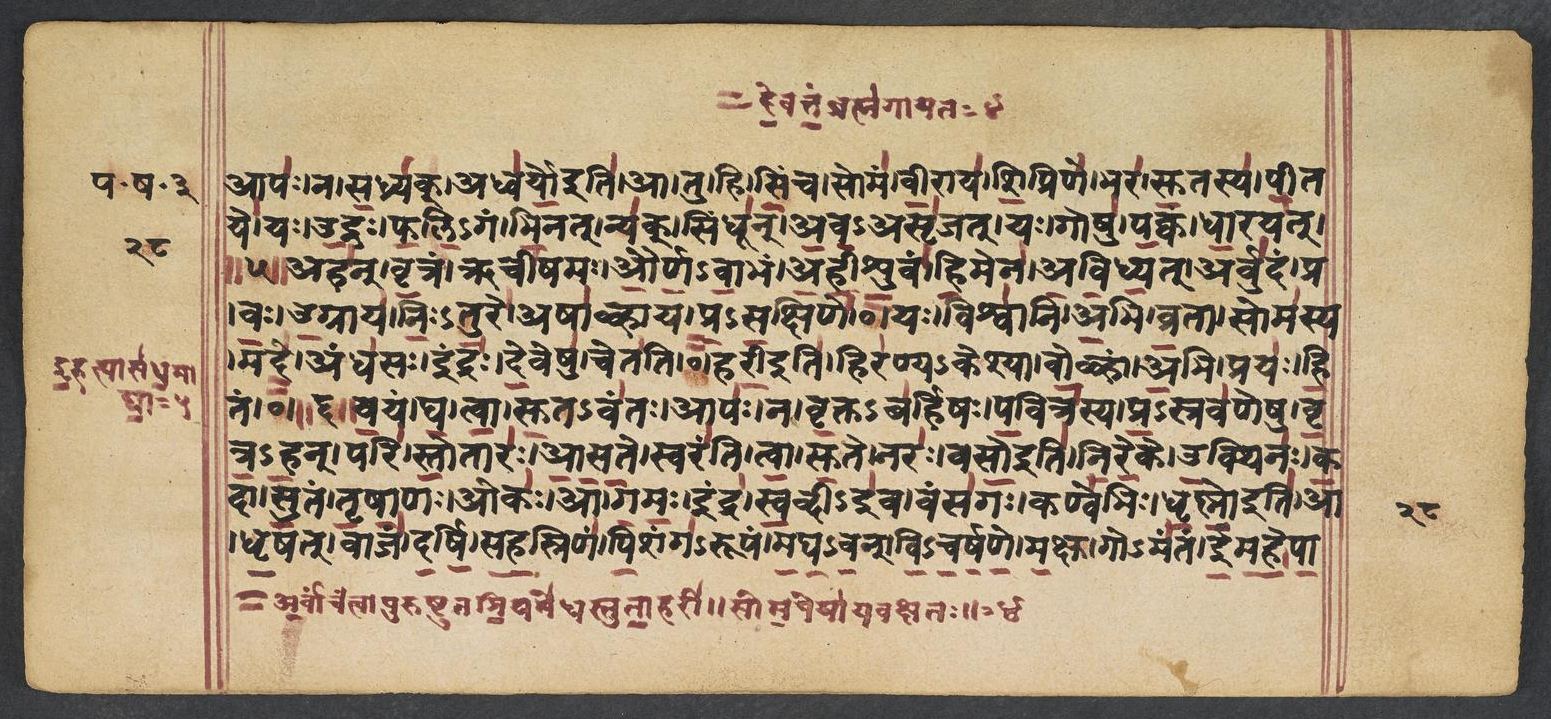
Penn Ms. Coll. 390 Item 41, fol. 606v (numbered 28v by the scribe) (OPenn image 607, upper leaf). Checked on the image: the Rigveda text on this page begins in RV 8.32.23 ‹āpaḥ na sadhryak›. The next page with Rigveda text, fol. 607r (numbered 29r by the scribe), begins in RV 8.33.4 ‹pāhi gāya andhasaḥ made›. Verses 8.33.1-3 end on this page.
1va̱yaṁ gha̍ tvā su̱tāva̍nta̱ āpo̱ na vṛ̱ktaba̍rhiṣaḥ | pa̱vitra̍sya pra̱srava̍ṇeṣu vṛtraha̱n pari̍ sto̱tāra̍ āsate ||
2svara̍nti tvā su̱te naro̱ vaso̍ nire̱ka u̱kthina̍ḥ | ka̱dā su̱taṁ tṛ̍ṣā̱ṇa oka̱ ā ga̍ma̱ indra̍ sva̱bdīva̱ vaṁsa̍gaḥ ||
3kaṇve̍bhir dhṛṣṇa̱v ā dhṛ̱ṣad vāja̍ṁ darṣi saha̱sriṇa̍m | pi̱śaṅga̍rūpam maghavan vicarṣaṇe ma̱kṣū goma̍ntam īmahe ||
Compare: Padapāṭha (word-by-word text written in the manuscript; Sansknet e-text via GRETIL)
1vayam | gha | tvā | suta-vantaḥ | āpaḥ | na | vṛkta-barhiṣaḥ | pavitrasya | pra-sravaṇeṣu | vṛtra-han | pari | stotāraḥ | āsate
2svaranti | tvā | sute | naraḥ | vaso iti | nireke | ukthinaḥ | kadā | sutam | tṛṣāṇaḥ | okaḥ | ā | gamaḥ | indra | svabdī-iva | vaṃsagaḥ
3kaṇvebhiḥ | dhṛṣṇo iti | ā | dhṛṣat | vājam | darṣi | sahasriṇam | piśaṅga-rūpam | magha-van | vi-carṣaṇe | makṣu | go--mantam | īmahe
1WE compass thee like waters, we whose grass is trimmed and Soma pressed. Here where the filter pours its stream, thy worshippers round thee, O Vr̥itra-slayer, sit.
2Men, Vasu! by the Soma, with lauds call thee to the foremost place: When comest thou athirst unto the juice as home, O Indra, like a bellowing bull?
3Boldly, Bold Hero, bring us spoil in thousands for the Kaṇvas' sake. O active Maghavan, with eager prayer we crave the yellow-hued with store ol kine.
Where on the image
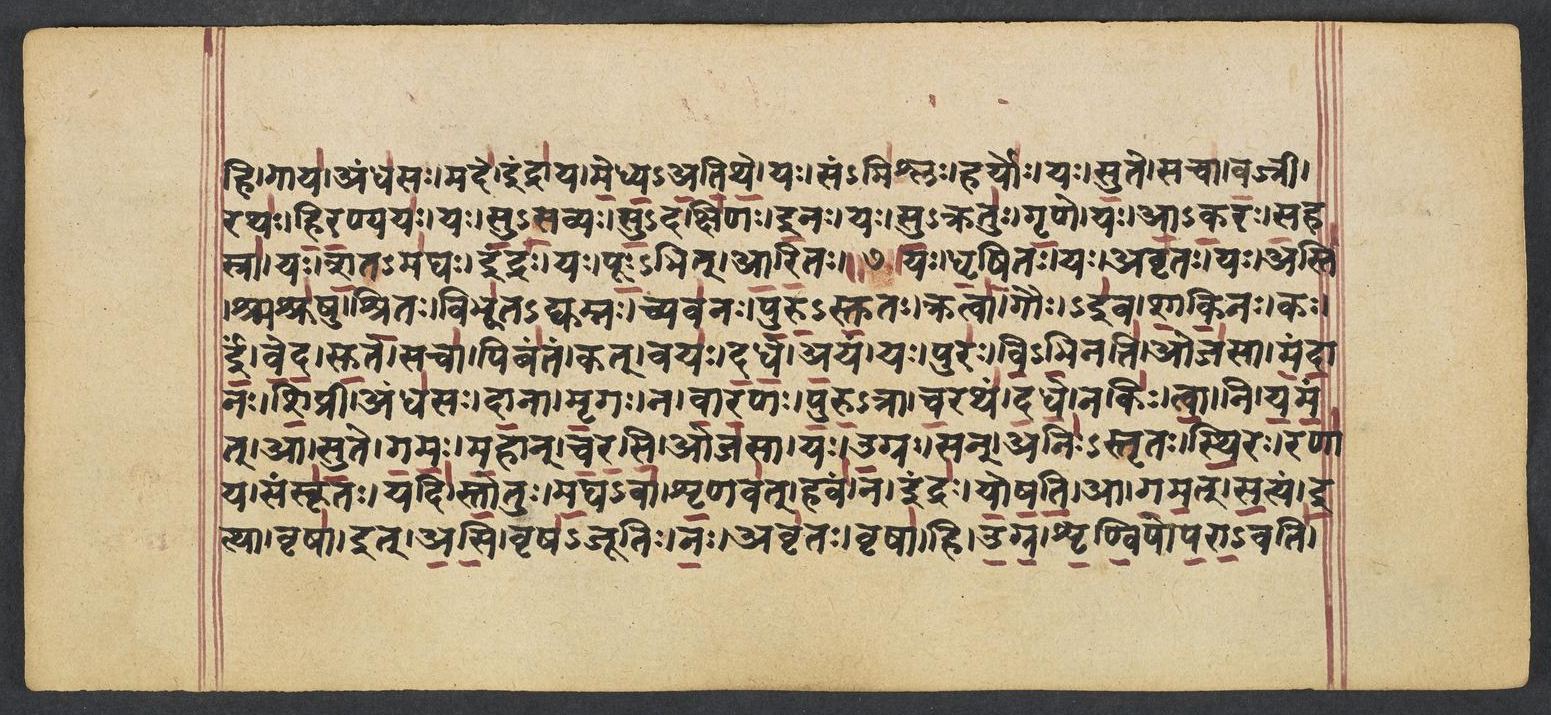
Penn Ms. Coll. 390 Item 41, fol. 607r (numbered 29r by the scribe) (OPenn image 607, lower leaf). Checked on the image: the Rigveda text on this page begins in RV 8.33.4 ‹pāhi gāya andhasaḥ made›. The next page with Rigveda text, fol. 607v (numbered 29v by the scribe), begins in RV 8.33.10 ‹-parāvati vṛṣaḥ arvāvati śrutaḥ›. Verses 8.33.4-9 end on this page.
4pā̱hi gāyāndha̍so̱ mada̱ indrā̍ya medhyātithe | yaḥ sammi̍ślo̱ haryo̱r yaḥ su̱te sacā̍ va̱jrī ratho̍ hira̱ṇyaya̍ḥ ||
5yaḥ su̍ṣa̱vyaḥ su̱dakṣi̍ṇa i̱no yaḥ su̱kratu̍r gṛ̱ṇe | ya ā̍ka̱raḥ sa̱hasrā̱ yaḥ śa̱tāma̍gha̱ indro̱ yaḥ pū̱rbhid ā̍ri̱taḥ ||
6yo dhṛ̍ṣi̱to yo 'vṛ̍to̱ yo asti̱ śmaśru̍ṣu śri̱taḥ | vibhū̍tadyumna̱ś cyava̍naḥ puruṣṭu̱taḥ kratvā̱ gaur i̍va śāki̱naḥ ||
7ka ī̍ṁ veda su̱te sacā̱ piba̍nta̱ṁ kad vayo̍ dadhe | a̱yaṁ yaḥ puro̍ vibhi̱natty oja̍sā mandā̱naḥ śi̱pry andha̍saḥ ||
8dā̱nā mṛ̱go na vā̍ra̱ṇaḥ pu̍ru̱trā ca̱ratha̍ṁ dadhe | naki̍ṣ ṭvā̱ ni ya̍ma̱d ā su̱te ga̍mo ma̱hām̐ś ca̍ra̱sy oja̍sā ||
9ya u̱graḥ sann ani̍ṣṭṛtaḥ sthi̱ro raṇā̍ya̱ saṁskṛ̍taḥ | yadi̍ sto̱tur ma̱ghavā̍ śṛ̱ṇava̱d dhava̱ṁ nendro̍ yoṣa̱ty ā ga̍mat ||
Compare: Padapāṭha (word-by-word text written in the manuscript; Sansknet e-text via GRETIL)
4pāhi | gāya | andhasaḥ | made | indrāya | medhya-atithe | yaḥ | sam-miślaḥ | haryoḥ | yaḥ | sute | sacā | vajrī | rathaḥ | hiraṇyayaḥ
5yaḥ | su-savyaḥ | su-dakṣiṇaḥ | inaḥ | yaḥ | su-kratuḥ | gṛṇe | yaḥ | ākaraḥ | sahasrā | yaḥ | śata-maghaḥ | indraḥ | yaḥ | pūḥ-bhit | āritaḥ
6yaḥ | dhṛṣitaḥ | yaḥ | avṛtaḥ | yaḥ | asti | śmaśruṣu | śritaḥ | vibhūta-dyumnaḥ | cyavanaḥ | puru-stutaḥ | kratvā | gauḥ-iva | śākinaḥ
7kaḥ | īm | veda | sute | sacā | pibantam | kat | vayaḥ | dadhe | ayam | yaḥ | puraḥ | vi-bhinatti | ojasā | mandānaḥ | śiprī | andhasaḥ
8dānā | mṛgaḥ | na | vāraṇaḥ | puru-trā | caratham | dadhe | nakiḥ | tvā | ni | yamat | ā | sute | gamaḥ | mahān | carasi | ojasā
9yaḥ | ugraḥ | san | aniḥ-stṛtaḥ | sthiraḥ | raṇāya | saṃskṛtaḥ | yadi | stotuḥ | magha-vā | śṛṇavat | havam | na | indraḥ | yoṣati | ā | gamat
4Medhyâtithi, to Indra sing, drink of the juice to make thee glad. Close-knit to his Bay Steeds, bolt-armed, beside the juice is he: his chariot is of gold.
5He Who is praised as strong of hand both right and left, most wise and hold: Indra who, rich in hundreds, gathers thousands up, honoured as breaker-down of forts.
6The bold of heart whom none provokes, who stands in bearded confidence; Much-lauded, very glorious, overthrowing foes, strong Helper, like a bull with might.
7Who knows what vital ower he wins, drinking beside the flowing juice? This is the fair-checked God who, joying in the draught, breaks down the castles in his strength.
8As a wild elephant rushes on this way and that way, mad with heat,' None may compel thee, yet come hither to the draught: thou movest mighty in thy power.
9When he, the Mighty, ne'er o'erthrown, steadfast, made ready for the fight, When Indra Maghavan lists to his praiser's call, he will not stand aloof, but come.
Where on the image
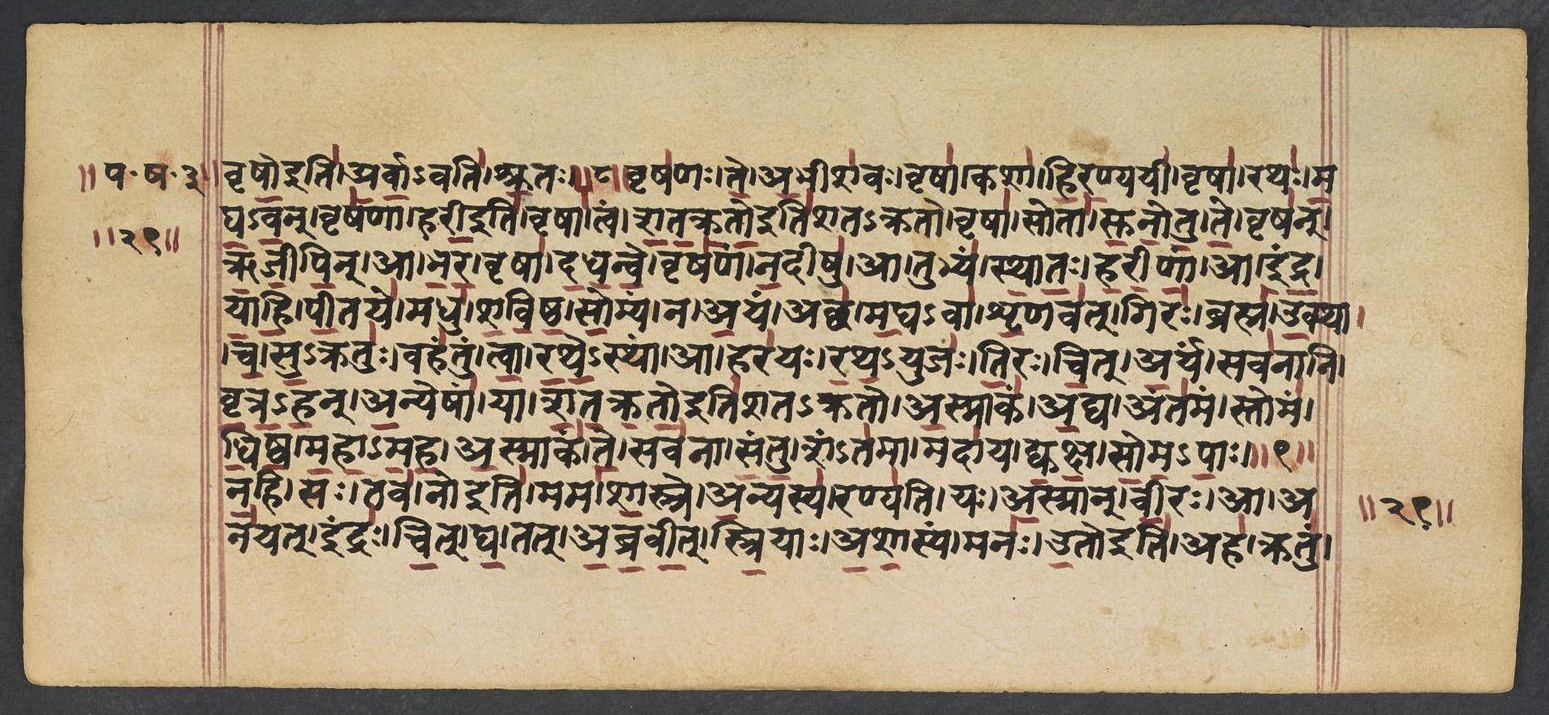
Penn Ms. Coll. 390 Item 41, fol. 607v (numbered 29v by the scribe) (OPenn image 608, upper leaf). Checked on the image: the Rigveda text on this page begins in RV 8.33.10 ‹-parāvati vṛṣaḥ arvāvati śrutaḥ›. The next page with Rigveda text, fol. 608r (numbered 30r by the scribe), begins in RV 8.33.17 ‹raghum›. Verses 8.33.10-16 end on this page; 8.33.10 begins on fol. 607r (numbered 29r by the scribe).
10sa̱tyam i̱tthā vṛṣed a̍si̱ vṛṣa̍jūti̱r no 'vṛ̍taḥ | vṛṣā̱ hy u̍gra śṛṇvi̱ṣe pa̍rā̱vati̱ vṛṣo̍ arvā̱vati̍ śru̱taḥ ||
11vṛṣa̍ṇas te a̱bhīśa̍vo̱ vṛṣā̱ kaśā̍ hira̱ṇyayī̍ | vṛṣā̱ ratho̍ maghava̱n vṛṣa̍ṇā̱ harī̱ vṛṣā̱ tvaṁ śa̍takrato ||
12vṛṣā̱ sotā̍ sunotu te̱ vṛṣa̍nn ṛjīpi̱nn ā bha̍ra | vṛṣā̍ dadhanve̱ vṛṣa̍ṇaṁ na̱dīṣv ā tubhya̍ṁ sthātar harīṇām ||
13endra̍ yāhi pī̱taye̱ madhu̍ śaviṣṭha so̱myam | nāyam acchā̍ ma̱ghavā̍ śṛ̱ṇava̱d giro̱ brahmo̱kthā ca̍ su̱kratu̍ḥ ||
14vaha̍ntu tvā rathe̱ṣṭhām ā hara̍yo ratha̱yuja̍ḥ | ti̱raś ci̍d a̱ryaṁ sava̍nāni vṛtrahann a̱nyeṣā̱ṁ yā śa̍takrato ||
15a̱smāka̍m a̱dyānta̍ma̱ṁ stoma̍ṁ dhiṣva mahāmaha | a̱smāka̍ṁ te̱ sava̍nā santu̱ śaṁta̍mā̱ madā̍ya dyukṣa somapāḥ ||
16na̱hi ṣas tava̱ no mama̍ śā̱stre a̱nyasya̱ raṇya̍ti | yo a̱smān vī̱ra āna̍yat ||
Compare: Padapāṭha (word-by-word text written in the manuscript; Sansknet e-text via GRETIL)
10satyam | itthā | vṛṣā | it | asi | vṛṣa-jūtiḥ | naḥ | avṛtaḥ | vṛṣā | hi | ugra | śṛṇviṣe | parāvati | vṛṣaḥ | arvāvati | śrutaḥ
11vṛṣaṇaḥ | te | abhīśavaḥ | vṛṣā | kaśā | hiraṇyayī | vṛṣā | rathaḥ | magha-van | vṛṣaṇā | harī iti | vṛṣā | tvam | śatakrato itiśata-krato
12vṛṣā | sotā | sunotu | te | vṛṣan | ṛjīpin | ā | bhara | vṛṣā | dadhanve | vṛṣaṇam | nadīṣu | ā | tubhyam | sthātaḥ | harīṇām
13ā | indra | yāhi | pītaye | madhu | śaviṣṭha | somyam | na | ayam | accha | magha-vā | śṛṇavat | giraḥ | brahma | ukthā | ca | su-kratuḥ
14vahantu | tvā | rathesthām | ā | harayaḥ | ratha-yujaḥ | tiraḥ | cit | aryam | savanāni | vṛtra-han | anyeṣām | yā | śatakrato itiśata-krato
15asmākam | adya | antamam | stomam | dhiṣva | mahāmaha | asmākam | te | savanā | santu | śam-tamā | madāya | dyukṣa | soma-pāḥ
16nahi | saḥ | tava | naḥ | mama | śāstre | anyasya | raṇyati | yaḥ | asmān | vīraḥ | ā | anayat
10Yea, verily, thou art a Bull, with a bull's rush. whom none may stay: Thou Mighty One, art celebrated as a Bull, famed as a Bull both near and far.
11Thy reins are very bulls in strength, bulls' strength is in thy golden whip. Thy car, O Maghavan, thy Bays are strong as bulls: thou, Ṣatakratu, art a Bull.
12Let the strong presser press for thee. Bring hither, thou straight-rushing Bull. The mighty makes the mighty run in flowing streams for thee whom thy Bay Horses bear.
13Come, thou most potent Indra, come to drink the savoury Soma juice. Maghavan, very wise, will quickly come to hear the songs, the prayer, the hymns of praise.
14When thou hast mounted on thy car let thy yoked Bay Steeds carry thee, Past other men's libations, Lord of Hundred Powers, thee, Vr̥itra-slayer, thee our Friend.
15O thou Most Lofty One, accept our laud as nearest to thine heart. May our libations be most sweet to make thee glad, O Soma-drinker, Heavenly Lord.
16Neither in thy decree nor mine, but in another's he delights,– The man who brought us unto this.
Where on the image
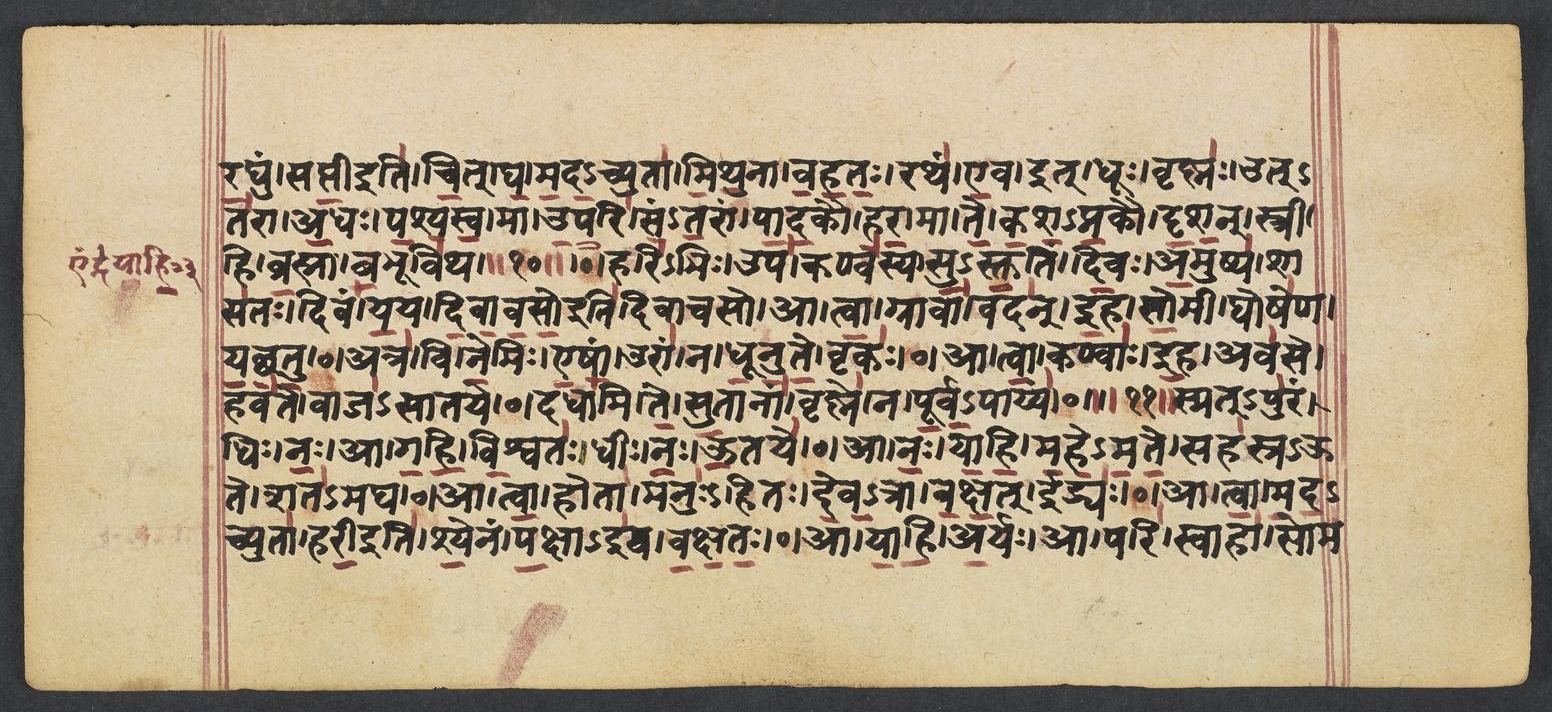
Penn Ms. Coll. 390 Item 41, fol. 608r (numbered 30r by the scribe) (OPenn image 608, lower leaf). Checked on the image: the Rigveda text on this page begins in RV 8.33.17 ‹raghum›. The next page with Rigveda text, fol. 608v (numbered 30v by the scribe), begins in RV 8.34.10 ‹-divāvaso itidivāvaso›. Verses 8.33.17-19 end on this page; 8.33.17 begins on fol. 607v (numbered 29v by the scribe).
17indra̍ś cid ghā̱ tad a̍bravīt stri̱yā a̍śā̱syam mana̍ḥ | u̱to aha̱ kratu̍ṁ ra̱ghum ||
18saptī̍ cid ghā mada̱cyutā̍ mithu̱nā va̍hato̱ ratha̍m | e̱ved dhūr vṛṣṇa̱ utta̍rā ||
19a̱dhaḥ pa̍śyasva̱ mopari̍ saṁta̱rām pā̍da̱kau ha̍ra | mā te̍ kaśapla̱kau dṛ̍śa̱n strī hi bra̱hmā ba̱bhūvi̍tha ||
Compare: Padapāṭha (word-by-word text written in the manuscript; Sansknet e-text via GRETIL)
17indraḥ | cit | gha | tat | abravīt | striyāḥ | aśāsyam | manaḥ | uto iti | aha | kratum | raghum
18saptī iti | cit | gha | mada-cyutā | mithunā | vahataḥ | ratham | eva | it | dhūḥ | vṛṣṇaḥ | ut-tarā
19adhaḥ | paśyasva | mā | upari | sam-tarām | pādakau | hara | mā | te | kaśa-plakau | dṛśan | strī | hi | brahmā | babhūvitha
17Indra himself hath said, The mind of woman brooks not discipline, Her intellect hath little weight.
18His pair of horses, rushing on in their wild transport, draw his car: High-lifted is the stallion's yoke.
19Cast down thine eyes and look not up. More closely set thy feet. Let none See what thy garment veils, for thou, a Brahman, hast become a dame.
Notes
- Sanskrit: Aufrecht's edition (1877) with the Vedic accents, as entered by van Nooten and Holland (GRETIL).
- English: Ralph T. H. Griffith, The Hymns of the Rigveda (1889-1892; 2nd ed. 1896-1897), from the VedaWeb digital text; OCR slips in that text were corrected against the printed 2nd edition (data/sources/rigveda/griffith_errata.json).
- Padapāṭha (edition text): Sansknet e-text via GRETIL (CC BY-NC-SA 4.0).
Cite
Sources
- Source: Penn Ms. Coll. 390 Item 41 (undated (catalogued with Penn's 18th-19th c. Vedic manuscripts)), OPenn, Public Domain Mark + Aufrecht's accented text (GRETIL) + Griffith's English (VedaWeb) (holding institution)
- Critical edition: Aufrecht (1877), accented e-text via GRETIL
← previous · → next · v cycle view · l back to library