Rigveda 8.39: To Agni
Introduction
Rigveda 8.39 is a hymn of 10 verses addressed to Agni. It stands in book (maṇḍala) 8, the book of the Kaṇva and Aṅgiras poets. The Rigveda is the oldest collection of Sanskrit hymns, composed in the second half of the second millennium BCE and handed down orally for many centuries before it was written down.
The manuscript shown is Penn Ms. Coll. 390 Item 41 (University of Pennsylvania), an undated paper manuscript of the padapāṭha (the word-by-word recitation text, in which every word is written separately and compounds are split) of the whole Ṛgveda in Devanāgarī, 884 leaves in fascicles, 7-9 lines to the page, accents in red; this hymn stands on fol. 610v-611v. Each section below gives the verses that end on one page; the page boundaries were read on the images (the opening words of every page), not counted out. Where the manuscript is a padapāṭha (the word-by-word recitation text), the section shows Aufrecht's continuous (saṃhitā) text first and, as the edition text, the padapāṭha of the same verses, which is the form written on the page.
How was this verified? (Provenance)
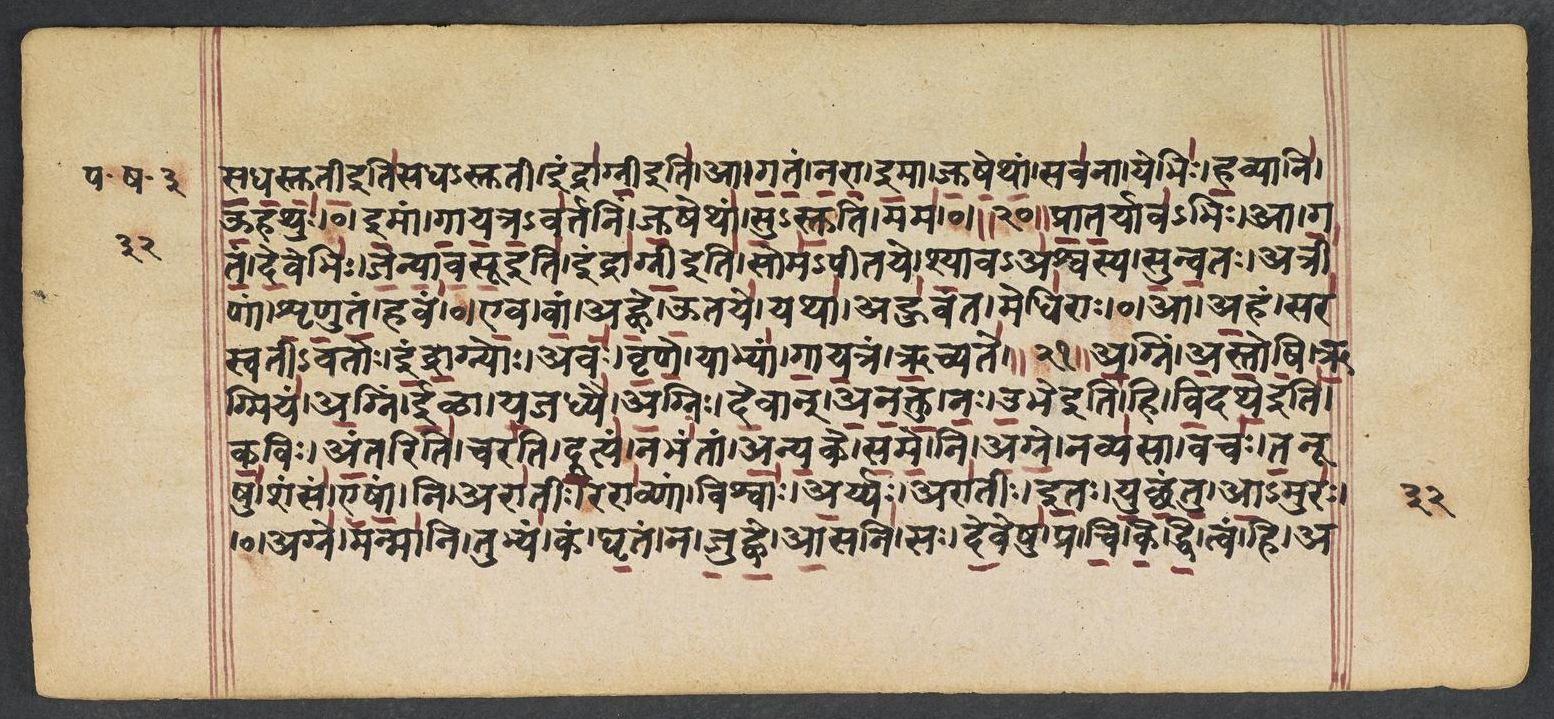
Where on the image
Penn Ms. Coll. 390 Item 41, fol. 610v (numbered 32v by the scribe) (OPenn image 611, upper leaf). Checked on the image: the Rigveda text on this page begins in RV 8.38.4 ‹sadhastutī itisadha-stutī indrāgnī iti›. The next page with Rigveda text, fol. 611r (numbered 33r by the scribe), begins in RV 8.39.3 ‹-asi pūrvyaḥ śivaḥ dūtaḥ›. Verses 8.39.1-2 end on this page.
1a̱gnim a̍stoṣy ṛ̱gmiya̍m a̱gnim ī̱ḻā ya̱jadhyai̍ | a̱gnir de̱vām̐ a̍naktu na u̱bhe hi vi̱dathe̍ ka̱vir a̱ntaś cara̍ti dū̱tya1̱̍ṁ nabha̍ntām anya̱ke sa̍me ||
2ny a̍gne̱ navya̍sā̱ vaca̍s ta̱nūṣu̱ śaṁsa̍m eṣām | ny arā̍tī̱ rarā̍vṇā̱ṁ viśvā̍ a̱ryo arā̍tīr i̱to yu̍cchantv ā̱muro̱ nabha̍ntām anya̱ke sa̍me ||
Compare: Padapāṭha (word-by-word text written in the manuscript; Sansknet e-text via GRETIL)
1agnim | astoṣi | ṛgmiyam | agnim | īḷā | yajadhyai | agniḥ | devān | anaktu | naḥ | ubhe iti | hi | vidatheiti | kaviḥ | antariti | carati | dūtyam | nabhantām | anyake | same
2ni | agne | navyasā | vacaḥ | tanūṣu | śaṃsam | eṣām | ni | arātīḥ | rarāvṇām | viśvāḥ | aryaḥ | arātīḥ | itaḥ | yucchantu | āmuraḥ | nabhantām | anyake | same
1THE glorious Agni have I praised, and worshipped with. the sacred food. May Agni deck the Gods for us. Between both gathering-places he goes on his embassy, the Sage. May all the others die away.
2Agni, burn down the word within their bodies through our newest speech, All hatreds of the godless, all the wicked man's malignities. Away let the destroyers go. May all the others die away.
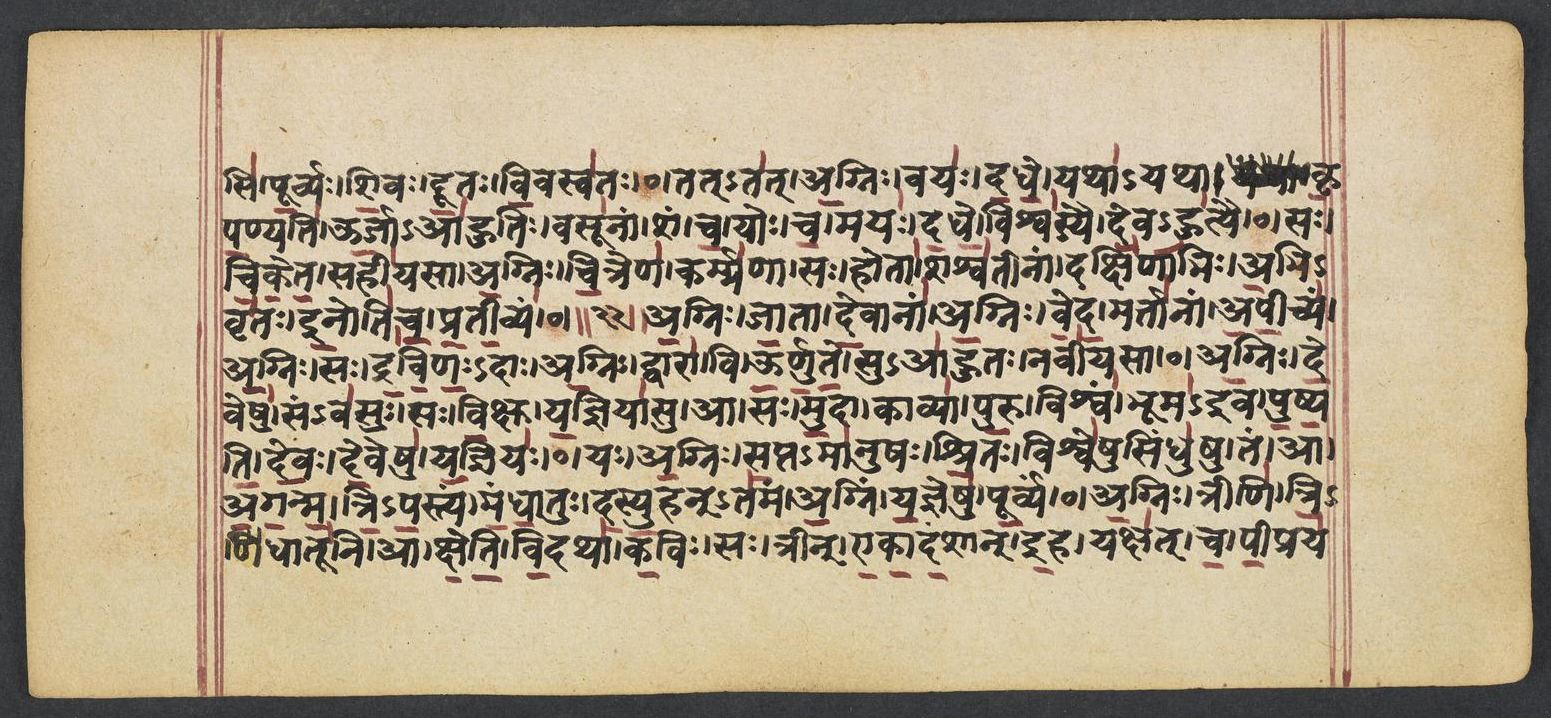
Where on the image
Penn Ms. Coll. 390 Item 41, fol. 611r (numbered 33r by the scribe) (OPenn image 611, lower leaf). Checked on the image: the Rigveda text on this page begins in RV 8.39.3 ‹-asi pūrvyaḥ śivaḥ dūtaḥ›. The next page with Rigveda text, fol. 611v (numbered 33v by the scribe), begins in RV 8.39.9 ‹ca naḥ vipraḥ dūtaḥ›. Verses 8.39.3-8 end on this page; 8.39.3 begins on fol. 610v (numbered 32v by the scribe).
3agne̱ manmā̍ni̱ tubhya̱ṁ kaṁ ghṛ̱taṁ na ju̍hva ā̱sani̍ | sa de̱veṣu̱ pra ci̍kiddhi̱ tvaṁ hy asi̍ pū̱rvyaḥ śi̱vo dū̱to vi̱vasva̍to̱ nabha̍ntām anya̱ke sa̍me ||
4tat-ta̍d a̱gnir vayo̍ dadhe̱ yathā̍-yathā kṛpa̱ṇyati̍ | ū̱rjāhu̍ti̱r vasū̍nā̱ṁ śaṁ ca̱ yoś ca̱ mayo̍ dadhe̱ viśva̍syai de̱vahū̍tyai̱ nabha̍ntām anya̱ke sa̍me ||
5sa ci̍keta̱ sahī̍yasā̱gniś ci̱treṇa̱ karma̍ṇā | sa hotā̱ śaśva̍tīnā̱ṁ dakṣi̍ṇābhir a̱bhīvṛ̍ta i̱noti̍ ca pratī̱vya1̱̍ṁ nabha̍ntām anya̱ke sa̍me ||
6a̱gnir jā̱tā de̱vānā̍m a̱gnir ve̍da̱ martā̍nām apī̱cya̍m | a̱gniḥ sa dra̍viṇo̱dā a̱gnir dvārā̱ vy ū̍rṇute̱ svā̍huto̱ navī̍yasā̱ nabha̍ntām anya̱ke sa̍me ||
7a̱gnir de̱veṣu̱ saṁva̍su̱ḥ sa vi̱kṣu ya̱jñiyā̱sv ā | sa mu̱dā kāvyā̍ pu̱ru viśva̱m bhūme̍va puṣyati de̱vo de̱veṣu̍ ya̱jñiyo̱ nabha̍ntām anya̱ke sa̍me ||
8yo a̱gniḥ sa̱ptamā̍nuṣaḥ śri̱to viśve̍ṣu̱ sindhu̍ṣu | tam āga̍nma tripa̱styam ma̍ndhā̱tur da̍syu̱hanta̍mam a̱gniṁ ya̱jñeṣu̍ pū̱rvyaṁ nabha̍ntām anya̱ke sa̍me ||
Compare: Padapāṭha (word-by-word text written in the manuscript; Sansknet e-text via GRETIL)
3agne | manmāni | tubhyam | kam | ghṛtam | na | juhve | āsani | saḥ | deveṣu | pra | ciki ddhi | tvam | hi | asi | pūrvyaḥ | śivaḥ | dūtaḥ | vivasvataḥ | nabhantām | anyake | same
4tat-tat | agniḥ | vayaḥ | dadhe | yathāyathā | kṛpaṇyati | ūrjāāhutiḥ | vasūnām | śam | ca | yoḥ | ca | mayaḥ | dadheviśvasyai devahūtyai | nabhantām | anyake | same
5saḥ | ciketa | sahīyasā | agniḥ | citreṇa | karmaṇā | saḥ | hotā | śaśvatīnām | dakṣiṇābhiḥ | abhi-vṛtaḥ | inoti | ca | pratīvyam | nabhantām | anyake | same
6agniḥ | jātā | devānām | agniḥ | veda | martānām | apīcyam | agniḥ | saḥ | draviṇaḥ-dāḥ | agniḥ | dvārā | vi | ūrṇute | su-āhutaḥ | navīyasā | nabhantām | anyake | same
7agniḥ | deveṣu | sam-vasuḥ | saḥ | vikṣu | yajñiyāsu | ā | saḥ | mudā | kāvyā | puru | viśvam | bhūma-iva | puṣyati | devaḥ | deveṣu | yajñiyaḥ | nabhantām | anyake | same
8yaḥ | agniḥ | sapta-mānuṣaḥ | śritaḥ | viśveṣu | sindhuṣu | tam | ā | aganma | tri--pastyam | mandhātuḥ | dasyuhan-tamam | agnim | yajñeṣu | pūrvyam | nabhantām | anyake | same
3Agni, I offer hymns to thee, like holy oil within thy mouth. Acknowledge them. among the Gods, for thou art the most excellent, the worshipper's blissful messenger. Let all the others die away.
4Agni bestows all vital power even as each man supplicates. He brings the Vasus strengthening gifts, and grants delight, in rest and stir, for every calling on the Gods. Let all the others die away.
5Agni hath made himself renowned by wonderful victorious act. He is the Priest of all the tribes, chosen with sacrificial meeds. He urges Deities to receive. Let all the others die away.
6Agni knows all that springs from Gods, he knows the mystery of men. Giver of wealth is Agni, he uncloses both the doors to us when worshipped with our newest gift. Let all the others die away.
7Agni inhabiteth with Gods and men who offer sacrifice. He cherisheth with great delight much wisdom, as all things that be, God among Gods adorable. May all the others die away.
8Agni who liveth in all streams, Lord of the Sevenfold Race of men, Him dweller in three homes we seek, best slayer of the Dasyus for Mandhâtar, first in sacrifice. Let all the others die away.
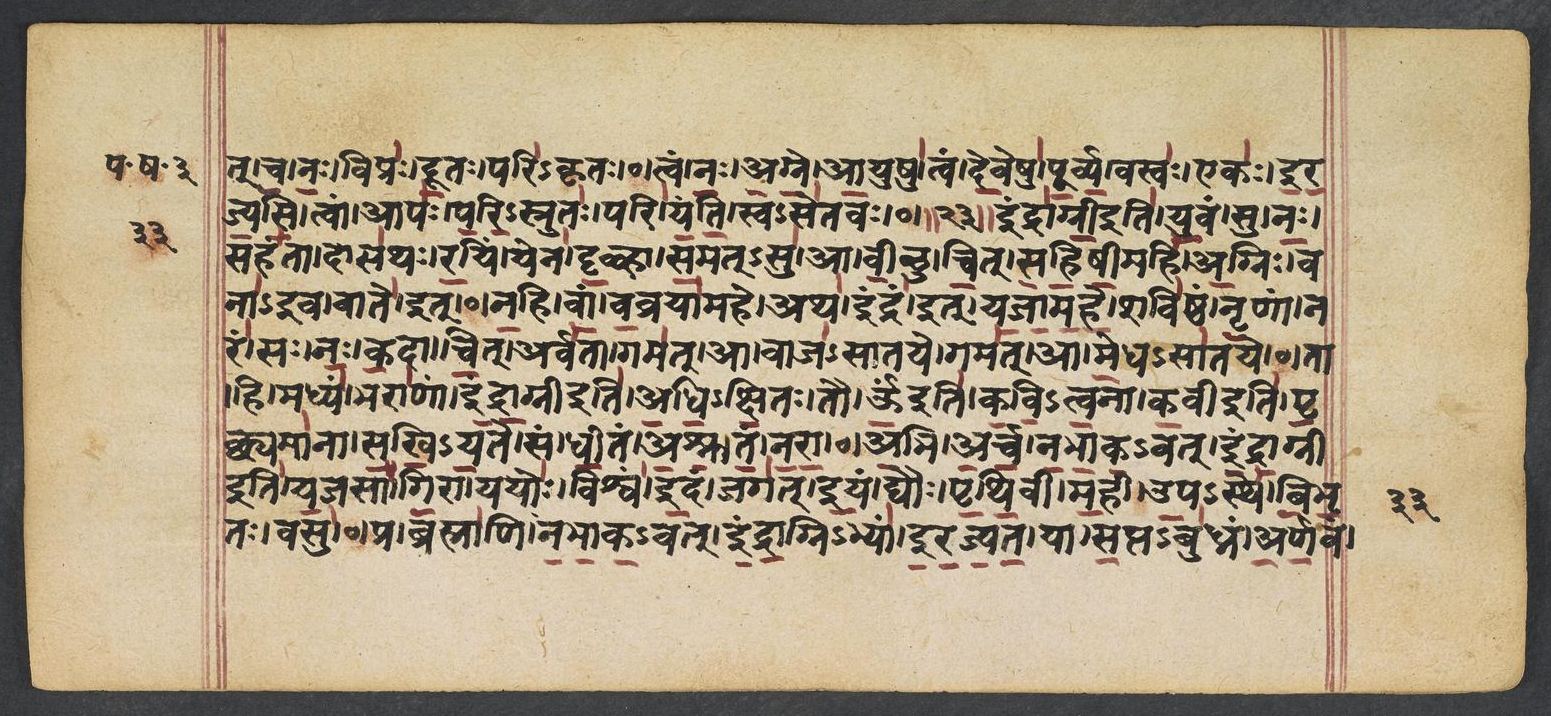
Where on the image
Penn Ms. Coll. 390 Item 41, fol. 611v (numbered 33v by the scribe) (OPenn image 612, upper leaf). Checked on the image: the Rigveda text on this page begins in RV 8.39.9 ‹ca naḥ vipraḥ dūtaḥ›. The next page with Rigveda text, fol. 612r (numbered 34r by the scribe), begins in RV 8.40.5 ‹jihma-bāram apa-ūrṇutaḥ indraḥ īśānaḥ›. Verses 8.39.9-10 end on this page; 8.39.9 begins on fol. 611r (numbered 33r by the scribe).
9a̱gnis trīṇi̍ tri̱dhātū̱ny ā kṣe̍ti vi̱dathā̍ ka̱viḥ | sa trīm̐r e̍kāda̱śām̐ i̱ha yakṣa̍c ca pi̱praya̍c ca no̱ vipro̍ dū̱taḥ pari̍ṣkṛto̱ nabha̍ntām anya̱ke sa̍me ||
10tvaṁ no̍ agna ā̱yuṣu̱ tvaṁ de̱veṣu̍ pūrvya̱ vasva̱ eka̍ irajyasi | tvām āpa̍ḥ pari̱sruta̱ḥ pari̍ yanti̱ svase̍tavo̱ nabha̍ntām anya̱ke sa̍me ||
Compare: Padapāṭha (word-by-word text written in the manuscript; Sansknet e-text via GRETIL)
9agniḥ | trīṇi | tri-dhātūni | ā | kṣeti | vidathā | kaviḥ | saḥ | trīn | ekādaśān | iha | yakṣat | ca | piprayat | ca | naḥ | vipraḥ | dūtaḥ | pari-kṛtaḥ | nabhantām | anyake | same
10tvam | naḥ | agne | āyuṣu | tvam | deveṣu | pūrvya | vasvaḥ | ekaḥ | irajyasi | tvām | āpaḥ | pari-srutaḥ | pari | yanti | sva-setavaḥ | nabhantām | anyake | same
9Agni the Wise inhabiteth three gathering-places, triply formed. Decked as our envoy let the Sage bring hither and conciliate the Thrice Eleven Deities. Let all the others die away.
10Our Agni, thou art first among the Gods, and first mid living men. Thou only rulest over wealth. Round about thee, as natural dams, circumfluous the waters run. Let all the others die away.
Notes
- Sanskrit: Aufrecht's edition (1877) with the Vedic accents, as entered by van Nooten and Holland (GRETIL).
- English: Ralph T. H. Griffith, The Hymns of the Rigveda (1889-1892; 2nd ed. 1896-1897), from the VedaWeb digital text; OCR slips in that text were corrected against the printed 2nd edition (data/sources/rigveda/griffith_errata.json).
- Padapāṭha (edition text): Sansknet e-text via GRETIL (CC BY-NC-SA 4.0).
Cite
Sources
- Source: Penn Ms. Coll. 390 Item 41 (undated (catalogued with Penn's 18th-19th c. Vedic manuscripts)), OPenn, Public Domain Mark + Aufrecht's accented text (GRETIL) + Griffith's English (VedaWeb) (holding institution)
- Critical edition: Aufrecht (1877), accented e-text via GRETIL
← previous · → next · v cycle view · l back to library