Rigveda 8.40: To Indra and Agni
Introduction
Rigveda 8.40 is a hymn of 12 verses addressed to Indra and Agni. It stands in book (maṇḍala) 8, the book of the Kaṇva and Aṅgiras poets. The Rigveda is the oldest collection of Sanskrit hymns, composed in the second half of the second millennium BCE and handed down orally for many centuries before it was written down.
The manuscript shown is Penn Ms. Coll. 390 Item 41 (University of Pennsylvania), an undated paper manuscript of the padapāṭha (the word-by-word recitation text, in which every word is written separately and compounds are split) of the whole Ṛgveda in Devanāgarī, 884 leaves in fascicles, 7-9 lines to the page, accents in red; this hymn stands on fol. 611v-612v. Each section below gives the verses that end on one page; the page boundaries were read on the images (the opening words of every page), not counted out. Where the manuscript is a padapāṭha (the word-by-word recitation text), the section shows Aufrecht's continuous (saṃhitā) text first and, as the edition text, the padapāṭha of the same verses, which is the form written on the page.
How was this verified? (Provenance)
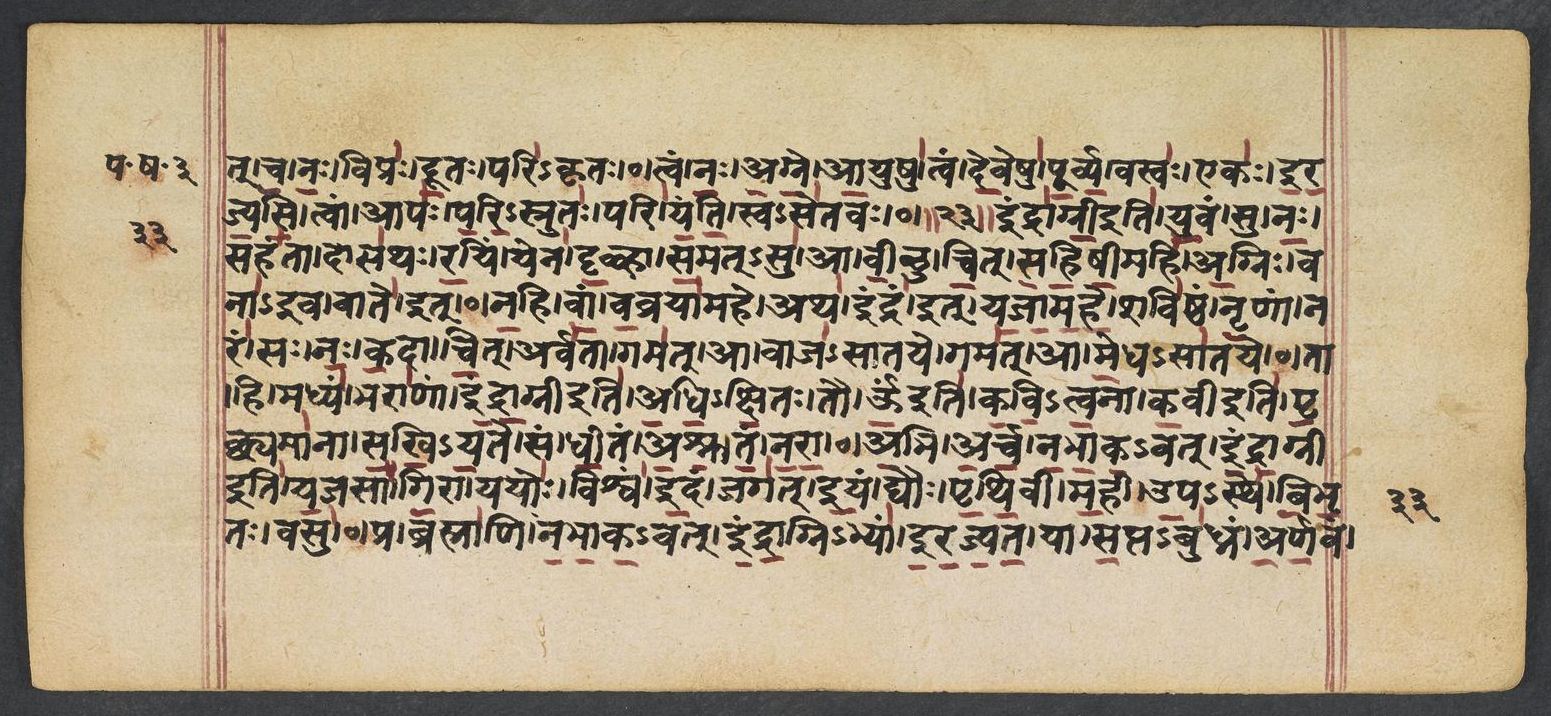
Where on the image
Penn Ms. Coll. 390 Item 41, fol. 611v (numbered 33v by the scribe) (OPenn image 612, upper leaf). Checked on the image: the Rigveda text on this page begins in RV 8.39.9 ‹ca naḥ vipraḥ dūtaḥ›. The next page with Rigveda text, fol. 612r (numbered 34r by the scribe), begins in RV 8.40.5 ‹jihma-bāram apa-ūrṇutaḥ indraḥ īśānaḥ›. Verses 8.40.1-4 end on this page.
1indrā̍gnī yu̱vaṁ su na̱ḥ saha̍ntā̱ dāsa̍tho ra̱yim | yena̍ dṛ̱ḻhā sa̱matsv ā vī̱ḻu ci̍t sāhiṣī̱mahy a̱gnir vane̍va̱ vāta̱ in nabha̍ntām anya̱ke sa̍me ||
2na̱hi vā̍ṁ va̱vrayā̍ma̱he 'thendra̱m id ya̍jāmahe̱ śavi̍ṣṭhaṁ nṛ̱ṇāṁ nara̍m | sa na̍ḥ ka̱dā ci̱d arva̍tā̱ gama̱d ā vāja̍sātaye̱ gama̱d ā me̱dhasā̍taye̱ nabha̍ntām anya̱ke sa̍me ||
3tā hi madhya̱m bharā̍ṇām indrā̱gnī a̍dhikṣi̱taḥ | tā u̍ kavitva̱nā ka̱vī pṛ̱cchyamā̍nā sakhīya̱te saṁ dhī̱tam a̍śnutaṁ narā̱ nabha̍ntām anya̱ke sa̍me ||
4a̱bhy a̍rca nabhāka̱vad i̍ndrā̱gnī ya̱jasā̍ gi̱rā | yayo̱r viśva̍m i̱daṁ jaga̍d i̱yaṁ dyauḥ pṛ̍thi̱vī ma̱hy u1̱̍pasthe̍ bibhṛ̱to vasu̱ nabha̍ntām anya̱ke sa̍me ||
Compare: Padapāṭha (word-by-word text written in the manuscript; Sansknet e-text via GRETIL)
1indrāgnī iti | yuvam | su | naḥ | sahantā | dāsathaḥ | rayim | yena | dṛḷhā | samat-su | ā | vīḷu | cit | sahiṣīmahi | agniḥ | vanāiva | vāte | it | nabhantām | anyake | same
2nahi | vām | vavrayāmahe | atha | indram | it | yajāmahe | śaviṣṭham | nṛṇām | naram | saḥ | naḥ | kadā | cit | arvatā | gamat | ā | vāja-sātaye | gamat | ā | medha-sātaye | nabhantām | anyake | same
3tā | hi | madhyam | bharāṇām | indrāgnī iti | adhi-kṣitaḥ | tā | oṃ iti | kavi-tvanā | kavī iti | pṛcchyamānā | sakhī-yate | sam | dhītam | aśnutam | narā | nabhantām | anyake | same
4abhi | arca | nabhāka-vat | indrāgnī iti | yajasā | girā | yayoḥ | viśvam | idam | jagat | iyam | dyauḥ | pṛthivī | mahī | upa-sthe | bibhṛtaḥ | vasu | nabhantām | anyake | same
1INDRA and Agni, surely ye as Conquerors will give us wealth, Whereby in fight we may o'ercome that which is strong and firmly fixed, as Agni burns the woods with wind. Let all the others die away.
2We set no snares to tangle you; Indra we worship and adore, Hero of heroes mightiest. Once may he come unto us with his Steed, come unto us to win us strength, and to complete the sacrifice.
3For, famous Indra-Agni, ye are dwellers in the midst of frays. Sages in wisdom, ye are knit to him who seeketh you as friends. Heroes, bestow on him his wish.
4Nabhâka-like, with sacred song Indra's and Agni's praise I sing, Theirs to whom all this world belongs, this heaven and this mighty earth which bear rich treasure in their lap.
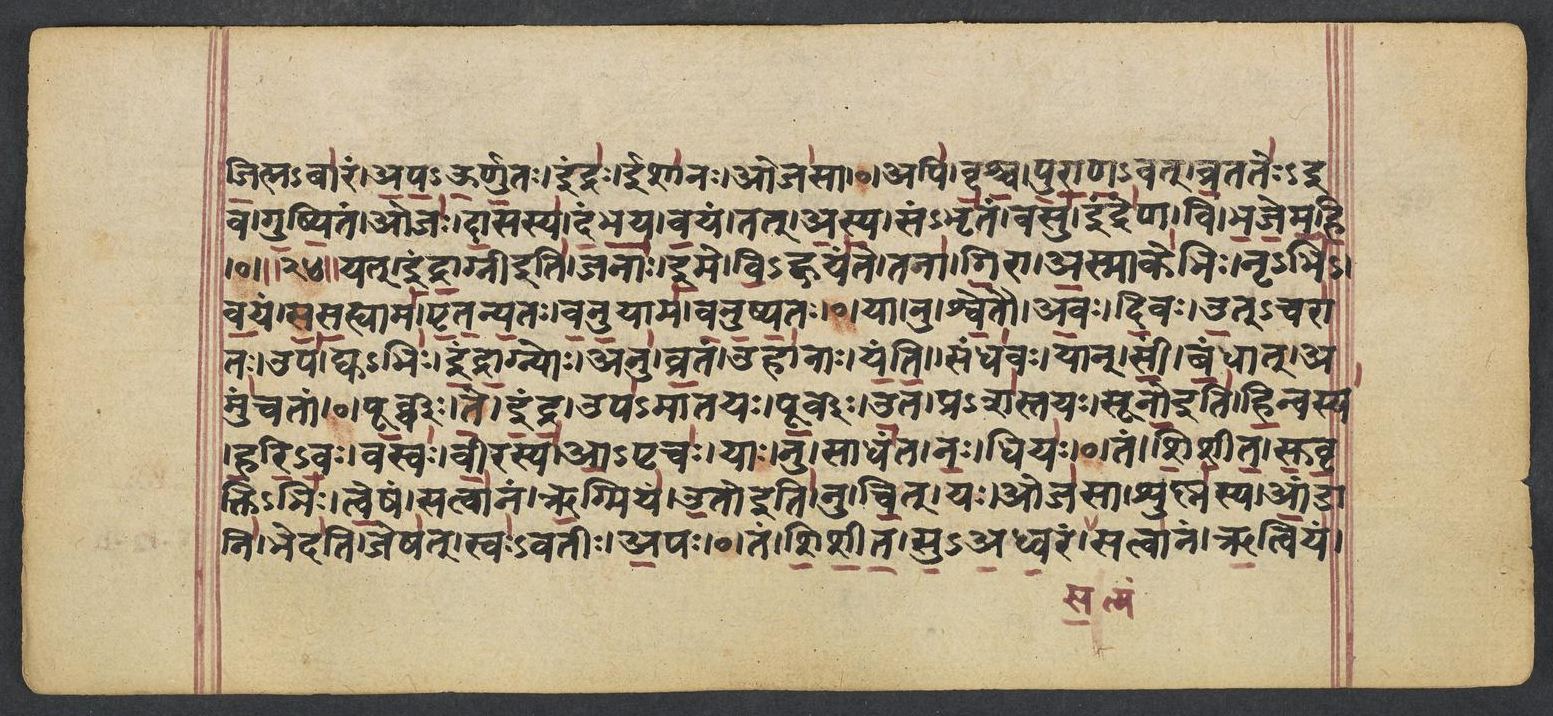
Where on the image
Penn Ms. Coll. 390 Item 41, fol. 612r (numbered 34r by the scribe) (OPenn image 612, lower leaf). Checked on the image: the Rigveda text on this page begins in RV 8.40.5 ‹jihma-bāram apa-ūrṇutaḥ indraḥ īśānaḥ›. The next page with Rigveda text, fol. 612v (numbered 34v by the scribe), begins in RV 8.40.10 ‹-cit yaḥ ojasā śuṣṇasya›. Verses 8.40.5-9 end on this page; 8.40.5 begins on fol. 611v (numbered 33v by the scribe).
5pra brahmā̍ṇi nabhāka̱vad i̍ndrā̱gnibhyā̍m irajyata | yā sa̱ptabu̍dhnam arṇa̱vaṁ ji̱hmabā̍ram aporṇu̱ta indra̱ īśā̍na̱ oja̍sā̱ nabha̍ntām anya̱ke sa̍me ||
6api̍ vṛśca purāṇa̱vad vra̱tate̍r iva guṣpi̱tam ojo̍ dā̱sasya̍ dambhaya | va̱yaṁ tad a̍sya̱ sambhṛ̍ta̱ṁ vasv indre̍ṇa̱ vi bha̍jemahi̱ nabha̍ntām anya̱ke sa̍me ||
7yad i̍ndrā̱gnī janā̍ i̱me vi̱hvaya̍nte̱ tanā̍ gi̱rā | a̱smāke̍bhi̱r nṛbhi̍r va̱yaṁ sā̍sa̱hyāma̍ pṛtanya̱to va̍nu̱yāma̍ vanuṣya̱to nabha̍ntām anya̱ke sa̍me ||
8yā nu śve̱tāv a̱vo di̱va u̱ccarā̍ta̱ upa̱ dyubhi̍ḥ | i̱ndrā̱gnyor anu̍ vra̱tam uhā̍nā yanti̱ sindha̍vo̱ yān sī̍m ba̱ndhād amu̍ñcatā̱ṁ nabha̍ntām anya̱ke sa̍me ||
9pū̱rvīṣ ṭa̍ i̱ndropa̍mātayaḥ pū̱rvīr u̱ta praśa̍staya̱ḥ sūno̍ hi̱nvasya̍ harivaḥ | vasvo̍ vī̱rasyā̱pṛco̱ yā nu sādha̍nta no̱ dhiyo̱ nabha̍ntām anya̱ke sa̍me ||
Compare: Padapāṭha (word-by-word text written in the manuscript; Sansknet e-text via GRETIL)
5pra | brahmāṇi | nabhāka-vat | indrāgni-bhyām | irajyata | yā | sapta-budhnam | arṇavam | jihma-bāram | apa-ūrṇutaḥ | indraḥ | īśānaḥ | ojasā | nabhantām | anyake | same
6api | vṛśca | purāṇa-vat | vratateḥ-iva | guṣpitam | ojaḥ | dāsasya | dambhaya | vayam | tat | asya | sam-bhṛtam | vasu | indreṇa | vi | bhajemahi | nabhantām | anyake | same
7yat | indrāgnī iti | janāḥ | ime | vi-hvayante | tanā | girā | asmākebhiḥ | nṛ-bhiḥ | vayam | sasahyāma | pṛtanyataḥ | vanuyāma | vanuṣyataḥ | nabhantām | anyake | same
8yā | nu | śvetau | avaḥ | divaḥ | ut-carātaḥ | upa | dyu-bhiḥ | indrāgnyoḥ | anu | vratam | uhānāḥ | yanti | sindhavaḥ | yān | sīm | bandhāt | amuñcatām | nabhantām | anyake | same
9pūrvīḥ | te | indra | upa-mātayaḥ | pūrvīḥ | uta | pra-śastayaḥ | sūno iti | hinvasya | hari-vaḥ | vasvaḥ | vīrasya | āpṛcaḥ | yā | nu | sādhanta | naḥ | dhiyaḥ | nabhantām | anyake | same
5To Indra and to Agni send your prayers, as was Nabhâka's wont,– Who oped with sideway opening the sea with its foundations seven-Indra all powerful in his might.
6Tear thou asunder, as of old, like tangles of a creeping plant, Demolish thou the Dâsa's might. May we with Indra's help divide the treasure he hath gathered up.
7What time with this same song these men call Indra-Agni sundry ways, May we with our own heroes quell those who provoke us to the fight, and conquer those who strive with us.
8The Two refulgent with their beams rise and come downward from the sky. By Indra's and by Agni's hest, flowing away, the rivers, run which they released from their restraint.
9O Indra, many are thine aids, many thy ways of guiding us, Lord of the Bay Steeds, Hinva's Son. To a Good Hero come our prayers, which soon shall have accomplishment.
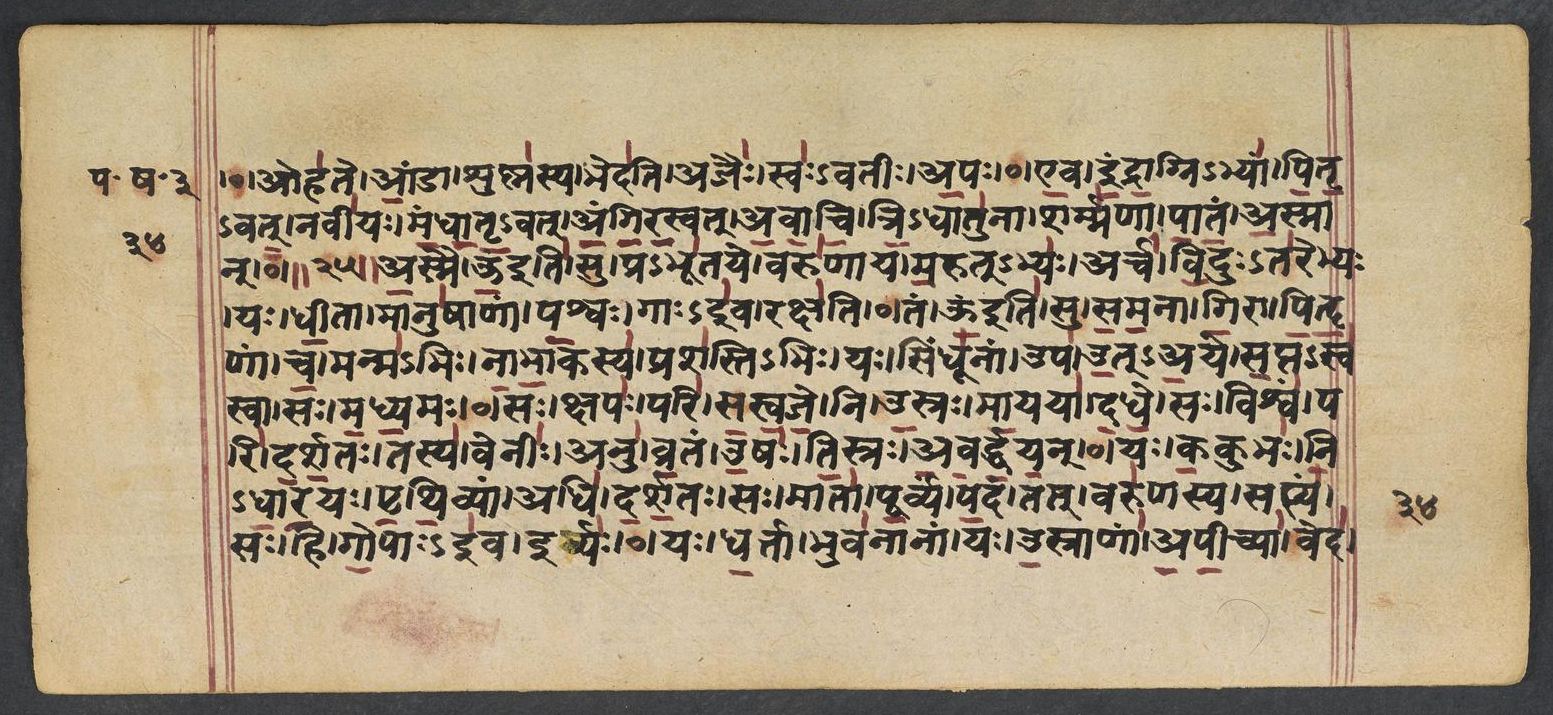
Where on the image
Penn Ms. Coll. 390 Item 41, fol. 612v (numbered 34v by the scribe) (OPenn image 613, upper leaf). Checked on the image: the Rigveda text on this page begins in RV 8.40.10 ‹-cit yaḥ ojasā śuṣṇasya›. The next page with Rigveda text, fol. 613r (numbered 35r by the scribe), begins in RV 8.41.5 ‹nāmāni guhyā saḥ kaviḥ›. Verses 8.40.10-12 end on this page; 8.40.10 begins on fol. 612r (numbered 34r by the scribe).
10taṁ śi̍śītā suvṛ̱ktibhi̍s tve̱ṣaṁ satvā̍nam ṛ̱gmiya̍m | u̱to nu ci̱d ya oja̍sā̱ śuṣṇa̍syā̱ṇḍāni̱ bheda̍ti̱ jeṣa̱t sva̍rvatīr a̱po nabha̍ntām anya̱ke sa̍me ||
11taṁ śi̍śītā svadhva̱raṁ sa̱tyaṁ satvā̍nam ṛ̱tviya̍m | u̱to nu ci̱d ya oha̍ta ā̱ṇḍā śuṣṇa̍sya̱ bheda̱ty ajai̱ḥ sva̍rvatīr a̱po nabha̍ntām anya̱ke sa̍me ||
12e̱vendrā̱gnibhyā̍m pitṛ̱van navī̍yo mandhātṛ̱vad a̍ṅgira̱svad a̍vāci | tri̱dhātu̍nā̱ śarma̍ṇā pātam a̱smān va̱yaṁ syā̍ma̱ pata̍yo rayī̱ṇām ||
Compare: Padapāṭha (word-by-word text written in the manuscript; Sansknet e-text via GRETIL)
10tam | śiśīta | suvṛkti-bhiḥ | tveṣam | satvānam | ṛgmiyam | uto iti | nu | cit | yaḥ | ojasā | śuṣṇasya | āṇḍāni | bhedati | jeṣat | svaḥ-vatīḥ | apaḥ | nabhantām | anyake | same
11tam | śiśīta | su-adhvaram | satyam | satvānam | ṛgmiyam | uto iti | nu | cit | yaḥ | ojasā | śuṣṇasya | āṇḍāni | bhedati | jeṣat | svaḥ-vatīḥ | apaḥ | nabhantām | anyake | same
12eva | indrāgni-bhyām | pitṛ-vat navīyaḥ | mandhātṛ-vat | aṅgirasvat | avāci | tri-dhātunā | śarmaṇā | pātam | asmān | vayam | syāma | patayaḥ | rayīṇām
10Inspire him with your holy hymns, the Hero bright and glorious, Him who with might demolisbeth even the brood of Ṣushṇa, and winneth for us the heavenly streams.
11Inspire him worshipped with fair rites, the glorious Hero truly brave. He brake in pieces Ṣushṇa's brood who still expected not the stroke, and won for us the heavenly streams. Let all the others die away.
12Thus have we sung anew to Indra-Agni, as sang our sires, Angirases, and Mandhâtar. Guard us with triple shelter and preserve us: may we be masters of a store of riches.
Notes
- Sanskrit: Aufrecht's edition (1877) with the Vedic accents, as entered by van Nooten and Holland (GRETIL).
- English: Ralph T. H. Griffith, The Hymns of the Rigveda (1889-1892; 2nd ed. 1896-1897), from the VedaWeb digital text; OCR slips in that text were corrected against the printed 2nd edition (data/sources/rigveda/griffith_errata.json).
- Padapāṭha (edition text): Sansknet e-text via GRETIL (CC BY-NC-SA 4.0).
Cite
Sources
- Source: Penn Ms. Coll. 390 Item 41 (undated (catalogued with Penn's 18th-19th c. Vedic manuscripts)), OPenn, Public Domain Mark + Aufrecht's accented text (GRETIL) + Griffith's English (VedaWeb) (holding institution)
- Critical edition: Aufrecht (1877), accented e-text via GRETIL
← previous · → next · v cycle view · l back to library