Rigveda 8.5: To Asvins
Introduction
Rigveda 8.5 is a hymn of 39 verses addressed to Asvins. It stands in book (maṇḍala) 8, the book of the Kaṇva and Aṅgiras poets. The Rigveda is the oldest collection of Sanskrit hymns, composed in the second half of the second millennium BCE and handed down orally for many centuries before it was written down.
The manuscript shown is Penn Ms. Coll. 390 Item 41 (University of Pennsylvania), an undated paper manuscript of the padapāṭha (the word-by-word recitation text, in which every word is written separately and compounds are split) of the whole Ṛgveda in Devanāgarī, 884 leaves in fascicles, 7-9 lines to the page, accents in red; this hymn stands on fol. 568r-570r. Each section below gives the verses that end on one page; the page boundaries were read on the images (the opening words of every page), not counted out. Where the manuscript is a padapāṭha (the word-by-word recitation text), the section shows Aufrecht's continuous (saṃhitā) text first and, as the edition text, the padapāṭha of the same verses, which is the form written on the page.
How was this verified? (Provenance)
Where on the image
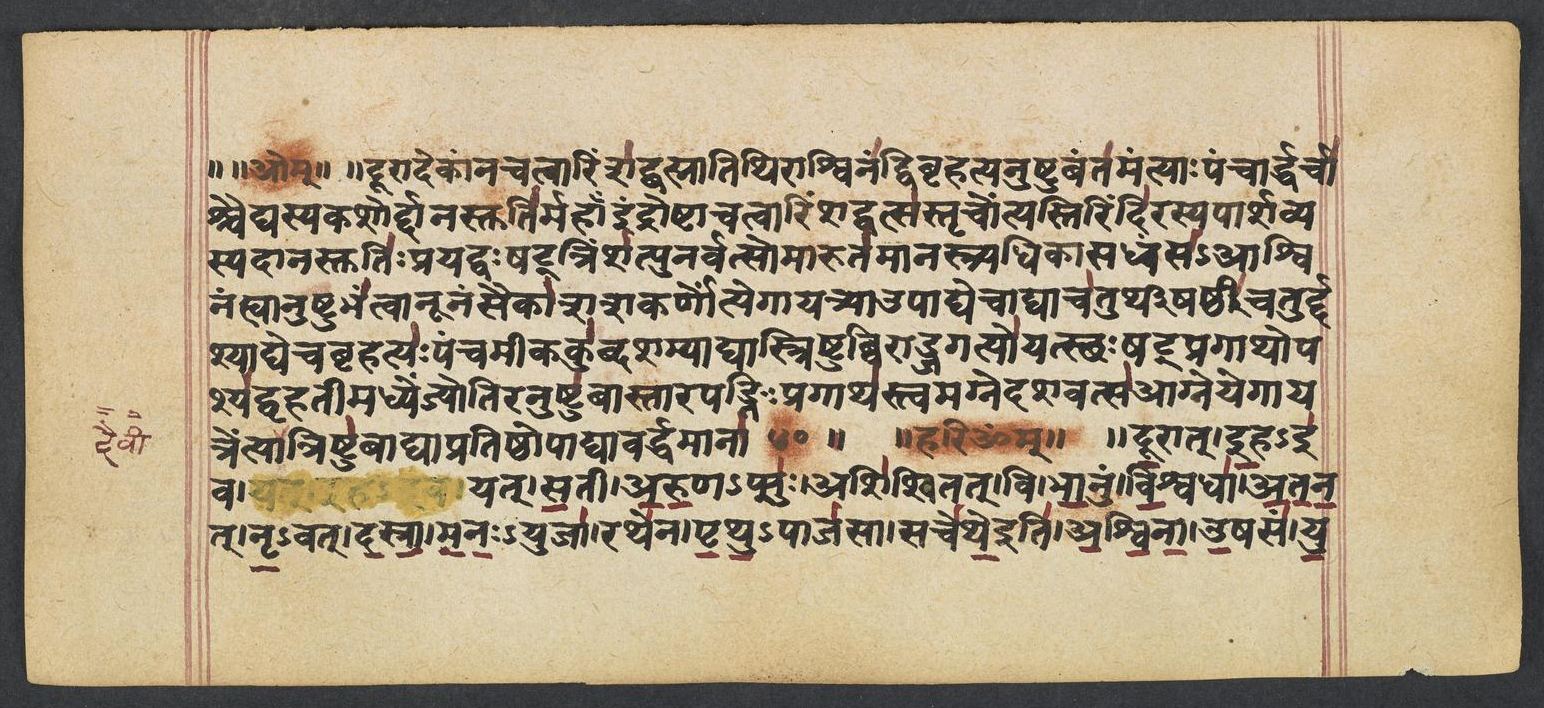
Penn Ms. Coll. 390 Item 41, fol. 568r (numbered 89r by the scribe) (OPenn image 568, lower leaf). Checked on the image: the Rigveda text on this page begins in RV 8.5.1 ‹dūrāt iha-iva yat satī›. Lines 1-7 carry the anukramaṇī for aṣṭaka 5, adhyāya 8; 8.5.1 (dūrāt iha iva) begins at the end of line 7 after hariḥ oṃ. The next page with Rigveda text, fol. 568v (numbered 89v by the scribe), begins in RV 8.5.3 ‹yuvābhyām vājinīvasūitivājinī-vasū prati stomāḥ›. Verses 8.5.1-2 end on this page.
1dū̱rād i̱heva̱ yat sa̱ty a̍ru̱ṇapsu̱r aśi̍śvitat | vi bhā̱nuṁ vi̱śvadhā̍tanat ||
2nṛ̱vad da̍srā mano̱yujā̱ rathe̍na pṛthu̱pāja̍sā | sace̍the aśvino̱ṣasa̍m ||
Compare: Padapāṭha (word-by-word text written in the manuscript; Sansknet e-text via GRETIL)
1dūrāt | iha-iva | yat | satī | aruṇa-pśuḥ | aśiśvitat | vi | bhānum | viśvadhā | atanat
2nṛ-vat | dasrā | manaḥ-yujā | rathena | pṛthu-pājasā | sacetheiti | aśvinā | uṣasam
1WHEN, even as she were present here, red Dawn hath shone from far away, She spreadeth light on every side.
2Like Heroes on your will-yoked car farshining, Wonder-Workers! ye Attend, O Aṣvins, on the Dawn.
Where on the image
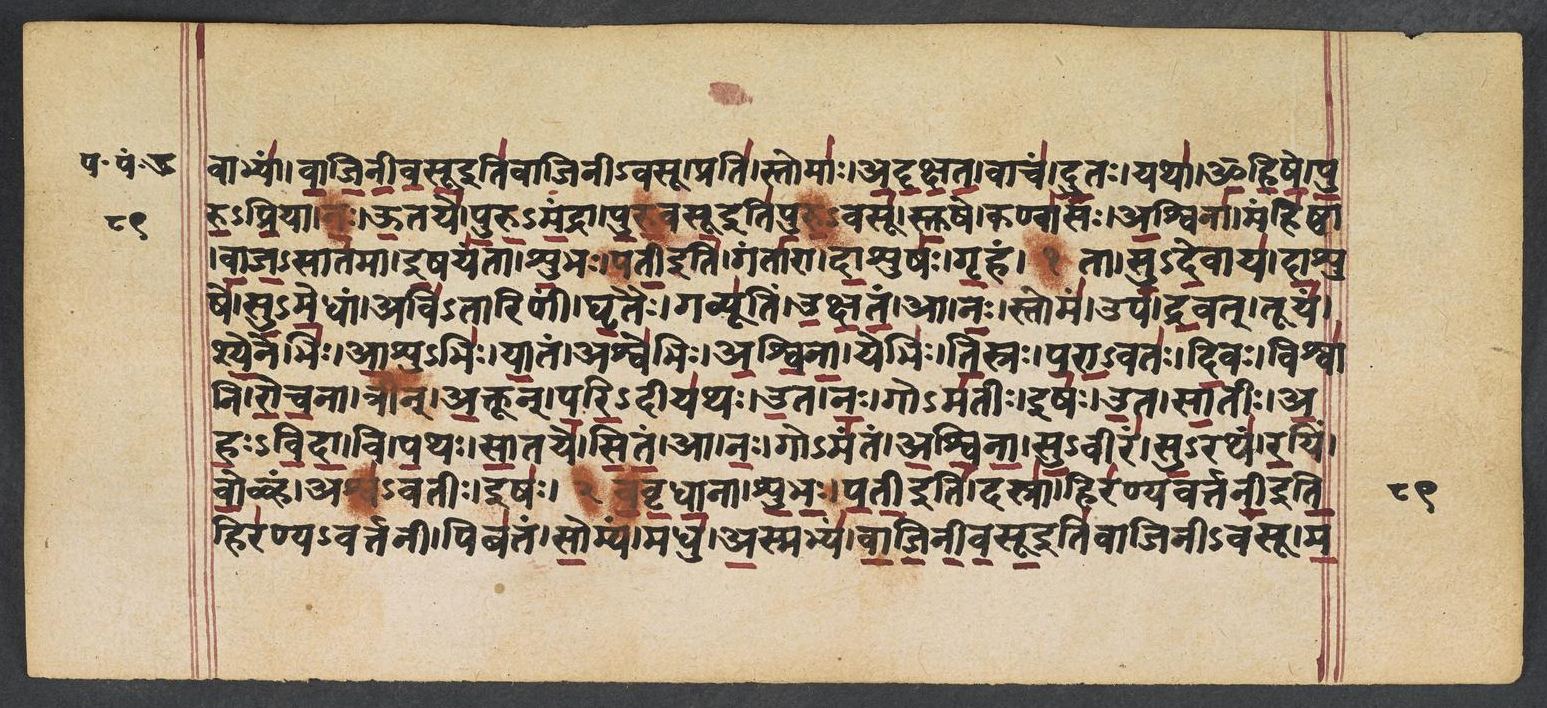
Penn Ms. Coll. 390 Item 41, fol. 568v (numbered 89v by the scribe) (OPenn image 569, upper leaf). Checked on the image: the Rigveda text on this page begins in RV 8.5.3 ‹yuvābhyām vājinīvasūitivājinī-vasū prati stomāḥ›. The next page with Rigveda text, fol. 569r (numbered 90r by the scribe), begins in RV 8.5.12 ‹-maghavat-bhyaḥ ca sa-prathaḥ chardiḥ›. Verses 8.5.3-11 end on this page.
3yu̱vābhyā̍ṁ vājinīvasū̱ prati̱ stomā̍ adṛkṣata | vāca̍ṁ dū̱to yatho̍hiṣe ||
4pu̱ru̱pri̱yā ṇa̍ ū̱taye̍ puruma̱ndrā pu̍rū̱vasū̍ | stu̱ṣe kaṇvā̍so a̱śvinā̍ ||
5maṁhi̍ṣṭhā vāja̱sāta̍me̱ṣaya̍ntā śu̱bhas patī̍ | gantā̍rā dā̱śuṣo̍ gṛ̱ham ||
6tā su̍de̱vāya̍ dā̱śuṣe̍ sume̱dhām avi̍tāriṇīm | ghṛ̱tair gavyū̍tim ukṣatam ||
7ā na̱ḥ stoma̱m upa̍ dra̱vat tūya̍ṁ śye̱nebhi̍r ā̱śubhi̍ḥ | yā̱tam aśve̍bhir aśvinā ||
8yebhi̍s ti̱sraḥ pa̍rā̱vato̍ di̱vo viśvā̍ni roca̱nā | trīm̐r a̱ktūn pa̍ri̱dīya̍thaḥ ||
9u̱ta no̱ goma̍tī̱r iṣa̍ u̱ta sā̱tīr a̍harvidā | vi pa̱thaḥ sā̱taye̍ sitam ||
10ā no̱ goma̍ntam aśvinā su̱vīra̍ṁ su̱ratha̍ṁ ra̱yim | vo̱ḻham aśvā̍vatī̱r iṣa̍ḥ ||
11vā̱vṛ̱dhā̱nā śu̍bhas patī dasrā̱ hira̍ṇyavartanī | piba̍taṁ so̱myam madhu̍ ||
Compare: Padapāṭha (word-by-word text written in the manuscript; Sansknet e-text via GRETIL)
3yuvābhyām | vājinīvasūitivājinī-vasū | prati | stomāḥ | adṛkṣata | vācam | dūtaḥ | yathā | ohiṣe
4puru-priyā | naḥ | ūtaye | puru-mandrā | puruvasūitipuru-vasū | stuṣe | kaṇvāsaḥ | aśvinā
5maṃhiṣṭhā | vāja-sātamā | iṣayantā | śubhaḥ | patī iti | gantārā | dāśuṣaḥ | gṛham
6tā | su-devāya | dāśuṣe | su-medhām | avi-tāriṇīm | ghṛtaiḥ | gavyūtim | ukṣatam
7ā | naḥ | stomam | upa | dravat | tūyam | śyenebhiḥ | āśu-bhiḥ | yātam | aśvebhiḥ | aśv inā
8yebhiḥ | tisraḥ | parāvataḥ | divaḥ | viśvāni | rocanā | trīn | aktūn | pari-dīyathaḥ
9uta | naḥ | go--matīḥ | iṣaḥ | uta | sātīḥ | ahaḥ-vidā | vi | pathaḥ | sātaye | sitam
10ā | naḥ | go--mantam | aśvinā | su-vīram | su-ratham | rayim | voḷham | aśva-vatīḥ | iṣaḥ
11vāvṛdhānā | śubhaḥ | patī iti | dasrā | hiraṇya-vartanī itihiraṇya-vartanī | pibatam | somyam | madhu
3By you, O Lords of ample wealth our songs of praise have been observed: As envoy have I brought the prayer.
4Kaṇvas must praise the Aṣvins dear to many, making many glad, Most rich, that they may succour us.
5Most liberal, best at winning strength, inciters, Lords of splendour who Visit the worshipper's abode.
6So for devout Sudeva dew with fatness his unfailing mead, And make it rich for sacrifice.
7Hitherward running speedily with horses, as with rapid hawks, Come, Aṣvins, to our song of praise
8Wherewith the three wide distances, and all the lights that are in heaven. Ye traverse, and three times of night.
9O Finders of the Day, that we may win us food of kine and wealth, Open the paths for us to tread.
10O Aṣvins, bring us wealth in kine, in noble heroes, and in cars: Bring us the strength that horses give.
11Ye Lords of splendour, glorified, ye Wonder-Workers borne on paths Of gold, drink sweets with Somajuice.
Where on the image
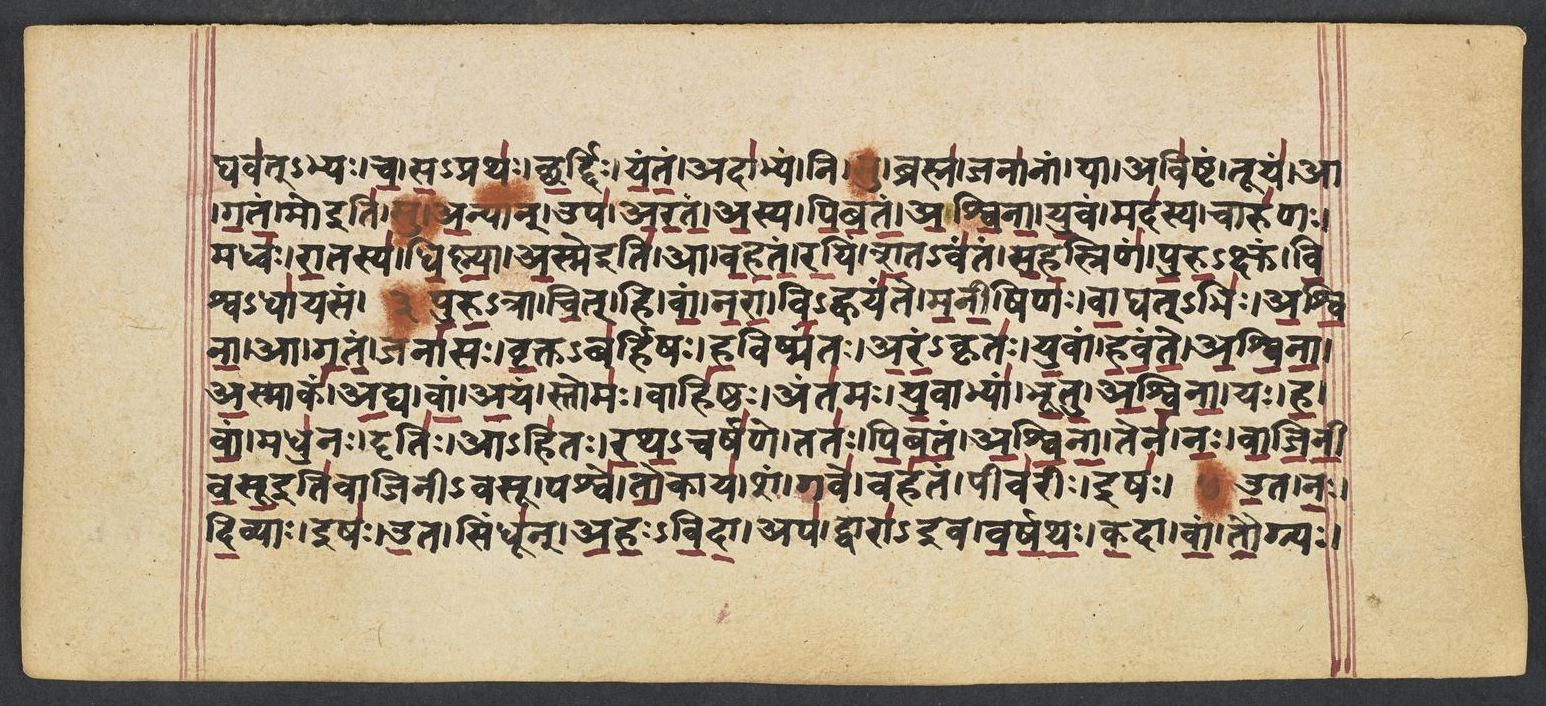
Penn Ms. Coll. 390 Item 41, fol. 569r (numbered 90r by the scribe) (OPenn image 569, lower leaf). Checked on the image: the Rigveda text on this page begins in RV 8.5.12 ‹-maghavat-bhyaḥ ca sa-prathaḥ chardiḥ›. The next page with Rigveda text, fol. 569v (numbered 90v by the scribe), begins in RV 8.5.22 ‹vidhat samudre jahitaḥ narā›. Verses 8.5.12-21 end on this page; 8.5.12 begins on fol. 568v (numbered 89v by the scribe).
12a̱smabhya̍ṁ vājinīvasū ma̱ghava̍dbhyaś ca sa̱pratha̍ḥ | cha̱rdir ya̍nta̱m adā̍bhyam ||
13ni ṣu brahma̱ janā̍nā̱ṁ yāvi̍ṣṭa̱ṁ tūya̱m ā ga̍tam | mo ṣv a1̱̍nyām̐ upā̍ratam ||
14a̱sya pi̍batam aśvinā yu̱vam mada̍sya̱ cāru̍ṇaḥ | madhvo̍ rā̱tasya̍ dhiṣṇyā ||
15a̱sme ā va̍hataṁ ra̱yiṁ śa̱tava̍ntaṁ saha̱sriṇa̍m | pu̱ru̱kṣuṁ vi̱śvadhā̍yasam ||
16pu̱ru̱trā ci̱d dhi vā̍ṁ narā vi̱hvaya̍nte manī̱ṣiṇa̍ḥ | vā̱ghadbhi̍r aśvi̱nā ga̍tam ||
17janā̍so vṛ̱ktaba̍rhiṣo ha̱viṣma̍nto ara̱ṁkṛta̍ḥ | yu̱vāṁ ha̍vante aśvinā ||
18a̱smāka̍m a̱dya vā̍m a̱yaṁ stomo̱ vāhi̍ṣṭho̱ anta̍maḥ | yu̱vābhyā̍m bhūtv aśvinā ||
19yo ha̍ vā̱m madhu̍no̱ dṛti̱r āhi̍to ratha̱carṣa̍ṇe | tata̍ḥ pibatam aśvinā ||
20tena̍ no vājinīvasū̱ paśve̍ to̱kāya̱ śaṁ gave̍ | vaha̍ta̱m pīva̍rī̱r iṣa̍ḥ ||
21u̱ta no̍ di̱vyā iṣa̍ u̱ta sindhū̍m̐r aharvidā | apa̱ dvāre̍va varṣathaḥ ||
Compare: Padapāṭha (word-by-word text written in the manuscript; Sansknet e-text via GRETIL)
12asmabhyam | vājinīvasūitivājinī-vasū | maghavat-bhyaḥ | ca | sa-prathaḥ | chardiḥ | yantam | adābhyam
13ni | su | brahma | janānām | yā | aviṣṭam | tūyam | ā | gatam | mo iti | su | anyān | upa | aratam
14asya | pibatam | aśvinā | yuvam | madasya | cāruṇaḥ | madhvaḥ | rātasya | dhiṣṇyā
15asme iti | ā | vahatam | rayim | śata-vantam | sahasriṇam | puru-kṣum | viśva-dhāyasam
16puru-trā | cit | hi | vām | narā | vi-hvayante | manīṣiṇaḥ | vāghat-bhiḥ | aśvinā | ā | gatam
17janāsaḥ | vṛkta-barhiṣaḥ | haviṣmantaḥ | aram-kṛtaḥ | yuvām | havante | aśvinā
18asmākam | adya | vām | ayam | stomaḥ | vāhiṣṭhaḥ | antamaḥ | yuvābhyām | bhūtu | aśvi nā
19yaḥ | ha | vām | madhunaḥ | dṛtiḥ | āhitaḥ | ratha-carṣaṇe | tataḥ | pibatam | aśvinā
20tena | naḥ | vājinīvasūitivājinī-vasū | paśve | tokāya | śam | gave | vahatam | pīvarīḥ | iṣaḥ
21uta | naḥ | divyāḥ | iṣaḥ | uta | sindhūn | ahaḥ-vidā | apa | dvārāiva | vaṣarthaḥ
12To us, ye Lords of ample wealth, and to our wealth chiefs extend Wide shelter, ne'er to be assailed.
13Come quickly downward to the prayer of people whom ye favour most: Approach not unto other folk.
14Ye Aṣvins whom our minds perceive, drink of this lovely gladdening draught, The mcath which we present to you.
15Bring riches hither unto us in hundreds and in thousands, source Of plenteous food, sustaining all.
16Verily sages call on you, ye Heroes, in full many a place. Moved by the priests, O Aṣvins, conic.
17Men who have trimmed the sacred grass, bringing oblations and prepared, O Aṣvins, are invoking you.
18May this our hymn of praise to-day, most powerful to bring you, be, O Aṣvins, nearest to your hearts.
19The skin filled full of savoury meath, laid in the pathway of your car- O Aṣvins, drink ye both therefrom.
20For this, ye Lords of ample wealth, bring blessing for our herd, our kine, Our progeny, and plenteous food.
21Ye too unclose to us like doors the strengthening waters of the sky, And rivers, ye who find the day.
Where on the image
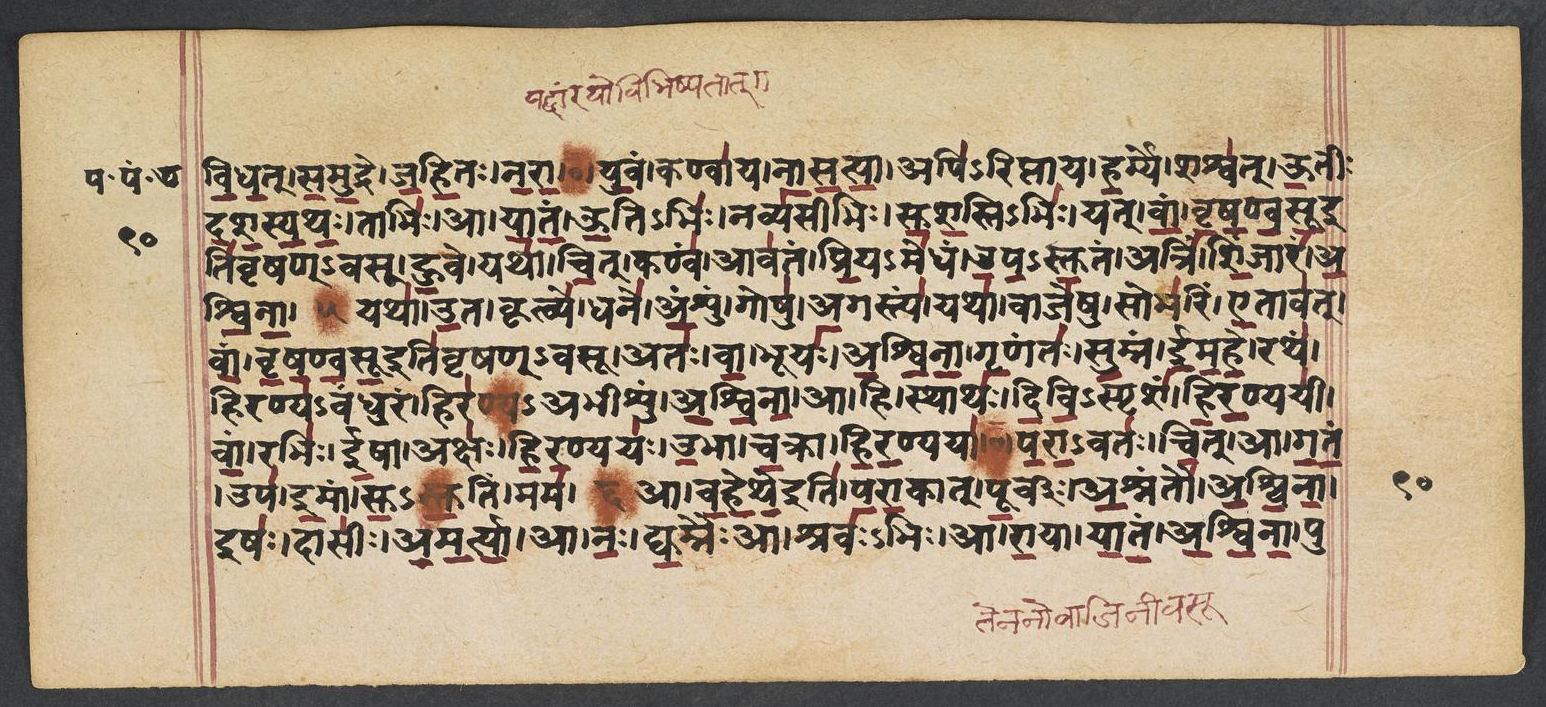
Penn Ms. Coll. 390 Item 41, fol. 569v (numbered 90v by the scribe) (OPenn image 570, upper leaf). Checked on the image: the Rigveda text on this page begins in RV 8.5.22 ‹vidhat samudre jahitaḥ narā›. The next page with Rigveda text, fol. 570r (numbered 91r by the scribe), begins in RV 8.5.32 ‹-puru-candrā nāsatyā›. Verses 8.5.22-31 end on this page; 8.5.22 begins on fol. 569r (numbered 90r by the scribe).
22ka̱dā vā̍ṁ tau̱gryo vi̍dhat samu̱dre ja̍hi̱to na̍rā | yad vā̱ṁ ratho̱ vibhi̱ṣ patā̍t ||
23yu̱vaṁ kaṇvā̍ya nāsatyā̱ ṛpi̍riptāya ha̱rmye | śaśva̍d ū̱tīr da̍śasyathaḥ ||
24tābhi̱r ā yā̍tam ū̱tibhi̱r navya̍sībhiḥ suśa̱stibhi̍ḥ | yad vā̍ṁ vṛṣaṇvasū hu̱ve ||
25yathā̍ ci̱t kaṇva̱m āva̍tam pri̱yame̍dham upastu̱tam | atri̍ṁ śi̱ñjāra̍m aśvinā ||
26yatho̱ta kṛtvye̱ dhane̱ 'ṁśuṁ goṣv a̱gastya̍m | yathā̱ vāje̍ṣu̱ sobha̍rim ||
27e̱tāva̍d vāṁ vṛṣaṇvasū̱ ato̍ vā̱ bhūyo̍ aśvinā | gṛ̱ṇanta̍ḥ su̱mnam ī̍mahe ||
28ratha̱ṁ hira̍ṇyavandhura̱ṁ hira̍ṇyābhīśum aśvinā | ā hi sthātho̍ divi̱spṛśa̍m ||
29hi̱ra̱ṇyayī̍ vā̱ṁ rabhi̍r ī̱ṣā akṣo̍ hira̱ṇyaya̍ḥ | u̱bhā ca̱krā hi̍ra̱ṇyayā̍ ||
30tena̍ no vājinīvasū parā̱vata̍ś ci̱d ā ga̍tam | upe̱māṁ su̍ṣṭu̱tim mama̍ ||
31ā va̍hethe parā̱kāt pū̱rvīr a̱śnantā̍v aśvinā | iṣo̱ dāsī̍r amartyā ||
Compare: Padapāṭha (word-by-word text written in the manuscript; Sansknet e-text via GRETIL)
22kadā | vām | taugryaḥ | vidhat | samudre | jahitaḥ | narā | yat | vām | rathaḥ | vi-bhiḥ | patāt
23yuvam | kaṇvāya | nāsatyā | api-riptāya | harmye | śaśvat | ūtīḥ | daśasyathaḥ
24tābhiḥ | ā | yātam | ūti-bhiḥ | navyasībhiḥ | suśasti-bhiḥ | yat | vām | vṛṣaṇvasūitivṛṣaṇ-vasū | huve
25yathā | cit | kaṇvam | āvatam | priya-medham | upa-stutam | atrim | śiñjāram | aśvinā
26yathā | uta | kṛtvye | dhane | aṃśum | goṣu | agastyam | yathā | vājeṣu | sobharim
27etāvat | vām | vṛṣaṇvasūitivṛṣaṇ-vasū | ataḥ | vā | bhūyaḥ | aśvinā | gṛṇantaḥ | sumnam | īmahe
28ratham | hiraṇya-vandhuram | hiraṇya-abhīśum | aśvinā | ā | hi | sthāthaḥ | divi-spṛśam
29hiraṇyayīm | vām | rabhiḥ | īṣā | akṣaḥ | hiraṇyayaḥ | ubhā | cakrā | hiraṇyayā
30tena | naḥ | vājinīvasūitivājinī-vasū | parāvataḥ | cit | ā | gatam | upa | imām | su-stutim | mama
31ā | vahetheiti | parākāt | pūrvīḥ | aśnantau | aśvinā | iṣaḥ | dāsīḥ | amartyā
22When did the son of' Tugra serve you, Men? Abandoned in the sea, That with winged steeds your car might fly.
23Ye, O Nâsatyas, ministered to Kaṇva with repeated aid, When cast into the heated pit.
24Come near with those most recent aids of yours which merit eulogy, When I invoke you, Wealthy Gods.
25As ye protected Kaṇva erst, Priyamedha and Upastuta, Atri, Sinjara, Aṣvins Twain
26And Anṣu in decisive fight, Agastya in the fray for kine. And, in his battles, Sobhari.
27For so much bliss, or even more, O Aṣvins, Wealthy Gods, than this, We pray while singing hymns to you.
28Ascend your car with golden seat, O Aṣvins, and with reins of gold, That reaches even to the sky.
29Golden is its supporting shaft, the axle also is of gold, And both the wheels are made of gold.
30Thereon, ye Lords of ample wealth, come to us even from afar, Come ye to this mine eulogy.
31From far away ye come to us, Aṣvins, enjoying plenteous food Of Dâsas, O Immortal Ones.
Where on the image
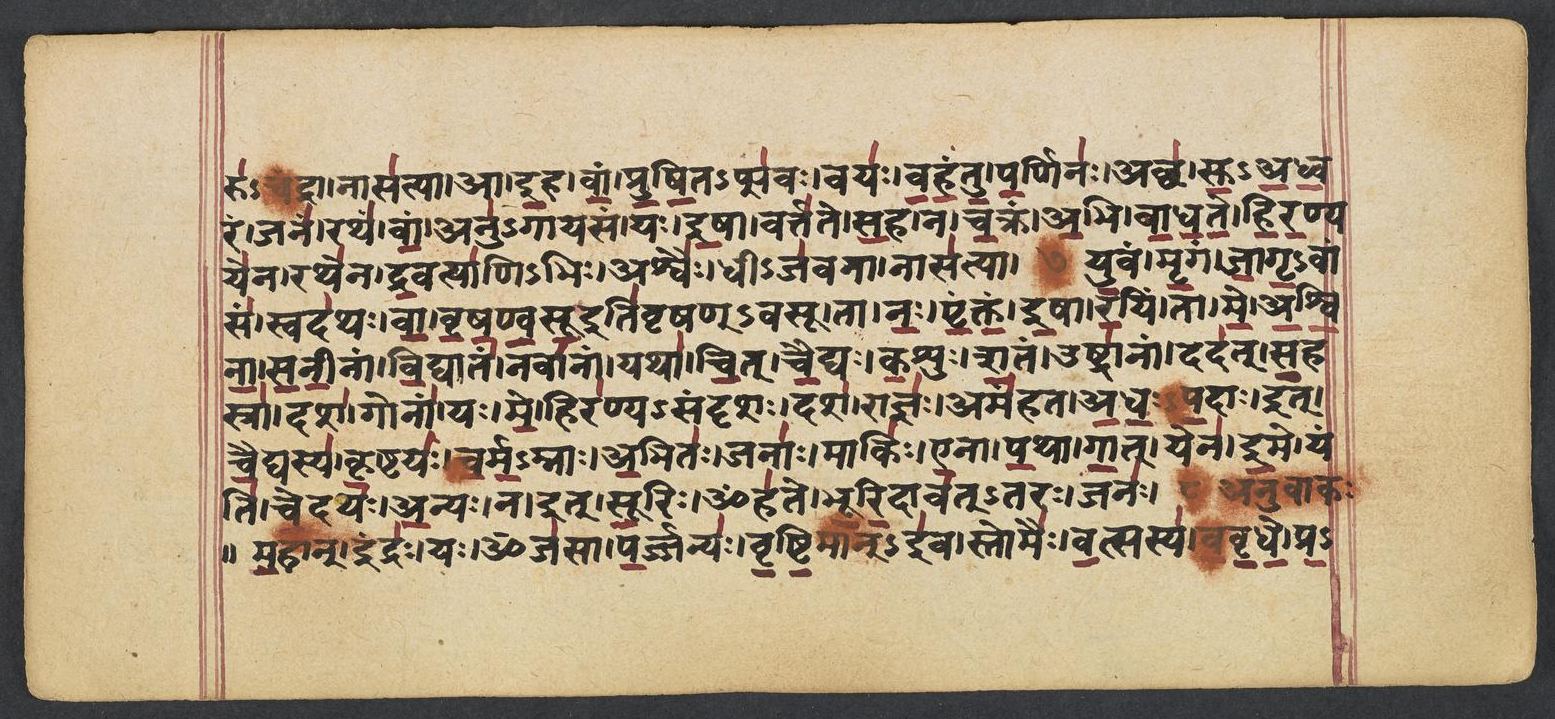
Penn Ms. Coll. 390 Item 41, fol. 570r (numbered 91r by the scribe) (OPenn image 570, lower leaf). Checked on the image: the Rigveda text on this page begins in RV 8.5.32 ‹-puru-candrā nāsatyā›. The next page with Rigveda text, fol. 570v (numbered 91v by the scribe), begins in RV 8.6.2 ‹-pra-jām ṛtasya piprataḥ pra›. Verses 8.5.32-39 end on this page; 8.5.32 begins on fol. 569v (numbered 90v by the scribe).
32ā no̍ dyu̱mnair ā śravo̍bhi̱r ā rā̱yā yā̍tam aśvinā | puru̍ścandrā̱ nāsa̍tyā ||
33eha vā̍m pruṣi̱tapsa̍vo̱ vayo̍ vahantu pa̱rṇina̍ḥ | acchā̍ svadhva̱raṁ jana̍m ||
34ratha̍ṁ vā̱m anu̍gāyasa̱ṁ ya i̱ṣā varta̍te sa̱ha | na ca̱kram a̱bhi bā̍dhate ||
35hi̱ra̱ṇyaye̍na̱ rathe̍na dra̱vatpā̍ṇibhi̱r aśvai̍ḥ | dhīja̍vanā̱ nāsa̍tyā ||
36yu̱vam mṛ̱gaṁ jā̍gṛ̱vāṁsa̱ṁ svada̍tho vā vṛṣaṇvasū | tā na̍ḥ pṛṅktam i̱ṣā ra̱yim ||
37tā me̍ aśvinā sanī̱nāṁ vi̱dyāta̱ṁ navā̍nām | yathā̍ cic cai̱dyaḥ ka̱śuḥ śa̱tam uṣṭrā̍nā̱ṁ dada̍t sa̱hasrā̱ daśa̱ gonā̍m ||
38yo me̱ hira̍ṇyasaṁdṛśo̱ daśa̱ rājño̱ ama̍ṁhata | a̱dha̱spa̱dā ic cai̱dyasya̍ kṛ̱ṣṭaya̍ś carma̱mnā a̱bhito̱ janā̍ḥ ||
39māki̍r e̱nā pa̱thā gā̱d yene̱me yanti̍ ce̱daya̍ḥ | a̱nyo net sū̱rir oha̍te bhūri̱dāva̍ttaro̱ jana̍ḥ ||
Compare: Padapāṭha (word-by-word text written in the manuscript; Sansknet e-text via GRETIL)
32ā | naḥ | dyumaiḥ | ā | śravaḥ-bhiḥ | ā | rāyā | yātam | aśvinā | puru-candrā | nāsatyā
33ā | iha | vām | pruṣita-psavaḥ | vayaḥ | vahantu | parṇinaḥ | accha | su-adhvaram | janam
34ratham | vām | anu-gāyasam | ya | iṣā | vartate | saha | na | cakram | abhi | bādhate
35hiraṇyayena | rathena | dravatpāṇi-bhiḥ | aśvaiḥ | dhī-javanā | nāsatyā
36yuvam | mṛgam | jāgṛ-vāṃsam | svadathaḥ | vā | vṛṣaṇvasūitivṛṣaṇ-vasū | tā | naḥ | pṛṅktam | iṣā | rayim
37tā | me | aśvinā | sanīnām | vidhyātam | navānām | yathā | cit | caidyaḥ | kaśum | śatam | uṣṭrānām | dadat | sahasrā | daśa | gonām
38yaḥ | me | hiraṇya-sandṛśaḥ | daśa | rājñaḥ | amaṃhata | adhaḥ-padāḥ | it | caidyasya | kṛṣṭayaḥ | carma-mnāḥ | abhitaḥ | janāḥ
39mākiḥ | enā | pathā | gādyena | ime | yanti | cedayaḥ | anyaḥ | na | it | sūriḥ | ohate | bhūrdāvat-taraḥ | janaḥ
32With splendour, riches, and renown, O Aṣvins, hither come to us, Nâsatyas, shining brilliantly.
33May dappled horses, steeds who fly with pinions, bring you hitherward To people skilled in sacrifice.
34The wheel delayeth not that car of yours accompanied by song, That cometh with a store of food.
35Borne on that chariot wrought of gold, with coursers very fleet of foot, Come, O Nâsatyas, swift as thought.
36O Wealthy Gods, ye taste and find the brisk and watchful wild beast good. Associate wealth with food for us.
37As such, O Aṣvins, find for me my share of new-presented gifts, As Kaṣu, Chedi's son, gave me a hundred head of buffaloes, and ten thousand kine.
38He who hath given me for mine own ten Kings like gold to look upon. At Caidya's feet are all the people round about, all those who think upon the shield.
39No man, not any, goes upon the path on which the Chedis walk. No other prince, no folk is held more liberal of gifts than they.
Notes
- Sanskrit: Aufrecht's edition (1877) with the Vedic accents, as entered by van Nooten and Holland (GRETIL).
- English: Ralph T. H. Griffith, The Hymns of the Rigveda (1889-1892; 2nd ed. 1896-1897), from the VedaWeb digital text; OCR slips in that text were corrected against the printed 2nd edition (data/sources/rigveda/griffith_errata.json).
- Padapāṭha (edition text): Sansknet e-text via GRETIL (CC BY-NC-SA 4.0).
Cite
Sources
- Source: Penn Ms. Coll. 390 Item 41 (undated (catalogued with Penn's 18th-19th c. Vedic manuscripts)), OPenn, Public Domain Mark + Aufrecht's accented text (GRETIL) + Griffith's English (VedaWeb) (holding institution)
- Critical edition: Aufrecht (1877), accented e-text via GRETIL
← previous · → next · v cycle view · l back to library